

Basic information
- CAS
2049-80-1- Standard SMILES
C=CCC(C(=O)OCC)C(=O)OCC- InChIKey
GDWAYKGILJJNBB-UHFFFAOYSA-N- Molecular formula
- C10H16O4
- Average molar mass
- 200.23 g/mol
- Monoisotopic mass
- 200.10485899
Names & identifiers
- Preferred name
- Diethyl allylmalonate
- IUPAC
- diethyl 2-prop-2-enylpropanedioate
- English name
- Diethyl allylmalonate
- Molecular formula
- C10H16O4
- Molecular weight
- 200.23
Names & synonyms
Diethyl allylmalonate2049-80-1diethyl 2-prop-2-enylpropanedioatePropanedioic acid, 2-(2-propen-1-yl)-, 1,3-diethyl esterM5ETZ38HUJ2-allylmalonic acid diethyl esterNSC-8777EINECS 218-072-9NSC-67393AI3-11069DTXSID30883787RefChem:133399
Show more names
NSC 8777Diethyl allylDiethyl allylmaloteALLYLDIETHYLMALONATEDiethyl allyimalonateDiethyl allylmalonate,97%Allylmalonic acid diethyl
DTXCID901023274218-072-9GDWAYKGILJJNBB-UHFFFAOYSA-NInChI=1/C10H16O4/c1-4-7-8(9(11)13-5-2)10(12)14-6-3/h4,8H,1,5-7H2,2-3HDiethyl 2-allylmalonateEthyl allylmalonateAllylmalonic acid diethyl esterDiethyl prop-2-enylpropanedioate
Database identifiers
- CAS
2049-80-1- PubChem CID
- 74900
- DTXSID
DTXSID30883787- UNII
- M5ETZ38HUJ
- EC Number
- 218-072-9
- Nikkaji
- J26.303F
Properties
Computed structural properties
- XLogP
- 1.9
- Topological polar surface area
- 52.6 Ų
- Hydrogen bond donors
- 0
- Hydrogen bond acceptors
- 4
- Rotatable bonds
- 8
- Heavy atoms
- 14
- Formal charge
- 0
- Complexity
- 192
Experimental & physicochemical properties
SpringerMaterials PropertiesDiamagnetic susceptibility
Physicochemical properties
- Boiling point
- 222 · 222-223 °C(lit.)
- Density
- 1.015 g/mL · 1.015 g/mL at 25 °C(lit.)
- refractive index
- 20 · n20/D 1.431(lit.)
- Flash point
- 160 °F · 160 °F
- storage temp.
- 30 °C · Store below +30°C.
- form
- Liquid
- pka
- 12.63 · 12.63±0.46(Predicted)
- color
- Clear colorless to slightly yellow
- Water Solubility
- Not miscible or difficult to mix with water.
- BRN
- 1709466 · 1709466
- InChI
- 1S/C10H16O4/c1-4-7-8(9(11)13-5-2)10(12)14-6-3/h4,8H,1,5-7H2,2-3H3
- InChIKey
- GDWAYKGILJJNBB-UHFFFAOYSA-N
- SMILES
- CCOC(=O)C(CC=C)C(=O)OCC
- LogP
- 1.99 · 1.990 (est)
- CAS DataBase Reference
- 2049 · 2049-80-1(CAS DataBase Reference)
- FDA UNII
- 5 ETZ38HUJ · M5ETZ38HUJ
- NIST Chemistry Reference
- 2 · Propanedioic acid, 2-propenyl-, diethyl ester(2049-80-1)
- EPA Substance Registry System
- 2 · Propanedioic acid, 2-propenyl-, diethyl ester (2049-80-1)
- UNSPSC Code
- 12162002 · 12162002
- NACRES
- 23 · NA.23
- Symbol(GHS)
- 7 · GHS07
- Signal word
- Warning
- Hazard statements
- 335 · H335-H227-H315-H319
- Precautionary statements
- 210 · P210-P264-P280-P302+P352+P332+P313+P362+P364-P305+P351+P338+P337+P313-P370+P378-P403+P235-P501-P210e-P261-P280a-P305+P351+P338-P405-P501a
- PPE
- Eyeshields, Gloves, type ABEK (EN14387) respirator filter
- Hazard Codes
- Xi
- Risk Statements
- 36 · 36/37/38
- Safety Statements
- 26 · 26-36-37/39
- RIDADR
- 1993 · NA 1993 / PGIII
- WGK Germany
- 3 · 3
- TSCA
- TSCA listed
- HS Code
- 29171990 · 29171990
- Storage Class
- 10 · 10 - Combustible liquids
Safety & regulation
GHS classification
GHS Classification
This chemical does not meet GHS hazard criteria for 2.4% (1 of 41) of reports.
Warning
H315 (97.6%): Causes skin irritation [Warning Skin corrosion/irritation]
P261, P264, P264+P265, P271, P280, P302+P352, P304+P340, P305+P351+P338, P319, P321, P332+P317, P337+P317, P362+P364, P403+P233, P405, and P501 (click each P-code to see the statement)
Aggregated GHS information provided per 41 reports by companies from 4 notifications to the ECHA C&L Inventory. Each notification may be associated with multiple companies.
Hazard information
Regulatory InformationChemical: Propanedioic acid, 2-propenyl-, diethyl ester
Other Safety InformationEvaluation - Chemicals not considered for in depth evaluation - Not commercially active in Australia
Hazard Classes and CategoriesSkin Irrit. 2 (97.6%)
Safety data
- PPE
- Eyeshields, Gloves, type ABEK (EN14387) respirator filter
- wgk
- 3
- tsca
- TSCA listed
- ridadr
- NA 1993 / PGIII
- hs_code
- 29171990
- risk_code
- 36/37/38
- Signal word
- Warning
- Symbol(GHS)
- GHS07
- hazard_code
- Xi
- safety_code
- 26-36-37/39
- Storage Class
- 10 - Combustible liquids
- Hazard statements
- H335-H227-H315-H319
- Precautionary statements
- P210-P264-P280-P302+P352+P332+P313+P362+P364-P305+P351+P338+P337+P313-P370+P378-P403+P235-P501-P210e-P261-P280a-P305+P351+P338-P405-P501a
Chemistry & industry
Uses & manufacturing
General Manufacturing InformationPropanedioic acid, 2-(2-propen-1-yl)-, 1,3-diethyl ester: INACTIVE
Applications
UsesDiethyl allylmalonate is an important intermediates in syntheses of vitamins B1 and B6, barbiturates, non-steroidal anti-inflammatory agents, other numerous pharmaceuticals, agrochemicals and flavors and fragrances compounds.
Preparation methods
PreparationDiethyl allyl malonate is obtained by reacting diethyl malonate with allyl bromide. Under nitrogen atmosphere, to a 500 mL three-neck round bottom flask was added diethyl malonate (20 g), anhydrous potassium carbonate (43 g) and anhydrous CH3CN (200 mL). The reaction mixture was stirred at room temperature for 10 minutes, then allyl bromide (23 g) was slowly added to the reaction mixture at room temperature. The reaction mixture was heated to 80°C for 24 hours. The reaction mixture was cooled to room temperature and filtered through a bed of celite. The celite bed was washed with acetonitrile (100 mL) and the combined filtrates were concentrated to give diethyl allylmalonate (24 g) as a colorless liquid.
Upstream & downstream products
Upstream raw materials
Downstream products
Suppliers100 total
梯希爱(上海)化成工业发展有限公司021-67121386 · [email protected]
苏州道澜生物医药科技有限公司15952404857 · [email protected]
上海阿拉丁生化科技股份有限公司400-6206333 13167063860 · [email protected]
南京凯美西化工有限公司02558748998 18951874644 · [email protected]
武汉英诺医药科技有限公司+86-027-59232304 15387063101 · [email protected]
保定秉承新材料有限公司17531190177 · [email protected]
毕佳索(上海毕得医药科技股份有限公司)400-6005915 · [email protected]
上海麦克林生化科技股份有限公司021-50706066 15221275939 · [email protected]
湖北鑫杰成化工科技有限公司13554075426 · [email protected]
上海腾准生物科技有限公司19821570922 · [email protected]
爱斯特(成都)生物制药股份有限公司+86-28-85122536 85324413 · [email protected]
上海赫文斯化工有限公司15721252604 17321035817 · [email protected]
Dayang Chem (Hangzhou) Co.,Ltd.+86-0571-88938639 17705817739 · [email protected]
Hebei Yanxi Chemical Co., Ltd.+86-17531190177 · [email protected]
Syntechem Co.,Ltd[email protected]
上海迈瑞尔生化科技有限公司4006356688 18621169109 · [email protected]
北京索莱宝科技有限公司010-50973130 17801761073 · [email protected]
上海颖心实验室设备有限公司021-59178156 17002132182 · [email protected]
阿法埃莎(中国)化学有限公司400-6106006 · [email protected]
安耐吉化学&3A(安徽泽升科技股份有限公司)400-0056266 · [email protected]
上海钰康生物科技有限公司+86-18930848214 +86-021-56762820 · [email protected]
南京诺利斯医药科技有限公司13901585132 · [email protected]
石家庄建鑫生物科技有限公司0311-1906231-3169 19062313169 · [email protected]
孝感深远化工有限公司15527621225; 15527621225 · [email protected]
山东李比希生物医药科技有限公司15318973357; 15318973357 · [email protected]
山东西亚化学有限公司13355009207 13355009207 · [email protected]
玛雅试剂+86 (573) 82222445 (0)18006601000 452520369 · [email protected]
天津希恩思生化科技有限公司400 638 7771 · [email protected]
ZHEJIANG JIUZHOU CHEM CO., LTD+86-0576225566889 +86-13454675544 · [email protected];[email protected];[email protected]
斯百全化学(上海)有限公司021-021-021-67601398-809-809-809 15221380277 · [email protected]
上海昊锐医药生物科技有限公司021-58388037;21-58388037 13472507714 · [email protected]
赛默飞世尔科技(中国)有限公司800-810-5118 · [email protected]
北京伊诺凯科技有限公司400-810-7969 010-59572699 · [email protected]
南京诺利斯医药科技有限公司13901585132 · [email protected]
上海健超生物科技有限公司150-2103-5486 18017383231 · [email protected]
TCI AMERICA800-4238616 · [email protected]
TOKYO CHEMICAL INDUSTRY CO., LTD.03-36680489 · [email protected]
TCI Europe320-37350700 · [email protected]
卡迪亚医药科技有限公司0371-86615086 18203638366 0371-86159066 13526786601
武汉卡诺斯科技有限公司153-37111468 15337111468 · [email protected]
Shijiazhuang Jianxin Biotechnology Co., LTD+undefined-86-1906231316-9 +86-19062313169 · [email protected]
天津奥立非医药技术有限公司18202662021 18522876413 · [email protected]
江苏艾康生物医药研发有限公司025-66028182 17714375163 · [email protected]
普善实业(陕西)有限公司029-81310890 18165209495 · [email protected]
Sigma-Aldrich西格玛奥德里奇(上海)贸易有限公司021-61415566 800-8193336 · [email protected]
Alfa Chemistry1-516-6625404 · [email protected]
南兴化工(江苏)有限公司0512-66387035 18662433356 · [email protected]
上海药克生物科技有限公司19943855286 · [email protected]
厦门志信化学有限公司+86-5922680277 +86-13806087780 · [email protected]
北京汇科盈生物科技有限公司15210661751 · [email protected]
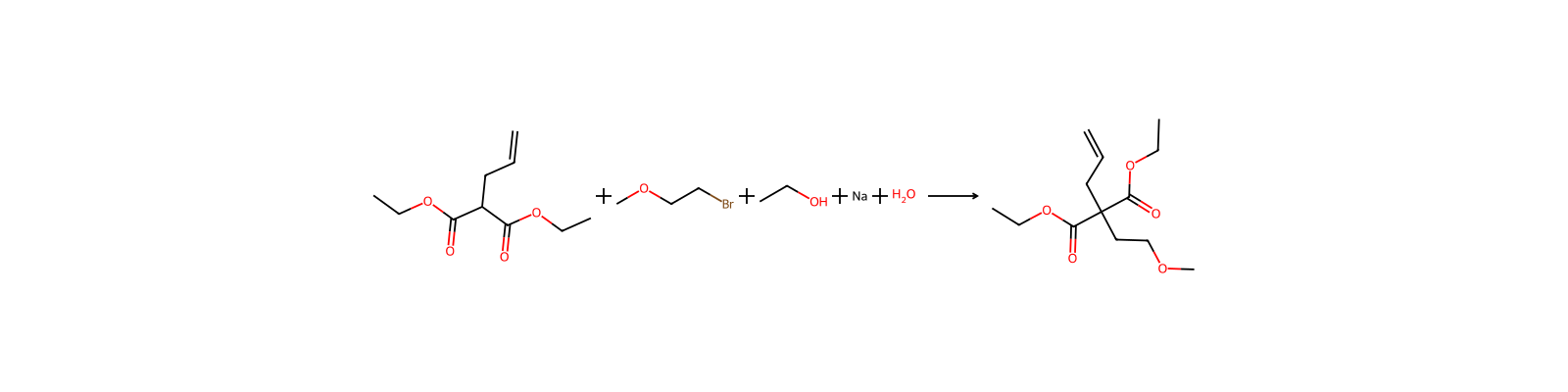
Related reactions
25 records




Compound notes
Loading…