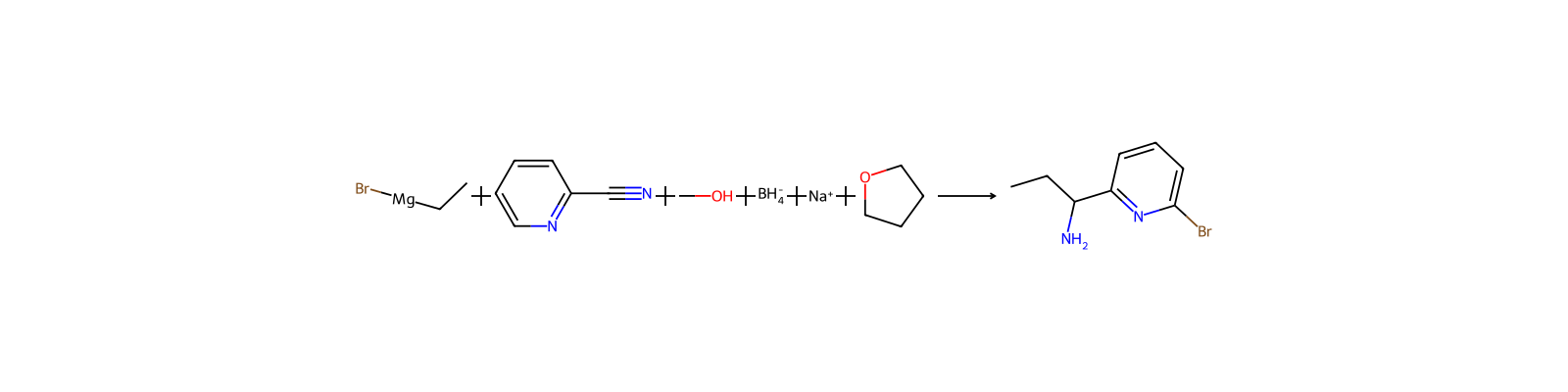
Pyridine-2-carbonitrile

Basic information
- CAS
100-70-9- Standard SMILES
N#Cc1ccccn1- InChIKey
FFNVQNRYTPFDDP-UHFFFAOYSA-N- Molecular formula
- C6H4N2
- Average molar mass
- 104.11 g/mol
- Monoisotopic mass
- 104.03744814
Overview
2-cyanopyridine is a cyanopyridine carrying the cyano group at position 2.
Names & identifiers
- Preferred name
- Pyridine-2-carbonitrile
- IUPAC
- pyridine-2-carbonitrile
- English name
- 2-Cyanopyridine
- Molecular formula
- C6H4N2
- Molecular weight
- 104.11
Names & synonyms
Pyridine-2-carbonitrileRefChem:4833572-CyanopyridinePicolinonitrile100-70-92-PYRIDINECARBONITRILEPyridinecarbonitrilePicolinic acid nitrile2-Pyridyl nitrilecyanopyridine29386-66-12-Pyridinecarboxylic acid, nitrile
Show more names
NSC 59697picolylnitrile2 cyanopyrimideα-Cyanopyridine
MFCD00006218DTXSID9021843WHR1DPG7YSCHEMBL3185861CHEBI:27837NSC-59697DTXCID1018432-pyridylnitrile
Database identifiers
- CAS
100-70-9、29386-66-1- PubChem CID
- 7522
- DTXSID
DTXSID9021843- ChEMBL
CHEMBL3185861- ChEBI
CHEBI:27837- UNII
- WHR1DPG7YS
- EC Number
- 202-880-3
- Nikkaji
- J58.011B
Properties
Computed structural properties
- XLogP
- 0.4
- Topological polar surface area
- 36.7 Ų
- Hydrogen bond donors
- 0
- Hydrogen bond acceptors
- 2
- Rotatable bonds
- 0
- Heavy atoms
- 8
- Formal charge
- 0
- Complexity
- 111
Experimental & physicochemical properties
Chemical ClassesNitrogen Compounds -> Nitriles
SpringerMaterials Properties15N nuclear magnetic resonance spectrum
LogP
log Kow= 0.45
0.5
Density1.0810 @ 25 °C
Color/FormNEEDLES OR PRISMS FROM ETHER
Solubility
Soluble in water, alcohol, ether, and benzene.
Soluble in chloroform; slightly soluble in petroleum ether.
Boiling Point224.5 °C
Melting Point29 °C
Vapor Pressure0.09 [mmHg]
Refractive IndexIndex of refraction: 1.5242 @ 25 °C/D
Physical DescriptionSolid; [HSDB] Low melting solid; mp = 26-28 deg C; [MSDSonline]
Dissociation ConstantspKa = 0.26 (conjugate acid)
Physicochemical properties
- Melting point
- 24 · 24-27 °C(lit.)
- Boiling point
- 212 · 212-215 °C(lit.)
- Density
- 1.081 g/mL · 1.081 g/mL at 25 °C(lit.)
- vapor pressure
- 11.96 Pa · 11.96Pa at 25℃
- refractive index
- 20 · n20/D 1.529(lit.)
- Flash point
- 193 °F · 193 °F
- storage temp.
- Inert atmosphere,Room Temperature
- solubility
- 67 g/l · 67g/l
- form
- Low Melting Crystalline Solid
- pka
- 1 · pK1:-0.26(+1) (25°C)
- color
- White to brown
- PH
- 8.4 · 8.4 (100g/l, H2O)
- Water Solubility
- immiscible
- BRN
- 107710 · 107710
- Henry's Law Constant
- 1.4 · 1.4×102 mol/(m3Pa) at 25℃, HSDB (2015)
- Exposure limits
- 25 mg/m3 · NIOSH: IDLH 25 mg/m3
- Dielectric constant
- 93.77 · 93.769999999999996
- InChI
- 1S/C6H4N2/c7-5-6-3-1-2-4-8-6/h1-4H
- InChIKey
- FFNVQNRYTPFDDP-UHFFFAOYSA-N
- SMILES
- N#Cc1ccccn1
- LogP
- 0.45 at · 0.45 at 25℃
- CAS DataBase Reference
- 100 · 100-70-9(CAS DataBase Reference)
- FDA UNII
- 1 DPG7YS · WHR1DPG7YS
- NIST Chemistry Reference
- 2 · 2-Pyridinecarbonitrile(100-70-9)
- EPA Substance Registry System
- 2 · 2-Pyridinecarbonitrile (100-70-9)
- UNSPSC Code
- 12352100 · 12352100
- NACRES
- 22 · NA.22
- Symbol(GHS)
- 6 · GHS06
- Signal word
- Danger
- Hazard statements
- 302 · H302-H311
- Precautionary statements
- 264 · P264-P270-P280-P301+P312-P302+P352+P312-P361+P364
- PPE
- 95 · dust mask type N95 (US), Eyeshields, Gloves
- Hazard Codes
- Xn
- Risk Statements
- 22 · 22-36/37/38-20/21/22
- Safety Statements
- 26 · 26-24/25
- RIDADR
- 3276 · 3276
- WGK Germany
- 3 · 3
- TSCA
- TSCA listed
- HazardClass
- 6.1 · 6.1
- PackingGroup
- III
- HS Code
- 29333999 · 29333999
- Storage Class
- 6.1 C · 6.1C - Combustible acute toxic Cat.3toxic compounds or compounds which causing chronic effects
- Hazard Classifications
- 3 DermalAcute · Acute Tox. 3 DermalAcute Tox. 4 Oral
- Hazardous Substances Data
- 100 · 100-70-9(Hazardous Substances Data)
- REACH Registrations
- Active
Safety & regulation
Safety information is for reference only and does not replace the supplier’s Safety Data Sheet (SDS), applicable regulations, or professional assessment.
GHS classification
GHS Classification
Warning
H302 (96.5%): Harmful if swallowed [Warning Acute toxicity, oral]
P261, P264, P264+P265, P270, P271, P280, P301+P317, P302+P352, P304+P340, P305+P351+P338, P319, P321, P330, P332+P317, P337+P317, P362+P364, P403+P233, P405, and P501 (click each P-code to see the statement)
Aggregated GHS information provided per 115 reports by companies from 11 notifications to the ECHA C&L Inventory. Each notification may be associated with multiple companies.
Warning
H302: Harmful if swallowed [Warning Acute toxicity, oral]
Hazard information
Regulatory Information
Chemical: 2-Pyridinecarbonitrile
REACH registered substance: Pyridine-2-carbonitrile (EC: 202-880-3)
2-Pyridinecarbonitrile: Does not have an individual approval but may be used under an appropriate group standard
Hazards SummaryEmergency treatment: Pyridine; Pyridine is an irritant that causes CNS depression after ingestion of 1/2 cup or inhalation of 6-12 ppm; It can cause liver and kidney injury; [HSDB] An irritant; [MSDSonline] See NITRILES.
TSCA Requirements
Pursuant to section 8(d) of TSCA, EPA promulgated a model Health and Safety Data Reporting Rule. The section 8(d) model rule requires manufacturers, importers, and processors of listed chemical substances and mixtures to submit to EPA copies and lists of unpublished health and safety studies. 2-Pyridinecarbonitrile is included on this list.
Hazard Classes and Categories
Acute Tox. 4 (96.5%)
Acute toxicity (Oral) - Category 4
Skin, Eye, and Respiratory IrritationsPyridine and its derivatives cause local irritation on contact with the skin, mucous membranes and cornea. /Pyridine and its derivatives/
Safety & protection
Disposal Methods
SRP: At the time of review, criteria for land treatment or burial (sanitary landfill) disposal practices are subject to significant revision. Prior to implementing land disposal of waste residue (including waste sludge), consult with environmental regulatory agencies for guidance on acceptable disposal practices.
Preventive Measures
SRP: The scientific literature for the use of contact lenses in industry is conflicting. The benefit or detrimental effects of wearing contact lenses depend not only upon the substance, but also on factors including the form of the substance, characteristics and duration of the exposure, the uses of other eye protection equipment, and the hygiene of the lenses. However, there may be individual substances whose irritating or corrosive properties are such that the wearing of contact lenses would be harmful to the eye. In those specific cases, contact lenses should not be worn. In any event, the usual eye protection equipment should be worn even when contact lenses are in place.
Personal Protective Equipment (PPE)
Depending on the extent of possible contact, workers should be provided with personal protective equipment. A charcoal gas mask canister respirator has been found to be effective against a 2% pyridine concentration at 30 l/min for 1 hr. Rubber and plastic gloves should not be relied upon to prevent skin contact because pyridine and many of its derivatives penetrate these materials ... . /Pyridine, homologs, and derivatives/
Toxicology
Ecotoxicity Values
LC50 Pimephales promelas (fathead minnow) 726 mg/l/96 hr (confidence limit 673 - 783 mg/l), flow-through bioassay with measured concentrations, 25.0 °C, dissolved oxygen 5.7 mg/l, hardness 45.0 mg/l CaCO3, alkalinity 51.3 mg/l CaCO3, and pH 7.58.
EC50 Pimephales promelas (fathead minnow) 726 mg/l/96 hr (confidence limit 673 - 783 mg/l), flow-through bioassay with measured concentrations, 25.0 °C, dissolved oxygen 5.7 mg/l, hardness 45.0 mg/l CaCO3, alkalinity 51.3 mg/l CaCO3, and pH 7.58. Effect: loss of equilibrium.
Environmental Fate
TERRESTRIAL FATE: Based on a classification scheme(1), an estimated Koc value of 42(SRC), determined from a log Kow of 0.45(2) and a regression-derived equation(3), indicates that 2-pyridinecarbonitrile is expected to have very high mobility in soil(SRC). Volatilization of 2-pyridinecarbonitrile from moist soil surfaces is not expected to be an important fate process(SRC) given an estimated Henry's Law constant of 6.89X10⁻⁸ atm-cu m/mole(SRC), using a fragment constant estimation method(4). 2-Pyridinecarbonitrile is not expected to volatilize from dry soil surfaces(SRC) based upon an estimated vapor pressure of 0.5 mm Hg(SRC), determined from its estimated water solubility, 25,500 mg/l(5), and estimated Henry's law constant(4). In water, the half-life for 2-pyridinecarbonitrile in an anoxic sediment from the Tansui River (Taiwan) was 16.5 hrs based in a pseudo-first-order rate constant of 1.01 per day(6); this suggests that 2-pyridinecarbonitrile may biodegrade in soil under anaerobic conditions(SRC).
AQUATIC FATE: Based on a classification scheme(1), an estimated Koc value of 42(SRC), determined from a log Kow of 0.45(2) and a regression-derived equation(3), indicates that 2-pyridinecarbonitrile is not expected to adsorb to suspended solids and sediment(SRC). Volatilization from water surfaces is not expected(3) based upon an estimated Henry's Law constant of 6.89X10⁻⁸ atm-cu m/mole(SRC), developed using a fragment constant estimation method(4). According to a classification scheme(5), an estimated BCF of 3(SRC), from its log Kow(2) and a regression-derived equation(6), suggests the potential for bioconcentration in aquatic organisms is low(SRC). The half-life for 2-pyridinecarbonitrile in an anoxic sediment from the Tansui River (Taiwan) was 16.5 hrs based in a pseudo-first-order rate constant of 1.01 per day(7), which suggests that 2-pyridinecarbonitrile may biodegrade in the environment under anaerobic conditions(SRC).
ATMOSPHERIC FATE: According to a model of gas/particle partitioning of semivolatile organic compounds in the atmosphere(1), 2-pyridinecarbonitrile, which has an estimated vapor pressure of 0.5 mm Hg at 25 °C(SRC), determined from its estimated water solubility, 25,500 mg/l(2), and its estimated Henry's law constant, 6.89X10⁻⁸ atm/cu m/mole(3), is expected to exist solely as a vapor in the ambient atmosphere(SRC). Vapor-phase 2-pyridinecarbonitrile is degraded in the atmosphere by reaction with photochemically-produced hydroxyl radicals(SRC); the half-life for this reaction in air is estimated to be 246 days(SRC), calculated from its rate constant of 6.53X10⁻¹⁴ cu cm/molecule-sec at 25 °C(SRC) determined using a structure estimation method(4).
Food Survey Values2-Pyridinecarbonitrile was qualitatively detected in the volatile components of meat(1).
Adverse EffectsNeurotoxin - Other CNS neurotoxin
Effluent ConcentrationsPyridinecarbonitrile (isomer not specified) was detected in 1 of 21 industrial wastewater effluents at a concn between 10 and 100 ug/l(1).
Soil Adsorption/Mobility
The Koc of 2-pyridinecarbonitrile is estimated as 42(SRC), using a measured log Kow of 0.45(1) and a regression-derived equation(2). According to a classification scheme(3), this estimated Koc value suggests that 2-pyridinecarbonitrile is expected to have very high mobility in soil(SRC).
Atmospheric Concentrations2-Pyridinecarbonitrile was qualitatively listed as a contaminant of the ambient air at Houston, TX(1).
Artificial Pollution Sources2-Pyridinecarbonitrile's production and use as a chemical intermediate(1) may result in its release to the environment through various waste streams(SRC).
Environmental Biodegradation
ANAEROBIC: The maximum pseudo-first-order rate constant and half-life for 2-pyridinecarbonitrile in an anoxic sediment slurry from the estuary of the Tansui River (Guandu, Taipei) were 1.01 per day and 16.5 hrs, respectively(1). 2-Pyridinecarbonitrile was not transformed in the sterile control sediment slurry(1) which suggests that 2-pyridinecarbonitrile may degrade in the environment, at least under anaerobic conditions(SRC).
Environmental Bioconcentration
An estimated BCF of 3 was calculated for 2-pyridinecarbonitrile(SRC), using a log Kow of 0.45(1) and a regression-derived equation(2). According to a classification scheme(3), this BCF suggests the potential for bioconcentration in aquatic organisms is low(SRC).
Volatilization from Water/Soil
The Henry's Law constant for 2-pyridinecarbonitrile is estimated as 6.89X10⁻⁸ atm-cu m/mole(SRC) using a fragment constant estimation method(1). This Henry's Law constant indicates that 2-pyridinecarbonitrile is expected to be essentially nonvolatile from water surfaces(2). 2-Pyridinecarbonitrile is not expected to volatilize from dry soil surfaces(SRC) based upon an estimated vapor pressure of 0.5 mm Hg(SRC), determined from its estimated water solubility, 25,500 mg/l(3), and its estimated Henry's law constant(1).
Environmental Abiotic Degradation
The rate constant for the vapor-phase reaction of 2-pyridinecarbonitrile with photochemically-produced hydroxyl radicals has been estimated as 6.53X10⁻¹⁴ cu cm/molecule-sec at 25 °C(SRC) using a structure estimation method(1). This corresponds to an atmospheric half-life of about 246 days at an atmospheric concentration of 5X10+5 hydroxyl radicals per cu cm(1). 2-Pyridinecarbonitrile is expected to undergo slow hydrolysis in the environment based upon the slow hydrolysis of other aromatic nitriles, eg benzonitrile(2). 2-Pyridinecarbonitrile will not directly photolyze due to the lack of absorption in the environmental UV spectrum (>290 nm)(SRC).
Regulatory information
TSCA Requirements
Pursuant to section 8(d) of TSCA, EPA promulgated a model Health and Safety Data Reporting Rule. The section 8(d) model rule requires manufacturers, importers, and processors of listed chemical substances and mixtures to submit to EPA copies and lists of unpublished health and safety studies. 2-Pyridinecarbonitrile is included on this list.
Safety data
- PPE
- dust mask type N95 (US), Eyeshields, Gloves
- wgk
- 3
- tsca
- TSCA listed
- ridadr
- 3276
- hs_code
- 29333999
- risk_code
- 22-36/37/38-20/21/22
- Signal word
- Danger
- Symbol(GHS)
- GHS06
- hazard_code
- Xn
- safety_code
- 26-24/25
- hazard_class
- 6.1
- Storage Class
- 6.1C - Combustible acute toxic Cat.3toxic compounds or compounds which causing chronic effects
- packing_group
- III
- Hazard statements
- H302-H311
- REACH Registrations
- Active
- Hazard Classifications
- Acute Tox. 3 DermalAcute Tox. 4 Oral
- Precautionary statements
- P264-P270-P280-P301+P312-P302+P352+P312-P361+P364
- Hazardous Substances Data
- 100-70-9(Hazardous Substances Data)
Chemistry & industry
Uses & manufacturing
Uses
Used as a chemical intermediate for rimiterol hydrobromide (bronchodilator) and other chemicals; [HSDB]
CHEM INT FOR RIMITEROL HYDROBROMIDE, A BRONCHODILATOR
An important chemical intermediate.
Methods of ManufacturingVAPOR PHASE AMMOXIDATION OF 2-METHYLPYRIDINE WITH AMMONIA IN THE PRESENCE OF AIR
General Manufacturing Information2-Pyridinecarbonitrile: ACTIVE
Applications
DescriptionThe cyanopyridines are as follows:2-cyano-: A white to tan liquid or solid with an almondodor. Boiling point=about 213℃; Freezing/Meltingpoint=27℃; Flash point=89℃.3-cyano-: A colorless liquid or gray crystalline solid.Molecular weight=104.12; Boiling point=83-84℃;Freezing/Melting point=47-49℃. Hazard Identification(based on NFPA-704 M Rating System): Health 3,Flammability 3, Reactivity 0. Soluble in water.4-cyano-: A beige solid. Freezing/Melting point=75.8℃
Uses2-Cyanopyridine is a cyano substituted pyridine. 2-Cyanopyridine is a related compound of nicotine and is a component of tobacco smoke condensate.
UsesIt is employed as an important chemical intermediate for rimiterol hydrobromide and used as a bronchodilator. It is also used as intermediates of pharmaceutical and dye and pigment. It acts as a precursor of the respective amidate for protein modification via amidation.
Upstream & downstream products
Upstream raw materials
Downstream products
Additional notes
DefinitionChEBI: A cyanopyridine carrying the cyano group at position 2.
Related reactions
230 records




Compound notes
Loading…