

Basic information
- CAS
2444-28-2- Standard SMILES
CC(C)(C)c1cc(O)cc(C(C)(C)C)c1O- InChIKey
JFGVTUJBHHZRAB-UHFFFAOYSA-N- Molecular formula
- C14H22O2
- Average molar mass
- 222.32 g/mol
- Monoisotopic mass
- 222.16197994
Overview
2,6-Di-tert-butyl-1,4-benzenediol is an alkylbenzene.
Names & identifiers
- Preferred name
- 2,6-Di-tert-butylhydroquinone
- IUPAC
- 2,6-ditert-butylbenzene-1,4-diol
- English name
- 2,6-di-tert-butylhydroquinone
- Molecular formula
- C14H22O2
- Molecular weight
- 222.32
Names & synonyms
2444-28-22,6-Di-tert-butylhydroquinone1,4-Benzenediol, 2,6-bis(1,1-dimethylethyl)-2,6-Di-tert-butyl-1,4-benzenediol2,6-Di-tert-butyl-hydroquinoneRW7RBM89DCHydroquinone, 2,6-di-tert-butyl-EINECS 219-481-52,6-Di-tert-butyl-1,4-dihydroxybenzeneDTXSID50624232,6-DI-TERT-BUTYL-P-HYDROQUINONE2,6-DI-TERT-BUTYLBENZOHYDROQUINONE
Show more names
2,6-DI-TERT-BUTYL-HYDROQUINOL3,5-Di-tert-butyl-1,4-benzenediol
2,6-DI-TERT-BUTYL-1,4-HYDROQUINONE3,5-DI-TERT-BUTYL-1,4-HYDROQUINONERefChem:445273DTXCID5037078219-481-52,6-di-tert-butylbenzene-1,4-diol2,6-ditert-butylbenzene-1,4-diol2,6-di-t-butylhydroquinone
Database identifiers
- CAS
2444-28-2- PubChem CID
- 75550
- DTXSID
DTXSID5062423- ChEMBL
CHEMBL375695- ChEBI
CHEBI:174144- UNII
- RW7RBM89DC
- EC Number
- 219-481-5
- Nikkaji
- J102.803K
Properties
Computed structural properties
- XLogP
- 4.6
- Topological polar surface area
- 40.5 Ų
- Hydrogen bond donors
- 2
- Hydrogen bond acceptors
- 2
- Rotatable bonds
- 2
- Heavy atoms
- 16
- Formal charge
- 0
- Complexity
- 210
Experimental & physicochemical properties
Melting Point117 - 118 °C
Physical DescriptionSolid
Physicochemical properties
- Melting point
- 101.5 · 101.5-102.5 °C
- Boiling point
- 313.3 · 313.3±37.0 °C(Predicted)
- Density
- 1.012 · 1.012±0.06 g/cm3(Predicted)
- pka
- 10.95 · 10.95±0.23(Predicted)
- FDA UNII
- 7 RBM89DC · RW7RBM89DC
- EPA Substance Registry System
- 1 · 1,4-Benzenediol, 2,6-bis(1,1-dimethylethyl)- (2444-28-2)
- Symbol(GHS)
- 7 · GHS07,GHS09
- Signal word
- Warning
- Hazard statements
- 411 · H411-H335-H319-H315-H302
- Precautionary statements
- 264 · P264-P280-P305+P351+P338-P337+P313P-P264-P280-P302+P352-P321-P332+P313-P362-P264-P270-P301+P312-P330-P501
- TSCA
- TSCA listed
Safety & regulation
GHS classification
GHS Classification
Warning
H302 (100%): Harmful if swallowed [Warning Acute toxicity, oral]
P261, P264, P264+P265, P270, P271, P273, P280, P301+P317, P302+P352, P304+P340, P305+P351+P338, P319, P321, P330, P332+P317, P337+P317, P362+P364, P391, P403+P233, P405, and P501 (click each P-code to see the statement)
Aggregated GHS information provided per 2 reports by companies from 2 notifications to the ECHA C&L Inventory. Each notification may be associated with multiple companies.
Hazard information
Hazard Classes and CategoriesAcute Tox. 4 (100%)
Safety data
- tsca
- TSCA listed
- Signal word
- Warning
- Symbol(GHS)
- GHS07,GHS09
- Hazard statements
- H411-H335-H319-H315-H302
- Precautionary statements
- P264-P280-P305+P351+P338-P337+P313P-P264-P280-P302+P352-P321-P332+P313-P362-P264-P270-P301+P312-P330-P501
Chemistry & industry
Pharmacology
Cellular LocationsMembrane
Uses & manufacturing
General Manufacturing Information1,4-Benzenediol, 2,6-bis(1,1-dimethylethyl)-: INACTIVE
Applications
Uses2,6-Bis(1,1-dimethylethyl)-1,4-benzenediol can be used in the identification of urinary tract infection-causing bacteria and their antibiotic susceptibility. It is also useful in studies of sarco-endoplasmic reticulum ATPase inhibition.
Upstream & downstream products
Upstream raw materials
Downstream products
Suppliers22 total
南京先景医药科技有限公司025-52760886 13073455575 · [email protected]
上海麦克林生化科技股份有限公司021-50706066 15221275939 · [email protected]
杭州品高化工有限公司0571-87658025 · [email protected]
郑州汇聚化工有限公司13393710386 · [email protected]
Xiamen Work-For-World Medicine Co.,Ltd.15921822462 · [email protected]
Sinco Pharmachem (ShenZhen) R&D Co., Ltd.+86-18603013401 · [email protected]
杭州云易国科生物科技有限公司18457506494 · [email protected]
深圳振强药物研发有限公司0755-66853366 13670046396 · [email protected]
金瓯生物医药(南京)有限公司13000000000 · [email protected]
深圳菲斯生物科技有限公司0755-83725350 13380397412 · [email protected]
南通博苏医药科技有限公司0513-51005092; 15962844273 · [email protected]
厦门志信化学有限公司+86-5922680277 +86-13806087780 · [email protected]
南通全益生物科技有限公司0513-66337626 18051384581 · [email protected]
菏泽艾鼎药业有限公司17661365138 · [email protected]
上海立崎生物医学研究中心18014399201 · [email protected]
上海腾骞生物科技有限公司021-50895067 18616507272;13681616114;15020344067 · [email protected]
ATK CHEMICAL COMPANY LIMITED+undefined-21-51877795 · [email protected]
武汉爱默尔特科技有限公司027-888-4366503 13986279625 · [email protected]
陕西缔都医药化工有限公司029-029-029-81148696 18161915376 · [email protected]
济南光尘医药科技有限公司18563726319 · [email protected]
HANGZHOU LEAP CHEM CO., LTD.+86-571-87711850 +8619957148339 · [email protected]
厦门沃克沃德医药科技有限公司15921822462 15921822462 · [email protected]
Additional notes
DefinitionChEBI: 2,6-Di-tert-butyl-1,4-benzenediol is an alkylbenzene.
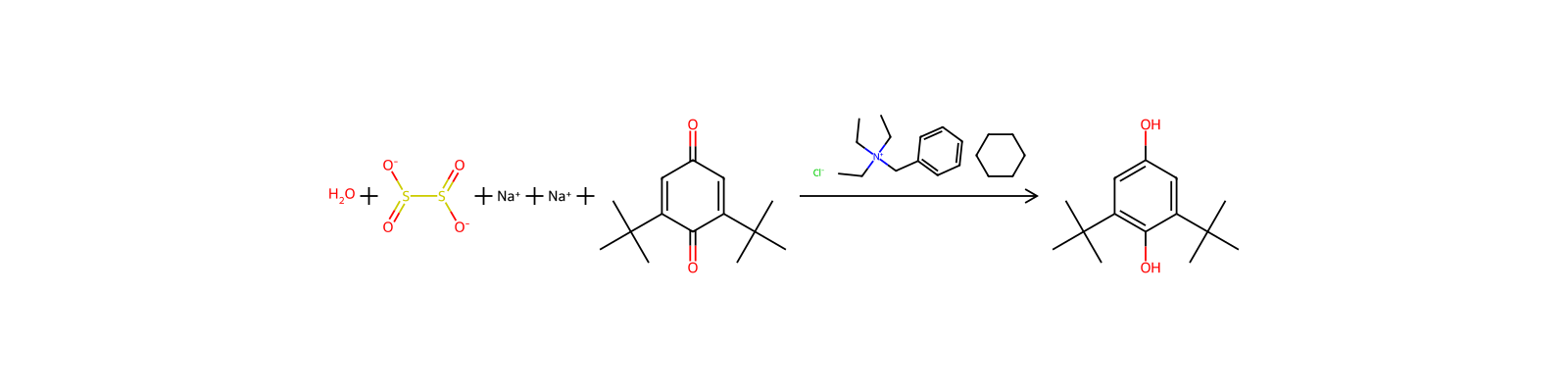
Related reactions
20 records



Compound notes
Loading…