
Basic information
- CAS
2493-02-9- Standard SMILES
O=C=Nc1ccc(Br)cc1- InChIKey
CZQIJQFTRGDODI-UHFFFAOYSA-N- Molecular formula
- C7H4BrNO
- Average molar mass
- 198.02 g/mol
- Monoisotopic mass
- 196.94763
Names & identifiers
- Preferred name
- 4-Bromophenyl isocyanate
- IUPAC
- 1-bromo-4-isocyanatobenzene
- English name
- 4-BROMOPHENYL ISOCYANATE
- Molecular formula
- C7H4BrNO
- Molecular weight
- 198.02
Names & synonyms
4-Bromophenyl isocyanate2493-02-9p-Bromophenyl isocyanate4-Bromophenylisocyanate4-bromophenylcarbimideIsocyanic acid, p-bromophenyl esterMGR77M31ZWP-BROMOPHENYLCARBONIMIDENSC 8037NSC-8037EINECS 219-662-9UNII-MGR77M31ZW
Show more names
p-BromocarbanilBroMo-4-isocyanatobenzene4-Bromophenylisocyanate,99%1-bromo-4-isocyanato-benzen
DTXSID1062465Isocyanic acid p-bromophenyl esterP-BROMOPHENYL ISOCYANATE [MI]RefChem:98215DTXCID3037177CZQIJQFTRGDODI-UHFFFAOYSA-NIsocyanic acid, p-bromophenyl ester (6CI,7CI,8CI)1-Bromo-4-isocyanatobenzene
Database identifiers
- CAS
2493-02-9- PubChem CID
- 75609
- DTXSID
DTXSID1062465- UNII
- MGR77M31ZW
- EC Number
- 219-662-9
- Nikkaji
- J7.593K
Properties
Computed structural properties
- XLogP
- 3.4
- Topological polar surface area
- 29.4 Ų
- Hydrogen bond donors
- 0
- Hydrogen bond acceptors
- 2
- Rotatable bonds
- 1
- Heavy atoms
- 10
- Formal charge
- 0
- Complexity
- 146
Physicochemical properties
- Melting point
- 42 · 42-44 °C(lit.)
- Boiling point
- 158 °C14 · 158 °C14 mm Hg(lit.)
- Density
- 1.6077 · 1.6077 (rough estimate)
- refractive index
- 1.55 · 1.5500 (estimate)
- Flash point
- 229 °F · 229 °F
- storage temp.
- Refrigerator (+4°C)
- solubility
- diethyl ether: very slightly soluble
- form
- Crystalline Solid
- color
- White to light beige
- Water Solubility
- Sparingly soluble in water (0.40 g/L at 25°C).
- Sensitive
- Moisture Sensitive
- Merck
- 14 · 14,1430
- BRN
- 508203 · 508203
- InChI
- 1S/C7H4BrNO/c8-6-1-3-7(4-2-6)9-5-10/h1-4H
- InChIKey
- CZQIJQFTRGDODI-UHFFFAOYSA-N
- SMILES
- Brc1ccc(cc1)N=C=O
- CAS DataBase Reference
- 2493 · 2493-02-9(CAS DataBase Reference)
- EWG's Food Scores
- 1 · 1
- FDA UNII
- 77 M31ZW · MGR77M31ZW
- EPA Substance Registry System
- p-Bromophenyl isocyanate (2493-02-9)
- UNSPSC Code
- 12352100 · 12352100
- NACRES
- 22 · NA.22
- Symbol(GHS)
- 6 · GHS06
- Signal word
- Danger
- Hazard statements
- 331 · H331-H315-H319-H335
- Precautionary statements
- 501 · P501-P261-P271-P264-P280-P302+P352-P337+P313-P305+P351+P338-P362+P364-P332+P313-P304+P340+P311-P403+P233-P405
- target organs
- Respiratory system
- PPE
- 95 · dust mask type N95 (US), Eyeshields, Gloves
- Hazard Codes
- Xn,Xi
- Risk Statements
- 20 · 20/21/22-36/37/38
- Safety Statements
- 7 · 7-26-27-36/37/39
- RIDADR
- 2206 · 2206
- WGK Germany
- 3 · 3
- RTECS
- 9035500 · CY9035500
- TSCA
- TSCA listed
- HazardClass
- 6.1 · 6.1
- PackingGroup
- III
- HS Code
- 29291090 · 29291090
- Storage Class
- 11 · 11 - Combustible Solids
- Hazard Classifications
- 4 DermalAcute · Acute Tox. 4 DermalAcute Tox. 4 InhalationEye Irrit. 2Resp. Sens. 1Skin Irrit. 2Skin Sens. 1STOT SE 3
- Limited Quantities
- 5 kg · 5.0 kg (11 lbs) (solid)
- Excepted Quantities
- Max Inner Pack (30g or 30ml) and Max Outer Pack (1Kg or 1L)
Safety & regulation
GHS classification
GHS Classification
Danger
H312 (89.4%): Harmful in contact with skin [Warning Acute toxicity, dermal];H315 (100%): Causes skin irritation [Warning Skin corrosion/irritation];H319 (100%): Causes serious eye irritation [Warning Serious eye damage/eye irritation];H332 (89.4%): Harmful if inhaled [Warning Acute toxicity, inhalation];H334 (14.9%): May cause allergy or asthma symptoms or breathing difficulties if inhaled [Danger Sensitization, respiratory];H335 (100%): May cause respiratory irritation [Warning Specific target organ toxicity, single exposure; Respiratory tract irritation]
P233, P260, P261, P264, P264+P265, P271, P280, P284, P302+P352, P304+P340, P305+P351+P338, P317, P319, P321, P332+P317, P337+P317, P342+P316, P362+P364, P403, P403+P233, P405, and P501 (click each P-code to see the statement)
Aggregated GHS information provided per 47 reports by companies from 6 notifications to the ECHA C&L Inventory. Each notification may be associated with multiple companies.;Information may vary between notifications depending on impurities, additives, and other factors. The percentage value in parenthesis indicates the notified classification ratio from companies that provide hazard codes. Only hazard codes with percentage values above 10% are shown. For more detailed information, please visit ECHA C&L website.
Hazard information
Hazard Classes and CategoriesAcute Tox. 4 (89.4%);Skin Irrit. 2 (100%);Eye Irrit. 2 (100%);Acute Tox. 4 (89.4%);Resp. Sens. 1 (14.9%);STOT SE 3 (100%)
Safety data
- PPE
- dust mask type N95 (US), Eyeshields, Gloves
- wgk
- 3
- tsca
- TSCA listed
- rtecs
- CY9035500
- ridadr
- 2206
- hs_code
- 29291090
- risk_code
- 20/21/22-36/37/38
- Signal word
- Danger
- Symbol(GHS)
- GHS06
- hazard_code
- Xn,Xi
- safety_code
- 7-26-27-36/37/39
- hazard_class
- 6.1
- Storage Class
- 11 - Combustible Solids
- packing_group
- III
- target organs
- Respiratory system
- Hazard statements
- H331-H315-H319-H335
- Limited Quantities
- 5.0 kg (11 lbs) (solid)
- Excepted Quantities
- Max Inner Pack (30g or 30ml) and Max Outer Pack (1Kg or 1L)
- Hazard Classifications
- Acute Tox. 4 DermalAcute Tox. 4 InhalationEye Irrit. 2Resp. Sens. 1Skin Irrit. 2Skin Sens. 1STOT SE 3
- Precautionary statements
- P501-P261-P271-P264-P280-P302+P352-P337+P313-P305+P351+P338-P362+P364-P332+P313-P304+P340+P311-P403+P233-P405
Chemistry & industry
Uses & manufacturing
General Manufacturing InformationBenzene, 1-bromo-4-isocyanato-: ACTIVE
Applications
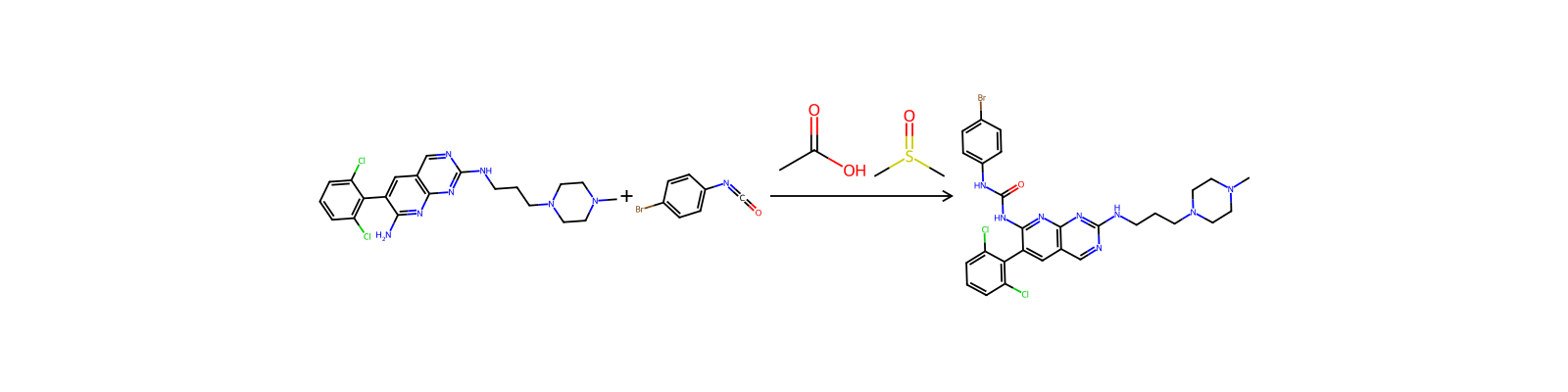
Uses4-Bromophenyl isocyanate is used in the synthesis of mixed bisamide derivative and monoamide product.
Uses4-Bromophenyl isocyanate was used in the synthesis of mixed bisamide derivative and monoamide product.
Usespreparation of bromophenylurea and urethan derivatives.
Upstream & downstream products
Downstream products
Suppliers63 total
梯希爱(上海)化成工业发展有限公司021-67121386 · [email protected]
上海阿拉丁生化科技股份有限公司400-6206333 13167063860 · [email protected]
上海麦克林生化科技股份有限公司021-50706066 15221275939 · [email protected]
温州共赢化学有限公司+86-0086-577-64498589 +86-15355981851 · [email protected]
爱斯特(成都)生物制药股份有限公司+86-28-85122536 85324413 · [email protected]
上海仲因实业有限公司2537653158 16621191650 · [email protected]
上海迈瑞尔生化科技有限公司4006356688 18621169109 · [email protected]
上海辅欣医药科技有限公司+86-021-021-50872116 · [email protected]
阿法埃莎(中国)化学有限公司400-6106006 · [email protected]
安耐吉化学&3A(安徽泽升科技股份有限公司)400-0056266 · [email protected]
上海瀚鸿科技股份有限公司021-54306202 13764082696 · [email protected]
山东西亚化学有限公司13355009207 13355009207 · [email protected]
玛雅试剂+86 (573) 82222445 (0)18006601000 452520369 · [email protected]
天津希恩思生化科技有限公司400 638 7771 · [email protected]
赛默飞世尔科技(中国)有限公司800-810-5118 · [email protected]
江苏艾康生物医药研发有限公司025-66113011 13913916777 · [email protected]
TCI AMERICA800-4238616 · [email protected]
TOKYO CHEMICAL INDUSTRY CO., LTD.03-36680489 · [email protected]
TCI Europe320-37350700 · [email protected]
北京京土恒盛化工科技有限公司00-13911456598 13911456598 · [email protected]
郑州安步防护用具有限公司+86-0371-88006763; +86-15988602810 · [email protected]
上海湄水化工科技有限公司021-60549325 18616193163
上海将来实业股份有限公司400-0066400 13621662912 · [email protected]
成都零六生物科技有限公司400-1166-196 13458535857 · [email protected]
雷丁试剂0510-85629785 18013409632 · [email protected]
上海鑫圭生物科技有限公司15121041756 · [email protected]
天津安浩生物科技有限公司[email protected]
杭州杰恒化工有限公司0571-87396432 · [email protected]
上海纳谦化学科技有限公司13598610367 13598610367 · [email protected]
上海拓目化工有限公司13391076197 · [email protected]
陕西缔都医药化工有限公司029-81024372 17792795018 · [email protected]
Changzhou Fullone Chemical Co., Ltd.+86-13328197671 +86-13861172460 · [email protected]
Sigma-Aldrich西格玛奥德里奇(上海)贸易有限公司021-61415566 800-8193336 · [email protected]
九鼎化学(上海)科技有限公司4009209199 · [email protected]
广东翁江化学试剂有限公司0751-2886766 13927870850 · [email protected]
嘉兴市德亿化工有限公司0573-85866609 13325730825 · [email protected]
山东利腾生物科技有限公司15020019777 18663721413 · [email protected]
sgtlifesciences pvt ltd+91-8790379245 · [email protected]
上海西陇生化科技有限公司021-52907766-8042
上海源叶生物科技有限公司13636370518 · [email protected]
上海策嵘生物科技有限公司(定制合成实验室)13062833949 · [email protected]
山东小野化学股份有限公司0539-6362799 20)
贝弗斯曼(武汉)生物科技有限公司0711-5919292 15307133740 · [email protected]
上海百舜生物科技有限公司021-37581181 · [email protected]
厦门盈融达化工有限公司+86-0592-6210733 · [email protected]
上海吉至生化科技有限公司021-4009004166/18616739031 18616739031 · [email protected]
career henan chemical co+86-0371-86658258 · [email protected]
北京迈瑞达科技有限公司010-82387566 · [email protected]
常州安赛普化工有限公司0519-86305871 13961213398 · [email protected]
梯希爱(上海)化成工业发展有限公司021-67121386, 800-988-0390 · [email protected]
Related reactions
94 records


Compound notes
Loading…