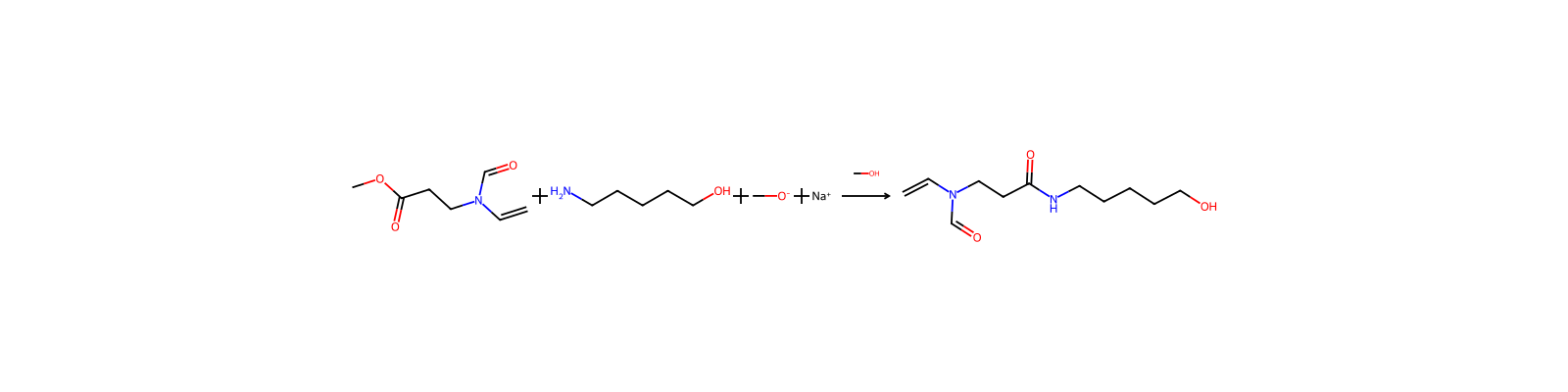
HRID 2385As reactant

2508-29-4NCCCCCOLQGKDMHENBFVRC-UHFFFAOYSA-N2508-29-4DTXSID10179771CHEMBL333552Safety information is for reference only and does not replace the supplier’s Safety Data Sheet (SDS), applicable regulations, or professional assessment.
This chemical does not meet GHS hazard criteria for 0.7% (1 of 152) of reports.
Danger
H302 (98.7%): Harmful if swallowed [Warning Acute toxicity, oral]
P260, P264, P264+P265, P270, P280, P301+P317, P301+P330+P331, P302+P361+P354, P304+P340, P305+P354+P338, P316, P317, P321, P330, P363, P405, and P501 (click each P-code to see the statement)
Aggregated GHS information provided per 152 reports by companies from 5 notifications to the ECHA C&L Inventory. Each notification may be associated with multiple companies.
Description5-Amino-1-pentanol is a linker containing a hydroxyl group and amine group. The hydroxyl group enables further derivatization or replacement with other reactive functional groups. The amine group is reactive with carboxylic acids, activated NHS esters, carbonyls (ketone, aldehyde) etc.
Uses5-Amino-1-pentanol is an aliphatic amino alcohol with potential plasma lipid-lowering properties. 5-Amino-1-pentanol and other amino alcohols are used as emulsifying agents in dry-cleaning soaps, wax removers, cosmetics, paints and insecticides.
Uses5-Amino-1-pentanol has been used in the synthesis of S-glycosyl amino-acid building blocks. It has been used as starting reagent in the synthesis of aminofunctionalized 4-chloro-2,2′:6′,2′′-terpyridine.
General Description5-Amino-1-pentanol undergoes facile intramolecular cyclocondensation with piperidine and methyl or ethyl piperidine in the presence of methanol or ethanol over zeolite catalyst.


