HomeMCPWorkbenchSkills
HomeWorkbenchNotificationsMe
llms.txt · MCP GuidePrivacy Policy · Terms of Service · Supportv1.8.0
  1. Home
  2. /Compound

N-Phenyl-p-phenylenediamine

HCID 7564
New noteNew reactionRequest quotes
Print preview

Completing data — refresh the page later to see the latest

Basic informationOverviewNames & identifiersPropertiesSafety & regulationChemistry & industryRelated reactionsCompound notes
Substructure searchFind similar structures

Basic information

CAS
101-54-2
Standard SMILES
Nc1ccc(Nc2ccccc2)cc1
InChIKey
ATGUVEKSASEFFO-UHFFFAOYSA-N
Molecular formula
C12H12N2
Average molar mass
184.24 g/mol
Monoisotopic mass
184.10004838

Overview

N-phenyl-p-phenylenediamine appears as odorless purple-black solid or flake or dark purple chips. (NTP, 1992)

Names & identifiers

Preferred name
N-Phenyl-p-phenylenediamine
IUPAC
4-N-phenylbenzene-1,4-diamine
English name
4-Aminodiphenylamine
Molecular formula
C12H12N2
Molecular weight
184.24

Names & synonyms

4-Aminodiphenylamine101-54-2N-Phenyl-p-phenylenediamineP-AMINODIPHENYLAMINEp-AnilinoanilineVariamine Blue RTAzosalt RLuxan Black RN-Phenyl-1,4-benzenediaminep-SemidineN-Phenyl-1,4-phenylenediamineDiphenyl Black
Show more names
4-ADPAN1-phenylbenzene-1,4-diamine4-N-phenylbenzene-1,4-diamineVariamine Blue RT BaseUBOB
N-4'-BianilineN-Phenyl-p-aminoanilineSemidinp-(Phenylamino)anilineAcna Black DF BasePeltol BRFast Blue R SaltPeltol BR II

Database identifiers

CAS
101-54-2
PubChem CID
7564
DTXSID
DTXSID7025895
ChEMBL
CHEMBL572203
ChEBI
CHEBI:59038
UNII
007X4XXS71
EC Number
202-951-9
Nikkaji
J4.017G

Properties

Computed structural propertiesFilling in

XLogP
2.5
Topological polar surface area
38.1 Ų
Hydrogen bond donors
2
Hydrogen bond acceptors
2
Rotatable bonds
2
Heavy atoms
14
Formal charge
0
Complexity
156

Experimental & physicochemical properties

PolymersNitrogen Compounds -> Amines, Polyaromatic
Cosmetics · 3 items

Cosmetics ingredient -> Colorant

Cosmetic ingredients (N-Phenyl-p-Phenylenediamine) -> CIR (Cosmetic Ingredient Review)

Hair dyeing

LogP2.4 (calculated)
Density · 3 items

1.15 (NTP, 1992) - Denser than water; will sink

1.1 at 100 °C

1.09 g/cm³

Viscosity1.76X10-2 Pa.s at 25 °C
Color/Form · 3 items

Needles (alcohol)

Purple powder

Purple needles

Solubility · 6 items

less than 1 mg/mL at 66 °F (NTP, 1992)

Slightly soluble in water, chloroform; very soluble in ethanol; soluble in diethyl ether, ligroin

Soluble in alcohol and acetone

Insoluble in water; soluble in oxygenated solvents

Solubility: 500 mg/L at 20 °C and pH 8.9

Solubility in water, g/100ml at 20 °C: 0.05

Safety & regulation

Safety information is for reference only and does not replace the supplier’s Safety Data Sheet (SDS), applicable regulations, or professional assessment.

GHS classification

GHS Classification · 6 items

Warning

H302 (97.2%): Harmful if swallowed [Warning Acute toxicity, oral]

P261, P264, P264+P265, P270, P272, P273, P280, P301+P317, P302+P352, P305+P351+P338, P321, P330, P333+P317, P337+P317, P362+P364, P391, and P501 (click each P-code to see the statement)

Aggregated GHS information provided per 680 reports by companies from 21 notifications to the ECHA C&L Inventory. Each notification may be associated with multiple companies.

Warning

H302: Harmful if swallowed [Warning Acute toxicity, oral]

Hazard information

Regulatory Information · 4 items

Chemical: 1,4-Benzenediamine, N-phenyl-

1,4-Benzenediamine, N1-phenyl- is listed on the EPA's Chemical Data Reporting (CDR) system. Manufacturers and importers of 1,4-Benzenediamine, N1-phenyl- are required to report information about their production and use of this chemical to the EPA under the Toxic Substances Control Act (TSCA). (40 eCFR Part 711)

Status: Active Update: 10-05-2023 https://echa.europa.eu/registration-dossier/-/registered-dossier/14731

4-Aminodiphenylamine: Does not have an individual approval but may be used under an appropriate group standard

Other Safety InformationIMAP assessments - 1,4-Benzenediamine, N-phenyl and a salt: Human health tier II assessment
DOT LabelPoison
Fire Hazards · 2 items

This chemical is combustible. (NTP, 1992)

Combustible.

Health Hazards · 1 item

SYMPTOMS: Symptoms of exposure to this compound may include irritation of the eyes and upper respiratory tract. It may also cause irritation of the skin and mucous membranes. Other symptoms include headache, dizziness and methemoglobinemia with symptoms of cyanosis including bluish discoloration of the lips, earlobes and fingernails. Dermatitis has been reported.

Chemistry & industry

Pharmacology

Absorption, Distribution and Excretion · 3 items

Aminodiphenylamine binds to the proteins of the intestinal mucosa.

Skin segments (1 sq cm) of male albino rats without underlying connective tissue and subcutaneous fat were used for uptake and efflux studies. 4-ADPA binds to skin showing saturation kinetics with Km= 2.54 X10 (-4) and Vmax= 4.76 micromol/g skin. Uptake dependent upon area of skin, concentration, exposure time, temperature and pH of the vehicle. No effects of bioinhibitors, suggesting a non-energy dependent process. Skin bound to 4-ADPA was effluxed through serum proteins.

P-aminodiphenylamine (p-ADPA) binds liver proteins. Aspartic and glutamic acids are presumably the responsible units in the protein chain involved in this binding with p-ADPA. p-ADPA is changed into a quinone structure after atmospheric oxidation in Krebs-ringer-bicarbonate buffer, pH 7.4, in the presence of trace metal ions. This oxidized form of p-ADPA binds with aspartic acid at pH 7.4 and temp 40 deg in 2 hr.

Uses & manufacturing

Uses · 6 items

CIR ingredient: N-Phenyl-p-Phenylenediamine

Used to produce dyes, pharmaceuticals, and photographic chemicals; [HSDB] Formerly used as a hair dye; [Kanerva, p. 1749]

Dressing Hair [Category: Other]

Dye intermediate, pharmaceuticals, photographic chemicals.

Azoic dye, diazo component

Oxidation dye color in hair dyes

U.S. Production · 3 items

2023: 10,000,000 - <50,000,000 lb

1,4-Benzenediamine, N-phenyl- is listed as a High Production Volume (HPV) chemical (65FR81686). Chemicals listed as HPV were produced in or imported into the U.S. in >1 million pounds in 1990 and/or 1994. The HPV list is based on the 1990 Inventory Update Rule. (IUR) (40 CFR part 710 subpart B; 51FR21438).

Production volumes for non-confidential chemicals reported under the Inventory Update Rule. [Table#3904]

Industry UsesIntermediate
Methods of Manufacturing

Related reactions

76 records
New reaction record
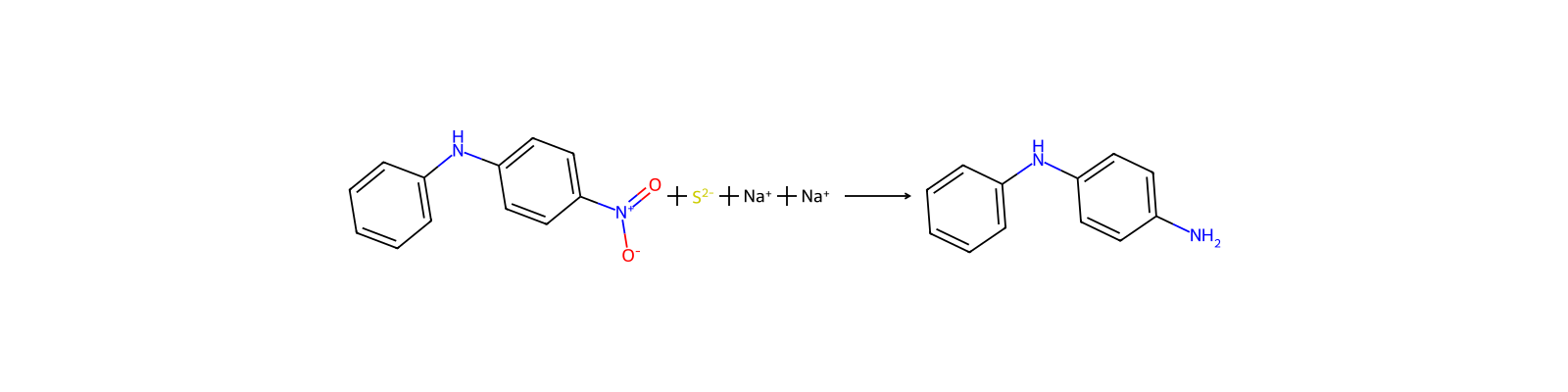
HRID 3980 reaction equation
HRID 3980As productuspto-grants-1988_02
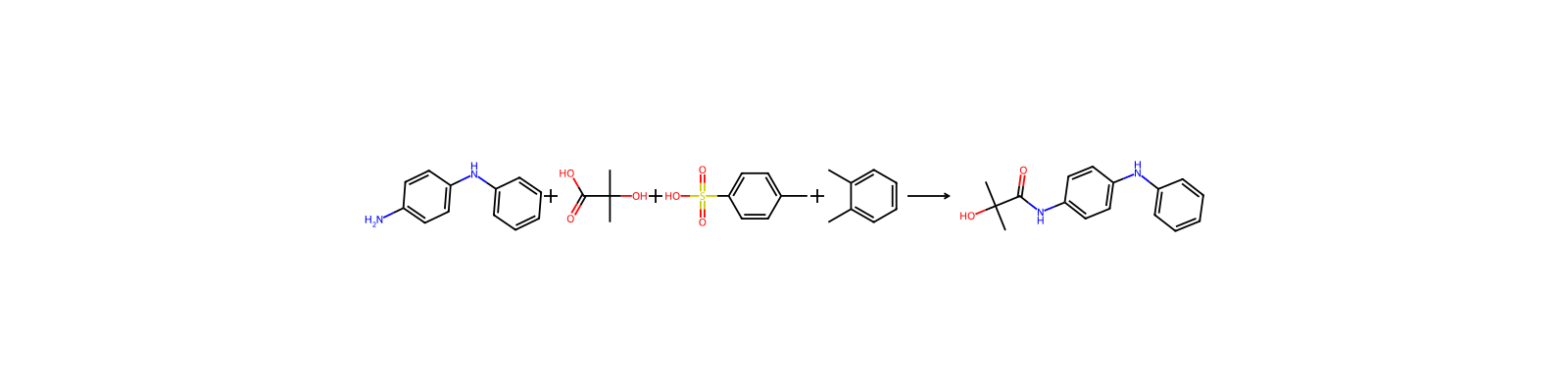
HRID 6192 reaction equation
HRID 6192As reactantuspto-grants-1993_09
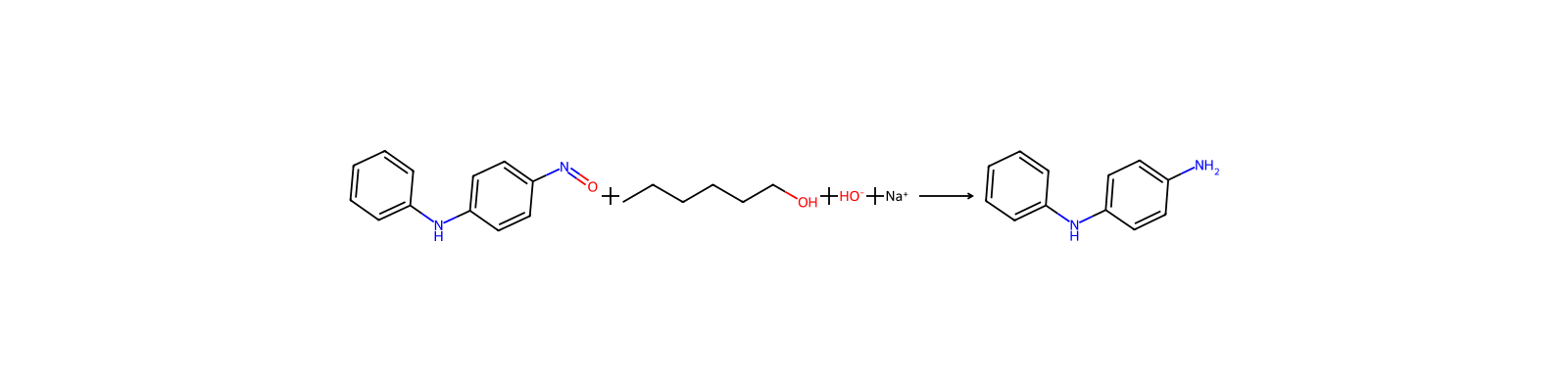
HRID 7262 reaction equation
HRID 7262As productuspto-grants-2006_08
HRID 7264 reaction equation
HRID 7264As productuspto-grants-2006_08
HRID 66258 reaction equation
HRID 66258As reactantuspto-grants-1978_12
HRID 116385 reaction equation
HRID 116385As reactantTraining data from https://doi.org/10.1039/C8SC04228D (2/10)
HRID 121474 reaction equation
HRID 121474As productTraining data from https://doi.org/10.1039/C8SC04228D (2/10)
HRID 128096 reaction equation
HRID 128096As reactantuspto-grants-1981_03
Page 1 of 10

Compound notes

Loading…

On this pageBasic informationOverviewNames & identifiersPropertiesSafety & regulationChemistry & industryRelated reactionsCompound notes
More actions
New noteNew reactionRequest quotes
Flash Point · 3 items

380 °F (NTP, 1992)

380 °F'

193 °C

Boiling Point · 3 items

669 °F at 760 mmHg (NTP, 1992)

354 °C

354 °C

DecompositionWhen heated to decompostion it emits toxic fumes of NOx.
Melting Point · 3 items

163 to 167 °F (NTP, 1992)

75 °C

75 °C

Vapor Pressure · 3 items

0.0000121 [mmHg]

1.21X10⁻⁵ mm Hg at 25 °C (extrapolated)

Vapor pressure, Pa at 20 °C: 0.000076

Physicochemical properties

Melting point
69 °C · 69 °C
Boiling point
354 °C · 354 °C
Density
1.09 · 1.09
vapor pressure
1 hPa · 1 hPa
refractive index
1.6266 · 1.6266 (estimate)
Flash point
193 °C · 193°C
storage temp.
30 °C · Store below +30°C.
solubility
10 mg/mL, · ethanol: soluble10mg/mL, clear, very dark red (Violet to brown to black solution)
pka
5.2 · 5.20±0.10(Predicted)
form
Liquid
Colour Index
37240 · 37240
color
Clear
PH
8.9 · 8.9 (0.5g/l, H2O, 20℃)
Water Solubility
20 °C · Soluble in water at 20°C 0.6g/L. Soluble in (10 mg/mL) ethanol.
BRN
908935 · 908935
Henry's Law Constant
1.5 · 1.5×103 mol/(m3Pa) at 25℃, Yaws (2003)
Stability
Stable. Combustible. Incompatible with strong oxidizing agents, strong acids, plastics.
Cosmetics Ingredients Functions
HAIR DYEING
Cosmetic Ingredient Review (CIR)
4 · 4-Aminodiphenylamine (101-54-2)
InChI
1S/C12H12N2/c13-10-6-8-12(9-7-10)14-11-4-2-1-3-5-11/h1-9,14H,13H2
InChIKey
ATGUVEKSASEFFO-UHFFFAOYSA-N
SMILES
Nc1ccc(Nc2ccccc2)cc1
LogP
1.82 at · 1.82 at 20℃ and pH7
Dissociation constant
5.45 · 5.45-5.47 at 20℃
Toxicology and Carcinogenesis
Bioassay of N-Phenyl-p-phenylenediamine for Possible Carcinogenicity (CASRN 101-54-2)
CAS DataBase Reference
101 · 101-54-2(CAS DataBase Reference)
EWG's Food Scores
3 · 3-7
FDA UNII
7 X4XXS71 · 007X4XXS71
NIST Chemistry Reference
1 · 1,4-Benzenediamine, N-phenyl-(101-54-2)
EPA Substance Registry System
p-Aminodiphenylamine (101-54-2)
UNSPSC Code
12352116 · 12352116
NACRES
22 · NA.22
Symbol(GHS)
7 · GHS07,GHS09
Signal word
Warning
Hazard statements
302 · H302-H315-H319-H317-H410
Precautionary statements
501 · P501-P261-P273-P272-P270-P264-P280-P302+P352-P391-P337+P313-P305+P351+P338-P362+P364-P333+P313-P301+P312+P330
Hazard Codes
Xn,Xi,N
Risk Statements
22 · 22-36-43-42/43-36/37/38-20/22-50/53
Safety Statements
26 · 26-36-45-36/37/39-61-60-36/37
RIDADR
3077 · UN3077
WGK Germany
3 · 3
RTECS
3150000 · ST3150000
F
8 · 8
Autoignition Temperature
500 °C · >500 °C
Hazard Note
Irritant
TSCA
TSCA listed
HazardClass
9 · 9
PackingGroup
III
HS Code
29215990 · 29215990
Storage Class
11 · 11 - Combustible Solids
Hazard Classifications
4 OralAquatic · Acute Tox. 4 OralAquatic Chronic 2Eye Irrit. 2Skin Sens. 1
Hazardous Substances Data
101 · 101-54-2(Hazardous Substances Data)
Toxicity
50 orally · LD50 orally in Rabbit: 464 mg/kg LD50 dermal Rabbit > 5000 mg/kg
REACH Registrations
Active
Limited Quantities
5 L · 5.0 L (1.3 gallons) (liquid) or 5.0 kg (11 lbs) (solid)
Excepted Quantities
Max Inner Pack (30g or 30ml) and Max Outer Pack (1Kg or 1L)
Hazards Summary · 1 item

Potential adverse effects form using this hair dye include dermatitis, eye injury, and liver damage. [HSDB] When it was used in hair dyes, sensitization was relatively low in hairdressers; [Kanerva, p. 1749] A skin and eye irritant; May cause skin sensitization; Can induce methemoglobinemia if ingested; [ICSC] Skin designation; Danger of skin sensitization; 3B carcinogen; [MAK]

Reactive GroupAmines, Aromatic
Special Reports · 2 items

Bioassay of p-Aminodiphenylamine for Possible Carcinogenicity (1978) Technical Rpt Series No. 82 DHEW Pub No. (NIH) 78-1332, U.S. Department of Health Education and Welfare, National Cancer Institute, Bethesda, MD 20014[Available from, as of April 4, 2003: http://ntp.niehs.nih.gov/ntp/htdocs/LT_rpts/tr082.pdf]

European Commission, ESIS; IUCLID Dataset, p-aminodiphenylamine (101-54-2) (2000 CD-ROM edition).[Available from, as of March 1, 2009: http://esis.jrc.ec.europa.eu/]

Reactivity ProfileN-PHENYL-P-PHENYLENEDIAMINE is incompatible with strong oxidizers. It is also incompatible with strong acids. It may react with plastics. (NTP, 1992)
Chemical DangersOn combustion, forms toxic fumes of carbon monoxide and nitrogen oxides. Reacts with strong acids and strong oxidants.
Air and Water ReactionsInsoluble in water.
Hazard Classes and Categories · 3 items

Acute Tox. 4 (97.2%)

Acute toxicity - category 4

Acute toxicity (Oral) - Category 4

Safety & protection

Fire Fighting · 2 items

Fires involving this material can be controlled with a dry chemical, carbon dioxide or Halon extinguisher. A water spray may also be used. (NTP, 1992)

Use dry powder, carbon dioxide.

First Aid Measures · 4 items

Fresh air, rest. Refer for medical attention.

Remove contaminated clothes. Rinse skin with plenty of water or shower.

First rinse with plenty of water for several minutes (remove contact lenses if easily possible), then refer for medical attention.

Rinse mouth. Give one or two glasses of water to drink. Do NOT induce vomiting. Refer for medical attention .

First Aid · 1 item

EYES: First check the victim for contact lenses and remove if present. Flush victim's eyes with water or normal saline solution for 20 to 30 minutes while simultaneously calling a hospital or poison control center. Do not put any ointments, oils, or medication in the victim's eyes without specific instructions from a physician. IMMEDIATELY transport the victim after flushing eyes to a hospital even if no symptoms (such as redness or irritation) develop.

Safe StorageSeparated from strong oxidants and strong acids. Dry.
Nonfire Spill Response · 1 item

SMALL SPILLS AND LEAKAGE: Should a spill occur while you are handling this chemical, FIRST REMOVE ALL SOURCES OF IGNITION, then you should dampen the solid spill material with 60-70% ethanol and transfer the dampened material to a suitable container. Use absorbent paper dampened with 60-70% ethanol to pick up any remaining material. Seal the absorbent paper, and any of your clothes, which may be contaminated, in a vapor-tight plastic bag for eventual disposal. Solvent wash all contaminated surfaces with 60-70% ethanol followed by washing with a soap and water solution. Do not reenter the contaminated area until the Safety Officer (or other responsible person) has verified that the area has been properly cleaned.

Disposal Methods · 1 item

SRP: The most favorable course of action is to use an alternative chemical product with less inherent propensity for occupational exposure or environmental contamination. Recycle any unused portion of the material for its approved use or return it to the manufacturer or supplier. Ultimate disposal of the chemical must consider: the material's impact on air quality; potential migration in soil or water; effects on animal, aquatic, and plant life; and conformance with environmental and public health regulations.

Spillage DisposalPersonal protection: particulate filter respirator adapted to the airborne concentration of the substance. Sweep spilled substance into covered containers. If appropriate, moisten first to prevent dusting.
Isolation and EvacuationExcerpt from ERG Guide 153 [Substances - Toxic and/or Corrosive (Combustible)]:
Eye PreventionWear safety spectacles or eye protection in combination with breathing protection if powder.
Fire PreventionNO open flames.
Inhalation RiskA harmful concentration of airborne particles can be reached quickly when dispersed, especially if powdered.
Skin PreventionProtective clothing. Protective gloves.

Toxicology

Ecotoxicity Values · 5 items

EC50; Species: Daphnia magna (Water flea, age <24 hr); Conditions: freshwater, static, pH 7.8-8.1, dissolved oxygen 96-99% saturated; Concentration: 1220 ug/L for 24 hr (95% confidence interval: 520-2920 ug/L); Effect: intoxication, immobilization /98% purity/

EC50; Species: Daphnia magna (Water flea, age <24 hr); Conditions: freshwater, renewal, pH 7.8-8.1, dissolved oxygen 96-99% saturated; Concentration: 370 ug/L for 48 hr; Effect: intoxication, immobilization /98% purity/

EC50; Species: Daphnia magna (Water flea); Conditions: static not aerated, 20.4 °C, pH 7.9 + or -0.1, dissolved oxygen 8.3-8.9 mg/L; Concentration: 4.1 mg/L for 24 hr; Effect: immobilization /98.8% purity/

EC50; Species: Daphnia magna (Water flea); Conditions: static unaerated, 19.8-21.5 °C, pH 7.5-9.7, dissolved oxygen 8.4-14.4 mg/L; Concentration: 0.1 mg/L for 21 days; Effect: reproduction rate /98.8% purity/

For more Ecotoxicity Values (Complete) data for P-AMINODIPHENYLAMINE (7 total), please visit the HSDB record page.

Environmental Fate · 3 items

TERRESTRIAL FATE: Based on a classification scheme(1), an estimated Koc value of 3.1X10+3(SRC), determined from a structure estimation method(2), indicates that p-aminodiphenylamine is expected to have slight mobility in soil(SRC). The pKa of p-aminodiphenylamine is 5.20(3), indicating that this compound will partially exist in cation form in the environment and cations generally adsorb more strongly to soils containing organic carbon and clay than their neutral counterparts(4). Volatilization of p-aminodiphenylamine from moist soil surfaces is not expected to be an important fate process(SRC) given an estimated Henry's Law constant of 3.7X10⁻¹⁰ atm-cu m/mole(SRC), using a fragment constant estimation method(5). p-Aminodiphenylamine is not expected to volatilize from dry soil surfaces(SRC) based upon a vapor pressure of 1.21X10⁻⁵ mm Hg at 25 °C(6). Reported inherent biodegradation values of 28% after 20 days in an adapted activated sludge and 58% after 3 hours in a mixed, non-adapted activated sludge inoculum(7) suggest that biodegradation in the aquatic environment may be an important fate process(SRC).

AQUATIC FATE: Based on a classification scheme(1), an estimated Koc value of 3.1X10+3(SRC), determined from a structure estimation method(2), indicates that p-aminodiphenylamine is expected to adsorb to suspended solids and sediment(SRC). Volatilization from water surfaces is not expected(3) based upon an estimated Henry's Law constant of 3.7X10⁻¹⁰ atm-cu m/mole(SRC), developed using a fragment constant estimation method(4). A pKa of 5.20(5) indicates p-aminodiphenylamine will exist partially in the cation form at pH values of 5 to 9 and therefore volatilization from water surfaces is not expected to be an important fate process(6). According to a classification scheme(7), an estimated BCF of 5.1(SRC), from an estimated log Kow of 1.82(8) and a regression-derived equation(9), suggests the potential for bioconcentration in aquatic organisms is low. Reported inherent biodegradation values of 28% after 20 days in an adapted activated sludge and 58% after 3 hours in a mixed, non-adapted activated sludge inoculum(10) suggest that biodegradation in the aquatic environment may be an important fate process(SRC).

ATMOSPHERIC FATE: According to a model of gas/particle partitioning of semivolatile organic compounds in the atmosphere(1), p-aminodiphenylamine, which has a vapor pressure of 1.21X10⁻⁵ mm Hg at 25 °C(2), will exist in both the vapor and particulate phases in the ambient atmosphere. Vapor-phase p-aminodiphenylamine is degraded in the atmosphere by reaction with photochemically-produced hydroxyl radicals(SRC); the half-life for this reaction in air is estimated to be 1.9 hours(SRC), calculated from its rate constant of 2.0X10⁻¹⁰ cu cm/molecule-sec at 25 °C(SRC) that was derived using a structure estimation method(3). Particulate-phase p-aminodiphenylamine may be removed from the air by wet or dry deposition(SRC). p-Aminodiphenylamine contains chromophores that absorb at wavelengths >290 nm(4) and therefore may be susceptible to direct photolysis by sunlight(SRC).

Adverse EffectsOccupational hepatotoxin - Secondary hepatotoxins: the potential for toxic effect in the occupational setting is based on cases of poisoning by human ingestion or animal experimentation.
Exposure RoutesThe substance can be absorbed into the body by inhalation and by ingestion.
Toxicity Summary · 2 items

On the basis of the data included in this report, the CIR Expert Panel concludes that N-Phenyl-p-Phenylenediamine... safe for use in hair dyes at concentrations up to 1.7% (as the free base).

Safe for use in cosmetics, with qualifications

Signs and Symptoms · 3 items

Redness. Pain.

Redness. Pain.

Blue lips, fingernails and skin. Confusion. Convulsions. Dizziness. Headache. Nausea. Abdominal pain. Vomiting. Unconsciousness.

Ongoing Test Status · 1 item

The following link will take the user to the National Toxicology Program (NTP) Test Agent Search Results page, which tabulates all of the "Standard Toxicology & Carcinogenesis Studies", "Developmental Studies", and "Genetic Toxicity Studies" performed with this chemical. Clicking on the "Testing Status" link will take the user to the status (i.e., in review, in progress, in preparation, on test, completed, etc.) and results of all the studies that the NTP has done on this chemical.[Available from: http://ntp-apps.niehs.nih.gov/ntp_tox/index.cfm?fuseaction=ntpsearch.searchresults&searchterm=101-54-2]

ICSC Environmental DataThis substance may be hazardous to the environment. Special attention should be given to aquatic organisms.
Soil Adsorption/Mobility · 1 item

Using a structure estimation method based on molecular connectivity indices(1), the Koc of p-aminodiphenylamine can be estimated to be 3.1X10+3(SRC). According to a classification scheme(2), this estimated Koc value suggests that p-aminodiphenylamine is expected to have slight mobility in soil. The pKa of p-aminodiphenylamine is 5.20(3), indicating that this compound will partially exist in cation form in the environment and cations generally adsorb more strongly to soils containing organic carbon and clay than their neutral counterparts(4).

Human Toxicity Excerpts · 5 items

/HUMAN EXPOSURE STUDIES/ A study of contact dermatitis in Italian hairdressers was conducted in a cohort of 302 hairdressers (43 men and 259 women, mean age 24.6 years) who were treated for skin problems at Italian dermatology clinics over a 5 year period. Of these, 184 were patch tested with an Italian standard allergen series and a hairdresser's allergen series. ... The subjects had been employed as hairdressers a mean of 5.3 years. ... Among hair dye allergens, p-phenylenediamine, para-aminodiphenylamine, o-nitro-p-phenylenediamine, and para-toluenediamine caused a high incidence of positive reactions, 24.2, 10.6, 7.9, and 13.2%, respectively. ... It was concluded that a high proportion of hairdressers who seek treatment for skin problems have allergic contact dermatitis.

/HUMAN EXPOSURE STUDIES/ A cleaner at a chemical plant suffering from allergic skin reaction of the face, neck and arms was tested. Positive reaction to 0 25% test substance in petrolatum after 48 and 72 hr.

/HUMAN EXPOSURE STUDIES/ Cosmetic intolerance has been studied in 5202 patients; tested for possible contact dermatitis. Results: 107 (2.1%) showed positive reaction to the test substance; from 156 patients with pure allergy to cosmetics 5 (3.2%) -reacted positve to the test substance.

/HUMAN EXPOSURE STUDIES/ Tests were performed in 181 persons with confirmed group sensitization to aromatic amino compounds; test concentration 1% of the test substance; results: 96 patients (53%) showed positive reaction.

For more Human Toxicity Excerpts (Complete) data for P-AMINODIPHENYLAMINE (8 total), please visit the HSDB record page.

Artificial Pollution Sourcesp-Aminodiphenylamine's production and use as a dye intermediate(1) may result in its release to the environment through various waste streams(SRC).
Environmental Biodegradation · 1 item

AEROBIC: p-Aminodiphenylamine, present at 2.4 mg/L biodegraded 0, 24, and 28% in 5, 10, and 20 days, respectively, using an adapted activated sludge inoculum in a DEV test(1). p-Aminodiphenylamine, present at 100 mg DOC/L, reached 58% DOC after 3 hours using a mixed, non-adapted activated sludge inoculum in a Zahn-Wellens test(1).

Safety data

F
8
wgk
3
tsca
TSCA listed
rtecs
ST3150000
ridadr
UN3077
hs_code
29215990
Toxicity
LD50 orally in Rabbit: 464 mg/kg LD50 dermal Rabbit > 5000 mg/kg
risk_code
22-36-43-42/43-36/37/38-20/22-50/53
Signal word
Warning
Symbol(GHS)
GHS07,GHS09
hazard_code
Xn,Xi,N
hazard_note
Irritant
safety_code
26-36-45-36/37/39-61-60-36/37
hazard_class
9
Storage Class
11 - Combustible Solids
packing_group
III
Hazard statements
H302-H315-H319-H317-H410
Limited Quantities
5.0 L (1.3 gallons) (liquid) or 5.0 kg (11 lbs) (solid)
Excepted Quantities
Max Inner Pack (30g or 30ml) and Max Outer Pack (1Kg or 1L)
REACH Registrations
Active
Hazard Classifications
Acute Tox. 4 OralAquatic Chronic 2Eye Irrit. 2Skin Sens. 1
Autoignition Temperature
>500 °C
Precautionary statements
P501-P261-P273-P272-P270-P264-P280-P302+P352-P391-P337+P313-P305+P351+P338-P362+P364-P333+P313-P301+P312+P330
Hazardous Substances Data
101-54-2(Hazardous Substances Data)
· 3 items

Reduction of the coupling product of diazotized sulfanilic acid and diphenylamine

Aniline + p-chloronitrobenzene (amine formation/nitro reduction)

By heating aniline with p-chloronitrobenzene in the presence of a copper salt and catalytically hydrogenating the nitro group.

Formulations/PreparationsHAIR DYES ARE PREPARED BY COMBINING 2,6-DIAMINOPYRIDINE OR ITS SALT, P-AMINODIPHENYLAMINE OR ITS SALT, AND 2,5-DIAMINOPYRIDINE OR ITS SALT AT THE MOLE RATIO OF 1:2:3.
Household Products · 2 items

Cosmetics product ingredient: p-Aminodiphenylamine

Information on 5 consumer products that contain N-Phenyl-p-phenylenediamine in the following categories is provided:

Use ClassificationCosmetics -> Hair dyeing
General Manufacturing Information · 2 items

All Other Basic Organic Chemical Manufacturing

1,4-Benzenediamine, N1-phenyl-: ACTIVE

Applications · 5 items

Descriptionp-Aminodiphenylamine hydrochloride was formerly used as a hair dye. Sensitization, when deteeted by patch testing, is relatively low in hairdressers.

UsesDye intermediate, pharmaceuticals, photographic chemicals.

Uses4-Aminodiphenylamine is used as an oxidation dye color in hair dyes. It is also promoted as an efficient reagent for oxidase enzymes, including glucose, lactate, xanthine, and lysine oxidases.

Usesp-Anilinoaniline is an antioxidant that has shown to cause a reduction of NOx emissions from soybean biodiesel powered DI diesel engines but has increased CO and HC emissions. It is also used to produce dyes, pharmaceuticals, and photographic chemicals and frmerly used as a hair dye.

General DescriptionOdorless purple-black solid or flake or dark purple chips.

Upstream & downstream products

Upstream raw materials

Anhydrous hydrogen chlorideMETANIL YELLOWDiphenyl4-Chloronitrobenzene4-NitrosodiphenylamineSodium sulfidePotassium carbonateFormic acidCupric oxideAnilineHydrogenN-Nitrosodiphenylamine4-NitrodiphenylamineNitrobenzeneFORMANILIDE2-Aminodiphenylamine

Downstream products

Direct Blue 106N-(1,3-Dimethylbutyl)-N'-phenyl-p-phenylenediamine4-Diazodiphenylamine sulfateN-Isopropyl-N'-phenyl-1,4-phenylenediamine4-Aminodiphenylaminep-Phenylaminobenzenediazoniumchloride1,2,3-Triphenylguanidine5-(Acetylamino)-4-hydroxy-3-[[4-(phenylamino)phenyl]azo]-2,7-naphthalenedisulfonic acid disodium salt3-methyl-8-N,10-diphenylphenazin-10-ium-2,8-diamine:chloride

Additional notes

DefinitionChEBI: An aromatic amine that is the 4-amino derivative of diphenylamine.