
Basic information
- CAS
2516-34-9- Standard SMILES
NC1CCC1- InChIKey
KZZKOVLJUKWSKX-UHFFFAOYSA-N- Molecular formula
- C4H9N
- Average molar mass
- 71.12 g/mol
- Monoisotopic mass
- 71.07349929
Names & identifiers
- Preferred name
- Cyclobutylamine
- IUPAC
- cyclobutanamine
- English name
- Cyclobutylamine
- Molecular formula
- C4H9N
- Molecular weight
- 71.12
Names & synonyms
CyclobutylamineCyclobutanamine2516-34-9Aminocyclobutane1-AminocyclobutaneHFH6FE5D4YDTXSID00870982RefChem:1082441DTXCID10818658219-736-0cyclobutaneaminecyclobutyl amine
Show more names
obutyLAURORA KA-7608Ring-butylaMine1-CyclobutanamineCyclobutylaMine 98%Cyclobutylamine,98%Cyclobutane-1-amine
cyclobutylaminMFCD00001328EINECS 219-736-0Cyclobutylamine, 98%UNII-HFH6FE5D4YPS-9374CS-0006656Q31190376
Database identifiers
- CAS
2516-34-9、6291-01-6- PubChem CID
- 75645
- DTXSID
DTXSID00870982- UNII
- HFH6FE5D4Y
- EC Number
- 219-736-0
- Nikkaji
- J80.508D
Properties
Computed structural properties
- XLogP
- 0.2
- Topological polar surface area
- 26 Ų
- Hydrogen bond donors
- 1
- Hydrogen bond acceptors
- 1
- Rotatable bonds
- 0
- Heavy atoms
- 5
- Formal charge
- 0
- Complexity
- 30.6
Experimental & physicochemical properties
SpringerMaterials PropertiesSchoenflies notation
Physicochemical properties
- Melting point
- 133 · 133-135.5 °C(Solv: ligroine (8032-32-4); dichloromethane (75-09-2))
- Boiling point
- 81.5 °C752 · 81.5 °C752 mm Hg(lit.)
- Density
- 0.833 g/mL · 0.833 g/mL at 25 °C(lit.)
- refractive index
- 20 · n20/D 1.437(lit.)
- Flash point
- 24 °F · 24 °F
- storage temp.
- 2 · 2-8°C
- pka
- 10.8 · 10.80±0.20(Predicted)
- form
- Liquid
- color
- Clear colorless to light yellow
- Water Solubility
- slightly soluble
- Sensitive
- Hygroscopic
- BRN
- 2069297 · 2069297
- InChI
- 1S/C4H9N/c5-4-2-1-3-4/h4H,1-3,5H2
- InChIKey
- KZZKOVLJUKWSKX-UHFFFAOYSA-N
- SMILES
- NC1CCC1
- CAS DataBase Reference
- 2516 · 2516-34-9(CAS DataBase Reference)
- FDA UNII
- 6 FE5D4Y · HFH6FE5D4Y
- NIST Chemistry Reference
- Cyclobutylamine(2516-34-9)
- UNSPSC Code
- 12352100 · 12352100
- NACRES
- 22 · NA.22
- Symbol(GHS)
- 2 · GHS02,GHS05
- Signal word
- Danger
- Hazard statements
- 225 · H225-H314
- Precautionary statements
- 210 · P210-P233-P240-P280-P303+P361+P353-P305+P351+P338
- PPE
- Faceshields, Gloves, Goggles, type ABEK (EN14387) respirator filter
- Hazard Codes
- F,C,Xi
- Risk Statements
- 11 · 11-34-20/21/22-36/37/38
- Safety Statements
- 16 · 16-26-36/37/39-45-33-7/9
- RIDADR
- 2733 · UN 2733 3/PG 2
- WGK Germany
- 3 · 3
- HazardClass
- 3 · 3
- PackingGroup
- II
- HS Code
- 29213000 · 29213000
- Storage Class
- 3 · 3 - Flammable liquids
- Hazard Classifications
- 2 Skin · Flam. Liq. 2Skin Corr. 1B
- Limited Quantities
- 1 L · 1.0 L (0.3 gallon) (liquid)
- Excepted Quantities
- Max Inner Pack (30g or 30ml) and Max Outer Pack (500g or 500ml)
Safety & regulation
GHS classification
GHS Classification
Danger
H225 (98%): Highly Flammable liquid and vapor [Danger Flammable liquids]
P210, P233, P240, P241, P242, P243, P260, P264, P280, P301+P330+P331, P302+P361+P354, P303+P361+P353, P304+P340, P305+P354+P338, P316, P321, P363, P370+P378, P403+P235, P405, and P501 (click each P-code to see the statement)
Aggregated GHS information provided per 49 reports by companies from 6 notifications to the ECHA C&L Inventory. Each notification may be associated with multiple companies.
Hazard information
Hazard Classes and CategoriesFlam. Liq. 2 (98%)
Safety data
- PPE
- Faceshields, Gloves, Goggles, type ABEK (EN14387) respirator filter
- wgk
- 3
- ridadr
- UN 2733 3/PG 2
- hs_code
- 29213000
- risk_code
- 11-34-20/21/22-36/37/38
- Signal word
- Danger
- Symbol(GHS)
- GHS02,GHS05
- hazard_code
- F,C,Xi
- safety_code
- 16-26-36/37/39-45-33-7/9
- hazard_class
- 3
- Storage Class
- 3 - Flammable liquids
- packing_group
- II
- Hazard statements
- H225-H314
- Limited Quantities
- 1.0 L (0.3 gallon) (liquid)
- Excepted Quantities
- Max Inner Pack (30g or 30ml) and Max Outer Pack (500g or 500ml)
- Hazard Classifications
- Flam. Liq. 2Skin Corr. 1B
- Precautionary statements
- P210-P233-P240-P280-P303+P361+P353-P305+P351+P338
Chemistry & industry
Applications
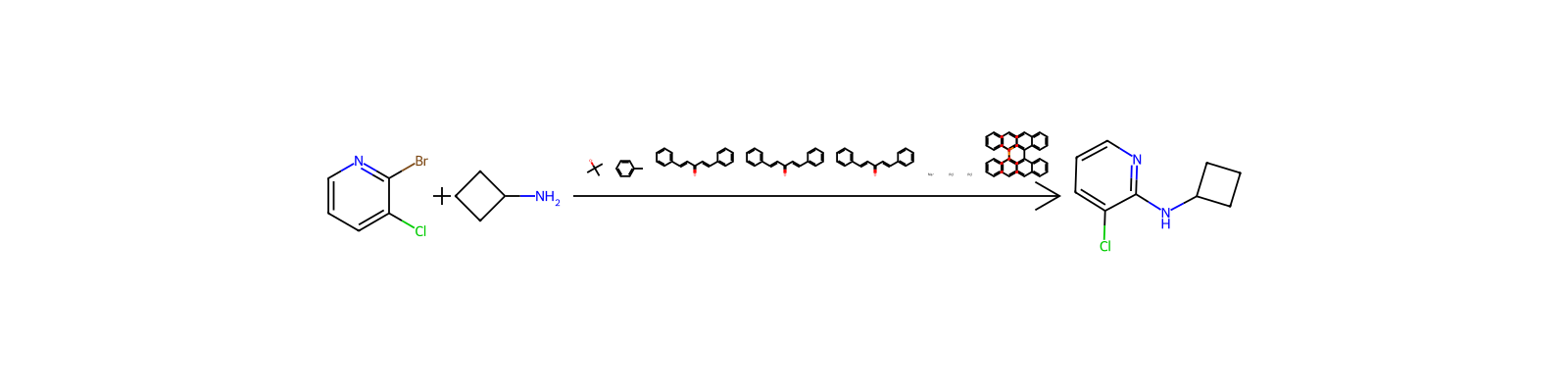
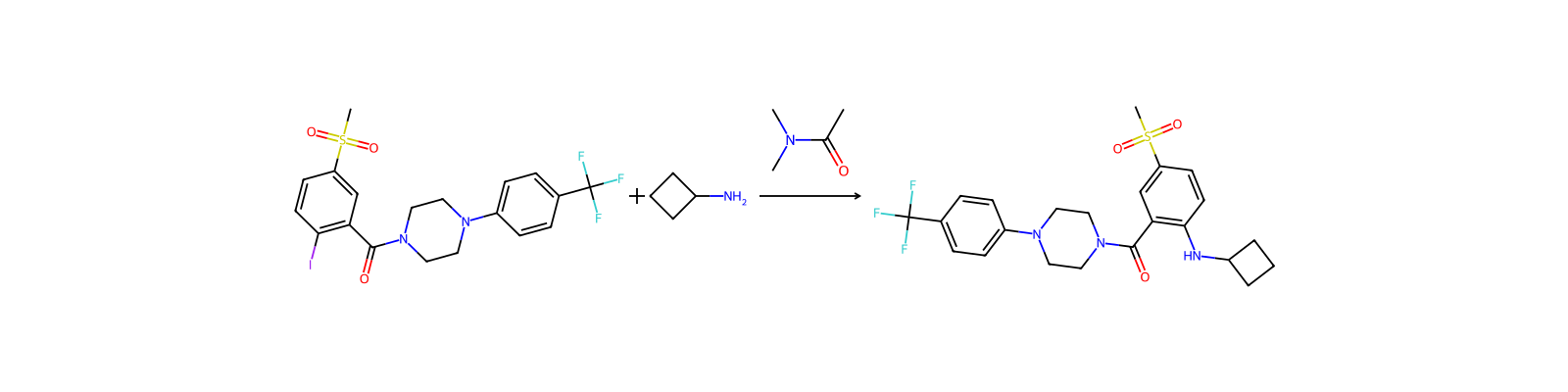
UsesCyclobutylamine is a substrate employed in a microwave-assisted synthesis of 7-azaindoles from dihalopyridines. Also it is a reactant in the preparation of imidazo[1,2-b]pyridazine derivatives as selective and orally available Mps1 (TTK) kinase inhibitors.
Preparation methods
PreparationThe preparation of cyclobutylamine from cyclobutanecarboxylic acid and hydrazoic acid has been reported previously. Cyclobutylamine has also been prepared by the Hofmann-type rearrangement of cyclobutanecarboxamide. More recently it has been prepared in 82–87% overall yield from cyclobutanecarboxamide by oxidative rearrangement with lead tetraacetate or iodosobenzene diacetate.Synthesis of cyclobutylamine
Upstream & downstream products
Downstream products
Suppliers100 total
国药集团化学试剂有限公司86-21-63210123 · [email protected]
常州帝通化工有限公司+86-0519-88298848 · [email protected]
梯希爱(上海)化成工业发展有限公司021-67121386 · [email protected]
上海阿拉丁生化科技股份有限公司400-6206333 13167063860 · [email protected]
合肥翰刚医药科技有限公司+8618062405514 · [email protected]
爱斯特(成都)生物制药股份有限公司+86-28-85122536 85324413 · [email protected]
常熟市海天医药原料有限公司13913622609
Dayang Chem (Hangzhou) Co.,Ltd.+86-0571-88938639 17705817739 · [email protected]
韶远科技(上海)有限公司021-50795510 4000665055 · [email protected]
科瑞迪化学400-821-5857 021-64326257 · [email protected]
Syntechem Co.,Ltd[email protected]
上海迈瑞尔生化科技有限公司4006356688 18621169109 · [email protected]
武汉易泰科技有限公司上海分公司18930552037 · [email protected]
宁波亿诺化学品有限公司86-574-27787657 · [email protected]
阿法埃莎(中国)化学有限公司400-6106006 · [email protected]
安耐吉化学&3A(安徽泽升科技股份有限公司)400-0056266 · [email protected]
武汉凯威斯科技有限公司86-027-67849912 · [email protected]
武汉卡诺斯科技有限公司027-83238443 15327105076 · [email protected]
上海瀚鸿科技股份有限公司021-54306202 13764082696 · [email protected]
上海相辉医药科技有限公司13761987713 · [email protected]
上海景颜化工科技有限公司13817811078 · [email protected]
嘉兴市艾森化工有限公司0573-85285100 18627885956 · [email protected]
上海隆盛化工有限公司58099637 13585536065 · [email protected]
Nanjing jinheyou Trading Co., Ltd.15705188088 · [email protected]
玛雅试剂+86 (573) 82222445 (0)18006601000 452520369 · [email protected]
HONG KONG IPURE BIOLOGY CO.,LIMITED86 18062405514 18062405514 · [email protected]
四川库利南科技有限公司400-1166-196 18981987031 · [email protected]
武汉海正工贸发展有限公司027-8866 0053/88660577/88660578
艾科试剂4008-755-333 18080918076 · [email protected]
上海思域化工科技有限公司86-21-34053660 · [email protected]
赛默飞世尔科技(中国)有限公司800-810-5118 · [email protected]
上海特伯化学科技有限公司+86-21-60341587 · [email protected]
TCI AMERICA800-4238616 · [email protected]
TOKYO CHEMICAL INDUSTRY CO., LTD.03-36680489 · [email protected]
TCI Europe320-37350700 · [email protected]
越林试剂021-62960152 · [email protected]
上海倍卓生物科技有限公司021-61119791,13386096464 · [email protected]
上海湄水化工科技有限公司021-60549325 18616193163
上海将来实业股份有限公司400-0066400 13621662912 · [email protected]
安徽科迪达化工有限公司0554-2106669 · [email protected]
上海爱蝶实业有限公司021-58957966 18930537195 · [email protected]
广拓化学(上海)有限公司021-60899189-8001 18918189673 · [email protected]
上海创赛科技有限公司400-6087598 15021221957 · [email protected]
上海御略医药科技有限公司021-60345187 13671753212 · [email protected]
上海麦克林生化科技股份有限公司15221275939 15221275939 · [email protected]
杭州杰恒化工有限公司0571-87396432 · [email protected]
常州天瑞医药科技有限公司0519-85386832 13382812559 · [email protected]
北京欣赛维化学科技有限公司010-56218822 13717722232 · [email protected]
江苏艾康生物医药研发有限公司025-66028182 17714375163 · [email protected]
上海拓目化工有限公司13391076197 · [email protected]
Related reactions
386 records


Compound notes
Loading…