
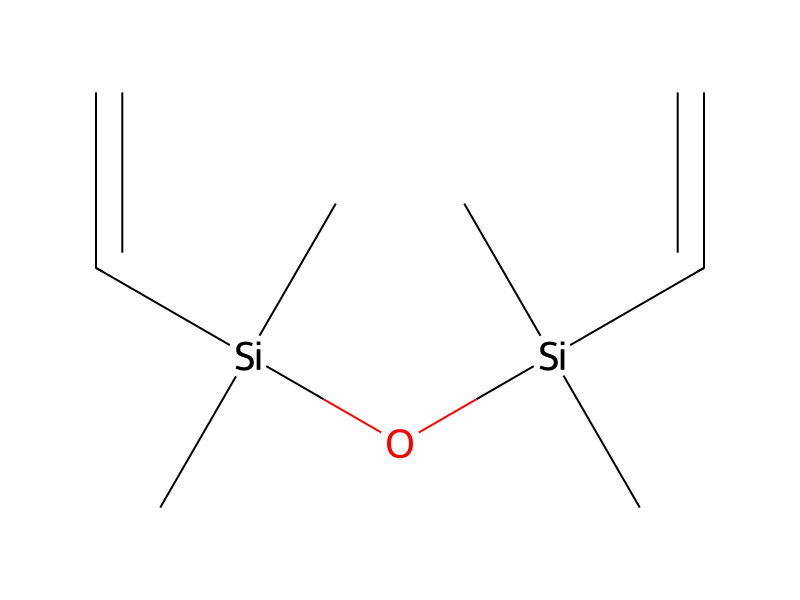
Basic information
- CAS
2627-95-4- Standard SMILES
C=C[Si](C)(C)O[Si](C)(C)C=C- InChIKey
BITPLIXHRASDQB-UHFFFAOYSA-N- Molecular formula
- C8H18OSi2
- Average molar mass
- 186.4 g/mol
- Monoisotopic mass
- 186.08961826
Names & identifiers
- Preferred name
- 1,3-Divinyltetramethyldisiloxane
- IUPAC
- ethenyl-[ethenyl(dimethyl)silyl]oxy-dimethylsilane
- English name
- Divinyltetramethyldisiloxane
- Molecular formula
- C8H18OSi2
- Molecular weight
- 186.4
Names & synonyms
2627-95-41,3-Divinyltetramethyldisiloxane1,1,3,3-Tetramethyl-1,3-divinyldisiloxaneDisiloxane, 1,3-diethenyl-1,1,3,3-tetramethyl-Bisvinyltetramethyldisiloxane1,1'-Divinyltetramethyldisiloxanesym-Tetramethyldivinyldisiloxane1,3-Diethenyl-1,1,3,3-tetramethyl disiloxaneSJ4D71ZQF41,3-Divinyl-1,1,3,3-tetramethyl disiloxaneBIS(ETHENYLDIMETHYLSILYL) ETHERRefChem:1052948
Show more names
1,3-DIVINYL-1,1,3,3-TETRAMETHYLDISILOXANEtetramethyldivinyldisiloxaneTetramethyldivinylsiloxaneTETRAMETHYL-1,3-DIVINYLDISILOXANE1,1,3,3-Tetramethyl-1,3-divinylsiloxane1,3-diethenyl-1,1,3,3-tetramethyl-disiloxanVIMMCD6210
220-099-6Divinyltetramethyldisiloxaneethenyl-[ethenyl(dimethyl)silyl]oxy-dimethylsilaneUNII-SJ4D71ZQF4EINECS 220-099-6MFCD00014933Disiloxane, 1,1,3,3-tetramethyl-1,3-divinyl-DTXSID7038810
Database identifiers
- CAS
2627-95-4、68083-19-2- PubChem CID
- 75819
- DTXSID
DTXSID7038810- ChEMBL
CHEMBL1878672- UNII
- SJ4D71ZQF4
- EC Number
- 220-099-6
- Nikkaji
- J7.637F
Properties
Computed structural properties
- Topological polar surface area
- 9.2 Ų
- Hydrogen bond donors
- 0
- Hydrogen bond acceptors
- 1
- Rotatable bonds
- 4
- Heavy atoms
- 11
- Formal charge
- 0
- Complexity
- 143
Experimental & physicochemical properties
Chemical ClassesMetals -> Metalloid Compounds (Silicon)
SpringerMaterials PropertiesChemical shift
Physical Description
Liquid
Colorless liquid; [Alfa Aesar MSDS]
Physicochemical properties
- Melting point
- -99 °C · -99 °C (lit.)
- Boiling point
- 139 °C · 139 °C (lit.)
- Density
- 0.809 g/mL · 0.809 g/mL at 25 °C (lit.)
- vapor pressure
- 17 hPa · 17hPa at 25℃
- refractive index
- 20 · n20/D 1.411(lit.)
- Flash point
- 76 °F · 76 °F
- storage temp.
- Flammables area
- form
- liquid
- Specific Gravity
- 0.811 · 0.811
- color
- colorless
- Viscosity
- 0.9 mm2/s · 0.9mm2/s
- Water Solubility
- insoluble
- Sensitive
- Moisture Sensitive
- Hydrolytic Sensitivity
- 1 · 1: no significant reaction with aqueous systems
- BRN
- 1762585 · 1762585
- Cosmetics Ingredients Functions
- CHELATING
- InChI
- 1S/C8H18OSi2/c1-7-10(3,4)9-11(5,6)8-2/h7-8H,1-2H2,3-6H3
- InChIKey
- BITPLIXHRASDQB-UHFFFAOYSA-N
- SMILES
- C[Si](C)(O[Si](C)(C)C=C)C=C
- LogP
- 5.4 at · 5.4 at 20℃
- CAS DataBase Reference
- 2627 · 2627-95-4(CAS DataBase Reference)
- EWG's Food Scores
- 2 · 2
- FDA UNII
- 4 D71ZQF4 · SJ4D71ZQF4
- NIST Chemistry Reference
- 1 · Disiloxane, 1,3-diethenyl-1,1,3,3-tetramethyl-(2627-95-4)
- EPA Substance Registry System
- 1 · 1,3-Divinyl-1,1,3,3-tetramethyl disiloxane (2627-95-4)
- UNSPSC Code
- 12162002 · 12162002
- NACRES
- 23 · NA.23
- Symbol(GHS)
- 2 · GHS02
- Signal word
- Danger
- Hazard statements
- 225 · H225
- Precautionary statements
- 210 · P210-P233-P303+P361+P353-P370+P378-P403+P235-P501
- PPE
- Eyeshields, Faceshields, Gloves, type ABEK (EN14387) respirator filter
- Hazard Codes
- F,Xi
- Risk Statements
- 11 · 11-36/37/38-10
- Safety Statements
- 16 · 16-26-36-37/39
- RIDADR
- 1993 · UN 1993 3/PG 2
- WGK Germany
- 2 · 2
- RTECS
- 9235250 · JM9235250
- F
- 10 · 10-21
- TSCA
- TSCA listed
- HazardClass
- 3 · 3
- PackingGroup
- III
- HS Code
- 29319090 · 29319090
- Storage Class
- 3 · 3 - Flammable liquids
- Hazard Classifications
- 2 · Flam. Liq. 2
- REACH Registrations
- Active
- Limited Quantities
- 1 L · 1.0 L (0.3 gallon) (liquid)
- Excepted Quantities
- Max Inner Pack (30g or 30ml) and Max Outer Pack (500g or 500ml)
Safety & regulation
GHS classification
GHS Classification
This chemical does not meet GHS hazard criteria for 0.4% (1 of 263) of reports.
Danger
H225 (94.3%): Highly Flammable liquid and vapor [Danger Flammable liquids]
P203, P210, P233, P240, P241, P242, P243, P261, P264, P264+P265, P271, P280, P302+P352, P303+P361+P353, P304+P340, P305+P351+P338, P318, P319, P321, P332+P317, P337+P317, P362+P364, P370+P378, P403+P233, P403+P235, P405, and P501 (click each P-code to see the statement)
Aggregated GHS information provided per 263 reports by companies from 18 notifications to the ECHA C&L Inventory. Each notification may be associated with multiple companies.
Hazard information
Regulatory Information
Chemical: Disiloxane, 1,3-diethenyl-1,1,3,3-tetramethyl-
Disiloxane, 1,3-diethenyl-1,1,3,3-tetramethyl- is listed on the EPA's Chemical Data Reporting (CDR) system. Manufacturers and importers of Disiloxane, 1,3-diethenyl-1,1,3,3-tetramethyl- are required to report information about their production and use of this chemical to the EPA under the Toxic Substances Control Act (TSCA). (40 eCFR Part 711)
Status: Active Update: 12-04-2023 https://echa.europa.eu/registration-dossier/-/registered-dossier/14606
Disiloxane, 1,3-diethenyl-1,1,3,3-tetramethyl-: Does not have an individual approval but may be used as a component in a product covered by a group standard. It is not approved for use as a chemical in its own right.
Hazards SummaryCauses somnolence and convulsions in inhalation lethal-concentration studies of rats; [RTECS] A skin and strong eye irritant; [Alfa Aesar MSDS]
Hazard Classes and CategoriesFlam. Liq. 2 (94.3%)
Toxicology
Adverse EffectsNeurotoxin - Other CNS neurotoxin
Toxicity DataLCLo (rat) = 111,000 mg/m3/1hr
Safety data
- F
- 10-21
- PPE
- Eyeshields, Faceshields, Gloves, type ABEK (EN14387) respirator filter
- wgk
- 2
- tsca
- TSCA listed
- rtecs
- JM9235250
- ridadr
- UN 1993 3/PG 2
- hs_code
- 29319090
- risk_code
- 11-36/37/38-10
- Signal word
- Danger
- Symbol(GHS)
- GHS02
- hazard_code
- F,Xi
- safety_code
- 16-26-36-37/39
- hazard_class
- 3
- Storage Class
- 3 - Flammable liquids
- packing_group
- III
- Hazard statements
- H225
- Limited Quantities
- 1.0 L (0.3 gallon) (liquid)
- Excepted Quantities
- Max Inner Pack (30g or 30ml) and Max Outer Pack (500g or 500ml)
- REACH Registrations
- Active
- Hazard Classifications
- Flam. Liq. 2
- Precautionary statements
- P210-P233-P303+P361+P353-P370+P378-P403+P235-P501
Chemistry & industry
Uses & manufacturing
U.S. Production2023: 1,000,000 - <2,500,000 lb
Consumer UsesMonomers
Industry UsesTerminator/Blocker
General Manufacturing Information
All Other Chemical Product and Preparation Manufacturing
Disiloxane, 1,3-diethenyl-1,1,3,3-tetramethyl-: ACTIVE
Applications
UsesDivinyl tetramethyl disiloxane could be used as a additives(intermediates) in the production process of addition silicone rubber, silicone gel, liquid silicone, vinyl silicone resin, vinyl silicone oil, platinum chromium compound and others. POTENTIAL VINYL NUCLEOPHILE IN CROSS-COUPLING REACTIONS. 1,3-Divinyltetramethyldisiloxane acts as a potential vinyl donor used in cross-coupling reactions. It is also involved in the copolymerization reaction with aromatic ketones.
Preparation methods
PreparationThe patent reports a method for preparing tetramethyldivinyldisiloxane, comprising the following steps: (1) mixing tetramethyldihydrogendisiloxane with a chloroplatinic acid catalyst to obtain a mixed solution; (2) bubbling acetylene into the mixed solution to carry out a hydrosilylation reaction, and after the reaction is completed, separating and purifying the reaction solution to obtain Divinyltetramethyldisiloxane.
Upstream & downstream products
Upstream raw materials
Downstream products
Suppliers100 total
国药集团化学试剂有限公司86-21-63210123 · [email protected]
北京华美互利生物化工010-56205725 · [email protected]
梯希爱(上海)化成工业发展有限公司021-67121386 · [email protected]
上海阿拉丁生化科技股份有限公司400-6206333 13167063860 · [email protected]
湖北科孚乐材料科技有限公司027-84459282 13720265353 · [email protected]
杭州大地化工有限公司0571-82699306 13906719152 · [email protected]
武汉欣扬瑞和化学科技有限公司13720274133 · [email protected]
爱斯特(成都)生物制药股份有限公司+86-28-85122536 85324413 · [email protected]
北京安司莫森技术有限公司010-82954736 13391601435 · [email protected]
科瑞迪化学400-821-5857 021-64326257 · [email protected]
Syntechem Co.,Ltd[email protected]
上海迈瑞尔生化科技有限公司4006356688 18621169109 · [email protected]
阿法埃莎(中国)化学有限公司400-6106006 · [email protected]
安耐吉化学&3A(安徽泽升科技股份有限公司)400-0056266 · [email protected]
上海瀚鸿科技股份有限公司021-54306202 13764082696 · [email protected]
上海尚饮思生化医药有限公司021-021-57872719 13761402923 · [email protected]
池州捷峰生物科技有限公司0566-8928158 · [email protected]
山东万达有机硅新材料有限公司021-54177116
合肥天健化工有限公司551-65418679 15856988503;15837135945 · [email protected]
上海比阳实业有限公司+86-15021878111 · [email protected]
孝感深远化工有限公司15527621225; 15527621225 · [email protected]
恒桥产业股份有限公司025-84712192 · [email protected]
山东西亚化学有限公司13355009207 13355009207 · [email protected]
玛雅试剂+86 (573) 82222445 (0)18006601000 452520369 · [email protected]
天津希恩思生化科技有限公司400 638 7771 · [email protected]
武汉科美沃化工有限公司027-85736489 · [email protected]
河南多贝化工有限公司0370-2785118 17550508557 · [email protected]
艾科试剂4008-755-333 18080918076 · [email protected]
赛默飞世尔科技(中国)有限公司800-810-5118 · [email protected]
北京伊诺凯科技有限公司400-810-7969 010-59572699 · [email protected]
安必亚特种有机硅南通有限公司18151323200 · [email protected]
TCI AMERICA800-4238616 · [email protected]
TOKYO CHEMICAL INDUSTRY CO., LTD.03-36680489 · [email protected]
TCI Europe320-37350700 · [email protected]
卡迪亚医药科技有限公司0371-86615086 18203638366 0371-86159066 13526786601
成都麦卡希化工有限公司028-85632863 18108198598 · [email protected]
上海贤鼎生物科技有限公司4009209199 · [email protected]
上海楚青新材料科技有限公司021-61530618; 18721685818
HBCChem, Inc.+1-510-219-6317 · [email protected]
上海探圭新材料科技有限公司18516111942 · [email protected]
美岚实业(上海)有限公司021-58958189 · [email protected]
上海石洋化工有限公司021-56795766 · [email protected]
成都零六生物科技有限公司400-1166-196 13458535857 · [email protected]
上海麦克林生化科技股份有限公司15221275939 15221275939 · [email protected]
杭州杰恒化工有限公司0571-87396432 · [email protected]
湖北巨胜科技有限公司027-59599241 18871490274 · [email protected]
池州凯隆进出口贸易有限公司[email protected]
Sigma-Aldrich西格玛奥德里奇(上海)贸易有限公司021-61415566 800-8193336 · [email protected]
Shanghai Enchem Industry Co., Ltd.15021317485
郑州盖科科技有限公司0371-63336364 17344886665 · [email protected]
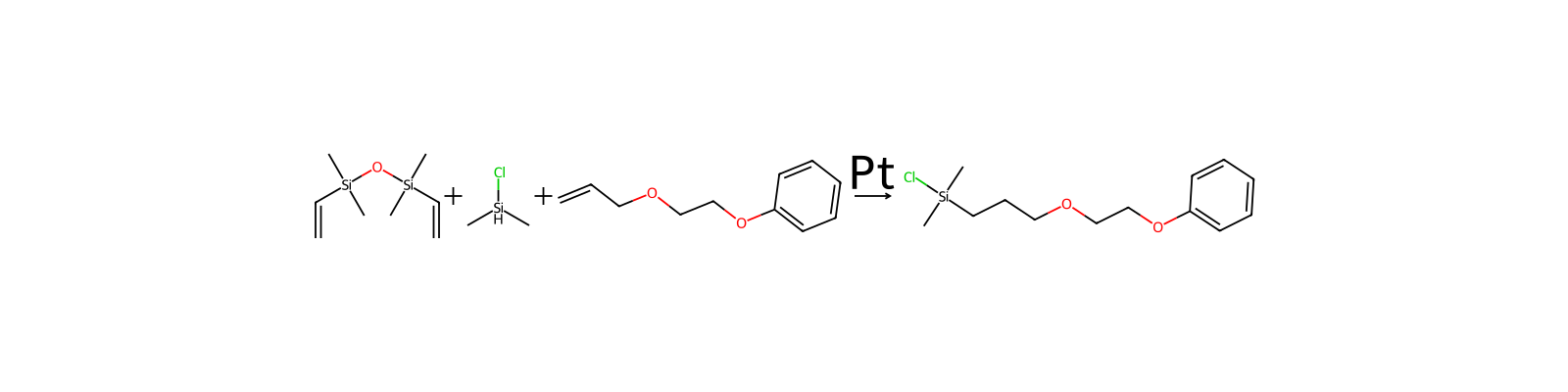
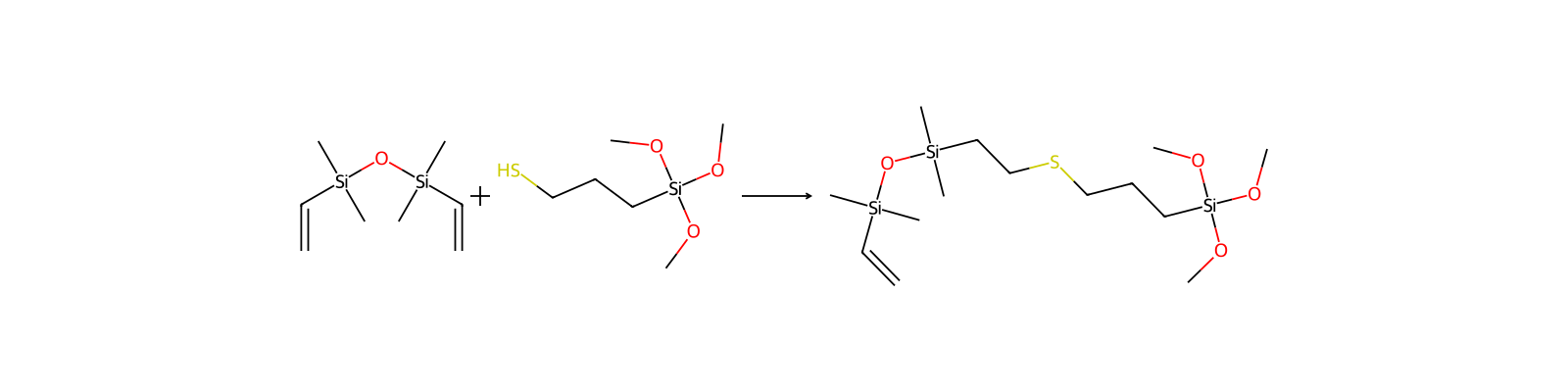
Related reactions
14 records



Compound notes
Loading…