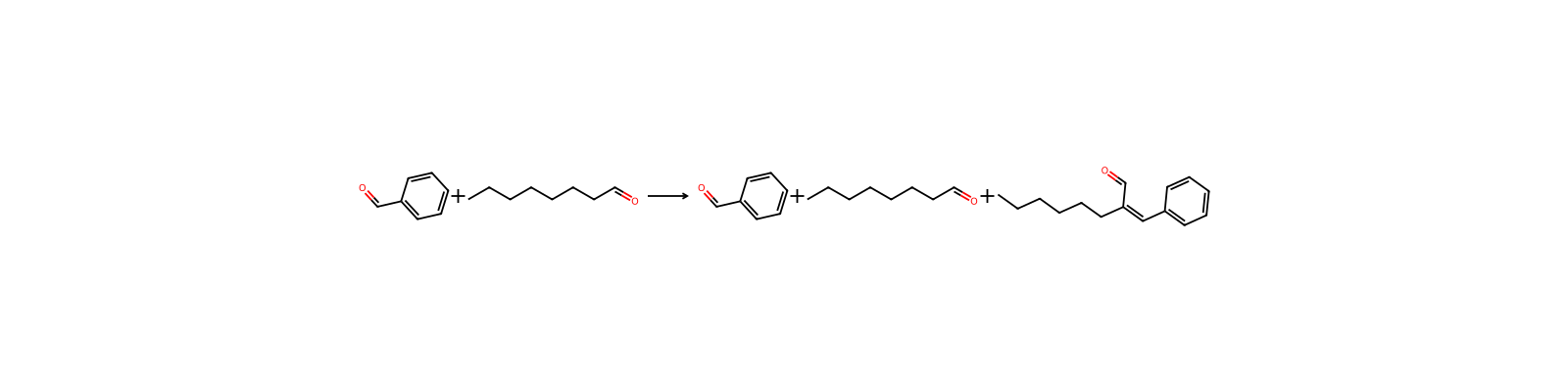
2-(Phenylmethylene)octanal
Completing data — refresh the page later to see the latest

Basic information
- CAS
101-86-0- Standard SMILES
CCCCCCC(C=O)=Cc1ccccc1- InChIKey
GUUHFMWKWLOQMM-UHFFFAOYSA-N- Molecular formula
- C15H20O
- Average molar mass
- 216.32 g/mol
- Monoisotopic mass
- 216.15141526
Overview
See also: alpha-Hexylcinnamaldehyde (annotation moved to).
Names & identifiers
- Preferred name
- 2-(Phenylmethylene)octanal
- IUPAC
- 2-benzylideneoctanal
- English name
- alpha-Hexylcinnamaldehyde
- Molecular formula
- C15H20O
- Molecular weight
- 216.32
Names & synonyms
2-(Phenylmethylidene)octanal2-(Phenylmethylene)octanalDTXSID4026684.alpha.-Hexylcinnamaldehydea-hexylcinnamaldehyde2-Phenylmethyleneoctanalalpha-hexyl-cinnamaidehydealpha-hexyl-cinnamaldehyde2-(Phenylmethylene)-octanaalpha-n-hexyl cinnamaldehydeSCHEMBL113171CHEMBL3183766
Show more names
HCAHEXYL CINNAMIC ALDEHYDEHEXYL CINNAMALHEXYLCINNAMALDEHYDEJASMONAL Hα-HexylcinnamaldehydeFEMA 2569alpha-Hexylzimtaldehyd2-(phenylmethylene)-Octanal
AKOS028108454NCGC00247907-01NS00002490F868715
Database identifiers
- CAS
101-86-0- PubChem CID
- 7585
- DTXSID
DTXSID4026684- ChEMBL
CHEMBL3183766
Properties
Computed structural propertiesFilling in
- XLogP
- 4.8
- Topological polar surface area
- 17.1 Ų
- Hydrogen bond donors
- 0
- Hydrogen bond acceptors
- 1
- Rotatable bonds
- 7
- Heavy atoms
- 16
- Formal charge
- 0
- Complexity
- 211
Experimental & physicochemical properties
FragrancesFragrance
Endocrine DisruptorsPotential endocrine disrupting compound
Physicochemical properties
- Boiling point
- 174 · 174-176 °C/15 mmHg (lit.)
- Density
- 0.95 g/mL · 0.95 g/mL at 25 °C (lit.)
- refractive index
- 20 · n20/D 1.55(lit.)
- FEMA
- 2569 · 2569 | ALPHA-HEXYLCINNAMALDEHYDE
- FLAVIS Number
- 5.041 · 05.041 | alpha-Hexylcinnamaldehyde
- Flash point
- 200 °F · 200 °F
- storage temp.
- -20 °C · -20°C
- solubility
- 0.005 g/L · water: soluble0.005g/L at 25°C
- form
- Oil
- color
- Clear Yellow
- Odor
- 100 % · at 100.00 %. fresh floral green jasmin herbal waxy
Safety & regulation
Safety information is for reference only and does not replace the supplier’s Safety Data Sheet (SDS), applicable regulations, or professional assessment.
Safety data
- wgk
- 2
- tsca
- TSCA listed
- rtecs
- GD6560000
- ridadr
- UN 3265 8/PG 3
- hs_code
- 29122990
- Toxicity
- The acute oral LD50 value in rats was reported as 3.1 g/kg (2.45-3.75 g/kg) (Moreno, 1971). The acute dermal LD50 value in rabbits was reported as > 3 g/kg (Moreno, 1971).
- risk_code
- 36/37/38-34-43-52/53
- Signal word
- Warning
- Symbol(GHS)
- GHS07,GHS09
- hazard_code
- C,Xi
- safety_code
- 26-36/37/39-45-36-36/37-61
- Storage Class
- 10 - Combustible liquids
- Hazard statements
- H317-H410
- Hazard Classifications
- Aquatic Acute 1Aquatic Chronic 2Skin Sens. 1
- Precautionary statements
- P261-P272-P273-P280-P302+P352-P333+P313
Chemistry & industry
Applications
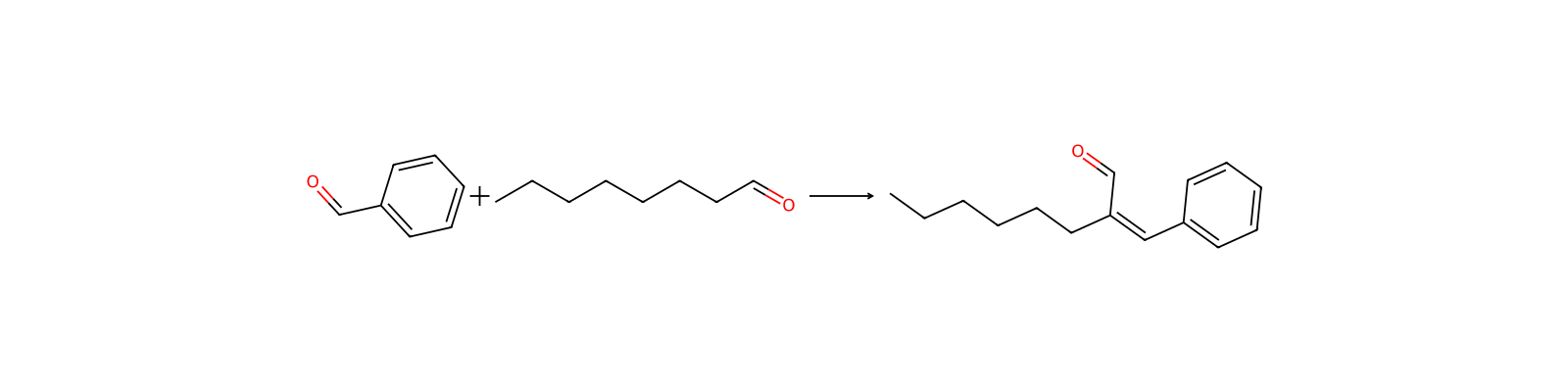
Descriptionα-Hexylcinnamaldehyde has a jasmine-like odor, particularly on dilution. May be synthesized by condensation of octylaldehyde with benzaldehyde.
OccurrenceReported found in cooked, scented rice.
Useshexyl cinnamal is also known as hexyl cinnamic aldehyde. It is a fragrance that provides a floral, jasmine-like scent.
Usesα-Hexylcinnamaldehyde is characterized by a typical floral scent, which makes them suitable to be used as fragrances in personal care (perfumes, creams, shampoos, etc.) and household products. It has been also used as flavouring additive in food and pharmaceutical industry.
General DescriptionSolubilization of α-hexylcinnamaldehyde by the ionic surfactants, sodium dodecyl sulfate and dodecyltrimethylammonium chloride and a non-ionic surfactant such as dodecyl polyoxyethylene ethers has been investigated.
Preparation methods
PreparationBy condensation of octylaldehyde with benzaldehyde
Upstream & downstream products
Upstream raw materials
Additional notes
DefinitionChEBI: A member of the class of cinnamaldehydes carrying a hexyl substituent at the alpha-position.
Related reactions
16 records




Compound notes
Loading…