
Diethyl cyanophosphonate
Completing data — refresh the page later to see the latest
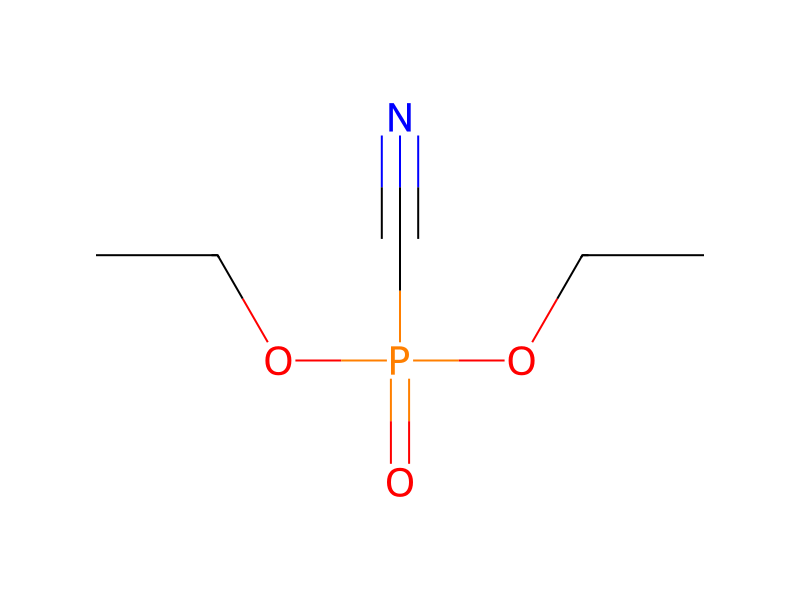
Basic information
- CAS
2942-58-7- Standard SMILES
CCOP(=O)(C#N)OCC- InChIKey
ZWWWLCMDTZFSOO-UHFFFAOYSA-N- Molecular formula
- C5H10NO3P
- Average molar mass
- 163.11 g/mol
- Monoisotopic mass
- 163.03982981
Overview
reagent for solid phase peptide synthesis; structure
Names & identifiers
- Preferred name
- Diethyl cyanophosphonate
- IUPAC
- diethoxyphosphorylformonitrile
- English name
- Diethyl cyanophosphonate
- Molecular formula
- C5H10NO3P
- Molecular weight
- 163.11
Names & synonyms
Diethyl cyanophosphonate2942-58-7Diethyl phosphorocyanidatePhosphorocyanidic acid, diethyl esterDiethylphosphorocyanidateDiethylcyanophosphonatePAD4WPZ7T0diethoxyphosphoryl cyanideDTXSID90183639DCNP cpdRefChem:587426DTXCID80106130
Show more names
DEPCDIETHYLPHOSPHORYL CYANIDE(ETO)2P(O)CNDiethypyrocarbonateDiethyl cyanophospho
220-936-5diethoxyphosphorylformonitrileDiethylcyanophosphateCyanophosphonic Acid Diethyl EsterDiethyl cyanidophosphatediethyl cyanophosphateDiethoxy-phosphoryl cyanideDiethyl cyanophosphosphonate
Database identifiers
- CAS
2942-58-7- PubChem CID
- 76257
- DTXSID
DTXSID90183639- UNII
- PAD4WPZ7T0
- EC Number
- 220-936-5
- Nikkaji
- J50.413K
Properties
Computed structural propertiesFilling in
- XLogP
- 0.3
- Topological polar surface area
- 59.3 Ų
- Hydrogen bond donors
- 0
- Hydrogen bond acceptors
- 4
- Rotatable bonds
- 4
- Heavy atoms
- 10
- Formal charge
- 0
- Complexity
- 173
Experimental & physicochemical properties
Chemical ClassesOther Uses -> Biochemical Research
Physical DescriptionYellow liquid; [Alfa Aesar MSDS]
Physicochemical properties
- Boiling point
- 104 · 104-105 °C19 mm Hg(lit.)
- Density
- 1.075 g/mL · 1.075 g/mL at 25 °C(lit.)
- refractive index
- 20 · n20/D 1.403(lit.)
- Flash point
- 177 °F · 177 °F
- storage temp.
- 2 · 2-8°C
- solubility
- Acetonitrile (Slightly), Chloroform (Slightly)
- form
- Liquid
- Specific Gravity
- 1.075 · 1.075
- color
- Clear colorless to yellow
- Water Solubility
- DECOMPOSES
- Sensitive
- Moisture Sensitive
Safety & regulation
Safety information is for reference only and does not replace the supplier’s Safety Data Sheet (SDS), applicable regulations, or professional assessment.
GHS classification
GHS Classification
Danger
H300+H310+H330 (75%): Fatal if swallowed, in contact with skin or if inhaled [Danger Acute toxicity, oral; acute toxicity, dermal; acute toxicity, inhalation]
P260, P262, P264, P270, P271, P280, P284, P301+P316, P301+P330+P331, P302+P352, P302+P361+P354, P304+P340, P305+P354+P338, P316, P320, P321, P330, P361+P364, P363, P403+P233, P405, and P501 (click each P-code to see the statement)
Aggregated GHS information provided per 52 reports by companies from 7 notifications to the ECHA C&L Inventory. Each notification may be associated with multiple companies.
Hazard information
Hazards Summary
Intraperitoneal LD50 (mouse) = 1.4 mg/kg; [RTECS] Hydrolyzed by water; Causes burns; Inhalation may cause corrosive injuries to upper respiratory tract and lungs; Highly toxic by ingestion, inhalation, and skin absorption; [Alfa Aesar MSDS] See Tabun.
Hazard Classes and CategoriesAcute Tox. 2 (98.1%)
Toxicology
Adverse EffectsDermatotoxin - Skin burns.
Safety data
- F
- 10-13-21
- PPE
- Faceshields, Gloves, Goggles, type ABEK (EN14387) respirator filter
- wgk
- 3
- rtecs
- TD2500000
- ridadr
- UN 2922 8/PG 2
- hs_code
- 2931900090
Chemistry & industry
Uses & manufacturing
UsesReagent for solid phase peptide synthesis. [ChemIDplus]
Applications
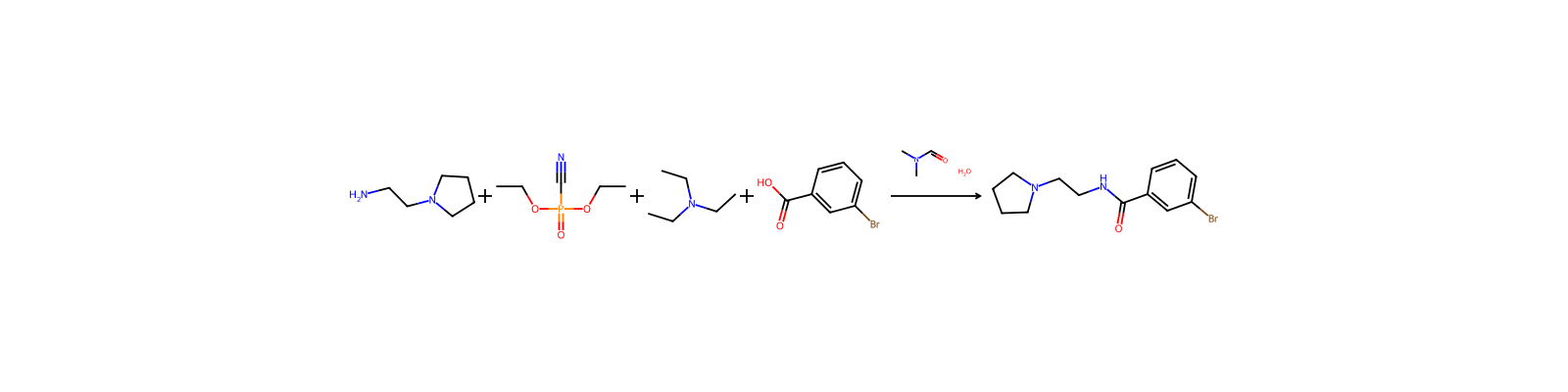
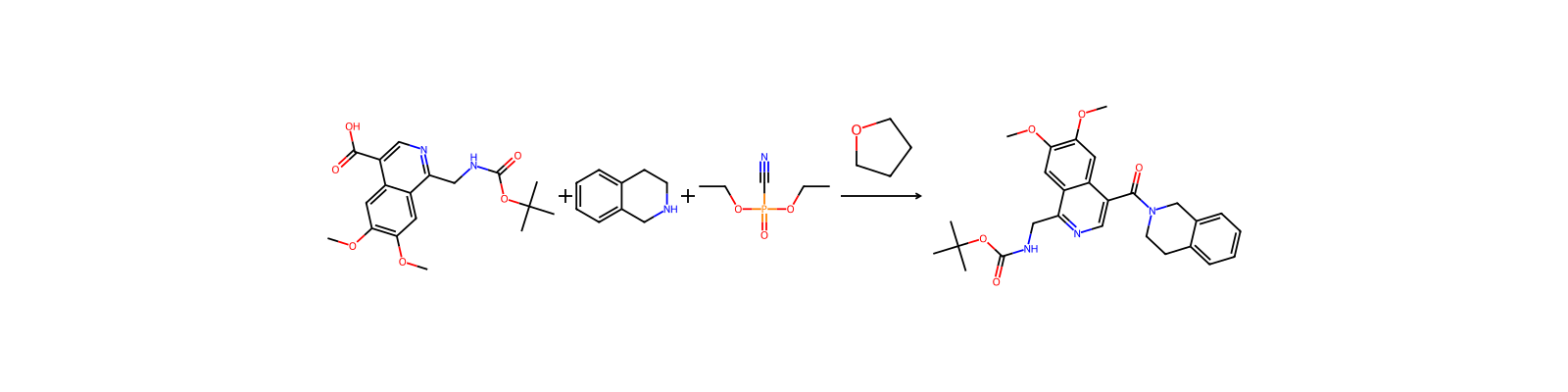
UsesDiethyl cyanophosphonate was used in the synthesis of 4-acylthiol-4-deoxy-4′-demethyl epipodophyllotoxin analogs. Coupling reagent for peptide synthesis. Reagent for the phosphorylation of phenols. Activating agent for fluorescent derivatization of carboxylic acids which allows separation by HPLC.
General DescriptionDiethyl cyanophosphonate (DCNP, a Tabun mimic, DECP) is a nerve agent simulant. Its detection by using fluorescein, a reversible fluorescent sensor, has been reported. Its degradation in the presence of suitable organocatalysts (different amines, aminoalcohols and glycols) has been studied.
Upstream & downstream products
Upstream raw materials
Downstream products
Related reactions
1,001 records




Compound notes
Loading…