
Phenyl Isothiocyanate
Completing data — refresh the page later to see the latest
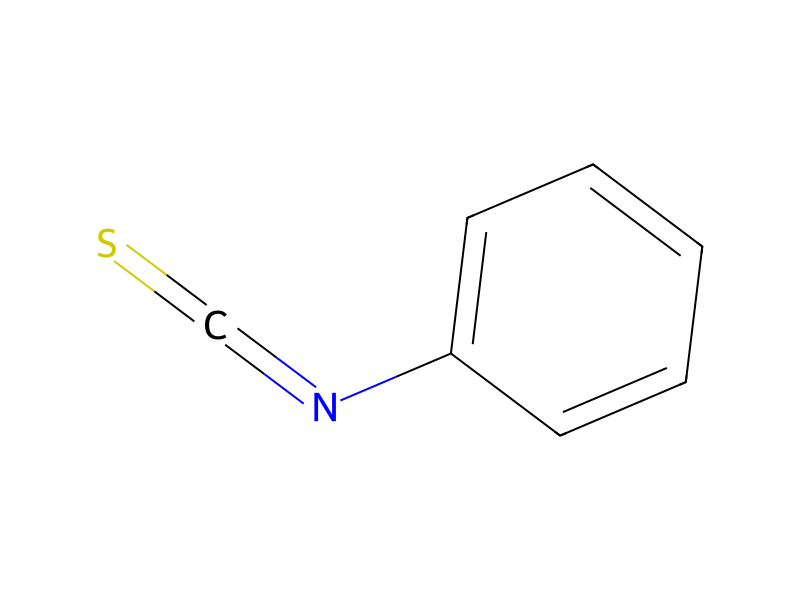
Basic information
- CAS
103-72-0- Standard SMILES
S=C=Nc1ccccc1- InChIKey
QKFJKGMPGYROCL-UHFFFAOYSA-N- Molecular formula
- C7H5NS
- Average molar mass
- 135.19 g/mol
- Monoisotopic mass
- 135.01427034
Names & identifiers
- Preferred name
- Phenyl Isothiocyanate
- IUPAC
- isothiocyanatobenzene
- English name
- Phenyl isothiocyanate
- Molecular formula
- C7H5NS
- Molecular weight
- 135.19
Names & synonyms
IsothiocyanatobenzenePHENYL ISOTHIOCYANATE103-72-0PhenylisothiocyanatePITCThiocarbanilBenzene, isothiocyanato-PhenylsenfoelIsothiocyanic acid phenyl esterBenzene-1-isothiocyanatePhenyl thioisocyanateIsothiocyanic acid, phenyl ester
Show more names
PTCR1PITPhenyl thiocyanatePhenyl isothiocyanate,PITCPHENYL ISOTHIOCYANATE SOLUTION, FOR PROT.SEQ. ANAL.RR1H174
FenylisothiokyanatDTXSID0021129CHEBI:851030D58F84LSUNSC-5583DTXCID501129RefChem:57537Phenylisothiocyanate 1533
Database identifiers
- CAS
103-72-0- PubChem CID
- 7673
- DTXSID
DTXSID0021129- ChEMBL
CHEMBL309036- ChEBI
CHEBI:85103- UNII
- 0D58F84LSU
- EC Number
- 203-138-1
- Nikkaji
- J5.019I
Properties
Computed structural propertiesFilling in
- XLogP
- 3.3
- Topological polar surface area
- 44.5 Ų
- Hydrogen bond donors
- 0
- Hydrogen bond acceptors
- 2
- Rotatable bonds
- 1
- Heavy atoms
- 9
- Formal charge
- 0
- Complexity
- 121
Experimental & physicochemical properties
Vapor Pressure1.5 [mmHg]
Physical DescriptionLiquid; [Merck Index] Colorless liquid; [Sigma-Aldrich MSDS]
Kovats Retention Index
1163
1138
Physicochemical properties
- Melting point
- 21 °C · −21 °C(lit.)
- Boiling point
- 218 °C · 218 °C(lit.)
- Density
- 1.132 g/mL · 1.132 g/mL at 20 °C(lit.)
- vapor pressure
- 10 hPa · 10 hPa (20 °C)
- refractive index
- 20 · n20/D 1.6515(lit.)
- Flash point
- 190 °F · 190 °F
- storage temp.
- 2 · 2-8°C
- solubility
- water: insoluble
- form
- liquid
Safety & regulation
Safety information is for reference only and does not replace the supplier’s Safety Data Sheet (SDS), applicable regulations, or professional assessment.
GHS classification
GHS Classification
This chemical does not meet GHS hazard criteria for 0.5% (1 of 214) of reports.
Danger
H301 (82.2%): Toxic if swallowed [Danger Acute toxicity, oral];H314 (79.4%): Causes severe skin burns and eye damage [Danger Skin corrosion/irritation];H317 (79%): May cause an allergic skin reaction [Warning Sensitization, Skin];H318 (54.7%): Causes serious eye damage [Danger Serious eye damage/eye irritation];H334 (76.2%): May cause allergy or asthma symptoms or breathing difficulties if inhaled [Danger Sensitization, respiratory];H341 (54.2%): Suspected of causing genetic defects [Warning Germ cell mutagenicity];H361 (54.2%): Suspected of damaging fertility or the unborn child [Warning Reproductive toxicity];H400 (21.5%): Very toxic to aquatic life [Warning Hazardous to the aquatic environment, acute hazard];H410 (24.3%): Very toxic to aquatic life with long lasting effects [Warning Hazardous to the aquatic environment, long-term hazard]
P203, P233, P260, P261, P264, P264+P265, P270, P271, P272, P273, P280, P284, P301+P316, P301+P330+P331, P302+P352, P302+P361+P354, P304+P340, P305+P354+P338, P316, P317, P318, P321, P330, P333+P317, P342+P316, P362+P364, P363, P391, P403, P405, and P501 (click each P-code to see the statement)
Aggregated GHS information provided per 214 reports by companies from 11 notifications to the ECHA C&L Inventory. Each notification may be associated with multiple companies.;Reported as not meeting GHS hazard criteria per 1 of 214 reports by companies.;There are 10 notifications provided by 213 of 214 reports by companies with hazard statement code(s).;Information may vary between notifications depending on impurities, additives, and other factors. The percentage value in parenthesis indicates the notified classification ratio from companies that provide hazard codes. Only hazard codes with percentage values above 10% are shown. For more detailed information, please visit ECHA C&L website.
Hazard information
Regulatory Information
Chemical: Benzene, isothiocyanato-
Status: Active Update: 10-12-2018 https://echa.europa.eu/registration-dossier/-/registered-dossier/26134
Chemistry & industry
Pharmacology
Metabolism/Metabolites
Cyanide is rapidly alsorbed through oral, inhalation, and dermal routes and distributed throughout the body. Cyanide is mainly metabolized into thiocyanate by either rhodanese or 3-mercaptopyruvate sulfur transferase. Cyanide metabolites are excreted in the urine. (L96)
Uses & manufacturing
Uses
Used to derive primary and secondary amines, in sequencing of peptides by Edman degradation, and in amino acid analysis by HPLC; [Merck Index]
Phenyl isothiocyanate is a reagent used in reversed phase high-performance liquid chromatography (HPLC). (L197)
General Manufacturing InformationBenzene, isothiocyanato-: ACTIVE
Applications
UsesPhenyl isothiocyanate is the reagent of choice in automated Edman degradation systems. However, this reagent is highly toxic and for manual modification other reagents are preferred such as dimethy laminoazobenzene isothiocyanate (Chang, 1983; Wang et al, 2000) or trifluoroethyl isothiocyanate (Bartlet-Jones et al, 1994). This last reagent has the advantage of being volatile, so that the excess of reagent is easily removed by vacuum before MS analysis (Spengler, 1997). This compound was used successfully during seven successive cycles of manual cleavage coupled with MS analysis. Nevertheless, the high reactivity of such compounds seems to shows artefactual modification such as“acetylation' of the hydroxyl groups of the Ser and Thr. Allyl isothiocyanate shows better selectivity, but again this reagent is toxic and difficult to use in manual approaches (Gu & Preswich, 1997) .
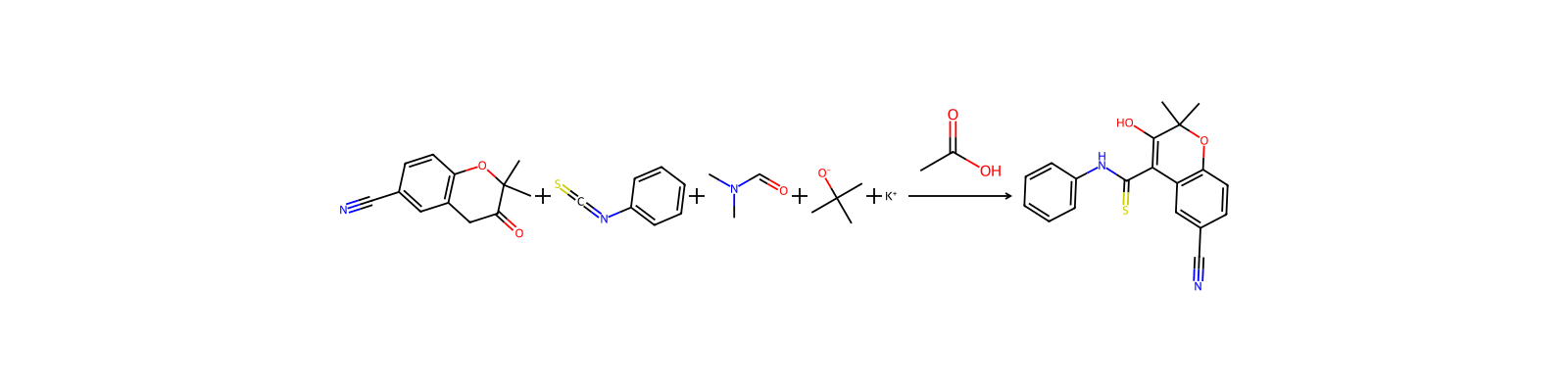
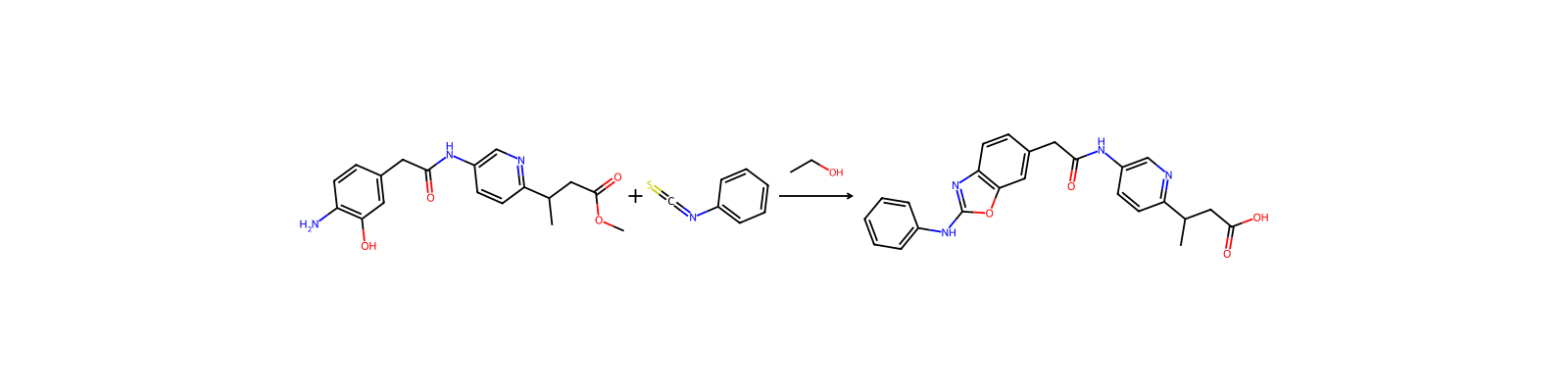
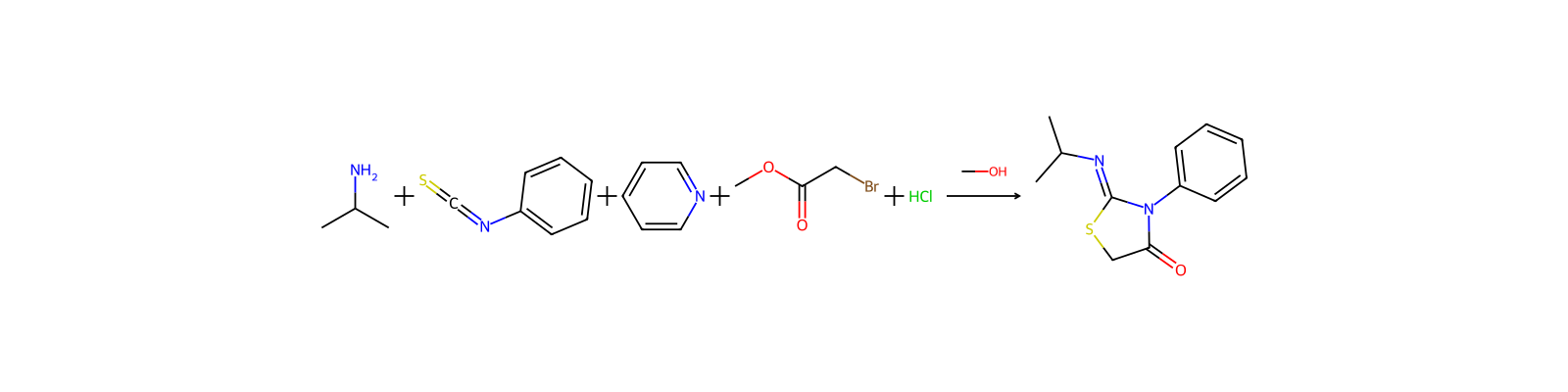
UsesPhenyl isothiocyanate acts as a derivatizing reagent for primary and secondary amines. It is used in sequencing peptides by Edman degradation and in amino acid analyses by HPLC. It is used for derivatizing N-terminal amino acids of proteins for automated sequential analysis. It is a synthon for dithiadiazafulvalenes.
Related reactions
334 records



Compound notes
Loading…