HomeMCPWorkbenchSkills
HomeWorkbenchNotificationsMe
llms.txt · MCP GuidePrivacy Policy · Terms of Service · Supportv1.8.0
  1. Home
  2. /Compound

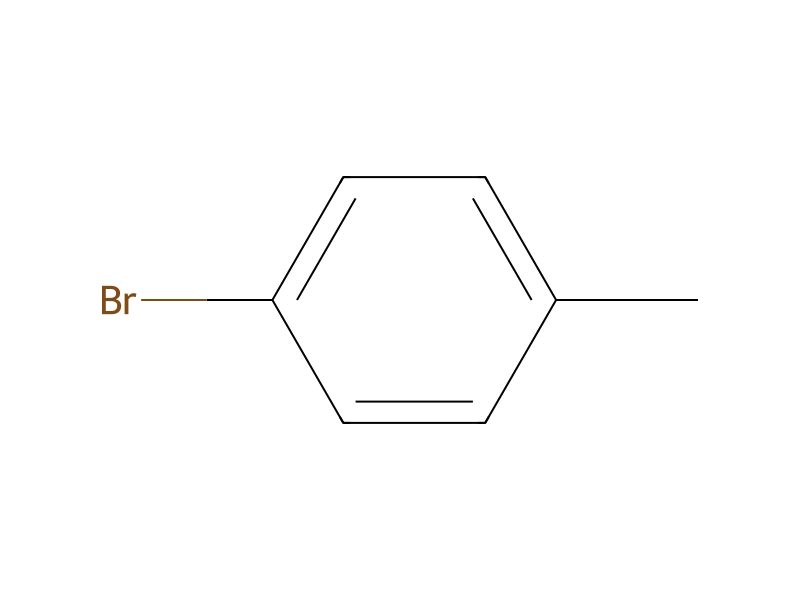
4-Bromotoluene

HCID 7805
New noteNew reactionRequest quotes
Print preview

Completing data — refresh the page later to see the latest
Basic informationOverviewNames & identifiersPropertiesSafety & regulationChemistry & industryRelated reactionsCompound notes
Substructure searchFind similar structures

Basic information

CAS
106-38-7
Standard SMILES
Cc1ccc(Br)cc1
InChIKey
ZBTMRBYMKUEVEU-UHFFFAOYSA-N
Molecular formula
C7H7Br
Average molar mass
171.03 g/mol
Monoisotopic mass
169.97311232

Overview

Crystals, clear pale yellow liquid. (NTP, 1992)

Names & identifiers

Preferred name
4-Bromotoluene
IUPAC
1-bromo-4-methylbenzene
English name
4-Bromotoluene
Molecular formula
C7H7Br
Molecular weight
171.03448

Names & synonyms

4-BROMOTOLUENE106-38-7p-Bromotoluene1-Bromo-4-methylbenzenep-Tolyl bromide4-MethylbromobenzeneBenzene, 1-bromo-4-methyl-4-Methylphenyl bromide1-Methyl-4-bromobenzeneToluene, p-bromo-4-Tolyl bromidep-Methylphenyl bromide
Show more names
p-MethylbromobenzeneParabromotoluene4-Bromo-1-methylbenzene4-Methyl-1-bromobenzeneToluene, 4-bromo-DTXSID70246619E349GQ7EUNSC-6531

Database identifiers

CAS
106-38-7
PubChem CID
7805
DTXSID
DTXSID7024661
ChEMBL
CHEMBL1377077
UNII
9E349GQ7EU
EC Number
203-391-8
Nikkaji
J47.007D

Properties

Computed structural propertiesFilling in

XLogP
3.4
Topological polar surface area
0 Ų
Hydrogen bond donors
0
Hydrogen bond acceptors
0
Rotatable bonds
0
Heavy atoms
8
Formal charge
0
Complexity
62.8

Experimental & physicochemical properties

SolventsSolvents -> Brominated Solvents
SpringerMaterials Properties13C nuclear magnetic resonance spectrum
LogPlog Kow = 3.42
Density · 2 items

1.399 at 68 °F (NTP, 1992) - Denser than water; will sink

1.3995 @ 35 °C

Color/FormCrystals from absolute alcohol
Solubility · 4 items

less than 1 mg/mL at 75 °F (NTP, 1992)

Sol in chloroform

Water solubility of 110 ppm at 25 °C.

Soluble in ethanol, acetone, and ether

Flash Point · 3 items

185 °F (NTP, 1992)

85 °C

85 °C (185 °F) Closed Cup

Boiling Point · 2 items

363 °F at 760 mmHg (NTP, 1992)

184.5 °C at 760 mm Hg

Melting Point · 2 items

Safety & regulation

Safety information is for reference only and does not replace the supplier’s Safety Data Sheet (SDS), applicable regulations, or professional assessment.

GHS classification

GHS Classification · 4 items

Warning

H302 (78.7%): Harmful if swallowed [Warning Acute toxicity, oral]

P261, P264, P264+P265, P270, P271, P280, P301+P317, P302+P352, P304+P340, P305+P351+P338, P319, P321, P330, P332+P317, P337+P317, P362+P364, P403+P233, P405, and P501 (click each P-code to see the statement)

Aggregated GHS information provided per 61 reports by companies from 11 notifications to the ECHA C&L Inventory. Each notification may be associated with multiple companies.

Hazard information

Regulatory Information · 3 items

Chemical: Benzene, 1-bromo-4-methyl-

Status: Active Update: 09-04-2019 https://echa.europa.eu/registration-dossier/-/registered-dossier/22739

4-Bromotoluene: Does not have an individual approval but may be used under an appropriate group standard

Fire HazardsThis chemical is combustible. (NTP, 1992)
Health HazardsSYMPTOMS: Symptoms of exposure to this compound include irritation of the skin, eyes, mucous membranes and upper respiratory tract.
Hazards Summary · 2 items

A skin, eye, mucous membrane, and upper respiratory tract irritant; [CAMEO] May cause CNS depression at high concentrations; [HSDB] An irritant; [MSDSonline]

The major hazards encountered in the use and handling of 4-bromotoluene stem from its toxicologic properties. Exposure to 4-bromotoluene may occur through inhalation or dermal contact at sites where the substance is manufactured, used as a solvent, or used as a chemical intermediate. This substance is to be considered hazardous to health, with the potential to cause respiratory irritation and CNS depression. Entry into contaminated areas warrants the wearing of full-face mask, self-contained breathing apparatus which provides eye protection. This substance is normally stable, even under fire conditions; requiring moderate heating before ignition will occur (flash point 85 °C, closed cup). Normal procedures may be used to fight a 4-bromotoluene fire; extinguishing with water spray that blankets the fire and cools the substance below its flash point. Before transporting 4-bromotoluene, the regulatory requirements of the DOT must be consulted. Prior to implementing land disposal of waste residue (including waste sludge), consult with environmental regulatory agencies for guidance.

Chemistry & industry

Uses & manufacturing

Uses · 3 items

Used as an intermediate and solvent for fats, waxes, and resins; [HSDB]

4-Bromotoluene is used as a solvent (for fats, waxes or resins, and as a medium for carrying out reactions) and as a chemical intermediate.

Chemical synthesis

U.S. Imports · 2 items

(1981) 2.84X10+6 GRAMS (PRINCPL CUSTMS DISTS)

(1982) 7.35X10+6 GRAMS (PRINCPL CUSTMS DISTS)

U.S. Production · 2 items

(1979) PROBABLY GREATER THAN 2.27X10+6 GRAMS

(1981) PROBABLY GREATER THAN 2.27X10+6 GRAMS

Methods of Manufacturing · 3 items

... BY DIAZOTIZATION OF p-TOLUIDINE FOLLOWED BY REPLACEMENT OF THE DIAZONIUM GROUP BY BROMINE.

Replacement of hydrogen in parent compound by bromine: (a) in the presence of iron; ... Hydrogen bromide is allowed to escape, preferably being washed by incoming raw material. In some cases a method for separating isomeric compounds is necessary.

... BY DIAZOTIZATION OF P-TOLUIDINE, FOLLOWED BY TREATMENT WITH CUPROUS BROMIDE, POTASSIUM BROMIDE & HYDROBROMIC ACID

General Manufacturing InformationBenzene, 1-bromo-4-methyl-: ACTIVE

Related reactions

365 records
New reaction record
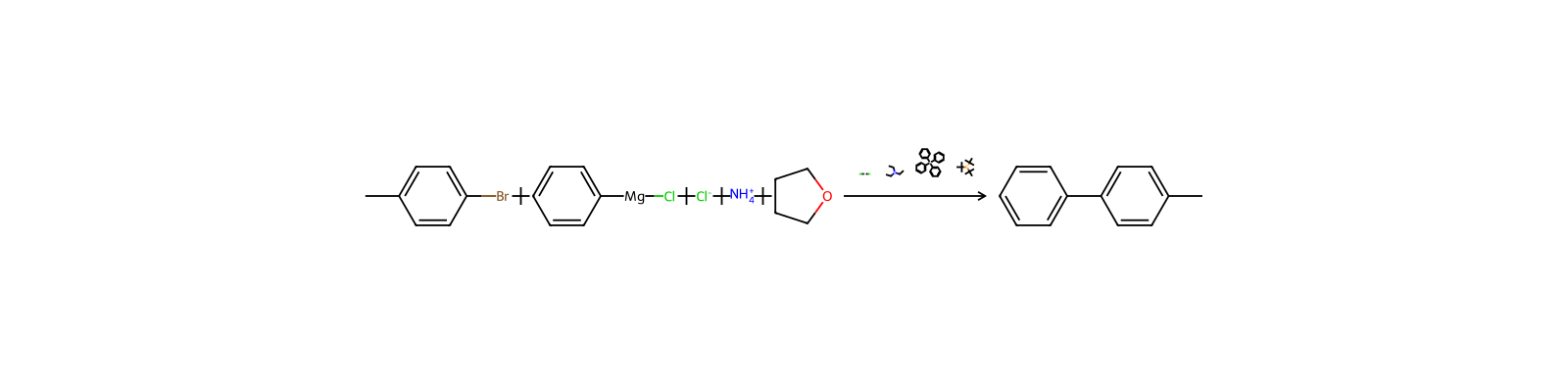
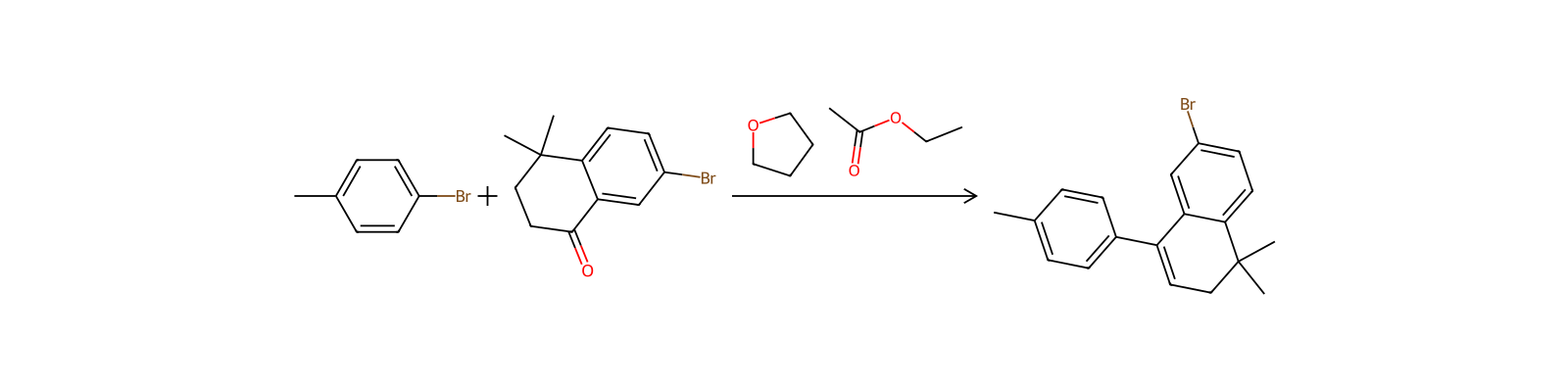
HRID 2604 reaction equation
HRID 2604As reactantuspto-grants-1998_03
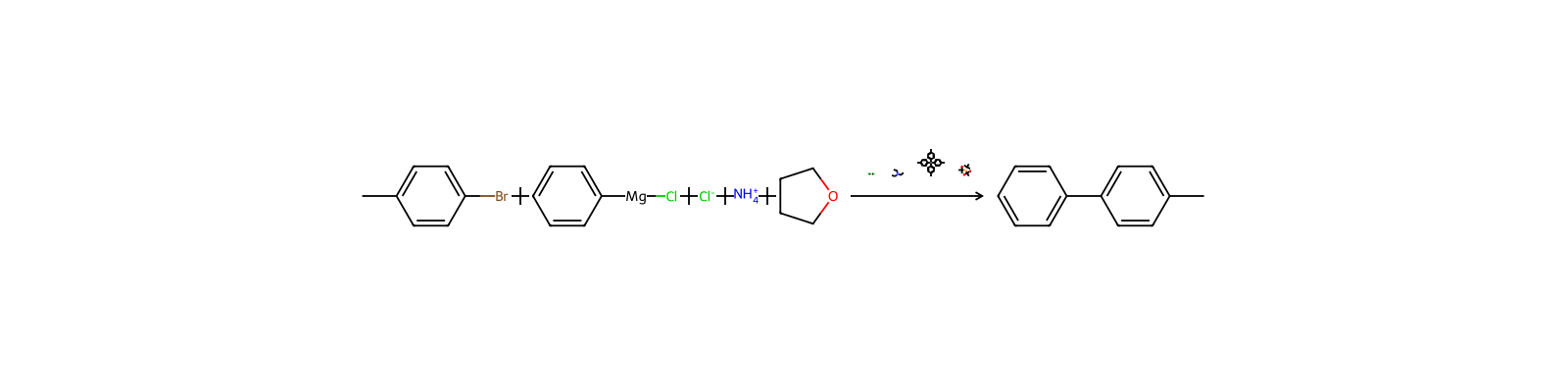
HRID 2614 reaction equation
HRID 2614As reactantuspto-grants-1998_03
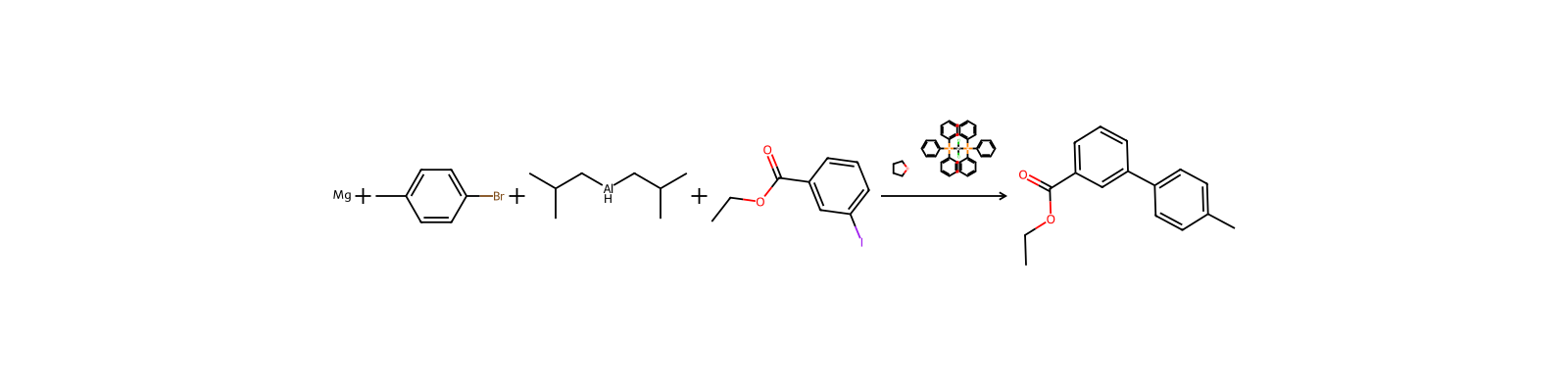
HRID 12515 reaction equation
HRID 12515As reactantuspto-grants-2010_06
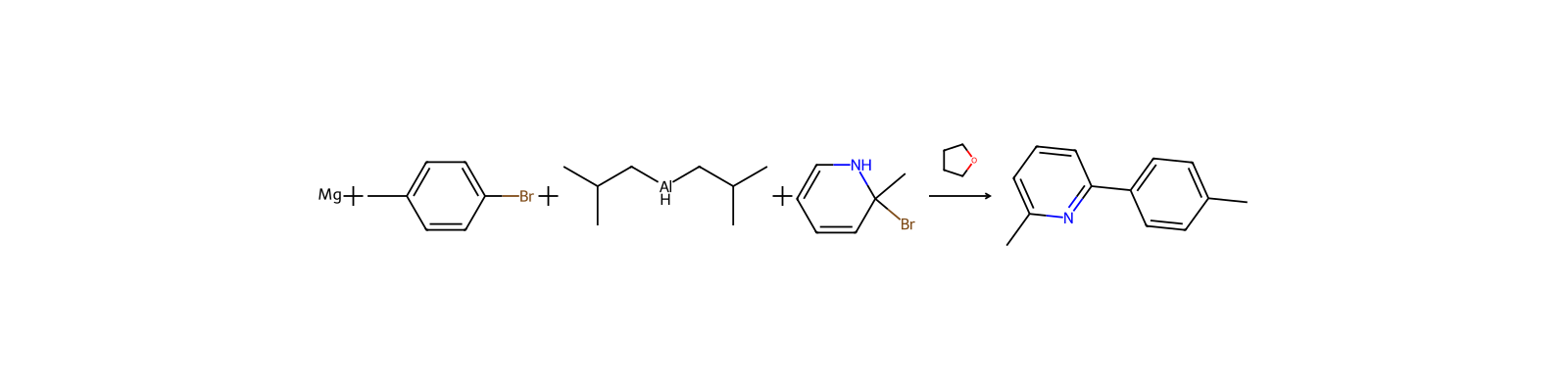
HRID 13872 reaction equation
HRID 13872As reactantuspto-grants-2010_06
HRID 13890 reaction equation
HRID 13890As reactantuspto-grants-2010_06
HRID 22246 reaction equation
HRID 22246As reactantuspto-grants-1995_06
HRID 22256 reaction equation
HRID 22256As reactantuspto-grants-1995_06
HRID 22259 reaction equation
HRID 22259As reactantuspto-grants-1995_06
Page 1 of 46

Compound notes

Loading…

On this pageBasic informationOverviewNames & identifiersPropertiesSafety & regulationChemistry & industryRelated reactionsCompound notes
More actions
New noteNew reactionRequest quotes

83.3 °F (NTP, 1992)

28.5 °C

Vapor Density · 2 items

5.9 (NTP, 1992) - Heavier than air; will sink (Relative to Air)

5.9 (Air= 1)

Vapor Pressure · 5 items

1 mmHg at 50.5 °F ; 5 mmHg at 117.5 °F; 10 mmHg at 142.0 °F (NTP, 1992)

1.15 [mmHg]

Vapor pressure = 2.52 kPa (18.9 mm Hg) at 75 °C

Vapor pressure = 1.90 mm Hg @ 25 °C /From experimentally-derived coefficients/

1.15 mm Hg at 25 °C.

Refractive IndexINDEX OF REFRACTION: 1.5490 AT 20 °C/D

Physicochemical properties

Melting point
28.5 °C · 28.5 °C
Boiling point
184.5 °C · 184.5 °C
Density
1.3995 g/cm3 · 1.3995 g/cm3(Temp: 35 °C)
color
White solid,Crystals, Powder or colorless liquid
Symbol(GHS)
7 · GHS07,GHS09
Signal word
Warning
Hazard statements
332 · H332-H411
Precautionary statements
262 · P262+P273
PackingGroup
III
Reactive GroupAryl Halides
Reactivity ProfileP-BROMOTOLUENE is incompatible with strong oxidizing agents. (NTP, 1992)
Air and Water ReactionsInsoluble in water.
NFPA Hazard Classification · 3 items

2 - Materials that, under emergency conditions, can cause temporary incapacitation or residual injury.

2 - Materials that must be moderately heated or exposed to relatively high ambient temperatures before ignition can occur. Materials would not under normal conditions form hazardous atmospheres with air, but under high ambient temperatures or under moderate heating could release vapor in sufficient quantities to produce hazardous atmospheres with air.

0 - Materials that in themselves are normally stable, even under fire conditions.

Hazard Classes and CategoriesAcute Tox. 4 (78.7%)
Skin, Eye, and Respiratory IrritationsIrritant /2-Bromotoluene/

Safety & protection

Fire FightingFires involving this material can be controlled with a dry chemical, carbon dioxide or Halon extinguisher. A water spray may also be used. (NTP, 1992)
First Aid · 1 item

EYES: First check the victim for contact lenses and remove if present. Flush victim's eyes with water or normal saline solution for 20 to 30 minutes while simultaneously calling a hospital or poison control center. Do not put any ointments, oils, or medication in the victim's eyes without specific instructions from a physician. IMMEDIATELY transport the victim after flushing eyes to a hospital even if no symptoms (such as redness or irritation) develop.

Nonfire Spill Response · 1 item

SMALL SPILLS AND LEAKAGE: If you spill this chemical, FIRST REMOVE ALL SOURCES OF IGNITION. Then, use absorbent paper to pick up all liquid spill material. Your contaminated clothing and absorbent paper should be sealed in a vapor-tight plastic bag for eventual disposal. Solvent wash all contaminated surfaces with 60-70% ethanol followed by washing with a soap and water solution. Do not reenter the contaminated area until the Safety Officer (or other responsible person) has verified that the area has been properly cleaned.

Disposal Methods · 1 item

SRP: At the time of review, criteria for land treatment or burial (sanitary landfill) disposal practices are subject to significant revision. Prior to implementing land disposal of waste residue (including waste sludge), consult with environmental regulatory agencies for guidance on acceptable disposal practices.

Preventive Measures · 1 item

SRP: The scientific literature for the use of contact lenses in industry is conflicting. The benefit or detrimental effects of wearing contact lenses depend not only upon the substance, but also on factors including the form of the substance, characteristics and duration of the exposure, the uses of other eye protection equipment, and the hygiene of the lenses. However, there may be individual substances whose irritating or corrosive properties are such that the wearing of contact lenses would be harmful to the eye. In those specific cases, contact lenses should not be worn. In any event, the usual eye protection equipment should be worn even when contact lenses are in place.

Personal Protective Equipment (PPE) · 1 item

RECOMMENDED RESPIRATOR: Where the neat test chemical is weighed and diluted, wear a NIOSH-approved half face respirator equipped with an organic vapor/acid gas cartridge (specific for organic vapors, HCl, acid gas and SO2) with a dust/mist filter. (NTP, 1992)

Toxicology

Environmental Fate · 3 items

TERRESTRIAL FATE: Based on a recommended classification scheme(1), an estimated Koc value of 434(SRC), derived from a molecular structure estimation method(2), suggests that 4-bromotoluene will have moderate mobility in soil(SRC). Its high Henry's Law constant, 2.3X10⁻³ atm-cu m/mole(3), high vapor pressure, 1.15 mm Hg at 25 °C(3), and moderate adsorptivity to soil indicate that volatilization may be an important fate process from both moist and dry soil surfaces(4,SRC). A single pure culture biodegradation study has observed biooxidation of 4-bromotoluene utilizing a bacterium isolated from soil(5); however, sufficient biodegradation data are not available to predict the significance of biodegradation in the environment. No data are available pertaining to abiotic degradation of 4-bromotoluene in soil(SRC).

AQUATIC FATE: Based on a recommended classification scheme(1), an estimated Koc value of 434(SRC) determined from molecular structure(2), indicates that 4-bromotoluene may adsorb to sediment and particulate matter in the water column(SRC). It is expected to readily volatilize from water based on its Henry's Law constant of 2.3X10⁻³ atm-cu m/mole(3). Estimated half-lives for a model river and model lake are 4.3 hours and 5.3 days, respectively(4,SRC). Using a model which takes adsorption into account(7), the volatilization half-life of 4-bromotoluene in an environmental pond is estimated to be 14.9 days. According to a recommended classification scheme(6), an estimated BCF value of 230(4,SRC), based on its log Kow(5,SRC), suggests that bioconcentration in aquatic organisms is moderately high(SRC). No experimental data are available pertaining to aquatic biodegradation(SRC).

ATMOSPHERIC FATE: According to a theory of gas/particle partitioning of semivolatile organic compounds in the atmosphere(2), 4-bromotoluene, which has a vapor pressure of 1.15 mm Hg at 25 °C(1), should exist entirely in the vapor phase in the ambient atmosphere(2,SRC). Vapor-phase 4-bromotoluene should degrade in the atmosphere by reaction with photochemically produced hydroxyl radicals; the half-life for this reaction is estimated to be 9.8 days(3,SRC).

Adverse EffectsNeurotoxin - Acute solvent syndrome
Soil Adsorption/Mobility · 1 item

Using an estimation method based on molecular connectivity indices(1), the Koc for 4-bromotoluene is estimated to be 430(SRC). According to a suggested classification scheme(2), this Koc value suggests that 4-bromotoluene will have medium mobility in soil(SRC).

Artificial Pollution SourcesBromotoluene's use as a solvent and chemical intermediate(1,2) may result in direct environmental release through evaporation and from wastes generated at sites of production or use(SRC).
Environmental Biodegradation4-Bromotoluene was oxidized to a dihydrodiol compound in a pure culture study utilizing the soil-isolated bacterium Pseudomonas putida(1).
Environmental Bioconcentration · 1 item

A BCF of 230 was estimated for 4-bromotoluene(SRC), using its log Kow of 3.42(1) and a recommended regression-derived equation(2). According to a recommended classification scheme(3), this BCF value suggests that bioconcentration in fish and aquatic organisms is moderately high(SRC).

Volatilization from Water/Soil · 1 item

The Henry's Law constant of 4-bromotoluene is 2.33X10⁻³ atm-cu m/mole(1) which indicates that volatilization from environmental waters is probably significant, and may be rapid(2). The volatilization half-life of 4-bromotoluene from a model river (1 meter deep flowing 1 m/sec with a wind speed of 3 m/sec) and model lake (1 meter deep flowing at 0.05 m/sec with a wind speed of 0.5 m/sec) is estimated to be 4.3 hr and 5.3 days, respectively(2,SRC); these estimates do not consider the effect of adsorption to sediment which may be important(SRC). The volatilization half-life of 4-bromotoluene in an experimental pond which considers adsorption has been estimated to be 14.9 days(3,SRC).

Non-Human Toxicity Excerpts · 2 items

RESPIRATORY IRRITATION &, IN HIGH CONCN ... /CNS DEPRESSION/ IN EXPTL ANIMALS. /3-BROMOTOLUENE/

p-Bromotoluene tested negative for mutagenicity test in Salmonella assays.

Environmental Abiotic Degradation · 1 item

The rate constant for the vapor-phase reaction of 4-bromotoluene with photochemically produced hydroxyl radicals has been estimated to be 1.6X10⁻¹² cu m/molecule-sec at 25 °C(1,SRC); assuming an average atmospheric hydroxyl radical concn of 5X10+5 molecules/cu cm, the half-life for this reaction can be estimated to be 9.8 days(1,SRC). 4-Bromotoluene does not contain any functional groups that are susceptible to aqueous environmental hydrolysis(2); therefore, hydrolysis is not expected to be significant in water(SRC). Irradiation of 4-bromotoluene (in hexane solution) with artificial UV light above 290 nm resulted in a dehalogenation of 1.0% over a two hour period(3).

Probable Routes of Human ExposureOccupational exposure may occur through inhalation or dermal contact at sites where 4-bromotoluene is manufactured, used as a solvent or used as a chemical intermediate. (SRC)
Environmental Water ConcentrationsDRINKING WATER: 4-Bromotoluene was qualitatively detected in drinking water concentrates collected from Cincinnati, OH in Oct 1978(1).
Environmental Fate/Exposure Summary · 1 item

4-Bromotoluene may be released to the environment through evaporation from solvent uses or from wastes generated at sites of production and use. If released to the atmosphere, 4-bromotoluene is expected to degrade by reaction with photochemically produced hydroxyl radicals; the half-life for this reaction is estimated to be 9.8 days. If released to water, 4-bromotoluene may be removed from the water column by volatilization and adsorption. Using an estimated Henry's Law constant of 2.3X10⁻³ atm-cu m/mol, volatilization half-lives of 4.3 hr and 5.3 days can be estimated for a model river and model lake, respectively. The potential effect of adsorption to sediment is considered in the half-life from an environmental pond which is estimated to be 14.9 days, but not from the model river or model lake. An estimated Koc value of 430 suggests that if 4-bromotoluene is released to soil, moderate leaching may occur. Based on its estimated Henry's Law constant and measured vapor pressure (1.15 mm Hg at 25 °C), evaporation from dry and moist surface soil may also occur. Data are insufficent to assess the importance of biodegradation in the environment. Its estimated BCF of 230 suggests that bioconcentration in aquatic organisms is moderately high. Occupational exposure may occur through inhalation or dermal contact at sites where 4-bromotoluene is manufactured, used as a solvent or used as a chemical intermediate. (SRC)

Safety data

Signal word
Warning
Symbol(GHS)
GHS07,GHS09
packing_group
III
Hazard statements
H332-H411
Precautionary statements
P262+P273