

Basic information
- CAS
106-92-3- Standard SMILES
C=CCOCC1CO1- InChIKey
LSWYGACWGAICNM-UHFFFAOYSA-N- Molecular formula
- C6H10O2
- Average molar mass
- 114.14 g/mol
- Monoisotopic mass
- 114.06807956
Overview
Allyl glycidyl ether appears as a colorless liquid with a pleasant odor. Slightly less dense than water and insoluble in water. Hence floats on water. Poisonous by ingestion and mildly toxic by inhalation and skin contact. Very irritating to skin and eyes. Used to make other chemicals.
Names & identifiers
- Preferred name
- Allyl glycidyl ether
- IUPAC
- 2-(prop-2-enoxymethyl)oxirane
- English name
- Allyl glycidyl ether
- Molecular formula
- C6H10O2
- Molecular weight
- 114.14
Names & synonyms
ALLYL GLYCIDYL ETHER106-92-3Glycidyl allyl etherAllyl 2,3-epoxypropyl etherAllylglycidaetherAllil-glicidil-etere1-Allyloxy-2,3-epoxypropane1,2-Epoxy-3-allyloxypropaneDenacol EX 111Propane, 1-(allyloxy)-2,3-epoxy-1-(Allyloxy)-2,3-epoxypropane1-Allyloxy-2,3-epoxypropan
Show more names
AGEallylAllylglycide etherAlly glycidyl etherM 560Ageflex AGESipomer AGEALLYLGLYCIDOLETHER
Ether, allyl 2,3-epoxypropylOxyde d'allyle et de glycidyle1-Allilossi-2,3 epossipropano1-Allyloxy-2,3-epoxy-propaanNCI-C56666DTXSID9039232[(2-Propenyloxy)methyl]oxiraneNSC-631
Database identifiers
- CAS
106-92-3- PubChem CID
- 7838
- DTXSID
DTXSID9039232- ChEMBL
CHEMBL1528174- UNII
- HDC0791894
- EC Number
- 203-442-4
- Nikkaji
- J34.520B
Properties
Computed structural properties
- XLogP
- 0.4
- Topological polar surface area
- 21.8 Ų
- Hydrogen bond donors
- 0
- Hydrogen bond acceptors
- 2
- Rotatable bonds
- 4
- Heavy atoms
- 8
- Formal charge
- 0
- Complexity
- 80.6
Experimental & physicochemical properties
Chemical ClassesFlammable agents - 2nd degree
PolymersPlastics & Rubber -> Glycidyl Ethers
LogP0.46 (estimated)
Odor
CHARACTERISTIC, NOT UNPLEASANT ODOR
... Pleasant odor.
Density
0.969 at 68 °F (NTP, 1992) - Less dense than water; will float
SP GR: 0.9698 AT 20 °C/40 °C
Relative density (water = 1): 0.97
0.97
0.97
Color/Form
COLORLESS LIQUID
Colorless liquid ...
Solubility
greater than or equal to 100 mg/mL at 65.3 °F (NTP, 1992)
14.1% IN WATER; MISCIBLE WITH ACETONE, TOLUENE, & OCTANE
Solubility in water, g/100ml: 14 (freely soluble)
14%
Flash Point
135 °F (NTP, 1992)
57 °C
135 °F (OPEN CUP)
45 °C c.c.
135 °F
135 °F
Boiling Point
309 °F at 760 mmHg (NTP, 1992)
153.9 °C AT 760 MM HG
154 °C
309 °F
309 °F
Melting Point
-148 °F (NTP, 1992)
FREEZING POINT: FORMS GLASS @ -100 °C
-100 °C
-148 °F [forms glass]
-148 °F [forms glass]
Vapor Density
3.94 (NTP, 1992) - Heavier than air; will sink (Relative to Air)
3.32 @ 25 °C (AIR= 1)
Relative vapor density (air = 1): 3.9
3.94
Odor Threshold
Odor Threshold Low: 9.4 [ppm]
44 mg/cu m odor low; 44 mg/cu m odor high.
Physicochemical properties
- Melting point
- -100 °C · -100 °C
- Boiling point
- 154 °C · 154 °C(lit.)
- Density
- 0.962 g/mL · 0.962 g/mL at 25 °C(lit.)
- vapor density
- 3.9 · 3.9 (vs air)
- vapor pressure
- 4.7 mm · 4.7 mm Hg ( 25 °C)
- refractive index
- 20 · n20/D 1.433(lit.)
- Flash point
- 135 °F · 135 °F
- storage temp.
- 20 °C · Store at <= 20°C.
- solubility
- 50 g/L · 50 g/L (20°C)
- form
- Liquid
- Specific Gravity
- 0.962 · 0.962
- color
- Clear colorless
- Water Solubility
- 50 g/L · 50 g/L (20 ºC)
- FreezingPoint
- -100 · -100
- BRN
- 105871 · 105871
- Henry's Law Constant
- (x 10-6 atmm3/mol): 3.83 at 20 °C (approximate - calculated from water solubility and vapor pressure)
- Exposure limits
- 1 ppm · ACGIH:TLV-TWA 1 ppm (4.7 mg/m3)OSHA:PEL-Ceiling 10 ppm (45 mg/m3)NIOSH:REL-TWA 5 ppm; REL-STEL 10 ppm
- Stability
- Stable. Combustible. Incompatible with strong oxidizing agents, acids, bases. May form peroxides in storage if in contact with air.
- InChI
- 1S/C6H10O2/c1-2-3-7-4-6-5-8-6/h2,6H,1,3-5H2
- InChIKey
- LSWYGACWGAICNM-UHFFFAOYSA-N
- SMILES
- C=CCOCC1OC1
- LogP
- 0.45 at · 0.45 at 25℃
- Toxicology and Carcinogenesis
- Toxicology and Carcinogenesis Studies of Allyl Glycidyl Ether (CASRN 106-92-3) in Osborne-Mendel Rats and B6C3F1 Mice (Inhalation Studies)
- FDA 21 CFR
- 177.228 · 177.2280
- Indirect Additives used in Food Contact Substances
- ALLYL GLYCIDYL ETHER
- CAS DataBase Reference
- 106 · 106-92-3(CAS DataBase Reference)
- EWG's Food Scores
- 5 · 5-6
- FDA UNII
- 791894 · HDC0791894
- NIST Chemistry Reference
- Oxirane, [(2-propenyloxy)methyl]-(106-92-3)
- EPA Substance Registry System
- Allyl glycidyl ether (106-92-3)
- UNSPSC Code
- 12352112 · 12352112
- NACRES
- 23 · NA.23
- Symbol(GHS)
- 2 · GHS02,GHS05,GHS06,GHS08
- Signal word
- Danger
- Hazard statements
- 331 · H331-H302-H313-H315-H318-H361-H370-H372-H317-H341-H351-H335-H412-H226
- Precautionary statements
- 501 · P501-P273-P272-P270-P202-P240-P260-P210-P233-P201-P243-P241-P242-P271-P264-P280-P370+P378-P308+P311-P362+P364-P303+P361+P353-P333+P313-P301+P312+P330-P304+P340+P311-P305+P351+P338+P310-P403+P233-P403+P235-P405
- target organs
- Respiratory system
- PPE
- Eyeshields, Faceshields, Gloves, type ABEK (EN14387) respirator filter
- Hazard Codes
- Xn
- Risk Statements
- 10 · 10-20/22-37/38-40-41-43-52/53-62-68
- Safety Statements
- 24 · 24/25-26-36/37/39-61
- OEB
- A
- OEL
- 5 ppm · TWA: 5 ppm (22 mg/m3), STEL: 10 ppm (44 mg/m3) [skin]
- RIDADR
- 2219 · UN 2219
- WGK Germany
- 3 · 3
- RTECS
- 875000 · RR0875000
- Autoignition Temperature
- 264 °C · 264 °C
- TSCA
- TSCA listed
- HazardClass
- 3 · 3
- PackingGroup
- III
- HS Code
- 29109000 · 29109000
- Storage Class
- 3 · 3 - Flammable liquids
- Hazard Classifications
- 3 InhalationAcute · Acute Tox. 3 InhalationAcute Tox. 4 OralAquatic Chronic 3Carc. 2Eye Dam. 1Flam. Liq. 3Muta. 2Repr. 2Skin Irrit. 2Skin Sens. 1STOT SE 3
- Hazardous Substances Data
- 106 · 106-92-3(Hazardous Substances Data)
- Toxicity
- 50 orally · LD50 orally in Rabbit: 922 mg/kg LD50 dermal Rabbit 2550 mg/kg
- IDLA
- 50 ppm · 50 ppm
- REACH Registrations
- Active
- Limited Quantities
- 5 L · 5.0 L (1.3 gallons) (liquid)
- Excepted Quantities
- Max Inner Pack (30g or 30ml) and Max Outer Pack (1Kg or 1L)
Safety & regulation
GHS classification
GHS Classification
Danger
H226: Flammable liquid and vapor [Warning Flammable liquids]
P203, P210, P233, P240, P241, P242, P243, P261, P264, P264+P265, P270, P271, P272, P273, P280, P301+P317, P302+P352, P303+P361+P353, P304+P340, P305+P354+P338, P317, P318, P319, P321, P330, P332+P317, P333+P317, P362+P364, P370+P378, P403+P233, P403+P235, P405, and P501 (click each P-code to see the statement)
Danger
H226 (100%): Flammable liquid and vapor [Warning Flammable liquids]
P203, P210, P233, P240, P241, P242, P243, P261, P264, P264+P265, P270, P271, P272, P273, P280, P301+P317, P302+P352, P303+P361+P353, P304+P340, P305+P354+P338, P316, P317, P318, P319, P321, P330, P332+P317, P333+P317, P362+P364, P370+P378, P403+P233, P403+P235, P405, and P501 (click each P-code to see the statement)
Hazard information
Regulatory Information
Chemical: Oxirane, [(2-propenyloxy)methyl]-
Oxirane, 2-[(2-propen-1-yloxy)methyl]- is listed on the EPA's Chemical Data Reporting (CDR) system. Manufacturers and importers of Oxirane, 2-[(2-propen-1-yloxy)methyl]- are required to report information about their production and use of this chemical to the EPA under the Toxic Substances Control Act (TSCA). (40 eCFR Part 711)
TP - indicates a substance that is the subject of a proposed TSCA section 4 test rule.
Status: Active Update: 26-04-2023 https://echa.europa.eu/registration-dossier/-/registered-dossier/14565
Allyl 2,3-epoxypropyl ether: Does not have an individual approval but may be used under an appropriate group standard
The New Jersey Worker and Community Right to Know Act requires public and private employers to provide information about hazardous substances at their workplaces. (N.J.S.A. 34:5A-1 et. seq.)
Other Safety InformationIMAP assessments - Aliphatic and allyl glycidyl ethers: Human health tier II assessment
DOT LabelFlammable Liquid
Fire Hazards
Excerpt from ERG Guide 129 [Flammable Liquids (Water-Miscible / Noxious)]:
· HIGHLY FLAMMABLE: Will be easily ignited by heat, sparks or flames.
Flammable. Above 48 °C explosive vapour/air mixtures may be formed.
Health Hazards
Excerpt from ERG Guide 129 [Flammable Liquids (Water-Miscible / Noxious)]:
· May cause toxic effects if inhaled or absorbed through skin.
Hazards SummarySecond degree skin burns and sensitization have been reported; [ACGIH] Pulmonary edema may result from inhalation of high concentrations. [Reference #1]
DOT ID and Guide
2219 129
2219 129
Reactive GroupEthers
EC ClassificationSymbol: Xn; R: 10-20/22-37/38-40-41-43-52/53-62-68; S: (2)-24/25-26-36/37/39-61
UN ClassificationUN Hazard Class: 3; UN Pack Group: III
Special ReportsDHHS/NTP; Toxicology & Carcinogenesis Studies of Allyl glycidyl ether in Osborne-Mendel Rats and B6C3F1 Mice (Inhalation Studies) Technical Report Series No. 376 (1990) NIH Publication No. 90-2831
TSCA Requirements
Pursuant to section 8(d) of TSCA, EPA promulgated a model Health and Safety Data Reporting Rule. The section 8(d) model rule requires manufacturers, importers, and processors of listed chemical substances and mixtures to submit to EPA copies and lists of unpublished health and safety studies. Oxirane, ((2-propenyloxy)methyl)- is included on this list.
Section 8(a) of TSCA requires manufacturers of this chemical substance to report preliminary assessment information concerned with production, use, and exposure to EPA as cited in the preamble of the 51 FR 41329.
Safety & protection
Fire Fighting
Excerpt from ERG Guide 129 [Flammable Liquids (Water-Miscible / Noxious)]:
Use powder, foam, carbon dioxide, water. In case of fire: keep drums, etc., cool by spraying with water.
First Aid Measures
Fresh air, rest. Artificial respiration may be needed. Refer immediately for medical attention.
Remove contaminated clothes. Rinse and then wash skin with water and soap. Refer for medical attention .
First rinse with plenty of water for several minutes (remove contact lenses if easily possible), then refer for medical attention.
Rinse mouth. Give one or two glasses of water to drink. Refer immediately for medical attention.
Accidental Release Measures
· CALL 911. Then call emergency response telephone number on shipping paper. If shipping paper not available or no answer, refer to appropriate telephone number listed on the inside back cover.
· ELIMINATE all ignition sources (no smoking, flares, sparks or flames) from immediate area.
First Aid
EYES: First check the victim for contact lenses and remove if present. Flush victim's eyes with water or normal saline solution for 20 to 30 minutes while simultaneously calling a hospital or poison control center. Do not put any ointments, oils, or medication in the victim's eyes without specific instructions from a physician. IMMEDIATELY transport the victim after flushing eyes to a hospital even if no symptoms (such as redness or irritation) develop.
General First Aid:
(General first aid procedures)
Safe StorageFireproof. Separated from strong oxidants, strong bases and strong acids. Cool. Keep in the dark.
Exposure Control and Personal Protection· Wear positive pressure self-contained breathing apparatus (SCBA).
Nonfire Spill ResponseExcerpt from ERG Guide 129 [Flammable Liquids (Water-Miscible / Noxious)]:
Spillage Disposal
Personal protection: filter respirator for organic gases and vapours adapted to the airborne concentration of the substance. Ventilation. Collect leaking and spilled liquid in sealable containers as far as possible. Absorb remaining liquid in inert absorbent. Wash away remainder with plenty of water. Store and dispose of according to local regulations. Do NOT let this chemical enter the environment.
Preventive Measures
SRP: The scientific literature for the use of contact lenses in industry is conflicting. The benefit or detrimental effects of wearing contact lenses depend not only upon the substance, but also on factors including the form of the substance, characteristics and duration of the exposure, the uses of other eye protection equipment, and the hygiene of the lenses. However, there may be individual substances whose irritating or corrosive properties are such that the wearing of contact lenses would be harmful to the eye. In those specific cases, contact lenses should not be worn. In any event, the usual eye protection equipment should be worn even when contact lenses are in place.
Clothing which becomes contaminated with allyl glycidyl ether should removed immediately and placed in closed containers for storage until it can be discarded or until provision is made for removal of alllyl glycidyl ether from clothing. If the clothing is to be laundered or cleaned, the person performing the operation should be informed of allyl glycidyl ether's hazardous properties.
Where there is any possibility of a worker's eyes being exposed to AGE, an eye-wash fountain should be provided within the immediate work area for emergency use. ...
Where there is any possibility of a worker's body being exposed to AGE, facilities for quick drenching of the body should be provided within the immediate work area for emergency use. ...
For more Preventive Measures (Complete) data for ALLYL GLYCIDYL ETHER (6 total), please visit the HSDB record page.
Isolation and Evacuation
Excerpt from ERG Guide 129 [Flammable Liquids (Water-Miscible / Noxious)]:
Immediate precautionary measure
Eye PreventionWear face shield, safety goggles or eye protection in combination with breathing protection.
Fire PreventionNO open flames, NO sparks and NO smoking. Above 48 °C use a closed system, ventilation and explosion-proof electrical equipment.
Toxicology
Target OrgansEyes, skin, respiratory system, blood, reproductive system
Ecotoxicity Values
LD50 Goldfish 78 mg/l/24 hr /Conditions of bioassay not specified/
LD50 Goldfish 30 mg/l/96 hr /Conditions of bioassay not specified/
Adverse EffectsDermatotoxin - Skin burns.
Exposure Routes
The substance can be absorbed into the body by inhalation, through the skin and by ingestion.
inhalation, skin absorption, ingestion, skin and/or eye contact
Signs and Symptoms
Cough. Sore throat. Burning sensation. Drowsiness. Lethargy.
MAY BE ABSORBED! Dry skin. Redness. Pain. Blisters.
Redness. Pain. Blurred vision. Severe deep burns.
Burning sensation. Headache. Dullness. Drowsiness. Nausea. Vomiting.
irritation eyes, skin, nose, respiratory system; dermatitis; pulmonary edema; narcosis; possible hematopoietic, reproductive effects
Ongoing Test Status
The following link will take the user to the National Toxicology Program (NTP) Test Agent Search Results page, which tabulates all of the "Standard Toxicology & Carcinogenesis Studies", "Developmental Studies", and "Genetic Toxicity Studies" performed with this chemical. Clicking on the "Testing Status" link will take the user to the status (i.e., in review, in progress, in preparation, on test, completed, etc.) and results of all the studies that the NTP has done on this chemical. [http://ntp-apps.niehs.nih.gov/ntp_tox/index.cfm?fuseaction=ntpsearch.searchresults&searchterm=106-92-3]
ICSC Environmental DataThe substance is harmful to aquatic organisms.
TSCA Test Submissions
The mutagenicity of allyl glycidyl ether (AGE) was evaluated in Salmonella tester strains TA98 and TA1535, both in the presence and absence of added metabolic activation by either Aroclor-induced or phenobarbitol-induced rat liver S9 fraction. AGE was tested for mutagenicity at concentrations of 0.5, 1.0 and 2.0 micromoles/plate using the plate incorporation method. AGE caused a positive response in tester strain 1535 at 2.0 micromoles/plate in the presence of metabolic activation by Aroclor-induced rat liver S9 fraction.
The effect of allyl glycidyl ether was examined in the DNA repair assay. Human mononucleated white cells in G-0 phase were exposed to 1, 10, 100 or 500 ppm test article (dissolved in DMSO) for 5 hours. Exposure at any concentration did not statistically significantly (Duncan's LSD test, p > 0.05) increase the number of grains per nucleus counted on autoradiographs, or increase the intracellular incorporation of tritiated thymidine measured by liquid scintillation counting. In a preliminary range finding test, toxicity was reported at the upper dose levels used in the definitive test.
The mutagenicity of allyl glycidyl ether (AGE) was evaluated in male B6D2F1 mice (at least 10) dermally exposed to GBE at a dose level of 1.5 g/kg three times/week for a minimum of 8 weeks. Following the treatment period, the male mice were mated with 3 untreated, virgin female B6D2F1f mice for one week and mated with 3 fresh females for a second week. Significant differences were observed between treated and control mice in the following: proportion of deaths/pregnancy (decreased throughout the study). Significant differences were observed between treated mice over time in the following: number of implants/pregnancy (decreased versus controls in 1st week post-treatment, decreased versus controls in 2nd week post-treatment). There were no differences between treated and control mice or in treated mice over time with respect to percent pregnancy.
Human Toxicity Excerpts
SEVERAL CASES OF DERMATITIS AND 1 CASE OF EYE IRRITATION CONSTITUTE THE HUMAN DATA.
Allyl glycidyl ether is a CNS depressant and also causes acute pulmonary edema. It is classified as slightly toxic after oral administration and percutaneous application, appreciably irritating and injurious to the eyes and skin, capable of causing skin sensitization in human subjects ... .
Short-term (acute): Exposure to AGE can cause moderate irritation of the skin and severe irritation of the eyes and respiratory tract. Long-term (chronic): Exposure to AGE can cause dermatitis with itching, swelling, and blisters. Skin sensitization to AGE and cross sensitization with other epoxy agents can also occur.
Dermal contact is the usual mode of exposure, but droplets in mist can also attack the eyes and respiratory tract. Glycidyl & diglycidyl ethers tend to be irritants and sensitizing agents. /Glycidyl & diglycidyl ethers/
Carcinogen Classification
Allyl Glycidyl Ether
TR-376: Toxicology and Carcinogenesis Studies of Allyl Glycidyl Ether (CASRN 106-92-3) in Osborne-Mendel Rats and B6C3F1 Mice (Inhalation Studies) (1990 )
06/27/89
Equivocal Evidence
No Evidence
Some Evidence
Non-Human Toxicity Excerpts
... CLASSIFIED AS A MODERATE PRIMARY SKIN IRRITANT AND SEVERE EYE IRRITANT. ... SYSTEMIC TOXICITY TO RATS WAS OBSERVED AFTER 50 DAILY, 7 HOUR EXPOSURES AT 260, 400 AND 900 PPM, MANIFESTED BY INCREASED WEIGHT GAIN AT 260 PPM, AND HIGH MORTALITY AT 600 AND 900 PPM.
KIDNEYS OF ... /RATS/ EXPOSED TO 400 PPM /50 DAYS/ ... EXCESSIVE KIDNEY-BODY WT RATIOS. 260 PPM ... VERY SLIGHT IRRITATION OF EYES & SLIGHT RESPIRATORY DISTRESS. AT HIGHER LEVELS CORNEAL OPACITIES ... & SEVERE RESPIRATORY DIFFICULTIES. ... AUTOPSY SHOWED BRONCHOPNEUMONIA, EMPHYSEMA, BRONCHIECTASIS, PNEUMONITIS & HEMORRHAGE.
/AT LEVELS HIGHER THAN 260 PPM AUTOPSY OF RATS EXPOSED 50 DAYS REVEALED/ ... MOTTLED DISCOLORATION OF THE LIVER & ENLARGED ADRENAL GLANDS. 2 ANIMALS EXPOSED TO 900 PPM HAD NECROTIC SPLEENS. ... PREDOMINANT TOXICOLOGIC ACTIVITY WAS DEPRESSION OF CNS AFTER INTRAGASTRIC ADMINISTRATION.
ADMIN TO MICE & RATS ORALLY PRODUCED MODERATE DEPRESSION & DYSPNEA WITHIN 15-19 MIN. DEATH OCCURRED IN 4 HR TO 5 DAYS. ... @ AUTOPSY HYPOTONICITY OF ENTERIC TRACT & EXTENSIVE ADHESIONS OF STOMACH WALLS TO ADJACENT TISSUES WERE NOTED. NO CHARACTERISTIC MICROSCOPIC PATHOLOGY OCCURRED ... .
For more Non-Human Toxicity Excerpts (Complete) data for ALLYL GLYCIDYL ETHER (12 total), please visit the HSDB record page.
Evidence for CarcinogenicityA4; Not classifiable as a human carcinogen.
Regulatory information
TSCA Requirements
Pursuant to section 8(d) of TSCA, EPA promulgated a model Health and Safety Data Reporting Rule. The section 8(d) model rule requires manufacturers, importers, and processors of listed chemical substances and mixtures to submit to EPA copies and lists of unpublished health and safety studies. Oxirane, ((2-propenyloxy)methyl)- is included on this list.
Section 8(a) of TSCA requires manufacturers of this chemical substance to report preliminary assessment information concerned with production, use, and exposure to EPA as cited in the preamble of the 51 FR 41329.
Safety data
- OEB
- A
- OEL
- TWA: 5 ppm (22 mg/m3), STEL: 10 ppm (44 mg/m3) [skin]
- PPE
- Eyeshields, Faceshields, Gloves, type ABEK (EN14387) respirator filter
- wgk
- 3
- IDLA
- 50 ppm
- tsca
- TSCA listed
- rtecs
- RR0875000
- ridadr
- UN 2219
- hs_code
- 29109000
- Toxicity
- LD50 orally in Rabbit: 922 mg/kg LD50 dermal Rabbit 2550 mg/kg
- risk_code
- 10-20/22-37/38-40-41-43-52/53-62-68
- Signal word
- Danger
- Symbol(GHS)
- GHS02,GHS05,GHS06,GHS08
- hazard_code
- Xn
- safety_code
- 24/25-26-36/37/39-61
- hazard_class
- 3
- Storage Class
- 3 - Flammable liquids
- packing_group
- III
- target organs
- Respiratory system
- Hazard statements
- H331-H302-H313-H315-H318-H361-H370-H372-H317-H341-H351-H335-H412-H226
- Limited Quantities
- 5.0 L (1.3 gallons) (liquid)
- Excepted Quantities
- Max Inner Pack (30g or 30ml) and Max Outer Pack (1Kg or 1L)
- REACH Registrations
- Active
- Hazard Classifications
- Acute Tox. 3 InhalationAcute Tox. 4 OralAquatic Chronic 3Carc. 2Eye Dam. 1Flam. Liq. 3Muta. 2Repr. 2Skin Irrit. 2Skin Sens. 1STOT SE 3
- Autoignition Temperature
- 264 °C
- Precautionary statements
- P501-P273-P272-P270-P202-P240-P260-P210-P233-P201-P243-P241-P242-P271-P264-P280-P370+P378-P308+P311-P362+P364-P303+P361+P353-P333+P313-P301+P312+P330-P304+P340+P311-P305+P351+P338+P310-P403+P233-P403+P235-P405
- Hazardous Substances Data
- 106-92-3(Hazardous Substances Data)
Chemistry & industry
Uses & manufacturing
Uses
Used as a reactive diluent and intermediate in the production of resins; [ACGIH]
Plastic Composites Manufacturing [Category: Industry]
STABILIZER OF CHLORINATED COMPOUNDS, VINYL RESINS, RUBBER; RESIN INTERMEDIATE
U.S. Production2023: 2,500,000 - <4,000,000 lb
Consumer UsesMonomers
Industry UsesIntermediate
Methods of Manufacturing... MANUFACTURED THROUGH THE CONDENSATION OF ALLYL ALCOHOL & EPICHLOROHYDRIN WITH SUBSEQUENT DEHYDROCHLORINATION WITH CAUSTIC TO FORM THE EPOXY RING.
General Manufacturing Information
Utilities
Oxirane, 2-[(2-propen-1-yloxy)methyl]-: ACTIVE
IT IS NOT CLASSIFIED AS DANGEROUS ARTICLE AND IS NOT REGULATED BY THE BUREAU OF EXPLOSIVES.
Applications
DescriptionAllyl glycidyl ether is a colorless liquid clycidyl ether with a pleasant odor. The compound is insoluble in water and less dense than water, therefore can easily float on water. When ingested or inhaled, allyl glycidyl ether is mildly toxic. It is not classified as a human carcinogen.
UsesAllyl glycidyl ether is utilized in sealants and adhesives. It is also used in the production of polyvinylcaprolactam.
UsesAGE can be used as a terminal epoxy group in the development of adhesive surfaces by hydrosilylation process. It can also be used in the synthesis of polymeric electrolytes for the fabrication of lithium batteries.Useful in hydrosilylation, including the H2PtCl6·xH2O catalyzed hydrosilylation of siloxanes to epoxysiloxanes.
General DescriptionA colorless liquid with a pleasant odor. Flash point 135°F. Slightly less dense than water and insoluble in water. Hence floats on water. Poisonous by ingestion and mildly toxic by inhalation and skin contact. Very irritating to skin and eyes. Used to make other chemicals.
Preparation methods
PreparationIn a condensation reaction, epichlorohydrin and allyl alcohol are used in the synthesis of allyl glycidyl ether.
Upstream & downstream products
Downstream products
Suppliers100 total
国药集团化学试剂有限公司86-21-63210123 · [email protected]
梯希爱(上海)化成工业发展有限公司021-67121386 · [email protected]
上海阿拉丁生化科技股份有限公司400-6206333 13167063860 · [email protected]
Shandong chuangyingchemical Co., Ltd.18853181302 · [email protected]
Changzhou Carman Chemical Co., Ltd.15061933924
艾特(浙江)供应链管理有限公司15553101207 18615619105
武汉欣扬瑞和化学科技有限公司153-07155313 15307155313 · [email protected]
韶关阳安化工有限公司18902343715 · [email protected]
河北创海生物科技有限公司+86-86-13131129325 · [email protected]
爱斯特(成都)生物制药股份有限公司+86-28-85122536 85324413 · [email protected]
Dayang Chem (Hangzhou) Co.,Ltd.+86-0571-88938639 17705817739 · [email protected]
科瑞迪化学400-821-5857 021-64326257 · [email protected]
Syntechem Co.,Ltd[email protected]
上海迈瑞尔生化科技有限公司4006356688 18621169109 · [email protected]
阿法埃莎(中国)化学有限公司400-6106006 · [email protected]
安耐吉化学&3A(安徽泽升科技股份有限公司)400-0056266 · [email protected]
武汉卡诺斯科技有限公司027-83238443 15327105076 · [email protected]
上海瀚鸿科技股份有限公司021-54306202 13764082696 · [email protected]
山东洛克化工有限公司17653113209 13065062079 · [email protected]
上海比阳实业有限公司+86-15021878111 · [email protected]
济南世纪通达化工有限公司15153132128 15153132128 · [email protected]
山东西亚化学有限公司13355009207 13355009207 · [email protected]
玛雅试剂+86 (573) 82222445 (0)18006601000 452520369 · [email protected]
四川库利南科技有限公司400-1166-196 18981987031 · [email protected]
天津希恩思生化科技有限公司400 638 7771 · [email protected]
Xiamen AmoyChem Co., Ltd+86-86-5926051114 · [email protected]
Connect Chemicals GmbH+49 2102 2077 19 · [email protected]
武汉吉业升化工有限公司027-13545242311 13545242311 · [email protected]
艾科试剂4008-755-333 18080918076 · [email protected]
上海思域化工科技有限公司86-21-34053660 · [email protected]
赛默飞世尔科技(中国)有限公司800-810-5118 · [email protected]
北京伊诺凯科技有限公司400-810-7969 010-59572699 · [email protected]
TCI AMERICA800-4238616 · [email protected]
TOKYO CHEMICAL INDUSTRY CO., LTD.03-36680489 · [email protected]
TCI Europe320-37350700 · [email protected]
上海贤鼎生物科技有限公司4009209199 · [email protected]
HBCChem, Inc.+1-510-219-6317 · [email protected]
日照力德士化工有限公司010-51268198 · [email protected]
美岚实业(上海)有限公司021-58958189 · [email protected]
上海爱蝶实业有限公司021-58957966 18930537195 · [email protected]
成都零六生物科技有限公司400-1166-196 13458535857 · [email protected]
广拓化学(上海)有限公司021-60899189-8001 18918189673 · [email protected]
上海御略医药科技有限公司021-60345187 13671753212 · [email protected]
上海麦克林生化科技股份有限公司15221275939 15221275939 · [email protected]
杭州杰恒化工有限公司0571-87396432 · [email protected]
上海嵩爰化工科技有限公司010-1234567 18521000990 · [email protected]
上海有朋化工有限公司021-69005955 13701776567 · [email protected]
上海凯赛化工有限公司021-33516722 13701817765 · [email protected]
上海彤源化工有限公司021-021-69182866 13701855675 · [email protected]
武汉弘德悦欣医药科技有限公司027-83855396 15271852016
Additional notes
DefinitionThe length of time something has existed.
Related reactions
55 records

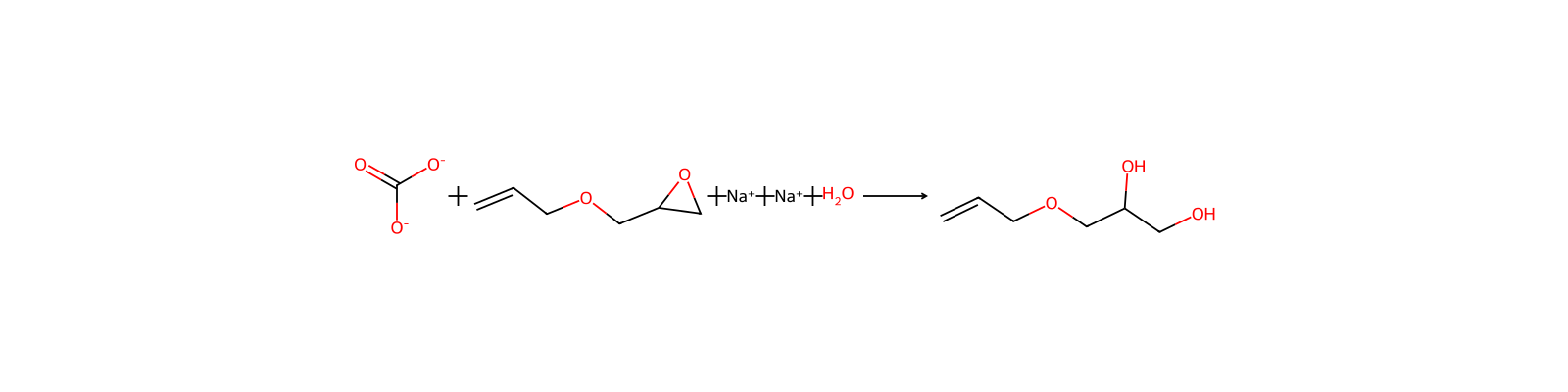


Compound notes
Loading…