Hydroquinone
HQ · QUINOL · HYDROQUINON · 1,4-DIHYDROXYBENZENE · Dihydroquinone · p-Hydroquinone · 1,4-BENZENEDIOL · 1,4-HYDROQUINONE
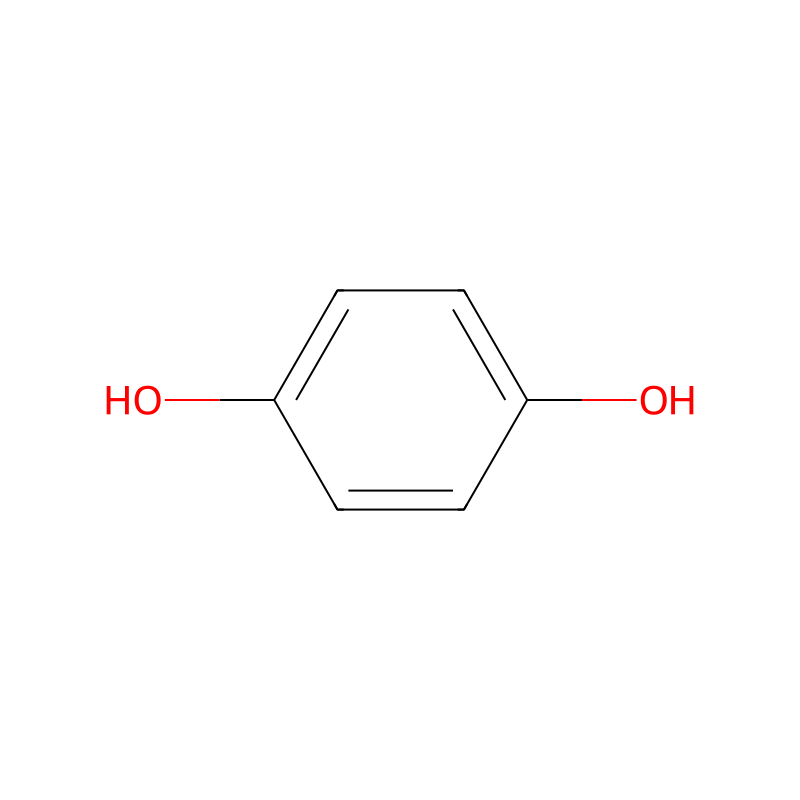
Identifiers & Physical Properties
| CAS No. | 123-31-9 |
|---|---|
| Molecular formula | C6H6O2 |
| Average molar mass | 110.11 g/mol |
| Monoisotopic mass | 110.03677943 g/mol |
| SMILES | Oc1ccc(O)cc1 |
| InChIKey | QIGBRXMKCJKVMJ-UHFFFAOYSA-N |
| PubChem CID | 785 |
| ChEMBL | CHEMBL537 |
| ChEBI | CHEBI:17594 |
| EC No. | 204-617-8 |
| DTXSID | DTXSID7020716 |
Chemical & Physical Properties
| XLogP | 0.6 |
|---|---|
| Topological polar surface area | 40.5 |
| Hydrogen bond donors | 2 |
| Hydrogen bond acceptors | 2 |
| Rotatable bonds | 0 |
| Heavy atoms | 8 |
| Formal charge | 0 |
| Complexity | 54.9 |
| Chemical classes | Hazardous Air Pollutants (HAPs)Other Classes -> PhenolsAntioxidant |
| Drugs | Pharmaceuticals -> Listed in ZINC15 |
| Cosmetics | Cosmetic ingredients (Hydroquinone) -> CIR (Cosmetic Ingredient Review)AntioxidantReducingBleachingHair dyeing |
| SpringerMaterials Properties | 13C nuclear magnetic resonance spectrum |
| Pesticides | Pesticide -> EPA IRISEnvironmental transformation -> Pesticide transformation products (metabolite, successor) |
| LogP (partition coefficient) | log Kow = 0.590.61 |
| Odor | Odorless |
| Taste | A slightly bitter taste in aqueous solutions |
| Density | 1.332 at 59 °F (EPA, 1998) - Denser than waterwill sink1.330 g/cu cm at 20 °CDensity of "saturated" air = 1.011 (150 °C) (air = 1) ... Crystals remain relatively stable in air if dry ... Reacts with molecular oxygen undergoing autooxidation in aqueous mediaRelative density (water = 1): 1.31.358 @ 20°C1.32 |
| Color/Form | White crystalsMonoclinic prisms (sublimation)needles from waterprisms from methanolLight-tan, light-gray, or colorless crystals |
| Solubility | 10 to 50 mg/mL at 68 °F (NTP, 1992)6.72g/L at 20 deg CIn water, 72,000 mg/L at 25 °CIn water, 6.72 g/L at 20 °C. Also water solubility = 3.85 g/L at 0 °C5.12 g/L at 10 °C5.40 g/L at 15 °C8.76 g/L at 30 °C11.5 g/L at 40 °C25/9 g/L at 60 °C46.8 g/L at 80 °C66.4 g/L at 100 °C7% soluble in water at 25 °CGrams of hydroquinone per 100 g solvent (30 °C)ethanol 46.4acetone 28.4water 8.3benzene 0.06tetrachloromethane 0.01H2O: 50 mg/mL, clear70 g/L (20 ºC) |
| Flash point | 329 °F (EPA, 1998)329 °F (CLOSED CUP)165 °C (329 °F) (Closed cup)329 °F (165 °C) (Closed cup) |
| Melting point | 172-175 °C(lit.) |
| Boiling point | 285 °C(lit.) |
| Bulk density | 600kg/m3 |
| Vapor density | 3.81 (vs air) |
| Vapor pressure | 1 mm Hg ( 132 °C) |
| Refractive index | 1.6320 |
| Storage conditions | Store below +30°C. |
| pKa (acidity coefficient) | 10.35(at 20℃) |
| Physical state | Needle-Like Crystals or Crystalline Powder |
| Color | White to off-white |
| Biological source | synthetic |
| Specific heat capacity | Cp(crystal): 1.24 J/(g·K), at 25℃ |
| Sensitivity | Air & Light Sensitive |
| Merck | 14,4808 |
| BRN | 605970 |
| Henry's law constant | (x 10-9 atmm3/mol): <2.07 at 20 °C (approximate - calculated from water solubility and vapor pressure) |
| Exposure limits | ACGIH:TLV-TWA 1 mg/m3OSHA:PEL-TWA 2 mg/m3NIOSH:REL-Ceiling 2 mg/m3[15-min] |
| Stability | Stable. Combustible. Incompatible with strong oxidizing agents, strong bases, oxygen, ferric salts. Light and air-sensitive. Discolours in air. |
| Cosmetics Ingredients Functions | FRAGRANCEHAIR DYEINGREDUCINGANTIOXIDANTBLEACHING |
| Cosmetic Ingredient Review (CIR) | Hydroquinone (123-31-9) |
| InChI | 1S/C6H6O2/c7-5-1-2-6(8)4-3-5/h1-4,7-8H |
| InChIKey | QIGBRXMKCJKVMJ-UHFFFAOYSA-N |
| SMILES | Oc1ccc(O)cc1 |
| LogP (partition coefficient) | 0.59 at 20℃ |
| Toxicology and Carcinogenesis | Toxicology and Carcinogenesis Studies of Hydroquinone (CASRN 123-31-9) in F344/N Rats and B6C3F1 Mice (Gavage Studies) |
| FDA 21 CFR | 175.105176.170177.2420 |
| Indirect Additives used in Food Contact Substances | HYDROQUINONE |
| CAS DataBase Reference | 123-31-9(CAS DataBase Reference) |
| EWG's Food Scores | 6-9 |
| FDA UNII | XV74C1N1AE |
| ATC code | D11AX11 |
| IARC | 3 (Vol. 15, Sup 7, 71) 1999 |
| NIST Chemistry Reference | Hydroquinone(123-31-9) |
| EPA Substance Registry System | Hydroquinone (123-31-9) |
| UNSPSC Code | 41116107 |
| NACRES | NA.77 |
| GHS pictogram | GHS05,GHS07,GHS08,GHS09 |
| Signal word | Danger |
| GHS hazard statements | H302-H315-H318-H370-H372-H373-H317-H341-H351-H410 |
| GHS precautionary statements | P501-P273-P272-P260-P270-P202-P201-P264-P280-P302+P352-P391-P308+P311-P362+P364-P333+P313-P301+P312+P330-P305+P351+P338+P310-P405 |
| Personal protective equipment (PPE) | Eyeshields, Faceshields, Gloves, type P3 (EN 143) respirator cartridges |
| Hazard symbols | Xn,N |
| Risk statements (R) | 22-40-41-43-50-68-R68-R50-R43-R41-R40-R22 |
| Safety statements (S) | 26-36/37/39-61-S61-S36/37/39-S26 |
| UN transport number | 2662 |
| Occupational exposure limit (OEL) | Ceiling: 2 mg/m3 [15-minute] |
| Water hazard class (WGK) | 3 |
| RTECS number | MX3500000 |
| Autoignition temperature | 930 °F |
| TSCA inventory status | TSCA listed |
| Hazard class | 9Acute Tox. 4 OralAquatic Acute 1Aquatic Chronic 1Carc. 2Eye Dam. 1Muta. 2Skin Sens. 1B |
| Packing group | III |
| Customs code | 29072210 |
| Storage class | 11 - Combustible Solids |
| Hazardous substances data | 123-31-9(Hazardous Substances Data) |
| Toxicity | LD50 orally in rats: 320 mg/kg (Woodard) |
| Immediately dangerous to life or health concentration | 50 mg/m3 |
| REACH registrations | Active |
| Limited quantities | 5.0 kg (11 lbs) (solid) |
| Excepted quantities | Max Inner Pack (30g or 30ml) and Max Outer Pack (1Kg or 1L) |
Safety & Regulations
| GHS classification | DangerH302: Harmful if swallowed [Warning Acute toxicity, oral]P203, P261, P264, P264+P265, P270, P272, P273, P280, P301+P317, P302+P352, P305+P354+P338, P317, P318, P321, P330, P333+P317, P362+P364, P391, P405, and P501 (click each P-code to see the statement)This chemical does not meet GHS hazard criteria for < 0.1% (1 of 2485) of reports.H302+H312 (17.7%): Harmful if swallowed or in contact with skin [Warning Acute toxicity, oralacute toxicity, dermal] |
|---|---|
| Regulatory information | Chemical: 1,4-BenzenediolHazard Traits - CarcinogenicityCommission Regulation (EC) No 1490/20021,4-Benzenediol is listed on the EPA's Chemical Data Reporting (CDR) system. Manufacturers and importers of 1,4-Benzenediol are required to report information about their production and use of this chemical to the EPA under the Toxic Substances Control Act (TSCA). (40 eCFR Part 711)Status: Active Update: 05-05-2023 https://echa.europa.eu/registration-dossier/-/registered-dossier/14417Hydroquinone: HSNO Approval: HSR003003 Approved with controls |
| Other safety information | IMAP assessments - 1,4-Benzenediol: Human health tier II assessment |
| DOT label | Class 9 Poison |
| Fire hazards | Dust cloud may explode if ignited in an enclosed area. It can react with oxidizing materials and is rapidly oxidized in the presence of alkaline materials. Oxidizes in air. (EPA, 1998)Combustible. Finely dispersed particles form explosive mixtures in air. |
| Fire potential | Fire hazard: slight, when exposed to heat or flamecan react with oxidizing materials. |
| Health hazards | This material is very toxicthe probable oral lethal dose for humans is 50-500 mg/kg, or between 1 teaspoon and 1 ounce for a 150 lb. person. It is irritating but not corrosive. Fatal human doses have ranged from 5-12 grams, but 300-500 mg have been ingested daily for 3-5 months without ill effects. Death is apparently initiated by respiratory failure or anoxia. (EPA, 1998) |
| Hazards summary | Hydroquinone is used as a developing agent in photography and as an antioxidant in rubber and food. Tinnitus (ringing in the ears), dizziness, headache, nausea, vomiting, dyspnea, erosion of the gastric mucosa, edema of internal organs, cyanosis, convulsions, delirium, and collapse may result from the ingestion of a large amount of hydroquinone in humans. Hydroquinone is also a skin irritant in humans. Chronic (long-term) occupational exposure to hydroquinone dust can result in eye irritation, corneal effects, and impaired vision. No information is available on the reproductive, developmental, or carcinogenic effects of hydroquinone in humans. There was some evidence of carcinogenic activity in orally-exposed rodents. Increased skin tumor incidence has been reported in mice treated dermally. EPA has not classified hydroquinone for carcinogenicity.Workers exposed to high concentrations developed corneal ulcers. [ACGIH] Animals exposed to lethal doses have convulsions and methemoglobinemia. [HSDB] Can cause leukoderma (depigmentation of skin)[LaDou, p. 328] Allergic contact dermatitis in photographers[Marks] Allergic contact dermatitis reported in developers of photographs, x-rays, and microfilmsalso reported in dental technicians[Kanerva, p. 1802] Severe eye irritant[ICSC] Induces genetic damage in germ cells of humans or animals (3A)[MAK] |
| DOT ID and guide | 2662 153 |
| FDA requirements | Hydroquinone is an indirect food additive for use only as a component of adhesives. |
| Reactive group | Phenols and Cresols |
| EC classification | Symbol: Xn, NR: 22-40-41-43-50-68S: (2)-26-36/37/39-61 |
| UN classification | UN Hazard Class: 6.1UN Pack Group: III |
| Fire fighting | Wear self-contained (positive pressure if available) breathing apparatus and full protective clothing.Use water spray, powder, foam, carbon dioxide. |
| First aid measures | Fresh air, rest. Artificial respiration may be needed. Refer for medical attention.Remove contaminated clothes. Rinse and then wash skin with water and soap.First rinse with plenty of water for several minutes (remove contact lenses if easily possible), then refer for medical attention.Rinse mouth. Induce vomiting (ONLY IN CONSCIOUS PERSONS!). Refer for medical attention . |
| First aid | Signs and Symptoms of Acute Hydroquinone Exposure: Signs and symptoms of acute exposure to hydroquinone may be severe and include dyspnea (shortness of breath), a sense of suffocation, increased respiratory rate, and respiratory failure. Pallor (paleness of the skin), cyanosis (blue tint to skin and mucous membranes), and cardiovascular collapse may occur. Neurologic effects include headache, tinnitus (ringing in the ears), dizziness, delirium, muscle twitching, tremor, and convulsions. Nausea, vomiting, and the production of green to brown-green urine may also occur. Hydroquinone may be irritating and corrosive to the skin, eyes, and mucous membranes. Jaundice (yellow tint to skin) may be noticed.(General first aid procedures) |
| Safe storage | Separated from strong bases and food and feedstuffs. |
| Firefighting Hazards | Special hazards arising from the substance or mixture: Carbon oxides |
| Fire fighting procedures | To fight fire, use water, carbon dioxide, dry chem ... .If material on fire or involved in fire: Extinguish fire using agent suitable for type of surrounding fire (Material itself does not burn or burns with difficulty). Use water in flooding quantities as fog. Apply water from as far a distance as possible. Keep run-off water out of sewers and water sources.Suitable extinguishing media: Use water spray, alcohol-resistant foam, dry chemical or carbon dioxide.Advice for firefighters: Wear self contained breathing apparatus for fire fighting if necessary. |
| Storage conditions | Keep well closed and protected from light.Plug tight and store in a place away from direct sunlight.Conditions for safe storage, including any incompatibilities: Keep container tightly closed in a dry and well-ventilated place. Air and light sensitive. |
| Cleanup methods | Environmental Considerations: Land spill: Dig a pit, pond, lagoon, holding area to contain liquid or solid material. Cover solids with a plastic sheet to prevent dissolving in rain or fire fighting water. Dike surface flow using soil, sand bags, foamed polyurethane, or foamed concrete. Absorb bulk liquid with fly ash, cement powder, or commercial sorbents. /SRP: If time permits, pits, ponds, lagoons, soak holes, or holding areas should be sealed with an impermeable flexible membrane liner./Environmental Considerations: Water spill: Use natural barriers or oil spill control booms to limit spill travel. Use natural deep water pockets, excavated lagoons, or sand bag barriers to trap material at bottom. Remove trapped material with suction hoses.Environmental Considerations: Air spill: Apply water spray or mist to knock down vapors.Accidental Release Measures. Personal precautions, protective equipment and emergency procedures: Use personal protective equipment. Avoid dust formation. Avoid breathing vapours, mist or gas. Ensure adequate ventilation. Evacuate personnel to safe areas. Avoid breathing dust. Environmental precautions: Prevent further leakage or spillage if safe to do so. Do not let product enter drains. Discharge into the environment must be avoided. Methods and materials for containment and cleaning up: Pick up and arrange disposal without creating dust. Sweep up and shovel. Keep in suitable, closed containers for disposal. |
| Nonfire spill response | Excerpt from ERG Guide 171 [Substances (Low to Moderate Hazard)]: |
| Disposal methods | SRP: The most favorable course of action is to use an alternative chemical product with less inherent propensity for occupational harm/injury/toxicity or environmental contamination. Recycle any unused portion of the material for its approved use or return it to the manufacturer or supplier. Ultimate disposal of the chemical must consider: the material's impact on air qualitypotential migration in soil or watereffects on animal and plant lifeand conformance with environmental and public health regulations.The following wastewater treatment technologies have been investigated for Hydroquinone: Concentration process: Reverse osmosis.The following wastewater treatment technologies have been investigated for Hydroquinone: Concentration process: Activated carbon.Hydroquinone is a waste chemical stream constituent which may be subjected to ultimate disposal by controlled incineration.For more Disposal Methods (Complete) data for HYDROQUINONE (6 total), please visit the HSDB record page. |
| Spillage disposal | Personal protection: particulate filter respirator adapted to the airborne concentration of the substance. Do NOT let this chemical enter the environment. Sweep spilled substance into covered sealable containers. Carefully collect remainder. Then store and dispose of according to local regulations. |
| Preventive Measures | Work clothing that becomes wet or significantly contaminated should be removed and replaced.Workers whose clothing may have become contaminated should change into uncontaminated clothing before leaving the work premises.The worker should immediately wash the skin when it becomes contaminated.SRP: The scientific literature for the use of contact lenses by industrial workers is inconsistent. The benefits or detrimental effects of wearing contact lenses depend not only upon the substance, but also on factors including the form of the substance, characteristics and duration of the exposure, the uses of other eye protection equipment, and the hygiene of the lenses. However, there may be individual substances whose irritating or corrosive properties are such that the wearing of contact lenses would be harmful to the eye. In those specific cases, contact lenses should not be worn. In any event, the usual eye protection equipment should be worn even when contact lenses are in place.For more Preventive Measures (Complete) data for HYDROQUINONE (11 total), please visit the HSDB record page. |
| Body burden | During an environmental benzene exposure assessment for parent-child pairs in Rouen, France, hydroquinone, a urinary metabolite of benzene, was detected in urine samples collected from a group of parents and their children. The parent's urine samples (n = 22) contained a mean hydroquinone concentration of 2.50 mg/L while the children's samples (n = 21) contained a mean concentration of 1.11 mg/L(1). |
| Interactions | Possible interactions between hydroquinone and phenol, two known benzene metabolites, in inducing micronuclei in mouse bone marrow cells were investigated. Hydroquinone and phenol administered alone gave weak and negative results, at the doses tested. However, simultaneous administration of both compounds caused a considerable increase in the induction of micronuclei as well as an increase in bone marrow toxicity. Using 3 different statistical methods, it was shown that the observed joint effect was significantly higher than additive interaction, and was close to multiplicative interaction. These findings bring further support to the hypothesis that the toxic and genotoxic effects of benzene are produced by several metabolites acting synergistically.Phenol, when administered together with (14)C hydroquinone, significantly stimulated the covalent binding of (14)C hydroquinone oxidation products to blood (p< 0.001) and bone marrow (p< 0.05) macromolecules, but had no significant effect on covalent binding of (14)C hydroquinone oxidation products to liver and kidney macromolecules (p> 0.05). Catechol, on the other hand, had no effect on the binding of (14)C hydroquinone oxidation products in either bone marrow, kidney or liver (p> 0.05). When hydroquinone was administered together with (14)C phenol, a stimulation of the covalent binding of phenol oxidation products to bone marrow macromolecules also occurred (p< 0.05).Modifying effects of catechol resorcinol and hydroquinone on second stage hepato- and renal carcinogenesis was investigated in rats pretreated with N-ethyl-N-hydroxyethyl-nitrosamine (EHEN). Groups of twenty 6-week-old Wistar/Crj male rats were treated with 0.1% N-ethyl-N-hydroxyethyl-nitrosamine in the drinking water for 3 weeks. Starting 1 week after the termination of N-ethyl-N-hydroxyethyl-N-nitrosamine treatment they were given a diet containing 0.8% catechol, 0.8% resorcinol or 0.8% hydroquinone or basal diet for 36 weeks. Further groups of 15 rats were each treated with the same doses of phenolic compounds or basal diet alone without N-ethyl-N-hydroxyethyl-N-nitrosamine pretreatment. ... At the end of week 40 histopathological assessment revealed significant reduction of the numbers per rat of hepatocellular adenonas and hepatocellular carcinomas by resorcinol whereas hydroquinone significantly enhanced the numbers per rat of renal microadenomas and renal cell tumors. On the other hand the number of alpha 2u-globulin positive tubules in the animals treated with hydroquinone was significantly lower than controls without any alteration in bromodeoxyuridine incorporation. Lipid peroxidation as evaluated by thiobarbituric acid reactive substance was at control levels in the kidneys of rats treated with hydroquinone throughout the experiment. The results showed that the known renal carcinogen hydroquinone potently enhances the second stage of N-ethyl-N-hydroxyethyl-N-nitrosamine-induced renal carcinogenesis, while its isomer resorcinol inhibited hepatocarcinogenesis.The effects of diethylnitrosamine on hydroquinone induced hepatic enzyme altered foci were studied. Male Sprague-Dawley-rats were injected with 40 mg/kg diethylnitrosamine followed 24 to 48 hr later by a single dose by gavage of hydroquinone. The presence of foci positive for glutathione-S-transferase-P activity was determined after 1 week by immunohistochemistry. Hepatocytes isolated from rats that had been treated with diethylnitrosamine, hydroquinone, and phenobarbital were immunostained for gamma-glutamyl-transpeptidase activity. For studies of enzyme induction rats were treated daily with hydroquinone for 3 days and the activities of several oxidative enzymes measured. Treatment with diethylnitrosamine andhydroquinone resulted in a dose dependent increase in the area ofenyme altered foci and a dose independent increase in the number of enzyme altered foci. Diethylnitrosamine and hydroquinone treatment also resulted in a decrease in the number of glutathione-S-transferase-P positive cells. The toxicity of hydroquinone was potentiated in-vitro by pretreatment with diethylnitrosamine. A glutathione and dose dependent increase in the percentage of gamma-glutamyl-transpeptidase positive cells as a function of time was seen. Hydroquinone demonstrated only minor effects in the induction of oxidative enzymes. These results support a synergistic effect of hydroquinone and diethylnitrosamine on the reduction of enzyme altered foci precursor cells but they do not support selective damage of enzyme altered foci cells by hydroquinone.For more Interactions (Complete) data for HYDROQUINONE (10 total), please visit the HSDB record page. |
| Target organs | Eyes, skin, respiratory system, central nervous system |
| Ecotoxicity values | EC50Species: Chlorococcales (Green algae)Conditions: freshwater, staticConcentration: 17000 ug/L for 24 hrEffect: physiologyassimilation efficiency /formulation/Species: Dunaliella tertiolecta (Green algae)Conditions: freshwater, static, 24 °C, pH 6.8, salinity 2.348%,Concentration: 29250 ug/L for 24 hrEffect: population, decreased photosynthesis /formulation/Species: Selenastrum capricormutum (algae)Concentration: 0.335 mg/L for 72 hrEffect: growth /Conditions of bioassay not specified in source examined/Species: Daphnia magna (Water flea) age 6-24 hrConditions: freshwater, static, 20 °C, pH > or =7.0Concentration: 320 ug/L for 24 hr (95% confidence interval: 270-380 ug/L)Effect: intoxication, immobilization /formulation/For more Ecotoxicity Values (Complete) data for HYDROQUINONE (22 total), please visit the HSDB record page. |
| Environmental fate | TERRESTRIAL FATE: Based on a classification scheme(1), an estimated Koc value of 240(SRC), determined from a strucure estimation method(2), indicates that hydroquinone is expected to have moderate mobility in soil(SRC). Volatilization of hydroquinone from moist soil surfaces is not expected to be an important fate process(SRC) given an estimated Henry's Law constant of 4.7X10⁻¹¹ atm-cu m/mole(SRC), derived from its vapor pressure, 2.4X10⁻⁵ mm Hg(3), and water solubility, 7.2X10+4 mg/L(4). Hydroquinone is not expected to volatilize from dry soil surfaces(SRC) based upon its vapor pressure(3). The compound may be removed from soil by oxidation processes(5,6) or by direct photolysis on the surface(7,8). In a survey of standardized tests, hydroquinone was found to biodegrade in the coupled units test, the Zahn-Wellens test, the MITI test, the Sturm test, the AFNOR test, the OECD screening test and the closed bottle test, although its biodegradation is likely to be strongly concentration-dependent. It may be inhibitory at high concentration(9,10).AQUATIC FATE: Based on a classification scheme(1), an estimated Koc value of 240(SRC), determined from a structure estimation method(2), indicates that hydroquinone is expected to adsorb to suspended solids and sediment(SRC). Volatilization from water surfaces is not expected(3) based upon an estimated Henry's Law constant of 4.7X10⁻¹¹ atm-cu m/mole(SRC), derived from its vapor pressure, 2.4X10⁻⁵ mm Hg(4), and water solubility, 7.2X10+4 mg/L(5). According to a classification scheme(6), an estimated BCF of 3(SRC), from its log Kow(7) and a regression-derived equation(2), suggests the potential for bioconcentration in aquatic organisms is low(SRC). In a survey of standardized tests, hydroquinone was found to biodegrade in the coupled units test, the Zahn-Wellens test, the MITI test, the Sturm test, the AFNOR test, the OECD screening test and the closed bottle test, although its biodegradation is likely to be strongly concentration-dependent. It may be inhibitory at high concentration(8,9).ATMOSPHERIC FATE: According to a model of gas/particle partitioning of semivolatile organic compounds in the atmosphere(1), hydroquinone, which has a vapor pressure of 2.4X10⁻⁵ mm Hg at 25 °C(2), will exist in both the vapor and particulate phases in the ambient atmosphere. Vapor-phase hydroquinone is degraded in the atmosphere by reaction with photochemically-produced hydroxyl radicals(SRC)the half-life for this reaction in air is estimated to be 17 hrs(SRC), calculated from its rate constant of 2.3X10⁻¹¹ cu cm/molecule-sec at 25 °C(SRC) that was derived using a structure estimation method(3). Particulate-phase hydroquinone may be removed from the air by wet and dry deposition(SRC). The water solubility of hydroquinone, 72,000 mg/L at 25 °C(4), indicates that it may undergo atmospheric removal by wet deposition processes(SRC). It may also be removed from the atmosphere by a gas-phase reaction with nitrate radicals, an important nighttime oxidant(3). Hydroquinone contains chromophores that absorb at wavelengths >290 nm(5) and, therefore, may be susceptible to direct photolysis by sunlight(SRC). |
| Food survey values | Hydroquinone is present in several foods such as wheat products, fruits, and beverages including coffee, teas, beer, and wine(1). Hydroquinone was detected in trace amounts in a mixture of extractable organic substances from New Zealand honeys from unifloral manuka (Leptospermum scoparium) and nodding thistle (Carduus nutans)(2,3). |
| Adverse effects | Methemoglobinemia - The presence of increased methemoglobin in the bloodthe compound is classified as secondary toxic effectAdverse Effects Include |
| Exposure routes | The substance can be absorbed into the body by inhalation, through the skin and by ingestion.inhalation, ingestion, skin and/or eye contact |
| Toxicity summary | The CIR Expert Panel concluded that hydroquinone is safe at concentrations of less than or equal to 1% for cosmetic formulations designed for discontinuous, brief use followed by rinsing from the skin and hair. Hydroquinone is safe for use in nail adhesives and in artificial nail coatings, as a polymerization inhibitor, that are cured by LED light. Hydroquinone is unsafe for use in other leave-on cosmetic products.The ingredient is unsafe for use in cosmeticsIDENTIFICATION AND USE: Hydroquinone (HQ) is an aromatic compound in the form of light tan to gray crystals. It is a high-volume commodity chemical used as a reducing agent, antioxidant, polymerization inhibitor, chemical stabilizer, chemical intermediate, and photographic reducer and developer. It is also used in skin lighteners, in cosmetics, hair dye, glue, and a medication to treat dyschromias. HUMAN EXPOSURE: A great deal of research has been conducted with HQ because it is a metabolite of benzene. In workers engaged in the manufacture, HQ dust oxidizes to brown benzoquinone. This material causes pigmentation of the eye and, in some cases, permanent corneal damage. There are reported cases of keratitis and discoloration of the conjunctiva among men exposed to concentrations ranging from 10 to 30 mg of vapor or dust of HQ per cubic meter of air. Ingestion of 1 g by an adult has caused dizziness, sense of suffocation, increased rate of respiration, vomiting, pallor, muscular twitching, headache, dyspnea, cyanosis and collapse and eventually death due to respiratory failure. Upon ingestion urine is green or brownish-green in color and continues to darken on standing. Five hundred forty-four (544) crewmen aboard a large USA Navy vessel developed GI disease characterized by acute onset of nausea, vomiting, abdominal cramps, and diarrhea which was found to be due to hydroquinone contamination of the chilled water system by automatic photo developing machines on the ship. HQ is only weakly positive in in vivo chromosomal assays when expected human exposure routes are used. Chromosomal effects are increased significantly when parenteral or in vitro assays are used. Hydroquinone impairs several leukocyte cell functions, which alter the immune response. It evokes pro-inflammatory properties in endothelial cells that are triggered by the enhancement of NF-kappaB nuclear translocation-dependent gene transcription. Parenteral administration of HQ is associated with changes in several hematopoietic and immunologic endpoints. This toxicity is more severe when combined with parenteral administration of phenol. It is likely that oxidation of HQ within the bone marrow compartment to the semiquinone or p-benzoquinone (BQ), followed by covalent macromolecular binding, and is critical to these effects. Bone marrow and hematologic effects are generally not characteristic of HQ exposures in animal studies employing routes of exposure other than parenteral. Enhanced Ras signaling increases both hydroquinone-mediated growth inhibition in yeast and genotoxicity in mammalian hematopoietic suggesting that HQ toxicity is modulated by Ras signaling and individuals with abnormal Ras signaling could be more vulnerable to developing myeloid diseases after exposure. Hydroquinone also increases proliferation of CFU-GM progenitor cells in mice with Nf1 null bone marrow relative to WT, the same cell type associated with benzene-associated leukemia. It is confirmed animal carcinogen with unknown relevance to humans. ANIMAL STUDIES: In cancer bioassays, HQ has reproducibly produced renal adenomas in male rats. The mechanism of tumorigenesis is unclear but probably involves a species-, strain-, and sex-specific interaction between renal tubule toxicity and an interaction with the chronic progressive nephropathy that is characteristic of aged male rats. Mouse liver tumors (adenomas) and mononuclear cell leukemia (female rat) have also been reported following HQ exposure, but their significance is uncertain. Various tumor initiation/promotion assays with HQ have shown generally negative results. In two-year studies in rats of each sex given hydroquinone in deionized water by gavage, nearly all male rats and most female rats in all vehicle control and dosed groups had nephropathy. The severity of this disease was judged to be greater in high dose male rats. The data on the effect of HQ on development are conflicting, with several studies reporting minimal to no treatment -related effects on duration of gestation, mean litter size, fetal viability, or lactation index in rats fed diets containing HQ. However, one study reports that female rats fed 0.5 g of hydroquinone in their diet during pregnancy had higher rates of fetal resorption than controls (100% versus 41% of the dams), and a greater number of the total implantations were resorbed (27% versus 11%). HQ was not mutagenic in Salmonella typhimurium strains TA98, TA100, TA1535, or TA1537 with or without exogenous metabolic activation. It induced trifluorothymidine resistance in mouse L5178Y/TK lymphoma cells in the presence or absence of metabolic activation, and induced sister chromatid exchanges in Chinese hamster ovary cells both with or without exogenous metabolic activation and caused chromosomal aberrations in the presence of activation. HQ also induced aneuploidy in yeast by delaying the cell cycle at the G2/M transition.No significant toxicity has been found with the topical use of the hydroquinone cream. |
| Ecotoxicity excerpts | /AQUATIC SPECIES/ Sea bass (Dicentrarchus labrax) were injected intraperitoneally once (single dose) or three times (fractionated dose) with phenol or OH-phenols (hydroquinone, resorcinol, and pyrocatechol). On the basis of the lethal doses, OH-phenols were more toxic than phenol, and pyrocatechol was the most powerful compound. Hematological, metabolic and antioxidant blood parameters were measured 3 days after the end of the treatment. Metabolic variations as specific effects on erythrocytes were revealed and differences between single and fractionated doses were observed. OH-phenols-treated fish showed disorders in the metabolic toxicity indicators as hypoglycemia, low blood urea nitrogen level (BUN) and decrease of alkaline phosphatase activity (ALP). |
| Plant Concentrations | Hydroquinone occurrence in foods(1).[Table#1672] |
| Animal Concentrations | Hydroquinone may play an important part in the defense mechanisms of a number of insects, including the bombadier beetle (Carabidae) and the earwig (Forficula auricularia)(1). |
| TSCA requirements | Pursuant to section 8(d) of TSCA, EPA promulgated a model Health and Safety Data Reporting Rule. The section 8(d) model rule requires manufacturers, importers, and processors of listed chemical substances and mixtures to submit to EPA copies and lists of unpublished health and safety studies. Hydroquinone is included on this list. Effective date 10/04/84Sunset date: 10/04/94. |
| Atmospheric standards | This action promulgates standards of performance for equipment leaks of Volatile Organic Compounds (VOC) in the Synthetic Organic Chemical Manufacturing Industry (SOCMI). The intended effect of these standards is to require all newly constructed, modified, and reconstructed SOCMI process units to use the best demonstrated system of continuous emission reduction for equipment leaks of VOC, considering costs, non air quality health and environmental impact and energy requirements. Hydroquinone is produced, as an intermediate or final product, by process units covered under this subpart.Listed as a hazardous air pollutant (HAP) generally known or suspected to cause serious health problems. The Clean Air Act, as amended in 1990, directs EPA to set standards requiring major sources to sharply reduce routine emissions of toxic pollutants. EPA is required to establish and phase in specific performance based standards for all air emission sources that emit one or more of the listed pollutants. Hydroquinone is included on this list. |
| CERCLA reportable quantities | Persons in charge of vessels or facilities are required to notify the National Response Center (NRC) immediately, when there is a release of this designated hazardous substance, in an amount equal to or greater than its reportable quantity of 100 lb or 45.4 kg. The toll free number of the NRC is (800) 424-8802. The rule for determining when notification is required is stated in 40 CFR 302.4 (section IV. D.3.b).Releases of CERCLA hazardous substances are subject to the release reporting requirement of CERCLA section 103, codified at 40 CFR part 302, in addition to the requirements of 40 CFR part 355. Hydroquinone is an extremely hazardous substance (EHS) subject to reporting requirements when stored in amounts in excess of its threshold planning quantity (TPQ) of 500 or 10,000 lbs. Extremely hazardous substances that are solids are subject to either of two threshold planning quantities ... The lower quantity applies only if the solid exists in powdered form and has a particle size less than 100 micronsor is handled in solution or in molten formor meets the criteria for a National Fire Protection Association (NFPA) rating of 2, 3 or 4 for reactivity. If the solid does not meet any of these criteria, it is subject to the upper ... threshold planning quantity ... . |
| State drinking water guidelines | (FL) FLORIDA 280 ug/L |
| Occupational exposure limit (OEL) | Ceiling: 2 mg/m3 [15-minute] |
| Personal protective equipment (PPE) | Eyeshields, Faceshields, Gloves, type P3 (EN 143) respirator cartridges |
| Water hazard class (WGK) | 3 |
| Immediately dangerous to life or health concentration | 50 mg/m3 |
| TSCA inventory status | TSCA listed |
| RTECS number | MX3500000 |
| UN transport number | 2662 |
| Customs code | 29072210 |
| Toxicity | LD50 orally in rats: 320 mg/kg (Woodard) |
| Risk statements (R) | 22-40-41-43-50-68-R68-R50-R43-R41-R40-R22 |
| Signal word | Danger |
| GHS pictogram | GHS05,GHS07,GHS08,GHS09 |
| Hazard symbols | Xn,N |
| Safety statements (S) | 26-36/37/39-61-S61-S36/37/39-S26 |
| Hazard class | 9Acute Tox. 4 OralAquatic Acute 1Aquatic Chronic 1Carc. 2Eye Dam. 1Muta. 2Skin Sens. 1B |
| Storage class | 11 - Combustible Solids |
| Packing group | III |
| GHS hazard statements | H302-H315-H318-H370-H372-H373-H317-H341-H351-H410 |
| Limited quantities | 5.0 kg (11 lbs) (solid) |
| Excepted quantities | Max Inner Pack (30g or 30ml) and Max Outer Pack (1Kg or 1L) |
| REACH registrations | Active |
| Autoignition temperature | 930 °F |
| GHS precautionary statements | P501-P273-P272-P260-P270-P202-P201-P264-P280-P302+P352-P391-P308+P311-P362+P364-P333+P313-P301+P312+P330-P305+P351+P338+P310-P405 |
| Hazardous substances data | 123-31-9(Hazardous Substances Data) |
Applications & Uses
Description
Hydroquinone (HQ) is produced by the oxidation of aniline or phenol, by the reduction of quinone, or from a reaction of acetylene and carbon monoxide. Hydroquinone occurs naturally as a glucose ether, also known as arbutin, in the leaves of many plants and in fruits, as well as one of the agents used in the defense mechanism of the bombardier beetle, family Carabidae.
Uses
hydroquinone is a pigment-lightening agent used in bleaching creams. Hydroquinone combines with oxygen very rapidly and becomes brown when exposed to air. Although it occurs naturally, the synthetic version is the one commonly used in cosmetics. Application to the skin may cause allergic reaction and increase skin sun sensitivity. Hydroquinone is potentially carcinogenic and is associated with causing ochronosis, a discoloration of the skin. The u.S. FDA has banned hydroquinone from oTC cosmetic formulations, but allows 4 percent in prescription products. Its use in cosmetics is prohibited in some european countries and in Australia.
Uses
Use as photographic reducer and developer; as reagent in the determination of small quantities of phosphate; as antioxidant. Hydroquinone is mainly used as a polymerisation inhibitor during the manufacture of acrylic acid, methyl methacrylate and acrylonitrile. It is also used as a skin-lightening ingredient in cosmetics, functioning as an inhibitor of natural melanin production. [1]