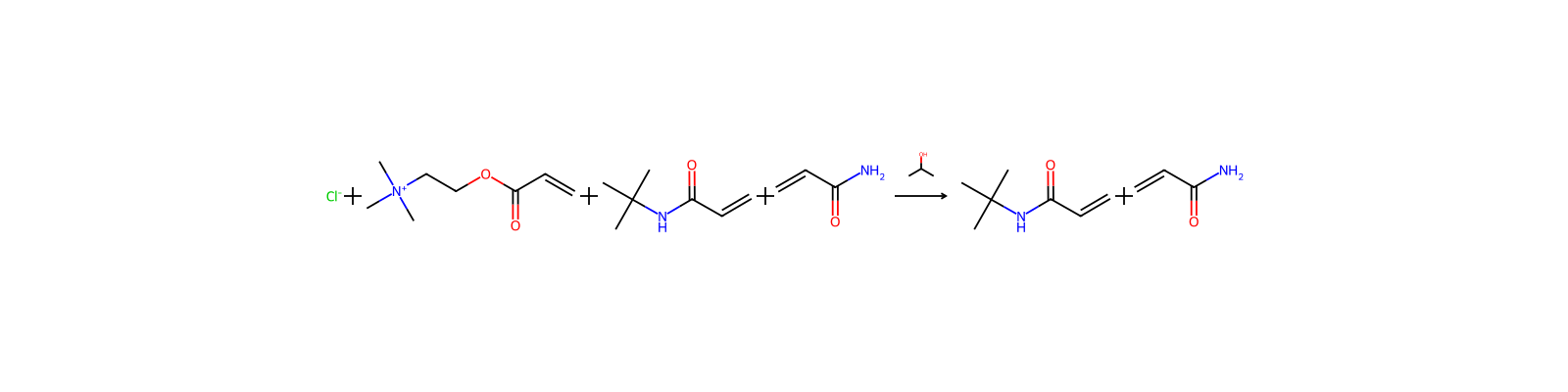
HRID 318181As product

107-58-4C=CC(=O)NC(C)(C)CXFHJDMUEHUHAJW-UHFFFAOYSA-Nstructure in first source
107-58-4DTXSID1040114CHEMBL3184503Safety information is for reference only and does not replace the supplier’s Safety Data Sheet (SDS), applicable regulations, or professional assessment.
Warning
H302 (100%): Harmful if swallowed [Warning Acute toxicity, oral]
P264, P264+P265, P270, P280, P301+P317, P305+P351+P338, P330, P337+P317, and P501 (click each P-code to see the statement)
Aggregated GHS information provided per 679 reports by companies from 5 notifications to the ECHA C&L Inventory. Each notification may be associated with multiple companies.
2-Propenamide, N-(1,1-dimethylethyl)- is listed on the EPA's Chemical Data Reporting (CDR) system. Manufacturers and importers of 2-Propenamide, N-(1,1-dimethylethyl)- are required to report information about their production and use of this chemical to the EPA under the Toxic Substances Control Act (TSCA). (40 eCFR Part 711)
REACH registered substance: N-tert-butylacrylamide (EC: 203-505-6)
Adhesive Manufacturing
2-Propenamide, N-(1,1-dimethylethyl)-: ACTIVE
UsesN-tert-Butylacrylamide is used for study on abiotic anti-VEGF nanoparticle for anti-angiogenic cancer therapy.
UsesnTBA is temperature sensitive monomers that can be potentially used in drug delivery systems, dewatering of proteins, and immobilization of cells. It can be used in the preparation of poly(nTBA) based copolymeric hydrogels for bovin serum albumin.
UsesN-tert-Butylacrylamide is used for study on abiotic anti-VEGF nanoparticle for anti-angiogenic cancer therapy (1,2).
General DescriptionN-tert-Butylacrylamide (nTBA) belongs to the class of hydrophobic acrylamides which can be synthesized by Ritter reaction and optimized by using N-tert-butyl acetate and acetic acid.