

Basic information
- Standard SMILES
C=C(C)C(=O)NCCCN(C)C- InChIKey
GDFCSMCGLZFNFY-UHFFFAOYSA-N- Molecular formula
- C9H18N2O
- Average molar mass
- 170.25 g/mol
- Monoisotopic mass
- 170.1419132
Overview
Dimethylaminopropyl Methacrylamide is a tertiary amino compound.
Names & identifiers
- Preferred name
- N-(3-(Dimethylamino)propyl)methacrylamide
- IUPAC
- N-[3-(dimethylamino)propyl]-2-methylprop-2-enamide
- English name
- Dimethylamino propyl methacrylamide
- Molecular formula
- C9H18N2O
- Molecular weight
- 170.25
Names & synonyms
5205-93-6N-(3-(Dimethylamino)propyl)methacrylamideN-[3-(Dimethylamino)propyl]methacrylamide63OBQ7BZDS2-Propenamide, N-(3-(dimethylamino)propyl)-2-methyl-MHOROMER BM 6112-Propenamide, N-[3-(dimethylamino)propyl]-2-methyl-DMAPMA compoundRefChem:7880226-002-3DMAPMAdimethylaminopropyl methacrylamide
Show more names
3-DIMETHYLAMINOPROPYL METHACRYLAMIDE3-DIMETHYLAMINOPROPYL-METHYLACRYLAMIDE3-(Methacryloylamino)propyldimethylamineN-[3-(Dimethylamino)propyl]methacrylamiddimethylaminopropylmethacrylamide(dmapma)N-[3-(Dimethylamino)propyl]methacrylamiideDimethylamino propyl methacrylamide Dampma
N-(3-Dimethylaminopropyl)methacrylamideN-[3-(dimethylamino)propyl]-2-methylprop-2-enamideUNII-63OBQ7BZDSEINECS 226-002-3MFCD00038359DTXSID7040154EINECS 266-635-267296-21-3
Database identifiers
- CAS
5205-93-6、67296-21-3- PubChem CID
- 78882
- DTXSID
DTXSID7040154- ChEBI
CHEBI:189271- UNII
- 63OBQ7BZDS
- EC Number
- 226-002-3、266-635-2
- Nikkaji
- J38.960I
Properties
Computed structural properties
- XLogP
- 0.9
- Topological polar surface area
- 32.3 Ų
- Hydrogen bond donors
- 1
- Hydrogen bond acceptors
- 2
- Rotatable bonds
- 5
- Heavy atoms
- 12
- Formal charge
- 0
- Complexity
- 164
Experimental & physicochemical properties
Physical DescriptionLiquid
Collision Cross Section135.8 Ų [M+H]+ [CCS Type: DT; Buffer gas: N2; Ionization: APCI+; Dataset: TOXCAST; Source Identifier: DTXSID7040154]
Physicochemical properties
- Melting point
- -60 °C · <-60°C
- Boiling point
- 134 °C2 · 134 °C2 mm Hg(lit.)
- Density
- 0.94 g/mL · 0.94 g/mL at 25 °C(lit.)
- vapor pressure
- 0.4 Pa · 0.4Pa at 19.85℃
- refractive index
- 20 · n20/D 1.479(lit.)
- Flash point
- 230 °F · >230 °F
- storage temp.
- 2 · 2-8°C(protect from light)
- form
- Liquid
- pka
- 15.01 · 15.01±0.46(Predicted)
- Specific Gravity
- 0.94 · 0.94
- Appearance
- Colorless to light yellow Liquid
- Viscosity
- 50 cp · <50cp (20C)
- InChI
- InChI=1S/C9H18N2O/c1-8(2)9(12)10-6-5-7-11(3)4/h1,5-7H2,2-4H3,(H,10,12)
- InChIKey
- GDFCSMCGLZFNFY-UHFFFAOYSA-N
- SMILES
- C(NCCCN(C)C)(=O)C(C)=C
- LogP
- 0.5 at · 0.5 at 20℃
- CAS DataBase Reference
- 5205 · 5205-93-6(CAS DataBase Reference)
- FDA UNII
- 63 OBQ7BZDS · 63OBQ7BZDS
- EPA Substance Registry System
- 2 · 2-Propenamide, N-[3-(dimethylamino)propyl]-2-methyl- (5205-93-6)
- UNSPSC Code
- 12162002 · 12162002
- NACRES
- 23 · NA.23
- Symbol(GHS)
- 5 · GHS05,GHS07
- Signal word
- Danger
- Hazard statements
- 315 · H315-H317-H318
- Precautionary statements
- 280 · P280-P305+P351+P338
- PPE
- Eyeshields, Gloves, type ABEK (EN14387) respirator filter
- Hazard Codes
- Xi
- Risk Statements
- 36 · 36-38-43-41
- Safety Statements
- 26 · 26-36/37/39
- WGK Germany
- 1 · 1
- TSCA
- TSCA listed
- HS Code
- 29241990 · 29241990
- Storage Class
- 10 · 10 - Combustible liquids
- Hazard Classifications
- 1 Skin · Eye Dam. 1Skin Irrit. 2Skin Sens. 1
- REACH Registrations
- Active
Safety & regulation
GHS classification
GHS Classification
This chemical does not meet GHS hazard criteria for 0.4% (3 of 699) of reports.
Danger
H315 (33.2%): Causes skin irritation [Warning Skin corrosion/irritation]
P261, P264, P264+P265, P272, P280, P302+P352, P305+P354+P338, P317, P321, P332+P317, P333+P317, P362+P364, and P501 (click each P-code to see the statement)
Aggregated GHS information provided per 699 reports by companies from 8 notifications to the ECHA C&L Inventory. Each notification may be associated with multiple companies.
Hazard information
Regulatory Information
Chemical: 2-Propenamide, N-[3-(dimethylamino)propyl]-2-methyl-
2-Propenamide, N-[3-(dimethylamino)propyl]-2-methyl- is listed on the EPA's Chemical Data Reporting (CDR) system. Manufacturers and importers of 2-Propenamide, N-[3-(dimethylamino)propyl]-2-methyl- are required to report information about their production and use of this chemical to the EPA under the Toxic Substances Control Act (TSCA). (40 eCFR Part 711)
Status: Active Update: 31-08-2022 https://echa.europa.eu/registration-dossier/-/registered-dossier/10266
2-Propenamide, N-3-(dimethylamino)propyl-2-methyl-: Does not have an individual approval but may be used as a component in a product covered by a group standard. It is not approved for use as a chemical in its own right.
Hazard Classes and CategoriesSkin Irrit. 2 (33.2%)
Safety data
- PPE
- Eyeshields, Gloves, type ABEK (EN14387) respirator filter
- wgk
- 1
- tsca
- TSCA listed
- hs_code
- 29241990
- risk_code
- 36-38-43-41
- Signal word
- Danger
- Symbol(GHS)
- GHS05,GHS07
- hazard_code
- Xi
- safety_code
- 26-36/37/39
- Storage Class
- 10 - Combustible liquids
- Hazard statements
- H315-H317-H318
- REACH Registrations
- Active
- Hazard Classifications
- Eye Dam. 1Skin Irrit. 2Skin Sens. 1
- Precautionary statements
- P280-P305+P351+P338
Chemistry & industry
Uses & manufacturing
U.S. Production2023: 500,000 - <1,000,000 lb
Industry UsesMonomers
General Manufacturing Information
Plastics Material and Resin Manufacturing
2-Propenamide, N-[3-(dimethylamino)propyl]-2-methyl-: ACTIVE
Applications
Uses1. This product is used as a fiber modifier to improve the dyeability and thermal stability of acrylic fibers to acid dyes. 2. It can also be used as a pulp additive and coagulant, a dewatering accelerator in the papermaking process, a paper sizing agent, and a film-forming agent. 3. It can also be used in ion exchange resins as a sucrose decolorizing agent, a lubricant additive, and a polymer for photographic equipment. 4. In the fiber processing industry, it is commonly used as a fiber processing agent, an antistatic agent, and a dye fixing agent.
UsesGlucose-containing diblock polycations exhibit molecular weight, charge, and cell-type dependence for pDNA delivery.: This study investigates the use of glucose-containing diblock polycations, including N-[3-(Dimethylamino)propyl]methacrylamide, in pDNA delivery systems. The research demonstrates that the efficiency of pDNA delivery is influenced by the molecular weight and charge of the polycations, as well as the type of cell used. This highlights the potential for tailored gene delivery applications in different cell types, emphasizing the role of N-[3-(Dimethylamino)propyl]methacrylamide in creating biocompatible and effective delivery vectors (Wu et al., 2014).N-[3-(Dimethylamino)propyl]Methacrylamide can be used:As a monomer to synthesize self-healing pH-responsive P(DMAPMA-stat-DAA) hydrogels for drug delivery applications.As a cationic monomer to develop gene delivery vector due to its ability to complex with nucleic acids and facilitate their intracellular delivery.To fabricate iron oxide nanoparticle formulations for 3D printing. These iron inks are utilized for printing magnetic devices, MRI contrast agents for bioimaging and targeted drug delivery systems.To prepare a non-toxic synthetic flocculant for harvesting microalgae.
Upstream & downstream products
Upstream raw materials
Suppliers2 total
SUZHOU SENFEIDA CHEMICAL CO.,LTD+86-0512-83500002 +86-15195660023 · [email protected]
湖北沃德化工科技有限公司15972179313 15972179313 · [email protected]
Additional notes
DefinitionChEBI: Dimethylaminopropyl Methacrylamide is a tertiary amino compound.
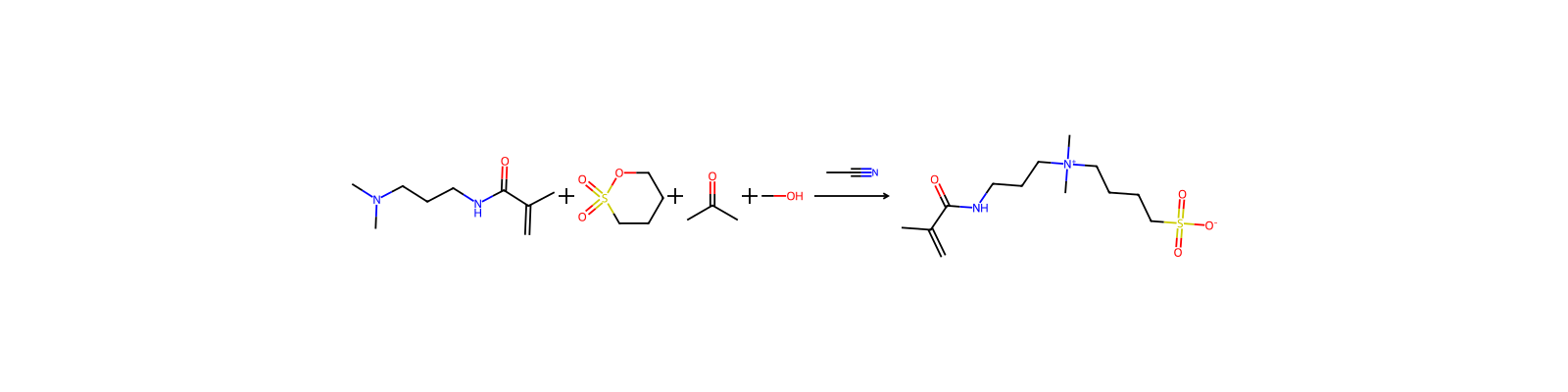
Related reactions
13 records



Linked notes
Loading…