
Alpha-D-Glucose

Basic information
- CAS
492-62-6- Standard SMILES
OC[C@H]1O[C@H](O)[C@H](O)[C@@H](O)[C@@H]1O- InChIKey
WQZGKKKJIJFFOK-DVKNGEFBSA-N- Molecular formula
- C6H12O6
- Average molar mass
- 180.16 g/mol
- Monoisotopic mass
- 180.0633881
Overview
Amylose is a glucan composed of unbranched chains of D-glucopyranose residues in alpha(14) glycosidic linkage. The number of repeated glucose subunits (n) is usually in the range of 300 to 3000, but can be many thousands. One of the two components of starch (the other, 70-80%, being amylopectin). Cf. linear maltodextrin, in which the chain length is typically between 3 and 17 glucose units. It has a role as a mouse metabolite, a plant metabolite and an Escherichia coli metabolite.
Names & identifiers
- Preferred name
- Alpha-D-Glucose
- IUPAC
- (2S,3R,4S,5S,6R)-6-(hydroxymethyl)oxane-2,3,4,5-tetrol
- English name
- Dextrose
- Molecular formula
- C6H12O6
- Molecular weight
- 180.16
Names & synonyms
alpha-D-glucose492-62-6alpha-D-Glucopyranosealpha-Dextrose(2S,3R,4S,5S,6R)-6-(hydroxymethyl)oxane-2,3,4,5-tetrol5J5I9EB41ECHEBI:17925GlyTouCan:G58161NSDTXSID30197710RefChem:936358DTXCID90120201G58161NS
Show more names
α-D-GlucoseD-GLCGLUCOSE STANDARDGlucose solutionGLUCOSUM
207-757-8607-980-4alpha-glucoseGlucopyranose, alpha-D-a-D-Glucose(2S,3R,4S,5S,6R)-6-(Hydroxymethyl)tetrahydro-2H-pyran-2,3,4,5-tetraolalpha-d(+)-glucose(1->3)-alpha-D-glucan
Database identifiers
- CAS
492-62-6- PubChem CID
- 79025
- DTXSID
DTXSID30197710- ChEMBL
CHEMBL423707- ChEBI
CHEBI:28102- UNII
- 5J5I9EB41E
- EC Number
- 207-757-8
- Nikkaji
Properties
Computed structural properties
- XLogP
- -2.6
- Topological polar surface area
- 110 Ų
- Hydrogen bond donors
- 5
- Hydrogen bond acceptors
- 6
- Rotatable bonds
- 1
- Heavy atoms
- 12
- Formal charge
- 0
- Complexity
- 151
Experimental & physicochemical properties
Chemical ClassesBiological Agents -> Monosaccharides and Derivatives
DrugsPharmaceuticals -> Metabolite of Sorbitol
CosmeticsSkin conditioning
SpringerMaterials PropertiesCrystal structure
Solubility500 mg/mL at 20 °C
Melting Point146 °C
Physical Description
White crystalline powder; Odorless; [Acros Organics MSDS]
Solid
Collision Cross Section
146.2 Ų [M+Na]+ [CCS Type: DT; Method: single field calibrated with Agilent tune mix (Agilent)]
146.6 Ų [M+Na]+ [CCS Type: DT; Method: single field calibrated with ESI Low Concentration Tuning Mix (Agilent)]
146.5 Ų [M+Na]+
Physicochemical properties
Safety & regulation
Safety information is for reference only and does not replace the supplier’s Safety Data Sheet (SDS), applicable regulations, or professional assessment.
GHS classification
GHS Classification
This chemical does not meet GHS hazard criteria for 98% (48 of 49) of all reports.
Not Classified
Aggregated GHS information provided per 49 reports by companies from 3 notifications to the ECHA C&L Inventory.
Hazard information
Regulatory Information
Chemical: .alpha.-D-Glucopyranose
.alpha.-D-Glucopyranose: Does not have an individual approval but may be used under an appropriate group standard
Other Safety InformationIMAP assessments - .alpha.-D-Glucopyranose: Human health tier I assessment
Hazards SummaryMay cause irritation; [Acros Organics MSDS] See Glucose.
Hazard Classes and CategoriesNot Classified
Safety data
- F
- 3
- PPE
- Eyeshields, Gloves, type N95 (US)
- wgk
- 3
- rtecs
- LZ6600000
- hs_code
- 17023000
- risk_code
- 36/37/38
- Signal word
- Warning
- Symbol(GHS)
- GHS07
- hazard_code
- Xi
- safety_code
- 26-36/37/39
- Storage Class
- 11 - Combustible Solids
Chemistry & industry
Pharmacology
Tissue LocationsEpidermis
Cellular LocationsCytoplasm
Metabolite PathwaysFanconi-bickel syndrome
Uses & manufacturing
Use ClassificationCosmetics -> Skin conditioning
Applications
Usesα-D-Glucose is used:As a reducing agent in the preparation superparamagnetic ferrous oxide (Fe3O4) nanoparticles and silver nanocrystals.As an additive for the formation of isoporous polystyrene-block-poly(4-vinylpyridine) (PS-b-P4VP) diblock copolymer membranes.For glycosylation of cell-penetrating poly(disulfide)s (CPDs) with improved solubility to achieve multifunctional cellular uptake.As a precursor in the synthesis of metal/carbon nanohybrids under hydrothermal conditions.
UsesD-(+)-Glucose is a common natural sugar involved in processes such as energy production, glycosylation, and formation of glycans that provide structure to cells. Glucose is involved in a detrimentatl process in cells called glycation. Glucose is used as a supplement for cell culture and in numerous cellular processes and molecular biology applications.
Upstream & downstream products
Upstream raw materials
Downstream products
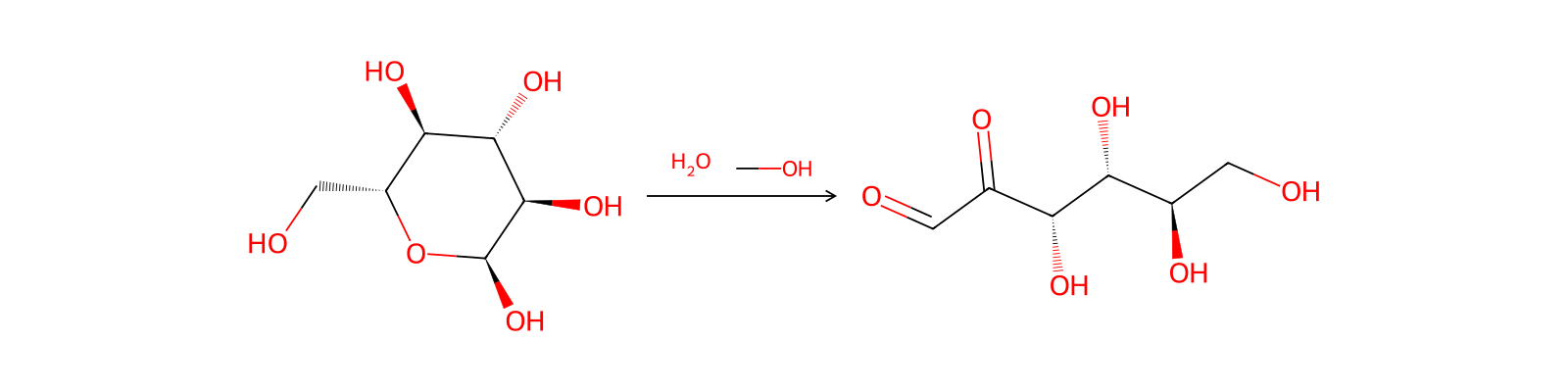
Related reactions
17 records



Compound notes
Loading…