

Basic information
- Standard SMILES
Brc1cccc(Br)c1- InChIKey
JSRLURSZEMLAFO-UHFFFAOYSA-N- Molecular formula
- C6H4Br2
- Average molar mass
- 235.9 g/mol
- Monoisotopic mass
- 233.86798
Names & identifiers
- Preferred name
- 1,3-Dibromobenzene
- IUPAC
- 1,3-dibromobenzene
- English name
- 1,3-Dibromobenzene
- Molecular formula
- C6H4Br2
- Molecular weight
- 235.9
Names & synonyms
1,3-DIBROMOBENZENE108-36-1m-DibromobenzeneBenzene, 1,3-dibromo-Benzene, m-dibromo-74EF6KH8TCDTXSID7051555CHEBI:37151meta-dibromobenzeneRefChem:72602DTXCID1030107203-574-2
Show more names
1.3-DibroMobenm-dibromo-benzen1,3-dibromo-benzenBenzene,1,3-dibromo-Inter-dibromobenzene1,3-Dibromobenzene97%
1,3-dibromo-benzeneMFCD00000078EINECS 203-574-2UNII-74EF6KH8TC1,3-DIBROMO BENZENE3,5-dibromobenzene1,3-dibrormobenzene1, 3-dibromobenzene
Database identifiers
- CAS
108-36-1- PubChem CID
- 7927
- DTXSID
DTXSID7051555- ChEBI
CHEBI:37151- UNII
- 74EF6KH8TC
- EC Number
- 203-574-2
- Nikkaji
- J2.420A
Properties
Computed structural properties
- XLogP
- 3.8
- Topological polar surface area
- 0 Ų
- Hydrogen bond donors
- 0
- Hydrogen bond acceptors
- 0
- Rotatable bonds
- 0
- Heavy atoms
- 8
- Formal charge
- 0
- Complexity
- 64
Experimental & physicochemical properties
Vapor Pressure0.26 [mmHg]
Physical DescriptionColorless liquid; [MSDSonline]
Kovats Retention Index
1162.2;1190;1197;1176.5;1190;1197;1197
1756
Physicochemical properties
- Melting point
- -7 °C · -7 °C (lit.)
- Boiling point
- 218 · 218-219 °C (lit.)
- Density
- 1.952 g/mL · 1.952 g/mL at 25 °C (lit.)
- vapor density
- 8.16 · 8.16 (vs air)
- vapor pressure
- 5 mm · 5 mm Hg ( 66 °C)
- refractive index
- 20 · n20/D 1.608(lit.)
- Flash point
- 201 °F · 201 °F
- storage temp.
- Sealed in dry,Room Temperature
- solubility
- 0.068 g/l · 0.068g/l
- form
- Liquid
- Specific Gravity
- 1.952 · 1.952
- color
- Clear colorless to light yellow
- Water Solubility
- insoluble
- BRN
- 1904538 · 1904538
- Henry's Law Constant
- 1.2 · 1.2×10-2 mol/(m3Pa) at 25℃, Brockbank (2013)
- Dielectric constant
- 5 · 5.0
- InChI
- 1S/C6H4Br2/c7-5-2-1-3-6(8)4-5/h1-4H
- InChIKey
- JSRLURSZEMLAFO-UHFFFAOYSA-N
- SMILES
- Brc1cccc(Br)c1
- CAS DataBase Reference
- 108 · 108-36-1(CAS DataBase Reference)
- EWG's Food Scores
- 1 · 1
- FDA UNII
- 74 EF6KH8TC · 74EF6KH8TC
- NIST Chemistry Reference
- 1 · Benzene, 1,3-dibromo-(108-36-1)
- EPA Substance Registry System
- m-Dibromobenzene (108-36-1)
- UNSPSC Code
- 12352100 · 12352100
- NACRES
- 22 · NA.22
- Symbol(GHS)
- 7 · GHS07
- Signal word
- Warning
- Hazard statements
- 315 · H315-H319-H335
- Precautionary statements
- 261 · P261-P264-P271-P280-P302+P352-P305+P351+P338
- Hazard Codes
- Xi,C
- Risk Statements
- 36 · 36/37/38
- Safety Statements
- 26 · 26-36-24/25
- RIDADR
- 2711 · UN 2711
- WGK Germany
- 2 · 2
- RTECS
- 1790000 · CZ1790000
- Hazard Note
- Irritant
- TSCA
- TSCA listed
- HazardClass
- 3.2 · 3.2
- PackingGroup
- III
- HS Code
- 29036990 · 29036990
- Storage Class
- 10 · 10 - Combustible liquids
- Hazard Classifications
- 2 Skin · Eye Irrit. 2Skin Irrit. 2STOT SE 3
- Toxicity
- 50 · mouse,LD50,intraperitoneal,900mg/kg (900mg/kg),Gigiena i Sanitariya. For English translation, see HYSAAV. Vol. 44(12), Pg. 19, 1979.
- Limited Quantities
- 5 L · 5.0 L (1.3 gallons) (liquid) or 5.0 kg (11 lbs) (solid)
- Excepted Quantities
- Max Inner Pack (30g or 30ml) and Max Outer Pack (1Kg or 1L)
Safety & regulation
GHS classification
GHS Classification
Warning
H315 (100%): Causes skin irritation [Warning Skin corrosion/irritation];H319 (100%): Causes serious eye irritation [Warning Serious eye damage/eye irritation];H335 (87.8%): May cause respiratory irritation [Warning Specific target organ toxicity, single exposure; Respiratory tract irritation]
P261, P264, P264+P265, P271, P280, P302+P352, P304+P340, P305+P351+P338, P319, P321, P332+P317, P337+P317, P362+P364, P403+P233, P405, and P501 (click each P-code to see the statement)
Aggregated GHS information provided per 49 reports by companies from 7 notifications to the ECHA C&L Inventory. Each notification may be associated with multiple companies.;Information may vary between notifications depending on impurities, additives, and other factors. The percentage value in parenthesis indicates the notified classification ratio from companies that provide hazard codes. Only hazard codes with percentage values above 10% are shown. For more detailed information, please visit ECHA C&L website.
Hazard information
Regulatory Information
Chemical: Benzene, 1,3-dibromo-
1,3-Dibromobenzene: Does not have an individual approval but may be used under an appropriate group standard
Hazards SummaryA skin and eye irritant; [eChemPortal: ERMA] An irritant; [MSDSonline] See Bromobenzene. See m-Dichlorobenzene.
DOT Hazard Classification
1,3-Dibromobenzene
Marine pollutant
Hazard Classes and CategoriesSkin Irrit. 2 (100%);Eye Irrit. 2 (100%);STOT SE 3 (87.8%)
Toxicology
Adverse EffectsNeurotoxin - Acute solvent syndrome
RAIS Toxicity Values
0.0004
SCREEN Current
0.004
PPRTV Current
EPA Provisional Peer-Reviewed Toxicity Values
1,3-Dibromobenzene
PDF Document
Inadequate information to assess carcinogenic potential
2014
Hazard Quotient Level 0.1 or Cancer Risk Level 1E-06
3.10e+01
4.70e+02
5.30e+00
6.0E+01(G)
5.10e-03
4.00e-04
Hazard Quotient Level 3 or Cancer Risk Level 1E-04
9.40e+01
1.40e+03
1.60e+01
6.0E+01 (G)
4.00e-04
Volatile
Regulatory information
Regulatory Information
Chemical: Benzene, 1,3-dibromo-
1,3-Dibromobenzene: Does not have an individual approval but may be used under an appropriate group standard
Safety data
- wgk
- 2
- tsca
- TSCA listed
- rtecs
- CZ1790000
- ridadr
- UN 2711
- hs_code
- 29036990
- Toxicity
- mouse,LD50,intraperitoneal,900mg/kg (900mg/kg),Gigiena i Sanitariya. For English translation, see HYSAAV. Vol. 44(12), Pg. 19, 1979.
- risk_code
- 36/37/38
- Signal word
- Warning
- Symbol(GHS)
- GHS07
- hazard_code
- Xi,C
- hazard_note
- Irritant
- safety_code
- 26-36-24/25
- hazard_class
- 3.2
- Storage Class
- 10 - Combustible liquids
- packing_group
- III
- Hazard statements
- H315-H319-H335
- Limited Quantities
- 5.0 L (1.3 gallons) (liquid) or 5.0 kg (11 lbs) (solid)
- Excepted Quantities
- Max Inner Pack (30g or 30ml) and Max Outer Pack (1Kg or 1L)
- Hazard Classifications
- Eye Irrit. 2Skin Irrit. 2STOT SE 3
- Precautionary statements
- P261-P264-P271-P280-P302+P352-P305+P351+P338
Chemistry & industry
Uses & manufacturing
General Manufacturing InformationBenzene, 1,3-dibromo-: ACTIVE
Applications
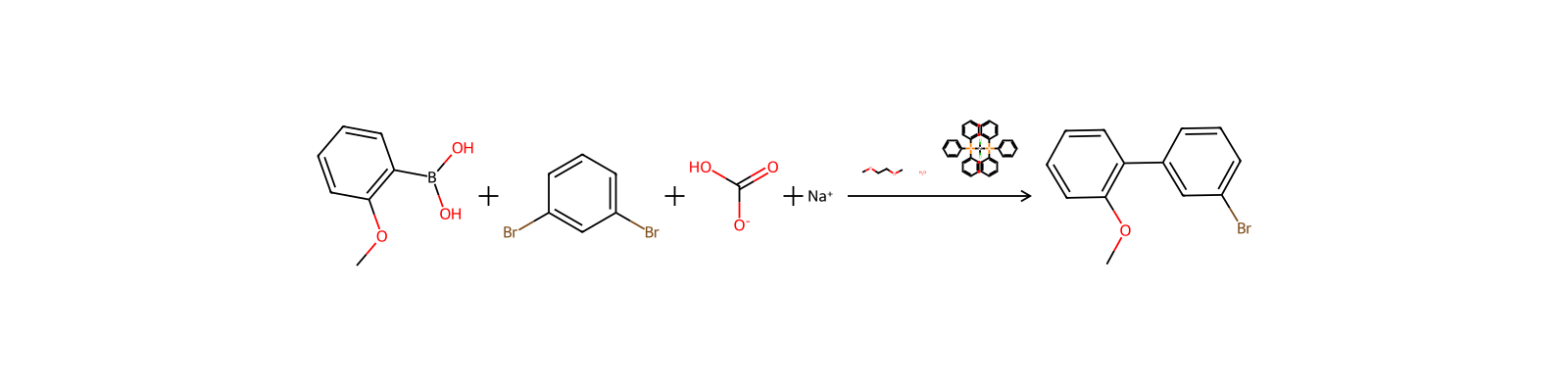
Uses1,3-Dibromobenzene is used in Suzuki coupling reaction for the preparation of [n]metacyclophanes. It is used to prepare 5-(3-bromo-phenyl)-2,4-di-tert-butoxy-pyrimidine using Pd(0) (PPh3)4 as a reagent. Further, it undergoes solid-supported potassium fluoride-aluminum oxide palladium-catalyzed polyarylation reaction with phenyl boronic acid to get conjugated polyaryls.
General Description1,3-Dibromobenzene undergoes solid-supported [KF-Al2O3] palladium-catalyzed polyarylation reaction with phenyl boronic acid under microwave irradiation to yield conjugated polyaryls.
Upstream & downstream products
Upstream raw materials
Downstream products
Suppliers50 total
国药集团化学试剂有限公司86-21-63210123 · [email protected]
梯希爱(上海)化成工业发展有限公司021-67121386 · [email protected]
衢州润东化工有限公司0570-8789886 18892685668 · [email protected]
上海阿拉丁生化科技股份有限公司400-6206333 13167063860 · [email protected]
北京穹峰科技有限公司13552142508 · [email protected]
上海如吉生物科技发展有限公司+86-21-65211385-8001 36031160 · [email protected]
科瑞迪化学400-821-5857 021-64326257 · [email protected]
上海将来实业股份有限公司400-0066400 13621662912 · [email protected]
上海迈瑞尔生化科技有限公司4006356688 18621169109 · [email protected]
宁波亿诺化学品有限公司86-574-27787657 · [email protected]
阿法埃莎(中国)化学有限公司400-6106006 · [email protected]
上海德默医药科技有限公司400-021-7337 2355568890 · [email protected]
安耐吉化学&3A(安徽泽升科技股份有限公司)400-0056266 · [email protected]
武汉凯威斯科技有限公司86-027-67849912 · [email protected]
上海瀚鸿科技股份有限公司021-54306202 13764082696 · [email protected]
青岛司臣生物科技有限公司0532-85625977 13668866880 · [email protected]
上海相辉医药科技有限公司13761987713 · [email protected]
上海景颜化工科技有限公司13817811078 · [email protected]
上海隆盛化工有限公司58099637 13585536065 · [email protected]
上海攀鸿化工科技有限公司021-56491756 13512199871 · [email protected]
武汉丰泰威远科技有限公司027-87465837 19945049750 · [email protected]
山东西亚化学有限公司13355009207 13355009207 · [email protected]
玛雅试剂+86 (573) 82222445 (0)18006601000 452520369 · [email protected]
四川库利南科技有限公司400-1166-196 18981987031 · [email protected]
上海耐士化工科技有限公司400-188-0725 +86 21 34310725 13611771617
天津希恩思生化科技有限公司400 638 7771 · [email protected]
南京维奥化工有限公司Please Send Email 18652950785 · [email protected]
河南多贝化工有限公司0370-2785118 17550508557 · [email protected]
斯百全化学(上海)有限公司021-021-021-67601398-809-809-809 15221380277 · [email protected]
艾科试剂4008-755-333 18080918076 · [email protected]
上海思域化工科技有限公司86-21-34053660 · [email protected]
赛默飞世尔科技(中国)有限公司800-810-5118 · [email protected]
北京伊诺凯科技有限公司400-810-7969 010-59572699 · [email protected]
上海健超生物科技有限公司150-2103-5486 18017383231 · [email protected]
TCI AMERICA800-4238616 · [email protected]
TOKYO CHEMICAL INDUSTRY CO., LTD.03-36680489 · [email protected]
TCI Europe320-37350700 · [email protected]
上海贤鼎生物科技有限公司4009209199 · [email protected]
深圳康特腾科技有限公司86-0755-86635001 · [email protected]
越林试剂021-62960152 · [email protected]
Clearsynth Labs Limited+91-22-26355700 · [email protected]
北京环宇世纪化学科技有限公司hysj_bj.com
湖北鑫源顺医药化工有限公司13971561712, 13995564702, 027-50664929 · [email protected]
上海将来实业股份有限公司400-0066400 13621662912 · [email protected]
上海将来实业股份有限公司021-61552785 · [email protected]
安徽科迪达化工有限公司0554-2106669 · [email protected]
HBCChem, Inc.+1-510-219-6317 · [email protected]
郑州阿尔法化工有限公司0371-53732842 15981811963 · [email protected]
美岚实业(上海)有限公司021-58958189 · [email protected]
上海石洋化工有限公司021-56795766 · [email protected]
Additional notes
DefinitionChEBI: A dibromobenzene carrying bromo groups at positions 1 and 3.
Related reactions
241 records




Linked notes
Loading…