

Basic information
- Standard SMILES
OC1CCNCC1- InChIKey
HDOWRFHMPULYOA-UHFFFAOYSA-N- Molecular formula
- C5H11NO
- Average molar mass
- 101.15 g/mol
- Monoisotopic mass
- 101.08406397
Names & identifiers
- Preferred name
- Piperidin-4-ol
- IUPAC
- piperidin-4-ol
- English name
- 4-Hydroxypiperidine
- Molecular formula
- C5H11NO
- Molecular weight
- 101.15
Names & synonyms
4-HydroxypiperidinePiperidin-4-ol4-PiperidinolKC61EA060XEINECS 226-373-1NSC 62083NSC-62083UNII-KC61EA060XAI3-391584-HYDROXYHEXAHYDROPYRIDINEDTXSID102020984-piperidinol (4-hydroxypiperidine)
Show more names
4PPOL4-piperidinylAURORA KA-1006Piperidine-4α-olPiperidine-4β-ol4-Hydropiperidine4-Piperidinol ,99%4-hydroxypiperdine
4piperidinolPiperidin4olRefChem:174423DTXCID10124589UN3263226-373-1HDOWRFHMPULYOA-UHFFFAOYSA-N5382-16-1
Database identifiers
- CAS
5382-16-1- PubChem CID
- 79341
- DTXSID
DTXSID10202098- ChEMBL
CHEMBL284022- UNII
- KC61EA060X
- EC Number
- 226-373-1
- Nikkaji
- J86.548F
Properties
Computed structural properties
- XLogP
- -0.3
- Topological polar surface area
- 32.3 Ų
- Hydrogen bond donors
- 2
- Hydrogen bond acceptors
- 2
- Rotatable bonds
- 0
- Heavy atoms
- 7
- Formal charge
- 0
- Complexity
- 50
Experimental & physicochemical properties
Chemical ClassesNitrogen Compounds -> Amino Alcohols, Other
Physical DescriptionHygroscopic solid; [Alfa Aesar MSDS]
Physicochemical properties
- Melting point
- 86 · 86-90 °C
- Boiling point
- 108 · 108-114 °C/10 mmHg (lit.)
- Density
- 0.9903 · 0.9903 (rough estimate)
- vapor pressure
- 13 Pa · 13Pa at 25℃
- refractive index
- 1.44 · 1.4400 (estimate)
- Flash point
- 226 °F · 226 °F
- storage temp.
- Keep in dark place,Inert atmosphere,Room temperature
- solubility
- Chloroform (Slightly), Methanol (Slightly)
- form
- Solid
- pka
- 14.94 · 14.94±0.20(Predicted)
- color
- Off-White to pale Yellow
- PH
- 11.5 · 11.5-11.7 (H2O)Aqueous solution
- Water Solubility
- soluble
- Sensitive
- Hygroscopic
- BRN
- 102738 · 102738
- InChI
- 1S/C5H11NO/c7-5-1-3-6-4-2-5/h5-7H,1-4H2
- InChIKey
- HDOWRFHMPULYOA-UHFFFAOYSA-N
- SMILES
- OC1CCNCC1
- LogP
- -0.35 at · -0.35 at 25℃
- CAS DataBase Reference
- 5382 · 5382-16-1(CAS DataBase Reference)
- FDA UNII
- 61 EA060X · KC61EA060X
- NIST Chemistry Reference
- 4 · 4-Hydroxypiperidine(5382-16-1)
- UNSPSC Code
- 12352100 · 12352100
- NACRES
- 22 · NA.22
- Symbol(GHS)
- 7 · GHS07
- Signal word
- Warning
- Hazard statements
- 315 · H315-H319
- Precautionary statements
- 264 · P264-P280-P302+P352-P305+P351+P338-P332+P313-P337+P313
- Hazard Codes
- Xi,C
- Risk Statements
- 36 · 36/37/38-34
- Safety Statements
- 26 · 26-36-37/39-45-36/37/39-27
- RIDADR
- 3263 · 3263
- WGK Germany
- 3 · 3
- Hazard Note
- Irritant
- HazardClass
- 8 · 8
- PackingGroup
- III
- HS Code
- 29333999 · 29333999
- Storage Class
- 11 · 11 - Combustible Solids
- Hazard Classifications
- 2 Skin · Eye Irrit. 2Skin Irrit. 2
- REACH Registrations
- Active
Safety & regulation
GHS classification
GHS Classification
Danger
H314 (24.4%): Causes severe skin burns and eye damage [Danger Skin corrosion/irritation]
P260, P261, P264, P264+P265, P271, P280, P301+P330+P331, P302+P352, P302+P361+P354, P304+P340, P305+P351+P338, P305+P354+P338, P316, P317, P319, P321, P332+P317, P337+P317, P362+P364, P363, P403+P233, P405, and P501 (click each P-code to see the statement)
Aggregated GHS information provided per 78 reports by companies from 15 notifications to the ECHA C&L Inventory. Each notification may be associated with multiple companies.
Hazard information
Regulatory Information
Chemical: 4-Piperidinol
Status: Active Update: 03-10-2018 https://echa.europa.eu/registration-dossier/-/registered-dossier/20857
4-Piperidinol: Does not have an individual approval but may be used under an appropriate group standard
Hazards SummaryCauses burns; Inhalation may cause corrosive injuries to upper respiratory tract and lungs; [Alfa Aesar MSDS]
Hazard Classes and CategoriesSkin Corr. 1B (24.4%)
Toxicology
Adverse EffectsDermatotoxin - Skin burns.
Safety data
- wgk
- 3
- ridadr
- 3263
- hs_code
- 29333999
- risk_code
- 36/37/38-34
- Signal word
- Warning
- Symbol(GHS)
- GHS07
- hazard_code
- Xi,C
- hazard_note
- Irritant
- safety_code
- 26-36-37/39-45-36/37/39-27
- hazard_class
- 8
- Storage Class
- 11 - Combustible Solids
- packing_group
- III
- Hazard statements
- H315-H319
- REACH Registrations
- Active
- Hazard Classifications
- Eye Irrit. 2Skin Irrit. 2
- Precautionary statements
- P264-P280-P302+P352-P305+P351+P338-P332+P313-P337+P313
Chemistry & industry
Applications
Uses4-Hydroxypiperidine (4-Piperidinol) can be used in the synthesis of a highly potent and selective IP (PGI(2) receptor) agonist. It can also be used in the study of copper-catalyzed N- versus O-arylation.
Uses4-Hydroxypiperidine is used as a reagent for the synthesis of acridine (A190900) derivatives and fibrinogen receptor antagonists.
General DescriptionThe molecular structure, vibrational spectra, NBO and UV-spectral analysis of 4-Hydroxypiperidine have been studied. The compounds with a substituted 4-piperidinol core have been found to be potent antagonists of the human H(3) receptor.
Upstream & downstream products
Downstream products
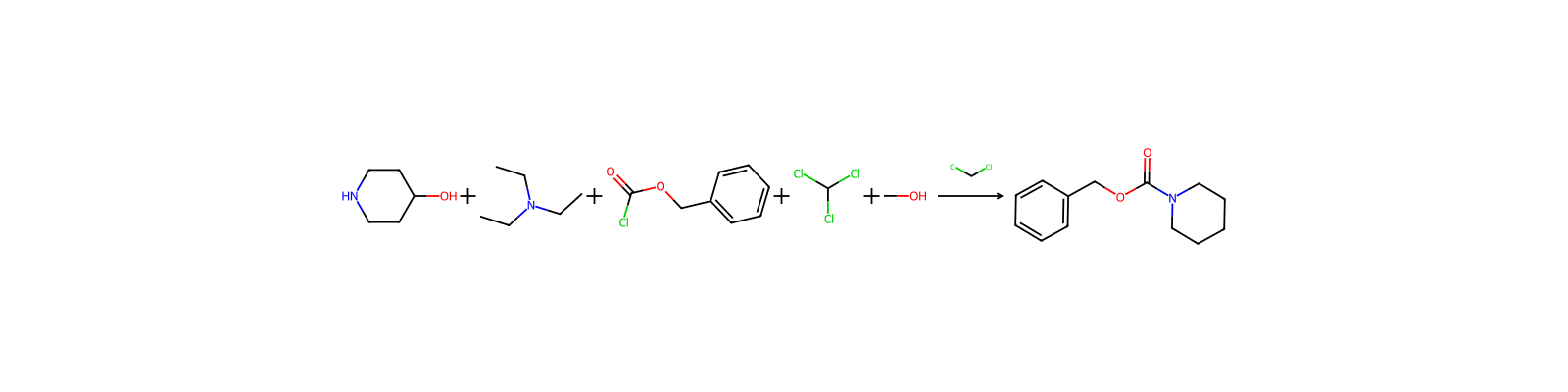
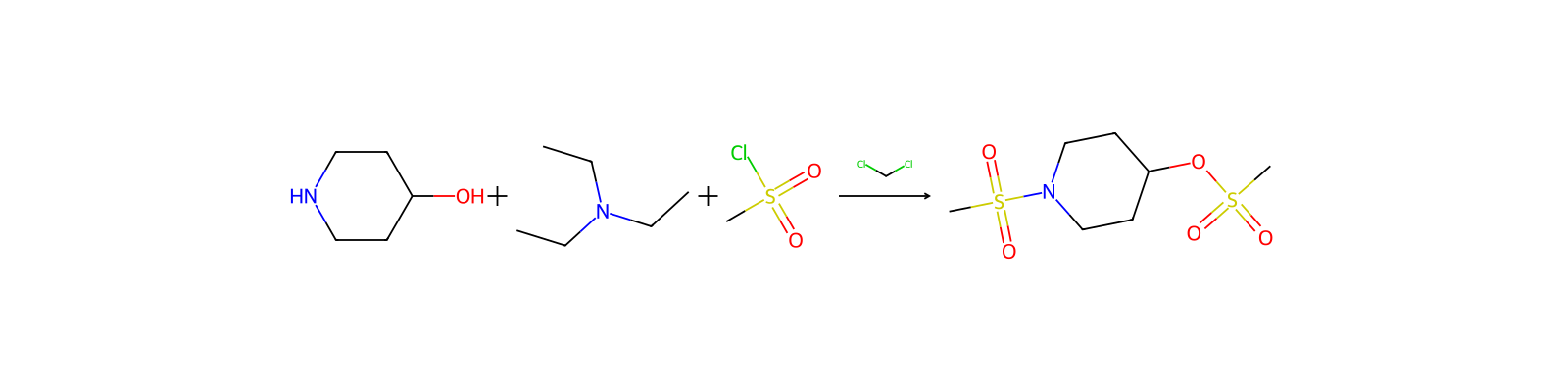
Related reactions
1,376 records



Linked notes
Loading…