
4-Methylmorpholine

Basic information
- CAS
109-02-4- Standard SMILES
CN1CCOCC1- InChIKey
SJRJJKPEHAURKC-UHFFFAOYSA-N- Molecular formula
- C5H11NO
- Average molar mass
- 101.15 g/mol
- Monoisotopic mass
- 101.08406397
Overview
4-methylmorpholine appears as a water-white liquid with an ammonia-like odor. Less dense than water and insoluble in water. May be moderately toxic by ingestion, inhalation and skin absorption. Very irritating to skin, eyes, and mucous membranes. Used as a solvent and to make pharmaceuticals.
Names & identifiers
- Preferred name
- 4-Methylmorpholine
- IUPAC
- 4-methylmorpholine
- English name
- 4-Methylmorpholine
- Molecular formula
- C5H11NO
- Molecular weight
- 101.15
Names & synonyms
4-MethylmorpholineN-METHYLMORPHOLINE109-02-4Morpholine, 4-methyl-1-MethylmorpholineDTXSID902914611P91ANU5XNSC-9382DTXCID709146RefChem:99901203-640-0Methylmorpholine
Show more names
4-methyl-morpholinN-Methyl morphofinen-methyl-morpholinMorpholine,4-methyl-N-MethylMorpholine, 99% 100GR
N-methyl morpholineMorpholine, N-methyl-4-MethylmorfolinN-MethylmorpholinN-methylmopholineNSC 93824-methyl-morpholineNMM
Database identifiers
- CAS
109-02-4- PubChem CID
- 7972
- DTXSID
DTXSID9029146- ChEMBL
CHEMBL2448839- UNII
- 11P91ANU5X
- EC Number
- 203-640-0
- Nikkaji
- J100.752A
Properties
Computed structural properties
- XLogP
- -0.3
- Topological polar surface area
- 12.5 Ų
- Hydrogen bond donors
- 0
- Hydrogen bond acceptors
- 2
- Rotatable bonds
- 0
- Heavy atoms
- 7
- Formal charge
- 0
- Complexity
- 50
Experimental & physicochemical properties
Chemical Classes
Nitrogen Compounds -> Morpholines
Flammable agents - 3rd degree
SpringerMaterials Properties15N nuclear magnetic resonance spectrum
LogP-0.33
Density0.9 @25 °C
Flash Point
75 °F (NFPA, 2010)
75 °F
Boiling Point115 °C @760 [mm Hg]
Vapor Pressure13.2 [mmHg]
Physical Description
4-methylmorpholine appears as a water-white liquid with an ammonia-like odor. Less dense than water and insoluble in water. May be moderately toxic by ingestion, inhalation and skin absorption. Very irritating to skin, eyes, and mucous membranes. Used as a solvent and to make pharmaceuticals.
Liquid
A water-white liquid with an ammonia-like odor; [CAMEO]
Safety & regulation
Safety information is for reference only and does not replace the supplier’s Safety Data Sheet (SDS), applicable regulations, or professional assessment.
GHS classification
GHS Classification
This chemical does not meet GHS hazard criteria for 2% (14 of 715) of reports.
Danger
H225 (89.1%): Highly Flammable liquid and vapor [Danger Flammable liquids]
P210, P233, P240, P241, P242, P243, P260, P261, P264, P264+P265, P270, P271, P280, P301+P317, P301+P330+P331, P302+P352, P302+P361+P354, P303+P361+P353, P304+P340, P305+P354+P338, P316, P317, P321, P330, P362+P364, P363, P370+P378, P403+P235, P405, and P501 (click each P-code to see the statement)
Aggregated GHS information provided per 715 reports by companies from 14 notifications to the ECHA C&L Inventory. Each notification may be associated with multiple companies.
Danger
Hazard information
Regulatory Information
Chemical: Morpholine, 4-methyl-
Morpholine, 4-methyl- is listed on the EPA's Chemical Data Reporting (CDR) system. Manufacturers and importers of Morpholine, 4-methyl- are required to report information about their production and use of this chemical to the EPA under the Toxic Substances Control Act (TSCA). (40 eCFR Part 711)
REACH registered substance: 4-methylmorpholine (EC: 203-640-0)
Morpholine, 4-methyl-: HSNO Approval: HSR001392 Approved with controls
The New Jersey Worker and Community Right to Know Act requires public and private employers to provide information about hazardous substances at their workplaces. (N.J.S.A. 34:5A-1 et. seq.)
DOT LabelFlammable Liquid Corrosive
Fire Hazards
Excerpt from ERG Guide 132 [Flammable Liquids - Corrosive]:
· Flammable/combustible material.
· Flammable/combustible material.
Health Hazards
Excerpt from ERG Guide 132 [Flammable Liquids - Corrosive]:
Chemistry & industry
Uses & manufacturing
Uses
Used as a solvent and to make pharmaceuticals. [CAMEO] Used in poyurethane foam production; [Reference #1]
Plastic Composites Manufacturing [Category: Industry]
U.S. Production2023: 1,000,000 - <2,500,000 lb
Consumer UsesCatalyst
Industry UsesCatalyst
General Manufacturing Information
Petroleum Refineries
Morpholine, 4-methyl-: ACTIVE
Applications
Uses4-Methylmorpholine is an excellent solvent, emulsifier, corrosion inhibitor, Catalyst in polyurethane foamsextraction solvent, stabilizing agent for chlorinated hydrocarbons, and also can be used as pesticide intermediates. 4-Methylmorpholine is widely used in the synthesis of pesticide compounds such as insecticide, fungicide, plant growth regulator, etc. It is also used in the synthesis of fine chemicals such as surfactant, lubricant coolant, metal antirust agent, fiber treatment agent, etc.
General Description4-Methylmorpholine is a water-white liquid with an ammonia-like odor. Less dense than water and insoluble in water. Flash point 75°F. May be moderately toxic by ingestion, inhalation and skin absorption. Very irritating to skin, eyes, and mucous membranes. Used as a solvent and to make pharmaceuticals.
Preparation methods
Preparation4-Methylmorpholine preparation method is to slowly add formaldehyde in morpholine drop by drop, under stirring add formic acid reaction, automatic reflux, and release carbon dioxide. After adding formic acid, heating reflux 4 ~ 5h, cooling and adding sodium hydroxide immediately distillation, collect all the fraction before the boiling point of 99 ℃, and then add sodium hydroxide in the fraction to saturation, cooling the oil layer, drying, fractional distillation, to obtain N-methylmorpholine.
Related reactions
17,911 records




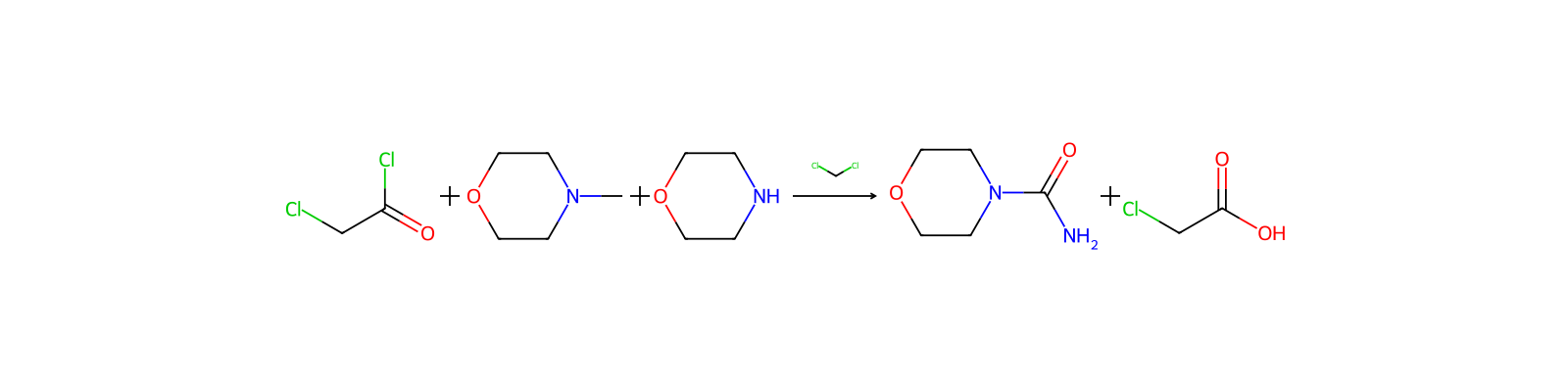

Compound notes
Loading…