

Basic information
- CAS
5754-35-8- Standard SMILES
NCCC1OCCO1- InChIKey
JNAQYWWCTUEVKR-UHFFFAOYSA-N- Molecular formula
- C5H11NO2
- Average molar mass
- 117.15 g/mol
- Monoisotopic mass
- 117.07897859
Names & identifiers
- Preferred name
- 1,3-Dioxolane-2-ethylamine
- IUPAC
- 2-(1,3-dioxolan-2-yl)ethanamine
- English name
- 2-(2-AMINOETHYL)-1,3-DIOXOLANE
- Molecular formula
- C5H11NO2
- Molecular weight
- 117.15
Names & synonyms
5754-35-81,3-dioxolane-2-ethanamine1,3-Dioxolane-2-ethylamineEINECS 227-277-2DTXSID70206158RefChem:414905DTXCID70128649227-277-22-(2-Aminoethyl)-1,3-dioxolane2-(1,3-dioxolan-2-yl)ethanamine2-(1,3-dioxolan-2-yl)ethan-1-amineMFCD00142756
Show more names
2-(2-aminoethyl)-1,3-dioxypentane2-(2-Aminoethyl)-1,3-dioxolane >2-(2-AMINOETHYL)-13-DIOXOLANE, 97+%
SCHEMBL98162-[1,3]dioxolan-2-yl-ethylamineAKOS006229366BS-22731CS-0205328Aminoethyldioxolane3-Aminopropionaldehyde Cyclic Ethylene AcetalSCHEMBL4170931
Database identifiers
- CAS
5754-35-8- PubChem CID
- 79827
- DTXSID
DTXSID70206158- EC Number
- 227-277-2
- Nikkaji
- J38.311B
Properties
Computed structural properties
- XLogP
- -0.7
- Topological polar surface area
- 44.5 Ų
- Hydrogen bond donors
- 1
- Hydrogen bond acceptors
- 3
- Rotatable bonds
- 2
- Heavy atoms
- 8
- Formal charge
- 0
- Complexity
- 61
Physicochemical properties
- Boiling point
- 75 °C · 75 °C / 18mmHg
- Density
- 1 · 1,07 g/cm3
- refractive index
- 1.451 · 1.4510-1.4540
- storage temp.
- 2 · Keep in dark place,Sealed in dry,2-8°C
- solubility
- Dichloromethane, Methanol
- form
- Oil
- pka
- 10.33 · 10.33±0.10(Predicted)
- color
- Yellow
- InChI
- InChI=1S/C5H11NO2/c6-2-1-5-7-3-4-8-5/h5H,1-4,6H2
- InChIKey
- JNAQYWWCTUEVKR-UHFFFAOYSA-N
- SMILES
- O1CCOC1CCN
- CAS DataBase Reference
- 5754 · 5754-35-8(CAS DataBase Reference)
- Symbol(GHS)
- 2 · GHS02,GHS05
- Signal word
- Danger
- Hazard statements
- 226 · H226-H314
- Precautionary statements
- 210 · P210-P233-P240-P241+P242+P243-P260-P264-P280-P301+P330+P331+P310-P303+P361+P353+P310+P363-P304+P340+P310-P305+P351+P338+P310-P370+P378-P403+P235-P405-P501
- Hazard Codes
- Xn
- Risk Statements
- 11 · 11-36/37/38-41-37/38-22
- Safety Statements
- 16 · 16-26-36/37/39-39
- RIDADR
- 1993 · 1993
- HS Code
- 2932.99 · 2932.99.9090
- HazardClass
- 3 · 3/8
- PackingGroup
- III
Safety & regulation
GHS classification
GHS Classification
Danger
H226 (66.7%): Flammable liquid and vapor [Warning Flammable liquids];H302 (66.7%): Harmful if swallowed [Warning Acute toxicity, oral];H314 (66.7%): Causes severe skin burns and eye damage [Danger Skin corrosion/irritation];H315 (33.3%): Causes skin irritation [Warning Skin corrosion/irritation];H318 (66.7%): Causes serious eye damage [Danger Serious eye damage/eye irritation];H335 (66.7%): May cause respiratory irritation [Warning Specific target organ toxicity, single exposure; Respiratory tract irritation]
P210, P233, P240, P241, P242, P243, P260, P261, P264, P264+P265, P270, P271, P280, P301+P317, P301+P330+P331, P302+P352, P302+P361+P354, P303+P361+P353, P304+P340, P305+P354+P338, P316, P317, P319, P321, P330, P332+P317, P362+P364, P363, P370+P378, P403+P233, P403+P235, P405, and P501 (click each P-code to see the statement)
Aggregated GHS information provided per 3 reports by companies from 3 notifications to the ECHA C&L Inventory. Each notification may be associated with multiple companies.;Information may vary between notifications depending on impurities, additives, and other factors. The percentage value in parenthesis indicates the notified classification ratio from companies that provide hazard codes. Only hazard codes with percentage values above 10% are shown. For more detailed information, please visit ECHA C&L website.
Hazard information
Hazard Classes and CategoriesFlam. Liq. 3 (66.7%);Acute Tox. 4 (66.7%);Skin Corr. 1B (66.7%);Skin Irrit. 2 (33.3%);Eye Dam. 1 (66.7%);STOT SE 3 (66.7%)
Safety data
- ridadr
- 1993
- hs_code
- 2932.99.9090
- risk_code
- 11-36/37/38-41-37/38-22
- Signal word
- Danger
- Symbol(GHS)
- GHS02,GHS05
- hazard_code
- Xn
- safety_code
- 16-26-36/37/39-39
- hazard_class
- 3/8
- packing_group
- III
- Hazard statements
- H226-H314
- Precautionary statements
- P210-P233-P240-P241+P242+P243-P260-P264-P280-P301+P330+P331+P310-P303+P361+P353+P310+P363-P304+P340+P310-P305+P351+P338+P310-P370+P378-P403+P235-P405-P501
Chemistry & industry
Suppliers53 total
南京波普生物医药研发有限公司025-87138562 18951783565 · [email protected]
梯希爱(上海)化成工业发展有限公司021-67121386 · [email protected]
上海阿拉丁生化科技股份有限公司400-6206333 13167063860 · [email protected]
合肥翰刚医药科技有限公司+8618062405514 · [email protected]
上海毕得医药科技股份有限公司400-1647117 13681763483 · [email protected]
陕西缔都新材料有限公司029-63373950 17392216152 · [email protected]
爱斯特(成都)生物制药股份有限公司+86-28-85122536 85324413 · [email protected]
Dayang Chem (Hangzhou) Co.,Ltd.+86-0571-88938639 17705817739 · [email protected]
石家庄衍晟生物科技有限公司18332018567; 18332018567 · [email protected]
上海迈瑞尔生化科技有限公司4006356688 18621169109 · [email protected]
上海九芳科技有限公司021-61150629 15921749159 · [email protected]
安耐吉化学&3A(安徽泽升科技股份有限公司)400-0056266 · [email protected]
常州科化生物科技有限公司0519-68985668 13685222090 · [email protected]
上海安米克化学品有限公司微信 17321281695 18019252918 · [email protected]
南京诺利斯医药科技有限公司13901585132 · [email protected]
HONG KONG IPURE BIOLOGY CO.,LIMITED86 18062405514 18062405514 · [email protected]
深圳菲斯生物科技有限公司0755-83725681-603
上海遐瑞医药科技有限公司+86 21 61551611
南京诺利斯医药科技有限公司13901585132 · [email protected]
江苏艾康生物医药研发有限公司025-66113011 13913916777 · [email protected]
TCI AMERICA800-4238616 · [email protected]
TOKYO CHEMICAL INDUSTRY CO., LTD.03-36680489 · [email protected]
TCI Europe320-37350700 · [email protected]
上海伟括医药科技有限公司19272189127 13331882176
上海湄水化工科技有限公司021-60549325 18616193163
上海毕得医药科技股份有限公司400-164-7117 18317119277 · [email protected]
上海麦克林生化科技股份有限公司15221275939 15221275939 · [email protected]
凯试(上海)科技有限公司021-50135380 · [email protected]
九鼎化学(上海)科技有限公司4009209199 · [email protected]
广东翁江化学试剂有限公司0751-2886766 13927870850 · [email protected]
苏州卓欣雅科技有限公司18506228039 · [email protected]
上海源叶生物科技有限公司13636370518 · [email protected]
上海贤鼎生物科技有限公司021-021-52271985 17721149837 · [email protected]
杭州洁汉化工有限公司+86-571-86217390; +8618058761490 · [email protected]
Capot Chemical Co.,Ltd.+86-(0)57185586718 +86-13336195806 · [email protected]
上海启乔生物科技有限公司021-37653318 15221675714 · [email protected]
厦门盈融达化工有限公司+86-0592-6210733 · [email protected]
career henan chemical co+86-0371-86658258 · [email protected]
ATK CHEMICAL COMPANY LIMITED+undefined-21-51877795 · [email protected]
上海晶石医药科技有限公司021-000000 · [email protected]
南京承乾医药科技有限公司025-52791040 18652036685
范德(北京)生物科技有限责任公司15911056312 · [email protected]
TCI Chemicals (India) Pvt. Ltd.[email protected]
Aladdin Scientific[email protected]
安徽敬同药业股份有限公司13675155016 · [email protected]
浙江皓格药业有限公司0573-88133976-8014 · [email protected]
Capot Chemical Co., Ltd+86 (0) 571 85 58 67 18
重庆卡兰医药有限公司[email protected]
北京百灵威科技有限公司18210857532 18210857532 · [email protected]
郑州研德生物科技有限公司13298105281 · [email protected]
Related reactions
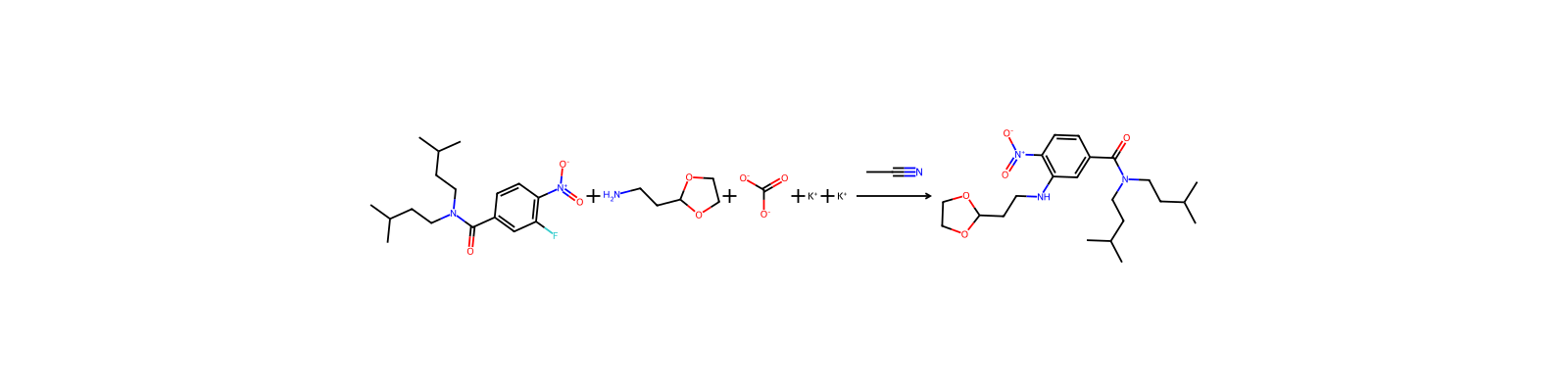
13 records




Compound notes
Loading…