HomeMCPWorkbenchSkills
HomeWorkbenchNotificationsMe
llms.txt · MCP GuidePrivacy Policy · Terms of Service · Supportv1.8.0
  1. Home
  2. /Compound

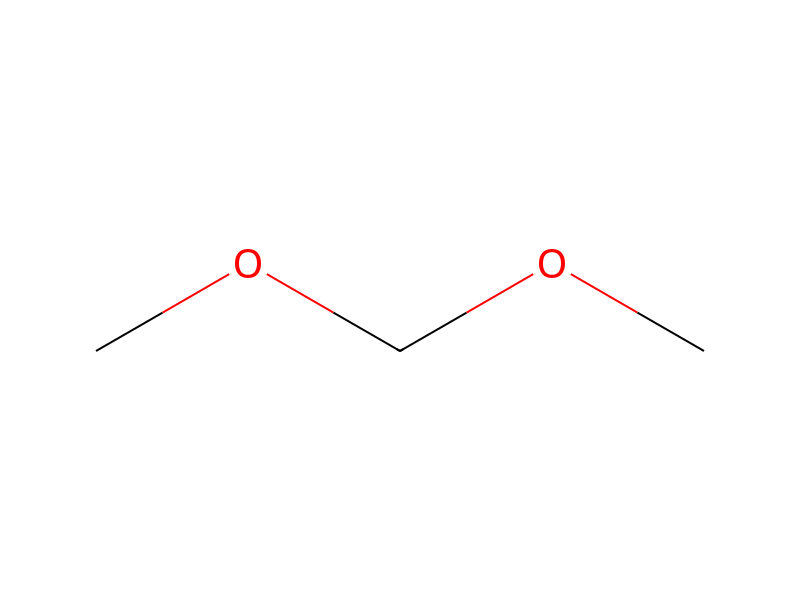
Dimethoxymethane

HCID 8020
New noteNew reactionRequest quotes
Print preview

Completing data — refresh the page later to see the latest
Basic informationOverviewNames & identifiersPropertiesSafety & regulationChemistry & industryRelated reactionsCompound notes
Substructure searchFind similar structures

Basic information

CAS
109-87-5
Standard SMILES
COCOC
InChIKey
NKDDWNXOKDWJAK-UHFFFAOYSA-N
Molecular formula
C3H8O2
Average molar mass
76.09 g/mol
Monoisotopic mass
76.0524295

Overview

Methylal appears as a clear colorless liquid with a chloroform-like odor. Flash point 0 °F. Boiling point 42.3 °C. Density 0.864 g / cm3 at 68 °F (20 °C). Vapors heavier than air.

Names & identifiers

Preferred name
Dimethoxymethane
IUPAC
dimethoxymethane
English name
Dimethoxymethane
Molecular formula
C3H8O2
Molecular weight
76.09

Names & synonyms

Dimethoxymethane109-87-5METHYLALFormalMethane, dimethoxy-Formaldehyde dimethyl acetalDimethyl formalAnesthenyl2,4-DioxapentaneMethylene dimethyl etherBis(methoxy)methaneMethoxymethyl methyl ether
Show more names
1,1-DIMETHOXYMETHANEMethylaMethyl formalDIMETHYLFORMALFORMALDEHYDE DIMETHYLmethanal,dimethylacetal
Formaldehyde methyl ketalMetylalFormaldehyde dimethylacetal7H1M4G2NUEDTXSID1025564CHEBI:48341RefChem:134194DTXCID905564

Database identifiers

CAS
109-87-5
PubChem CID
8020
DTXSID
DTXSID1025564
ChEMBL
CHEMBL15537
ChEBI
CHEBI:48341
UNII
7H1M4G2NUE
EC Number
203-714-2
Nikkaji
J3.250F

Properties

Computed structural propertiesFilling in

XLogP
0.2
Topological polar surface area
18.5 Ų
Hydrogen bond donors
0
Hydrogen bond acceptors
2
Rotatable bonds
2
Heavy atoms
5
Formal charge
0
Complexity
12.4

Experimental & physicochemical properties

Chemical Classes · 3 items

Other Classes -> Acetals

Flammable agents - 3rd degree

Volatile Organic Compound (VOC)

CosmeticsSolvent
SpringerMaterials PropertiesSchoenflies notation
LogP · 2 items

log Kow= 0.0

0.18

Odor · 2 items

CHLOROFORM ODOR

Chloroform-like odor.

TastePUNGENT TASTE
Density · 6 items

0.861 at 68 °F (USCG, 1999) - Less dense than water; will float

0.8593 @ 20 °C/4 °C

0.86 g/cm³

Relative density of the vapour/air-mixture at 20 °C (air = 1): 1.7

0.86

0.8593 @ 20°C

Flavoring AgentsEU Flavoring substances
Color/Form · 2 items

Safety & regulation

Safety information is for reference only and does not replace the supplier’s Safety Data Sheet (SDS), applicable regulations, or professional assessment.

GHS classification

GHS Classification · 6 items

This chemical does not meet GHS hazard criteria for 1.2% (5 of 433) of reports.

Danger

H225 (98.8%): Highly Flammable liquid and vapor [Danger Flammable liquids]

P210, P233, P240, P241, P242, P243, P261, P264, P264+P265, P271, P280, P302+P352, P303+P361+P353, P304+P340, P305+P351+P338, P319, P321, P332+P317, P337+P317, P362+P364, P370+P378, P403+P233, P403+P235, P405, and P501 (click each P-code to see the statement)

Aggregated GHS information provided per 433 reports by companies from 19 notifications to the ECHA C&L Inventory. Each notification may be associated with multiple companies.

Danger

Hazard information

Regulatory Information · 6 items

Chemical: Methane, dimethoxy-

Commission Regulation (EC) No 1565/2000 (Repealed by Com. Implementing Reg. (EU) No 872/2012)

Methane, dimethoxy- is listed on the EPA's Chemical Data Reporting (CDR) system. Manufacturers and importers of Methane, dimethoxy- are required to report information about their production and use of this chemical to the EPA under the Toxic Substances Control Act (TSCA). (40 eCFR Part 711)

Status: Active Update: 27-10-2021 https://echa.europa.eu/registration-dossier/-/registered-dossier/5159

Methane, dimethoxy-: HSNO Approval: HSR001047 Approved with controls

The New Jersey Worker and Community Right to Know Act requires public and private employers to provide information about hazardous substances at their workplaces. (N.J.S.A. 34:5A-1 et. seq.)

DOT LabelFlammable Liquid
Fire Hazards · 3 items

FLAMMABLE. Irritating gases may be produced when heated. Containers may explode in fire. Flashback along vapor trail may occur. Vapor may explode if ignited in an enclosed area. Irritating formaldehyde gas may be present in smoke. (USCG, 1999)

· HIGHLY FLAMMABLE: Will be easily ignited by heat, sparks or flames.

Chemistry & industry

Pharmacology

Metabolism/Metabolites · 1 item

Methylal (dimethoxymethane) ... was metabolised by rats to methanol and dimethyl ether in equimolar ratio, regardless of the route of administration. Symptoms of methylal poisoning and the typical damage to the retina and optic nerve are the same as those seen in methanol poisoning. Inhalation experiments showed that the blood methanol concentration is proportional to the concentration of methylal in the air.

Uses & manufacturing

Uses · 6 items

Used as a solvent for adhesives and coatings, a fuel, and an intermediate for other organic compounds; [ACGIH] Has been used as an anesthetic; [HSDB]

Painting (Solvents) [Category: Paint]

IN PERFUMERY; MFR ARTIFICIAL RESINS; REACTION MEDIUM FOR GRIGNARD & REPPE REACTIONS

EXTERNALLY AS OINTMENT AND INTERNALLY AS AN ANAESTHETIC AND HYPNOTIC

SPECIAL PURPOSES FUEL; SOLVENT FOR ADHESIVES & COATINGS; IN ORG SYNTHESES

In methacrylate mfg

U.S. Production2023: 1,000,000 - <2,500,000 lb
Consumer UsesSolvent
Industry UsesIntermediate
Methods of Manufacturing... BY CATALYTIC VAPOR-PHASE OXIDN OF METHANOL IN PRESENCE OF SMALL AMT OF HYDROCHLORIC ACID; FROM METHANOL & FORMALDEHYDE. FROM PARAFORMALDEHYDE + METHANOL IN PRESENCE OF CALCIUM CHLORIDE + HYDROCHLORIC ACID.
Household ProductsInformation on 10 consumer products that contain Dimethoxymethane in the following categories is provided:
Use ClassificationCosmetics -> Solvent
General Manufacturing Information · 2 items

Related reactions

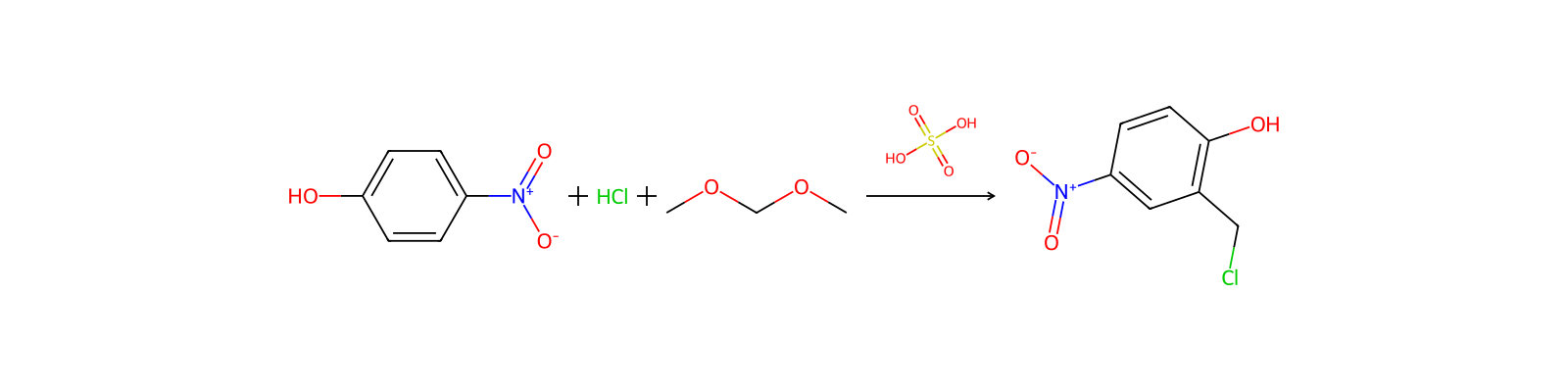
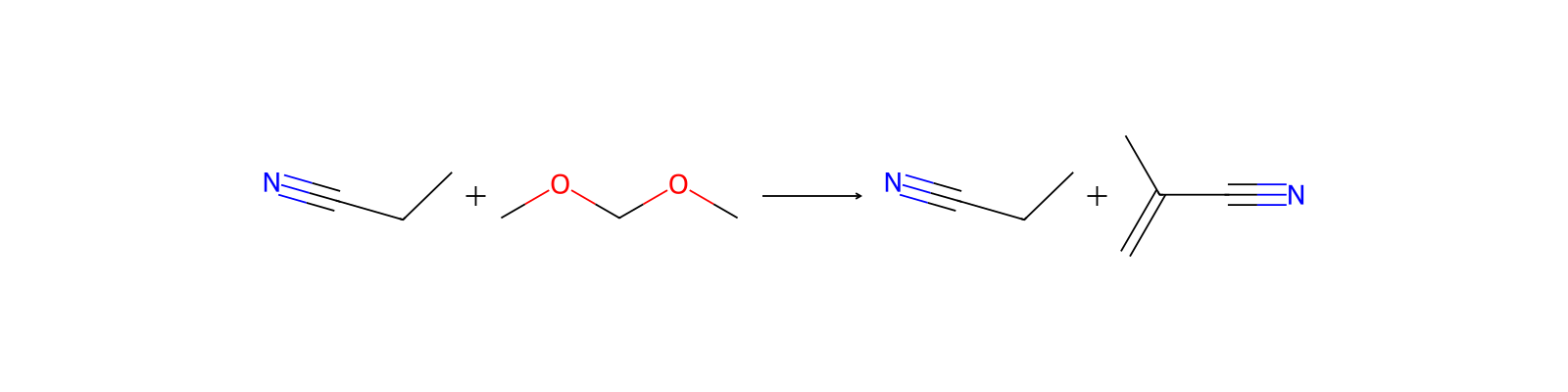
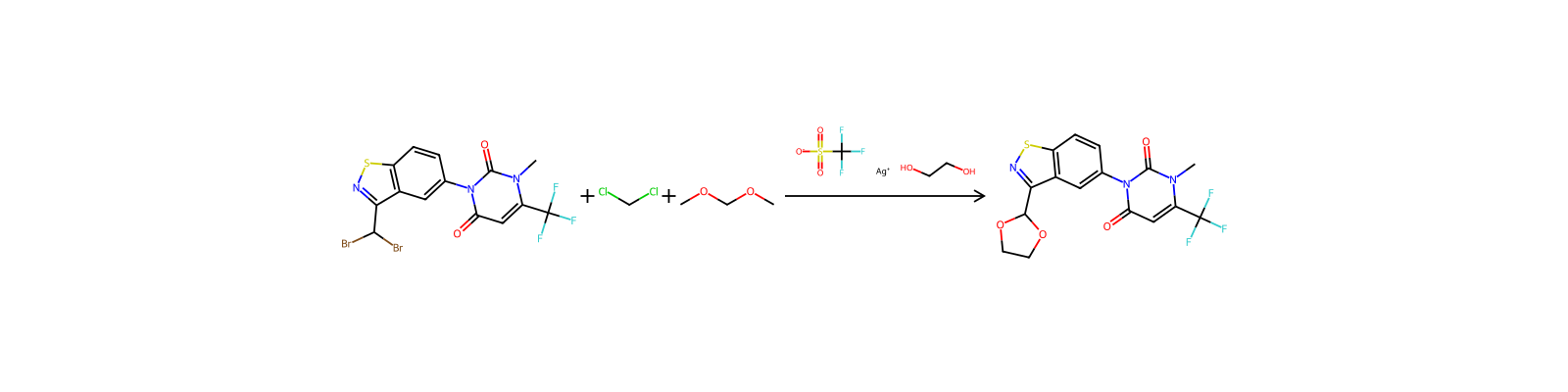
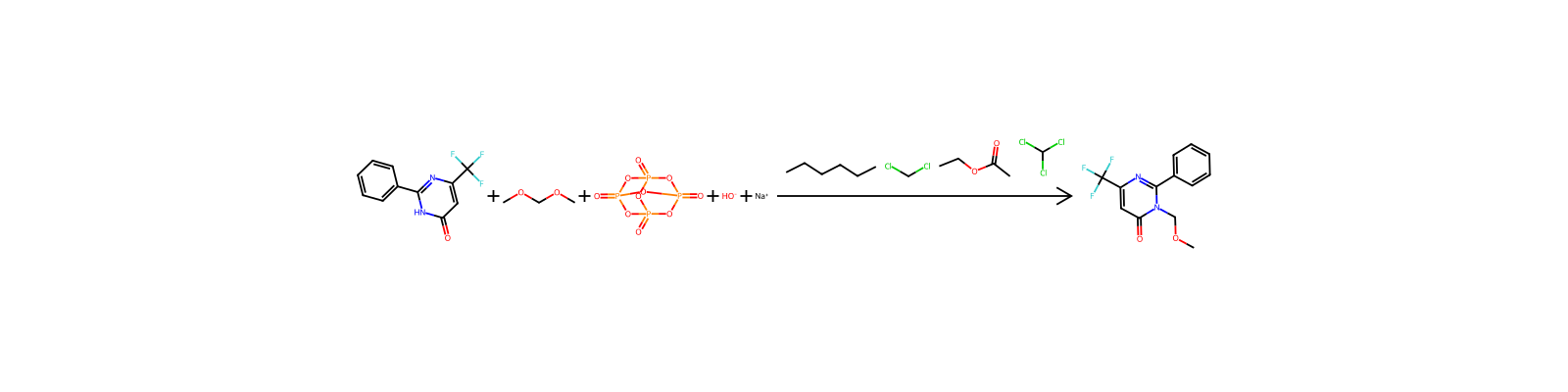
182 records
New reaction record
HRID 1455 reaction equation
HRID 1455As reactantuspto-grants-1998_03
HRID 18437 reaction equation
HRID 18437As solventuspto-grants-2010_06
HRID 21512 reaction equation
HRID 21512As reactantuspto-grants-1995_06
HRID 24289 reaction equation
HRID 24289As reactantuspto-grants-2005_02
HRID 25918 reaction equation
HRID 25918As reactantuspto-grants-1979_04
HRID 49005 reaction equation
HRID 49005As reactantuspto-grants-2004_03
HRID 67054 reaction equation
HRID 67054As reactantuspto-grants-1982_08
HRID 89508 reaction equation
HRID 89508As reactantTraining data from https://doi.org/10.1039/C8SC04228D (2/10)
Page 1 of 23

Compound notes

Loading…

On this pageBasic informationOverviewNames & identifiersPropertiesSafety & regulationChemistry & industryRelated reactionsCompound notes
More actions
New noteNew reactionRequest quotes

COLORLESS, CLEAR LIQUID

Colorless solid.

Solubility · 6 items

33 % (NIOSH, 2024)

MISCIBLE WITH ALCOHOL, ETHER, OILS; SOL IN 3 PARTS WATER

SOL IN ALL ACETONE, AND BENZENE

Water solubility: 330,000 mg/l

Solubility in water, g/100ml at 20 °C: 28.5 (good)

33%

Flash Point · 6 items

0 °F (USCG, 1999)

-32 °C

-26 °F (-32 °C) (OPEN CUP)

-31 °C c.c.

-26 °F (open cup)

(oc) -26 °F

Boiling Point · 6 items

108 °F at 760 mmHg (USCG, 1999)

41.6 °C @ 760 MM HG

42 °C

111 °F

42 °C @760 [mm Hg]

111 °F

Physicochemical properties

Melting point
-105 °C · -105 °C
Boiling point
41 · 41-43 °C
Density
0.86 g/mL · 0.860 g/mL at 20 °C(lit.)
vapor density
2.6 · 2.6 (vs air)
vapor pressure
6.38 psi · 6.38 psi ( 20 °C)
refractive index
20 · n20/D 1.354
FLAVIS Number
6.074 · 06.074 | Dimethoxymethane
Flash point
-18 °C · -18 °C
storage temp.
20 °C · Store at <= 20°C.
solubility
32.3 g/100 · 32.3 g/100 mL (16°C)
form
Liquid
pka
3.1 · 3.1[at 20 ℃]
color
Clear colorless
Odor
Mild, ethereal; chloroform-like.
PH
pH (12.5vol % , 25℃) : 4.5~6.6
Viscosity
0.371 mm2/s · 0.371mm2/s
explosive limit
1.6 · 1.6-17.6%(V)
Water Solubility
32.3 g/100 · 32.3 g/100 mL (16 ºC)
Specific Heat Capacity
2.13 J/ · Cp(liquid): 2.13 J/(g·K), at 25℃
Sensitive
Moisture Sensitive
Merck
14 · 14,6012
BRN
1697025 · 1697025
Henry's Law Constant
(x 10-4 atmm3/mol): 1.73 at 25 °C (Hine and Mookerjee, 1975)
Exposure limits
1000 ppm · ACGIH:TLV-TWA 1000 ppm (3110 mg/m3)OSHA:PEL-TWA 1000 ppm (3100 mg/m3)NIOSH:REL-TWA 1000 ppm
Dielectric constant
2.7 · 2.7(20℃)
Stability
Stable. Extremely flammable. Readily forms explosive mixtures with air. Note low flash point and wide explosive limits. Incompatible with strong oxidizing agents, strong acids. May form explosive peroxides upon exposure to air.
Cosmetics Ingredients Functions
SOLVENT
InChI
1S/C3H8O2/c1-4-3-5-2/h3H2,1-2H3
InChIKey
NKDDWNXOKDWJAK-UHFFFAOYSA-N
SMILES
COCOC
LogP
0 · 0
CAS DataBase Reference
109 · 109-87-5(CAS DataBase Reference)
EWG's Food Scores
2 · 2
FDA UNII
7 H1M4G2NUE · 7H1M4G2NUE
NIST Chemistry Reference
Methane, dimethoxy-(109-87-5)
EPA Substance Registry System
Dimethoxymethane (109-87-5)
UNSPSC Code
41116107 · 41116107
NACRES
24 · NA.24
Symbol(GHS)
2 · GHS02,GHS07
Signal word
Danger
Hazard statements
315 · H315-H319-H335-H336-H225
Precautionary statements
501 · P501-P240-P261-P210-P233-P243-P241-P242-P271-P264-P280-P370+P378-P337+P313-P305+P351+P338-P362+P364-P303+P361+P353-P332+P313-P304+P340+P312-P403+P233-P403+P235-P405
PPE
Eyeshields, Faceshields, Gloves
Hazard Codes
F,Xi
Risk Statements
11 · 11-19-36-36/37/38
Safety Statements
16 · 16-26-33-7/9-37/39
OEB
A
OEL
1000 ppm · TWA: 1000 ppm (3100 mg/m3)
RIDADR
1234 · UN 1234
WGK Germany
1 · 1
RTECS
8750000 · PA8750000
F
21 · 21
Autoignition Temperature
459 °F · 459 °F
TSCA
TSCA listed
HS Code
2911 · 2911 00 00
HazardClass
3 · 3
PackingGroup
II
Storage Class
3 · 3 - Flammable liquids
Hazard Classifications
2 · Flam. Liq. 2
Hazardous Substances Data
109 · 109-87-5(Hazardous Substances Data)
Toxicity
50 orally · LD50 orally in Rabbit: 6653 mg/kg
IDLA
2 · 2,200 ppm [10% LEL]
REACH Registrations
Active
Limited Quantities
1 L · 1.0 L (0.3 gallon) (liquid)
Excepted Quantities
Max Inner Pack (30g or 30ml) and Max Outer Pack (500g or 500ml)

Highly flammable. Heating will cause rise in pressure with risk of bursting. Vapour/air mixtures are explosive. Risk of fire and explosion on contact with strong oxidizing agents or strong bases.

Fire PotentialDANGEROUS, WHEN EXPOSED TO HEAT, FLAME, OXIDIZERS
Health Hazards · 2 items

VAPOR: Irritating to eyes, nose and throat. Harmful if inhaled. LIQUID: Irritating to skin and eyes. Harmful if swallowed. (USCG, 1999)

· Inhalation or contact with material may irritate or burn skin and eyes.

Hazards SummaryAnimal inhalation studies: anesthesia and damage to the liver and other organs; [ACGIH] A skin, eye, and respiratory tract irritant; Inhalation of high concentrations can cause CNS depression; [ICSC]
DOT ID and Guide · 2 items

1234 127

1234 127

Reactive GroupAcetals, Ketals, Hemiacetals, and Hemiketals
UN ClassificationUN Hazard Class: 3; UN Pack Group: II
TSCA Requirements · 1 item

Pursuant to section 8(d) of TSCA, EPA promulgated a model Health and Safety Data Reporting Rule. The section 8(d) model rule requires manufacturers, importers, and processors of listed chemical substances and mixtures to submit to EPA copies and lists of unpublished health and safety studies. Methane, dimethoxy- is included on this list.

Reactivity AlertsHighly Flammable
OSHA Standards8 hr Time-Weighted avg: 1,000 ppm (3,100 mg/cu m)

Safety & protection

Fire Fighting · 2 items

Excerpt from ERG Guide 127 [Flammable Liquids (Water-Miscible)]:

Use water spray, dry powder, carbon dioxide, alcohol-resistant foam. In case of fire: keep drums, etc., cool by spraying with water.

First Aid Measures · 4 items

Fresh air, rest. Refer for medical attention.

First rinse with plenty of water for at least 15 minutes, then remove contaminated clothes and rinse again.

First rinse with plenty of water for several minutes (remove contact lenses if easily possible), then refer for medical attention.

Rinse mouth. Do NOT induce vomiting. Refer for medical attention .

Accidental Release Measures · 2 items

· CALL 911. Then call emergency response telephone number on shipping paper. If shipping paper not available or no answer, refer to appropriate telephone number listed on the inside back cover.

· ELIMINATE all ignition sources (no smoking, flares, sparks or flames) from immediate area.

First Aid · 3 items

Excerpt from NIOSH Pocket Guide for Methylal:

General First Aid:

(General first aid procedures)

Safe StorageFireproof. Separated from strong oxidants and strong bases. Cool. Keep in the dark. Well closed. Store only if stabilized. Store in an area without drain or sewer access.
Exposure Control and Personal Protection · 2 items

· Wear positive pressure self-contained breathing apparatus (SCBA).

500.0 [ppm]

Fire Fighting Procedures · 2 items

TO FIGHT FIRE: FOAM, CARBON DIOXIDE, DRY CHEMICAL ...

Water may be ineffective. Alcohol foam.

Cleanup Methods · 1 item

1. REMOVE ALL IGNITION SOURCES. 2. VENTILATE AREA OF SPILL OR LEAK. 3. FOR SMALL QUANTITIES, ABSORB ON PAPER TOWELS. EVAPORATE IN SAFE PLACE (SUCH AS FUME HOOD). ALLOW SUFFICIENT TIME TO COMPLETELY CLEAR HOOD DUCTWORK. BURN PAPER IN SUITABLE LOCATION AWAY FROM COMBUSTIBLE MATERIALS. 3. LARGE QUANTITIES CAN BE COLLECTED, DISSOLVED IN ALC OF GREATER MOLECULAR WT THAN BUTYL ALC, & ATOMIZED IN SUITABLE COMBUSTION CHAMBER. METHYLAL SHOULD NOT BE ALLOWED TO ENTER CONFINED SPACE, SUCH AS SEWER, BECAUSE OF THE POSSIBILITY OF AN EXPLOSION.

Nonfire Spill ResponseExcerpt from ERG Guide 127 [Flammable Liquids (Water-Miscible)]:
Disposal Methods... MAY BE DISPOSED OF BY DISSOLVING IN ALCOHOL OF GREATER MOLECULAR WEIGHT THAN BUTYL ALCOHOL & ATOMIZING IN SUITABLE COMBUSTION CHAMBER.
Spillage Disposal · 1 item

Consult an expert! Personal protection: filter respirator for organic vapours of low boiling point adapted to the airborne concentration of the substance. Remove all ignition sources. Cover the spilled material with sand or other non-combustible material. Collect leaking liquid in covered containers. Absorb remaining liquid in sand or inert absorbent. Then store and dispose of according to local regulations.

Preventive Measures · 5 items

SRP: The scientific literature supports the wearing of contact lenses in industrial environments, as part of a program to protect the eye against chemical compounds and minerals causing eye irritation. However, there may be individual substances whose irritating or corrosive properties are such that the wearing of contact lenses would be harmful to the eye. In those specific cases contact lenses should not be worn.

SAFE-HANDLING PRECAUTIONS SHOULD INCL USE OF ADEQUATE VENTILATION TO BE CERTAIN THAT AVG CONCN ARE WELL BELOW 1000 PPM, & AVOIDANCE OF EXCESSIVE OR PROLONGED SKIN CONTACT. METHYLAL SHOULD BE HANDLED WITH DUE REGARD FOR ITS FLAMMABLE PROPERTIES.

To prevent injury from occurring as a result of contact with an aldehyde in the form of liquid or vapor, the process in which the substance is present should, if possible be conducted in enclosed plant. If openings are necessary for the purposes of manipulation, vapor should be prevented from escaping into the workroom by the application of exhaust ventilation to the plant or enclosure. When the process cannot be enclosed, exhaust ventilation hoods should be fitted to trap and extract escaping vapor before it can diffuse into the workroom atmosphere. /Aldehydes and ketals/

The worker should immediately wash the skin when it becomes contaminated.

Work clothing that becomes wet should be immediately removed due to its flammability hazard.

Toxicology

Body Burden · 1 item

In the EPA National Human Adipose Survey for fiscal year 1982, 46 composite samples categorized broadly by region and age group were analyzed for pollutants(1). Methylal was identified in one sample from the northeast US in the >45 age group.

Target OrgansEyes, skin, respiratory system, central nervous system
Environmental Fate · 3 items

TERRESTRIAL FATE: If released on land, methylal would volatilize rapidly due to its high vapor pressure and Henry's Law constant and low adsorptivity to soil. It would also exhibit high mobility in soil. The importance of biodegradation in soil is unknown. (SRC)

AQUATIC FATE: If released to water, methylal will be primarily lost through volatilization. Its half-life in a model river is estimated from a calculated Henry's Law constant to be 7.2 hr(1-3). Adsorption to sediment and particulate matter in the water column, and bioconcentration should not be important. The importance of biodegradation in water is unknown. Hydrolysis is fairly slow(SRC).

ATMOSPHERIC FATE: The atmosphere is the sink for methylal. In the atmosphere, methylal will degrade by reaction with photochemically-produced hydroxyl radicals. The half-life for this reaction is estimated to be 2.3 days(1). Methylal is highly soluble in water, 2.44X10+5 ppm(2), and would be washed out by rain. However, methylal thus remove would be recycled back into the atmosphere. (SRC)

Adverse EffectsNeurotoxin - Acute solvent syndrome
Exposure Routes · 2 items

The substance can be absorbed into the body by inhalation of its vapour.

inhalation, ingestion, skin and/or eye contact

Signs and Symptoms · 5 items

Cough. Dizziness. Drowsiness. Headache. Sore throat. Unconsciousness.

Dry skin.

Redness. Pain.

Abdominal pain. Nausea. Vomiting. Further see Inhalation.

irritation eyes, skin, upper respiratory system; anesthesia

Effluent Concentrations · 1 item

In a comprehensive survey of wastewater from 4000 industrial and publicly owned treatment works (POTWs) sponsored by the Effluent Guidelines Division of the U.S. EPA, methylal was identified in discharges of the following industrial category (positive occurrences; median concn in ppb): leather tanning (1; 1637.5), plastics and synthetics (3; 30.8), organic chemicals (6; 45.6), publicly owned treatment works (3; 5.0)(1). The highest effluent concn was 1637 ppb in the leather tanning industry(1). Detected in effluent concentrates from the advanced treatment plant in Orange County, CA, but not in that of five other communities(2).

ICSC Environmental DataEnvironmental effects of the substance have been adequately investigated, but no significant effects have been found.
Soil Adsorption/MobilityThe Koc for methylal estimated from its water solubility, 2.44X10+5 ppm(1), by a recommended regression equation is 5(2). Therefore methylal would be very mobile in soil(3).
Human Toxicity Excerpts · 2 items

... PROPERTIES OF SIMPLE UNSUBSTITUTED ACETALS ARE CHARACTERIZED BY ETHER-LIKE ANESTHETIC ACTION, & BY RELATIVELY LOW DEGREE OF PRIMARY IRRITATION COMPARED TO PARENT ALDEHYDE. /ACETALS/

INHALATION CAUSES IRRITATION OF RESP SYSTEM & DEPRESSION OF CNS. LIQ CAUSES IRRITATION OF EYES & WILL IRRITATE SKIN IF ALLOWED TO REMAIN.

Artificial Pollution Sources · 2 items

Methylal used as a solvent and reagent in organic synthesis(2) may be released to the environment in waste water and as fugitive emissions relating to its manufacture and use. Mean vapor emission rates of methylal measured at two locations at an industrial waste water treatment facility in December were 28.6 and 14.7 mg/min sq-m, at which time the ambient and liquid surface temperatures were 6 and 15 °C, respectively(1).

METHYLAL WAS ONE OF THE COMPONENTS IN WASTE WATER FROM A UREA-FORMALDEHYDE GLUE PLANT.

Environmental Biodegradation · 1 item

A reduction in BOD in 8 hr was obtained in one study in which well acclimated sewage seed was incubated with 333 ppm of methylal(1). However this reduction was small compared with the theoretical oxygen demand and toxicity resulted in an initial increase in BOD.

Regulatory information

TSCA Requirements · 1 item

Pursuant to section 8(d) of TSCA, EPA promulgated a model Health and Safety Data Reporting Rule. The section 8(d) model rule requires manufacturers, importers, and processors of listed chemical substances and mixtures to submit to EPA copies and lists of unpublished health and safety studies. Methane, dimethoxy- is included on this list.

Safety data

F
21
OEB
A
OEL
TWA: 1000 ppm (3100 mg/m3)
PPE
Eyeshields, Faceshields, Gloves
wgk
1
IDLA
2,200 ppm [10% LEL]
tsca
TSCA listed
rtecs
PA8750000
ridadr
UN 1234
hs_code
2911 00 00
Toxicity
LD50 orally in Rabbit: 6653 mg/kg
risk_code
11-19-36-36/37/38
Signal word
Danger
Symbol(GHS)
GHS02,GHS07
hazard_code
F,Xi
safety_code
16-26-33-7/9-37/39
hazard_class
3
Storage Class
3 - Flammable liquids
packing_group
II
Hazard statements
H315-H319-H335-H336-H225
Limited Quantities
1.0 L (0.3 gallon) (liquid)
Excepted Quantities
Max Inner Pack (30g or 30ml) and Max Outer Pack (500g or 500ml)
REACH Registrations
Active
Hazard Classifications
Flam. Liq. 2
Autoignition Temperature
459 °F
Precautionary statements
P501-P240-P261-P210-P233-P243-P241-P242-P271-P264-P280-P370+P378-P337+P313-P305+P351+P338-P362+P364-P303+P361+P353-P332+P313-P304+P340+P312-P403+P233-P403+P235-P405
Hazardous Substances Data
109-87-5(Hazardous Substances Data)

Plastics Material and Resin Manufacturing

Methane, dimethoxy-: ACTIVE

Applications · 3 items

DescriptionMethylal is a colorless liquid with a pungent odor. Molecular weight= 76.11; Specific gravity (H2O:1)= 0.86;Boiling point=43.9℃; Freezing/Melting point=105℃; Vapor pressure 330 mmHg at 20℃; Flash point=32℃; Autoignition temperature=237℃. Explosive limits: LEL= 2.2%; UEL= 13.8%. Hazard Identification (based on NFPA-704 M Rating System): Health 2, Flammability 3, Reactivity 2. Soluble in water; solubility= 33%.

UsesDimethoxymethane (Methylal) is a valuable extraction solvent for pharmaceutical products and a stable, inexpensive solvent for Grignard reactions. Methylal is stable under alkaline and mild acidic conditions. Its dissolving ability is stronger than ether, acetone, and methanol and azeotrope can dissolve nitrocellulose with high nitrogen content. Dimethoxymethane is mainly used in the production of anion-exchange resins, and also as solvents and special fuels.

General DescriptionDimethoxymethane (DMM, methylal) is a biodegradable dimethyl acetal. It can be synthesized by acid catalyzed condensation of formaldehyde with methanol. It is amphiphilic in nature with low viscosity, surface tension and boiling point. It is a flammable, highly volatile solvent with good dissolving power. DMM is considered as a potential alternative fuel and fuel additive due to its high oxygen content and its ability to enhance the combustion characteristics of diesel and petrol. Its thermal diffusivity has been determined by photoacoustic method. Analysis of the molecular structure of DMM by electron diffraction technique shows that it has C2 symmetry with a gauche-gauche conformation.

Preparation methods · 1 item

PreparationDimethoxymethane synthesis is based on the liquid-phase acetalization reaction of methanol and formaldehyde. It can be manufactured by oxidation of methanol or by the reaction of formaldehyde with methanol. In aqueous acid, it is hydrolyzed back to formaldehyde and methanol. Reaction mechanisms and catalysis in the one-step synthesis of methylal via methanol oxidationNovel Porous Iron Molybdate Catalysts for Synthesis of Dimethoxymethane from Methanol: Metal Organic Frameworks as Precursors

Upstream & downstream products

Upstream raw materials

Hydrogen peroxideSodiumParaformaldehydeGlycineMethanolMethyl formate1-Propene, 2-chloro-3,3-dimethoxy-methoxymethanol

Downstream products

DirithromycinAcetamipridFormaldehyde2-HYDROXY-5-NITROBENZYL BROMIDE1,3-Dithiane1-PHENYL-2-PROPYN-1-OL1,3-Dioxolane-4-methanolDimethyl sulfite2,3-Dihydrothiophene1,1-DIMETHOXYCYCLOHEXANE4-ISOPROPYLBENZYL CHLORIDE7-AMCA4-(Chloromethyl)biphenyl6-Methyleneandrost-4-ene-3,17-dione(METHOXYMETHYL)DIPHENYLPHOSPHINE OXIDE

Additional notes

DefinitionChEBI: Dimethoxymethane is an acetal that is the dimethyl acetal derivative of formaldehyde. It is an acetal and a diether. It derives from a methanediol.