HomeMCPWorkbenchSkills
HomeWorkbenchNotificationsMe
llms.txt · MCP GuidePrivacy Policy · Terms of Service · Supportv1.8.0
  1. Home
  2. /Compound

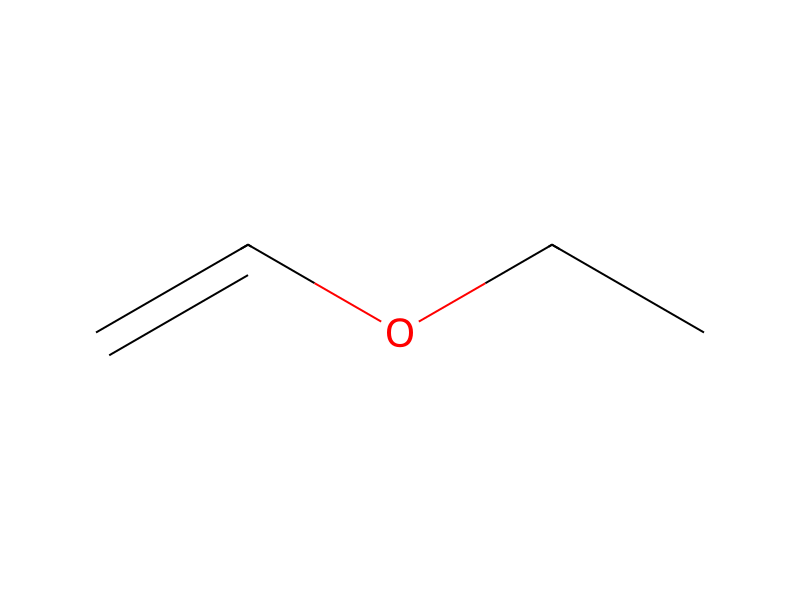
Ethyl vinyl ether

HCID 8023
New noteNew reactionRequest quotes
Print preview

Completing data — refresh the page later to see the latest
Basic informationOverviewNames & identifiersPropertiesSafety & regulationChemistry & industryRelated reactionsCompound notes
Substructure searchFind similar structures

Basic information

CAS
109-92-2
Standard SMILES
C=COCC
InChIKey
FJKIXWOMBXYWOQ-UHFFFAOYSA-N
Molecular formula
C4H8O
Average molar mass
72.11 g/mol
Monoisotopic mass
72.05751488

Overview

Vinyl ethyl ether appears as a clear colorless low-boiling liquid (35-36 °C) with an ether-like odor. Flash point below -50 °F. May polymerize exothermically if heated or contaminated. If polymerization takes place inside a container, the container may rupture violently. Less dense than water and slightly soluble in water. Hence floats on water. Vapors are heavier than air.

Names & identifiers

Preferred name
Ethyl vinyl ether
IUPAC
ethenoxyethane
English name
Ethyl vinyl ether
Molecular formula
C4H8O
Molecular weight
72.11

Names & synonyms

Ethyl vinyl etherEthoxyethene109-92-2EthoxyethyleneEthene, ethoxy-1-EthoxyetheneVinamarVINYL ETHYL ETHER1-EthoxyethyleneEthyl ethenyl etherEther, ethyl vinylEther, vinyl ethyl
Show more names
EVEEthyl Vinyl EtheCH2=CHOC2H5ethoxy-ethenagrisyntheveEthoxythylene
Ethene, ethoxyAgrisynth EVEVinyl ethyl ether, inhibitedEther, ethyl vinyl (inhibited)EthyloxyetheneNSC-84056235C9592HRefChem:139075

Database identifiers

CAS
109-92-2、25104-37-4
PubChem CID
8023
DTXSID
DTXSID3029609
ChEMBL
CHEMBL116745
UNII
6235C9592H
EC Number
203-718-4
Nikkaji
J2.440F

Properties

Computed structural propertiesFilling in

XLogP
1
Topological polar surface area
9.2 Ų
Hydrogen bond donors
0
Hydrogen bond acceptors
1
Rotatable bonds
2
Heavy atoms
5
Formal charge
0
Complexity
24.8

Experimental & physicochemical properties

Chemical ClassesFlammable agents - 4th degree
PolymersPlastics & Rubber -> Other Monomers
SpringerMaterials PropertiesSchoenflies notation
LogP · 3 items

log Kow = 1.04

1.04

1.04

Density · 4 items

0.7589 at 68 °F (USCG, 1999) - Less dense than water; will float

0.7589 at 20 °C

Relative density (water = 1): 0.8

0.754 @25 °C

Viscosity0.3 mm²/s
Color/Form · 2 items

Colorless liquid

Ether-like odor

Solubility · 4 items

In water, 7800 mg/L at 25 °C

In water, 10000 mg/L at 37 °C

Slightly soluble in carbon tetrachloride; soluble in ethanol; miscible in ether

Solubility in water, g/l at 15 °C: 8.3 (slightly soluble)

Safety & regulation

Safety information is for reference only and does not replace the supplier’s Safety Data Sheet (SDS), applicable regulations, or professional assessment.

GHS classification

GHS Classification · 6 items

Danger

H225 (29%): Highly Flammable liquid and vapor [Danger Flammable liquids]

P210, P233, P240, P241, P242, P243, P261, P264+P265, P271, P280, P303+P361+P353, P304+P340, P305+P351+P338, P319, P337+P317, P370+P378, P403+P233, P403+P235, P405, and P501 (click each P-code to see the statement)

Aggregated GHS information provided per 710 reports by companies from 16 notifications to the ECHA C&L Inventory. Each notification may be associated with multiple companies.

Danger

H224: Extremely flammable liquid and vapor [Danger Flammable liquids]

Hazard information

Regulatory Information · 5 items

Chemical: Ethene, ethoxy-

Ethene, ethoxy- is listed on the EPA's Chemical Data Reporting (CDR) system. Manufacturers and importers of Ethene, ethoxy- are required to report information about their production and use of this chemical to the EPA under the Toxic Substances Control Act (TSCA). (40 eCFR Part 711)

Status: Active Update: 08-05-2018 https://echa.europa.eu/registration-dossier/-/registered-dossier/24588

Vinamar: HSNO Approval: HSR004474 Approved with controls

The New Jersey Worker and Community Right to Know Act requires public and private employers to provide information about hazardous substances at their workplaces. (N.J.S.A. 34:5A-1 et. seq.)

DOT LabelFlammable Liquid
Fire Hazards · 3 items

Behavior in Fire: Explosive hazard (USCG, 1999)

· HIGHLY FLAMMABLE: Will be easily ignited by heat, sparks or flames.

Highly flammable. Vapour/air mixtures are explosive.

Fire PotentialFlammable liquid
Health Hazards · 2 items

Chemistry & industry

Pharmacology

Metabolism/MetabolitesIn vitro studies with ethyl vinyl ether suggested that vinyl ethers may undergo microsomal oxidation to unstable epoxides, however, no mutagenic activity was found.
Absorption, Distribution and ExcretionThere is evidence for rapid absorption after inhalation

Uses & manufacturing

Uses · 5 items

Used to make large scale chemicals, polymers, and resins, and as a laboratory reagent; [ExPub: ECHA REACH Registrations]

Copolymerization, intermediate.

A useful vinyl ether for proteomics research and organic synthesis.

Vinyl ethers are mainly used for the production of homo- and copolymers, in the adhesives and varnish industries. /Vinyl ethers/

MEDICATION /Former Use/

U.S. Production · 2 items

2022: 50,000 - <250,000 lb

Non-confidential 2016 Chemical Data Reporting (CDR) information on the production and use of chemicals manufactured or imported into the United States. Chemical: Ethyl vinyl ether:

Industry UsesIntermediate
Methods of Manufacturing · 3 items

Reaction of acetylene with ethanol.

In industry, vinyl ethers are produced in autoclaves (stirred or not stirred), in reaction towers (tube reactor), bubble columns, or loop reactors. The catalyst, normally potassium alcoholate, is in most cases prepared before the reaction. Therefore, solid KOH or KOH solution is added to the alcohol. Excess water can be removed batchwise in a stirred vessel or continuously by distillation in carbon steel apparatus. The acetylene-if not consumed in the reaction-can be recycled into the reactor and supplemented by pure acetylene (fresh gas). /Vinyl ethers/

CH3CH(O(14)CH2CH3)2 and CH2CHO(14)CH2CH3 have been synthesized from CH3CHO and CH3(14)CH2OH. The synthesized vinyl ethyl ether (b.p. 35.5 deg) is accompanied by diethyl ether (b.p. 34.6 deg) and other impurities. A satisfactory separation has been made by gas chromatography in a 2 m dimethylsulfolane column followed by a 3 m squalane column on Celite. In this way, 0.5 mL of CH3(14)CH2OCHCH2 of 99.4% chemical purity and 98.3% radiochemical purity has been obtained; the position of the C-14 has been checked by hydrolysis in acid medium. The ether was pyrolyzed in a high vacuum apparatus by the static method. The amounts and specific activities of products were determined in a gas chromatograph connected to a flow ionization chamber with vibrating reed electrometer. Results obtained around 450 °C seem to prove that vinyl ethyl ether decomposes mainly (78%) by a rearrangement process forming an hexagonal activated complex.

Related reactions

388 records
New reaction record
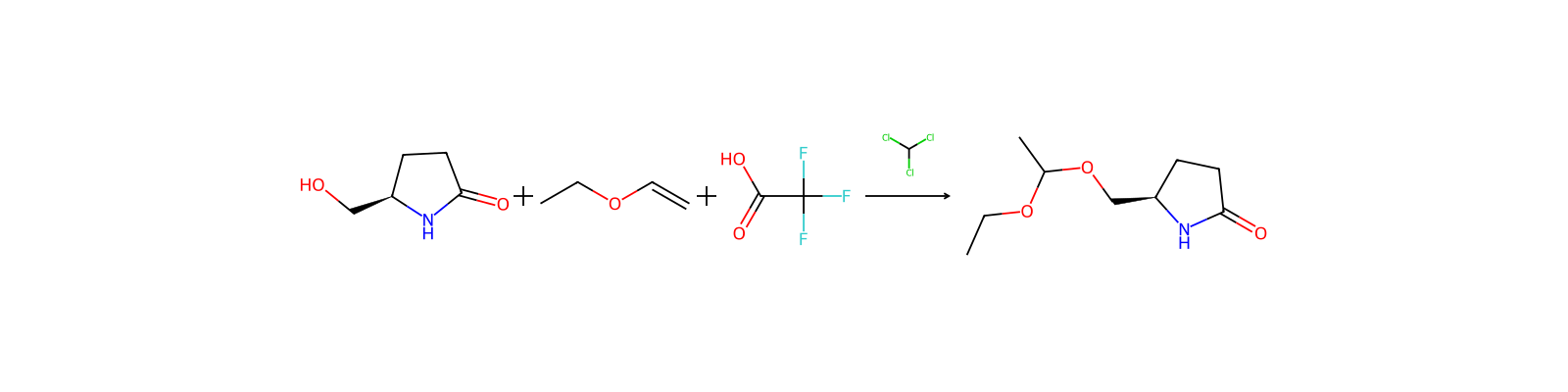
HRID 937 reaction equation
HRID 937As reactantuspto-grants-1998_03
HRID 4276 reaction equation
HRID 4276As reactantuspto-grants-1988_02
HRID 9269 reaction equation
HRID 9269As reactantuspto-grants-2006_08
HRID 20339 reaction equation
HRID 20339As reactantuspto-grants-2010_06
HRID 22965 reaction equation
HRID 22965As reactantuspto-grants-2005_02
HRID 27295 reaction equation
HRID 27295As reactantuspto-grants-1980_09
HRID 27651 reaction equation
HRID 27651As reactantuspto-grants-1980_09
HRID 28728 reaction equation
HRID 28728As reactantuspto-grants-2008_09
Page 1 of 49

Compound notes

Loading…

On this pageBasic informationOverviewNames & identifiersPropertiesSafety & regulationChemistry & industryRelated reactionsCompound notes
More actions
New noteNew reactionRequest quotes
Flash Point · 2 items

less than -50 °F (USCG, 1999)

< -50 °F (< -46 °C) /closed cup/

Boiling Point · 4 items

96 °F at 760 mmHg (USCG, 1999)

35.5 °C

36 °C

35.6 °C @760 [mm Hg]

Decomposition · 2 items

Hazardous decomposition products formed under fire conditions. - Carbon oxides

When heated to decomposition it emits acrid smoke and irritating fumes.

Melting Point · 4 items

-175 °F (USCG, 1999)

-115.8 °C

-115 °C

-115 °C

Physicochemical properties

Melting point
-116 °C · -116 °C (lit.)
Boiling point
33 °C · 33 °C (lit.)
Density
0.753 g/mL · 0.753 g/mL at 25 °C (lit.)
vapor pressure
560 hPa · 560 hPa (20 °C)
refractive index
20 · n20/D 1.376(lit.)
Flash point
50 °F · −50 °F
storage temp.
2 · 2-8°C
solubility
8.3 g/l · 8.3g/l
form
Liquid
color
Clear colorless
Odor
nauseating-ethereal but sweet odor
explosive limit
1.3 · 1.3-12.0%(V)
Water Solubility
7.8 g/L · 7.8 g/L (25 ºC)
BRN
605351 · 605351
Henry's Law Constant
1.8 · 1.8×10-3 mol/(m3Pa) at 25℃, Duchowicz et al. (2020)
Exposure limits
2 mg/m3NIOSH: · ACGIH: Ceiling 2 mg/m3NIOSH: Ceiling 2 mg/m3
Stability
Stable. Highly flammable. Incompatible with strong oxidizing agents. May form peroxides in storage - check for their formation before use.
InChI
1S/C4H8O/c1-3-5-4-2/h3H,1,4H2,2H3
InChIKey
FJKIXWOMBXYWOQ-UHFFFAOYSA-N
SMILES
CCOC=C
LogP
1.63 at · 1.63 at 25℃
Indirect Additives used in Food Contact Substances
ETHYL VINYL ETHER
FDA 21 CFR
175.105 · 175.105
CAS DataBase Reference
109 · 109-92-2(CAS DataBase Reference)
EWG's Food Scores
1 · 1
FDA UNII
6235 C9592H · 6235C9592H
NIST Chemistry Reference
Ethene, ethoxy-(109-92-2)
EPA Substance Registry System
Vinyl ethyl ether (109-92-2)
UNSPSC Code
12352112 · 12352112
NACRES
23 · NA.23
Symbol(GHS)
2 · GHS02,GHS07
Signal word
Danger
Hazard statements
315 · H315-H319-H336-H225
Precautionary statements
501 · P501-P261-P240-P210-P233-P243-P241-P242-P271-P264-P280-P370+P378-P337+P313-P305+P351+P338-P362+P364-P303+P361+P353-P332+P313-P304+P340+P312-P403+P233-P403+P235-P405
target organs
Central nervous system
PPE
Eyeshields, Faceshields, Gloves
Hazard Codes
F+,Xi,F
Risk Statements
12 · 12-19-36/37/38-11
Safety Statements
16 · 16-23-26-3/7-33-36-9
RIDADR
1302 · UN 1302 (VINYL ETHYL ETHER, STABILIZED)
WGK Germany
1 · 1
RTECS
710000 · KO0710000
F
19 · 19
Autoignition Temperature
178 °C · 178 °C
TSCA
TSCA listed
HazardClass
3 · 3
PackingGroup
I
HS Code
29091900 · 29091900
Storage Class
3 · 3 - Flammable liquids
Hazard Classifications
3 Flam · Aquatic Chronic 3Flam. Liq. 2STOT SE 3
Hazardous Substances Data
109 · 109-92-2(Hazardous Substances Data)
Toxicity
50 orally · LD50 orally in Rabbit: 6120 mg/kg LD50 dermal Rabbit > 15000 mg/kg
REACH Registrations
Active
Excepted Quantities
Max Inner Pack (30g or 30ml) and Max Outer Pack (300g or 300ml)

INHALATION OR INGESTION: Excitement followed by unconsciousness and respiratory paralysis. CNS depression. EYES: May cause irritation and transient injury to cornea. SKIN: Prolonged contact can cause tissue defatting and dehydration leading to dermatitis. (USCG, 1999)

· Inhalation or contact with material may irritate or burn skin and eyes.

Hazards Summary · 1 item

A mild skin irritant; Causes general anesthesia in inhalation lethal-concentration studies of mice; [RTECS] May polymerize on heating or contamination and form unstable peroxides on exposure to oxygen; [CAMEO] May cause CNS depression; [ICSC] A skin and eye irritant that may cause transient corneal injury; May cause reddening of skin if spilled and allowed to remain on clothes; Inhalation can cause CNS depression; High vapor concentrations may cause mild smarting of eyes and respiratory system; May cause liver injury; [CHRIS] Stabilized with 0.1% potassium hydroxide; May form explosive peroxides; A skin and strong eye irritant; Inhalation may cause unconsciousness and respiratory paralysis; May cause liver injury; [Sigma-Aldrich MSDS] Vinyl ethyl ether, stabilized (UN1302) has warning of explosive polymerization; [ERG 2016] See Butyl vinyl ether.

DOT ID and Guide1302 127P
FDA RequirementsVinyl ethyl ether is an indirect food additive for use only as a component of adhesives.
Reactive GroupEthers
UN ClassificationUN Hazard Class: 3; UN Pack Group: I
Special ReportsToxikologische Bewertung. Heidelberg, Berufsgenossenschaft der chemischen Industrie 263 (2000)
Reactivity AlertsHighly Flammable

Safety & protection

Fire Fighting · 2 items

Excerpt from ERG Guide 127 [Flammable Liquids (Water-Miscible); polymerization hazard]:

Use foam, dry powder, carbon dioxide, water. In case of fire: keep drums, etc., cool by spraying with water.

First Aid Measures · 4 items

Fresh air, rest. Refer immediately for medical attention.

Rinse and then wash skin with water and soap.

First rinse with plenty of water for several minutes (remove contact lenses if easily possible), then refer for medical attention.

Rinse mouth. Do NOT induce vomiting. Refer immediately for medical attention.

Accidental Release Measures · 2 items

· CALL 911. Then call emergency response telephone number on shipping paper. If shipping paper not available or no answer, refer to appropriate telephone number listed on the inside back cover.

· ELIMINATE all ignition sources (no smoking, flares, sparks or flames) from immediate area.

First Aid · 2 items

Call a doctor.

General First Aid:

Safe StorageFireproof. Separated from strong oxidants and acids. See Chemical Dangers. Cool. Keep under inert gas. Store only if stabilized.
Exposure Control and Personal Protection· Wear positive pressure self-contained breathing apparatus (SCBA).
Fire Fighting Procedures · 5 items

Alcohol Foam.

Water May be Ineffective.

To fight fire, use alcohol foam, foam, CO2, dry chemical.

Suitable extinguishing media: Use water spray, alcohol-resistant foam, dry chemical or carbon dioxide.

Advice for firefighters: Wear self-contained breathing apparatus for firefighting if necessary. Further information: Use water spray to cool unopened containers.

Storage ConditionsKeep container tightly closed in a dry and well-ventilated place. Containers which are opened must be carefully resealed and kept upright to prevent leakage. Handle and open container with care. Air sensitive.
Cleanup Methods · 1 item

ACCIDENTAL RELEASE MEASURES; Personal precautions, protective equipment and emergency procedures: Avoid breathing vapors, mist or gas. Ensure adequate ventilation. Remove all sources of ignition. Evacuate personnel to safe areas. Beware of vapors accumulating to form explosive concentrations. Vapors can accumulate in low areas. Environmental precautions: Prevent further leakage or spillage if safe to do so. Do not let product enter drains. Methods and materials for containment and cleaning up: Contain spillage, and then collect with an electrically protected vacuum cleaner or by wet-brushing and place in container for disposal according to local regulations.

Nonfire Spill ResponseExcerpt from ERG Guide 127 [Flammable Liquids (Water-Miscible); polymerization hazard]:
Disposal Methods · 2 items

SRP: Recycle any unused portion of the material for its approved use or return it to the manufacturer or supplier. Ultimate disposal of the chemical must consider: the material's impact on air quality; potential migration in air, soil or water; effects on animal, aquatic and plant life; and conformance with environmental and public health regulations. If it is possible or reasonable use an alternative chemical product with less inherent propensity for occupational harm/injury/toxicity or environmental contamination.

Product: Burn in a chemical incinerator equipped with an afterburner and scrubber but exert extra care in igniting as this material is highly flammable. Offer surplus and non-recyclable solutions to a licensed disposal company. Contact a licensed professional waste disposal service to dispose of this material. Contaminated packaging: Dispose of as unused product.

Spillage Disposal · 1 item

Evacuate danger area! Consult an expert! Remove all ignition sources. Ventilation. Personal protection: filter respirator for organic gases and vapours adapted to the airborne concentration of the substance. Do NOT wash away into sewer. Collect leaking and spilled liquid in sealable containers as far as possible. Absorb remaining liquid in sand or inert absorbent. Wash away remainder with plenty of water. Then store and dispose of according to local regulations.

Toxicology

Interactions · 3 items

Alkyl ether-degrading Rhodococcus sp. strain DEE5151, isolated from activated sewage sludge, has an activity for the oxidation of a variety of alkyl ethers, aralkyl ethers and dibenzyl ether. The whole cell activity for diethyl ether oxidation was effectively inhibited by 2,3-dihydrofurane, ethyl vinyl ether and glutaraldehyde. Glutaraldehyde of less than 30 uM inhibited the activity by a competitive manner with the inhibition constant, K(I) of 7.07+/-1.36 uM. The inhibition type became mixed at higher glutaraldehyde concentrations >30 uM, probably due to the inactivation of the cell activity by the Schiff-base formation. Structurally analogous ethyl vinyl ether inhibited the diethyl ether oxidation activity in a mixed manner with decreasing the apparent maximum oxidation rate, v(max)(app), and increasing the apparent Michaelis-Menten constant, K(M)(app). The mixed type inhibition by ethyl vinyl ether seemed to be introduced not only by the structure similarity with diethyl ether, but also by the reactivity of the vinyl ether with cellular components in the whole cell system.

1. In rats, surgically anesthetized with Urethane, an increase in the depth of anesthesia upon administration of ethyl carbamate (Urethane), pentobarbitone sodium (Nembutal), thiopentone sodium (Intraval), althesin, ketamine, trichloroethylene, halothane, methoxyflurane, diethyl ether, ethyl-vinyl ether, cyclopropane, enflurane or chloroform resulted in a dose-dependent increase in the latency, the decrease in the amplitudes of the initial positive and negative components of the short latency cortical response to electrical stimuli applied to the forepaw. 2. The same changes were seen when starting from initially unanesthetized rats and anesthetizing them with Urethane. 3. With all the inhalational agents used, these changes lasted for as long as the administration except with nitrous oxide where the changes in the cortical response were transient. 4. The tranquilizing agents diazepam, chlordiazepoxide, and haloperidol showed no such action. Chloral hydrate and chlorpromazine, on the other hand, produced moderate changes in the evoked cortical response similar to those seen with the other anesthetic agents used.

The effects of ten inhalational anesthetic agents on drug metabolism were studied in rats. Male Sprague Dawley-rats were exposed to below anesthetic concentrations of the test agents 7 hours a day for 1 to 7 days, or up to 15 days when nitrous-oxide was used. A single intraperitoneal injection of 125 milligrams per kilogram (mg/kg) hexobarbital, a sleep inducer, was given 20 to 22 hours after the last exposure to the anesthetic, and sleeping time was determined. Some animals were given an intraperitoneal injection of 50 mg/kg SKF-525-A, an inhibitor of hepatic microsomal enzyme activity, 30 minutes before the hexobarbital injection. Liver homogenates prepared from some rats pretreated with diethyl-ether or halothane were incubated with hexobarbital and assayed for O-demethylase activity and aniline-hydroxylase activity. Hexobarbital sleeping time was significantly reduced after a single 7 hour exposure to diethyl-ether, isopropyl-ether, fluroxene, enflurane, and Forane. Two exposures to halothane and ethyl-vinyl-ether were required to cause a significant reduction in sleeping time. Chloroform caused an increase in sleeping time after one exposure, no change with two or four exposures, and a decrease after five or more exposures. Nitrous-oxide and cyclopropane had no effect on hexobarbital sleeping time. SKF-525-A blocked the decrease in sleeping time caused by diethyl-ether and halothane. The rate of hydroxylation of hexobarbital and aniline by rat liver homogenates was increased by pretreatment with either diethyl-ether or halothane, but demethylase activity was increased only by diethyl-ether pretreatment. The authors conclude that exposure to inhalation anesthetics can enhance the ability of rats to metabolize drugs. ...

Environmental Fate · 3 items

TERRESTRIAL FATE: Based on a classification scheme(1), an estimated Koc value of 10(SRC), determined from a structure estimation method(2), indicates that vinyl ethyl ether is expected to have very high mobility in soil(SRC). Volatilization of vinyl ethyl ether from moist soil surfaces is expected to be an important fate process(SRC) given an estimated Henry's Law constant of 6.3X10⁻³ atm-cu m/mole(SRC), derived from its vapor pressure, 515 mm Hg(3), and water solubility, 7800 mg/L(4). Vinyl ethyl ether is expected to volatilize from dry soil surfaces(SRC) based upon its vapor pressure. A 100% degradation using activated sludge in the OECD Guideline 302B (Inherent biodegradability: Zahn-Wellens/EMPA) test(4) suggests that biodegradation is an important environmental fate process in soil(SRC).

AQUATIC FATE: Based on a classification scheme(1), an estimated Koc value of 10(SRC), determined from a structure estimation method(2), indicates that vinyl ethyl ether is not expected to adsorb to suspended solids and sediment(SRC). Volatilization from water surfaces is expected(3) based upon an estimated Henry's Law constant of 6.3X10⁻³ atm-cu m/mole(SRC), derived from its vapor pressure, 515 mm Hg(4), and water solubility, 7800 mg/L(5). Using this Henry's Law constant and an estimation method(3), volatilization half-lives for a model river and model lake are 2.6 hours and 3.4 days, respectively(SRC). According to a classification scheme(6), an estimated BCF of 2(SRC), from its log Kow of 1.04(7) and a regression-derived equation(2), suggests the potential for bioconcentration in aquatic organisms is low(SRC). A 100% degradation using activated sludge in the OECD Guideline 302B (Inherent biodegradability: Zahn-Wellens/EMPA) test(5) suggests that biodegradation is an important environmental fate process in water(SRC). Vinyl ethyl ether is not expected to undergo hydrolysis in the environment due to the lack of functional groups that hydrolyze under environmental conditions(3). Vinyl ethyl ether is an olefin and olefins react with photooxidants in natural waters (such as hydroxyl, peroxy and singlet oxygen) exposed to sunlight with a half-life on the order of 25 days(8).

ATMOSPHERIC FATE: According to a model of gas/particle partitioning of semivolatile organic compounds in the atmosphere(1), vinyl ethyl ether, which has a vapor pressure of 515 mm Hg at 25 °C(2), is expected to exist solely as a vapor in the ambient atmosphere. Vapor-phase vinyl ethyl ether is degraded in the atmosphere by reaction with photochemically-produced hydroxyl radicals(SRC); the half-life for this reaction in air is estimated to be 5 hours(SRC), calculated from its rate constant of 7.79X10⁻¹¹ cu cm/molecule-sec at 25 °C(3). Vapor-phase vinyl ethyl ether is also degraded in the atmosphere by reaction with ozone and nitrate radicals(SRC); the half-lives for these reactions in air is estimated to be 1.4 and 0.6 hours(SRC), calculated from respective rate constants of 2.0X10⁻¹⁶ and 1.40X10⁻¹² cu cm/molecule-sec at 25 °C(3). Vinyl ethyl ether does not absorb at wavelengths >290 nm(4) and, therefore, is not expected to be susceptible to direct photolysis by sunlight(SRC).

Adverse EffectsNeurotoxin - Other CNS neurotoxin
Exposure RoutesThe substance can be absorbed into the body by inhalation of its vapour.
Toxicity Summary · 1 item

IDENTIFICATION AND USE: Vinyl ethyl ether is a flammable liquid. It is used in proteomics research and organic synthesis. It was studied as an anesthetic agent in the 1950s. HUMAN STUDIES: Vinyl ethyl ether was studied in clinical trials to investigate whether it was suitable as an anesthetic. Some patients participating in these studies suffered complications (generalized convulsions due to hypercarbia and respiratory and circulatory depression as well as respiratory and cardiac arrest), which were attributed to overdosage. The degree of muscle relaxation obtained with this type of anesthesia was considered to be inadequate. Liver function tests conducted after several hours of anesthesia showed that hepatic function was not affected. Urinalyses, blood counts and electrocardiograms obtained after anesthesia revealed slight, reversible changes in some cases. There is a report of one case of transient damage to the human cornea, which was reversible after 48 hr. ANIMAL STUDIES: In rabbits, it caused only very mild irritation to the skin and eye. On acute oral administration, dermal application and inhalation exposure, vinyl ethyl ether was found to be of low toxicity. A rapid induction of CNS depression and rapid recovery from narcosis was noted with monkeys, dogs, rats. The clinical signs of intoxication were characterized by the CNS depressant effect of the substance. In the Salmonella/microsome assay, vinyl ethyl ether was found to test negative both with and without metabolic activation. In the sister chromatid exchange assay in Chinese hamster ovary cells, the chemical caused a significant increase in sister chromatid exchange rate.

Signs and Symptoms · 4 items

Cough. Incoordination. Dizziness. Drowsiness. Headache. Wheezing. Unconsciousness.

Redness. Dry skin.

Redness.

Aspiration hazard! Headache. Nausea.

Effluent ConcentrationsVinyl ethyl ether has been detected in emissions from turbine engines(1).
Soil Adsorption/Mobility · 1 item

Using a structure estimation method based on molecular connectivity indices(1), the Koc of vinyl ethyl ether can be estimated to be 10(SRC). According to a classification scheme(2), this estimated Koc value suggests that vinyl ethyl ether is expected to have very high mobility in soil.

Human Toxicity Excerpts · 5 items

/HUMAN EXPOSURE STUDIES/ ... /CNS depression/ was also studied in one human subject. The induction period was 60 seconds, duration of light anesthesia was 6 minutes. Recovery was rapid and uneventful. Blood pressure and pulse were not altered. The subject stated that the vapors did not irritate the upper respiratory tract.

/HUMAN EXPOSURE STUDIES/ In the 1950s, ethoxyethene was studied in clinical trials to investigate whether it was suitable as an anesthetic. Some patients participating in these studies suffered complications (generalized convulsions due to hypercarbia and respiratory and circulatory depression as well as respiratory and cardiac arrest), which were attributed to overdosage. The degree of muscle relaxation obtained with this type of anesthesia was considered to be inadequate. Liver function tests conducted after several hours of anesthesia showed that hepatic function was not affected. Urinalyses, blood counts and electrocardiograms obtained after anesthesia revealed slight, reversible changes in some cases.

/HUMAN EXPOSURE STUDIES/ The pharmacological effects were studied in 29 patients, aged 14 to 58 years (7 males, 22 females). Gynecological and orthopedic cases prevailed. Ethyl vinyl ether (EVE) was used in combination with other common anesthetics. In brief, findings were as follows: Liver function was unchanged in 58% of the patients. Bromsulphthalein excretion was observed in some cases. In two of these, large doses up to 110 mL EVE had been used. Urinalysis: no changes were noted in 68% of the patients. Six patients (20%) showed findings (traces of acetone (n=6), increased sugar (n=2), traces of albumin (n=3) which had returned to normal on day 5 post treatment. Blood: no changes in 82% of the patients; the remainder showed slight leucocytosis. ECG: no change in 48% of the patients. Tachycardia, auricular and ventricular premature contractions were all seen. Mild myocardial depression was noted in 5 cases (17%). Nausea, vomiting: was seen in 10 out of 29 patients. Salivation: was quite severe at times; was treatable with atropine.

/CASE REPORTS/ There is a report of one case of transient damage to the human cornea, which was reversible after 48 hr.

/OTHER TOXICITY INFORMATION/ A rapid induction of /CNS depression/ and rapid recovery from narcosis was noted with monkeys, dogs, rats, and man. Compared with diethylether approximately 50% less the quantity was required.

Artificial Pollution Sources · 1 item

Vinyl ethyl ether's production and use in copolymerizations and as a chemical intermediate(1) may result in its release to the environment through various waste streams(SRC). Vinyl ethyl ether is released to air in emissions from turbine engines(2). Vinyl ethers are released to the atmosphere entirely from anthropogenic sources(3).

Environmental Biodegradation · 1 item

AEROBIC: Using OECD Guideline 302B (Inherent biodegradability: Zahn-Wellens/EMPA Test) with an activated, non-adapted industrial sludge inoculum, vinyl ethyl ether, at 400 mg/L, reached 100% degradation (DOC removal) after 5 days of incubation. Using OECD Guideline 310 (Ready Biodegradability - CO2 in Sealed Vessels, Headspace Test) with a domestic activated sludge, the analog isobutyl vinyl ether, at 27.7 mg/L, reached 60-70% after 28 days of incubation(1); the interpretation of the test result was readily biodegradable, but failing the 10-day window(1).

Environmental Bioconcentration · 1 item

An estimated BCF of 2 was calculated in fish for vinyl ethyl ether(SRC), using a log Kow of 1.04(1) and a regression-derived equation(2). According to a classification scheme(3), this BCF suggests the potential for bioconcentration in aquatic organisms is low(SRC).

Regulatory information

FDA RequirementsVinyl ethyl ether is an indirect food additive for use only as a component of adhesives.
DHS Chemicals of Interest (COI) · 4 items

Vinyl ethyl ether

1

10000

Flammable chemical that can be released at a facility.

Safety data

F
19
PPE
Eyeshields, Faceshields, Gloves
wgk
1
tsca
TSCA listed
rtecs
KO0710000
ridadr
UN 1302 (VINYL ETHYL ETHER, STABILIZED)
hs_code
29091900
Toxicity
LD50 orally in Rabbit: 6120 mg/kg LD50 dermal Rabbit > 15000 mg/kg
risk_code
12-19-36/37/38-11
Signal word
Danger
Symbol(GHS)
GHS02,GHS07
hazard_code
F+,Xi,F
safety_code
16-23-26-3/7-33-36-9
hazard_class
3
Storage Class
3 - Flammable liquids
packing_group
I
target organs
Central nervous system
Hazard statements
H315-H319-H336-H225
Excepted Quantities
Max Inner Pack (30g or 30ml) and Max Outer Pack (300g or 300ml)
REACH Registrations
Active
Hazard Classifications
Aquatic Chronic 3Flam. Liq. 2STOT SE 3
Autoignition Temperature
178 °C
Precautionary statements
P501-P261-P240-P210-P233-P243-P241-P242-P271-P264-P280-P370+P378-P337+P313-P305+P351+P338-P362+P364-P303+P361+P353-P332+P313-P304+P340+P312-P403+P233-P403+P235-P405
Hazardous Substances Data
109-92-2(Hazardous Substances Data)
Formulations/PreparationsTechnical
General Manufacturing Information · 2 items

All Other Basic Organic Chemical Manufacturing

Ethene, ethoxy-: ACTIVE

Applications · 3 items

UsesEthyl vinyl ether is used in fragrances, lubricating oil additives and spices preparation. It acts as an intermediate for sulfadiazine. It finds application in pharmaceuticals as anesthetics and analgesics. Further, it is used as a solvent in organic synthesis.

UsesCopolymerization, intermediate.

General DescriptionA clear colorless low-boiling liquid (35-36°C) with an ether-like odor. Flash point below -50°F. May polymerize exothermically if heated or contaminated. If polymerization takes place inside a container, the container may rupture violently. Less dense than water and slightly soluble in water. Hence floats on water. Vapors are heavier than air.

Preparation methods · 1 item

PreparationEthyl vinyl ether (EVE) can be prepared by reacting acetylene with absolute ethanol in the presence of an alkali catalyst. The most commonly used catalyst for vinylation is an alkali metal hydroxide or an alkali metal alkoxide. In China, three processes for the manufacture of EVE using the acetylene route were used:A continuous process with a homogeneous catalyst under high pressure. The advantages of this process are fast reaction rate and high conversion, but the disadvantages include the requirement of high standard equipment, large energy consumption, and easy safety issues. A process with a solid catalyst (heterogeneous catalyst) under atmospheric pressure is relatively simple in product separation and refining compared with a process with a homogeneous catalyst under high pressure. However, it has the disadvantages of low output, the short service life of catalyst (about 110 h), and a high requirement on the specification of carrier lime.A process with a homogeneous catalyst under atmospheric pressure has the advantages of high output and good safety but disadvantages of low conversion.In the process with solid catalyst under atmospheric pressure, acetylene, and ethanol vapor were introduced into a fixed-bed reactor, and the vinylation reaction was carried out at a temperature as high as about 180 °C. EVE was produced with a concentration of about 70% in the outlet gas stream from the reactor. The fixed-bed reactor was charged with 4–5 mesh catalyst particles of potassium hydroxide supported on lime.

Upstream & downstream products

Upstream raw materials

Calcium carbideAcetylene

Downstream products

1-[4-(TRIFLUOROMETHYL)PYRIMID-2-YL]PIPERAZINE2-Hydroxy-4-(trifluoromethyl)pyrimidine(3-(TRIFLUOROMETHYL)-1-METHYL-1H-PYRAZOL-4-YL)METHANOL2-Chloro-4-(trifluoromethyl)pyrimidine5-(TRIFLUOROMETHYL)-1-METHYL-1H-PYRAZOLE3-(TRIFLUOROMETHYL)-1-METHYL-1H-PYRAZOL-4-AMINE1-TERT-BUTYL-5-(TRIFLUOROMETHYL)-1H-PYRAZOLE-4-CARBALDEHYDE1-TERT-BUTYL-3-(TRIFLUOROMETHYL)-1H-PYRAZOLE-5-CARBOXYLIC ACID4-BROMO-3-(TRIFLUOROMETHYL)-1-PHENYL-1H-PYRAZOLE(3-(TRIFLUOROMETHYL)-1-METHYL-1H-PYRAZOL-4-YL)METHANAMINE1-METHYL-3-(TRIFLUOROMETHYL)-1H-PYRAZOLEGlutaraldehydeSulfadiazineN-BOC-3-AMINOOXETANE-3-CARBOXYLIC ACID1-TERT-BUTYL-5-(TRIFLUOROMETHYL)-1H-PYRAZOLE1-TERT-BUTYL-3-(TRIFLUOROMETHYL)-1H-PYRAZOLE-4-CARBOXYLIC ACIDCIS-4-DECENAL2-(METHYLTHIO)-4-(TRIFLUOROMETHYL)PYRIMIDINE7-(TRIFLUOROMETHYL)-3-IODOIMIDAZO[1,2-A]PYRIMIDINE5-(TRIFLUOROMETHYL)-1-PHENYL-1H-PYRAZOLE-4-CARBALDEHYDE1-TERT-BUTYL-4-BROMO-5-(TRIFLUOROMETHYL)-1H-PYRAZOLE1-METHYL-3-(TRIFLUOROMETHYL)-1H-PYRAZOLE-4-CARBOXYLIC ACIDETHYL 1-METHYL-3-(TRIFLUOROMETHYL)-1H-PYRAZOLE-4-CARBOXYLATE1-PHENYL-3-(TRIFLUOROMETHYL)PYRAZOLE4-BROMO-5-(TRIFLUOROMETHYL)-1-PHENYL-1H-PYRAZOLE1-TERT-BUTYL-3-(TRIFLUOROMETHYL)-1H-PYRAZOLE(1-TERT-BUTYL-3-(TRIFLUOROMETHYL)-1H-PYRAZOL-4-YL)METHANOL3-Bromo-7-(trifluoromethyl)imidazo[1,2-a]pyrimidine2-METHYL-5-TRIFLUOROMETHYL-2H-PYRAZOLE-3-CARBOXYLIC ACID2-Hydrazino-4-(trifluoromethyl)pyrimidineMETHYL 3-AMINOOXETANE-3-CARBOXYLATEETHYL 1-TERT-BUTYL-3-(TRIFLUOROMETHYL)-1H-PYRAZOLE-4-CARBOXYLATE3-(TRIFLUOROMETHYL)-1-PHENYL-1H-PYRAZOLE-5-CARBOXYLIC ACID4-BROMO-1-METHYL-3-(TRIFLUOROMETHYL)-1H-PYRAZOLE5-(TRIFLUOROMETHYL)-1-METHYL-1H-PYRAZOLE-4-CARBALDEHYDE1-TERT-BUTYL-4-BROMO-3-(TRIFLUOROMETHYL)-1H-PYRAZOLEMilrinone4-BROMO-5-(TRIFLUOROMETHYL)-1-METHYL-1H-PYRAZOLE2,2,2-TRIFLUORO-1-(3-(TRIFLUOROMETHYL)-1-PHENYL-1H-PYRAZOL-4-YL)ETHANONE1-TERT-BUTYL-3-(TRIFLUOROMETHYL)-1H-PYRAZOL-4-AMINE