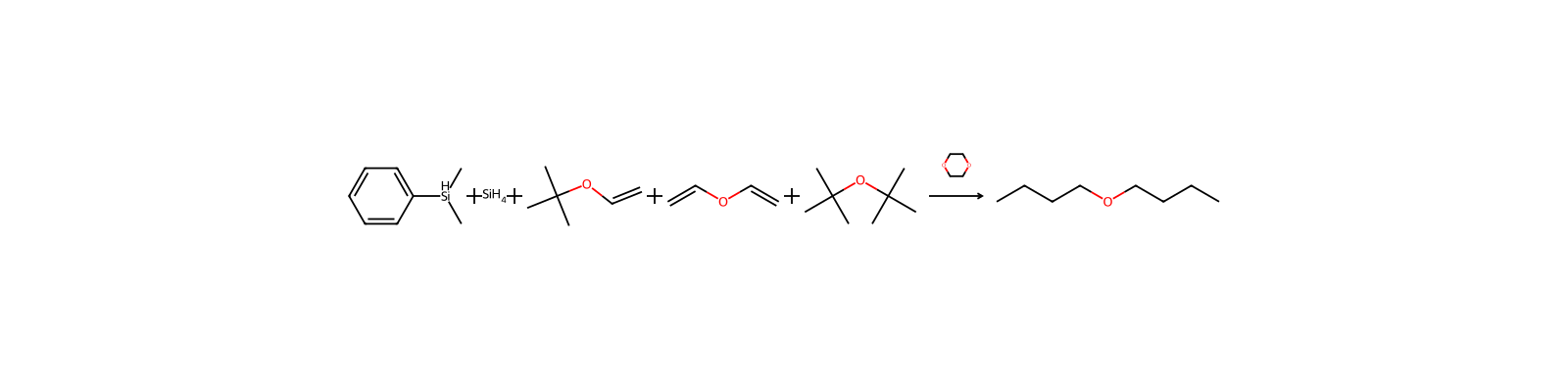
Vinyl ether

Basic information
- CAS
109-93-3- Standard SMILES
C=COC=C- InChIKey
QYKIQEUNHZKYBP-UHFFFAOYSA-N- Molecular formula
- C4H6O
- Average molar mass
- 70.09 g/mol
- Monoisotopic mass
- 70.04186481
Overview
Divinyl ether, stabilized appears as a clear colorless liquid with a characteristic odor. Less dense than water. Vapors heavier than air. Toxic by inhalation.
Names & identifiers
- Preferred name
- Vinyl ether
- IUPAC
- ethenoxyethene
- English name
- Vinyl ether
- Molecular formula
- C4H6O
- Molecular weight
- 70.09
Names & synonyms
Vinyl etherDIVINYL ETHERDivinyl oxide109-93-3EthenyloxyetheneEther, divinyl(ethenyloxy)ethene2H2T044E11ether, vinylRefChem:194318203-720-5ethenoxyethene
Show more names
(vinyloxy)ethenevinyloxyethylene1,1'-oxybisethene
VinetherVinidylVinydanVinestheneVinesthesinVinethenVinetheneEthene, 1,1'-oxybis-
Database identifiers
- CAS
109-93-3- PubChem CID
- 8024
- DTXSID
DTXSID5074555- ChEMBL
CHEMBL2105883- ChEBI
CHEBI:81293- UNII
- 2H2T044E11
- EC Number
- 203-720-5
- Nikkaji
- J2.441D
Properties
Computed structural properties
- XLogP
- 1.3
- Topological polar surface area
- 9.2 Ų
- Hydrogen bond donors
- 0
- Hydrogen bond acceptors
- 1
- Rotatable bonds
- 2
- Heavy atoms
- 5
- Formal charge
- 0
- Complexity
- 32.9
Experimental & physicochemical properties
Chemical ClassesFlammable agents - 4th degree
PolymersPlastics & Rubber -> Other Monomers
SpringerMaterials PropertiesSchoenflies notation
Flash Pointless than -22 °F (NFPA, 2010)
Physical Description
Divinyl ether, stabilized appears as a clear colorless liquid with a characteristic odor. Less dense than water. Vapors heavier than air. Toxic by inhalation.
Colorless liquid; [CAMEO]
Physicochemical properties
- Melting point
- -101.1 °C · -101.1°C
- Boiling point
- 28.4 ° · bp 28.4°
- Density
- 2020 · d2020 0.774; d420 0.773
- refractive index
- 20 · nD20 1.3989
- Water Solubility
- 5.25 g/L · 5.25g/L(37 ºC)
- Henry's Law Constant
Safety & regulation
Safety information is for reference only and does not replace the supplier’s Safety Data Sheet (SDS), applicable regulations, or professional assessment.
Hazard information
Regulatory InformationThe New Jersey Worker and Community Right to Know Act requires public and private employers to provide information about hazardous substances at their workplaces. (N.J.S.A. 34:5A-1 et. seq.)
DOT LabelFlammable Liquid
Fire Hazards
Excerpt from ERG Guide 128 [Flammable Liquids (Water-Immiscible); polymerization hazard]:
· HIGHLY FLAMMABLE: Will be easily ignited by heat, sparks or flames.
Health Hazards
Excerpt from ERG Guide 128 [Flammable Liquids (Water-Immiscible); polymerization hazard]:
CAUTION: Petroleum crude oil (UN1267) may contain TOXIC hydrogen sulphide gas.
Hazards SummaryMay irritate or burn skin and eyes; Inhalation can cause dizziness and suffocation; [CAMEO] Divinyl ether, stabilized (UN1167) has warning of explosive polymerization. [ERG 2016] See Ethyl vinyl ether.
DOT ID and Guide1167 128P
Reactive GroupEthers
Reactivity AlertsHighly Flammable
Reactivity Profile
Ethers, such as DIVINYL ETHER, can act as bases. They form salts with strong acids and addition complexes with Lewis acids. The complex between diethyl ether and boron trifluoride is an example. Ethers may react violently with strong oxidizing agents. In other reactions, which typically involve the breaking of the carbon-oxygen bond, ethers are relatively inert. It is miscible with alcohol, acetone, chloroform and ether and must be protected from light [Hawley].
Chemistry & industry
Pharmacology
ATC Code
N - Nervous system
QN - Nervous system
MeSH Pharmacological Classification
Agents capable of inducing a total or partial loss of sensation, especially tactile sensation and pain. They may act to induce general ANESTHESIA, in which an unconscious state is achieved, or may act locally to induce numbness or lack of sensation at a targeted site.
Applications
DescriptionDivinyl ether is a mobile, colorless, inflammable liquid with a characteristic sweet odor, bp 28.4 C. Approximately 4 % ethanol is added as a stabilizer. Divinyl ether may contain 0.0077 % of a stabilizer, phenyl-α- naphthylamine, that produces a slightly reddish fluorescence.
UsesVinyl ether is used as an anesthetic and inorganic synthesis.
UsesCopolymer with 3–5% polyvinyl chloride for plastic products such as clear plastic bottles; medicine (anesthetic, for brief operations only).
General DescriptionA clear colorless liquid with a characteristic odor. Flash point below -22°F. Less dense than water. Autoignition temperature 680°F. Slightly soluble in water; miscible with alcohol, acetone, chloroform, and ether. Must be protected from light.Vapors heavier than air. Toxic by inhalation.
Upstream & downstream products
Upstream raw materials
Related reactions
48 records


Compound notes
Loading…