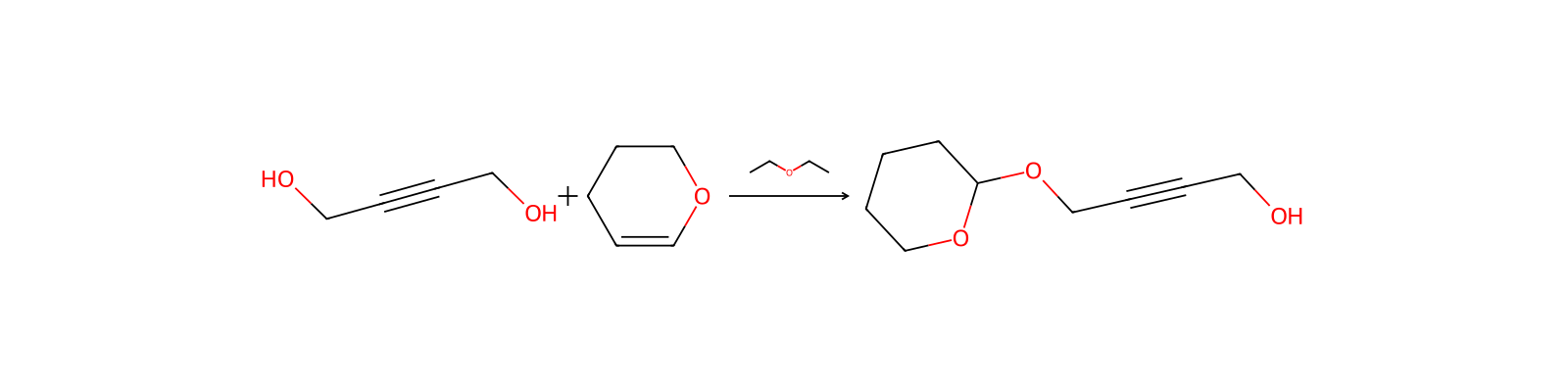
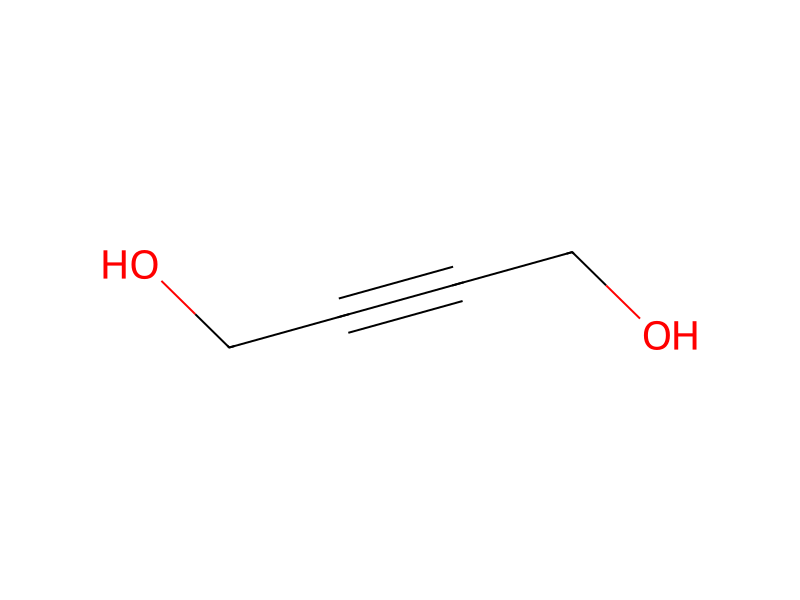
Basic information
- Standard SMILES
OCC#CCO- InChIKey
DLDJFQGPPSQZKI-UHFFFAOYSA-N- Molecular formula
- C4H6O2
- Average molar mass
- 86.09 g/mol
- Monoisotopic mass
- 86.03677943
Overview
1,4-butynediol appears as white to light-brown solid or brownish-yellow aqueous solution. Solid sinks and mixes with water. (USCG, 1999)
Names & identifiers
- Preferred name
- 2-Butyne-1,4-diol
- IUPAC
- but-2-yne-1,4-diol
- English name
- 2-Butyne-1,4-diol
- Molecular formula
- C4H6O2
- Molecular weight
- 86.09
Names & synonyms
2-Butyne-1,4-diol110-65-6But-2-yne-1,4-diolButynediol1,4-Dihydroxy-2-butyne1,4-BUTYNEDIOLBis(hydroxymethyl)acetylene2-ButynediolAgrisynth B3D2-Butin-1,4-diolDTXSID40219211,4-Butinodiol
Show more names
BOZBYD2-BUTYN-1,4-DIOLDihydroxydimethylacetyleneagrisynthb3d
Butynediol-1,4AXH202FPQMNSC-8342-Butin-1,4-diol [Czechoslovakia]DTXCID901921CHEBI:164132-Butin-1,4-diol (Czechoslovakia)RefChem:86062
Database identifiers
- CAS
110-65-6、54141-09-2- PubChem CID
- 8066
- DTXSID
DTXSID4021921- ChEMBL
CHEMBL3187551- ChEBI
CHEBI:16413- UNII
- AXH202FPQM
- EC Number
- 203-788-6
- Nikkaji
- J5.098I
Properties
Computed structural properties
- XLogP
- -1.1
- Topological polar surface area
- 40.5 Ų
- Hydrogen bond donors
- 2
- Hydrogen bond acceptors
- 2
- Rotatable bonds
- 0
- Heavy atoms
- 6
- Formal charge
- 0
- Complexity
- 66
Experimental & physicochemical properties
Chemical Classes
Other Classes -> Other Organic Compounds
Reactive agents - 1st degree
SpringerMaterials PropertiesBoiling point
LogP-0.73
Density
1.07 at 68 °F (USCG, 1999) - Denser than water; will sink
Relative density = 1.115 at 20 °C
Relative density (water = 1): 1.1
1.115 @ 20°C
Color/Form
Plates from benzene and ethyl acetate
White, orthorhombic crystals
WHITE TO LIGHT YELLOW
Yellow scaley solid at 20 °C and 1,013 hPa
Solubility
Insoluble in benzene; slightly soluble in ethyl ether, choroform; very soluble in ethanol, acetone, methanol
Soluble in aqueous acids.
In water, 3.74X10+6 mg/L at 25 °C
Solubility in water, g/100ml at 20 °C: 75 (good)
Flash Point
263 °F (USCG, 1999)
128 °C
263 °F (OPEN CUP)
152 °C
Boiling Point
460 °F at 760 mmHg (USCG, 1999)
238 °C
No boiling point at normal pressure; decomposes at >160 °C
238 °C @760 [mm Hg]
DecompositionWhen heated to decomposition it emits acrid smoke and fumes and may explode.
Melting Point
50 °C
58 °C
50 °C
Vapor DensityRelative vapor density (air = 1): 3.0
Vapor Pressure
0.000556 [mmHg]
5.56X10⁻⁴ mm Hg at 25 °C
Vapor pressure, Pa at 20 °C: 0.2
Physicochemical properties
- Melting point
- 54 °C · 54 °C
- Boiling point
- 238 °C · 238 °C(lit.)
- Density
- 1.2 · 1.2
- bulk density
- 500 kg/m3 · 500kg/m3
- vapor pressure
- 0.1 mm · <0.1 mm Hg ( 55 °C)
- refractive index
- 1.4804 · 1.4804
- Flash point
- 306 °F · 306 °F
- storage temp.
- 30 °C · Store below +30°C.
- solubility
- 3740 g/l · 3740g/l
- form
- Crystalline Platelets or Flakes
- pka
- 12.72 · 12.72±0.10(Predicted)
- color
- slightly brown
- PH
- 4 · 4-7.5 (100g/l, H2O, 23℃)
- Water Solubility
- 3740 g/L · 3740 g/L (20 ºC)
- BRN
- 1071237 · 1071237
- Henry's Law Constant
- 2 · 2.0×103 mol/(m3Pa) at 25℃, Altschuh et al. (1999)
- Exposure limits
- 0.5 mg/m3 · EU LTEL:0.5 mg/m3
- Stability
- Stable. Highly flammable solid. Incompatible with strong oxidizing agents, acid chlorides, acid anhydrides, strong acids, strong bases.
- InChI
- 1S/C4H6O2/c5-3-1-2-4-6/h5-6H,3-4H2
- InChIKey
- DLDJFQGPPSQZKI-UHFFFAOYSA-N
- SMILES
- OCC#CCO
- LogP
- -0.73 at · -0.73 at 25℃
- CAS DataBase Reference
- 110 · 110-65-6(CAS DataBase Reference)
- EWG's Food Scores
- 1 · 1-2
- FDA UNII
- 202 FPQM · AXH202FPQM
- NIST Chemistry Reference
- 2 · 2-Butyne-1,4-diol(110-65-6)
- EPA Substance Registry System
- 2 · 2-Butyne-1,4-diol (110-65-6)
- UNSPSC Code
- 12352104 · 12352104
- NACRES
- 22 · NA.22
- Symbol(GHS)
- 5 · GHS05,GHS06,GHS08
- Signal word
- Danger
- Hazard statements
- 301 · H301+H311+H331-H314-H372-H370-H317-H402
- Precautionary statements
- 501 · P501-P273-P272-P260-P270-P271-P264-P280-P308+P311-P361+P364-P303+P361+P353-P333+P313-P301+P330+P331-P301+P310+P330-P304+P340+P310-P305+P351+P338+P310-P403+P233-P405
- PPE
- 3 · Eyeshields, Faceshields, Gloves, type P3 (EN 143) respirator cartridges
- Hazard Codes
- T,C
- Risk Statements
- 21 · 21-23/25-34-43-48/22
- Safety Statements
- 25 · 25-26-36/37/39-45-46
- RIDADR
- 2716 · UN 2716
- WGK Germany
- 2 · 2
- RTECS
- 525000 · ES0525000
- F
- 23 · 23-10
- Autoignition Temperature
- 410 °C · 410 °C
- TSCA
- TSCA listed
- HazardClass
- 6.1 · 6.1
- PackingGroup
- III
- HS Code
- 29053980 · 29053980
- Storage Class
- 6.1 C · 6.1C - Combustible acute toxic Cat.3toxic compounds or compounds which causing chronic effects
- Hazard Classifications
- 3 DermalAcute · Acute Tox. 3 DermalAcute Tox. 3 InhalationAcute Tox. 3 OralEye Dam. 1Skin Corr. 1BSkin Sens. 1STOT RE 2
- Hazardous Substances Data
- 110 · 110-65-6(Hazardous Substances Data)
- Toxicity
- 50 orally · LD50 orally in Rabbit: 100 mg/kg
- REACH Registrations
- Active
- Limited Quantities
- 5 L · 5.0 L (1.3 gallons) (liquid) or 5.0 kg (11 lbs) (solid)
- Excepted Quantities
- Max Inner Pack (30g or 30ml) and Max Outer Pack (1Kg or 1L)
Safety & regulation
GHS classification
GHS Classification
Danger
H301: Toxic if swallowed [Danger Acute toxicity, oral]
P260, P261, P264, P270, P271, P272, P280, P301+P316, P301+P330+P331, P302+P352, P302+P361+P354, P304+P340, P305+P354+P338, P316, P317, P319, P321, P330, P333+P317, P362+P364, P363, P403+P233, P405, and P501 (click each P-code to see the statement)
Danger
H301 (100%): Toxic if swallowed [Danger Acute toxicity, oral]
P260, P261, P262, P264, P264+P265, P270, P271, P272, P280, P301+P316, P301+P330+P331, P302+P352, P302+P361+P354, P304+P340, P305+P354+P338, P316, P317, P319, P321, P330, P333+P317, P361+P364, P362+P364, P363, P403+P233, P405, and P501 (click each P-code to see the statement)
Hazard information
Regulatory Information
Chemical: 2-Butyne-1,4-diol
2-Butyne-1,4-diol is listed on the EPA's Chemical Data Reporting (CDR) system. Manufacturers and importers of 2-Butyne-1,4-diol are required to report information about their production and use of this chemical to the EPA under the Toxic Substances Control Act (TSCA). (40 eCFR Part 711)
Status: Active Update: 30-08-2022 https://echa.europa.eu/registration-dossier/-/registered-dossier/13224
2-Butyne-1,4-diol: Does not have an individual approval but may be used under an appropriate group standard
The New Jersey Worker and Community Right to Know Act requires public and private employers to provide information about hazardous substances at their workplaces. (N.J.S.A. 34:5A-1 et. seq.)
DOT LabelPoison
Fire Hazards
Excerpt from ERG Guide 153 [Substances - Toxic and/or Corrosive (Combustible)]:
· Combustible material: may burn but does not ignite readily.
Combustible. Risk of explosion on contact with bases, oxidizing agents or halogens.
Health Hazards
May cause dermatitis. (USCG, 1999)
· TOXIC and/or CORROSIVE; inhalation, ingestion or skin contact with material may cause severe injury or death.
Hazards Summary
A severe skin and eye irritant; [HSDB] Toxic by inhalation, ingestion, and skin contact; [CAMEO] May cause skin burns and sensitization; [eChemPortal: ESIS] A corrosive substance that can cause injury to the skin, eyes, and respiratory tract; Inhalation may cause chemical pneumonitis; May cause skin sensitization; Causes liver, brain, and reproductive injury in high-dose animal studies; [MSDSonline] Danger of cutaneous absorption; Danger of skin sensitization; [MAK]
DOT ID and Guide2716 153
Reactive GroupAlcohols and Polyols
EC ClassificationSymbol: C, T; R: 21-23/25-34-43-48/22; S: (1/2)-25-26-36/37/39-45-46
UN ClassificationUN Hazard Class: 6.1; UN Pack Group: III
Special Reports
European Chemicals Bureau; IUCLID Dataset, But-2-yne-1,4-diol (110-65-6) (2000 CD-ROM edition). Provides information on usage patterns, toxicity, and environmental effects supplied by industry to the European Union. Available from the database query page: http://ecb.jrc.it/esis/esis.php as of September 09, 2006.
Reactivity Profile
Pure 1,4-BUTYNEDIOL is non-explosive. Small amounts of certain impurities-alkali hydroxides, alkaline earth hydroxides, halides-may cause explosive decomposition upon distillation. Butynediol should not be treated with basic catalysts in the absence of a solvent at room temperature, and its stability is less with elevated temperatures. In strong acids, contamination with mercury salts can also result in violent decomposition. [NFPA 491M 1991].
Chemical DangersDecomposes on heating. This produces toxic and corrosive fumes. Reacts violently with anhydrides, acid chlorides, mercury salts and alkaline hydroxides or chlorides. This generates explosion hazard.
Safety & protection
Fire Fighting
Fire Extinguishing Agents: Water, alcohol foam, dry chemical, or carbon dioxide (USCG, 1999)
Use water spray, alcohol-resistant foam, dry powder, carbon dioxide.
First Aid Measures
Fresh air, rest. Half-upright position. Refer immediately for medical attention.
Remove contaminated clothes. Rinse and then wash skin with water and soap. Refer immediately for medical attention.
Rinse with plenty of water (remove contact lenses if easily possible). Refer immediately for medical attention.
Rinse mouth. Do NOT induce vomiting. Refer immediately for medical attention.
Accidental Release Measures
· CALL 911. Then call emergency response telephone number on shipping paper. If shipping paper not available or no answer, refer to appropriate telephone number listed on the inside back cover.
· ELIMINATE all ignition sources (no smoking, flares, sparks or flames) from immediate area.
First Aid
SKIN CONTACT: wash affected skin area thoroughly with water.
General First Aid:
Safe StorageSeparated from incompatible materials. See Chemical Dangers. Cool. Store in an area without drain or sewer access.
Exposure Control and Personal Protection
· Wear positive pressure self-contained breathing apparatus (SCBA).
0.1 [ppm]
Fire Fighting Procedures
If material on fire or involved in fire: Do not extinguish fire unless flow can be stopped. Use water in flooding quantities as fog. Solid streams fo water may be ineffective Cool all affected containers with flooding quantities of water. Use "alcohol" foam, dry chemical or carbon dioxide. Keep run-off water out of sewers and water sources.
Storage Conditions
The storage temperature should be kept below 40 °C and storage times longer than a few months should be avoided because the butynediol flakes tend to set up.
... MATERIALS WHICH ARE TOXIC AS STORED OR WHICH CAN DECOMP INTO TOXIC COMPONENTS DUE TO CONTACT WITH HEAT, MOISTURE, ACIDS, OR ACID FUMES, SHOULD BE STORED IN COOL, WELL-VENTILATED PLACE, OUT OF DIRECT RAYS OF SUN, AWAY FROM AREAS OF ... FIRE HAZARD & SHOULD BE PERIODICALLY INSPECTED & MONITORED.
Nonfire Spill ResponseExcerpt from ERG Guide 153 [Substances - Toxic and/or Corrosive (Combustible)]:
Disposal Methods
SRP: The most favorable course of action is to use an alternative chemical product with less inherent propensity for occupational exposure or environmental contamination. Recycle any unused portion of the material for its approved use or return it to the manufacturer or supplier. Ultimate disposal of the chemical must consider: the material's impact on air quality; potential migration in soil or water; effects on animal, aquatic, and plant life; and conformance with environmental and public health regulations.
Spillage Disposal
Evacuate danger area! Consult an expert! Personal protection: chemical protection suit including self-contained breathing apparatus. Do NOT let this chemical enter the environment. Sweep spilled substance into covered containers. If appropriate, moisten first to prevent dusting. Carefully collect remainder. Then store and dispose of according to local regulations.
Preventive Measures
SRP: Local exhaust ventilation should be applied wherever there is an incidence of point source emissions or dispersion of regulated contaminants in the work area. Ventilation control of the contaminant as close to its point of generation is both the most economical and safest method to minimize personnel exposure to airborne contaminants.
SRP: The scientific literature for the use of contact lenses in industry is conflicting. The benefit or detrimental effects of wearing contact lenses depend not only upon the substance, but also on factors including the form of the substance, characteristics and duration of the exposure, the uses of other eye protection equipment, and the hygiene of the lenses. However, there may be individual substances whose irritating or corrosive properties are such that the wearing of contact lenses would be harmful to the eye. In those specific cases, contact lenses should not be worn. In any event, the usual eye protection equipment should be worn even when contact lenses are in place.
Personnel protection: Avoid breathing vapors. Keep upwind. ... Do not handle broken packages unless wearing appropriate personal protective equipment. If contact with the material anticipated, wear appropriate chemical protective clothing.
If material not on fire and not involved in fire: Keep sparks, flames, and other sources of ignition away. Keep material out of water sources and sewers. Build dikes to contain flow as necessary. Attempt to stop leak if without undue personnel hazard. Use water spray to knock-down vapors.
Toxicology
InteractionsToxic action of 1,4-butynediol was prevented by pretreatment with pyrazole which competitively inhibited oxidation of 1,4-butynediol by rat liver alcohol dehydrogenase indicating that toxicity is due to products of oxidative metabolism.
Ecotoxicity Values
EC50 Daphnia magna 26.8 mg/L48 hr (nominal concentration) immobilization, static test. NOTE: At 100 mg/L all daphnids were immobile after 48 hours.
LC50 Pimephales promelas (Fathead minnow) 53.6 mg/L/96 hr (confidence limit 49.3-58.3 mg/L), flow-through bioassay with measured concentrations, 25.1 °C, dissolved oxygen 6.8 mg/L, hardness 46.5 mg/L calcium carbonate, alkalinity 43.5 mg/L calcium carbonate, and pH 7.7
EC50 Pimephales promelas (Fathead minnow) 53.6 mg/L/96 hr (confidence limit 49.3-58.3 mg/L), flow-through bioassay with measured concentrations, 25.1 °C, dissolved oxygen 6.8 mg/L, hardness 46.5 mg/L calcium carbonate, alkalinity 43.5 mg/L calcium carbonate, and pH 7.7. Effect: loss of equilibrium was not observed prior to death.
LC50 Leuciscus idus (fresh-water cyprinoid fish) 46 mg/L/96 hr /Conditions of bioassay not specified in source examined/
For more Ecotoxicity Values (Complete) data for 1,4-BUTYNEDIOL (7 total), please visit the HSDB record page.
Environmental Fate
TERRESTRIAL FATE: Based on a classification scheme(1), an estimated Koc value of 1(SRC), determined from a water solubility of 3.74X10+6 mg/L(2) and a regression-derived equation(3), indicates that 1,4-butynediol is expected to have very high mobility in soil(SRC). Volatilization of 1,4-butynediol from moist soil surfaces is not expected to be an important fate process(SRC) given an estimated Henry's Law constant of 1.7X10⁻¹¹ atm-cu m/mole(SRC), derived from its vapor pressure, 5.56X10⁻⁴ mm Hg(4), and water solubility(2). 1,4-Butynediol is not expected to volatilize from dry soil surfaces(SRC) based upon its vapor pressure(4). 1,4-Butynediol has been shown to biodegrade 90% in 4 days using a sewage sludge(5); therefore, biodegradation is expected to be an important environmental fate process in soil(SRC).
AQUATIC FATE: Based on a classification scheme(1), an estimated Koc value of 1(SRC), determined from a water solubility of 3.74X10+6 mg/L(2) and a regression-derived equation(3), indicates that 1,4-butynediol is not expected to adsorb to suspended solids and sediment(SRC). Volatilization from water surfaces is not expected(3) based upon an estimated Henry's Law constant of 1.7X10⁻¹¹ atm-cu m/mole(SRC), derived from its vapor pressure, 5.56X10⁻⁴ mm Hg(4), and its water solubility(2). According to a classification scheme(5), an estimated BCF of 0.12(SRC), from its water solubility(2) and a regression-derived equation(3), suggests the potential for bioconcentration in aquatic organisms is low(SRC). 1,4-Butynediol has been shown to biodegrade 90% in 4 days using a sewage sludge(6); therefore, biodegradation is expected to be an important environmental fate profcess in water(SRC).
ATMOSPHERIC FATE: According to a model of gas/particle partitioning of semivolatile organic compounds in the atmosphere(1), 1,4-butynediol, which has a vapor pressure of 5.56X10⁻⁴ mm Hg at 25 °C(2), is expected to exist solely as a vapor in the ambient atmosphere. Vapor-phase 1,4-butynediol is degraded in the atmosphere by reaction with photochemically-produced hydroxyl radicals(SRC); the half-life for this reaction in air is estimated to be 11 hours(SRC), calculated from its rate constant of 3.4X10⁻¹¹ cu cm/molecule-sec at 25 °C(SRC) that was derived using a structure estimation method(3). 1,4-Butynediol does not contain chromophores that absorb at wavelengths >290 nm and therefore is not expected to be susceptible to direct photolysis by sunlight(4).
Adverse EffectsNeurotoxin - Other CNS neurotoxin
Exposure RoutesThe substance can be absorbed into the body by inhalation, through the skin and by ingestion. Serious local effects by all routes of exposure.
Ecotoxicity Excerpts
/AQUATIC SPECIES/ ... The test results on /the freshwater fish/ Leuciscus idus /showed that among/ the selected test concentrations (10, 21.5, 46.4 and 100 mg/L) only at the highest two lethal effects were observed. After 96 hours the mortality was 5% at 46.4 mg/L and 100% at 100 mg/L and therefore the LC50 is between 46.4 and 100 mg/Ll. The NOEC was 21.5 mg/L.
/AQUATIC SPECIES/ The population growth impairment testing was done in the /protozoa/ Tetrahymena pyriformis batch system ... This is a two-day assay using population density measured spectrophotometrically at 540 nm as the endpoint. An EC50 inhibition of growth of 1,343 mg/L after 48 hours was obtained.
/AQUATIC SPECIES/ In a test ... with /the freshwater algae/ Scenedesmus subspicatus after 96 hours an EC50 of 433 mg/L and an EC20 of 218 mg/L were derived for the reduction of biomass measured fluorometrically.
/AQUATIC SPECIES/ Using continuous flow diluters, the 96 hr LC50 values were determined for 16 acetylenic alcohols in the fathead minnow (Pimephales promelas). The observed LC50 value for butyn-1,4-diol was 53.6 (49.3-58.3) mg/L. This was 4740 times greater than the predicted LC50 of 254,000 mg/L based on quantitative structure activity relationships (QSAR) for ... /CNS depressant/ lethality.
/OTHER TERRESTRIAL SPECIES/ In a test with /the soil bacterium/ Pseudomonas putida ... after 17 hours an EC50 of 3,935 mg/L and an EC10 of 1993 were obtained for cell multiplication inhibition measured at 436 nm.
Signs and Symptoms
Cough. Sore throat. Burning sensation. Shortness of breath. Laboured breathing.
Redness. Pain. Skin burns.
Redness. Pain. Burns.
Burns in mouth and throat. Burning sensation in the throat and chest. Abdominal pain.
Effluent Concentrations1,4-Butynediol was reported at 5304 ng/uL of extract in 1 occurrence from the organics and plastics industry(1).
ICSC Environmental DataThe substance is harmful to aquatic organisms.
Soil Adsorption/Mobility
The Koc of 1,4-butynediol is estimated as 1(SRC), using a water solubility of 3.74X10+6 mg/L(1) and a regression-derived equation(2). According to a classification scheme(3), this estimated Koc value suggests that 1,4-butynediol is expected to have very high mobility in soil.
Human Toxicity Excerpts
/HUMAN EXPOSURE STUDIES/ Ten workers with suspicion of allergic contact eczema who were probably accidentally exposed to butynediol were asked for voluntary patch testing for possible sensitisation; 6 of these 10 workers were willing to undergo the test. Pure butynediol and technical grade butynediol were applied as a 0.5% aqueous solution. Furthermore, formaldehyde which is a precursor for synthesis and an impurity in technical grade butynediol was also tested. Whereas formaldehyde did not show a positive reaction in these individuals, 4/4 tested in 2001 showed clear evidence of sensitisation. Two other workers tested in 1990 and 1994 had positive patch test reactions ...
/SIGNS AND SYMPTOMS/ ... Reported to be severely irritating to eyes and to penetrate skin and cause severe irritation.
/CASE REPORTS/ A 20-year old patient whose occupation involved nickel-plating developed itchy dermatitis on the dorsum of his left hand, extending to the upper arm. By patch testing butynediol (1% in water) was identified as the causative agent ...
/CASE REPORTS/ A 54-yr old male worker developed an itchy dermatitis on his hands and lower arms. Eczematous eruption was seen and contact allergy suspected. He was patch tested. The only substance to give a two plus positive reaction at 48 hr was a 2% butin diol soln in water. At the 72 hr reading, the reaction had increased in severity.
/CASE REPORTS/ A 41-year-old female cleaner developed dermatitis on the face, hands and forearms after having used a new cleaning agent for a few months. The dermatitis appeared about 12 hours after contact with the agent and settled when she was not using it. Patch testing with the components of the cleaning agent produced a strong reaction to butynediol. The compound was present in the cleaning agent at low concentration (0.7%) as corrosion inhibitor. Patch testing of 55 control persons with 1% butynediol in water was negative ...
Artificial Pollution Sources
1,4-Butynediol's production and use as an intermediate, corrosion inhibitor, electroplating brightener, polymerization accelerator, stabilizer for chlorinated hydrocarbons and cosolvent for paint and varnish removal(1) may result in its release to the environment through various waste streams. Its use as a defoliant(1) (not regristered for this application in the US(2)) will result in its direct release to the environment(SRC).
Safety data
- F
- 23-10
- PPE
- Eyeshields, Faceshields, Gloves, type P3 (EN 143) respirator cartridges
- wgk
- 2
- tsca
- TSCA listed
- rtecs
- ES0525000
- ridadr
- UN 2716
- hs_code
- 29053980
- Toxicity
- LD50 orally in Rabbit: 100 mg/kg
- risk_code
- 21-23/25-34-43-48/22
- Signal word
- Danger
- Symbol(GHS)
- GHS05,GHS06,GHS08
- hazard_code
- T,C
- safety_code
- 25-26-36/37/39-45-46
- hazard_class
- 6.1
- Storage Class
- 6.1C - Combustible acute toxic Cat.3toxic compounds or compounds which causing chronic effects
- packing_group
- III
- Hazard statements
- H301+H311+H331-H314-H372-H370-H317-H402
- Limited Quantities
- 5.0 L (1.3 gallons) (liquid) or 5.0 kg (11 lbs) (solid)
- Excepted Quantities
- Max Inner Pack (30g or 30ml) and Max Outer Pack (1Kg or 1L)
- REACH Registrations
- Active
- Hazard Classifications
- Acute Tox. 3 DermalAcute Tox. 3 InhalationAcute Tox. 3 OralEye Dam. 1Skin Corr. 1BSkin Sens. 1STOT RE 2
- Autoignition Temperature
- 410 °C
- Precautionary statements
- P501-P273-P272-P260-P270-P271-P264-P280-P308+P311-P361+P364-P303+P361+P353-P333+P313-P301+P330+P331-P301+P310+P330-P304+P340+P310-P305+P351+P338+P310-P403+P233-P405
- Hazardous Substances Data
- 110-65-6(Hazardous Substances Data)
Chemistry & industry
Pharmacology
Metabolism/Metabolites
It can be anticipated that in a first metabolic step butynediol is enzymatically activated to the corresponding reactive aldehyde capable of reacting with biologically relevant nucleophiles. Using purified horse liver and rainbow trout hepatic cytosol alcohol dehydrogenase (ADH) preparations, the propensity of butynediol to inhibit enzyme activity, in both the presence and the absence of reduced glutathione, was ascertained ... The involvement of ADH in the metabolic activation was additionally shown by inhibition experiments with rat liver extracts. Pyrazole, an inhibitor of ADH, competitively inhibited the oxidation of butynediol ... Cytochrome P450-dependent metabolism can not be excluded, because a low increase of aminopyrine demethylase activity was detected.
Absorption, Distribution and Excretion... /Can/ penetrate skin ...
Uses & manufacturing
Uses
Used to produce flame retardants and other chemicals; Also used as a corrosion inhibitor, pickling agent, paint remover, cleansing agent, descaling agent, electroplating brightener, defoliant, polymerization accelerator, and stabilizer for chlorinated hydrocarbons; [HSDB]
Electroplating [Category: Plate]
... Hydrogenation in aqueous solution to butanediol and butenediol is the main application area ... Less than 2% of the production volume of butynediol are ... used as an external intermediate for the production of flame retardants or as a corrosion inhibitor and pickling agent in metal surface treatment ... Butynediol is reported to serve as an intermediate for the synthesis of polyols, insecticides, pharmaceuticals and auxiliaries for the paint and textile industry ... Butynediol is ... a component in cleaning solutions to remove scale by means of acids, in acid pickles and in organic paint removers. The following consumer products may contain butynediol ... cleansing agents for sanitary installations ... car cleansing products ... building facade cleansers ... disinfectants for sanitary installations ... pipe descaling agents ... descaling agents ...
Intermediate; corrosion inhibitor; electroplating brightener; defoliant /SRP: Not registered for USE in USA/; polymerization accelerator; stabilizer for chlorinated hydrocarbons; cosolvent for paint and varnish removal.
Impurities< 0.5% water; 1% butane-1,4-diol
U.S. Production
2023: 100,000,000 - <500,000,000 lb
This chemical is listed as a High Production Volume (HPV) (65FR81686). Chemicals listed as HPV were produced in or imported into the U.S. in >1 million pounds in 1990 and/or 1994. The HPV list is based on the 1990 Inventory Update Rule. (IUR) (40 CFR part 710 subpart B; 51FR21438).
Production volumes for non-confidential chemicals reported under the Inventory Update Rule. [Table#3759]
Industry UsesCorrosion inhibitor
Methods of ManufacturingThe synthesis 2-butyne-1,4-diol ... is carried out by reaction under pressure of acetylene and an aqueous solution of formaldehyde, catalyzed by copper acetylide.
Formulations/PreparationsGrade: crystalline solid, 97%; aqueous solution 35%
General Manufacturing Information
All Other Chemical Product and Preparation Manufacturing
2-Butyne-1,4-diol: ACTIVE
Butynediol is produced by Reppe synthesis. The reaction of acetylene and formaldehyde is carried out in closed systems at 80 to 100 °C using an aqueous formaldehyde solution (30-50%) and a partial pressure of acetylene of 1 to 6 X10+5 Pa ... The crude product contains 33 to 55% butynediol, 1 to 2% propargyl alcohol, 0.4 to 1% of unreacted formaldehyde and 1 to 2% heavy by-products.
At 2 sites in the European Union ... produced at tonnages of >1,000 tonnes/annum, the maximum production volume at a single site is 100,000 tonnes/annum. The maximum cumulative production volume is indicated in IUCLID amounts to 200,000 tonnes/annum, from 1993 to 1996 around 185,000 tonnes were annually produced. Less than 200 tonnes/annum were exported outside the European Union.
Applications
Uses2-Butyne-1,4-diol is used as a precursor to prepare 1,4-butanediol, 2-butene-1,4-diol and mucochloric acid. It is also used in textile additives, corrosion inhibitors, plasticizers, synthetic resins and polyurethanes. It is an important raw material of vitamin B6. Further, it is used for brightening, preserving and inhibiting nickel plating. In addition, it is used in biological studies for nematocidal activity.
General Description1,4-butynediol appears as white to light-brown solid or brownish-yellow aqueous solution. Solid sinks and mixes with water. (USCG, 1999)
Upstream & downstream products
Upstream raw materials
Downstream products
Suppliers50 total
国药集团化学试剂有限公司86-21-63210123 · [email protected]
梯希爱(上海)化成工业发展有限公司021-67121386 · [email protected]
上海阿拉丁生化科技股份有限公司400-6206333 13167063860 · [email protected]
河北创海生物科技有限公司+86-86-13131129325 · [email protected]
爱斯特(成都)生物制药股份有限公司+86-28-85122536 85324413 · [email protected]
武汉科美沃化工有限公司+86-2785736489 +8618171418573 · [email protected]
武汉博莱特化工有限公司+86-027-85583407 +86-13554014698 · [email protected]
Dayang Chem (Hangzhou) Co.,Ltd.+86-0571-88938639 17705817739 · [email protected]
Hebei Yanxi Chemical Co., Ltd.+86-17531190177 · [email protected]
上海迈瑞尔生化科技有限公司4006356688 18621169109 · [email protected]
阿法埃莎(中国)化学有限公司400-6106006 · [email protected]
安耐吉化学&3A(安徽泽升科技股份有限公司)400-0056266 · [email protected]
上海瀚鸿科技股份有限公司021-54306202 13764082696 · [email protected]
山东洛克化工有限公司17653113209 13065062079 · [email protected]
上海景颜化工科技有限公司13817811078 · [email protected]
武汉赛沃尔化工有限公司027-85613400 18707177243 · [email protected]
山东西亚化学有限公司13355009207 13355009207 · [email protected]
唐山默内德贸易有限公司0315-8309571 15633399667 · [email protected]
玛雅试剂+86 (573) 82222445 (0)18006601000 452520369 · [email protected]
四川库利南科技有限公司400-1166-196 18981987031 · [email protected]
天津希恩思生化科技有限公司400 638 7771 · [email protected]
Xiamen AmoyChem Co., Ltd+86-86-5926051114 · [email protected]
武汉科美沃化工有限公司027-85736489 · [email protected]
艾科试剂4008-755-333 18080918076 · [email protected]
上海思域化工科技有限公司86-21-34053660 · [email protected]
赛默飞世尔科技(中国)有限公司800-810-5118 · [email protected]
北京伊诺凯科技有限公司400-810-7969 010-59572699 · [email protected]
TCI AMERICA800-4238616 · [email protected]
TOKYO CHEMICAL INDUSTRY CO., LTD.03-36680489 · [email protected]
TCI Europe320-37350700 · [email protected]
Yangzhou Model Electronic Materials Co., Ltd.+8613761402923 · [email protected]
北京环宇世纪化学科技有限公司hysj_bj.com
上海将来实业股份有限公司021-61552785 · [email protected]
日照力德士化工有限公司010-51268198 · [email protected]
美岚实业(上海)有限公司021-58958189 · [email protected]
上海爱蝶实业有限公司021-58957966 18930537195 · [email protected]
成都零六生物科技有限公司400-1166-196 13458535857 · [email protected]
湖北瑞今化学有限公司027 83642615 13995607107 · [email protected]
广拓化学(上海)有限公司021-60899189-8001 18918189673 · [email protected]
上海麦克林生化科技股份有限公司15221275939 15221275939 · [email protected]
上海有朋化工有限公司021-69005955 13701776567 · [email protected]
上海凯赛化工有限公司021-33516722 13701817765 · [email protected]
上海彤源化工有限公司021-021-69182866 13701855675 · [email protected]
成都润泽本土化工有限公司13096311329 028-88469284 616445927 · [email protected]
上海蓝润化学有限公司021-69515658 ; 69515628 13701998368 · [email protected]
上海容立化学科技有限公司021-69992220 13701886816 · [email protected]
上海康拓化工有限公司021-69185552 13701777608 · [email protected]
池州凯隆进出口贸易有限公司[email protected]
Sigma-Aldrich西格玛奥德里奇(上海)贸易有限公司021-61415566 800-8193336 · [email protected]
九鼎化学(上海)科技有限公司4009209199 · [email protected]
Additional notes
DefinitionChEBI: 2-Butyne-1,4-diol is a butynediol that is but-2-yne substituted by hydroxy groups at positions 1 and 4. It is used to produce butanedioland butenediol, in metal plating andpickling baths, and in making the carbamateherbicide Barban (Carbyne).
Related reactions
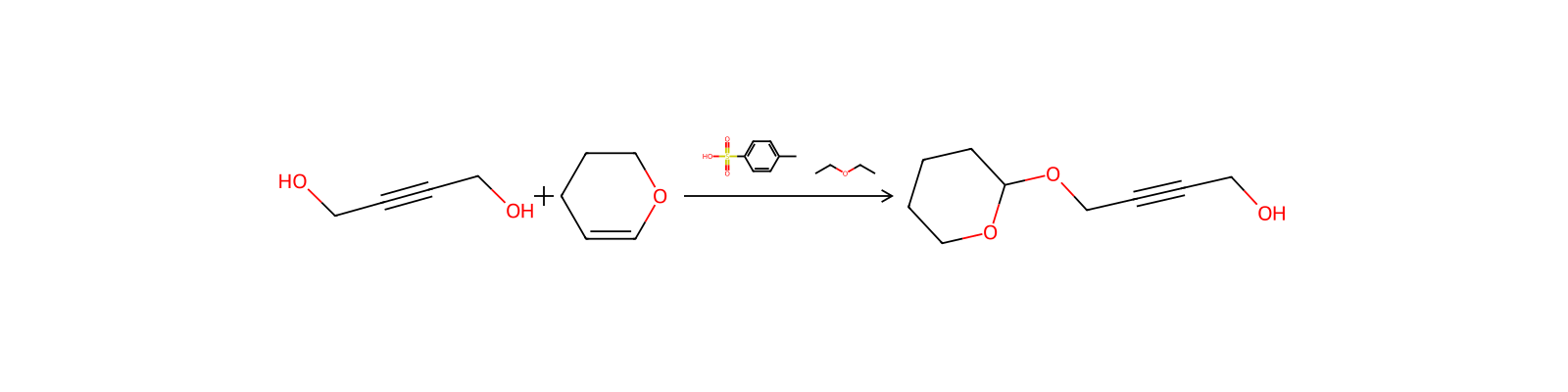
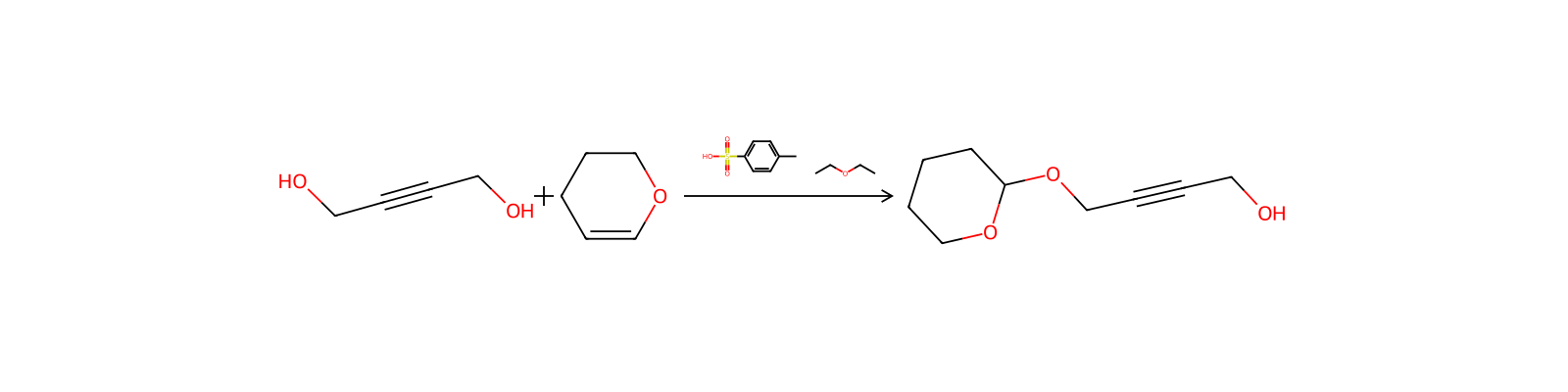
78 records


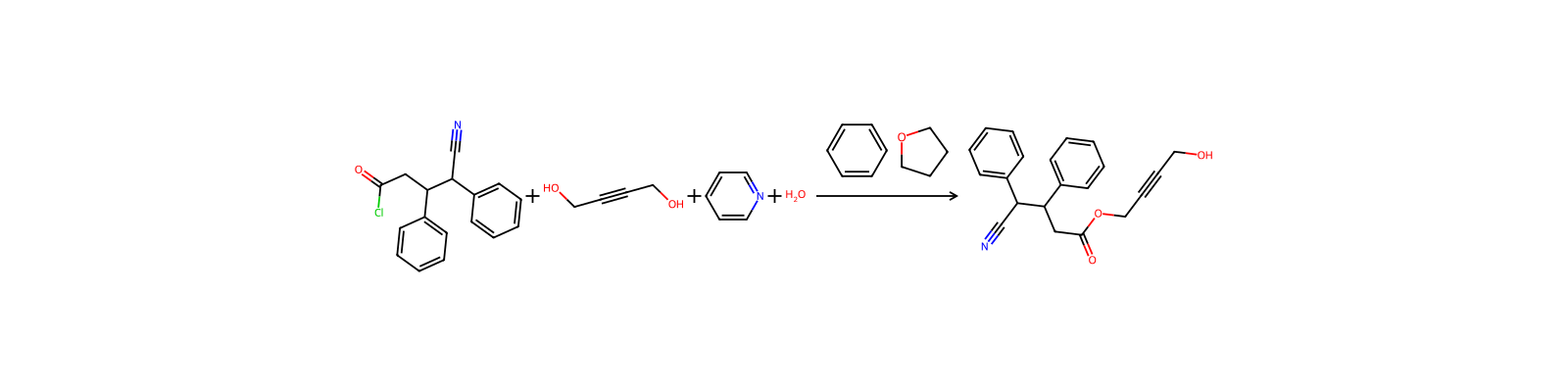


Linked notes
Loading…