HomeMCPWorkbenchSkills
HomeWorkbenchNotificationsMe
llms.txt · MCP GuidePrivacy Policy · Terms of Service · Supportv1.8.0
  1. Home
  2. /Compound

3,4-dihydro-2H-pyran

HCID 8080
New noteNew reactionRequest quotes
Print preview

Completing data — refresh the page later to see the latest

Basic informationOverviewNames & identifiersPropertiesSafety & regulationChemistry & industryRelated reactionsCompound notes
Substructure searchFind similar structures

Basic information

CAS
110-87-2
Standard SMILES
C1=COCCC1
InChIKey
BUDQDWGNQVEFAC-UHFFFAOYSA-N
Molecular formula
C5H8O
Average molar mass
84.12 g/mol
Monoisotopic mass
84.05751488

Overview

Dihydro-2h-pyran appears as a clear colorless liquid with an ethereal odor. Less dense than water. Vapors heavier than air.

Names & identifiers

Preferred name
3,4-dihydro-2H-pyran
IUPAC
3,4-dihydro-2H-pyran
English name
3,4-Dihydro-2H-pyran
Molecular formula
C5H8O
Molecular weight
84.12

Names & synonyms

3,4-Dihydro-2H-pyran110-87-2DIHYDROPYRAN3,4-Dihydropyran2,3-Dihydro-4H-pyran2H-3,4-Dihydropyran5,6-Dihydro-4H-pyran2H-Pyran, 3,4-dihydro-delta2-DihydropyranPyran, dihydro-DTXSID6041426T6V9N71IHX
Show more names
DHP3,4-Dihydro-2H-pyraneDIHYDROPYRANE3,4-Dihydro-2-pyran3,4-dihydro-2h-pyra
NSC-57860NSC-73472DTXCID4021426RefChem:910852,3-DIHYDRO-GAMMA-PYRAN203-810-4Dihydro-2H-pyran2,3-Dihydropyran

Database identifiers

CAS
110-87-2、25512-65-6、3174-74-1
PubChem CID
8080
DTXSID
DTXSID6041426
ChEMBL
CHEMBL3184439
UNII
T6V9N71IHX
EC Number
203-810-4
Nikkaji
J43.463I

Properties

Computed structural propertiesFilling in

XLogP
0.7
Topological polar surface area
9.2 Ų
Hydrogen bond donors
0
Hydrogen bond acceptors
1
Rotatable bonds
0
Heavy atoms
6
Formal charge
0
Complexity
57

Experimental & physicochemical properties

Chemical Classes · 2 items

Other Classes -> Ethers, Other

Flammable agents - 3rd degree

SpringerMaterials PropertiesCoriolis coupling
LogP0.69
Density0.922 @ 19°C
Flash Point0 °F (NFPA, 2010)
Physical Description · 3 items

Dihydro-2h-pyran appears as a clear colorless liquid with an ethereal odor. Less dense than water. Vapors heavier than air.

Liquid

Clear colorless liquid with an ethereal odor; [CAMEO] Unpleasant odor; [Alfa Aesar MSDS]

Physicochemical properties

Melting point
-70 °C · -70 °C (lit.)
Boiling point
86 °C · 86 °C (lit.)
Density
0.922 g/mL · 0.922 g/mL at 25 °C (lit.)

Safety & regulation

Safety information is for reference only and does not replace the supplier’s Safety Data Sheet (SDS), applicable regulations, or professional assessment.

GHS classification

GHS Classification · 6 items

Danger

H225 (100%): Highly Flammable liquid and vapor [Danger Flammable liquids]

P210, P233, P240, P241, P242, P243, P261, P264, P264+P265, P272, P280, P302+P352, P303+P361+P353, P305+P351+P338, P321, P332+P317, P333+P317, P337+P317, P362+P364, P370+P378, P403+P235, and P501 (click each P-code to see the statement)

Aggregated GHS information provided per 180 reports by companies from 12 notifications to the ECHA C&L Inventory. Each notification may be associated with multiple companies.

Warning

H317: May cause an allergic skin reaction [Warning Sensitization, Skin]

Hazard information

Regulatory Information · 5 items

Chemical: 2H-Pyran, 3,4-dihydro-

2H-Pyran, 3,4-dihydro- is listed on the EPA's Chemical Data Reporting (CDR) system. Manufacturers and importers of 2H-Pyran, 3,4-dihydro- are required to report information about their production and use of this chemical to the EPA under the Toxic Substances Control Act (TSCA). (40 eCFR Part 711)

Status: Active Update: 29-11-2022 https://echa.europa.eu/registration-dossier/-/registered-dossier/12042

2H-Pyran, 3,4-dihydro-: HSNO Approval: HSR001129 Approved with controls

The New Jersey Worker and Community Right to Know Act requires public and private employers to provide information about hazardous substances at their workplaces. (N.J.S.A. 34:5A-1 et. seq.)

DOT LabelFlammable Liquid
Fire Hazards · 2 items

Excerpt from ERG Guide 127 [Flammable Liquids (Water-Miscible)]:

· HIGHLY FLAMMABLE: Will be easily ignited by heat, sparks or flames.

Health Hazards · 2 items

Excerpt from ERG Guide 127 [Flammable Liquids (Water-Miscible)]:

· Inhalation or contact with material may irritate or burn skin and eyes.

Chemistry & industry

Uses & manufacturing

UsesPermitted for use as an inert ingredient in non-food pesticide products; [EPA] Used in organic syntheses; [REPROTOX]
U.S. Production2023: 75,000 - <500,000 lb
Industry UsesIntermediate
General Manufacturing Information · 2 items

All Other Basic Organic Chemical Manufacturing

2H-Pyran, 3,4-dihydro-: ACTIVE

Applications · 1 item

UsesWidely used hydroxyl-protecting reagent3,4-Dihydro-2H-pyran is used as a hydroxyl-protecting reagent in organic synthesis. It acts as an intermediate in synthetic chemistry. It is used to protect various reactive functional groups. It is involved in the polymerization reaction either alone or with unsaturated compound and finds application in polymer industries. Further, it is employed in the preparation of bicyclic compounds of epoxide-fused, halo compounds and allenic alcohols.

Upstream & downstream products

Upstream raw materials

Tetrahydrofurfuryl alcohol

Downstream products

Glutaraldehyde2-[(5-Nitro-2-furyl)methoxy]tetrahydro-2H-pyran2-ethoxyoxane4-Chloro-2-(tetrahydro-2H-pyran-2-yl)-5-hydroxypyridazin-3(2H)-one

Related reactions

1,906 records
New reaction record
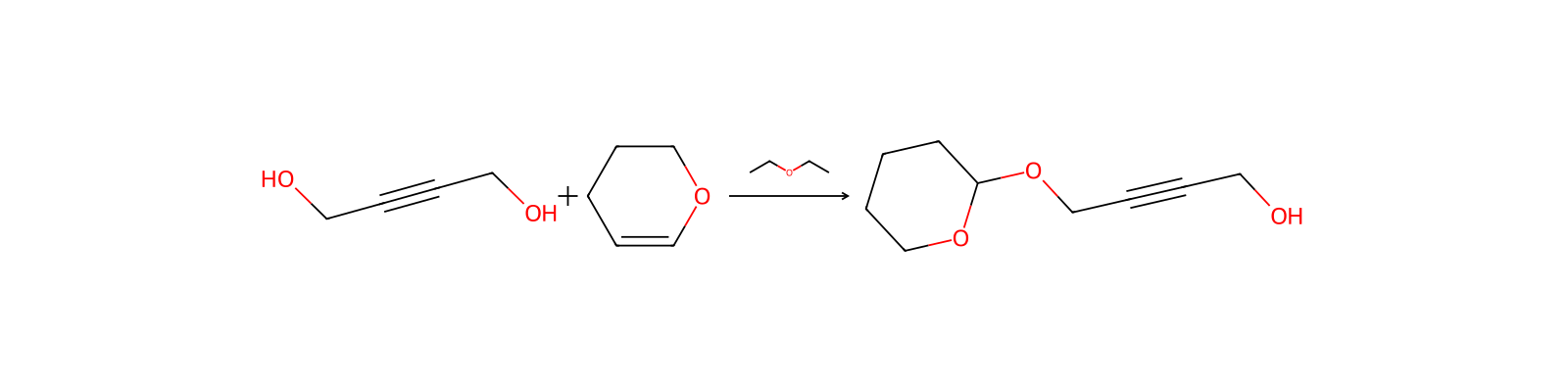
HRID 1123 reaction equation
HRID 1123As reactantuspto-grants-1998_03
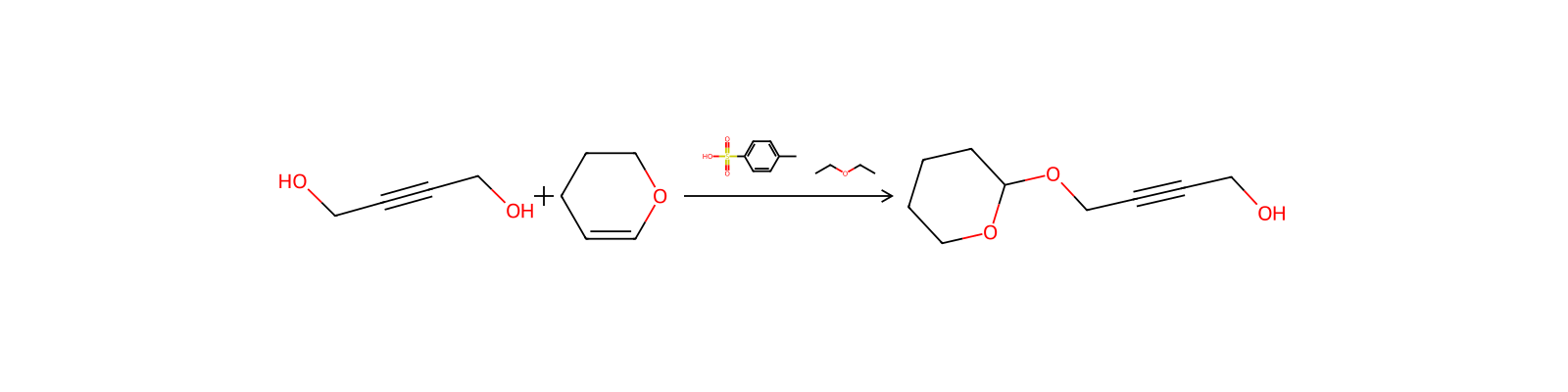
HRID 1496 reaction equation
HRID 1496As reactantuspto-grants-1998_03
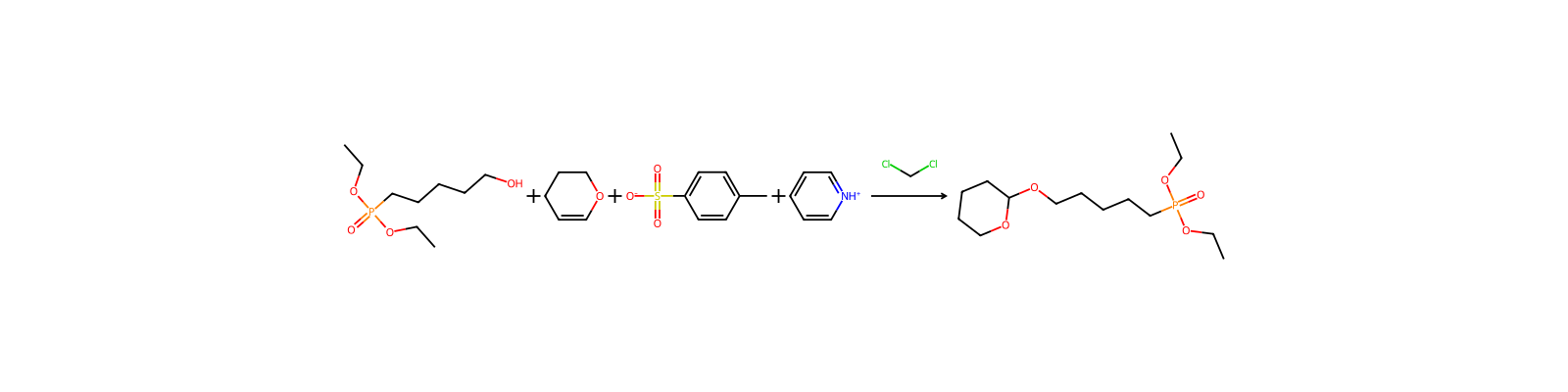
HRID 1563 reaction equation
HRID 1563As reactantuspto-grants-1998_03
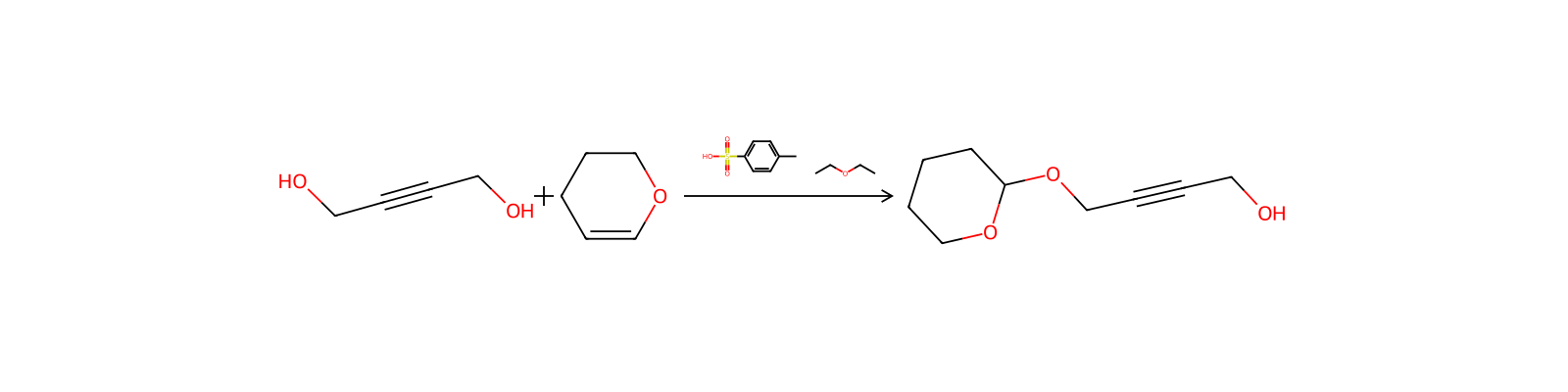
HRID 1935 reaction equation
HRID 1935As reactantuspto-grants-1998_03
HRID 2013 reaction equation
HRID 2013As reactantuspto-grants-1998_03
HRID 2068 reaction equation
HRID 2068As reactantuspto-grants-1998_03
HRID 2109 reaction equation
HRID 2109As reactantuspto-grants-1998_03
HRID 2168 reaction equation
HRID 2168As reactantuspto-grants-1998_03
Page 1 of 239

Compound notes

Loading…

On this pageBasic informationOverviewNames & identifiersPropertiesSafety & regulationChemistry & industryRelated reactionsCompound notes
More actions
New noteNew reactionRequest quotes
vapor density
2.9 · 2.9 (vs air)
vapor pressure
77.8 hPa · 77.8 hPa (20 °C)
refractive index
20 · n20/D 1.440(lit.)
Flash point
4 °F · 4 °F
storage temp.
30 °C · Store below +30°C.
solubility
7.7 g/l · 7.7g/l
form
Liquid
color
Clear colorless to yellow
PH
7 · 7 (5g/l, H2O, 20℃)
explosive limit
1.1 · 1.1-13.8%(V)
Water Solubility
20 g/L · 20 g/L (20 ºC)
BRN
103493 · 103493
Stability
Volatile
InChI
1S/C5H8O/c1-2-4-6-5-3-1/h2,4H,1,3,5H2
InChIKey
BUDQDWGNQVEFAC-UHFFFAOYSA-N
SMILES
C1COC=CC1
LogP
0.69 · 0.690
CAS DataBase Reference
110 · 110-87-2(CAS DataBase Reference)
FDA UNII
6 V9N71IHX · T6V9N71IHX
NIST Chemistry Reference
2 H-Pyran, · 2H-Pyran, 3,4-dihydro-(110-87-2)
EPA Substance Registry System
2 H-Pyran, · 2H-Pyran, 3,4-dihydro- (110-87-2)
UNSPSC Code
12352005 · 12352005
NACRES
22 · NA.22
Symbol(GHS)
2 · GHS02,GHS07
Signal word
Danger
Hazard statements
225 · H225-H315-H317-H319-H412
Precautionary statements
210 · P210-P233-P273-P280-P303+P361+P353-P305+P351+P338
PPE
Eyeshields, Faceshields, Gloves, type ABEK (EN14387) respirator filter
Hazard Codes
F,Xi
Risk Statements
11 · 11-36/37/38-36/38-19
Safety Statements
16 · 16-26-36-37/39-33-7/9
RIDADR
2376 · UN 2376
WGK Germany
3 · 3
RTECS
7700000 · UP7700000
Autoignition Temperature
240 °C · 240 °C
Hazard Note
Highly Flammable/Irritant
TSCA
TSCA listed
HazardClass
3 · 3
PackingGroup
II
HS Code
29329995 · 29329995
Storage Class
3 · 3 - Flammable liquids
Hazard Classifications
3 Eye · Aquatic Chronic 3Eye Irrit. 2Flam. Liq. 2Skin Irrit. 2Skin Sens. 1B
Toxicity
50 orally · LD50 orally in Rabbit: > 4000 mg/kg
REACH Registrations
Active
Limited Quantities
1 L · 1.0 L (0.3 gallon) (liquid)
Excepted Quantities
Max Inner Pack (30g or 30ml) and Max Outer Pack (500g or 500ml)
Hazards SummaryA skin and strong eye irritant; [Alfa Aesar MSDS]
DOT ID and Guide2376 127
Reactive GroupEthers
Reactivity AlertsHighly Flammable
Reactivity Profile · 1 item

Ethers, such as DIHYDRO-2H-PYRAN, can act as bases. They form salts with strong acids and addition complexes with Lewis acids. The complex between diethyl ether and boron trifluoride is an example. Ethers may react violently with strong oxidizing agents. In other reactions, which typically involve the breaking of the carbon-oxygen bond, ethers are relatively inert.

DOT Hazard Classification · 4 items

2,3-Dihydropyran

UN2376

Class 3 Flammable and combustible liquid (49 eCFR § 173.120)

PG II: the degree of danger presented by the material is medium

Air and Water ReactionsHighly flammable. Slightly soluble in water.
Hazard Classes and Categories · 4 items

Flam. Liq. 2 (100%)

Flammable liquids - Category 2

Skin sensitization - Category 1B

Flammable agents - 3rd degree, Reactive agents - 1st degree

Safety & protection

Fire FightingExcerpt from ERG Guide 127 [Flammable Liquids (Water-Miscible)]:
Accidental Release Measures · 2 items

· CALL 911. Then call emergency response telephone number on shipping paper. If shipping paper not available or no answer, refer to appropriate telephone number listed on the inside back cover.

· ELIMINATE all ignition sources (no smoking, flares, sparks or flames) from immediate area.

First Aid · 2 items

Excerpt from ERG Guide 127 [Flammable Liquids (Water-Miscible)]:

General First Aid:

Exposure Control and Personal Protection· Wear positive pressure self-contained breathing apparatus (SCBA).
Nonfire Spill ResponseExcerpt from ERG Guide 127 [Flammable Liquids (Water-Miscible)]:
Isolation and Evacuation · 2 items

Excerpt from ERG Guide 127 [Flammable Liquids (Water-Miscible)]:

Immediate precautionary measure

Protective Action Criteria (PAC) · 3 items

14 [mg/m3]

150 [mg/m3]

910 [mg/m3]

Personal Protective Equipment (PPE)Excerpt from ERG Guide 127 [Flammable Liquids (Water-Miscible)]:
Emergency Response Planning GuidelinesCAUTION: The majority of these products have a very low flash point. Use of water spray when fighting fire may be inefficient.

Toxicology

Toxicity DataLC50 (rat) > 10,700 mg/m3/4hr

Safety data

PPE
Eyeshields, Faceshields, Gloves, type ABEK (EN14387) respirator filter
wgk
3
tsca
TSCA listed
rtecs
UP7700000
ridadr
UN 2376
hs_code
29329995
Toxicity
LD50 orally in Rabbit: > 4000 mg/kg
risk_code
11-36/37/38-36/38-19
Signal word
Danger
Symbol(GHS)
GHS02,GHS07
hazard_code
F,Xi
hazard_note
Highly Flammable/Irritant
safety_code
16-26-36-37/39-33-7/9
hazard_class
3
Storage Class
3 - Flammable liquids
packing_group
II
Hazard statements
H225-H315-H317-H319-H412
Limited Quantities
1.0 L (0.3 gallon) (liquid)
Excepted Quantities
Max Inner Pack (30g or 30ml) and Max Outer Pack (500g or 500ml)
REACH Registrations
Active
Hazard Classifications
Aquatic Chronic 3Eye Irrit. 2Flam. Liq. 2Skin Irrit. 2Skin Sens. 1B
Autoignition Temperature
240 °C
Precautionary statements
P210-P233-P273-P280-P303+P361+P353-P305+P351+P338
1-{2-[(Tetrahydro-2H-pyran-2-yl)oxy]ethyl}-4-(4,4,5,5-tetramethyl-1,3,2-dioxaborolan-2-yl)-1H-pyrazole
Pyrazole-3-boronic acid
O-(Tetrahydro-2H-pyran-2-yl)hydroxylamine
Tetrahydropyran
3,4-Dihydro-2H-pyran-5-carbaldehyde
(S)-Tetrahydro-2H-pyran-3-ol
2,5-Dichlorohydroquinone
2-(3,4-Dihydro-2H-pyran-5-yl)-4,4,5,5-tetramethyl-1,3,2-dioxaborolane
2-Methoxytetrahydropyran
N-Benzyl-9-(tetrahydro-2H-pyran-2-yl)adenine