

Basic information
- CAS
6484-25-9- Standard SMILES
Clc1nc(-c2ccccc2)nc2ccccc12- InChIKey
OBHKONRNYCDRKM-UHFFFAOYSA-N- Molecular formula
- C14H9ClN2
- Average molar mass
- 240.69 g/mol
- Monoisotopic mass
- 240.04542597
Names & identifiers
- Preferred name
- 4-Chloro-2-phenylquinazoline
- IUPAC
- 4-chloro-2-phenylquinazoline
- English name
- 4-Chloro-2-phenylquinazoline
- Molecular formula
- C14H9ClN2
- Molecular weight
- 240.69
Names & synonyms
4-Chloro-2-phenylquinazoline6484-25-9Am-ex-olEINECS 229-346-2OBHKONRNYCDRKM-UHFFFAOYSA-DTXSID00215132NSC 400965RefChem:98401DTXCID00137623229-346-2InChI=1/C14H9ClN2/c15-13-11-8-4-5-9-12(11)16-14(17-13)10-6-2-1-3-7-10/h1-9HOBHKONRNYCDRKM-UHFFFAOYSA-N
Show more names
AKOS 93518AM-EX-OL(R)am-ex-ol tmAM-ex-OL®4-Chloro-2-phenyl-quizoline
Quinazoline, 4-chloro-2-phenyl-4-chloro-2-phenyl-quinazoline2-PHENYL-4-CHLOROQUINAZOLINEMFCD00006713NSC-400965NSC400965phenyl-4-chloroquinazoline2-phenyl 4-chloroquinazoline
Database identifiers
- CAS
6484-25-9- PubChem CID
- 80977
- DTXSID
DTXSID00215132- UNII
- 2QRD56Y64F
- EC Number
- 229-346-2
- Nikkaji
- J236D
Properties
Computed structural properties
- XLogP
- 4.5
- Topological polar surface area
- 25.8 Ų
- Hydrogen bond donors
- 0
- Hydrogen bond acceptors
- 2
- Rotatable bonds
- 1
- Heavy atoms
- 17
- Formal charge
- 0
- Complexity
- 253
Experimental & physicochemical properties
LogP4.47
Physicochemical properties
- Melting point
- 124 · 124-126 °C(lit.)
- Boiling point
- 383.11 °C · 383.11°C (rough estimate)
- Density
- 1.285 · 1.285
- refractive index
- 1.5749 · 1.5749 (estimate)
- storage temp.
- 2 · under inert gas (nitrogen or Argon) at 2–8 °C
- form
- Crystalline Powder
- pka
- 0.67 · 0.67±0.30(Predicted)
- color
- Slightly yellow to yellow
- InChI
- 1S/C14H9ClN2/c15-13-11-8-4-5-9-12(11)16-14(17-13)10-6-2-1-3-7-10/h1-9H
- InChIKey
- OBHKONRNYCDRKM-UHFFFAOYSA-N
- SMILES
- Clc1nc(nc2ccccc12)-c3ccccc3
- CAS DataBase Reference
- 6484 · 6484-25-9(CAS DataBase Reference)
- FDA UNII
- 2 QRD56Y64F · 2QRD56Y64F
- UNSPSC Code
- 12352100 · 12352100
- NACRES
- 22 · NA.22
- Symbol(GHS)
- 7 · GHS07
- Signal word
- Warning
- Hazard statements
- 315 · H315-H319-H335
- Precautionary statements
- 261 · P261-P305+P351+P338
- Hazard Codes
- Xi
- Risk Statements
- 36 · 36/37/38
- Safety Statements
- 37 · 37/39-26
- WGK Germany
- 3 · 3
- HS Code
- 29339980 · 29339980
- Storage Class
- 11 · 11 - Combustible Solids
Safety & regulation
GHS classification
GHS Classification
Warning
H315 (100%): Causes skin irritation [Warning Skin corrosion/irritation]
P261, P264, P264+P265, P271, P280, P302+P352, P304+P340, P305+P351+P338, P319, P321, P332+P317, P337+P317, P362+P364, P403+P233, P405, and P501 (click each P-code to see the statement)
Aggregated GHS information provided per 39 reports by companies from 2 notifications to the ECHA C&L Inventory. Each notification may be associated with multiple companies.
Hazard information
Regulatory InformationQuinazoline, 4-chloro-2-phenyl-: Does not have an individual approval but may be used under an appropriate group standard
Hazard Classes and CategoriesSkin Irrit. 2 (100%)
Safety data
- wgk
- 3
- hs_code
- 29339980
- risk_code
- 36/37/38
- Signal word
- Warning
- Symbol(GHS)
- GHS07
- hazard_code
- Xi
- safety_code
- 37/39-26
- Storage Class
- 11 - Combustible Solids
- Hazard statements
- H315-H319-H335
- Precautionary statements
- P261-P305+P351+P338
Chemistry & industry
Applications
UsesReactant involved in the synthesis of biologically active molecules including:Nitrotriazole amines or nitroimidazole amines for use as antitrypanosomal activity and mammalian cytotoxicityQuinazoline-containing piperazinylpyrimidine derivatives with antitumor activityQuinazoline substituted cyclopentane as HCV NS3/4A protease inhibitorsQuinazolines with antibacterial and antitumor activityAurora inhibitor MK-0457Reactant involved in Suzuki-Miyaura cross-coupling and catalyst-free / base-free water promoted nucleophilic aromatic substitution
Uses4-Chloro-2-phenylquinazoline can be involved in the synthesis of biologically active molecules including: Nitrotriazole amines or nitroimidazole amines for use as antitrypanosomal activity and mammalian cytotoxicity.
Upstream & downstream products
Upstream raw materials
Suppliers79 total
衢州润东化工有限公司0570-8789886 18892685668 · [email protected]
郑州海阔光电材料有限公司67759225 13526468238 · [email protected]
Hebei Chuanghai Biotechnology Co., Ltd+86-17732866630 · [email protected]
苏州驰瑞智合生物科技有限公司0512-13626191578 13626191578 · [email protected]
上海麦克林生化科技股份有限公司021-50706066 15221275939 · [email protected]
Shaanxi Cuikang Pharmaceutical Technology Co., Ltd+86-13119157289 · [email protected]
上海毕得医药科技股份有限公司400-1647117 13681763483 · [email protected]
西安美科生物科技有限公司029-18710438009 18710438009 · [email protected]
Dayang Chem (Hangzhou) Co.,Ltd.+86-0571-88938639 17705817739 · [email protected]
上海海皋科技有限公司021-57646680 18306277365 · [email protected]
上海迈瑞尔生化科技有限公司4006356688 18621169109 · [email protected]
安耐吉化学&3A(安徽泽升科技股份有限公司)400-0056266 · [email protected]
上海瀚鸿科技股份有限公司021-54306202 13764082696 · [email protected]
上海源鼎化学科技有限公司21-57721279 18121011378 · [email protected]
上海思英化工科技有限公司021-64502386 18017349250 · [email protected]
济南德迈医药科技有限公司18669728830 15806766175 · [email protected]
Pure Chemistry Scientific Inc.001-857-928-2050 or 1-888-588-9418 · [email protected]
郑州研德生物科技有限公司0371-63682289 15538176268 · [email protected]
上海竺钥化工有限公司021-33559231 18964673308 · [email protected]
山东西亚化学有限公司13355009207 13355009207 · [email protected]
济南千叶医药技术有限公司0531-81313138 13066006660 · [email protected]
赛默飞世尔科技(中国)有限公司800-810-5118 · [email protected]
北京伊诺凯科技有限公司400-810-7969 010-59572699 · [email protected]
QINGDAO KAIENSI INTERNATIONAL TRADE CO.,LTD.+86-0532-8699-9256 +86-18518128472 · [email protected]
苏州爱玛特生物科技有限公司0512-56316828 4008675858 · [email protected]
上海毕得医药科技股份有限公司400-164-7117 18317119277 · [email protected]
济南泺合医药技术有限公司86-0531-68658065 15726150375 · [email protected]
Sigma-Aldrich西格玛奥德里奇(上海)贸易有限公司021-61415566 800-8193336 · [email protected]
九鼎化学(上海)科技有限公司4009209199 · [email protected]
HANGZHOU LEAP CHEM CO., LTD.+86-571-87711850 +86-15355479329 · [email protected]
上海锌果科技有限公司13120711461 · [email protected]
上海博景化工有限公司021-37199966 13681836088 · [email protected]
上海阿拉丁生化科技股份有限公司6206333 13167063860 · [email protected]
南京科晟祥科技有限公司18252089365 · [email protected]
Guangzhou Yuheng Pharmaceutical Technology Co., Ltd+8613580539051 · [email protected]
江西冠能光电材料有限公司0799-3607521 17379923216
上海源叶生物科技有限公司13636370518 · [email protected]
上海颖心实验室设备有限公司021-021-59178156 15300768757 · [email protected]
上海超岚化工科技中心(原上海巢莱)0-2022843681 15618226720 · [email protected]
郑州汇聚化工有限公司0371-55900031 18137872243 · [email protected]
苏州爱玛特生物科技有限公司0512-56316828 400-867-5858;400-867-5858 · [email protected]
合肥钼凯医药科技有限公司18130062233 · [email protected]
上海泰坦科技股份有限公司18616708014 · [email protected]
杭州洁汉化工有限公司+86-571-86217390; +8618058761490 · [email protected]
上海玉函化工有限公司021-61469567 13774476675 · [email protected]
厦门盈融达化工有限公司+86-0592-6210733 · [email protected]
郑州如科生物科技有限公司15981811963 · [email protected]
career henan chemical co+86-0371-86658258 · [email protected]
南京波普生物医药研发有限公司025-87138562 18951783565 · [email protected]
山东鸿图生物科技有限公司15966937598 · [email protected]
Related reactions
58 records


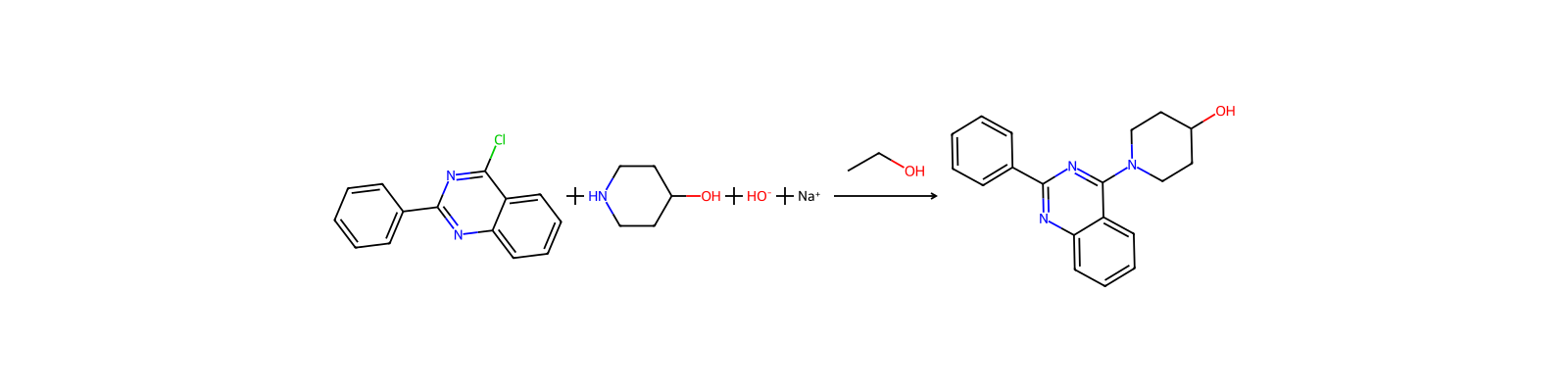
Compound notes
Loading…