HomeMCPWorkbenchSkills
HomeWorkbenchNotificationsMe
llms.txt · MCP GuidePrivacy Policy · Terms of Service · Supportv1.8.3
  1. Home
  2. /Compound

Itaconic acid

HCID 811
New reaction
Print
Basic informationOverviewNames & identifiersPropertiesSafety & regulationChemistry & industryRelated reactionsCompound notes
Substructure searchFind similar structures

Basic information

CAS
25119-64-6
Standard SMILES
C=C(CC(=O)O)C(=O)O
InChIKey
LVHBHZANLOWSRM-UHFFFAOYSA-N
Molecular formula
C5H6O4
Average molar mass
130.1 g/mol
Monoisotopic mass
130.02660867

Overview

Itaconic acid is a dicarboxylic acid that is methacrylic acid in which one of the methyl hydrogens is substituted by a carboxylic acid group. It has a role as a fungal metabolite and a human metabolite. It is a dicarboxylic fatty acid, a dicarboxylic acid and an olefinic compound. It is functionally related to a succinic acid. It is a conjugate acid of an itaconate(2-).

Names & identifiers

Preferred name
Itaconic acid
IUPAC
2-methylidenebutanedioic acid
English name
Poly(itaconic acid)
Molecular formula
C15H18O12X2
Molecular weight
130.1

Names & synonyms

Itaconic acid97-65-42-Methylenesuccinic acid2-methylidenebutanedioic acidMETHYLENESUCCINIC ACIDMethylenebutanedioic aciditaconatePropylenedicarboxylic acidButanedioic acid, methylene-2-Propene-1,2-dicarboxylic acidSuccinic acid, methylene-2-methylenebutanedioic acid
Show more names
Poly(itaconic acid)itaconicacidpolymersITACONIC ACID POLYMERitaconic acid homopolymerpoly(2-methylenesuccinicacid)methylenesuccinicacidpolymersmethylene-butanedioicacihomopolymer
DTXSID2026608NSC-3357Q4516562YHDTXCID006608CHEBI:30838methylidenebutanedioateRefChem:792464hydron;2-methylidenebutanedioate

Database identifiers

CAS
25119-64-6、97-65-4
PubChem CID
811
DTXSID
DTXSID2026608
ChEMBL
CHEMBL359159
ChEBI
CHEBI:30838
UNII
Q4516562YH
EC Number
202-599-6
Nikkaji
J38.149G

Properties

Computed structural properties

XLogP
-0.1
Topological polar surface area
74.6 Ų
Hydrogen bond donors
2
Hydrogen bond acceptors
4
Rotatable bonds
3
Heavy atoms
9
Formal charge
0
Complexity
158

Experimental & physicochemical properties

LipidsFatty Acyls [FA] -> Fatty Acids and Conjugates [FA01] -> Dicarboxylic acids [FA0117]
PolymersPlastics & Rubber -> Other Monomers
SpringerMaterials PropertiesCrystal structure
OdorCHARACTERISTIC ODOR
Density1.632
Color/Form · 2 items

RHOMBIC CRYSTALS FROM BENZENE

WHITE CRYSTALS

Solubility · 3 items

1 G DISSOLVES IN 12 ML WATER, 5 ML ALC; VERY SLIGHTLY SOL IN BENZENE, CHLOROFORM, CARBON DISULFIDE, PETROLEUM ETHER

SOL IN ACETONE

76.8 mg/mL at 20 °C

Boiling Point268 °C, SUBLIMES
Melting Point · 2 items

162-164 °C WITH DECOMP, ALSO REPORTED AS 172 °C

175 °C

Food Contact Substances · 3 items

FCS -> FDA Cumulative Estimated Daily Intake (CEDI)

FCS -> FDA Inventory of Food Contact Substances Listed in 21 CFR

FCS -> FDA Inventory of Food Contact Substances Listed in 21 CFR

Physical Description · 3 items

Liquid; Large Crystals; Dry Powder; Other Solid

Hygroscopic solid; [Merck Index] White crystalline powder; [MSDSonline]

Solid

Dissociation ConstantsACID DISSOCIATION CONSTANTS: 3.84 & 5.55

Physicochemical properties

pka
3.85 · 3.85 (pKa1)
Indirect Additives used in Food Contact Substances
POLYITACONIC ACID
FDA 21 CFR
175.105 · 175.105; 176.180; 181.30

Safety & regulation

Safety information is for reference only and does not replace the supplier’s Safety Data Sheet (SDS), applicable regulations, or professional assessment.

GHS classification

GHS Classification · 6 items

This chemical does not meet GHS hazard criteria for 5.9% (33 of 555) of reports.

Danger

H315 (14.8%): Causes skin irritation [Warning Skin corrosion/irritation]

P261, P264, P264+P265, P271, P280, P302+P352, P304+P340, P305+P351+P338, P305+P354+P338, P317, P319, P321, P332+P317, P337+P317, P362+P364, P403+P233, P405, and P501 (click each P-code to see the statement)

Aggregated GHS information provided per 555 reports by companies from 20 notifications to the ECHA C&L Inventory. Each notification may be associated with multiple companies.

Danger

Hazard information

Regulatory Information · 4 items

Chemical: Butanedioic acid, methylene-

Butanedioic acid, 2-methylene- is listed on the EPA's Chemical Data Reporting (CDR) system. Manufacturers and importers of Butanedioic acid, 2-methylene- are required to report information about their production and use of this chemical to the EPA under the Toxic Substances Control Act (TSCA). (40 eCFR Part 711)

REACH registered substance: Itaconic acid (EC: 202-599-6)

Methylenesuccinic acid: Does not have an individual approval but may be used under an appropriate group standard

Other Safety InformationIMAP assessments - Butanedioic acid, methylene-: Environment tier I assessment
Hazards SummaryCorrosive to eyes; [eChemPortal: ERMA] Oral LD50 (rat) = 2969 mg/kg; NOEL = 500 mg/kg/d (highest dose tested) for oral repeated dose testing of rats for 4 weeks; [eChemPortal: SIDSUNEP] An irritant; [MSDSonline]
Hazard Classes and Categories · 2 items

Skin Irrit. 2 (14.8%)

Serious eye damage/eye irritation - Category 1

Toxicology

Human Toxicity ExcerptsIT IS PROBABLY MILD IRRITANT.
Non-Human Toxicity Excerpts · 2 items

...IT MAY INHIBIT UTILIZATION OF SUCCINIC ACID WHEN FED IN RELATIVELY LARGE DOSES TO RATS. 1% IN THE DIET OF RATS CAUSED SLOW GROWTH. A SINGLE LARGE ORAL DOSE CAUSES AN INCREASED OUTPUT OF SUCCINIC ACID IN RABBIT URINE.

ITACONIC ACID RETARDED GROWTH OF PEAS, INHIBITED CHLOROPHYLL DESTRUCTION & CHLOROPHYLLASE ACTIVITY IN RADISH LEAF DISKS, & HASTENED FLOWERING & RIPENING OF TOMATOES.

Chemistry & industry

Pharmacology

Cellular LocationsMitochondria

Uses & manufacturing

Uses · 2 items

Used in copolymerization and to make resins, plasticizers, and lube oil additives; [HSDB] Used as a comonomer in the production of acrylic fibers and latex; [eChemPortal: SIDSUNEP]

COPOLYMERIZATIONS; RESINS; PLASTICIZERS; LUBE OIL ADDITIVES; INTERMEDIATE

U.S. Production2023: 2,500,000 - <4,000,000 lb
Consumer UsesNot Known or Reasonably Ascertainable
Industry UsesSurface modifier
Methods of Manufacturing · 2 items

OBTAINED BY DRY DISTILLATION OF CITRIC ACID AND SUBSEQUENT TREATMENT OF THE ANHYDRIDE WITH WATER. PRODUCED ON A LARGE SCALE BY SUBMERGED AEROBIC FERMENTATION USING ASPERGILLUS TERREUS AND LOW COST CARBOHYDRATES FROM BEET OR CANE: KANE ET AL, US PATENT 2,385,283 (1945 TO PFIZER).

SYNTHESIS FROM PROPARGYL CHLORIDE, CARBON MONOXIDE, NICKEL CARBONYL & WATER: CHIUSOLI, US PATENT 3,025,320 (1962 TO MONTECATINI).

Household ProductsInformation on 1 consumer products that contain Methylenesuccinic acid in the following categories is provided:
General Manufacturing Information · 2 items

Petrochemical Manufacturing

Butanedioic acid, 2-methylene-: ACTIVE

Additional notes · 1 item

DefinitionChEBI: Itaconic acid is a dicarboxylic acid that is methacrylic acid in which one of the methyl hydrogens is substituted by a carboxylic acid group. It has a role as a fungal metabolite and a human metabolite. It is a dicarboxylic acid, an olefinic compound and a dicarboxylic fatty acid. It is functionally related to a succinic acid. It is a conjugate acid of an itaconate(2-).

Related reactions

153 records
New reaction record
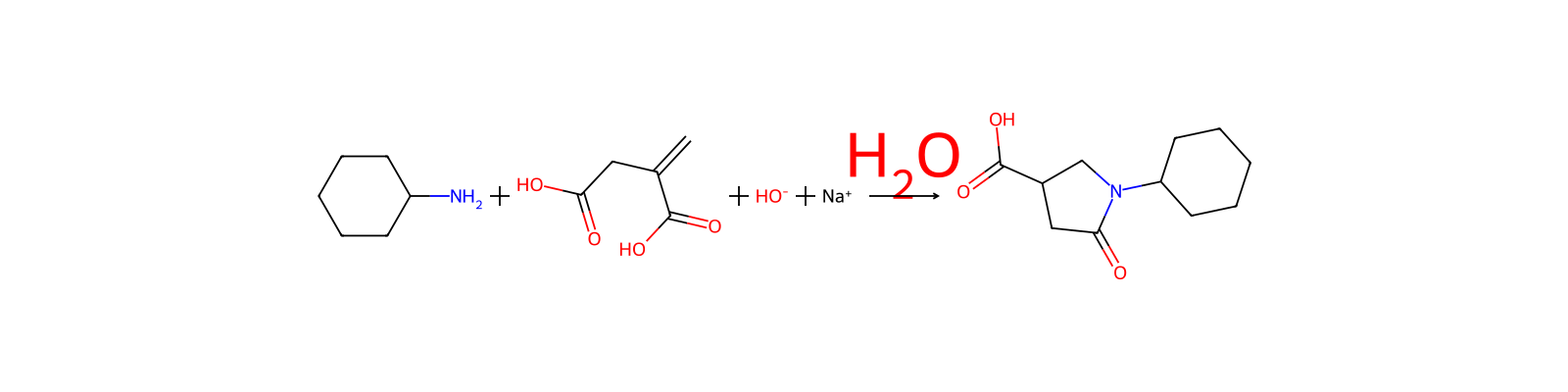
HRID 22897 reaction equation
HRID 22897As reactant
HRID 58553 reaction equation
HRID 58553As reactant
HRID 58554 reaction equation
HRID 58554As reactant
HRID 58888 reaction equation
HRID 58888As reactant
HRID 65123 reaction equation
HRID 65123As reactant
HRID 65125 reaction equation
HRID 65125As reactant
HRID 66795 reaction equation
HRID 66795As reactant
HRID 66796 reaction equation
HRID 66796As reactant
PreviousPage 1 of 20

Compound notes

On this pageBasic informationOverviewNames & identifiersPropertiesSafety & regulationChemistry & industryRelated reactionsCompound notes