
Basic information
- CAS
6642-31-5- Standard SMILES
Cn1c(N)cc(=O)n(C)c1=O- InChIKey
VFGRNTYELNYSKJ-UHFFFAOYSA-N- Molecular formula
- C6H9N3O2
- Average molar mass
- 155.15 g/mol
- Monoisotopic mass
- 155.06947653
Overview
structure in first source
Names & identifiers
- Preferred name
- 6-Amino-1,3-dimethyluracil
- IUPAC
- 6-amino-1,3-dimethylpyrimidine-2,4-dione
- English name
- 6-Amino-1,3-dimethyl-1,2,3,4-tetrahydropyrimidine-2,4-dione
- Molecular formula
- C6H9N3O2
- Molecular weight
- 155.15
Names & synonyms
6-Amino-1,3-dimethyluracil6642-31-56-Amino-1,3-dimethyl uracil2,4(1H,3H)-Pyrimidinedione, 6-amino-1,3-dimethyl-DTXSID4074350RefChem:104160DTXCID5044811229-662-06-amino-1,3-dimethylpyrimidine-2,4(1H,3H)-dione6-Amino-1,3-dimethyl-1,2,3,4-tetrahydropyrimidine-2,4-dione1,3-Dimethyl-6-amino-uracilUracil, 6-amino-1,3-dimethyl-
Show more names
6-AMINO-1,3-DIMETHYLURICILAURORA KA-4912Uradil impurity 42TIMTEC-BB SBB004028AminodimethyluracilSPECS AB-323/25048015Dimethyl- 6-aminouracilChlorpyrifos Impurity 21
6-Amino-1,3-dimethyl-2,4(1H,3H)-pyrimidinedioneMFCD000065521,3-dimethyl-6-aminouracilAI3-524496-amino-1,3-dimethylpyrimidine-2,4-dioneOprea1_258982SCHEMBL238576-amino-1,3-dimethyl-pyrimidine-2,4-dione
Database identifiers
- CAS
6642-31-5- PubChem CID
- 81152
- DTXSID
DTXSID4074350- EC Number
- 229-662-0
- Nikkaji
- J49.015F
Properties
Computed structural properties
- XLogP
- -1.1
- Topological polar surface area
- 66.6 Ų
- Hydrogen bond donors
- 1
- Hydrogen bond acceptors
- 3
- Rotatable bonds
- 0
- Heavy atoms
- 11
- Formal charge
- 0
- Complexity
- 246
Experimental & physicochemical properties
SpringerMaterials PropertiesNuclear quadrupole resonance spectroscopy
Physical DescriptionLarge Crystals; Dry Powder
Physicochemical properties
- Melting point
- 295 °C · 295 °C (dec.) (lit.)
- Boiling point
- 243.1 · 243.1±43.0 °C(Predicted)
- Density
- 1.288 · 1.288±0.06 g/cm3(Predicted)
- vapor pressure
- 0 Pa · 0Pa at 25℃
- storage temp.
- Keep in dark place,Inert atmosphere,Room temperature
- solubility
- 6 g/l · 6g/l
- form
- Solid
- pka
- 5.17 · 5.17±0.70(Predicted)
- color
- Pale Beige
- PH
- 6.9 · 6.9 (100g/l, H2O, 20℃)
- Water Solubility
- 7.06 g/L · 7.06g/L(25 ºC)
- InChI
- 1S/C6H9N3O2/c1-8-4(7)3-5(10)9(2)6(8)11/h3H,7H2,1-2H3
- InChIKey
- VFGRNTYELNYSKJ-UHFFFAOYSA-N
- SMILES
- CN1C(N)=CC(=O)N(C)C1=O
- LogP
- -0.4 at · -0.4 at 20℃
- CAS DataBase Reference
- 6642 · 6642-31-5(CAS DataBase Reference)
- EPA Substance Registry System
- 2 · 2,4(1H,3H)-Pyrimidinedione, 6-amino-1,3-dimethyl- (6642-31-5)
- UNSPSC Code
- 12352100 · 12352100
- NACRES
- 22 · NA.22
- Symbol(GHS)
- 7 · GHS07
- Signal word
- Warning
- Hazard statements
- 302 · H302+H312+H332
- Precautionary statements
- 261 · P261-P264-P270-P271-P280-P301+P312+P330-P302+P352+P312+P362+P364-P304+P340+P312-P501
- Hazard Codes
- Xn
- Risk Statements
- 22 · 22-36/37/38
- Safety Statements
- 22 · 22-26-36/37/39
- WGK Germany
- 1 · 1
- RTECS
- 8755000 · YQ8755000
- TSCA
- TSCA listed
- HS Code
- 29335990 · 29335990
- Storage Class
- 11 · 11 - Combustible Solids
- REACH Registrations
- Active
Safety & regulation
GHS classification
GHS Classification
This chemical does not meet GHS hazard criteria for 98.2% (164 of 167) of all reports.
Not Classified
Aggregated GHS information provided per 167 reports by companies from 2 notifications to the ECHA C&L Inventory.
Hazard information
Regulatory Information
Chemical: 2,4(1H,3H)-Pyrimidinedione, 6-amino-1,3-dimethyl-
2,4(1H,3H)-Pyrimidinedione, 6-amino-1,3-dimethyl- is listed on the EPA's Chemical Data Reporting (CDR) system. Manufacturers and importers of 2,4(1H,3H)-Pyrimidinedione, 6-amino-1,3-dimethyl- are required to report information about their production and use of this chemical to the EPA under the Toxic Substances Control Act (TSCA). (40 eCFR Part 711)
PMN - indicates a commenced PMN (Pre-Manufacture Notices) substance.
Status: Active Update: 18-08-2021 https://echa.europa.eu/registration-dossier/-/registered-dossier/10736
2,4(1H,3H)-Pyrimidinedione, 6-amino-1,3-dimethyl-: Does not have an individual approval but may be used under an appropriate group standard
Hazard Classes and CategoriesNot Classified
Safety data
- wgk
- 1
- tsca
- TSCA listed
- rtecs
- YQ8755000
- hs_code
- 29335990
- risk_code
- 22-36/37/38
- Signal word
- Warning
- Symbol(GHS)
- GHS07
- hazard_code
- Xn
- safety_code
- 22-26-36/37/39
- Storage Class
- 11 - Combustible Solids
- Hazard statements
- H302+H312+H332
- REACH Registrations
- Active
- Precautionary statements
- P261-P264-P270-P271-P280-P301+P312+P330-P302+P352+P312+P362+P364-P304+P340+P312-P501
Chemistry & industry
Uses & manufacturing
U.S. Production2023: 73,194 lb
Consumer UsesHeat stabilizer
Industry UsesOther
General Manufacturing Information
All Other Chemical Product and Preparation Manufacturing
2,4(1H,3H)-Pyrimidinedione, 6-amino-1,3-dimethyl-: ACTIVE
Applications
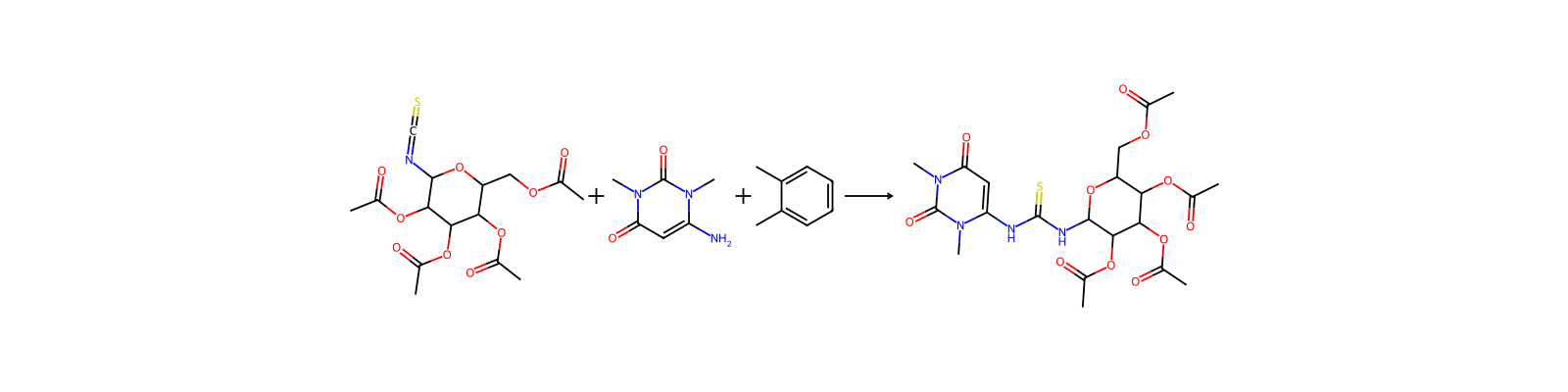
Uses6-Amino-1,3-dimethyluracil is used as a reagent in the synthesis of new pyrimidine and caffeine derivatives that display highly potential antitumor activity. It is also used as a starting material in the synthesis of fused pyrido-pyrimidines.
Upstream & downstream products
Upstream raw materials
Downstream products
Suppliers100 total
梯希爱(上海)化成工业发展有限公司021-67121386 · [email protected]
上海阿拉丁生化科技股份有限公司400-6206333 13167063860 · [email protected]
邹平铭远进出口贸易有限公司18364991597
爱斯特(成都)生物制药股份有限公司+86-28-85122536 85324413 · [email protected]
北京安司莫森技术有限公司010-82954736 13391601435 · [email protected]
韶远科技(上海)有限公司021-50795510 4000665055 · [email protected]
山东中科泰斗化学有限公司0531-88682301 18595278760 · [email protected]
Syntechem Co.,Ltd[email protected]
上海迈瑞尔生化科技有限公司4006356688 18621169109 · [email protected]
太原市瑞和丰科贸有限公司+86 351 7031519 · [email protected]
安耐吉化学&3A(安徽泽升科技股份有限公司)400-0056266 · [email protected]
上海瀚鸿科技股份有限公司021-54306202 13764082696 · [email protected]
上海柯维化学技术有限公司021-64609169 18901607656 · [email protected]
上海隆盛化工有限公司58099637 13585536065 · [email protected]
孝感深远化工有限公司15527621225; 15527621225 · [email protected]
云南西力生物技术股份有限公司0871-65217109 · [email protected]
Beckmann-Kenko GmbH+49 4241 9308 88 · [email protected]
山东西亚化学有限公司13355009207 13355009207 · [email protected]
玛雅试剂+86 (573) 82222445 (0)18006601000 452520369 · [email protected]
四川库利南科技有限公司400-1166-196 18981987031 · [email protected]
天津希恩思生化科技有限公司400 638 7771 · [email protected]
济南健丰化工有限公司0531-88110457; 18954159893
南京维奥化工有限公司Please Send Email 18652950785 · [email protected]
上海拓朴医药科技有限公司+86 (21) 5196-9732
南京诺利斯医药科技有限公司13901585132 · [email protected]
江苏艾康生物医药研发有限公司025-66113011 13913916777 · [email protected]
TCI AMERICA800-4238616 · [email protected]
TOKYO CHEMICAL INDUSTRY CO., LTD.03-36680489 · [email protected]
TCI Europe320-37350700 · [email protected]
上海贤鼎生物科技有限公司4009209199 · [email protected]
上海睿升化工科技有限公司+86-021-50935922
山东新华制药股份有限公司0533- 2196801 18853385675 · [email protected]
石家庄鲲翔达科技有限公司0311-89683399 15373948595
湖北省圣宝莱生物科技有限公司027-59105235 13007105135 · [email protected]
成都零六生物科技有限公司400-1166-196 13458535857 · [email protected]
湖南华腾制药有限公司400-8592883 · [email protected]
杭州杰恒化工有限公司0571-87396432 · [email protected]
上海嵩爰化工科技有限公司010-1234567 18521000990 · [email protected]
上海有朋化工有限公司021-69005955 13701776567 · [email protected]
北京海力扬化学科技有限公司13718199399 · [email protected]
北京欣赛维化学科技有限公司010-56218822 13717722232 · [email protected]
四川海诺威科技有限公司13708085536 13708085536 · [email protected]
上海凯赛化工有限公司021-33516722 13701817765 · [email protected]
上海彤源化工有限公司021-021-69182866 13701855675 · [email protected]
北京华扬致成科技有限公司13716033033 · [email protected]
上海蓝润化学有限公司021-69515658 ; 69515628 13701998368 · [email protected]
上海容立化学科技有限公司021-69992220 13701886816 · [email protected]
上海康拓化工有限公司021-69185552 13701777608 · [email protected]
湖北巨胜科技有限公司027-59599241 18871490274 · [email protected]
Sigma-Aldrich西格玛奥德里奇(上海)贸易有限公司021-61415566 800-8193336 · [email protected]
Related reactions
21 records


Compound notes
Loading…