
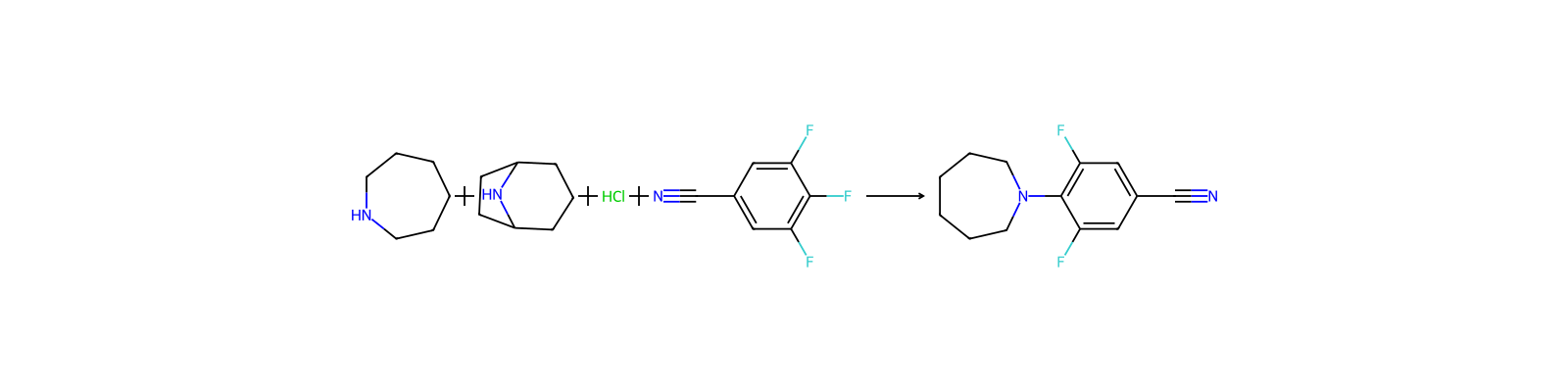
HRID 12861As reactant

111-49-9C1CCCNCC1ZSIQJIWKELUFRJ-UHFFFAOYSA-NHexamethyleneimine appears as a colorless liquid with an ammonia-like odor. Flash point 65 °F. Toxic by ingestion. Corrosive to metals and tissue. Combustion produces toxic oxides of nitrogen.
111-49-9DTXSID1026879CHEMBL1375444CHEBI:32616Nitrogen Compounds -> Amines, Cyclic
Flammable agents - 3rd degree
0.88 at 68 °F (USCG, 1999) - Less dense than water; will float
0.8643 @ 22 °C/4 °C
0.8643 @ 22°C
Very soluble in ethanol and ethyl ether
In water, 3.19X10+4 mg/l @ 25 °C
99 °F (USCG, 1999)
99 °F OC
270 °F at 760 mmHg (USCG, 1999)
138 °C
138 °C @760 [mm Hg]
Safety information is for reference only and does not replace the supplier’s Safety Data Sheet (SDS), applicable regulations, or professional assessment.
Danger
H225 (36.5%): Highly Flammable liquid and vapor [Danger Flammable liquids]
P210, P233, P240, P241, P242, P243, P260, P261, P264, P264+P265, P270, P271, P280, P301+P316, P301+P317, P301+P330+P331, P302+P361+P354, P303+P361+P353, P304+P340, P305+P354+P338, P316, P317, P321, P330, P363, P370+P378, P403+P233, P403+P235, P405, and P501 (click each P-code to see the statement)
Aggregated GHS information provided per 178 reports by companies from 11 notifications to the ECHA C&L Inventory. Each notification may be associated with multiple companies.
Danger
H225: Highly Flammable liquid and vapor [Danger Flammable liquids]
Chemical: 1H-Azepine, hexahydro-
1H-Azepine, hexahydro- is listed on the EPA's Chemical Data Reporting (CDR) system. Manufacturers and importers of 1H-Azepine, hexahydro- are required to report information about their production and use of this chemical to the EPA under the Toxic Substances Control Act (TSCA). (40 eCFR Part 711)
REACH registered substance: Perhydroazepine (EC: 203-875-9)
Hexamethyleneimine: Does not have an individual approval but may be used under an appropriate group standard
The New Jersey Worker and Community Right to Know Act requires public and private employers to provide information about hazardous substances at their workplaces. (N.J.S.A. 34:5A-1 et. seq.)
Special Hazards of Combustion Products: Toxic oxides of nitrogen may form in fire.
· Flammable/combustible material.
Inhalation of vapor irritates respiratory tract; high concentrations may cause disturbance of the central nervous system. Ingestion causes burns of mouth and stomach. Contact with concentrated vapor may cause severe eye injury. Contact with liquid causes burns of eyes and skin. (USCG, 1999)
HEXAMETHYLENEIMINE WAS FOUND TO BE A URINARY METABOLITE OF THE CARCINOGEN N-NITROSOHEXAMETHYLENEIMINE IN MALE RATS.
HEXAMETHYLENIMINE WAS FOUND TO BE A URINARY METABOLITE OF PIVMECILLINAM IN HUMANS.
Used to make pharmaceutical, agricultural, and rubber chemicals; [Hawley] Used as processing aid for copper, nickel, lead, and zinc mining; [Reference #1]
Mining [Category: Industry]
CHEMICAL INTERMEDIATE FOR PHARMACEUTICAL, AGRICULTURAL & RUBBER CHEMICALS
IN PREPN OF HERBICIDES
84% yield by heating hexamethylenediamine at 350 °C in a stream of hydrogen. The catalyst, ammonium vanadate on activated alumina, is prereduced with hydrogen at 500 °C. Residues from industrial distillation of hexamethylenediamine can be converted into hexamethyleneimine over aluminum silicate of aluminum oxide in a stream of nitrogen.
From caprolactam
Dimerizing acrolein, reducing the product to 2-hydroxymethyltetrahydropyran, expanding the ring to give oxepane, and reacting it with ammonia over aluminum oxide at 350 °C.
Adiponitrile (nitrile reduction; byproduct of hexamethylenediamine production)
Synthetic Rubber Manufacturing
1H-Azepine, hexahydro-: ACTIVE
Hexamethyleneimine is used as a pharmaceutical product and raw material for rubber products. It is also used as a intermediate for agrochemicals, zeolites, dyes , inks, rubber chemicals, textile chemicals, corrosion inhibitors, ore flotation.




217.14 mmHg (USCG, 1999)
8.09 [mmHg]
8.09 mm Hg @ 25 °C
8.09 [mm Hg] @25 °C
· May cause toxic effects if inhaled or ingested.
HEXAMETHYLENEIMINE neutralizes acids in exothermic reactions to form salts plus water. May be incompatible with isocyanates, halogenated organics, peroxides, phenols (acidic), epoxides, anhydrides, and acid halides. Flammable gaseous hydrogen is generated in combination with strong reducing agents, such as hydrides.
/GUIDE 132: FLAMMABLE LIQUIDS - CORROSIVE/ Fire or Explosion: Flammable/combustible material. May be ignited by heat, sparks or flames. Vapors may form explosive mixtures with air. Vapors may travel to source of ignition and flash back. Most vapors are heavier than air. They will spread along ground and collect in low or confined areas (sewers, basements, tanks). Vapor explosion hazard indoors, outdoors or in sewers. Those substances designated with a (P) may polymerize explosively when heated or involved in a fire. Runoff to sewer may create fire or explosion hazard. Containers may explode when heated. Many liquids are lighter than water.
/GUIDE 132: FLAMMABLE LIQUIDS - CORROSIVE/ Health: May cause toxic effects if inhaled or ingested/swallowed. Contact with substance may cause severe burns to skin and eyes. Fire will produce irritating, corrosive and/or toxic gases. Vapors may cause dizziness or suffocation. Runoff from fire control or dilution water may cause pollution.
/GUIDE 132: FLAMMABLE LIQUIDS - CORROSIVE/ Public Safety: CALL Emergency Response Telephone Number on Shipping Paper first. If Shipping Paper not available or no answer, refer to appropriate telephone number listed on the inside back cover. As an immediate precautionary measure, isolate spill or leak area for at least 50 meters (150 feet) in all directions. Keep unauthorized personnel away. Stay upwind. Keep out of low areas. Ventilate closed spaces before entering.
/GUIDE 132: FLAMMABLE LIQUIDS - CORROSIVE/ Protective Clothing: Wear positive pressure self-contained breathing apparatus (SCBA). Wear chemical protective clothing that is specifically recommended by the manufacturer. It may provide little or no thermal protection. Structural firefighters' protective clothing provides limited protection in fire situations ONLY; it is not effective in spill situations where direct contact with the substance is possible.
For more DOT Emergency Guidelines (Complete) data for HEXAMETHYLENEIMINE (8 total), please visit the HSDB record page.
Hexamethyleneimine
UN2493
Class 3 Flammable and combustible liquid (49 eCFR § 173.120)
Class 3 Flammable and combustible liquid (49 eCFR § 173.120)
PG II: the degree of danger presented by the material is medium
· CALL 911. Then call emergency response telephone number on shipping paper. If shipping paper not available or no answer, refer to appropriate telephone number listed on the inside back cover.
· ELIMINATE all ignition sources (no smoking, flares, sparks or flames) from immediate area.
INHALATION: remove victim to uncontaminated atmosphere; get medical attention.
General First Aid:
N-NITROSOHEXAMETHYLENIMINE PHOTOLYSIS PRODUCED HEXAMETHYLENIMINE WHICH DECOMP AT RATE SIMILAR TO N-NITROSOHEXAMETHYLENIMINE. 2-HR LIGHTING OF 100 MG N-NITROSOHEXAMETHYLENIMINE/L WITH XEON LAMP DEGRADED 90% OF N-NITROSOHEXAMETHYLENIMINE & RAISED HEXAMETHYLENIMINE CONCN TO 15% OF INITIAL N-NITROSOHEXAMETHYLENIMINE CONCN. DURING SUBSEQUENT 24-HR DARK INCUBATION, N-NITROSOHEXAMETHYLENIMINE DISAPPEARED COMPLETELY & HEXAMETHYLENIMINE LEVEL ROSE TO 25% OF INITIAL N-NITROSOHEXAMETHYLENIMINE CONCN.
SRP: At the time of review, criteria for land treatment or burial (sanitary landfill) disposal practices are subject to significant revision. Prior to implementing land disposal of waste residue (including waste sludge), consult with environmental regulatory agencies for guidance on acceptable disposal practices.
Excerpt from ERG Guide 132 [Flammable Liquids - Corrosive]:
Immediate precautionary measure
1.6 [mg/m3]
18 [mg/m3]
110 [mg/m3]
Self-contained breathing apparatus; impervious gloves; chemical safety goggles; impervious apron and boots (USCG, 1999)
SELF-CONTAINED BREATHING APPARATUS; IMPERVIOUS GLOVES; CHEMICAL SAFETY GOGGLES; IMPERVIOUS APRON & BOOTS.
TERRESTRIAL FATE: Based on a classification scheme(1), an estimated Koc value of 170(SRC), determined from a structure estimation method(2), indicates that hexamethyleneimine is expected to have very moderate mobility in soil(SRC). This mobility is expected to be lessened by its protonated nature (pKa = 11.07)(3) at environmentally relevant pHs. Volatilization of hexamethyleneimine free amine from moist soil surfaces is not expected to be an important fate process(SRC) given a Henry's Law constant of 6.1X10⁻⁶ atm-cu m/mole(4). The potential for volatilization of hexamethyleneimine from dry soil surfaces may exist(SRC) based upon its vapor pressure of 8.09 mm Hg at 25 °C(5). Hexamethyleneimine can be degraded by waste water microorganisms(6), suggesting that it will be degraded by similar microbes in terrestrial environments.
AQUATIC FATE: Based on a classification scheme(1), an estimated Koc value of 170(SRC), determined from an estimation method(2), indicates that hexamethyleneimine is expected to adsorb to some degree to suspended solids and sediment in water(SRC). Some volatilization from water surfaces is expected for the free amine(3) based upon a Henry's Law constant of 6.1X10⁻⁶ atm-cu m/mole(4). However, a pKa of 11.07(5) indicates hexamethyleneimine will exist almost entirely in the protonated form in aqueous environments and the protonated form of hexamethyleneimine is not expected to volatilize from water surfaces. According to a classification scheme(6), an estimated BCF of 3.9(SRC), from an estimated log Kow of 1.7(7) suggests the potential for bioconcentration in aquatic organisms is low. Hexamethyleneimine can be degraded by waste water microorganisms such that about 27% of it is incorporated into proteins by these organisms over a 1 week period(8). This suggests that it will be degraded in aquatic environments(SRC).
ATMOSPHERIC FATE: According to a model of gas/particle partitioning of semivolatile organic compounds in the atmosphere(1), hexamethyleneimine, which has a vapor pressure of 8.09 mm Hg at 25 °C(2), is expected to exist solely as a vapor in the ambient atmosphere. Vapor-phase hexamethyleneimine is degraded in the atmosphere by reaction with photochemically-produced hydroxyl radicals(SRC); the half-life for this reaction in air is estimated to be 4.3 hours(SRC), calculated from its rate constant of 9.0X10⁻¹¹ cu cm/molecule-sec at 25 °C determined using a structure estimation method(3).
Using a structure estimation method based on molecular connectivity indices(1), the Koc for hexamethyleneimine can be estimated to be 170(SRC). According to a classification scheme(2), this estimated Koc value suggests that hexamethyleneimine is expected to have moderate mobility in soil. Furthermore, the pKa of hexamethyleneimine is 11.07(3), indicating that this compound will exist in cation form in the environment and cations generally adsorb to organic carbon and clay more strongly than their neutral counterparts.
Hexamethyleneimine (CAS # 111-49-9) was evaluated for acute oral toxicity in Sprague-Dawley strain albino rats (alternately 2 male, 3 female and 3 male, 2 female rats/group) fed undiluted doses of 7.94, 12.6, 20.0, or 31.6 mg/kg by oral gavage. Clinical signs of toxicity included reduced appetite, reduced activity and lethargy, increasing weakness, slight tremors, convulsions, collapse, and death. Mortality generally occurred within 8 days of gavage and was consistent with an oral LD50 of 20.7 mg/kg (95% confidence limits, 17.8-24.2). Necropsy of study lethalities revealed hemorrhagic lungs, liver discoloration, and gastrointestinal inflammation. Some (7/12, unspecified) survivors of 14-day post-gavage observation exhibited slight lung congestion and zones of slight liver discoloration; the viscera of 5 surviving rats appeared normal.
Hexamethyleneimine (CAS # 111-49-9) was evaluated for acute inhalation toxicity in 6 mature male rats administered whole-body exposures to a dynamically-generated concentrated vapor (average 33.3 g/cu m) for a minimum of 30 minutes, such that the oxygen requirements of the test animals was satisfied. Death was universal during the exposure, the succumbing animals exhibiting slight ocular irritation with discharge about the nose and mouth within 10 minutes and collapse by 20 minutes. Necropsy revealed freely hemorrhaging lungs.
Hexamethyleneimine (CAS # 111-49-9) was evaluated for acute dermal toxicity in solitary male or female New Zealand white rabbits administered undiluted semi-occluded applications of 1000, 2000, 3160, and 5010 mg/kg upon clipped, intact skin for 24 hours. Clinical signs of systemic toxicity included reduced appetite and activity, increasing weakness, collapse, and death. Hexamethyleneimine was dermally corrosive, producing an intact scab after 14 days. Mortality occurred in the sole female of a 5010 mg/kg dose, and a LD50 was reportedly between 3160 and 5010 mg/kg. Upon necropsy, this animal exhibited slight liver discoloration and slightly enlarged gall bladder; the viscera of rabbits surviving 14 days' post-treatment observation appeared normal.
Hexamethyleneimine (CAS # 111-49-9) was evaluated for acute inhalation toxicity in 6 male ChR-CD rats administered whole-body exposures to dynamically-generated vapor concentrations of 0.52, 1.32, 1.95, 2.45, 2.77, and 3.12 mg/l for 4 hours. During 14-day post-exposure observation, clinical signs of toxicity included chewing and grooming motions (0.52-1.95 mg/l), labored breathing (1.32-2.77 mg/l), gasping and redness about eyes and nose (2.45 mg/l), fasciculations (2.77, 3.12 mg/l), convulsions (2.77 mg/l), and death (exposures of 2.45 mg/l and above). All exposure groups exhibited at least a transient weight loss in study survivors, the duration, severity, and incidence exposure related. Mortality was consistent with a 4-hour inhalation LC50 in rats of approximately 2.45 mg/L. Upon necropsy, corneal opacity (exposures of 1.95-2.77 mg/l), lung congestion (1.95-2.77 mg/l), nasal discharge (2.45, 2.77 mg/l), and lacrimation (2.77 mg/l) were associated with treatment in both survivors and lethalities; all study lethalities exhibited mild to moderate lung pathology. Histopathologic examination of major organs and tissues in deceased rats only revealed potential toxic effects of lungs, trachea, and eyes.
AEROBIC: Hexamethylenimine was degraded in aerobic waste-water microcosms, using acclimated sewage sludge cultures as the test organisms(1). By measuring an increase in cellular proteins, hexamethyleneimine served as the sole carbon and nitrogen source for these organisms. The calculated conversion rate was about 27% over one week(1).
The Henry's Law constant for hexamethyleneimine is 6.1X10⁻⁶ atm-cu m/mole(1). This Henry's Law constant indicates that the free amine of hexamethyleneimine is expected to volatilize from water surfaces(3). Volatilization of hexamethyleneimine (pKa = 11.07)(4) from water surfaces, and from moist and dry soil is not expected due to it being in the protonated form, which is expected to predominate at environmentally relevant pHs.
HEXAMETHYLENIMINE CAUSED SKIN IRRITATION WHEN APPLIED 8-10 TIMES AS A 10% SOLUTION TO GUINEA PIGS, BUT WAS WITHOUT EFFECT AT LOWER CONCN.
Moderately toxic by ingestion and subcutaneous routes. Mildly toxic by inhalation. A corrosive irritant to the eyes, skin, and mucous membranes.
Hexamethyleneimine's production and use as an intermediate in the synthesis of pharmaceutical, pesticide and rubber products may result in its release to the environment through various waste streams. If released to air, a vapor pressure of 8.09 mm Hg at 25 °C indicates hexamethyleneimine will exist solely in the vapor phase in the ambient atmosphere. Vapor-phase hexamethyleneimine will be degraded in the atmosphere by reaction with photochemically-produced hydroxyl radicals; the half-life for this reaction in air is estimated to be 4.3 hours. If released to soil, hexamethyleneimine is expected to have moderate mobility based upon an estimated Koc of 170. A pKa value of 11.07 suggests that hexamethyleneimine will exist in the protonated form in moist soils and the protonated form of hexamethyleneimine is expected to bind strongly to soil surfaces. Volatilization from moist soil surfaces is not expected to be an important fate process because the cation is not expected to volatilize. Hexamethyleneimine will, however, volatilize from dry soil surfaces based upon its vapor pressure of 8.09, but adsorption to soil is expected to attenuate this process. The compound can be degraded by acclimated microbes in aerobic waste-water microcosms, suggesting that it can be degraded in soils. Hydrolysis is not expected to occur due to the lack of hydrolyzable functional groups. If released into water, hexamethyleneimine is expected to adsorb to suspended solids and sediment in water based upon the estimated Koc of 170. The compound was degraded by acclimated microbes in waste-water microcosms, which suggests that it can be degraded in other aquatic environments. Volatilization of the free amine from water surfaces is expected to be an important fate process based upon this compound's Henry's Law constant. However, a pKa of 11.07 indicates hexamethyleneimine will exist almost entirely in the ionized form at pH values of 5 to 9, and the cation will not volatilize. An estimated BCF of 3.9 suggests the potential for bioconcentration in aquatic organisms is low. Occupational exposure to hexamethyleneimine may occur through inhalation and dermal contact with this compound at workplaces, including those where it is produced or used. (SRC)
Basic Treatment: Establish a patent airway. Suction if necessary. Watch for signs of respiratory insufficiency and assist ventilations if necessary. Administer oxygen by nonrebreather mask at 10 to 15 L/min. Monitor for pulmonary edema and treat if necessary ... . Monitor for shock and treat if necessary... . Anticipate seizures and treat if necessary... . For eye contamination, flush eyes immediately with water. Irrigate each eye continuously with normal saline during transport ... . Do not use emetics. For ingestion, rinse mouth and administer 5 ml/kg up to 200 ml of water for dilution if the patent can swallow, has a strong gag reflex, and does not drool. Administer activated charcoal ... . Cover skin burns with dry sterile dressings after decontamination ... . /Organic bases/amines and related compounds/
Advanced Treatment: Consider orotracheal or nasotracheal intubation for airway control in the patient who is unconscious or has severe pulmonary edema. Positive pressure ventilation techniques with a bag valve mask device may be beneficial. Monitor cardiac rhythm and treat arrhythmias as necessary ... . Start an IV with D5W TKO /SRP: "To keep open", minimal flow rate/. Use lactated Ringer's if signs of hypovolemia are present. Watch for signs of fluid overload. Administer 1% solution methylene blue if patient is symptomatic with severe hypoxia, cyanosis, and cardiac compromise not responding to oxygen. ... . Consider drug therapy for pulmonary edema ... . For hypotension with signs of hypovolemia, administer fluid cautiously. If patient is unresponsive to these measures, vasopressors may be helpful. Watch for signs of fluid overload ... . Treat seizures with diazepam (Valium) ... . Use proparacaine hydrochloride to assist eye irrigation ... . /Organic bases/amines and related compounds/
UsesA degradation product of herbicide Molinate in pot soil and rice plants.
General DescriptionA colorless liquid with an ammonia-like odor. Flash point 65°F. Toxic by ingestion. Corrosive to metals and tissue. Combustion produces toxic oxides of nitrogen.
DefinitionChEBI: An azacycloalkane that is cycloheptane in which one of the carbon atoms is replaced by a nitrogen atom.