
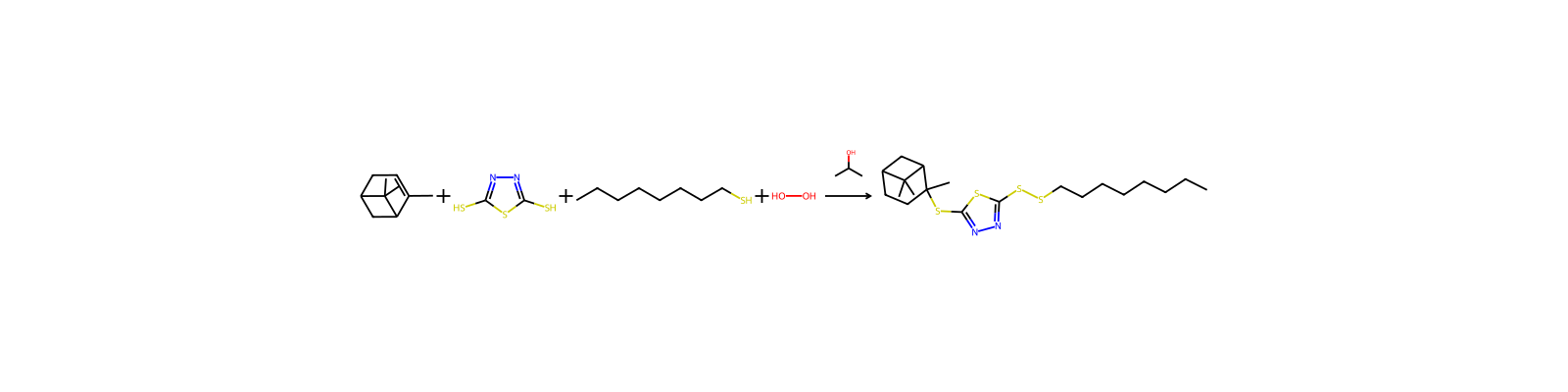
HRID 8422As reactant

111-88-6CCCCCCCCSKZCOBXFFBQJQHH-UHFFFAOYSA-N1-octanethiol appears as a clear colorless liquid. Flash point 115 °F. Insoluble in water and less dense than water. Used to make other chemicals.
111-88-6、94805-33-1DTXSID4026894CHEMBL3182056CHEBI:188351Other Classes -> Thiols
Flammable agents - 2nd degree
0.84 (NIOSH, 2024) - Less dense than water; will float
0.8433 at 20 °C/4 °C
Relative density (water = 1): 0.84
0.8433 @ 20°C
0.84
Insoluble (NIOSH, 2024)
Soluble in ethanol; slightly soluble in carbon tetrachloride
Insoluble in water
Solubility in water: none
Insoluble
Safety information is for reference only and does not replace the supplier’s Safety Data Sheet (SDS), applicable regulations, or professional assessment.
This chemical does not meet GHS hazard criteria for 5.9% (17 of 286) of reports.
Warning
H315 (14%): Causes skin irritation [Warning Skin corrosion/irritation]
P261, P264, P264+P265, P271, P272, P273, P280, P302+P352, P304+P340, P305+P351+P338, P319, P321, P332+P317, P333+P317, P337+P317, P362+P364, P391, P403+P233, P405, and P501 (click each P-code to see the statement)
Aggregated GHS information provided per 286 reports by companies from 11 notifications to the ECHA C&L Inventory. Each notification may be associated with multiple companies.
Warning
Chemical: 1-Octanethiol
1-Octanethiol is listed on the EPA's Chemical Data Reporting (CDR) system. Manufacturers and importers of 1-Octanethiol are required to report information about their production and use of this chemical to the EPA under the Toxic Substances Control Act (TSCA). (40 eCFR Part 711)
REACH registered substance: Octane-1-thiol (EC: 203-918-1)
1-Octanethiol: Does not have an individual approval but may be used under an appropriate group standard
The New Jersey Worker and Community Right to Know Act requires public and private employers to provide information about hazardous substances at their workplaces. (N.J.S.A. 34:5A-1 et. seq.)
Excerpt from ERG Guide 131 [Flammable Liquids - Toxic]:
Combustible. Gives off irritating or toxic fumes (or gases) in a fire. Above 69 °C explosive vapour/air mixtures may be formed.
Simple aliphatic and aromatic thiols undergo S-methylation in mammals to produce the corresponding methyl thioether or sulfide. Methylation is catalysed by thiopurine methyltransferase in the cytoplasm and thiol methyltransferase in microsomes, and both reactions require S-adenosyl-l-methionine as a methyl group donor. Thiopurine methyltransferase is present in human liver, kidney, and erythrocytes; preferential substrates for this enzyme include aromatic and heterocyclic thiols. S-Methylation of aliphatic thiols is catalysed by microsomal thiol methyltransferase, and the resulting methyl thioether (sulfide) metabolite would undergo S-oxidation to give the methyl sulfoxide and methyl sulfone analogues as urinary products. Thiols may react with glutathione and other endogenous thiol substances to form mixed disulfides. Both microsomal and cytoplasmic thioltransferasess have been reported to catalyse the formation of mixed disulfides. The resulting mixed disulfides can undergo reduction back to thiols, oxidative desulfuration, or oxidation to a sulfonic acid via the intermediate thiosulfinate and sulfinic acids. The principal form in the circulation would probably be a mixed disulfide formed with albumin. /Simple thiols/
Used in organic synthesis and polymerization; [Hawley]]
Polymerization conditioner; in synthesis
2023: 1,000,000 - <8,500,000 lb
1-Octanethiol is listed as a High Production Volume (HPV) chemical (65FR81686). Chemicals listed as HPV were produced in or imported into the U.S. in >1 million pounds in 1990 and/or 1994. The HPV list is based on the 1990 Inventory Update Rule. (IUR) (40 CFR part 710 subpart B; 51FR21438).




115 °F (NIOSH, 2024)
69 °C
156 °F (69 °C) (Open cup)
69 °C o.c.
(oc) 115 °F
390 °F at 760 mmHg (NIOSH, 2024)
199.1 °C at 760 mm Hg
199 °C
198.1 °C @760 [mm Hg]
390 °F
-57 °F (NIOSH, 2024)
-49.2 °C
Liquid molar volume = 0.174195 cu m/kmol; IG Heat of Formation = -1.7010X10+8 J/kmol; Heat Fusion at Melting Point = 2.4000X10+7 J/kmol
-49 °C
-57 °F
May irritate or burn skin and eyes; Vapors may cause dizziness or suffocation. [CAMEO] An eye irritant; Absorption of large amounts by ingestion or inhalation could produce CNS depression and convulsions. Workers avoid because of obnoxious smell. [CHEMINFO] See THIOLS;
Decomposes on burning. This produces toxic gases including hydrogen sulfide and sulfur oxides. Reacts violently with oxidants. This generates fire hazard. Reacts with strong acids, strong bases and strong reducing agents. Attacks metals and rubber.
Excerpt from ERG Guide 131 [Flammable Liquids - Toxic]:
Use powder, carbon dioxide, foam.
Fresh air, rest. Refer for medical attention.
Rinse and then wash skin with water and soap.
First rinse with plenty of water for several minutes (remove contact lenses if easily possible), then refer for medical attention.
Rinse mouth. Refer for medical attention .
Excerpt from NIOSH Pocket Guide for 1-Octanethiol:
(General first aid procedures)
Collect leaking and spilled liquid in sealable containers as far as possible. Absorb remaining liquid in sand or inert absorbent and remove to safe place. (Extra personal protection: filter respirator for organic gases and vapours.) Do NOT let this chemical enter the environment.
SRP: The most favorable course of action is to use an alternative chemical product with less inherent propensity for occupational exposure or environmental contamination. Recycle any unused portion of the material for its approved use or return it to the manufacturer or supplier. Ultimate disposal of the chemical must consider: the material's impact on air quality; potential migration in soil or water; effects on animal, aquatic, and plant life; and conformance with environmental and public health regulations.
Personal protection: filter respirator for organic gases and vapours adapted to the airborne concentration of the substance. Collect leaking and spilled liquid in sealable containers as far as possible. Absorb remaining liquid in sand or inert absorbent. Then store and dispose of according to local regulations. Do NOT let this chemical enter the environment.
SRP: The scientific literature for the use of contact lenses in industry is conflicting. The benefit or detrimental effects of wearing contact lenses depend not only upon the substance, but also on factors including the form of the substance, characteristics and duration of the exposure, the uses of other eye protection equipment, and the hygiene of the lenses. However, there may be individual substances whose irritating or corrosive properties are such that the wearing of contact lenses would be harmful to the eye. In those specific cases, contact lenses should not be worn. In any event, the usual eye protection equipment should be worn even when contact lenses are in place.
The worker should immediately wash the skin when it becomes contaminated.
Work clothing that becomes wet or significantly contaminated should be removed and replaced.
/Upon contact with eyes/, first rinse with plenty of water for several minutes (remove contact lenses if easily possible), then take to a doctor.
TERRESTRIAL FATE: Based on a classification scheme(1), an estimated Koc value of 930(SRC), determined from a structure estimation method(2), indicates that 1-octanethiol is expected to have low mobility in soil(SRC). Volatilization of 1-octanethiol from moist soil surfaces is expected to be an important fate process(SRC) given an estimated Henry's Law constant of 2.3X10⁻² atm-cu m/mole(SRC), using a fragment constant estimation method(3). 1-Octanethiol is not expected to volatilize from dry soil surfaces(SRC) based upon an estimated vapor pressure of 0.42 mm Hg(SRC), determined from a fragment constant method(4). Insufficient data are available to determine biodegradability of 1-octanethiol(SRC) but its linear alkyl chemical structure would suggest that biodegradation may be an important environmental fate process in soil(5).
AQUATIC FATE: Based on a classification scheme(1), an estimated Koc value of 930(SRC), determined from a structure estimation method(2), indicates that 1-octanethiol is expected to adsorb to suspended solids and sediment(SRC). Volatilization from water surfaces is expected(3) based upon an estimated Henry's Law constant of 2.3X10⁻² atm-cu m/mole(SRC), developed using a fragment constant estimation method(4). Using this Henry's Law constant and an estimation method(3), volatilization half-lives for a model river and model lake are 3.6 hours and 5 days, respectively(SRC). According to a classification scheme(5), an estimated BCF of 35(SRC), from an estimated log Kow of 4.2(6) and a regression-derived equation(7), suggests the potential for bioconcentration in aquatic organisms is moderate(SRC). Insufficient data are available to determine biodegradability of 1-octanethiol(SRC) but its linear alkyl chemical structure would suggest that biodegradation may be an important environmental fate process in water(8).
ATMOSPHERIC FATE: According to a model of gas/particle partitioning of semivolatile organic compounds in the atmosphere(1), 1-octanethiol, which has an extrapolated vapor pressure of 0.42 mm Hg at 25 °C(2), is expected to exist solely as a vapor in the ambient atmosphere. Vapor-phase 1-octanethiol is degraded in the atmosphere by reaction with photochemically-produced hydroxyl radicals(SRC); the half-life for this reaction in air is estimated to be 8 hours(SRC), calculated from its rate constant of 5.0X10⁻¹¹ cu cm/molecule-sec at 25 °C(SRC) that was derived using a structure estimation method(3). 1-Octanethiol does not contain chromophores that absorb at wavelengths >290 nm and therefore is not expected to be susceptible to direct photolysis by sunlight(SRC).
The substance can be absorbed into the body by inhalation and by ingestion.
inhalation, ingestion, skin and/or eye contact
Cough. Sore throat. Headache. Nausea. Vomiting. Dizziness.
Redness.
Redness.
Headache. Nausea. Vomiting. Dizziness.
irritation eyes, skin, nose, throat; lassitude (weakness, exhaustion), cyanosis, increased respiration, nausea, drowsiness, headache, vomiting
Using a structure estimation method based on molecular connectivity indices(1), the Koc of 1-octanethiol can be estimated to be 930(SRC). According to a classification scheme(2), this estimated Koc value suggests that 1-octanethiol is expected to have low mobility in soil.
/SIGNS AND SYMPTOMS/ Inhalation /may cause/, cough, sore throat, headache, nausea, vomiting, and dizziness.
/SIGNS AND SYMPTOMS/ /1-Octanethiol/ is mildly irritating to the eyes, the skin and the respiratory tract. The substance may cause effects on the central nervous system. Exposure at high levels may result in lowering of consciousness.
/SPECIAL STUDIES/ The oral and inhalation toxicity of n-octylmercaptan ... is similar to that of butane- and hexanethiol.
Insufficient data are available to determine biodegradability of 1-octanethiol(SRC) but its linear alkyl chemical structure would suggest that biodegradation is important in water(1). 1-Octanethiol, present at 500 mg/L, was not aerobically biodegraded by a pure culture of Alcaligenes faecalis over a period of 115-195 hours(2).
Rubber Product Manufacturing
1-Octanethiol: ACTIVE
Thiols can be prepared by a variety of methods. The most-utilized of these synthetic methods for tertiary and secondary thiols is acid-catalyzed synthesis; for normal and secondary thiols, the most-utilized methods are free-radical-initiated, alcohol substitution, or halide substitution; for mercaptoalcohols, the most-utilized method is oxirane addition; and for mercaptoacids and mercaptonitriles, the most-utilized methods are Michael-type additions. /Thiols/
Uses1-Octanethiol can be used to improve charge injection by creating a monolayer of this material on gold source-drain electrode surfaces for bottom-contact thin-film transistors (TFTs).
UsesOT can be used as a sulfur precursor for the preparation of shell for CdSe/CdS quantum dots. It forms ligands that help in enhancing the power efficiency of hetero-junction nanorod sensitized solar cells as it enhances the electron extraction from the nanorod and TiO2 interface. OT based stabilized coating on copper nanoparticles (CuNPs) may be used in the dispersion of these colloidal particles in different sample solutions. It can be used to improve charge injection by creating a monolayer on gold source-drain electrode surfaces for bottom-contact thin-film transistors (TFTs).
General DescriptionA clear colorless liquid. Flash point 115°F. Insoluble in water and less dense than water. Used to make other chemicals.
DefinitionChEBI: Octane-1-thiol is an alkanethiol that is octane substituted by a thiol group at position 1.