

Basic information
- Standard SMILES
C=C(C#N)C(=O)OCC- InChIKey
FGBJXOREULPLGL-UHFFFAOYSA-N- Molecular formula
- C6H7NO2
- Average molar mass
- 125.13 g/mol
- Monoisotopic mass
- 125.04767847
Names & identifiers
- Preferred name
- Ethyl cyanoacrylate
- IUPAC
- ethyl 2-cyanoprop-2-enoate
- English name
- cyacrin
- Molecular formula
- C6H7NO2
- Molecular weight
- 125.13
Names & synonyms
Ethyl 2-cyanoacrylate7085-85-0Ethyl cyanoacrylateethyl 2-cyanoprop-2-enoate2-Propenoic acid, 2-cyano-, ethyl esterDTXSID10252792G95FOH7SFDTXCID605279ethyl-2-cyanoacrylateKrazy glueSuper Glueethyl alpha-cyanoacrylate
Show more names
cyacrin
RefChem:1388992-Cyanoacrylic acid, ethyl ester2-Cyano-2-propenoic acid, ethyl ester2-Propenoic acid, 2-cyano, ethyl ester230-391-52-Cyanoacrylic Acid Ethyl EsterMFCD000456152-Propenoic acid,2-cyano-, ethyl ester
Database identifiers
- CAS
25067-30-5、7085-85-0- PubChem CID
- 81530
- DTXSID
DTXSID1025279- ChEMBL
CHEMBL1564920- UNII
- 2G95FOH7SF
- EC Number
- 230-391-5
- Nikkaji
- J3.726E
Properties
Computed structural properties
- XLogP
- 1
- Topological polar surface area
- 50.1 Ų
- Hydrogen bond donors
- 0
- Hydrogen bond acceptors
- 3
- Rotatable bonds
- 3
- Heavy atoms
- 9
- Formal charge
- 0
- Complexity
- 175
Experimental & physicochemical properties
OdorStrong , acrid odor
Density1.040 at 20 °C
Color/FormClear, colorless, liquid
SolubilitySoluble in methyl ethyl ketone, toluene, acetone, DMF /N,N-dimethylformamide/, nitromethane
Flash Point
82.78 °C (closed cup)
75 °C c.c.
Boiling Point
55 °C at 3 mm Hg
BP: 54-56 °C (0.21-0.40 kPa)
54-56 °C
54-56 °C
Decomposition
When heated to decomposition it emits vapors of /Nitrogen oxides/.
Decomposition: degradation products include formaldehyde; thermal decomposition products may include highly toxic fumes of hydrogen cyanide and toxic oxides of carbon and nitrogen
Melting Point-20 to -25 °C
Odor ThresholdOdor Threshold Low: 0.31 [ppm]
Polymerization
Polymer: Poly(ethyl 2-cyanoacrylate); PECA
Polymerizes rapidly in various media including water
Vapor Pressure
VP: <0.27 kPa at 25 °C
0.31 mm Hg at 20 °C
<2 mmHg at 25 °C
Surface Tension34.32 dynes/cm
Physicochemical properties
- EPA Substance Registry System
- 2 · 2-Propenoic acid, 2-cyano-, ethyl ester, homopolymer (25067-30-5)
- TSCA
- TSCA listed
Safety & regulation
GHS classification
GHS Classification
Warning
H315: Causes skin irritation [Warning Skin corrosion/irritation];H319: Causes serious eye irritation [Warning Serious eye damage/eye irritation];H335: May cause respiratory irritation [Warning Specific target organ toxicity, single exposure; Respiratory tract irritation]
P261, P264, P264+P265, P271, P280, P302+P352, P304+P340, P305+P351+P338, P319, P321, P332+P317, P337+P317, P362+P364, P403+P233, P405, and P501 (click each P-code to see the statement)
Warning
Hazard information
Regulatory Information
Chemical: 2-Propenoic acid, 2-cyano-, ethyl ester
2-Propenoic acid, 2-cyano-, ethyl ester is listed on the EPA's Chemical Data Reporting (CDR) system. Manufacturers and importers of 2-Propenoic acid, 2-cyano-, ethyl ester are required to report information about their production and use of this chemical to the EPA under the Toxic Substances Control Act (TSCA). (40 eCFR Part 711)
Status: Active Update: 24-03-2023 https://echa.europa.eu/registration-dossier/-/registered-dossier/14976
Ethyl cyanoacrylate: Does not have an individual approval but may be used under an appropriate group standard
The New Jersey Worker and Community Right to Know Act requires public and private employers to provide information about hazardous substances at their workplaces. (N.J.S.A. 34:5A-1 et. seq.)
Fire HazardsCombustible. Above 75 °C explosive vapour/air mixtures may be formed.
Hazards SummaryCyanoacrylates are rare sensitizers of the skin. [Marks, p. 179] Five patients had asthma provoked by cyanoacrylates; [Reference #1] DSEN and RSEN notations recommended; [ACGIH]
EC ClassificationSymbol: Xi; R: 36/37/38; S: (2)-23-24/25-26
Special Reports
WHO; Concise International Chemical Assessment Document 36, Methyl Cyanoacrylate and Ethyl Cyanoacrylate (2001). CICADs are concise documents that provide summaries of the relevant scientific information concerning the potential effects of chemicals upon human health and/or the environment. The primary objective of CICADs is characterization of hazard and dose-response from exposure to a chemical.[Available from, as of February 15, 2011: http://www.inchem.org/documents/cicads/cicads/cicad36.htm]
TSCA Requirements
Section 8(a) of TSCA requires manufacturers of this chemical substance to report preliminary assessment information concerned with production, exposure, and use to EPA as cited in the preamble in 51 FR 41329. Effective date 1/26/94; Reporting date: 3/28/94.
Pursuant to section 8(d) of TSCA, EPA promulgated a model Health and Safety Data Reporting Rule. The section 8(d) model rule requires manufacturers, importers, and processors of listed chemical substances and mixtures to submit to EPA copies and lists of unpublished health and safety studies. 2-Propenoic acid, 2-cyano-, ethyl ester is included on this list. Effective date: 1/26/94; Sunset date: 12/19/95.
Chemical DangersThe substance rapidly polymerizes. Decomposes on heating and on burning. This produces toxic and irritating fumes and gases including nitrogen oxides and cyanides.
Toxic Combustion ProductsHazardous decomposition products formed under fire conditions. - Carbon oxides, nitrogen oxides (NOx).
Hazard Classes and Categories
Skin Irrit. 2 (100%);Eye Irrit. 2 (100%);STOT SE 3 (99.7%)
Eye irritation - category 2;Specific target organ toxicity (single exposure) - category 3;Skin irritation - category 2
Flammable liquids - Category 4;Serious eye damage/eye irritation - Category 2B;Skin sensitization - Category 1;Specific target organ toxicity - Single exposure - Category 3 (Respiratory tract irritation)
Flammable liquids - Category 4;Skin corrosion/irritation - Category 2;Serious eye damage/eye irritation - Category 2B;Skin sensitization - Category 1;Specific target organ toxicity - Single exposure - Category 3 (Respiratory tract irritation)
Flammable liquids - Category 4;Serious eye damage/eye irritation - Category 2;Specific target organ toxicity - Single exposure - Category 3 (Respiratory tract irritation)
Flammable agents - 2nd degree, Reactive agents - 2nd degree
Safety & protection
Fire FightingIn case of fire in the surroundings, use appropriate extinguishing media. In case of fire: keep drums, etc., cool by spraying with water.
First Aid Measures
Fresh air, rest. Refer for medical attention.
Refer for medical attention .
First rinse with plenty of water for several minutes (remove contact lenses if easily possible), then refer for medical attention.
Refer for medical attention .
Safe StorageCool.
Fire Fighting ProceduresSuitable extinguishing media: Use water spray, alcohol-resistant foam, dry chemical or carbon dioxide. Special protective equipment for fire-fighters: Wear self contained breathing apparatus for fire fighting if necessary.
Storage ConditionsKeep container tightly closed in a dry and well-ventilated place. Recommended storage temperature: 2 - 8 °C Product is sensitive to light and moisture.
Cleanup Methods
Personal precautions: Use personal protective equipment. Avoid breathing vapors, mist or gas. Ensure adequate ventilation. Environmental precautions: Do not let product enter drains. Methods and materials for containment and cleaning up: Soak up with inert absorbent material and dispose of as hazardous waste. Keep in suitable, closed containers for disposal.
Disposal Methods
SRP: The most favorable course of action is to use an alternative chemical product with less inherent propensity for occupational harm/injury/toxicity or environmental contamination. Recycle any unused portion of the material for its approved use or return it to the manufacturer or supplier. Ultimate disposal of the chemical must consider: the material's impact on air quality; potential migration in soil or water; effects on animal and plant life; and conformance with environmental and public health regulations.
Spillage DisposalVentilation. Collect leaking and spilled liquid in sealable containers as far as possible. Absorb remaining liquid in sand or inert absorbent. Then store and dispose of according to local regulations.
Preventive Measures
Handle in accordance with good industrial hygiene and safety practice. Wash hands before breaks and at the end of workday.
Avoid contact with skin and eyes. Avoid inhalation of vapor or mist. Keep away from sources of ignition - No smoking. Take measures to prevent the build up of electrostatic charge.
Eye PreventionWear safety goggles.
Fire PreventionNO open flames. Above 75 °C use a closed system, ventilation and explosion-proof electrical equipment.
Inhalation RiskNo indication can be given about the rate at which a harmful concentration of this substance in the air is reached on evaporation at 20 °C.
Toxicology
Treatment
Antidotes to cyanide poisoning include hydroxocobalamin and sodium nitrite, which release the cyanide from the cytochrome system, and rhodanase, which is an enzyme occurring naturally in mammals that combines serum cyanide with thiosulfate, producing comparatively harmless thiocyanate. Oxygen therapy can also be administered. (L97)
Health Effects
Exposure to high levels of cyanide for a short time harms the brain and heart and can even cause coma, seizures, apnea, cardiac arrest and death. Chronic inhalation of cyanide causes breathing difficulties, chest pain, vomiting, blood changes, headaches, and enlargement of the thyroid gland. Skin contact with cyanide salts can irritate and produce sores. (L96, L97)
Environmental Fate
TERRESTRIAL FATE: Based on a classification scheme(1), an estimated Koc value of 6.8(SRC), determined from a structure estimation method(2), indicates that ethyl cyanoacrylate is expected to have very high mobility in soil(SRC). However, movement of ethyl cyanoacrylate through soil will be hindered by its rapid polymerization as it comes into contact with moisture or other weakly basic substances(3,4). Since ethyl cyanoacrylate polymerizes rapidly on contact with moisture, volatilization from moist soil surfaces is not a relevant environmental process for this substance. Ethyl cyanoacrylate is not expected to volatilize from dry soil surfaces(SRC) based upon a vapor pressure of 0.31 mm Hg at 20 °C(3).
AQUATIC FATE: Based on a classification scheme(1), an estimated Koc value of 6.8(SRC), determined from a structure estimation method(2), indicates that ethyl cyanoacrylate is not expected to adsorb to suspended solids and sediment(SRC). However, the 2-cyanoacrylate esters polymerize rapidly on contact with moisture or other weakly basic substances(3,4). Therefore, environmental processes such as biodegradation, volatilization from water surfaces and bioconcentration in aquatic organisms are not relevant for this substance(SRC).
ATMOSPHERIC FATE: According to a model of gas/particle partitioning of semivolatile organic compounds in the atmosphere(1), ethyl cyanoacrylate, which has a vapor pressure of 0.31 mm Hg at 20 °C(2), is expected to exist solely as a vapor in the ambient atmosphere. Vapor-phase ethyl cyanoacrylate is degraded in the atmosphere by reaction with photochemically-produced hydroxyl radicals(SRC); the half-life for this reaction in air is estimated to be 3.5 days(SRC), calculated from its rate constant of 4.5X10⁻¹² cu cm/molecule-sec at 25 °C(SRC) that was derived using a structure estimation method(3). Ethyl cyanoacrylate contains chromophores that absorb strongly at wavelengths >290 nm, and therefore may be susceptible to direct photolysis by sunlight(4).
Adverse EffectsSkin Sensitizer - An agent that can induce an allergic reaction in the skin.;Asthma - Reversible bronchoconstriction (narrowing of bronchioles) initiated by the inhalation of irritating or allergenic agents.
Exposure Routes
The substance can be absorbed into the body by inhalation of its vapour.
Oral (L96) ; inhalation (L96) ; dermal (L96)
Toxicity Summary
Organic nitriles decompose into cyanide ions both in vivo and in vitro. Consequently the primary mechanism of toxicity for organic nitriles is their production of toxic cyanide ions or hydrogen cyanide. Cyanide is an inhibitor of cytochrome c oxidase in the fourth complex of the electron transport chain (found in the membrane of the mitochondria of eukaryotic cells). It complexes with the ferric iron atom in this enzyme. The binding of cyanide to this cytochrome prevents transport of electrons from cytochrome c oxidase to oxygen. As a result, the electron transport chain is disrupted and the cell can no longer aerobically produce ATP for energy. Tissues that mainly depend on aerobic respiration, such as the central nervous system and the heart, are particularly affected. Cyanide is also known produce some of its toxic effects by binding to catalase, glutathione peroxidase, methemoglobin, hydroxocobalamin, phosphatase, tyrosinase, ascorbic acid oxidase, xanthine oxidase, succinic dehydrogenase, and Cu/Zn superoxide dismutase. Cyanide binds to the ferric ion of methemoglobin to form inactive cyanmethemoglobin. (L97)
Signs and Symptoms
Redness. Pain.
Redness. Pain.
Cyanide poisoning is identified by rapid, deep breathing and shortness of breath, general weakness, giddiness, headaches, vertigo, confusion, convulsions/seizures and eventually loss of consciousness. (L96, L97)
Soil Adsorption/Mobility
Using a structure estimation method based on molecular connectivity indices(1), the Koc of ethyl cyanoacrylate can be estimated to be 6.8(SRC). According to a classification scheme(2), this estimated Koc value suggests that ethyl cyanoacrylate is expected to have very high mobility in soil. However, movement of ethyl cyanoacrylate through soil will be hindered by its rapid polymerization as it comes into contact with moisture or other weakly basic substances(3,4).
Human Toxicity Excerpts
/HUMAN EXPOSURE STUDIES/ 27 patients (26 women and 1 man), all in contact with artificial nails, were tested for acrylic compounds, known to be present in nail cosmetics. The patch test results obtained in these patients demonstrated that 2-hydroxyethyl methacrylate and ethyl cyanoacrylate were the only 2 allergens needed to diagnose contact allergy to acrylic-containing nail cosmetics, except for 1 patient who reacted only to her nail preparation...
/CASE REPORTS/ ... A young hairdresser ... developed an occupational allergic contact dermatitis to 2 "instant glues" used to attach false hair. The eczematous eruption involved the fingers and face slightly but mainly the eyelids. Patch test reactions were strongly positive to ethyl cyanoacrylate adhesives.
/CASE REPORTS/ An apprentice cobbler with an occupational allergic contact dermatitis from an ethyl cyanoacrylate glue, in which the major monomer was shown to be the sensitizer, is reported. Initial patch testing with the cyanoacrylate glue dissolved in acetone with the Finn Chamber (aluminium) technique yielded false-negative reactions. Positive test reactions were obtained with the same preparations using Van der Bend chambers. With petrolatum as vehicle for the glue, there was no difference between Finn Chamber technique and Van der Bend chamber technique. The role of aluminium in the false-negative reactions is discussed.
/CASE REPORTS/ ... An individual ... showed a skin reaction associated with occupational exposure to an ethyl cyanoacrylate (ECA)-based adhesive (90% ECA), initially on the backs of hands but later progressing to all of the hands, lower arms, and abdomen. The only positive skin reaction in a patch testing series was to ECA. Negative reactions were reported for a group of 20 control subjects patch-tested with 100% adhesive.
For more Human Toxicity Excerpts (Complete) data for Ethyl cyanoacrylate (29 total), please visit the HSDB record page.
Artificial Pollution SourcesEthyl cyanoacrylate's production and use as an adhesive(1,2) may result in its release to the environment through various waste streams(SRC).
Environmental BiodegradationEthyl cyanoacrylate polymerizes rapidly on contact with moisture(1,2). Therefore, biodegradation is not a relevant environmental fate process for this substance(SRC).
Carcinogen ClassificationNo indication of carcinogenicity to humans (not listed by IARC).
Regulatory information
Regulatory Information
Chemical: 2-Propenoic acid, 2-cyano-, ethyl ester
2-Propenoic acid, 2-cyano-, ethyl ester is listed on the EPA's Chemical Data Reporting (CDR) system. Manufacturers and importers of 2-Propenoic acid, 2-cyano-, ethyl ester are required to report information about their production and use of this chemical to the EPA under the Toxic Substances Control Act (TSCA). (40 eCFR Part 711)
Status: Active Update: 24-03-2023 https://echa.europa.eu/registration-dossier/-/registered-dossier/14976
Ethyl cyanoacrylate: Does not have an individual approval but may be used under an appropriate group standard
The New Jersey Worker and Community Right to Know Act requires public and private employers to provide information about hazardous substances at their workplaces. (N.J.S.A. 34:5A-1 et. seq.)
TSCA Requirements
Section 8(a) of TSCA requires manufacturers of this chemical substance to report preliminary assessment information concerned with production, exposure, and use to EPA as cited in the preamble in 51 FR 41329. Effective date 1/26/94; Reporting date: 3/28/94.
Pursuant to section 8(d) of TSCA, EPA promulgated a model Health and Safety Data Reporting Rule. The section 8(d) model rule requires manufacturers, importers, and processors of listed chemical substances and mixtures to submit to EPA copies and lists of unpublished health and safety studies. 2-Propenoic acid, 2-cyano-, ethyl ester is included on this list. Effective date: 1/26/94; Sunset date: 12/19/95.
Safety data
- tsca
- TSCA listed
Chemistry & industry
Pharmacology
Metabolism/Metabolites
ECA is ... hydrolyzed to yield formaldehyde and alkyl cyanoacetate. ... The cyanoacetate may be further degraded to yield calcium malonate, and the cyano group converted to cyanide and excreted as thiocyanate.
Organic nitriles are converted into cyanide ions through the action of cytochrome P450 enzymes in the liver. Cyanide is rapidly absorbed and distributed throughout the body. Cyanide is mainly metabolized into thiocyanate by either rhodanese or 3-mercaptopyruvate sulfur transferase. Cyanide metabolites are excreted in the urine. (L96)
MeSH Pharmacological Classification
Agents acting to arrest the flow of blood. Absorbable hemostatics arrest bleeding either by the formation of an artificial clot or by providing a mechanical matrix that facilitates clotting when applied directly to the bleeding surface. These agents function more at the capillary level and are not effective at stemming arterial or venous bleeding under any significant intravascular pressure.
Uses & manufacturing
Uses
Used in glues in the electronic industry and wound sealants in medical practice; [Marks, p. 179]
Working with Glues and Adhesives [Category: Other]
Woodworking [Category: Hobbies]
ECA is used as an adhesive to bond a variety of materials, e.g., glass, metals, plastic, rubber, and biological tissue.
In adhesives, manufacture of plastics, electronics, scientific instruments, jewelry, sports equipment; in cable joining, manicuring, dentistry, mortuaries, fingerprint development. Polymer nanoparticles as pharmaceutic aid for controlled release drug delivery.
Ethyl cyanoacrylate is used as the main component of certain cyanoacrylate glues, such as the well known Super Glue and Krazy Glue. (L605)
U.S. Production
2023: 1,000,000 - <2,500,000 lb;2022: 10,000,000 - <50,000,000 lb;2021: 10,000,000 - <50,000,000 lb;2020: 10,000,000 - <50,000,000 lb
2-Propenoic acid, 2-cyano-, ethyl ester is listed as a High Production Volume (HPV) chemical (65FR81686). Chemicals listed as HPV were produced in or imported into the U.S. in >1 million pounds in 1990 and/or 1994. The HPV list is based on the 1990 Inventory Update Rule. (IUR) (40 CFR part 710 subpart B; 51FR21438).
Production volumes for non-confidential chemicals reported under the Inventory Update Rule. [Table#7745]
Production volume for non-confidential chemicals reported under the 2006 Inventory Update Rule. Chemical: 2-Propenoic acid, 2-cyano-, ethyl ester. Aggregated National Production Volume: 500,000 to < 1 million lbs.
Consumer UsesBinder;Adhesion/cohesion promoter
Industry UsesAdhesion/cohesion promoter;Monomers
Methods of Manufacturing
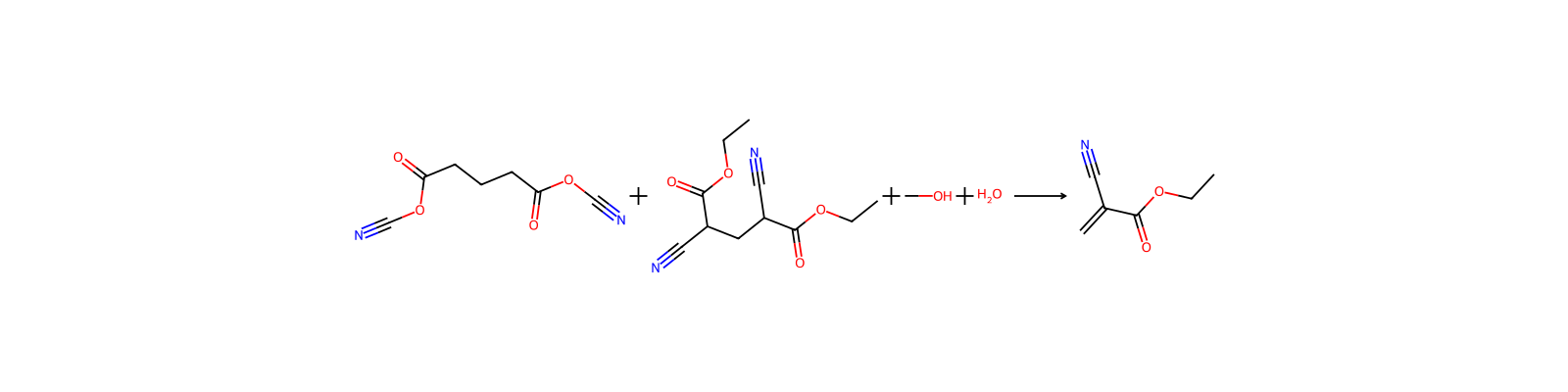
The important step in most of the published syntheses is the classical Knoevenagel reaction using formaldehyde and a cyanoacetic ester. In this first step oligomeric cyanoacrylates, water, and other byproducts are formed. The reaction can be catalyzed by bases (e.g., amines), alkali metal tetraborates, metal carbonyls, or phase-transfer catalysts. The raw condensation product from the first reaction is depolymerized thermally (either continuously or discontinuously) and purified by distillation, chromatography on alumina or silica gel, crystallization in polyethylene columns, or treatment with zinc chloride. Alternatively, 2-cyanoacrylates can be manufactured by the ethoxycarbonylation of cyanoacetylene in the presence of nickel carbonyl. /2-Cyanoacrylates/
Household ProductsInformation on 85 consumer products that contain Ethyl 2-cyanoacrylate in the following categories is provided:;• Auto Products;• Home Maintenance;• Inside the Home;• Personal Care
Use ClassificationCosmetics -> Film forming
General Manufacturing Information
Adhesive Manufacturing;Miscellaneous Manufacturing;Machinery Manufacturing;Computer and Electronic Product Manufacturing;Electrical Equipment, Appliance, and Component Manufacturing
2-Propenoic acid, 2-cyano-, ethyl ester: ACTIVE
Prepn: Ardis US Patent 2,467,927 (1949 to B.F. Goodrich); McKeever US Patent 2,912,454 (1959 to Rohm & Haas)
Main constituent of super glue
Applications
UsesIn adhesives; in manufacture of plastics, electronics, scientific instruments, jewelry, sports equip; in cable joining, manicuring, dentistry, mortuaries, fingerprint development. Polymer nanoparticles as pharmaceutic aid for controlled release drug delivery.
Suppliers50 total
湖北永阔科技有限公司027-59223108 15972152991 · [email protected]
Shandong chuangyingchemical Co., Ltd.18853181302 · [email protected]
湖北万得化工有限公司15377098680 15377098680 · [email protected]
武汉欣扬瑞和化学科技有限公司13720274133 · [email protected]
武汉欣扬瑞和化学科技有限公司153-07155313 15307155313 · [email protected]
河北创海生物科技有限公司+86-86-13131129325 · [email protected]
Dayang Chem (Hangzhou) Co.,Ltd.+86-0571-88938639 17705817739 · [email protected]
Syntechem Co.,Ltd[email protected]
上海迈瑞尔生化科技有限公司4006356688 18621169109 · [email protected]
安耐吉化学&3A(安徽泽升科技有限公司)021-58432009 400-005-6266 · [email protected]
安耐吉化学&3A(安徽泽升科技股份有限公司)400-0056266 · [email protected]
武汉卡诺斯科技有限公司027-83238443 15327105076 · [email protected]
上海瀚鸿科技股份有限公司021-54306202 13764082696 · [email protected]
郑州研德生物科技有限公司0371-63682289 15538176268 · [email protected]
湖北广奥生物科技有限公司027-02702759223056 18162699093 · [email protected]
武汉丰泰威远科技有限公司+86-27-8746-5837 +86-18627785180 · [email protected]
武汉赛沃尔化工有限公司027-85613400 18707177243 · [email protected]
武汉丰泰威远科技有限公司027-87465837 19945049750 · [email protected]
上海竺钥化工有限公司021-33559231 18964673308 · [email protected]
武汉吉业升化工有限公司027-13545242311 13545242311 · [email protected]
斯百全化学(上海)有限公司021-021-021-67601398-809-809-809 15221380277 · [email protected]
赛默飞世尔科技(中国)有限公司800-810-5118 · [email protected]
上海纳谦化学科技有限公司13598610367 0373-7129549 · [email protected]
成都麦卡希化工有限公司028-85632863 18108198598 · [email protected]
湖北隆信化工实业有限公司15271551270 · [email protected]
上海麦克林生化科技股份有限公司15221275939 15221275939 · [email protected]
杭州杰恒化工有限公司0571-87396432 · [email protected]
上海纳谦化学科技有限公司13598610367 13598610367 · [email protected]
上海嵩爰化工科技有限公司010-1234567 18521000990 · [email protected]
上海有朋化工有限公司021-69005955 13701776567 · [email protected]
北京海力扬化学科技有限公司13718199399 · [email protected]
北京欣赛维化学科技有限公司010-56218822 13717722232 · [email protected]
四川海诺威科技有限公司13708085536 13708085536 · [email protected]
上海凯赛化工有限公司021-33516722 13701817765 · [email protected]
上海彤源化工有限公司021-021-69182866 13701855675 · [email protected]
武汉弘德悦欣医药科技有限公司027-83855396 15271852016
凯试(上海)科技有限公司021-50135380 · [email protected]
北京华扬致成科技有限公司13716033033 · [email protected]
上海蓝润化学有限公司021-69515658 ; 69515628 13701998368 · [email protected]
上海容立化学科技有限公司021-69992220 13701886816 · [email protected]
上海康拓化工有限公司021-69185552 13701777608 · [email protected]
湖北巨胜科技有限公司027-59599241 18871490274 · [email protected]
池州凯隆进出口贸易有限公司[email protected]
Sigma-Aldrich西格玛奥德里奇(上海)贸易有限公司021-61415566 800-8193336 · [email protected]
TargetMol中国(陶术生物)021-021-33632979 15002134094 · [email protected]
上海昕凯医药科技有限公司21-619849051-1 18521059765 · [email protected]
杭州鼎燕化工有限公司0571-87157530-8003 18267553885 · [email protected]
上海珈得尔化学技术有限公司021-4007787-550 400-7787-550 · [email protected]
成都京欣科技有限公司028-85005297 13980656781 · [email protected]
上海源叶生物科技有限公司13636370518 · [email protected]
Related reactions
12 records


Linked notes
Loading…