
Basic information
- CAS
112-14-1- Standard SMILES
CCCCCCCCOC(C)=O- InChIKey
YLYBTZIQSIBWLI-UHFFFAOYSA-N- Molecular formula
- C10H20O2
- Average molar mass
- 172.26 g/mol
- Monoisotopic mass
- 172.14632988
Names & identifiers
- Preferred name
- Octyl Acetate
- IUPAC
- octyl acetate
- English name
- Acetic acid octyl ester
- Molecular formula
- C10H20O2
- Molecular weight
- 172.26
Names & synonyms
Octyl acetate112-14-1n-Octyl acetateAcetic acid, octyl esterCaprylyl acetateOctyl ethanoaten-Octanyl acetateOctyl alcohol acetateOctyl acetate, normalFEMA No. 2806DTXSID8044202X0FN2J413S
Show more names
FEMA 2806ACETATE C-8OCTANYL ACETATEAcO-8C-OHn Acetate
NSC-67348DTXCID6024202CHEBI:87495RefChem:167871203-939-6Acetic acid octyl ester1-Octyl acetate1-Octanol acetate
Database identifiers
- CAS
112-14-1- PubChem CID
- 8164
- DTXSID
DTXSID8044202- ChEMBL
CHEMBL2228456- ChEBI
CHEBI:87495- UNII
- X0FN2J413S
- EC Number
- 203-939-6
- Nikkaji
- J1.992E
Properties
Computed structural properties
- XLogP
- 3.4
- Topological polar surface area
- 26.3 Ų
- Hydrogen bond donors
- 0
- Hydrogen bond acceptors
- 2
- Rotatable bonds
- 8
- Heavy atoms
- 12
- Formal charge
- 0
- Complexity
- 110
Physicochemical properties
- Melting point
- -38.5 °C · -38.5°C
- Boiling point
- 211 °C · 211 °C(lit.)
- Density
- 0.868 · 0.868
- vapor density
- 5.9 · 5.9 (vs air)
- vapor pressure
- 29.1 Pa · 29.1Pa at 25℃
- FEMA
- 2806 · 2806 | OCTYL ACETATE
- refractive index
- 20 · n20/D 1.418(lit.)
- FLAVIS Number
- 9.007 · 09.007 | Octyl acetate
- Flash point
- 187 °F · 187 °F
- solubility
- Very slightly soluble in water, soluble in alcohol and oils.
- form
- Liquid
- Specific Gravity
- 0.87 · 0.87
- color
- Clear colorless
- Odor
- orange-jasmine odor
- explosive limit
- 8.14 % · 8.14%
- Odor Type
- floral
- biological source
- synthetic
- Viscosity
- 13.72 mm2/s · 13.72mm2/s
- Water Solubility
- 33.69 mg/L · 33.69mg/L at 25℃
- JECFA Number
- 130 · 130
- BRN
- 1754554 · 1754554
- Henry's Law Constant
- 8.6 · 8.6×10-3 mol/(m3Pa) at 25℃, Yaws (2003)
- Cosmetics Ingredients Functions
- PERFUMING
- InChI
- 1S/C10H20O2/c1-3-4-5-6-7-8-9-12-10(2)11/h3-9H2,1-2H3
- InChIKey
- YLYBTZIQSIBWLI-UHFFFAOYSA-N
- SMILES
- CCCCCCCCOC(C)=O
- LogP
- 3.81 · 3.81
- CAS DataBase Reference
- 112 · 112-14-1(CAS DataBase Reference)
- Substances Added to Food (formerly EAFUS)
- OCTYL ACETATE
- FDA UNII
- 0 FN2J413S · X0FN2J413S
- NIST Chemistry Reference
- Acetic acid, octyl ester(112-14-1)
- EPA Substance Registry System
- Acetic acid, octyl ester (112-14-1)
- UNSPSC Code
- 12352100 · 12352100
- NACRES
- 22 · NA.22
- Symbol(GHS)
- 7 · GHS07,GHS08,GHS09
- Signal word
- Danger
- Hazard statements
- 227 · H227-H303
- Precautionary statements
- 210 e-P280a-P370+P378a-P403+P235-P501a · P210e-P280a-P370+P378a-P403+P235-P501a
- Risk Statements
- 36 · 36/37/38
- Safety Statements
- 24 · 24/25
- WGK Germany
- 2 · 2
- RTECS
- 1400000 · AJ1400000
- Autoignition Temperature
- 515 °F · 515 °F
- TSCA
- TSCA listed
- HS Code
- 29153900 · 29153900
- Storage Class
- 10 · 10 - Combustible liquids
- Toxicity
- 50 orl-rat: · LD50 orl-rat: 3000 mg/kg AMIHBC 10,61,54
- REACH Registrations
- Inactive
Safety & regulation
Safety data
- wgk
- 2
- tsca
- TSCA listed
- rtecs
- AJ1400000
- hs_code
- 29153900
- Toxicity
- LD50 orl-rat: 3000 mg/kg AMIHBC 10,61,54
- risk_code
- 36/37/38
- Signal word
- Danger
- Symbol(GHS)
- GHS07,GHS08,GHS09
- safety_code
- 24/25
- Storage Class
- 10 - Combustible liquids
- Hazard statements
- H227-H303
- REACH Registrations
- Inactive
- Autoignition Temperature
- 515 °F
- Precautionary statements
- P210e-P280a-P370+P378a-P403+P235-P501a
Chemistry & industry
Applications
DescriptionOctyl acetate has a fruity odor reminiscent of neroli and jasmine with a fruity, slightly bitter taste suggestive of peach. May be synthesized by acetylation of the corresponding alcohol.
OccurrenceReported found in the essential oils of green tea, Heracleum giganteum L., orange peel, lemon peel, grapefruit peel, mandarin peel, Satsuma mandarin peel and pummelo peel. Also reported found in Ocimum basilicum varieties, wheaten bread, cheddar cheese, red wine, sparkling wine and nectarine.
UsesOctyl Acetate is a flavoring agent that is a colorless liquid with a fruity odor resembling orange and jasmine. It is miscible in alcohol, oils, and other organic solvents, and insoluble in water. It is obtained by chemical synthesis.
Uses1-Octyl Acetate is a component in essential oil extracts from Arnebia linearifolia which has been seen to promote antioxidant and antimicrobial activity. It is also a flavour ester contributing to products and foods requiring a fruity characteristic. Dyes and metabolites.
UsesOctyl acetate may be used as a reference standard for the determination of the analyte in wine samples and orange juice by chromatography based techniques.
General DescriptionOctyl acetate is one of the major constituents of the essential oils of Heracleum crenatifolium, oranges and grapefruit.
Preparation methods
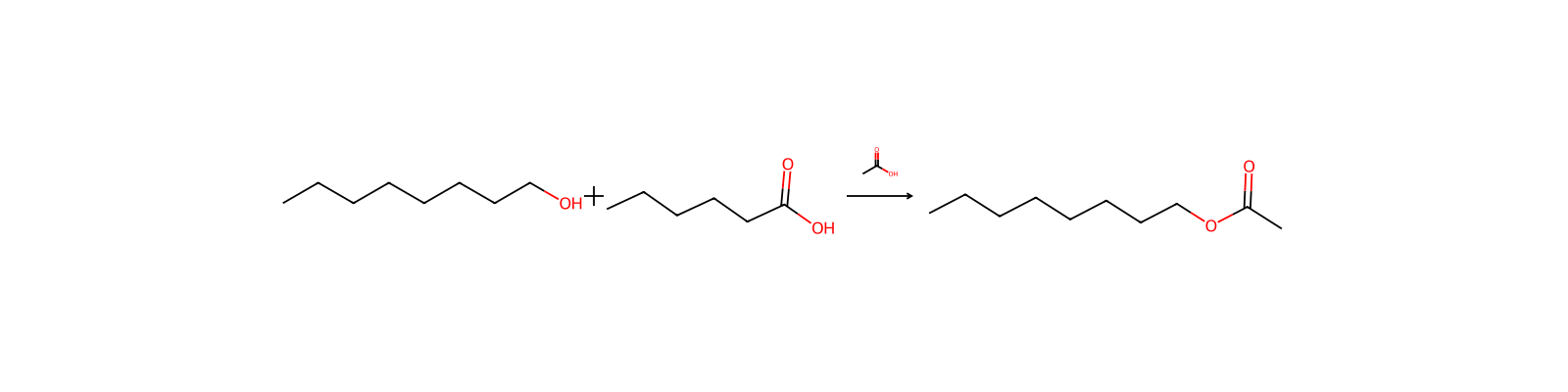
PreparationBy acetylation of the corresponding alcohol.
Upstream & downstream products
Upstream raw materials
Suppliers100 total
国药集团化学试剂有限公司86-21-63210123 · [email protected]
北京华美互利生物化工010-56205725 · [email protected]
梯希爱(上海)化成工业发展有限公司021-67121386 · [email protected]
上海阿拉丁生化科技股份有限公司400-6206333 13167063860 · [email protected]
合肥翰刚医药科技有限公司+8618062405514 · [email protected]
河北创海生物科技有限公司+86-86-13131129325 · [email protected]
爱斯特(成都)生物制药股份有限公司+86-28-85122536 85324413 · [email protected]
上海如吉生物科技发展有限公司+86-21-65211385-8001 36031160 · [email protected]
Dayang Chem (Hangzhou) Co.,Ltd.+86-0571-88938639 17705817739 · [email protected]
北京安司莫森技术有限公司010-82954736 13391601435 · [email protected]
科瑞迪化学400-821-5857 021-64326257 · [email protected]
Syntechem Co.,Ltd[email protected]
上海迈瑞尔生化科技有限公司4006356688 18621169109 · [email protected]
大连美仑生物技术有限公司0411-62910999 13889544652 · [email protected]
阿法埃莎(中国)化学有限公司400-6106006 · [email protected]
安耐吉化学&3A(安徽泽升科技股份有限公司)400-0056266 · [email protected]
上海诗丹德标准技术服务有限公司021-021-57127007-6622-6622 17621252073 · [email protected]
山东洛克化工有限公司17653113209 13065062079 · [email protected]
成都普思生物科技股份有限公司028-85370565-229 18080489829 · [email protected]
吉良化学21-62165282 · [email protected]
常州希辰曦生物科技有限公司13000000000 · [email protected]
上海隆盛化工有限公司58099637 13585536065 · [email protected]
山东西亚化学有限公司13355009207 13355009207 · [email protected]
玛雅试剂+86 (573) 82222445 (0)18006601000 452520369 · [email protected]
HONG KONG IPURE BIOLOGY CO.,LIMITED86 18062405514 18062405514 · [email protected]
四川库利南科技有限公司400-1166-196 18981987031 · [email protected]
天津希恩思生化科技有限公司400 638 7771 · [email protected]
斯百全化学(上海)有限公司021-021-021-67601398-809-809-809 15221380277 · [email protected]
艾科试剂4008-755-333 18080918076 · [email protected]
青岛保税区鲁联国际贸易有限公司0532-83893697 18561902820 · [email protected]
上海思域化工科技有限公司86-21-34053660 · [email protected]
赛默飞世尔科技(中国)有限公司800-810-5118 · [email protected]
江苏艾康生物医药研发有限公司025-66113011 13913916777 · [email protected]
TCI AMERICA800-4238616 · [email protected]
TOKYO CHEMICAL INDUSTRY CO., LTD.03-36680489 · [email protected]
TCI Europe320-37350700 · [email protected]
上海贤鼎生物科技有限公司4009209199 · [email protected]
越林试剂021-62960152 · [email protected]
上海倍卓生物科技有限公司021-61119791,13386096464 · [email protected]
上海将来实业股份有限公司400-0066400 13621662912 · [email protected]
上海将来实业股份有限公司021-61552785 · [email protected]
四川省维克奇生物科技有限公司028-81700200 18116577057 · [email protected]
成都零六生物科技有限公司400-1166-196 13458535857 · [email protected]
雷丁试剂0510-85629785 18013409632 · [email protected]
上海麦克林生化科技股份有限公司15221275939 15221275939 · [email protected]
上海永叶生物科技有限公司86-021-61559134 15921386130 · [email protected]
上海嵩爰化工科技有限公司010-1234567 18521000990 · [email protected]
Sigma-Aldrich西格玛奥德里奇(上海)贸易有限公司021-61415566 800-8193336 · [email protected]
桦特昇生物科技(武汉)有限公司027-59207879 1972026995 18140587686 · [email protected]
TargetMol中国(陶术生物)021-021-33632979 15002134094 · [email protected]
Additional notes
DefinitionChEBI: The acetate ester of octan-1-ol.
Related reactions
30 records


Compound notes
Loading…