Basic information
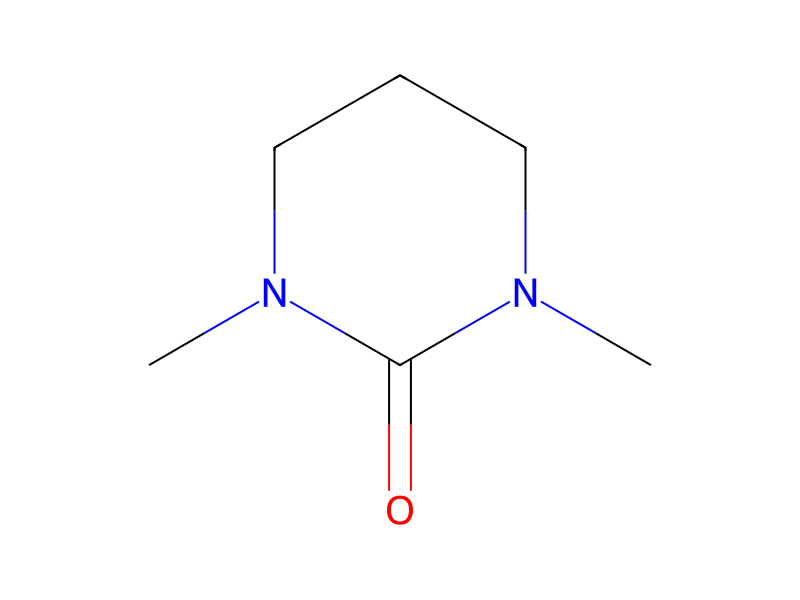
- Standard SMILES
CN1CCCN(C)C1=O- InChIKey
GUVUOGQBMYCBQP-UHFFFAOYSA-N- Molecular formula
- C6H12N2O
- Average molar mass
- 128.17 g/mol
- Monoisotopic mass
- 128.094963
Names & identifiers
- Preferred name
- 2(1H)-Pyrimidinone, tetrahydro-1,3-dimethyl-
- IUPAC
- 1,3-dimethyl-1,3-diazinan-2-one
- English name
- 1,3-Dimethyl-3,4,5,6-tetrahydro-2(1H)-pyrimidinone
- Molecular formula
- C6H12N2O
- Molecular weight
- 128.17
Names & synonyms
1,3-Dimethyl-3,4,5,6-tetrahydro-2(1H)-pyrimidinoneN,N'-Dimethyltrimethyleneurea2(1H)-Pyrimidinone, tetrahydro-1,3-dimethyl-CCRIS 4322EINECS 230-625-6Tetrahydro-1,3-dimethyl-1H-pyrimidin-2-oneBRN 0110562DTXSID3074575Tetrahydro-1,3-dimethyl-2(1H)pyrimidine1,3-Dimethyltetrahydro-2(1H)-pyrimidinoneEC 230-625-61,3-dimethyl-3,4,5,6-tetrahydro-2[1H]-pyrimidinone
Show more names
DMPU1,3-Dimethyltetrahydropyrimidin-2(1H)-oneN,N'-Dimethylpropyleneurea1,3-Dimethyl-1,3-diazinan-2-one1,3-dimethyl-perhydro-2-pyrimidinone1,3-DIMETHYLTETRAHYDRO-2-PYRIMIDINONE1,3-Dimethyl-2-oxohexahydropyrimidine1,3-Dimethyl-3,4,5,6-tetrahydro-2(1H)-pyrimidinone (DMPU)
RefChem:439802N,N'DimethyltrimethyleneureaDTXCID10472811,3Dimethyltetrahydropyrimidin2(1H)one2(1H)Pyrimidinone, tetrahydro1,3dimethyl1,3Dimethyl3,4,5,6tetrahydro2(1H)pyrimidinone230-625-67226-23-5
Database identifiers
- CAS
7226-23-5- PubChem CID
- 81646
- DTXSID
DTXSID3074575- ChEMBL
CHEMBL12284- EC Number
- 230-625-6
- Nikkaji
- J35.422H
Properties
Computed structural properties
- XLogP
- -0.1
- Topological polar surface area
- 23.6 Ų
- Hydrogen bond donors
- 0
- Hydrogen bond acceptors
- 1
- Rotatable bonds
- 0
- Heavy atoms
- 9
- Formal charge
- 0
- Complexity
- 112
Experimental & physicochemical properties
Chemical ClassesNitrogen Compounds -> Pyrimidines
SpringerMaterials PropertiesBoiling point
Physical DescriptionColorless odorless liquid; Hygroscopic; [Alfa Aesar MSDS]
Physicochemical properties
- Melting point
- -20 °C · -20 °C
- Boiling point
- 146 °C44 · 146 °C44 mm Hg(lit.)
- Density
- 1.06 g/mL · 1.06 g/mL at 25 °C(lit.)
- vapor pressure
- 0.5 hPa · 0.5 hPa (57 °C)
- refractive index
- 20 · n20/D 1.488(lit.)
- Flash point
- 121 °C · 121 °C
- storage temp.
- 30 °C · Store below +30°C.
- solubility
- Chloroform (Slightly), Ethyl Acetate (Slightly)
- form
- Liquid
- pka
- -0.65 · -0.65±0.20(Predicted)
- color
- Clear colorless to slightly yellow
- PH
- 11 · 11 (100g/l, H2O, 20℃)
- explosive limit
- 1.6 · 1.6-9.3%(V)
- Water Solubility
- soluble
- Sensitive
- Hygroscopic
- BRN
- 110562 · 110562
- Dielectric constant
- 36.12 · 36.119999999999997
- Stability
- Hygroscopic
- Major Application
- peptide synthesis
- InChI
- 1S/C6H12N2O/c1-7-4-3-5-8(2)6(7)9/h3-5H2,1-2H3
- InChIKey
- GUVUOGQBMYCBQP-UHFFFAOYSA-N
- SMILES
- CN1CCCN(C)C1=O
- LogP
- 0.05 at · 0.05 at 25℃
- CAS DataBase Reference
- 7226 · 7226-23-5(CAS DataBase Reference)
- EWG's Food Scores
- 1 · 1-2
- EPA Substance Registry System
- 2 · 2(1H)-Pyrimidinone, tetrahydro-1,3-dimethyl- (7226-23-5)
- UNSPSC Code
- 12352115 · 12352115
- NACRES
- 22 · NA.22
- Symbol(GHS)
- 5 · GHS05,GHS07,GHS08
- Signal word
- Danger
- Hazard statements
- 302 · H302-H318-H361f
- Precautionary statements
- 201 · P201-P280-P301+P312+P330-P305+P351+P338+P310-P308+P313
- PPE
- Eyeshields, Faceshields, Gloves, type ABEK (EN14387) respirator filter
- Hazard Codes
- Xn
- Risk Statements
- 22 · 22-36-43-62-41
- Safety Statements
- 23 · 23-26-36/37/39-45
- WGK Germany
- 2 · 2
- RTECS
- 7582500 · UW7582500
- F
- 3 · 3-10
- Autoignition Temperature
- 255 °C · 255 °C
- TSCA
- TSCA listed
- HS Code
- 29335995 · 29335995
- Storage Class
- 10 · 10 - Combustible liquids
- Hazard Classifications
- 4 OralEye · Acute Tox. 4 OralEye Dam. 1Repr. 2
- Toxicity
- 50 orally · LD50 orally in Rabbit: 1770 mg/kg
- REACH Registrations
- Active
Safety & regulation
GHS classification
GHS Classification
Danger
H302: Harmful if swallowed [Warning Acute toxicity, oral]
P203, P264, P264+P265, P270, P280, P301+P317, P305+P354+P338, P317, P318, P330, P405, and P501 (click each P-code to see the statement)
Danger
H302 (100%): Harmful if swallowed [Warning Acute toxicity, oral]
P203, P261, P264, P264+P265, P270, P272, P280, P301+P317, P302+P352, P305+P354+P338, P317, P318, P321, P330, P333+P317, P362+P364, P405, and P501 (click each P-code to see the statement)
Hazard information
Regulatory Information
Chemical: 2(1H)-Pyrimidinone, tetrahydro-1,3-dimethyl-
PMN - indicates a commenced PMN (Pre-Manufacture Notices) substance.
Status: Active Update: 04-05-2015 https://echa.europa.eu/registration-dossier/-/registered-dossier/11391
1,3-Dimethyltetrahydro-2(1H)-pyrimidinone: Does not have an individual approval but may be used under an appropriate group standard
Other Safety InformationIMAP assessments - 2(1H)-Pyrimidinone, tetrahydro-1,3-dimethyl-: Human health tier II assessment
Hazards Summary
May cause serious eye injury; Harmful by ingestion; Suspected of being toxic to fertility or the developing child; [ECHA REACH Registrations] Causes somnolence, ataxia, and respiratory stimulation in intraperitoneal lethal-dose studies of mice (LD50 = 1,300 mg/kg); [RTECS] A mild skin and severe eye irritant that may cause serious eye injury; Harmful by ingestion; Possible reproductive toxicant; [Alfa Aesar MSDS]
Hazard Classes and Categories
Acute Tox. 4 (100%)
Acute toxicity - category 4
Repr. 2
Safety data
- F
- 3-10
- PPE
- Eyeshields, Faceshields, Gloves, type ABEK (EN14387) respirator filter
- wgk
- 2
- tsca
- TSCA listed
- rtecs
- UW7582500
- hs_code
- 29335995
- Toxicity
- LD50 orally in Rabbit: 1770 mg/kg
- risk_code
- 22-36-43-62-41
- Signal word
- Danger
- Symbol(GHS)
- GHS05,GHS07,GHS08
- hazard_code
- Xn
- safety_code
- 23-26-36/37/39-45
- Storage Class
- 10 - Combustible liquids
- Hazard statements
- H302-H318-H361f
- REACH Registrations
- Active
- Hazard Classifications
- Acute Tox. 4 OralEye Dam. 1Repr. 2
- Autoignition Temperature
- 255 °C
- Precautionary statements
- P201-P280-P301+P312+P330-P305+P351+P338+P310-P308+P313
Chemistry & industry
Uses & manufacturing
UsesUsed in manufacturing and as a laboratory reagent; [ECHA REACH Registrations]
General Manufacturing Information2(1H)-Pyrimidinone, tetrahydro-1,3-dimethyl-: ACTIVE
Applications
Uses1,3-Dimethyl-3,4,5,6-tetrahydro-2(1H)-pyrimidinone is a versatile organic solvent in and less toxic than HMPA. It is mainly applied in the synthesis of pharmaceuticals and agrochemicals. DMPU is also used in the electronics industry.
Uses1,3-Dimethyl-3,4,5,6-tetrahydro-2(1H)-pyrimidinone is a versatile solvent used in the N-alkylation of chiral and O-alkylation of aldoses. It is involved in the preparation of poly(aryl ethers). It is a cyclic urea and used as a polar aprotic organic solvent. Further, it reacts with trifluoro-methanesulfonic acid anhydride to prepare 2,2'-oxy-bis(1,3-dimethyl-tetrahydropyrimidinium) bis(trifluoromethanesulfonate).
UsesVersatile solvent employed in N-alkylation of chiral, primary amines, O-alkylation of aldoses, and in the synthesis of poly(aryl ethers).
Upstream & downstream products
Upstream raw materials
Downstream products
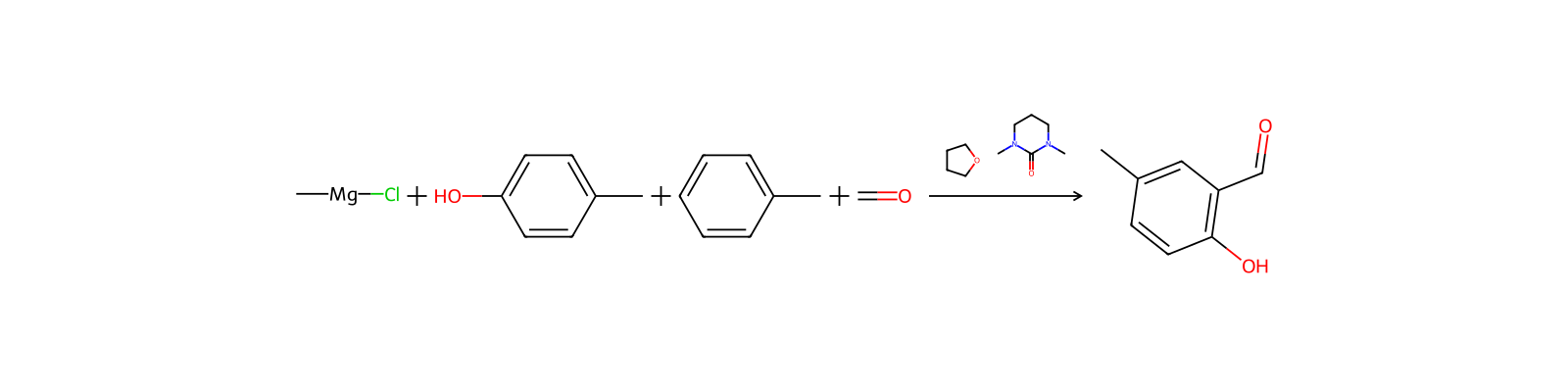
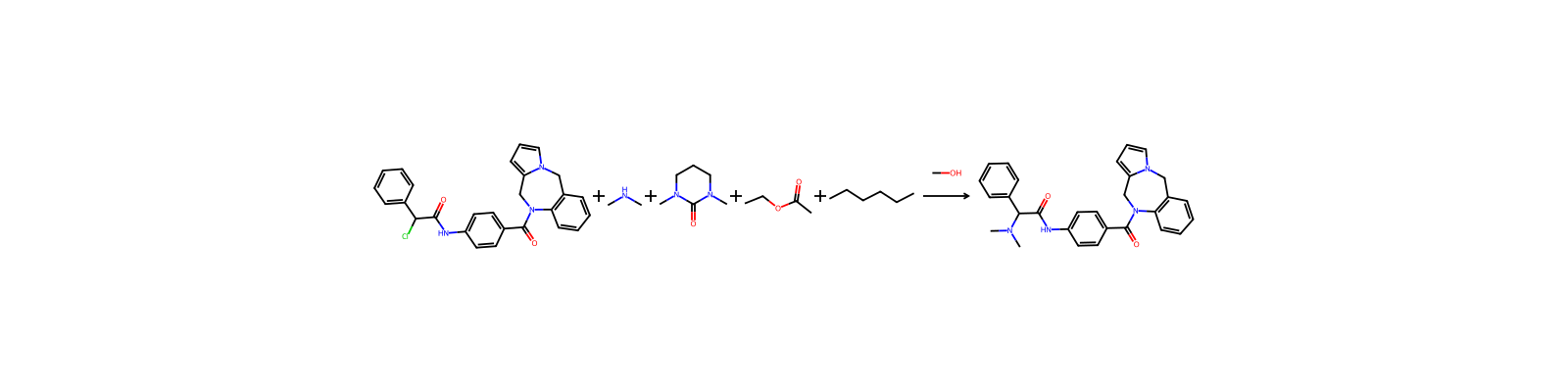
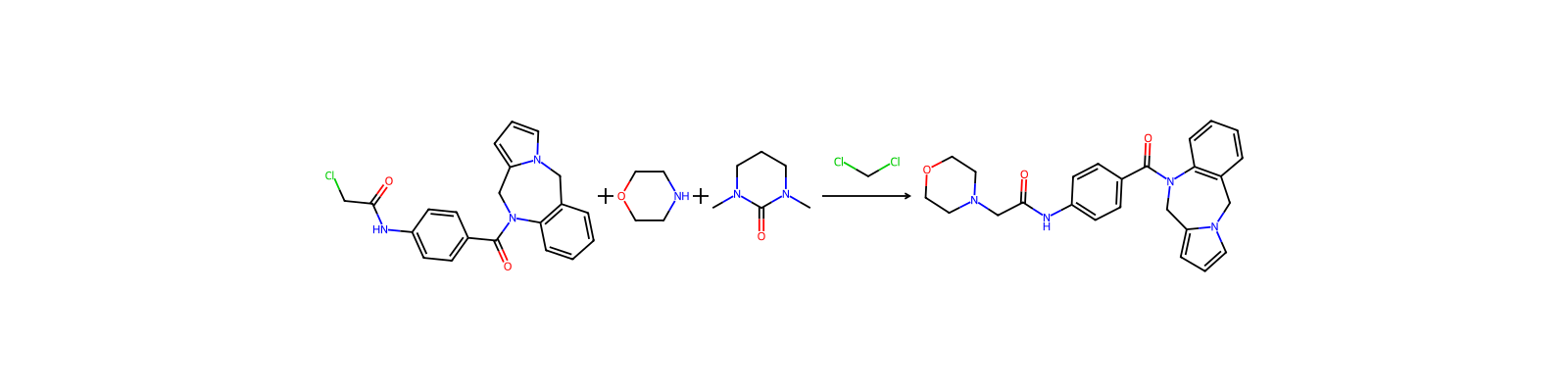
Related reactions
1,214 records



Linked notes
Loading…