

Basic information
- CAS
7252-84-8- Standard SMILES
COc1ccc(N)nn1- InChIKey
YPWBPONDYDVMLX-UHFFFAOYSA-N- Molecular formula
- C5H7N3O
- Average molar mass
- 125.13 g/mol
- Monoisotopic mass
- 125.05891186
Names & identifiers
- Preferred name
- 6-Methoxypyridazin-3-amine
- IUPAC
- 6-methoxypyridazin-3-amine
- English name
- 3-Amino-6-methoxypyridazine
- Molecular formula
- C5H7N3O
- Molecular weight
- 125.13
Names & synonyms
6-Methoxypyridazin-3-amine3-Pyridazinamine, 6-methoxy-6-methoxy-3-pyridazinamineN3H9A46C5HNSC-73703DTXSID002228463-METHOXY-6-AMINOPYRIDAZINEEINECS 230-670-1NSC 73703PYRIDAZINE, 3-AMINO-6-METHOXY-RefChem:543726DTXCID30145337
Show more names
6-Amino-3-methoxypyridazineEOS-62222Netarsudil Impurity 12
230-670-13-Amino-6-methoxypyridazine7252-84-8MFCD01646127NSC737036-METHOXY-PYRIDAZIN-3-YLAMINEPB232433-Pyridazinamine,6-methoxy-
Database identifiers
- CAS
7252-84-8- PubChem CID
- 81673
- DTXSID
DTXSID00222846- UNII
- N3H9A46C5H
- EC Number
- 230-670-1
- Nikkaji
- J212.265K
Properties
Computed structural properties
- XLogP
- -0.4
- Topological polar surface area
- 61 Ų
- Hydrogen bond donors
- 1
- Hydrogen bond acceptors
- 4
- Rotatable bonds
- 1
- Heavy atoms
- 9
- Formal charge
- 0
- Complexity
- 88
Physicochemical properties
- Melting point
- 108 · 108-109℃
- Boiling point
- 353.5 · 353.5±22.0 °C(Predicted)
- Density
- 1.224 · 1.224
- storage temp.
- 2 · 2-8°C(protect from light)
- form
- Solid
- pka
- 5.84 · 5.84±0.10(Predicted)
- Appearance
- White to off-white Solid
- InChI
- InChI=1S/C5H7N3O/c1-9-5-3-2-4(6)7-8-5/h2-3H,1H3,(H2,6,7)
- InChIKey
- YPWBPONDYDVMLX-UHFFFAOYSA-N
- SMILES
- C1(N)=NN=C(OC)C=C1
- FDA UNII
- 3 H9A46C5H · N3H9A46C5H
- Symbol(GHS)
- 7 · GHS07
- Signal word
- Warning
- Hazard statements
- 315 · H315-H319-H335
- Precautionary statements
- 261 · P261-P305+P351+P338
- Hazard Codes
- Xi,Xn
- Risk Statements
- 22 · 22
- HS Code
- 2933998090 · 2933998090
Safety & regulation
GHS classification
GHS Classification
Warning
H302 (40%): Harmful if swallowed [Warning Acute toxicity, oral];H315 (100%): Causes skin irritation [Warning Skin corrosion/irritation];H319 (100%): Causes serious eye irritation [Warning Serious eye damage/eye irritation];H335 (100%): May cause respiratory irritation [Warning Specific target organ toxicity, single exposure; Respiratory tract irritation]
P261, P264, P264+P265, P270, P271, P280, P301+P317, P302+P352, P304+P340, P305+P351+P338, P319, P321, P330, P332+P317, P337+P317, P362+P364, P403+P233, P405, and P501 (click each P-code to see the statement)
Aggregated GHS information provided per 5 reports by companies from 5 notifications to the ECHA C&L Inventory. Each notification may be associated with multiple companies.;Information may vary between notifications depending on impurities, additives, and other factors. The percentage value in parenthesis indicates the notified classification ratio from companies that provide hazard codes. Only hazard codes with percentage values above 10% are shown. For more detailed information, please visit ECHA C&L website.
Hazard information
Hazard Classes and CategoriesAcute Tox. 4 (40%);Skin Irrit. 2 (100%);Eye Irrit. 2 (100%);STOT SE 3 (100%)
Safety data
- hs_code
- 2933998090
- risk_code
- 22
- Signal word
- Warning
- Symbol(GHS)
- GHS07
- hazard_code
- Xi,Xn
- Hazard statements
- H315-H319-H335
- Precautionary statements
- P261-P305+P351+P338
Chemistry & industry
Applications
Description3-amino-6-methoxypyridazine: a critical pharmaceutical intermediate.It can be used for pyridopyrimidine compounds with remarkable biological activity or medicines, such as the anticancer drug Ruugeli, which can be used for treating indications such as pain caused by endometriosis, uterine fibroids and advanced prostate cancer. At present, many reports on the preparation method of the compound exist, and various process impurities such as 3-amino-6-chloropyridazine, 3-amino-6-hydroxypyridazine, 3-chloro-6-hydroxypyridazine, 3-dichloropyridazine, 3, 6-dimethoxypyridazine, 3-amino-6-methoxypyridazine, 3-aminopyridazine and the like are often introduced in the process of the conventional synthesis process.
Uses3-Amino-6-methoxypyridazine is an organic reagent that can be used as a key intermediate in the preparation of Relugoli.
Upstream & downstream products
Upstream raw materials
Suppliers100 total
杭州创引化工科技有限公司0571-87086220 13516718938 · [email protected]
上海阿拉丁生化科技股份有限公司400-6206333 13167063860 · [email protected]
成都伊诺达博医药科技有限公司028-85929779 18881048017
合肥翰刚医药科技有限公司+8618062405514 · [email protected]
Dayang Chem (Hangzhou) Co.,Ltd.+86-0571-88938639 17705817739 · [email protected]
珠海海瑞德制药有限公司7737188 13326687259 · [email protected]
北京华威锐科化工有限公司0757-86329057 18934348241 · [email protected]
南部县诚信科技有限公司0838-5675166 15883665058 · [email protected]
武汉凯威斯科技有限公司86-027-67849912 · [email protected]
Allfluoro Pharmaceutical Company Limited+86-400-0216110 +86-15958047586 · [email protected]
上海瀚鸿科技股份有限公司021-54306202 13764082696 · [email protected]
上海柯维化学技术有限公司021-64609169 18901607656 · [email protected]
上海钰康生物科技有限公司+86-18930848214 +86-021-56762820 · [email protected]
上海相辉医药科技有限公司13761987713 · [email protected]
上海星酶生物科技有限公司18112588827
武汉泰易成生化药业有限公司027-88320699 · [email protected]
上海泰坦科技股份有限公司400-6009262 15618770481 · [email protected]
苏州莱克施德药业有限公司0512-63970158-603 18018108880 · [email protected]
武汉丰泰威远科技有限公司+86-27-8746-5837 +86-18627785180 · [email protected]
上海攀鸿化工科技有限公司021-56491756 13512199871 · [email protected]
武汉丰泰威远科技有限公司027-87465837 19945049750 · [email protected]
上海忆嵘生物科技有限公司18049974220 · [email protected]
江苏威凯尔医药科技有限公司025-58741518 13327700685 · [email protected]
济南精合医药科技有限公司0531-88811783 · [email protected]
苏州施亚生物科技有限公司86(512)5235 8471 17715136450 · [email protected]
南京斯贝源医药科技有限公司+86-25-68710855, +86-25-68710897 · [email protected]
武汉杂环科技有限公司027-88041443 13072715837 · [email protected]
西安瑞联新材料股份有限公司029-68669089-8816
天津科创医药中间体技术生产力促进有限公司022-60116533 13207668525 · [email protected]
上海赢瑞生物医药科技有限公司21-33585366 13311639313 · [email protected]
越林试剂021-62960152 · [email protected]
上海睿升化工科技有限公司+86-021-50935922
广州康瑞泰药业有限公司020-82185713,82185709 13418171485 · [email protected]
苏州爱玛特生物科技有限公司0512-56316828 4008675858 · [email protected]
上海贺康生物技术有限公司17721021104 18939837085 · [email protected]
山东友帮生化科技有限公司15098208899 · [email protected]
常州艾菲森化工科技有限公司18136598690 18136597130
重庆普瑞生物医药科技有限公司023-89130144 18523560356 · [email protected]
Labnetwork lnc.+86-27-50766799 +86-18062016861 · [email protected]
重庆星灿医药科技有限公司13594048950 19923294409 · [email protected]
上海驭远医药科技有限公司13052276172 · [email protected]
凯方医药科技(上海)有限公司021-67220633 021-54824098 · [email protected]
上海鑫圭生物科技有限公司15121041756 · [email protected]
上海寰川实业有限公司021-61478794 · [email protected]
上海孚一生物科技有限公司+86 (21) 61124340
珠海优润医药科技有限公司0756-6811852 15876689832
上海佐林生物医药有限公司13818361018 · [email protected]
铜陵恒优生物科技有限公司021-50426030 13856289449;13124863828 · [email protected]
宁波智锐新材料有限公司0574-87487840-805 15888368997
南京熙泽医药科技有限公司025-66023220 15250997978 · [email protected]
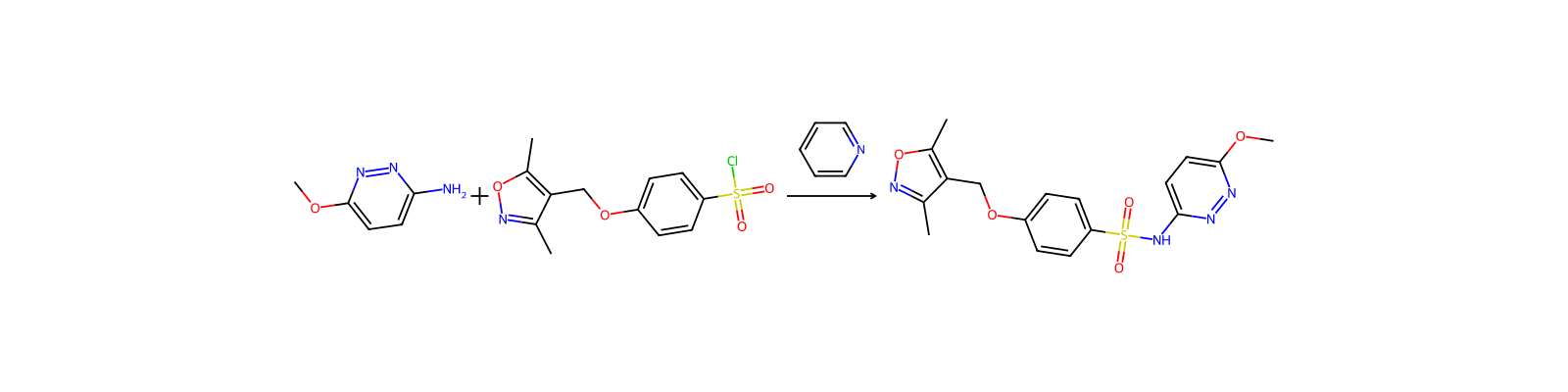
Related reactions
17 records




Compound notes
Loading…