HomeMCPWorkbenchSkills
HomeWorkbenchNotificationsMe
llms.txt · MCP GuidePrivacy Policy · Terms of Service · Supportv1.8.0
  1. Home
  2. /Compound

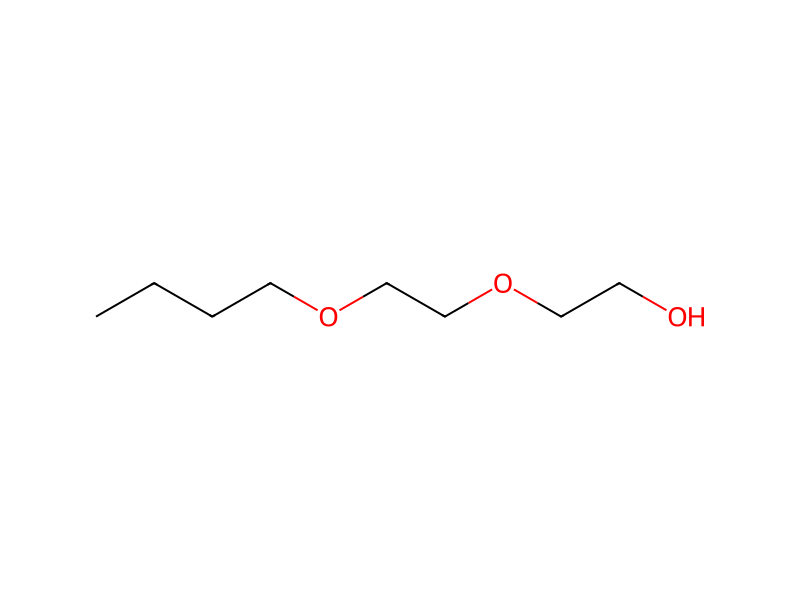
Diethylene Glycol Monobutyl Ether
HCID 8177
New noteNew reactionRequest quotes
Print preview
Basic informationOverviewNames & identifiersPropertiesSafety & regulationChemistry & industryRelated reactionsCompound notes
Substructure searchFind similar structures

Basic information

CAS
112-34-5
Standard SMILES
CCCCOCCOCCO
InChIKey
OAYXUHPQHDHDDZ-UHFFFAOYSA-N
Molecular formula
C8H18O3
Average molar mass
162.23 g/mol
Monoisotopic mass
162.12559444

Overview

Diethylene glycol monobutyl ether is a colorless liquid with a mild pleasant odor. Mixes with water. (USCG, 1999)

Names & identifiers

Preferred name
Diethylene Glycol Monobutyl Ether
IUPAC
2-(2-butoxyethoxy)ethanol
English name
Diethylene glycol monobutyl ether
Molecular formula
C8H18O3
Molecular weight
162.23

Names & synonyms

2-(2-Butoxyethoxy)ethanol112-34-5DIETHYLENE GLYCOL MONOBUTYL ETHERDiethylene glycol butyl etherButyl carbitolButoxydiglycolButyl diglycolButyl dioxitolButyl digolGlycol ether DBBUCBDowanol DB
Show more names
BUTYLDIGLYCOLDBDGBEdegbe
ButoxyethoxyethanolEthanol, 2-(2-butoxyethoxy)-Jeffersol dbEktasolve DBButoxydiethylene glycolDiethylene glycol mono-n-butyl etherDiglycol monobutyl etherO-Butyl diethylene glycol

Database identifiers

CAS
112-34-5
PubChem CID
8177
DTXSID
DTXSID8021519
ChEMBL
CHEMBL1904721
ChEBI
CHEBI:195270
UNII
9TB90IYC0E
EC Number
203-961-6
Nikkaji
J5.123C

Properties

Computed structural properties

XLogP
0.6
Topological polar surface area
38.7 Ų
Hydrogen bond donors
1
Hydrogen bond acceptors
3
Rotatable bonds
8
Heavy atoms
11
Formal charge
0
Complexity
66.4

Experimental & physicochemical properties

SolventsSolvents -> Glycol Ethers (E Series)
CosmeticsSolvent
pHNeutral
SpringerMaterials PropertiesBoiling point
FragrancesFragrance Ingredient (Diethylene glycol monobutyl ether) -> IFRA transparency List
SurfactantsSurfactant
LogP · 3 items

log Kow = 0.56

0.3

0.56

Odor · 2 items

Faint butyl odor

Mild ether odor

Density · 6 items

0.954 at 68 °F (USCG, 1999) - Less dense than water; will float

0.9553 g/cu cm at 20 °C

Density: 0.952 at 20 °C; 0.948 at 25 °C

Relative density (water = 1): 0.95

0.954 at 68 °F

0.9553 @ 20°C

Viscosity

Safety & regulation

Safety information is for reference only and does not replace the supplier’s Safety Data Sheet (SDS), applicable regulations, or professional assessment.

GHS classification

GHS Classification · 6 items

Warning

H319: Causes serious eye irritation [Warning Serious eye damage/eye irritation]

P264+P265, P280, P305+P351+P338, and P337+P317 (click each P-code to see the statement)

This chemical does not meet GHS hazard criteria for < 0.1% (2 of 4089) of reports.

Warning

H319 (> 99.9%): Causes serious eye irritation [Warning Serious eye damage/eye irritation]

Hazard information

Regulatory Information · 6 items

Chemical: Ethanol, 2-(2-butoxyethoxy)-

Hazard Traits - Respiratory Toxicity

Ethanol, 2-(2-butoxyethoxy)- is listed on the EPA's Chemical Data Reporting (CDR) system. Manufacturers and importers of Ethanol, 2-(2-butoxyethoxy)- are required to report information about their production and use of this chemical to the EPA under the Toxic Substances Control Act (TSCA). (40 eCFR Part 711)

Status: Active Update: 26-04-2023 https://echa.europa.eu/registration-dossier/-/registered-dossier/15952

Restricted substance: 2-(2-butoxyethoxy)ethanol (DEGBE)

Ethanol, 2-(2-butoxyethoxy)-: HSNO Approval: HSR001075 Approved with controls

Other Safety InformationIMAP assessments - Ethanol, 2-(2-butoxyethoxy)-: Human health tier II assessment
Fire Hazards · 2 items

This chemical is combustible. (NTP, 1992)

Combustible. Above 78 °C explosive vapour/air mixtures may be formed.

Fire PotentialCombustible when exposed to heat or flame; can react with oxidizing materials.
Health HazardsInhalation for brief periods has no significant effect. Contact with liquid causes moderate irritation of eyes and corneal injury. Prolonged contact with skin causes only minor irritation. (USCG, 1999)

Chemistry & industry

Pharmacology

Metabolism/Metabolites · 3 items

Male and female Sprague-Dawley rats received 200 and 2000 mg neat (14)C-DEGBE/kg bw and 200 mg of a 10% aqueous solution/kg bw. 2-(2-butoxyethanol)acetic acid was the major urinary metabolite identified and the glucuronide conjugate was present at levels of 5.2% to 8.2% of the urinary (14)C.

The metabolism of diethylene glycol monobutyl ether acetate was studied in vitro and in vivo in male Sprague-Dawley rats. The extent of conversion of diethylene glycol monobutyl ether acetate to diethylene glycol monobutyl ether was determined. In vitro, diethylene glycol monobutyl ether acetate was rapidly hydrolyzed by rat blood to diethylene glycol monobutyl ether; the biological half-life was less than 3 min. The urine was the major pathway for eliminating diethylene glycol monobutyl ether acetate derived (14)C activity; 80% was eliminated after 24 hr. Only 2 to 3% of each dose was eliminated in the feces. About 5% of each dose was eliminated in the expired air, mostly as radioactive carbon dioxide. Only 1-3% doses were found in the tissues and ied. No unchanged diethylene glycol monobutyl ether acetate or diethylene glycol monobutyl ether or 2-butoxyacetic acid, a putative hematotoxic diethylene glycol monobutyl ether acetate metabolite, was found. Diethylene glycol monobutyl ether acetate is rapidly hydrolyzed to diethylene glycol monobutyl ether by rat blood. The biological effects of diethylene glycol monobutyl ether acetate and diethylene glycol monobutyl ether would be indistinguishable. No 2-butoxyacetic acid is produced.

In the present study, floor lacquerers' (n = 22) inhalation and total exposure to 2-(2-alkoxy)ethoxyethanols was measured. The measurements of inhalation exposure were done with charcoal tubes, and total exposure was biomonitored by urinalysis of 2-(2-alkoxyethoxy)acetic acids. The 8hr inhalation exposures of floor lacquerers to 2-(2-methoxyethoxy)ethanol (DEGME), 2-(2-ethoxyethoxy)ethanol (DEGEE) and 2-(2-butoxyethoxy)ethanol (DEGBE) were in average 0.23 +/- 0.07 ppm (average+/-S.D., n = 3), 0.08 +/- 0.07 ppm (n = 16), and 0.05 +/- 0.03 ppm (n = 16), respectively. The excretions of 2-(2-methoxyethoxy)acetic acid (MEAA), 2-(2-ethoxyethoxy)acetic acid (EEAA) and 2-(2-butoxyethoxy)acetic acid (BEAA) were in average 4.9 +/- 4.3 mmol/mol creatinine, 9.3 +/- 8.0 mmol/mol creatinine and 9.2 +/- 7.4 mmol/mol creatinine, respectively. A linear relationship was found between the urinary 2-(2-alkoxyethoxy)acetic acid concentrations and the preceding 8-hr occupational exposure to 2-(2-alkoxyethoxy)ethanol. /2-(2-Alkoxyethoxy)ethanol/

Related reactions

46 records
New reaction record
HRID 129354 reaction equation
HRID 129354As reactantuspto-grants-1995_11
HRID 181563 reaction equation
HRID 181563As reactantTraining data from https://doi.org/10.1039/C8SC04228D (6/10)
HRID 183930 reaction equation
HRID 183930As reactantTraining data from https://doi.org/10.1039/C8SC04228D (6/10)
HRID 218803 reaction equation
HRID 218803As reactantuspto-grants-2012_06
HRID 256988 reaction equation
HRID 256988As reactantuspto-grants-1993_11
HRID 257926 reaction equation
HRID 257926As reactantuspto-grants-1993_11
HRID 328330 reaction equation
HRID 328330As reactantuspto-grants-1977_04
HRID 362740 reaction equation
HRID 362740As productuspto-grants-1999_02
Page 1 of 6

Compound notes

Loading…

On this pageBasic informationOverviewNames & identifiersPropertiesSafety & regulationChemistry & industryRelated reactionsCompound notes
More actions
New noteNew reactionRequest quotes
0.0649 cP at 20 °C
Color/Form · 2 items

Colorless liquid

Clear liquid

Solubility · 5 items

greater than or equal to 100 mg/mL at 68 °F (NTP, 1992)

Miscible with water at 25 °C

Miscible with oils

Very soluble in ethanol, ethyl ether, acetone; soluble in benzene

Solubility in water: very good

Physicochemical properties

Melting point
-68 °C · -68 °C (lit.) -68 °C (lit.)
Boiling point
231 °C · 231 °C (lit.)
Density
0.967 g/mL · 0.967 g/mL at 25 °C (lit.)
vapor density
5.6 · 5.6 (vs air)
vapor pressure
30 mm · 30 mm Hg ( 130 °C)
refractive index
20 · n20/D 1.432
Flash point
212 °F · 212 °F
storage temp.
30 °C · Store below +30°C.
solubility
soluble in Chloroform
form
Liquid
pka
14.37 · 14.37±0.10(Predicted)
color
Clear Colorless
Odor
Mild, characteristic; pleasant.
PH Range
7 · 7
PH
7 · 7 (20°C)
Evaporation Rate
0.01 · < 0.01
explosive limit
0.7 · 0.7-5.9%(V)
Water Solubility
soluble
Thermal Conductivity
0.163 W/ · 0.163 W/(m·K) at 25 ℃
Specific Heat Capacity
2.19 J/ · Cp(liquid): 2.19 J/(g·K), at 25℃
Merck
14 · 14,1557
BRN
1739225 · 1739225
Henry's Law Constant
1.4 · 1.4×103 mol/(m3Pa) at 25℃, Kim et al. (2000)
Exposure limits
10 ppm · EU LTEL:10 ppm(67.5 mg/m3); EU STEL:15 ppm(101.2 mg/m3)
Stability
Stable. Combustible. Incompatible with strong oxidizing agents, strong bases.
Major Application
hematology
Cosmetics Ingredients Functions
FRAGRANCEVISCOSITY CONTROLLINGSOLVENT
InChI
1S/C8H18O3/c1-2-3-5-10-7-8-11-6-4-9/h9H,2-8H2,1H3
InChIKey
OAYXUHPQHDHDDZ-UHFFFAOYSA-N
SMILES
CCCCOCCOCCO
LogP
1 at · 1 at 20℃
Indirect Additives used in Food Contact Substances
DIETHYLENE GLYCOL MONOBUTYL ETHER
CAS DataBase Reference
112 · 112-34-5(CAS DataBase Reference)
REACH Annex XVII Substances List
2 · 2-(2-butoxyethoxy)ethanol (DEGBE) (112-34-5)
FDA 21 CFR
175.105 · 175.105; 176.180; 178.3910
EWG's Food Scores
1 · 1-4
FDA UNII
9 TB90IYC0E · 9TB90IYC0E
NIST Chemistry Reference
2 · 2-(2-Butoxyethoxy)ethanol(112-34-5)
EPA Substance Registry System
Diethylene glycol monobutyl ether (112-34-5)
UNSPSC Code
12352104 · 12352104
NACRES
22 · NA.22
Symbol(GHS)
7 · GHS07
Signal word
Warning
Hazard statements
319 · H319
Precautionary statements
264 · P264-P280-P305+P351+P338-P337+P313
PPE
Eyeshields, Gloves, type ABEK (EN14387) respirator filter
Hazard Codes
Xi
Risk Statements
36 · 36
Safety Statements
24 · 24-26
WGK Germany
1 · 1
RTECS
9100000 · KJ9100000
Autoignition Temperature
400 °F · 400 °F
TSCA
TSCA listed
HS Code
29094300 · 29094300
Storage Class
10 · 10 - Combustible liquids
Hazard Classifications
2 · Eye Irrit. 2
Hazardous Substances Data
112 · 112-34-5(Hazardous Substances Data)
Toxicity
50 orally · LD50 orally in rats, guinea pigs: 6.56, 2.00 g/kg (Smyth)
REACH Registrations
Active
Hazards Summary · 1 item

TLV Basis is hematologic, liver, and kidney effects; The NOAEL for rats was 250 mg/kg/day, equivalent to a worker exposed to 260 ppm; [ACGIH] In animal studies, no genotoxic or mutagenic effects and no acute adverse effects after exposure to 18 ppm; No evidence of liver, kidney, blood, or reproductive toxicity in humans; [Sullivan, p. 1204] A mild skin irritant and severe eye irritant that is absorbed through the skin; [CHS, p. 164] The toxicity of diethylene glycol ethers is lower than that of the ethylene glycol ethers. Animal studies: Can cause central nervous system depression, liver, and kidney injury; [HSDB] A skin and eye irritant; [ICSC] Rats in high-dose feeding studies for 6 weeks have decreased red blood cell counts; [CPS&Q: IUCLID Reports] It is considered an exceptional allergen. [Kanerva, p. 1763]

FDA RequirementsDiethylene glycol monobutyl ether is an indirect food additive for use only as a component of adhesives.
Reactive GroupAlcohols and Polyols
EC ClassificationSymbol: Xi; R: 36; S: (2)-24-26
Special Reports · 3 items

Hardin BD, Lyon JP; Environmental Health Perspectives 57: 273-5 (1984) Proceedings from a NIOSH symposium on the toxic effects of glycol ethers are reviewed.

European Chemicals Bureau; IUCLID Dataset, 2-(2-Butoxyethoxy)ethanol (CAS No 112-34-5).[Available from, as of February 23, 2007: http://esis.jrc.ec.europa.eu/]

European Chemicals Bureau; Risk Assessment for 2-(2-Butoxyethoxy)ethanol (CAS No 112-34-5) Final Report (July 1999)

TSCA RequirementsManufacturers and processors of diethylene glycol monobutyl ether required to conduct subchronic toxicity, neurotoxicity/behavorial effects, developmental neurotoxicity, and pharmacokinetic test under TSCA section 4.
EPA Safer ChemicalChemical: Diethylene glycol mono-N-butyl ether

Safety & protection

Fire Fighting · 2 items

Fire Extinguishing Agents: Water, "alcohol" foam, carbon dioxide, dry chemical (USCG, 1999)

Use water spray, powder, alcohol-resistant foam, carbon dioxide.

First Aid Measures · 4 items

Fresh air, rest.

Remove contaminated clothes. Rinse skin with plenty of water or shower.

First rinse with plenty of water for several minutes (remove contact lenses if easily possible), then refer for medical attention.

Rinse mouth.

First Aid · 1 item

EYES: First check the victim for contact lenses and remove if present. Flush victim's eyes with water or normal saline solution for 20 to 30 minutes while simultaneously calling a hospital or poison control center. Do not put any ointments, oils, or medication in the victim's eyes without specific instructions from a physician. IMMEDIATELY transport the victim after flushing eyes to a hospital even if no symptoms (such as redness or irritation) develop.

Safe StorageSeparated from strong oxidants. Ventilation along the floor.
Exposure Control and Personal Protection10.0 [ppm], sum of the concentrations of DGBE and its acetate in air[German Research Foundation (DFG)]
Fire Fighting Procedures · 2 items

Use water spray, alcohol-resistant foam, dry chemical or carbon dioxide.

Alcohol foam, carbon dioxide, dry chemical.

Storage ConditionsConditions for safe storage, including any incompatibilities: Store in cool place. Keep container tightly closed in a dry and well-ventilated place.
Cleanup Methods · 3 items

Use personal protective equipment. Avoid breathign vapors, mist, or gas. Ensure adequate ventilation.

Do not let product enter drains.

Soak up with inert absorbent material and dispose of as hazardous waste. Keep in suitable, closed containers for disposal.

Nonfire Spill Response · 1 item

SMALL SPILLS AND LEAKAGE: If you spill this chemical. Then, use absorbent paper to pick up all liquid spill material. Seal the absorbent paper, as well as any of your clothing which may be contaminated, in a vapor tight plastic bag for eventual disposal. Wash any surfaces you may have contaminated with a soap and water solution. Do not reenter the contaminated area until the Safety Officer (or other responsible person) has verified that the area has been properly cleaned.

Disposal Methods · 1 item

SRP: Recycle any unused portion of the material for its approved use or return it to the manufacturer or supplier. Ultimate disposal of the chemical must consider: the material's impact on air quality; potential migration in air, soil or water; effects on animal, aquatic and plant life; and conformance with environmental and public health regulations. If it is possible or reasonable use an alternative chemical product with less inherent propensity for occupational harm/injury/toxicity or environmental contamination.

Spillage DisposalCollect leaking liquid in sealable containers. Wash away remainder with plenty of water.
Preventive Measures · 4 items

Avoid contact with skin and eyes. Avoid inhalation of vapor or mist.

Keep container tightly closed in a dry and well-ventilated place.

SRP: The scientific literature for the use of contact lenses by industrial workers is inconsistent. The benefits or detrimental effects of wearing contact lenses depend not only upon the substance, but also on factors including the form of the substance, characteristics and duration of the exposure, the uses of other eye protection equipment, and the hygiene of the lenses. However, there may be individual substances whose irritating or corrosive properties are such that the wearing of contact lenses would be harmful to the eye. In those specific cases, contact lenses should not be worn. In any event, the usual eye protection equipment should be worn even when contact lenses are in place.

Gloves must be inspected prior to use. Use proper glove removal technique (without touching glove's outer surface) to avoid skin contact with this product. Dispose of contaminated gloves after use in accordance with applicable laws and good laboratory practices. Wash and dry hands.

Toxicology

Body Burden · 1 item

Floor lacquerers' occupational exposure to diethylene glycol mono-n-butyl ether measured over an 8 hour shift was an average of 0.05 ppm resulting in an average urine concentration of 9.2 mmol/mol creatinine(1). Butoxyethoxy acetic acid (a metabolite of diethylene glycol mono-n-butyl ether) was detected at a maximum of 75.1 mg/L (median 6.3 mg/L) in 39 pressroom workers exposed to diethylene glycol mono-n-butyl ether present at 10-15% in water based cleaning products; 19 dispatch workers not exposed contained butoxyethoxy acetic acid at or less than 0.5 mg/L; the route of exposure was determined to be dermal(2).

Ecotoxicity Values · 5 items

LC50; Species: Menidia beryllina (Inland silverside); Concentration: 2000 mg/L for 96 hr /Conditions of bioassay not specified in source examined/

LC50; Species: Carassius auratus (Goldfish); Concentration: 2700 mg/L for 24 hr /Conditions of bioassay not specified in source examined/

LC50; Species: Lepomis macrochirus (Bluegill sunfish); Conditions: static bioassay; Concentration: 2400 mg/L for 24 hr

LC50; Species: Lepomis macrochirus (Bluegill sunfish); Conditions: static bioassay; Concentration: 2400 mg/L for 48 hr

For more Ecotoxicity Values (Complete) data for DIETHYLENE GLYCOL MONO-N-BUTYL ETHER (9 total), please visit the HSDB record page.

Environmental Fate · 3 items

TERRESTRIAL FATE: Based on a classification scheme(1), an estimated Koc value of 10(SRC), determined from a structure estimation method(2), indicates that diethylene glycol mono-n-butyl ether is expected to have very high mobility in soil(SRC). Volatilization of diethylene glycol mono-n-butyl ether from moist soil surfaces is not expected to be an important fate process(SRC) given a Henry's Law constant of 7.2X10⁻⁹ atm-cu m/mole(3). Diethylene glycol mono-n-butyl ether is not expected to volatilize from dry soil surfaces(SRC) based upon a vapor pressure of 0.0219 mm Hg at 25 °C(4). Biodegradation of ethylene glycol mono-n-butyl ether ranges from 2% using 5 day BOD(5) to 100% in 6 days using a modified Zahns-Wellens test(6), suggesting that biodegradation may be an important fate process in aerobic soil under certain conditions(SRC).

AQUATIC FATE: Based on a classification scheme(1), an estimated Koc value of 10(SRC), determined from a structure estimation method(2), indicates that diethylene glycol mono-n-butyl ether is not expected to adsorb to suspended solids and sediment(SRC). Volatilization from water surfaces is not expected(3) based upon a Henry's Law constant of 7.2X10⁻⁹ atm-cu m/mole(4). Diethylene glycol mono-n-butyl ether is not expected to undergo hydrolysis in the environment due to the lack of functional groups that hydrolyze under environmental conditions(3). According to a classification scheme(5), an estimated BCF of 3(SRC), from its log Kow of 0.56(6) and a regression-derived equation(2), suggests the potential for bioconcentration in aquatic organisms is low(SRC). Aqueous aerobic screening tests gave biodegradation rates ranging from 2% in 5 day BOD(7) to 100% in 6 days using a modified Zahns-Wellens test(8), suggesting that biodegradation may be an important environmental fate process in water under certain condtions(SRC).

ATMOSPHERIC FATE: According to a model of gas/particle partitioning of semivolatile organic compounds in the atmosphere(1), diethylene glycol mono-n-butyl ether, which has a vapor pressure of 0.0219 mm Hg at 25 °C(2), is expected to exist solely as a vapor in the ambient atmosphere. Vapor-phase diethylene glycol mono-n-butyl ether is degraded in the atmosphere by reaction with photochemically-produced hydroxyl radicals(SRC); the half-life for this reaction in air is estimated to be 5.2 hours(SRC), calculated from its rate constant of 7.44X10⁻¹¹ cu cm/molecule-sec at 23 °C(3). Alcohols and ethers do not contain chromophores that absorb at wavelengths >290 nm(4) and, therefore, diethylene glycol mono-n-butyl ether is not expected to be susceptible to direct photolysis by sunlight(SRC).

Adverse EffectsNeurotoxin - Acute solvent syndrome
Toxicity Summary · 1 item

IDENTIFICATION AND USE: Diethylene glycol mono-n-butyl ether (DGBE) is a colorless liquid with a faint butyl odor. It is used as an inert ingredient that is not registered for current use as a pesticide in the U.S., but is used in pesticide products. It is also used as a coalescing agent in latex paints; solvent for stamp pad inks; dye solvent; solvent in high baked enamels; dispersant; diluent for hydraulic brake fluids; and a mutual solvent for soap, oil, and water in household cleaners. HUMAN EXPOSURE AND TOXICITY: The ethers of diethylene glycol are lower in toxicity than the ethers of ethylene glycol, but they have many similar characteristics. Exposure to some ether derivatives of ethylene and diethylene glycols can cause central nervous depression, no hypocalcemic tetany or metabolic acidosis, nausea, vomiting, & sometimes diarrhea, headache, later abdominal and lumbar pain, costovertebral angle tenderness, transient polyuria & then oliguria, progressing to anuria, acute renal failure, and pathological lesions may appear in brain, lung, liver, meninges & heart. ANIMAL STUDIES: Observations in animals suggest a possibility of pulmonary edema, intravascular hemolysis and bone marrow depression, at least with some ether derivative of ethylene and diethylene glycols. Rats exposed to DGBE vapor or aerosol (350 and 1000 mg/ cu m) for 2-weeks had a reduction of spleen weight in males. Histopathological changes including perivascular and peribronchial accumulation of granulocytes as well as minimal bronchiolization in the lungs were observed in all treatment groups. DGBE did cause mild hemolysis when administered to rats by gavage and a reduction in red blood cell count, hemoglobin, and hematocrit was seen when 100 mg/kg/day of DGBE was administered in a 13-week drinking study in rats. DGBE had no adverse effects on the pre- and postnatal development of the offspring in rats. Dermal application of DGBE does not result in neurotoxicity based on behavioral and histopathological evaluations. DGBE is not genotoxic, testing negative in the Ames reverse mutation assay with Salmonella typhimurium TA 98, TA 100, TA 1535, TA 1537 and TA 1538 with and without metabolic activation and the sex linked recessive lethal mutation assay in Drosophila.

Signs and Symptoms · 2 items

Dry skin.

Redness. Pain.

Ongoing Test Status · 1 item

EPA has released the first beta version (version 0.5) of the Interactive Chemical Safety for Sustainability (iCSS) Dashboard. The beta version of the iCSS Dashboard provides an interactive tool to explore rapid, automated (or in vitro high-throughput) chemical screening data generated by the Toxicity Forecaster (ToxCast) project and the federal Toxicity Testing in the 21st century (Tox21) collaboration. /The title compound was tested by ToxCast and/or Tox21 assays; Click on the "Chemical Explorer" button on the tool bar to see the data./[USEPA; ICSS Dashboard Application; Available from, as of April 22, 2015: http://actor.epa.gov/dashboard/]

Effluent Concentrations · 2 items

Diethylene glycol mono-n-butyl ether was identified in 1 neutral fraction of 33 industrial wastewater effluents at <10 ug/L(1). Effluent samples collected from 3 publicly owned treatment works in New Jersey contained diethylene glycol mono-n-butyl ether at 9 ppb(2). Diethylene glycol mono-n-butyl ether was not detected in tire wear particle or road dust particle samples but was detected in a brake lining particle sample at 45.7 ug/g(3). Diethylene glycol mono-n-butyl ether was detected, not quantified, in 7 of 44 emission samples from furniture(4). Diethylene glycol mono-n-butyl ether was released from 3 of 10 PVC cushion vinyl floorings at a maximum of 193 ug/sq m h after 3 days and 91 ug/sq m h after 28 days(5). Diethylene glycol mono-n-butyl ether was a volatile emission from carpets (wool, synthetic) in chamber experiments run for 3 days at 23 °C and 45% relative humidity; maximum concentration was 320 ug/cu m(6).

In a national survey, diethylene glycol mono-n-butyl ether was detected in 19 of 21 industrial categories of wastewater effluents(1). Industries that diethylene glycol mono-n-butyl ether were not detected in were publicly owned treatment works and organics and plastics(1). Diethylene glycol mono-n-butyl ether was detected in the wastewater from the following industries(1):[Table#1068]

Soil Adsorption/Mobility · 1 item

Using a structure estimation method based on molecular connectivity indices(1), the Koc of diethylene glycol mono-n-butyl ether can be estimated to be 10(SRC). According to a classification scheme(2), this estimated Koc value suggests that diethylene glycol mono-n-butyl ether is expected to have very high mobility in soil.

TSCA Test Submissions · 5 items

The mutagenicity of diethylene glycol monobutyl ether was evaluated in Salmonella tester strains TA98, TA100, TA1573 and TA1538 (Ames Test), both in the presence and absence of added metabolic activation by Aroclor-induced rat liver S9 fraction. Based on the results of preliminary bacterial toxicity determinations, diethylene glycol monobutyl ether, diluted with water, was tested at concentrations up to 20uL/plate using the plate incorporation technique. Diethylene glycol monobutyl ether did not cause a positive response in any of the tester strains with or without metabolic activation.

The ability of diethylene glycol monobutyl ether to induce specific locus mutations at the TK locus in cultured L5178Y mouse lymphoma cells (Mouse Lymphoma Mutagenesis Assay) was evaluated in the presence and absence of Aroclor-induced rat liver S9 metabolic activation. Based on preliminary toxicity tests, 10 nonactivated cultures treated with 5.6, 4.2, 3.2, 2.4, 1.8, 1.3, 1.0, 0.75, 0.56 or 0.42uL/mL were cloned, producing a range of 12 - 112% total growth. Nine S9-activated cultures treated with 7.5, 4.2, 3.2, 2.4, 1.8, 1.3, 1.0, 0.75 or 0.56uL/mL were cloned, producing a range of 58 - 112% total growth. Nonactivated cultures at the two highest dose levels produced mutant frequencies 4.5 and 3.8 times that of the solvent (acetone, DMSO) control, respectively, along with evidence for a dose dependent response. None of the activated cultures produced mutant frequencies significantly greater than the solvent controls.

The effects of diethylene glycol monobutyl ether were examined in the rat hepatocyte primary culture/DNA repair assay. Based on preliminary toxicity tests, diethylene glycol monobutyl ether was tested at concentrations of 10 (relative survival 0%), 6.67, 4.44, 2,96, 1.97, 1.32, 0.87, 0.58, 0.39 or 0.26uL/mL (relative survival 83%). None of the tested concentrations caused a significant increase in unscheduled DNA synthesis over the solvent control (distilled water).

The ability of diethylene glycol monobutyl ether to cause chromosome aberrations in Chinese hamster ovary (CHO) cells in vitro was evaluated in the presence and absence of induced rat liver S9 metabolic activation. Based on preliminary toxicity tests, nonactivated cultures treated with 7.92, 5.94 and 4.46uL/mL were cloned, producing a cloning efficiency ranging from 24.24 to 53.03% relative to the solvent (water) control. Assays at the same test concentrations with metabolic activation produced a cloning efficiency ranging from 67.71 to 83.38%. None of the test cultures exhibited a significant increase in the frequency of cells with chromosome aberrations in either the activated or nonactivated systems compared to the negative control.

For more TSCA Test Submissions (Complete) data for DIETHYLENE GLYCOL MONO-N-BUTYL ETHER (51 total), please visit the HSDB record page.

Atmospheric Concentrations · 2 items

INDOOR AIR: Emission factors were published for the use of diethylene glycol mono-n-butyl ether in paints, primers, and varnishes, all purpose cleaners, window and glass cleaners, engine degreasers, rug and upholstery cleaners and metal cleaners and polishes(1). Air sampled from rooms which had been washed with hard surface cleaners containing diethylene glycol mono-n-butyl ether, had concentrations of up to 1.9 mg/cu m 22 hours following the wash(2). Diethylene glycol mono-n-butyl ether was found at concentrations from 0.5 to <1.5 ppb in 11 new manufactured and site-built houses, the source was traced back to latex paint(3). The average indoor air concentration for diethylene glycol mono-n-butyl ether was reported as 1.3 ug/cu m(4).

SOURCE DOMINATED: Diethylene glycol mono-n-butyl ether was detected, not quantified in 6 of 13 air samples taken during aircraft maintenance degreasing operations(1).

Human Toxicity Excerpts · 5 items

/SIGNS AND SYMPTOMS/ Symptomatology: ...Diethylene glycol ... 1. central nervous depression ... 2. no hypocalcemic tetany or metabolic acidosis ... 3. nausea, vomiting, & sometimes diarrhea. 4. ... headache. later abdominal & lumbar pain & costovertebral angle tenderness. 5. transient polyuria & then oliguria, progressing to anuria. 6. acute renal failure ... 7. ... pathological lesions may appear in brain, lung, liver, meninges & heart. 8. observations in animals suggest remote possibility of pulmonary edema, intravascular hemolysis & bone marrow depression, at least with some ether deriv of ethylene & diethylene glycols. /Diethylene glycol & deriv/

/SIGNS AND SYMPTOMS/ The substance is not corrosive to the skin, eyes, or respiratory tract.

/BIOMONITORING/ The aim of the study was to investigate the suitability of butoxyethoxyacetic acid (BEAA) as a biomarker of exposure to water-based cleaning agents containing diethylene glycol mono butyl ether (DEGBE). The study was performed in two printing plants where water-based products containing 10-15% DEGBE were used for rubber and blanket washes. Thirty nine newspaper pressroom workers (exposed) and 19 employees of newspaper despatch departments (controls) were investigated. By questionnaire, the workers were asked about the use of personal protective measures. BEAA was determined in post-shift urine using GC-MS. The BEAA concentration in the urine of exposed workers ranged up to 75.1 mg/L (median 6.3 mg/L), whereas in urine samples of the controls the BEAA level was below or around the determination limit of 0.5 mg/L. A protective effect on DEGBE uptake was observed with the use of protective gloves. This observation implies that dermal penetration of DEGBE may be important in exposure monitoring.

/BIOMONITORING/ In the present study, floor lacquerers' (n = 22) inhalation and total exposure to 2-(2-alkoxy)ethoxyethanols was measured. The measurements of inhalation exposure were done with charcoal tubes, and total exposure was biomonitored by urinalysis of 2-(2-alkoxyethoxy)acetic acids. The 8 hr inhalation exposures of floor lacquerers to 2-(2-methoxyethoxy)ethanol (DEGME), 2-(2-ethoxyethoxy)ethanol (DEGEE) and 2-(2-butoxyethoxy)ethanol (DEGBE) were in average 0.23 +/- 0.07 ppm (average+/-S.D., n = 3), 0.08 +/- 0.07 ppm (n = 16), and 0.05 +/- 0.03 ppm (n = 16), respectively. The excretions of 2-(2-methoxyethoxy)acetic acid (MEAA), 2-(2-ethoxyethoxy)acetic acid (EEAA) and 2-(2-butoxyethoxy)acetic acid (BEAA) were in average 4.9 +/- 4.3 mmol/mol creatinine, 9.3 +/- 8.0 mmol/mol creatinine and 9.2 +/- 7.4 mmol/mol creatinine, respectively. A linear relationship was found between the urinary 2-(2-alkoxyethoxy)acetic acid concentrations and the preceding 8 hr occupational exposure to 2-(2-alkoxyethoxy)ethanol. /2-(2-Alkoxyethoxy)ethanol/

For more Human Toxicity Excerpts (Complete) data for DIETHYLENE GLYCOL MONO-N-BUTYL ETHER (6 total), please visit the HSDB record page.

Regulatory information

FDA RequirementsDiethylene glycol monobutyl ether is an indirect food additive for use only as a component of adhesives.
TSCA RequirementsManufacturers and processors of diethylene glycol monobutyl ether required to conduct subchronic toxicity, neurotoxicity/behavorial effects, developmental neurotoxicity, and pharmacokinetic test under TSCA section 4.
FIFRA Requirements · 1 item

Residues of diethylene glycol mono butyl ether are exempted from the requirement of a tolerance when used in accordance with good agricultural practice as inert (or occasionally active) ingredients in pesticide formulations applied to growing crops only. Use: Pesticide inert ingredient as a solvent, stabilizer and/or antifreeze. Limit: Without limitation.

Atmospheric Standards · 1 item

This action promulgates standards of performance for equipment leaks of Volatile Organic Compounds (VOC) in the Synthetic Organic Chemical Manufacturing Industry (SOCMI). The intended effect of these standards is to require all newly constructed, modified, and reconstructed SOCMI process units to use the best demonstrated system of continuous emission reduction for equipment leaks of VOC, considering costs, non air quality health and environmental impact and energy requirements. Diethylene glycol monobutyl ether is produced, as an intermediate or final product, by process units covered under this subpart.

Safety data

PPE
Eyeshields, Gloves, type ABEK (EN14387) respirator filter
wgk
1
tsca
TSCA listed
rtecs
KJ9100000
hs_code
29094300
Toxicity
LD50 orally in rats, guinea pigs: 6.56, 2.00 g/kg (Smyth)
risk_code
36
Signal word
Warning
Symbol(GHS)
GHS07
hazard_code
Xi
safety_code
24-26
Storage Class
10 - Combustible liquids
Hazard statements
H319
REACH Registrations
Active
Hazard Classifications
Eye Irrit. 2
Autoignition Temperature
400 °F
Precautionary statements
P264-P280-P305+P351+P338-P337+P313
Hazardous Substances Data
112-34-5(Hazardous Substances Data)
Absorption, Distribution and Excretion · 5 items

Butyl carbitol can be absorbed through skin, but only in toxic amt if application is prolonged & continuous.

In vitro percutaneous absorption studies were carried out for ... /tritiated water, 2-ethoxyethyl acetate, diethylene glycol monobutyl ether, urea, di(2-ethylhexyl) phthalate, 2-ethylhexanol, ethyl 3-ethoxypropionate, and 2-propoxyethanol/ using full thickness rat skin and human stratum corneum. The purpose of the studies was to compare the rates of absorption for the two species. For each of the chemicals, the observed rate using full thickness rat skin was greater than that observed for human stratum corneum. The ratios of the rates (rat/human) varied from 1.7 to 5.8 with a mean value of 3.1. ... It was concluded that rat skin was more permeable than human skin for each of these eight chemicals. ...

Male and female Sprague-Dawley rats received 200 and 2000 mg neat (14)C-DEGBE/kg bw and 200 mg of a 10% aqueous solution/kg bw. Dermal adsorption rate was 0.73 and 1.46 mg/sq cm/hr for males and females respectively.

To assist the evaluation of the hazards of skin contact with selected undiluted glycol ethers, their absorption across isolated human abdominal epidermis was measured in vitro. Epidermal membranes were set up in glass diffusion cells and, following an initial determination of permeability to tritiated water, excess undiluted glycol ether was applied to the outer surface for 8 hr. The appearance of glycol ether in an aqueous "receptor" phase bathing the underside of the epidermis was quantified by a gas chromatographic technique. A final determination of tritiated water permeability was compared with initial values to establish any irreversible alterations in epidermal barrier function induced by contact with the glycol ethers. 2-Methoxyethanol was most readily absorbed (mean steady rate 2.82 mg/sq cm/hr), and a relatively high absorption rate (1.17 mg/sq cm/hr) was also apparent for 1-methoxypropan-2-ol. There was a trend of reducing absorption rate with increasing molecular weight or reducing volatility for monoethylene glycol ethers (2-methoxyethanol, 2.82 mg/sq cm/hr; 2-ethoxyethanol, 0.796 mg/sq cm/hr; 2-butoxyethanol, 0.198 mg/sq cm/hr) and also within the diethylene glycol series: 2-(2-methoxyethoxy) ethanol (0.206 mg/sq cm/hr); 2-(2-ethoxyethoxy) ethanol (0.125 mg/sq cm/hr) and 2-(2-butoxyethoxy) ethanol (0.05 mg/sq cm/hr). The rate of absorption of 2-ethoxyethyl acetate was similar to that of the parent alcohol, 2-ethoxyethanol. Absorption rates of diethylene glycol ethers were slower than their corresponding monoethylene glycol equivalents. Combination of intrinsic toxicity and ability to pass across skin contribute to assessment of hazards of contact with undiluted glycol ethers.

For more Absorption, Distribution and Excretion (Complete) data for DIETHYLENE GLYCOL MONO-N-BUTYL ETHER (8 total), please visit the HSDB record page.

Uses & manufacturing

Uses · 6 items

Used as a solvent and diluent for polymers, resins, coatings, inks, cleaners, and metalworking fluids; [HSDB] Used as a solvent (nitrocellulose, oils, dyes, gums, soaps, and polymers) and coalescing agent in latex paints; In paints containing 1.5% w/w, painters exposed to 4-5 mg/m3; [ACGIH]

Metal Machining [Category: Heat or Machine]

For diethylene glycol monobutyl ether (USEPA/OPP Pesticide Code: 011502) there are 0 labels match. /SRP: Not registered for current use in the U.S., but approved pesticide uses may change periodically and so federal, state and local authorities must be consulted for currently approved uses./

Inert ingredient in pesticide products. Diethylene glycol monobutyl ether is found on List 2: potentially toxic other ingredients/high priority for testing inerts. ... List 2 inert ingredients are structurally similar to chemicals known to be toxic; some have data suggesting a concern.

CHEM INT FOR DIETHYLENE GLYCOL MONOBUTYL ETHER ACETATE; COALESCING AGENT IN LATEX PAINTS; SOLVENT FOR STAMP PAD INKS; DYE SOLVENT; SOLVENT IN HIGH BAKED ENAMELS; DISPERSANT FOR VINYL CHLORIDE RESINS IN ORGANOSOLS; DILUENT FOR HYDRAULIC BRAKE FLUIDS; MUTUAL SOLVENT FOR SOAP, OIL, WATER IN HOUSEHOLD CLEANERS

In textile industry as wetting-out soln

U.S. Imports · 2 items

(1972) NEGLIGIBLE

(1984) 9.43X10+9 g /Diethylene glycol esters, ethers, etc/

U.S. Production · 6 items

2023: 100,000,000 - <250,000,000 lb

(1972) 6.81X10+9 GRAMS

(1975) 1.22X10+10 GRAMS

(1984) 3.02X10+10 g

(2006) 1,612 million lb annual capacity /Glycol ethers/

For more U.S. Production (Complete) data for DIETHYLENE GLYCOL MONO-N-BUTYL ETHER (7 total), please visit the HSDB record page.

Consumption Patterns33% AS A CHEM INT FOR DIETHYLENE GLYCOL MONOBUTYL ETHER ACETATE; 25% AS A COALESCING AGENT IN LATEX PAINTS; 42% IN VARIOUS SOLVENT & DISPERSANT APPLICATIONS & AS A DILUENT FOR HYDRAULIC BRAKE FLUIDS (1972)
Consumer UsesCleaning agent
Industry UsesPlating agent
Methods of Manufacturing · 2 items

Ethylene glycol monoethers are usually produced by reaction of ethylene oxide with the appropriate alcohol. A mixture of homologues is obtained ... The glycol monoethers can be converted to diethers by alkylation with common alkylating agents, such as dimethyl sulfate or alkyl halides (Williamson synthesis). Glycol dimethyl ethers are formed by treatment of dimethyl ether with ethylene oxide. /Ethers/

n-Butanol + ethylene oxide (epoxidation; co-produced with ethylene glycol monobutyl ether/triethylene glycol monobutyl ether)

Formulations/Preparations · 2 items

Trade Names: Dowanol OR.

Grade: Technical.

Household Products · 2 items

Cosmetics product ingredient: Diethylene glycol monobutyl ether

Information on 477 consumer products that contain Diethylene glycol monobutyl ether in the following categories is provided:

Use Classification · 4 items

EPA Safer Chemical Functional Use Classes -> Solvents

Safer Chemical Classes -> Yellow triangle - The chemical has met Safer Choice Criteria for its functional ingredient-class, but has some hazard profile issues

Fragrance Ingredients

Cosmetics -> Solvent

General Manufacturing Information · 5 items

Plastics Material and Resin Manufacturing

Ethanol, 2-(2-butoxyethoxy)-: ACTIVE

Temperature, pressure, mole ratios of reactants and catalysts are chosen to yield the desired product mix. High ratios of ethylene oxide to alcohol are used to favor production of monoethers of diethylene glycol. /Gylcol ethers/

Butyl diglycol has a high solvency for cellulose nitrate, cellulose ethers, chlorinated rubber, poly(vinyl acetate), polyacrylates, and some oils, as well as for many synthetic resins, natural resins, and dyes. Polystyrene, poly(vinyl chloride), fats, and most oils are not dissolved.

Butyl diglycol is used as a high-boiling solvent to improve gloss and flow properties. On account of its high evaporation number even additions of <5% considerably improve paint properties, without noticeably increasing the stoving time. In cellulose nitrate and cellulose ether lacquers even smaller amounts are effective. In emulsion paints and cold-hardening paints diethylene glycol mono-n-butyl ether improves the coatability and enhances the surface gloss.

Applications · 2 items

UsesDiethylene glycol monobutyl ether(DGBE) is widely used as a solvent for cellulose ester, lacquers, varnishes, cleaners, detergents, dyes, ink, and paint industries. it is also used as an intermediate for plasticizers and a diluent for hydraulic brake fluids, in addition to the production of piperonyl butoxy compounds. In France, its use in the cosmetics industry is permissible, wherein it is used as a solvent in hair dyes with a maximum concentration of 9%.

General DescriptionDiethylene glycol monobutyl ether is a colorless liquid with a mild pleasant odor. Mixes with water. (USCG, 1999)

Preparation methods

PreparationDiethylene glycol monobutyl ether is prepared by co-heating ethylene oxide and ethylene glycol butyl ether under pressure.

Upstream & downstream products

Upstream raw materials

EthanolMethanol1-Butanol2-Butoxyethanol

Downstream products

Piperonyl butoxide2-(2-Butoxyethoxy)ethyl acetate