
Basic information
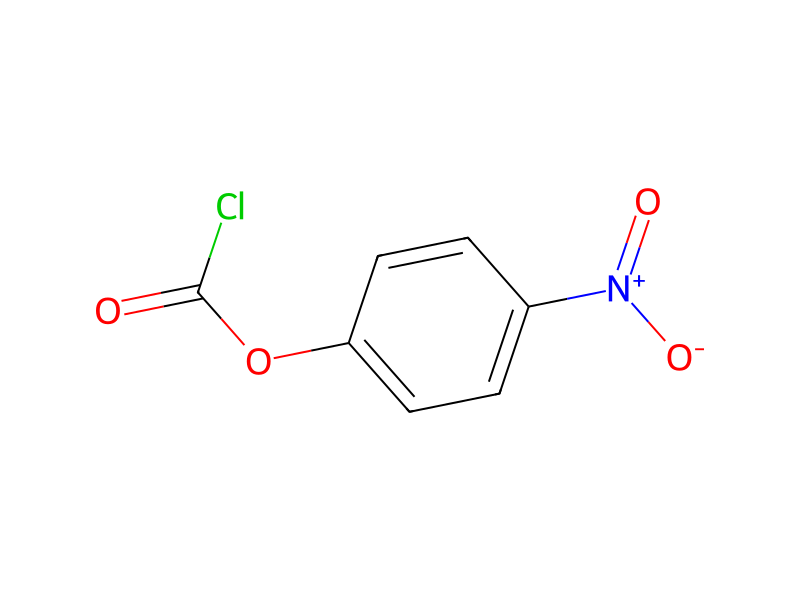
- Standard SMILES
O=C(Cl)Oc1ccc([N+](=O)[O-])cc1- InChIKey
NXLNNXIXOYSCMB-UHFFFAOYSA-N- Molecular formula
- C7H4ClNO4
- Average molar mass
- 201.56 g/mol
- Monoisotopic mass
- 200.98288529
Names & identifiers
- Preferred name
- 4-Nitrophenyl chloroformate
- IUPAC
- (4-nitrophenyl) carbonochloridate
- English name
- 4-Nitrophenyl chloroformate
- Molecular formula
- C7H4ClNO4
- Molecular weight
- 201.56
Names & synonyms
4-Nitrophenyl chloroformate7693-46-14-Nitrophenyl carbonochloridateChloroformic acid 4-nitrophenyl esterCarbonochloridic acid, 4-nitrophenyl esterp-Nitrophenyl chloroformate(4-nitrophenyl) carbonochloridateChloroformic acid p-nitrophenyl esterMFCD000073214-nitrophenol chloroformateFormic acid, chloro-, p-nitrophenyl ester(4-nitrophenyl) chloroformate
Show more names
PNPCFNitrophenyl chloroforMatePARA-NITROPHENYL CHLOROFORMATE4-Nitrophenyl chloridocarbonate4-NITROPHENYL CHLOROCARBONATEp-Nitrophenyl c
EINECS 231-706-9AI3-52204p-nitrophenylchloroformate4-nitrophenyl choroformate4-nitrophenyl chioroformatep-nitro-phenyl chloroformate(4-nitrophenyl)chloroformate4-nitro-phenyl chloroformate
Database identifiers
- CAS
7693-46-1- PubChem CID
- 82129
- DTXSID
DTXSID3064772- EC Number
- 231-706-9
- Nikkaji
- J249F
Properties
Computed structural properties
- XLogP
- 2.6
- Topological polar surface area
- 72.1 Ų
- Hydrogen bond donors
- 0
- Hydrogen bond acceptors
- 4
- Rotatable bonds
- 2
- Heavy atoms
- 13
- Formal charge
- 0
- Complexity
- 207
Experimental & physicochemical properties
Chemical ClassesToxic Gases & Vapors -> Acid Halides
Physical DescriptionCream crystals with an acrid odor; [Alfa Aesar MSDS]
Physicochemical properties
- Melting point
- 77 · 77-79 °C(lit.)
- Boiling point
- 159 · 159-162 °C19 mm Hg(lit.)
- Density
- 1.5719 · 1.5719 (rough estimate)
- refractive index
- 1.6 · 1.6000 (estimate)
- Flash point
- 110 °C · >110°C
- storage temp.
- 2 · 2-8°C
- solubility
- Soluble in acetone, chloroform, acetone, toluene and benzene.
- form
- isopropanol suspension
- color
- White to yellow-beige
- Water Solubility
- decomposes
- Sensitive
- Lachrymatory
- BRN
- 518127 · 518127
- Stability
- Stable. Incompatible with strong bases, acids. Combustible.
- Major Application
- peptide synthesis
- InChI
- 1S/C7H4ClNO4/c8-7(10)13-6-3-1-5(2-4-6)9(11)12/h1-4H
- InChIKey
- NXLNNXIXOYSCMB-UHFFFAOYSA-N
- SMILES
- [O-][N+](=O)c1ccc(OC(Cl)=O)cc1
- CAS DataBase Reference
- 7693 · 7693-46-1(CAS DataBase Reference)
- NIST Chemistry Reference
- 4 · Carbonochloridic acid, 4-nitrophenyl ester(7693-46-1)
- EPA Substance Registry System
- 4 · Carbonochloridic acid, 4-nitrophenyl ester (7693-46-1)
- UNSPSC Code
- 12352108 · 12352108
- NACRES
- 22 · NA.22
- Symbol(GHS)
- 5 · GHS05,GHS07
- Signal word
- Danger
- Hazard statements
- 314 · H314-H335
- Precautionary statements
- 260 · P260-P271-P280-P301+P330+P331-P303+P361+P353-P305+P351+P338
- target organs
- Respiratory system
- PPE
- 3 · Eyeshields, Faceshields, Gloves, type P3 (EN 143) respirator cartridges
- Hazard Codes
- C,T,Xi,F
- Risk Statements
- 34 · 34-36/37-23/24/25-41-36/37/38-11-67-36
- Safety Statements
- 26 · 26-36/37/39-45-38-28A-36-16-27
- RIDADR
- 3261 · UN 3261 8/PG 2
- WGK Germany
- 3 · 3
- F
- 19 · 19-21
- Hazard Note
- Toxic/Corrosive/Lachrymator
- TSCA
- TSCA listed
- HazardClass
- 8 · 8
- PackingGroup
- II
- HS Code
- 29159020 · 29159020
- Storage Class
- 8 A · 8A - Combustible corrosive hazardous materials
- Hazard Classifications
- 1 Skin · Eye Dam. 1Skin Corr. 1BSTOT SE 3
- REACH Registrations
- Active
Safety & regulation
GHS classification
GHS Classification
Danger
H314 (96.8%): Causes severe skin burns and eye damage [Danger Skin corrosion/irritation]
P260, P261, P264, P271, P280, P301+P330+P331, P302+P361+P354, P304+P340, P305+P354+P338, P316, P319, P321, P363, P403+P233, P405, and P501 (click each P-code to see the statement)
Aggregated GHS information provided per 62 reports by companies from 16 notifications to the ECHA C&L Inventory. Each notification may be associated with multiple companies.
Hazard information
Regulatory Information
Status: Active Update: 09-05-2018 https://echa.europa.eu/registration-dossier/-/registered-dossier/24548
4-Nitrophenyl chloroformate: Does not have an individual approval but may be used under an appropriate group standard
Hazards SummaryReacts with water; Causes burns; Inhalation may cause corrosive injuries to upper respiratory tract and lungs; Harmful by ingestion and inhalation; [Alfa Aesar MSDS] See CHLOROFORMATES.
Hazard Classes and CategoriesSkin Corr. 1B (96.8%)
Toxicology
Adverse EffectsDermatotoxin - Skin burns.
Safety data
- F
- 19-21
- PPE
- Eyeshields, Faceshields, Gloves, type P3 (EN 143) respirator cartridges
- wgk
- 3
- tsca
- TSCA listed
- ridadr
- UN 3261 8/PG 2
- hs_code
- 29159020
- risk_code
- 34-36/37-23/24/25-41-36/37/38-11-67-36
- Signal word
- Danger
- Symbol(GHS)
- GHS05,GHS07
- hazard_code
- C,T,Xi,F
- hazard_note
- Toxic/Corrosive/Lachrymator
- safety_code
- 26-36/37/39-45-38-28A-36-16-27
- hazard_class
- 8
- Storage Class
- 8A - Combustible corrosive hazardous materials
- packing_group
- II
- target organs
- Respiratory system
- Hazard statements
- H314-H335
- REACH Registrations
- Active
- Hazard Classifications
- Eye Dam. 1Skin Corr. 1BSTOT SE 3
- Precautionary statements
- P260-P271-P280-P301+P330+P331-P303+P361+P353-P305+P351+P338
Chemistry & industry
Uses & manufacturing
General Manufacturing InformationCarbonochloridic acid, 4-nitrophenyl ester: ACTIVE
Applications
Uses4-Nitrophenyl chloroformate can be used:As a reagent for the activation of amines, alcohols and thiols.In the synthesis of 4-substituted phenyl derivatives of 1,2,4-triazolidindiones (urazoles).In the solid-phase synthesis of 3-aryl-2,4-quinazolinedione derivatives with potent anti-cancer property.In the preparation of poly(oxyethylene) modified dextrans.To synthesize a cleavable, heterobifunctional cross-linker for reversible conjugation of amines to thiol-modified DNA.
Uses4-Nitrophenyl chloroformate is used in the synthesis of poly(oxyethylene) modified dextrans. It is also used to prepare a cleavable, heterobifunctional cross-linker for reversible conjugation of amines to thiol-modified DNA. Further, it is used in the synthesis of mixed, activated carbonates, thiocarbonates and activated urethanes. In addition to this, it is used in the preparation of 4-nitrophenyl diazoacetate with diazomethane. It is an ester of chloroformic acid used in the immobilization of enzymes and other biomolecules.
Description4-Nitrophenyl chloroformate, also known as p-nitrophenyl chloroformate, is a coupling agent used in the synthesis of ureas, carbamates, and carbonates. It is also used as a building block in solid-phase peptide synthesis (SPPS) to obtain altered side chain functionalities in peptides.
Upstream & downstream products
Downstream products
Suppliers50 total
国药集团化学试剂有限公司86-21-63210123 · [email protected]
梯希爱(上海)化成工业发展有限公司021-67121386 · [email protected]
衢州润东化工有限公司0570-8789886 18892685668 · [email protected]
河南斯维茵医药科技有限责任公司13072124697 18837373888
爱斯特(成都)生物制药股份有限公司+86-28-85122536 85324413 · [email protected]
科瑞迪化学400-821-5857 021-64326257 · [email protected]
上海拓磊化学试剂有限公司86-021-50318510
Syntechem Co.,Ltd[email protected]
上海迈瑞尔生化科技有限公司4006356688 18621169109 · [email protected]
武汉易泰科技有限公司上海分公司18930552037 · [email protected]
阿法埃莎(中国)化学有限公司400-6106006 · [email protected]
安耐吉化学&3A(安徽泽升科技股份有限公司)400-0056266 · [email protected]
武汉凯威斯科技有限公司86-027-67849912 · [email protected]
上海瀚鸿科技股份有限公司021-54306202 13764082696 · [email protected]
新沂市永诚化工有限公司15952286050 · [email protected]
上海相辉医药科技有限公司13761987713 · [email protected]
上海景颜化工科技有限公司13817811078 · [email protected]
嘉兴市艾森化工有限公司0573-85285100 18627885956 · [email protected]
池州捷峰生物科技有限公司0566-8928158 · [email protected]
Pure Chemistry Scientific Inc.001-857-928-2050 or 1-888-588-9418 · [email protected]
合肥天健化工有限公司551-65418679 15856988503;15837135945 · [email protected]
武汉丰泰威远科技有限公司027-87465837 19945049750 · [email protected]
孝感深远化工有限公司15527621225; 15527621225 · [email protected]
山东西亚化学有限公司13355009207 13355009207 · [email protected]
唐山默内德贸易有限公司0315-8309571 15633399667 · [email protected]
玛雅试剂+86 (573) 82222445 (0)18006601000 452520369 · [email protected]
四川库利南科技有限公司400-1166-196 18981987031 · [email protected]
天津希恩思生化科技有限公司400 638 7771 · [email protected]
斯百全化学(上海)有限公司021-021-021-67601398-809-809-809 15221380277 · [email protected]
北京泰亚杰科技有限公司021-33690831-8001 13552411790;18616022633 · [email protected]
艾科试剂4008-755-333 18080918076 · [email protected]
赛默飞世尔科技(中国)有限公司800-810-5118 · [email protected]
北京伊诺凯科技有限公司400-810-7969 010-59572699 · [email protected]
上海遐瑞医药科技有限公司+86 21 61551611
上海健超生物科技有限公司150-2103-5486 18017383231 · [email protected]
TCI AMERICA800-4238616 · [email protected]
TOKYO CHEMICAL INDUSTRY CO., LTD.03-36680489 · [email protected]
TCI Europe320-37350700 · [email protected]
上海贤鼎生物科技有限公司4009209199 · [email protected]
深圳康特腾科技有限公司86-0755-86635001 · [email protected]
越林试剂021-62960152 · [email protected]
无锡中坤生化科技有限公司+86 0510-85629785
Xunteng International Trading Co.,Limited—
上海宸香医药科技有限公司021-20960837 · [email protected]
北京环宇世纪化学科技有限公司hysj_bj.com
HBCChem, Inc.+1-510-219-6317 · [email protected]
日照力德士化工有限公司010-51268198 · [email protected]
郑州阿尔法化工有限公司0371-53732842 15981811963 · [email protected]
美岚实业(上海)有限公司021-58958189 · [email protected]
上海石洋化工有限公司021-56795766 · [email protected]
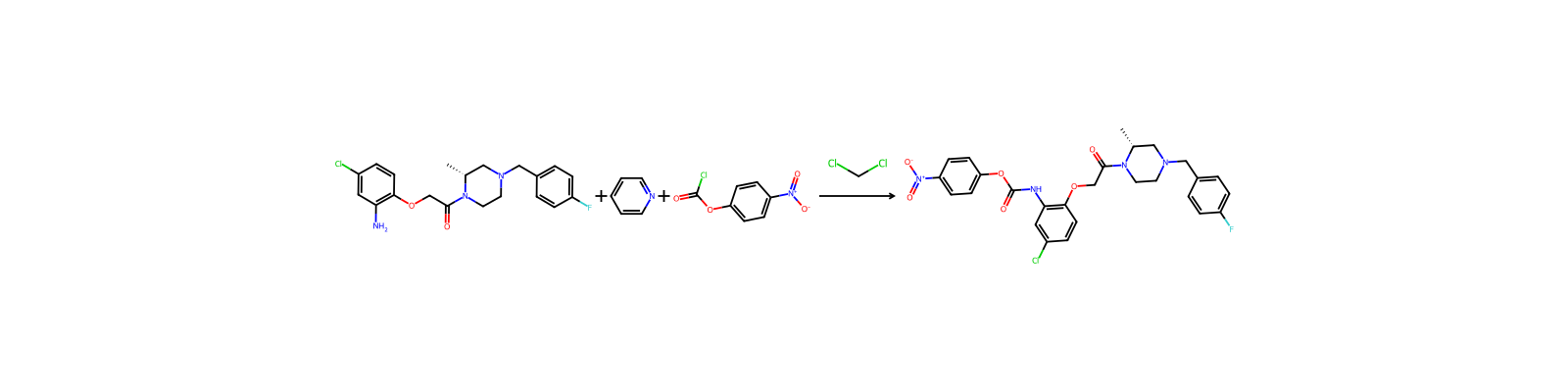
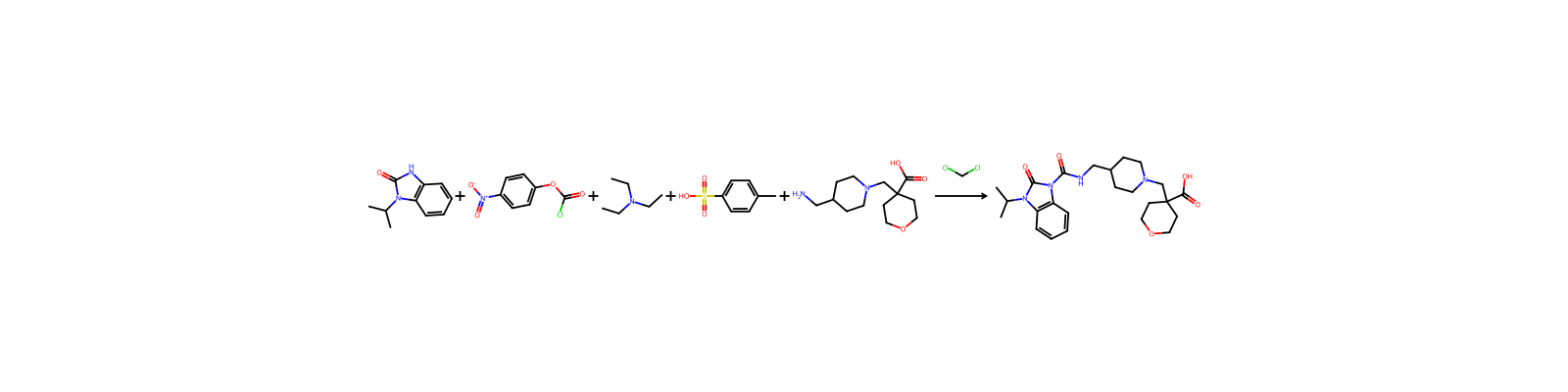
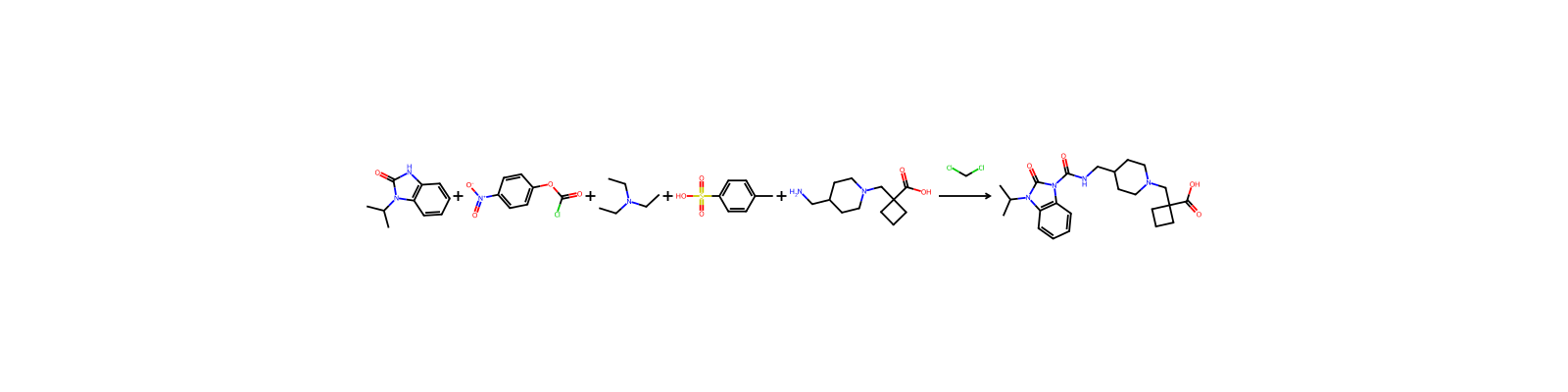
Related reactions
1,598 records




Linked notes
Loading…