
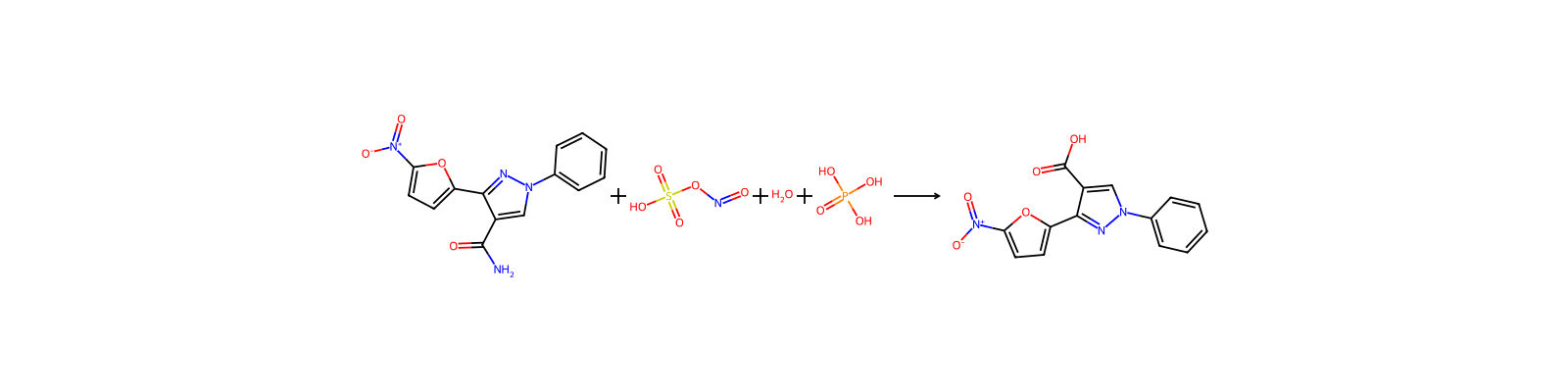
HRID 35509As reactant

37297-09-9O=NOS(=O)(=O)OVQTGUFBGYOIUFS-UHFFFAOYSA-NShipped in solution with sulfuric acid (solutions are usually 40% nitrosylsulfuric acid and 54% sulfuric acid (Hawley)). Solution is a straw-colored oily liquid with a sharp odor. When pure, a crystalline solid decomposing at 73 °C. Very irritating to skin and eyes. Used to make dyes and other chemicals.
37297-09-9、7782-78-7DTXSID30889380Toxic Gases & Vapors -> Acids, Inorganic
Corrosives
Shipped in solution with sulfuric acid (solutions are usually 40% nitrosylsulfuric acid and 54% sulfuric acid (Hawley)). Solution is a straw-colored oily liquid with a sharp odor. When pure, a crystalline solid decomposing at 73 °C. Very irritating to skin and eyes. Used to make dyes and other chemicals.
Solid; [Merck Index] Sulfuric acid solution: Straw-colored liquid with a sharp odor; [CAMEO] Light yellow crystals; [Sigma-Aldrich MSDS]
Solid
Safety information is for reference only and does not replace the supplier’s Safety Data Sheet (SDS), applicable regulations, or professional assessment.
Danger
H271 (12.4%): May cause fire or explosion; strong Oxidizer [Danger Oxidizing liquids; Oxidizing solids]
P210, P220, P260, P261, P262, P264, P264+P265, P270, P271, P280, P283, P301+P316, P301+P330+P331, P302+P352, P302+P361+P354, P304+P340, P305+P354+P338, P306+P360, P316, P317, P321, P330, P361+P364, P363, P370+P378, P371+P380+P375, P403+P233, P405, P420, and P501 (click each P-code to see the statement)
Aggregated GHS information provided per 185 reports by companies from 10 notifications to the ECHA C&L Inventory. Each notification may be associated with multiple companies.
Water-reactive material (WR)
Water-reactive material (WR)
Chemical: Sulfuric acid, monoanhydride with nitrous acid
Sulfuric acid, anhydride with nitrous acid (1:1) is listed on the EPA's Chemical Data Reporting (CDR) system. Manufacturers and importers of Sulfuric acid, anhydride with nitrous acid (1:1) are required to report information about their production and use of this chemical to the EPA under the Toxic Substances Control Act (TSCA). (40 eCFR Part 711)
REACH registered substance: Nitrosylsulphuric acid (EC: 231-964-2)
Nitrosylsulfuric acid: Does not have an individual approval but may be used under an appropriate group standard
The New Jersey Worker and Community Right to Know Act requires public and private employers to provide information about hazardous substances at their workplaces. (N.J.S.A. 34:5A-1 et. seq.)
Excerpt from ERG Guide 157 [Substances - Toxic and/or Corrosive (Non-Combustible / Water-Sensitive)]:
Used for bleaching cereal; [Merck Index] Used to make dyes and other chemicals; [CAMEO] Used in the chemicals industry as an intermediate and solvent; [IUCLID]
Toxic Gas from Spilling Chemical in Water [Category: Other]
Not Known or Reasonably Ascertainable
Sulfuric acid, anhydride with nitrous acid (1:1): ACTIVE
UsesFor bleaching cereal milling products.
UsesNitrosylsulfuric acid (40wt. % in sulfuric acid) is a reagent used for the preparation of new heterocyclic disperse azo dyes.
UsesNitrosylsulfuric acid is used for diazotisation, nitrosation, oxidation and oximation reactions. Product Data Sheet
General DescriptionShipped in solution with sulfuric acid (solutions are usually 40% Nitrosylsulfuric acid and 54% sulfuric acid (Hawley)). Solution is a straw-colored oily liquid with a sharp odor. When pure, a crystalline solid decomposing at 73°C. Very irritating to skin and eyes. Used to make dyes and other chemicals.






CHEBI:230452· Non-combustible, substance itself does not burn but may decompose upon heating to produce corrosive and/or toxic fumes.
· Non-combustible, substance itself does not burn but may decompose upon heating to produce corrosive and/or toxic fumes.
Excerpt from ERG Guide 157 [Substances - Toxic and/or Corrosive (Non-Combustible / Water-Sensitive)]:
· TOXIC and/or CORROSIVE; inhalation, ingestion or contact (skin, eyes) with vapors, dusts or substance may cause severe injury, burns or death.
· TOXIC and/or CORROSIVE; inhalation, ingestion or contact (skin, eyes) with vapors, dusts or substance may cause severe injury, burns or death.
Decomposed by moisture producing sulfuric and nitric acids; [Merck Index] Shipped in solution with sulfuric acid; A strong oxidizing agent; Reacts vigorously with water evolving sulfuric acid and nitric acids; A strong skin and eye irritant; [CAMEO] Reacts violently with water; Causes burns; Inhalation may cause corrosive injuries to upper respiratory tract and lungs; Highly toxic by inhalation; Toxic by ingestion and skin absorption; [Sigma-Aldrich MSDS]
2308 157
3456 157
NITROSYLSULFURIC ACID is an oxidizing agent. Neutralizes chemical bases in exothermic reactions. An attempt to diazotize dinitroaniline using nitrosylsulfuric acid resulted in an explosion with loss of life. The event was blamed on the high concentration of the reactants dinitroaniline hydrochloride and nitrosylsulfuric acid [MCA Case History 1763. 1971].
Nitrosylsulfuric acid, liquid
UN2308
Class 8 Corrosive material (49 eCFR § 173.136)
PG II: the degree of danger presented by the material is medium
Nitrosylsulphuric acid, solid
UN3456
· CALL 911. Then call emergency response telephone number on shipping paper. If shipping paper not available or no answer, refer to appropriate telephone number listed on the inside back cover.
· ELIMINATE all ignition sources (no smoking, flares, sparks or flames) from immediate area.
· CALL 911. Then call emergency response telephone number on shipping paper. If shipping paper not available or no answer, refer to appropriate telephone number listed on the inside back cover.
· ELIMINATE all ignition sources (no smoking, flares, sparks or flames) from immediate area.
Excerpt from ERG Guide 157 [Substances - Toxic and/or Corrosive (Non-Combustible / Water-Sensitive)]:
General First Aid:
General First Aid:
· Wear positive pressure self-contained breathing apparatus (SCBA).
· Wear positive pressure self-contained breathing apparatus (SCBA).
TIH (Toxic Inhalation Hazard) - Term used to describe gases and volatile liquids that are toxic when inhaled. Some are TIH materials themselves, e.g., chlorine, and some release TIH gases when spilled in water, e.g., chlorosilanes. [ERG 2016].
Excerpt from ERG Guide 157 [Substances - Toxic and/or Corrosive (Non-Combustible / Water-Sensitive)]:
Immediate precautionary measure
When spilled in water
When spilled in water
Immediate precautionary measure
When spilled in water
NO2 - when spill Nitrosylsulfuric acid, liquid into water.
NO2 - when spill Nitrosylsulfuric acid, solid into water.
1.2 [mg/m3]
13 [mg/m3]
79 [mg/m3]
· Note: Some foams will react with the material and release corrosive/toxic gases.
· Note: Some foams will react with the material and release corrosive/toxic gases.