

Basic information
- Standard SMILES
O=Cc1cnc2ccccc2c1- InChIKey
RYGIHSLRMNXWCN-UHFFFAOYSA-N- Molecular formula
- C10H7NO
- Average molar mass
- 157.17 g/mol
- Monoisotopic mass
- 157.05276385
Names & identifiers
- Preferred name
- 3-Quinolinecarboxaldehyde
- IUPAC
- quinoline-3-carbaldehyde
- English name
- 3-Quinolinecarboxaldehyde
- Molecular formula
- C10H7NO
- Molecular weight
- 157.17
Names & synonyms
3-Quinolinecarboxaldehyde13669-42-6Quinoline-3-carbaldehydeDTXSID40159889RefChem:872033DTXCID3082380237-147-7Quinoline-3-carboxaldehyde3-QuinolinecarbaldehydeMFCD000067683-FormylquinolineEINECS 237-147-7
Show more names
3-QAKOS BBS-00005332RARECHEM AK ML 0129Chinolin-3-carbaldehyd3-quinoliecarboxaldehyde3-quinolylcarboxaldehyde
quinoline-3 carbaldehyde3-quinoline carboxaldehydequinoline 3-carboxaldehyde3-Quinoline-carboxaldehydeQUINOLINE-3-ALDEHYDECHEMBL11852SCHEMBL232457SCHEMBL232458
Database identifiers
- CAS
13669-42-6- PubChem CID
- 83641
- DTXSID
DTXSID40159889- ChEMBL
CHEMBL11852- EC Number
- 237-147-7
- Nikkaji
- J277.973K
Properties
Computed structural properties
- XLogP
- 2
- Topological polar surface area
- 30 Ų
- Hydrogen bond donors
- 0
- Hydrogen bond acceptors
- 2
- Rotatable bonds
- 1
- Heavy atoms
- 12
- Formal charge
- 0
- Complexity
- 169
Physicochemical properties
- Melting point
- 68 · 68-71 °C (lit.)
- Boiling point
- 128 °C/1mmHg · 128°C/1mmHg(lit.)
- Density
- 1.223 · 1.223±0.06 g/cm3(Predicted)
- storage temp.
- Keep in dark place,Sealed in dry,Room Temperature
- pka
- 3.36 · 3.36±0.11(Predicted)
- form
- Powder
- color
- White to yellow
- λmax
- 282 nm · 282nm(MeOH)(lit.)
- Sensitive
- Air Sensitive
- BRN
- 113269 · 113269
- InChI
- 1S/C10H7NO/c12-7-8-5-9-3-1-2-4-10(9)11-6-8/h1-7H
- InChIKey
- RYGIHSLRMNXWCN-UHFFFAOYSA-N
- SMILES
- [H]C(=O)c1cnc2ccccc2c1
- CAS DataBase Reference
- 13669 · 13669-42-6(CAS DataBase Reference)
- UNSPSC Code
- 12352100 · 12352100
- NACRES
- 22 · NA.22
- Symbol(GHS)
- 7 · GHS07
- Signal word
- Warning
- Hazard statements
- 315 · H315-H319-H335
- Precautionary statements
- 261 · P261-P280a-P304+P340-P305+P351+P338-P405-P501a
- PPE
- 95 · dust mask type N95 (US), Eyeshields, Gloves
- Hazard Codes
- Xi
- Risk Statements
- 37 · 37/38-36/37/38
- Safety Statements
- 26 · 26-37/39-36-24/25-22
- WGK Germany
- 3 · 3
- F
- 10 · 10-23
- HS Code
- 29334900 · 29334900
- Storage Class
- 11 · 11 - Combustible Solids
Safety & regulation
GHS classification
GHS Classification
Warning
H315 (100%): Causes skin irritation [Warning Skin corrosion/irritation];H319 (13.6%): Causes serious eye irritation [Warning Serious eye damage/eye irritation];H335 (97.7%): May cause respiratory irritation [Warning Specific target organ toxicity, single exposure; Respiratory tract irritation]
P261, P264, P264+P265, P271, P280, P302+P352, P304+P340, P305+P351+P338, P319, P321, P332+P317, P337+P317, P362+P364, P403+P233, P405, and P501 (click each P-code to see the statement)
Aggregated GHS information provided per 44 reports by companies from 4 notifications to the ECHA C&L Inventory. Each notification may be associated with multiple companies.;Information may vary between notifications depending on impurities, additives, and other factors. The percentage value in parenthesis indicates the notified classification ratio from companies that provide hazard codes. Only hazard codes with percentage values above 10% are shown. For more detailed information, please visit ECHA C&L website.
Hazard information
Hazard Classes and CategoriesSkin Irrit. 2 (100%);Eye Irrit. 2A (13.6%);STOT SE 3 (97.7%)
Safety data
- F
- 10-23
- PPE
- dust mask type N95 (US), Eyeshields, Gloves
- wgk
- 3
- hs_code
- 29334900
- risk_code
- 37/38-36/37/38
- Signal word
- Warning
- Symbol(GHS)
- GHS07
- hazard_code
- Xi
- safety_code
- 26-37/39-36-24/25-22
- Storage Class
- 11 - Combustible Solids
- Hazard statements
- H315-H319-H335
- Precautionary statements
- P261-P280a-P304+P340-P305+P351+P338-P405-P501a
Chemistry & industry
Applications
Uses3-Quinolinecarboxaldehyde was used in the synthesis of 1,4-addition products.
General DescriptionThe structure and vibrational spectra of 3-quinolinecarboxaldehyde has been studied.
Upstream & downstream products
Upstream raw materials
Downstream products
Suppliers50 total
国药集团化学试剂有限公司86-21-63210123 · [email protected]
常州帝通化工有限公司+86-0519-88298848 · [email protected]
梯希爱(上海)化成工业发展有限公司021-67121386 · [email protected]
上海阿拉丁生化科技股份有限公司400-6206333 13167063860 · [email protected]
苏州启航生物科技有限公司18151111370 · [email protected]
河北展药生物科技有限公司15369953316 +8615369953316 · [email protected]
爱斯特(成都)生物制药股份有限公司+86-28-85122536 85324413 · [email protected]
Baoji Guokang Healthchem co.,ltd+8615604608665 15604608665 · [email protected]
Hunan Jibang Biological Technology Co., LTD13776644403 · [email protected]
Dayang Chem (Hangzhou) Co.,Ltd.+86-0571-88938639 17705817739 · [email protected]
上海泰锐尔生物科技有限公司021-54822871 13817743194
韶远科技(上海)有限公司021-50795510 4000665055 · [email protected]
Ark Pharm, Inc.847-367-3680 · [email protected]
上海迈瑞尔生化科技有限公司4006356688 18621169109 · [email protected]
北京华威锐科化工有限公司0757-86329057 18934348241 · [email protected]
阿法埃莎(中国)化学有限公司400-6106006 · [email protected]
苏州艾缇克药物化学有限公司0512-68323967 18015559028 · [email protected]
安耐吉化学&3A(安徽泽升科技股份有限公司)400-0056266 · [email protected]
上海恩诺生物科技有限公司+86 (21) 6435-5022
上海瀚鸿科技股份有限公司021-54306202 13764082696 · [email protected]
上海景颜化工科技有限公司13817811078 · [email protected]
嘉兴市艾森化工有限公司0573-85285100 18627885956 · [email protected]
上海隆盛化工有限公司58099637 13585536065 · [email protected]
南京维奥化工有限公司Please Send Email 18652950785 · [email protected]
成都法玛斯医药有限公司15528092102 · [email protected]
上海思域化工科技有限公司86-21-34053660 · [email protected]
赛默飞世尔科技(中国)有限公司800-810-5118 · [email protected]
上海纳谦化学科技有限公司13598610367 0373-7129549 · [email protected]
江苏艾康生物医药研发有限公司025-66113011 13913916777 · [email protected]
TOKYO CHEMICAL INDUSTRY CO., LTD.03-36680489 · [email protected]
越林试剂021-62960152 · [email protected]
上海睿升化工科技有限公司+86-021-50935922
上海昶衍化工科技有限公司021-20242659 18930833303 · [email protected]
上海将来实业股份有限公司021-61552785 · [email protected]
上海毕得医药科技股份有限公司400-164-7117 18317119277 · [email protected]
北京奥秘佳得医药科技有限公司+86-13522808617 · [email protected]
Labnetwork lnc.+86-27-50766799 +86-18062016861 · [email protected]
上海默达医药科技有限公司+86 (0)21 51320687 51371369 1744605818
苏州科为化学有限公司512-62706911 13401923197 · [email protected]
上海麦克林生化科技股份有限公司15221275939 15221275939 · [email protected]
上海嵩爰化工科技有限公司010-1234567 18521000990 · [email protected]
上海孚一生物科技有限公司+86 (21) 61124340
湖北巨胜科技有限公司027-59599241 18871490274 · [email protected]
Sigma-Aldrich西格玛奥德里奇(上海)贸易有限公司021-61415566 800-8193336 · [email protected]
Accela ChemBio Inc.+1(858) 699-3322 · [email protected]
诺尔凯立科技有限公司86-(0)21-31261262 373522135 · [email protected]
Henan Alfa Chemical Co., Ltd+8618339805032 · [email protected]
厦门志信化学有限公司+86-5922680277 +86-13806087780 · [email protected]
成都润泽本土化工有限公司028-88469284 18000562381 · [email protected]
上海岚克医药科技发展有限公司0086-21-58956006
Related reactions
108 records
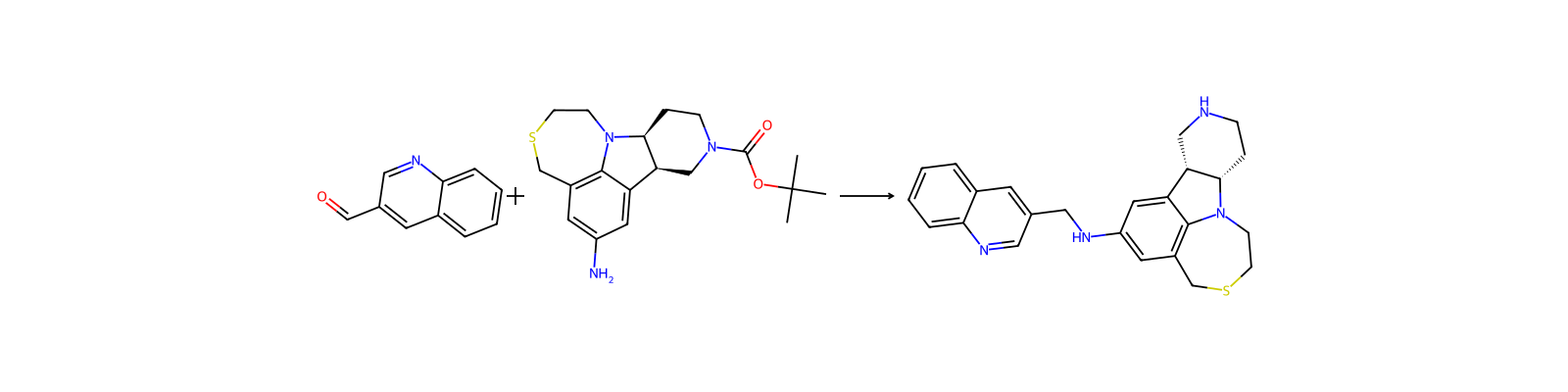

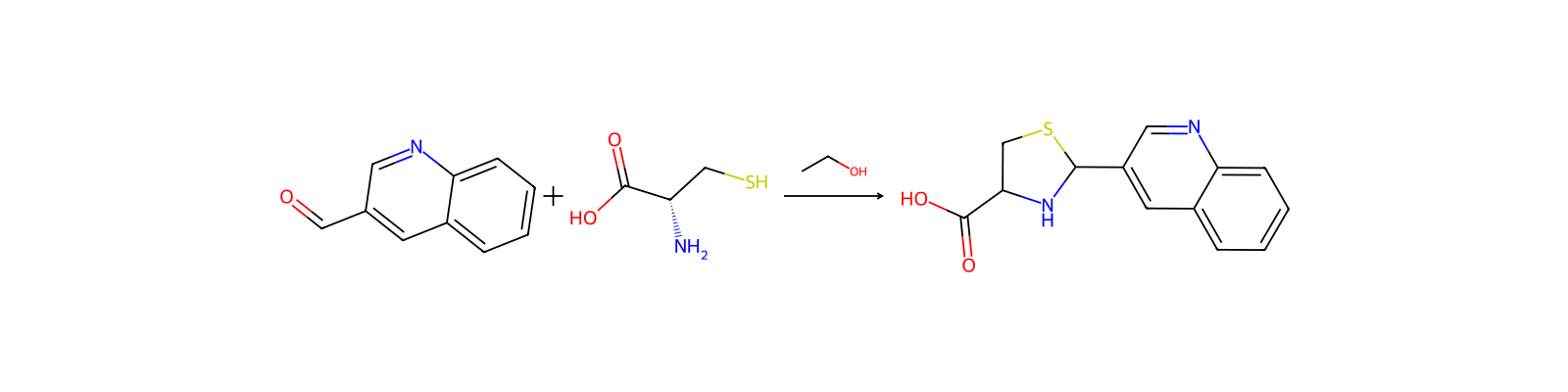



Linked notes
Loading…