
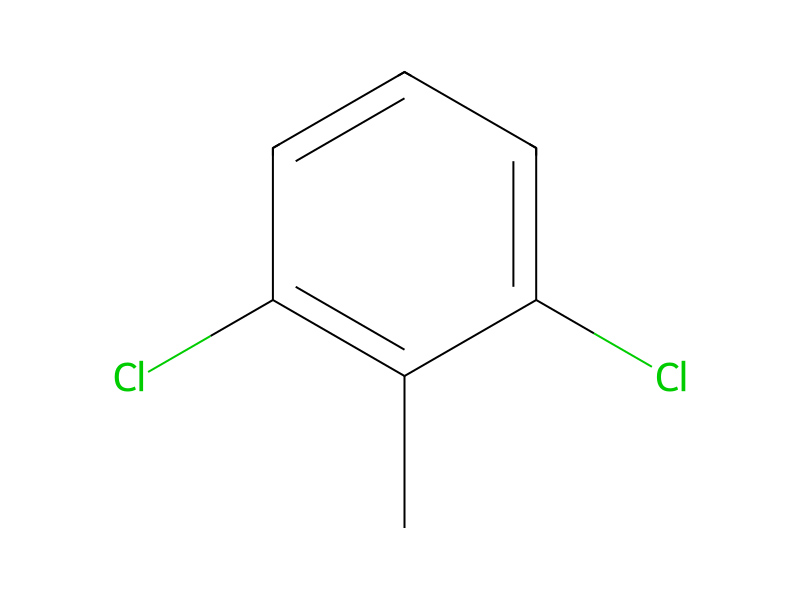
Basic information
- Standard SMILES
Cc1c(Cl)cccc1Cl- InChIKey
DMEDNTFWIHCBRK-UHFFFAOYSA-N- Molecular formula
- C7H6Cl2
- Average molar mass
- 161.03 g/mol
- Monoisotopic mass
- 159.98465555
Names & identifiers
- Preferred name
- 2,6-Dichlorotoluene
- IUPAC
- 1,3-dichloro-2-methylbenzene
- English name
- 2,6-Dichlorotoluene
- Molecular formula
- C7H6Cl2
- Molecular weight
- 161.03
Names & synonyms
2,6-DICHLOROTOLUENE118-69-4Benzene, 1,3-dichloro-2-methyl-Toluene, 2,6-dichloro-DTXSID3040697RVM09757WWNSC-60722DTXCID1020697RefChem:1060245204-269-71,3-Dichloro-2-methylbenzene1,3-dichloro-2-methyl-benzene
Show more names
DICHLOROTOLUENE MIXTUREorotoL2,6-DCT2.6-Dichloroto2,6-Dichlortoluol2,6-dichloro-toluen2,6-two chlorotoluene
MFCD00000576UNII-RVM09757WWHSDB 40202,6-Dichloro-toluene; 1,3-Dichloro-2-methylbenzene; 2,6-Dichloro-1-methylbenzene; 2,6-Dichlorotoluene; NSC 60722; Isoconazole Impurity 10NSC60722EINECS 204-269-7NSC 60722Toluene,6-dichloro-
Database identifiers
- CAS
118-69-4- PubChem CID
- 8368
- DTXSID
DTXSID3040697- ChEMBL
CHEMBL3182206- UNII
- RVM09757WW
- EC Number
- 204-269-7
- Nikkaji
- J2.476G
Properties
Computed structural properties
- XLogP
- 4.3
- Topological polar surface area
- 0 Ų
- Hydrogen bond donors
- 0
- Hydrogen bond acceptors
- 0
- Rotatable bonds
- 0
- Heavy atoms
- 9
- Formal charge
- 0
- Complexity
- 82.9
Experimental & physicochemical properties
Chemical ClassesOther Classes -> Halogenated Monoaromatics
SpringerMaterials PropertiesDielectric constant
LogP
Log Kow = 4.29
4.29
4.29
Density
1268.6 kg/cu m @ 20 °C
Liquid density = 1.254 g/cu cm at 20 °C
1.28 g/cm³
Relative density of the vapour/air-mixture at 20 °C (air = 1): 1.00
Solubility
Soluble in chloroform
Insoluble in water.
Solubility in water, g/100ml at 25 °C: (very poor)
Flash Point82 °C
Boiling Point
198 °C @ 760 mm Hg
198 °C
Melting Point
25.8 °C
2.8 °C
Vapor Pressure
0.35 [mmHg]
Vapor pressure, Pa at 25 °C: 34
Refractive IndexIndex of refraction: 1.5507 @ 20 °C/D
Physical Description
Liquid; mp = 2.8 deg C; [eChemPortal: SIDSUNEP] Colorless liquid; [MSDSonline]
COLOURLESS LIQUID WITH CHARACTERISTIC ODOUR.
Other Experimental Properties
The use of global and substituent physicochemical structure descriptors for quantitative structure-property relationship studies has been evaluated through direct and autocorrelated applications. Partial least squares analysis has been used to predict the partition coefficient for octanol/water, log P, for chlorinated alkylbenzenes. This investigation revealed that various of the physicochemical parameters considered were highly correlated with the partition coefficient and that partial least squares models based on global, direct or autocorrelated substituent parameters all seem to be adequate for prediction of log P, as compared to results obtained experimentally or by means of standard substituent calculation schemes. However, the use of autocorrelation vectors of connectivity, steric and electronic effects may be preferably due to a high degree of explanation of the molecular descriptor variance.
Physicochemical properties
- Melting point
- 2 °C · 2 °C
- Boiling point
- 196 · 196-203 °C(lit.)
- Density
- 1.254 g/mL · 1.254 g/mL at 25 °C(lit.)
- vapor pressure
- 34 Pa · 34Pa at 25℃
- refractive index
- 20 · n20/D 1.55(lit.)
- Flash point
- 82 °C · 82 °C
- storage temp.
- 30 °C · Store below +30°C.
- solubility
- Soluble in benzene, toluene and other organic solvents.
- form
- Liquid
- color
- Clear colorless to slightly yellow
- Water Solubility
- 24 mg/L · 24 mg/L (20 oC) insoluble
- BRN
- 1907194 · 1907194
- Henry's Law Constant
- 2.3 · 2.3×10-3 mol/(m3Pa) at 25℃, HSDB (2015)
- InChI
- 1S/C7H6Cl2/c1-5-6(8)3-2-4-7(5)9/h2-4H,1H3
- InChIKey
- DMEDNTFWIHCBRK-UHFFFAOYSA-N
- SMILES
- Cc1c(Cl)cccc1Cl
- LogP
- 4.25 at · 4.25 at 25℃
- CAS DataBase Reference
- 118 · 118-69-4(CAS DataBase Reference)
- FDA UNII
- 9757 WW · RVM09757WW
- NIST Chemistry Reference
- 1 · Benzene, 1,3-dichloro-2-methyl-(118-69-4)
- EPA Substance Registry System
- 2 · 2,6-Dichlorotoluene (118-69-4)
- UNSPSC Code
- 12352100 · 12352100
- NACRES
- 22 · NA.22
- Symbol(GHS)
- 8 · GHS08,GHS09
- Signal word
- Warning
- Hazard statements
- 361 · H361-H411-H227
- Precautionary statements
- 501 · P501-P273-P202-P210-P201-P280-P370+P378-P391-P308+P313-P403+P235-P405
- PPE
- Eyeshields, Faceshields, Gloves, type ABEK (EN14387) respirator filter
- Hazard Codes
- T,Xi,Xn
- Risk Statements
- 22 · 22-23-37/38-40-41-36/37/38
- Safety Statements
- 26 · 26-36/37/39-45-24/25-37/39
- RIDADR
- 2810 · UN 2810
- WGK Germany
- 2 · 2
- Hazard Note
- Harmful
- TSCA
- TSCA listed
- HazardClass
- 9 · 9
- PackingGroup
- III
- HS Code
- 29036990 · 29036990
- Storage Class
- 10 · 10 - Combustible liquids
- Hazard Classifications
- 2 · Aquatic Chronic 2
- Hazardous Substances Data
- 118 · 118-69-4(Hazardous Substances Data)
- REACH Registrations
- Active
- Limited Quantities
- 5 L · 5.0 L (1.3 gallons) (liquid) or 5.0 kg (11 lbs) (solid)
- Excepted Quantities
- Max Inner Pack (30g or 30ml) and Max Outer Pack (1Kg or 1L)
Safety & regulation
GHS classification
GHS Classification
This chemical does not meet GHS hazard criteria for 0.9% (1 of 114) of reports.
Danger
H302 (36.8%): Harmful if swallowed [Warning Acute toxicity, oral]
P261, P264, P264+P265, P270, P271, P273, P280, P301+P317, P302+P352, P304+P340, P305+P351+P338, P305+P354+P338, P317, P319, P321, P330, P332+P317, P337+P317, P362+P364, P391, P403+P233, P405, and P501 (click each P-code to see the statement)
Aggregated GHS information provided per 114 reports by companies from 12 notifications to the ECHA C&L Inventory. Each notification may be associated with multiple companies.
Warning
Hazard information
Regulatory Information
Chemical: Benzene, 1,3-dichloro-2-methyl-
Status: Active Update: 26-11-2018 https://echa.europa.eu/registration-dossier/-/registered-dossier/13588
Benzene, 1,3-dichloro-2-methyl-: Does not have an individual approval but may be used as a component in a product covered by a group standard. It is not approved for use as a chemical in its own right.
Fire HazardsCombustible. Gives off irritating or toxic fumes (or gases) in a fire. Above 82 °C explosive vapour/air mixtures may be formed.
Fire PotentialCombustible /Dichlorotoluene/
Hazards Summary
Histopathological changes to liver and kidney observed in feeding study with rats; Female rats exhibited atrophy of the thymus at the higher doses (300 and 1000 mg/kg); Reproductive toxicity (decrease in implantation number and viability four days after birth and abnormal nursing) was observed in feeding study with rats; No evidence of mutagenicity; [eChemPortal: SIDSUNEP] An irritant; [MSDSonline]
The major hazards encountered in the use and handling of 2,6-dichlorotoluene stem from its toxicologic properties and flammability. Exposure to 2,6-dichlorotoluene may be via inhalation or dermal routes, primarily resulting from occupational activities, including those associated with production and use as a high boiling solvent, and its production and use as a chemical intermediate in the manufacture of dyestuffs and herbicides. Because it is a strong irritant, personnel involved with 2,6-dichlorotoluene should wear boots, protective gloves, and goggles. Avoid breathing vapor, or, before entering a contaminated area, wear a full-face mask self-contained breathing apparatus which provides eye protection. Broken packages containing 2,6-dichlorotoluene should not be handled without protective equipment. Wash away any material which may have contacted the body with copious amounts of water or soap and water. While this substance must be moderately heated before ignition occurs, 2,6-dichlorotoluene is nevertheless considered a combustion hazard. For fires involving 2,6-dichlorotoluene, extinguish with alcohol foam, carbon dioxide, dry chemical, or water in flooding quantities as fog (solid streams of water may be ineffective). This substance should be stored away from sparks, flames, and other sources of ignition, even though it is considered normally stable even under fire exposure conditions. Shipping regulations and other DOT regulatory requirements should be consulted before transport. If a 2,6-dichlorotoluene spill occurs, keep material out of water sources and sewers by building dikes to contain the flow, as necessary. Use water spray to knock down vapor. Prior to implementing land disposal of waste residue (including waste sludge), consult with environmental regulatory agencies for guidance.
UN ClassificationUN Hazard Class: 9; UN Pack Group: III
Chemical DangersDecomposes on heating. This produces carbon monoxide, chlorine and hydrogen chloride. Reacts violently with strong oxidants and strong bases.
DOT Emergency Guidelines
/GUIDE 129: FLAMMABLE LIQUIDS (POLAR/WATER-MISCIBLE/NOXIOUS)/ Fire or Explosion: HIGHLY FLAMMABLE: Will be easily ignited by heat, sparks or flames. Vapors may form explosive mixtures with air. Vapors may travel to source of ignition and flash back. Most vapors are heavier than air. They will spread along ground and collect in low confined areas (sewers, basements, tanks). Vapor explosion hazard indoors, outdoors or in sewers. Those substances designated with "P" may polymerize explosively when heated or involved in a fire. Runoff to sewer may create fire or explosion hazard. Containers may explode when heated. Many liquids are lighter than water. /Chlorotoluenes/
/GUIDE 129: FLAMMABLE LIQUIDS (POLAR/WATER-MISCIBLE/NOXIOUS)/ Health: May cause toxic effects if inhaled or absorbed through skin. Inhalation or contact with material may irritate or burn skin and eyes. Fire will produce irritating, corrosive and/or toxic gases. Vapors may cause dizziness or suffocation. Runoff from fire control or dilution water may cause pollution. /Chlorotoluenes/
/GUIDE 129: FLAMMABLE LIQUIDS (POLAR/WATER-MISCIBLE/NOXIOUS)/ Public Safety: CALL Emergency Response Telephone Number ... . As an immediate precautionary measure, isolate spill or leak area for at least 50 meters (150 feet) in all directions. Keep unauthorized personnel away. Stay upwind. Keep out of low areas. Ventilate closed spaces before entering. /Chlorotoluenes/
/GUIDE 129: FLAMMABLE LIQUIDS (POLAR/WATER-MISCIBLE/NOXIOUS)/ Protective Clothing: Wear positive pressure self-contained breathing apparatus (SCBA). Structural firefighters' protective clothing will only provide limited protection. /Chlorotoluenes/
For more DOT Emergency Guidelines (Complete) data for 2,6-DICHLOROTOLUENE (8 total), please visit the HSDB record page.
Hazard Classes and Categories
Acute Tox. 4 (36.8%)
Flammable liquids - Category 4
Flammable liquids - Category 4
Standard Transportation Number49 131 48; Chlorotoluenes
Shipment Methods and Regulations
No person may /transport,/ offer or accept a hazardous material for transportation in commerce unless that person is registered in conformance ... and the hazardous material is properly classed, described, packaged, marked, labeled, and in condition for shipment as required or authorized by ... /the hazardous materials regulations (49 CFR 171-177)./
The International Air Transport Association (IATA) Dangerous Goods Regulations are published by the IATA Dangerous Goods Board pursuant to IATA Resolutions 618 and 619 and constitute a manual of industry carrier regulations to be followed by all IATA Member airlines when transporting hazardous materials.
The International Maritime Dangerous Goods Code lays down basic principles for transporting hazardous chemicals. Detailed recommendations for individual substances and a number of recommendations for good practice are included in the classes dealing with such substances. A general index of technical names has also been compiled. This index should always be consulted when attempting to locate the appropriate procedures to be used when shipping any substance or article.
Shipping Name/ Number DOT/UN/NA/IMO
UN 2238; Chlorotoluenes
IMO 3.3; Chlorotoluenes
Skin, Eye, and Respiratory Irritations... Strong irritant /4-Chlorotoluene/
Safety & protection
Fire FightingUse powder, water spray, carbon dioxide.
First Aid Measures
Fresh air, rest.
Rinse and then wash skin with water and soap.
Rinse with plenty of water (remove contact lenses if easily possible).
Rinse mouth.
Safe StorageProvision to contain effluent from fire extinguishing. Separated from strong bases and strong oxidants. Cool. Well closed. Keep in a well-ventilated room. Store in an area without drain or sewer access.
Fire Fighting Procedures
If material on fire or involved in fire: Do not extinguish fire unless flow can be stopped or safely confined. Use water in flooding quantities as fog. Solid streams of water may spread fire. Cool all affected containers with flooding quantities of water. Apply water from as far a distance as possible. Use foam, dry chemical, or carbon dioxide. /Chlorotoluenes/
Disposal Methods
SRP: At the time of review, criteria for land treatment or burial (sanitary landfill) disposal practices are subject to significant revision. Prior to implementing land disposal of waste residue (including waste sludge), consult with environmental regulatory agencies for guidance on acceptable disposal practices.
Spillage Disposal
Personal protection: filter respirator for organic gases and vapours adapted to the airborne concentration of the substance. Do NOT let this chemical enter the environment. Absorb remaining liquid in sand or inert absorbent. Then store and dispose of according to local regulations. Remove vapour with fine water spray.
Preventive Measures
If material not on fire and not involved in fire: Keep sparks, flames, and other sources of ignition away. Keep material out of water sources and sewers. Build dikes to contain flow as necessary. Use water spray to knock-down vapors. /Chlorotoluenes/
Personnel protection: Avoid breathing vapors. Keep upwind. ... Do not handle broken packages unless wearing appropriate personal protective equipment. Wash away any material which may have contacted the body with copious amounts of water or soap and water. /Chlorotoluenes/
SRP: The scientific literature for the use of contact lenses in industry is conflicting. The benefit or detrimental effects of wearing contact lenses depend not only upon the substance, but also on factors including the form of the substance, characteristics and duration of the exposure, the uses of other eye protection equipment, and the hygiene of the lenses. However, there may be individual substances whose irritating or corrosive properties are such that the wearing of contact lenses would be harmful to the eye. In those specific cases, contact lenses should not be worn. In any event, the usual eye protection equipment should be worn even when contact lenses are in place.
Eye PreventionWear safety goggles.
Fire PreventionNO open flames. Above 82 °C use a closed system and ventilation.
Inhalation RiskNo indication can be given about the rate at which a harmful concentration of this substance in the air is reached on evaporation at 20 °C.
Skin PreventionProtective gloves.
Ingestion PreventionDo not eat, drink, or smoke during work.
Toxicology
Environmental Fate
TERRESTRIAL FATE: Based on a recommended classification scheme(1), an estimated Koc value of 5,100(SRC), determined from a measured log Kow(2) and a recommended regression-derived equation(3), indicates that 2,6-dichlorotoluene will be immobile in soil(SRC). Volatilization of 2,6-dichlorotoluene may be important from moist soil surfaces(SRC) given an estimated Henry's Law constant of 4.2X10⁻³ atm-cu m/mole(SRC), using a recommended regression equation(4), and from dry soil surfaces(SRC) based on an estimated vapor pressure of 0.36 mm Hg(SRC), using a fragment constant method(5). Based on limited data, 2,6-dichlorotoluene may be resistant to biodegradation under anaerobic conditions(SRC). 2,6-Dichlorotoluene, at 1000 uM, was not readily biodegraded in an anoxic soil slurry; 30-35% biodegradation was reached after 150 days(6).
AQUATIC FATE: Based on a recommended classification scheme(1), an estimated Koc value of 5,100(SRC), determined from a measured log Kow(2) and a recommended regression-derived equation(1), indicates that 2,6-dichlorotoluene should adsorb to suspended solids and sediment in water(SRC). 2,6-Dichlorotoluene may volatilize from water surfaces based on an estimated Henry's Law constant of 4.2X10⁻³ atm-cu m/mole(SRC), developed using a fragment constant estimation method(3). Estimated half-lives for a model river and model lake are 4 hours and 5 days, respectively(1,SRC). An estimated BCF value of 1,100(1,SRC), from a measured log Kow(2), suggests that 2,6-dichlorotoluene will bioconcentrate in aquatic organisms(SRC), according to a recommended classification scheme(4). Based on limited data, 2,6-dichlorotoluene may be resistant to biodegradation under anaerobic conditions(SRC). 2,6-Dichlorotoluene, at 1000 uM, was not readily biodegraded in an anoxic soil slurry; 30-35% biodegradation was reached after 150 days(5).
ATMOSPHERIC FATE: According to a model of gas/particle partitioning of semivolatile organic compounds in the atmosphere(1), 2,6-dichlorotoluene, which has an estimated vapor pressure of 0.36 mm Hg at 25 °C(2), will exist solely as a vapor in the ambient atmosphere. Vapor-phase 2,6-dichlorotoluene is degraded in the atmosphere by reaction with photochemically produced hydroxyl radicals(SRC); the half-life for this reaction in air is estimated to be about 12 days(3,SRC).
Adverse EffectsOccupational hepatotoxin - Secondary hepatotoxins: the potential for toxic effect in the occupational setting is based on cases of poisoning by human ingestion or animal experimentation.
Effluent Concentrations
In a comprehensive survey of wastewater from 4000 industrial and publicly owned treatment works (POTWS) sponsored by the Effluent Guidelines Division of the USEPA, 2,6-dichlorotoluene was identified in discharges of the following industrial category (frequency of occurrence, median concn in ppb): organic chemicals (14; 26.7), publicly owned treatment works (5; 40.4)(1). The highest effluent concn was 1424 ppb in the paint and ink industry(1).
ICSC Environmental DataThe substance is toxic to aquatic organisms. It is strongly advised not to let the chemical enter into the environment.
Soil Adsorption/Mobility
The Koc of 2,6-dichlorotoluene is estimated as approximately 5,100(SRC), using a measured log Kow of 4.29(1) and a regression-derived equation(2,SRC). According to a recommended classification scheme(3), this estimated Koc value suggests that 2,6-dichlorotoluene will be immobile in soil(SRC).
Artificial Pollution Sources2,6-Dichlorotoluene's production and use as a chemical intermediate in the manufacture of dyestuffs and herbicides(1) may result in its release to the environment through various waste streams(SRC).
Environmental Biodegradation
Bacterial strains isolated from a landfill site previously used for disposal of chlorinated organic wastes were able to utilize 2,6-dichlorotoluene(1). 2,6-Dichlorotoluene, at 1000 uM, was not readily biodegraded in an anoxic soil slurry; 30-35% biodegradation was reached after 150 days(2).
Environmental Bioconcentration
An estimated BCF value of 1100 was calculated for 2,6-dichlorotoluene(SRC), using a measured log Kow of 4.29(1) and a recommended regression-derived equation(2). According to a recommended classification scheme(3), this BCF value suggests that bioconcentration in aquatic organisms will occur(SRC).
Volatilization from Water/Soil
The Henry's Law constant for 2,6-dichlorotoluene is estimated as 4.2X10⁻³ atm-cu m/mole(SRC) using a fragment constant estimation method(1). This value indicates that 2,6-dichlorotoluene will volatilize from water surfaces(2,SRC). Based on this Henry's Law constant, the volatilization half-life from a model river (1 m deep, flowing 1 m/sec, wind velocity of 3 m/sec) is estimated as approximately 4 hours(2,SRC). The volatilization half-life from a model lake (1 m deep, flowing 0.05 m/sec, wind velocity of 0.5 m/sec) is estimated as approximately 5 days(2,SRC). This rate may be attenuated by adsorption to sediment and particulate matter in the water(SRC). 2,6-Dichlorotoluene's estimated values for vapor pressure, 0.36 mm Hg(3,SRC), and Henry's Law constant(1,SRC) indicate that volatilization from dry and moist soil surfaces may occur(SRC).
Non-Human Toxicity Excerpts
A method was developed to analyze rat tissue, fat and blood for some chlorinated compounds found in an extract of soil from an industrial waste site. Extraction with hexane and ethyl ether-hexane (1 + 1) was followed by concentration over steam, and gas chromatographic analysis with an electron capture detector. Volatile compounds were analyzed in a glass column coated with 6% SP-2100 plus 4% OV-ll on Chromosorb W. Semivolatile compounds, chlorinated compounds and pesticides were analyzed in a 70 m glass capillary column coated with 5 OV-101. Phenols were analyzed in a glass column packed with 1% SP-1240 DA on Supelcoport. The most efficient means of separation was to use the same glass column for volatile compounds, a DB-5 fused silica capillary column for semivolatile compounds, pesticides and phenols, and the same 1% SP-1240 DA glass column for separation of beta-BHC and pentachlorophenol. Recoveries ranged from 86.3 + or - 9.1% (mean + or - SD) to 105 + or - 10.4%. Sensitivities for semivolatile chlorinated compounds, pesticides and phenols were 4 ng/g for fat, 1 ng/g for tissue and 0.2 ng/ml for blood. Sensitivities for volatile compounds were 4-fold higher (16, 4 and 0.8, respectively). Sensitivities for dichlorobenzenes and dichlorotoluenes were 8 ng/g for fat, 2 ng/g for tissue and 0.4 ng/ml for blood.
Environmental Abiotic Degradation
2,6-Dichlorotoluene reacts with photochemically-produced hydroxyl radicals in the atmosphere by addition to the aromatic ring and H-atom abstraction. The rate constant for the vapor-phase reaction of 2,6-dichlorotoluene with photochemically-produced hydroxyl radicals has been estimated as 1.3X10⁻¹² cu cm/molecule-sec at 25 °C(SRC) using a structure estimation method(1,SRC). This corresponds to an atmospheric half-life of about 12 days at an atmospheric concentration of 5X10+5 hydroxyl radicals per cu cm(1,SRC). 2,6-Dichlorotoluene has an absorption band at 274 nm that extends to about 300 nm(2); it is therefore a candidate for direct photolysis by sunlight. No information concerning photolysis rates could be found; however on irradiation with shorter UV light in dry, nitrogen purged methanol, rapid dehalogenation occurs(3).
Probable Routes of Human ExposureExposure to 2,6-dichlorotoluene would be primarily occupational via inhalation and dermal contact. (SRC)
Safety data
- PPE
- Eyeshields, Faceshields, Gloves, type ABEK (EN14387) respirator filter
- wgk
- 2
- tsca
- TSCA listed
- ridadr
- UN 2810
- hs_code
- 29036990
- risk_code
- 22-23-37/38-40-41-36/37/38
- Signal word
- Warning
- Symbol(GHS)
- GHS08,GHS09
- hazard_code
- T,Xi,Xn
- hazard_note
- Harmful
- safety_code
- 26-36/37/39-45-24/25-37/39
- hazard_class
- 9
- Storage Class
- 10 - Combustible liquids
- packing_group
- III
- Hazard statements
- H361-H411-H227
- Limited Quantities
- 5.0 L (1.3 gallons) (liquid) or 5.0 kg (11 lbs) (solid)
- Excepted Quantities
- Max Inner Pack (30g or 30ml) and Max Outer Pack (1Kg or 1L)
- REACH Registrations
- Active
- Hazard Classifications
- Aquatic Chronic 2
- Precautionary statements
- P501-P273-P202-P210-P201-P280-P370+P378-P391-P308+P313-P403+P235-P405
- Hazardous Substances Data
- 118-69-4(Hazardous Substances Data)
Chemistry & industry
Uses & manufacturing
Uses
Used to make dyes and dichlobenil (herbicide); Also used as a high boiling solvent; [HSDB] Used as an intermediate in the production of pesticides and pharmaceuticals; [eChemPortal: SIDSUNEP]
CHEM INT FOR DYES; HIGH BOILING SOLVENT
2,6-Dichlorotoluene is applied as a herbicide and dyestuff intermediate.
U.S. Production
(1975) PROBABLY GREATER 4.54X10+5 GRAMS
(1977) PROBABLY GREATER 4.54X10+5 GRAMS
Methods of Manufacturing
REACTION OF SODIUM NITRATE AND HYDROCHLORIC ACID WITH 2-AMINO-6-CHLOROTOLUENE FOLLOWED BY REACTION WITH CUPROUS CHLORIDE
2,6-Dichlorotoluene is obtained from the Sandmeyer reaction on 2-amino-6-chlorotoluene, ring chlorination and desulfonylation of p-toluene sulfonyl chloride, and from the chlorination and dealkylation of 4-tert-butyltoluene or 3,5-di-tert-butyltoluene.
...by chlorination of p-toluenesulfonyl chloride in the presence of antimonous chloride, followed by desulfonation. Alternatively it can be made by chlorination of 4-t-butyltoluene or 3,5-di-t-butyltoluene with subsequent dealkylation, or by means of a Sandmeyer reaction on 2-amino-6-chlorotoluene.
o-Chlorotoluene (ring chlorination; coproduced with 2,4-dichlorotoluene)
General Manufacturing Information
Benzene, 1,3-dichloro-2-methyl-: ACTIVE
/2,6-DICHLOROTOLUENE USED IN SYNTHESIS OF HERBICIDE DICHLOBENIL/ ... METHOD OF SYNTHESIS INVOLVED JOINT OXIDATION OF 2,6-DICHLOROTOLUENE & AMMONIA WITH VANADIUM PENTOXIDE CATALYST @ 360 °C.
Applications
Uses2,6-Dichlorotoluene is an important organic intermediate. It can be used in agrochemical, pharmaceutical and dyestuff field.
Preparation methods
Preparation2,6-Dichlorotoluene is obtained from the Sandmeyer reaction on 2-amino-6-chlorotoluene, ring chlorination and desulfonylation of p-toluene sulfonyl chloride, and from the chlorination and dealkylation of 4-tert-butyltoluene or 3,5-di-tert-butyltoluene.
Upstream & downstream products
Upstream raw materials
Downstream products
Suppliers50 total
国药集团化学试剂有限公司86-21-63210123 · [email protected]
梯希爱(上海)化成工业发展有限公司021-67121386 · [email protected]
上海阿拉丁生化科技股份有限公司400-6206333 13167063860 · [email protected]
武汉欣扬瑞和化学科技有限公司153-07155313 15307155313 · [email protected]
Dayang Chem (Hangzhou) Co.,Ltd.+86-0571-88938639 17705817739 · [email protected]
科瑞迪化学400-821-5857 021-64326257 · [email protected]
Syntechem Co.,Ltd[email protected]
Ark Pharm, Inc.847-367-3680 · [email protected]
上海迈瑞尔生化科技有限公司4006356688 18621169109 · [email protected]
阿法埃莎(中国)化学有限公司400-6106006 · [email protected]
安耐吉化学&3A(安徽泽升科技股份有限公司)400-0056266 · [email protected]
石家庄斯迪亚诺精细化工有限公司0311-89250318 13582355795 · [email protected]
上海瀚鸿科技股份有限公司021-54306202 13764082696 · [email protected]
河北缤享新材料科技有限公司+8618633865755 · [email protected]
上海景颜化工科技有限公司13817811078 · [email protected]
嘉兴市艾森化工有限公司0573-85285100 18627885956 · [email protected]
上海隆盛化工有限公司58099637 13585536065 · [email protected]
山东西亚化学有限公司13355009207 13355009207 · [email protected]
玛雅试剂+86 (573) 82222445 (0)18006601000 452520369 · [email protected]
四川库利南科技有限公司400-1166-196 18981987031 · [email protected]
天津希恩思生化科技有限公司400 638 7771 · [email protected]
Xiamen AmoyChem Co., Ltd+86-86-5926051114 · [email protected]
南京维奥化工有限公司Please Send Email 18652950785 · [email protected]
艾科试剂4008-755-333 18080918076 · [email protected]
上海思域化工科技有限公司86-21-34053660 · [email protected]
赛默飞世尔科技(中国)有限公司800-810-5118 · [email protected]
北京伊诺凯科技有限公司400-810-7969 010-59572699 · [email protected]
上海特伯化学科技有限公司+86-21-60341587 · [email protected]
TCI AMERICA800-4238616 · [email protected]
TOKYO CHEMICAL INDUSTRY CO., LTD.03-36680489 · [email protected]
TCI Europe320-37350700 · [email protected]
上海贤鼎生物科技有限公司4009209199 · [email protected]
越林试剂021-62960152 · [email protected]
北京环宇世纪化学科技有限公司hysj_bj.com
HBCChem, Inc.+1-510-219-6317 · [email protected]
日照力德士化工有限公司010-51268198 · [email protected]
上海石洋化工有限公司021-56795766 · [email protected]
上海爱蝶实业有限公司021-58957966 18930537195 · [email protected]
成都零六生物科技有限公司400-1166-196 13458535857 · [email protected]
广拓化学(上海)有限公司021-60899189-8001 18918189673 · [email protected]
雷丁试剂0510-85629785 18013409632 · [email protected]
上海麦克林生化科技股份有限公司15221275939 15221275939 · [email protected]
上海有朋化工有限公司021-69005955 13701776567 · [email protected]
上海凯赛化工有限公司021-33516722 13701817765 · [email protected]
上海彤源化工有限公司021-021-69182866 13701855675 · [email protected]
上海蓝润化学有限公司021-69515658 ; 69515628 13701998368 · [email protected]
上海容立化学科技有限公司021-69992220 13701886816 · [email protected]
上海康拓化工有限公司021-69185552 13701777608 · [email protected]
Sigma-Aldrich西格玛奥德里奇(上海)贸易有限公司021-61415566 800-8193336 · [email protected]
成都瑞欧克科技有限公司028-64353063 · [email protected]
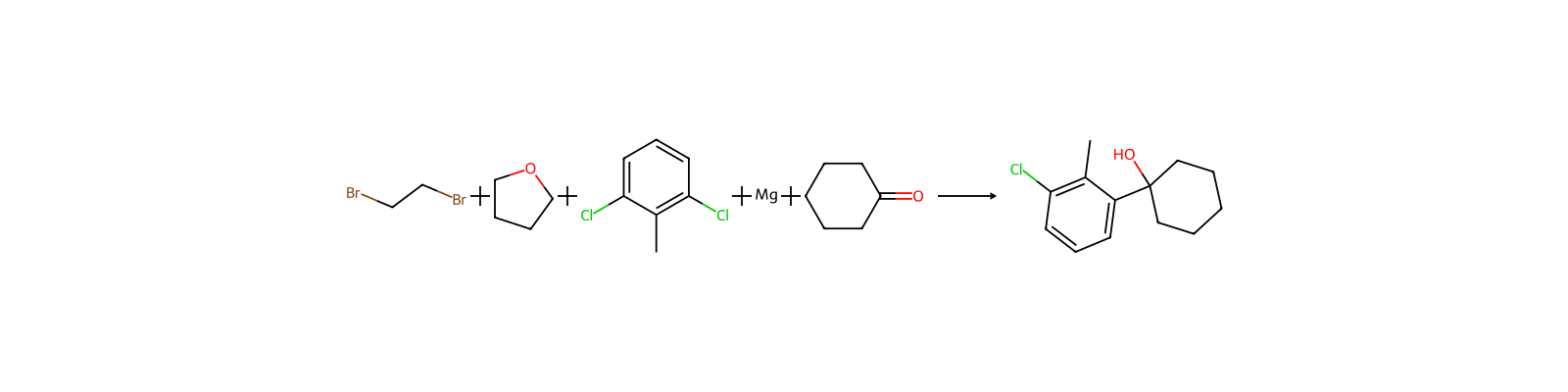
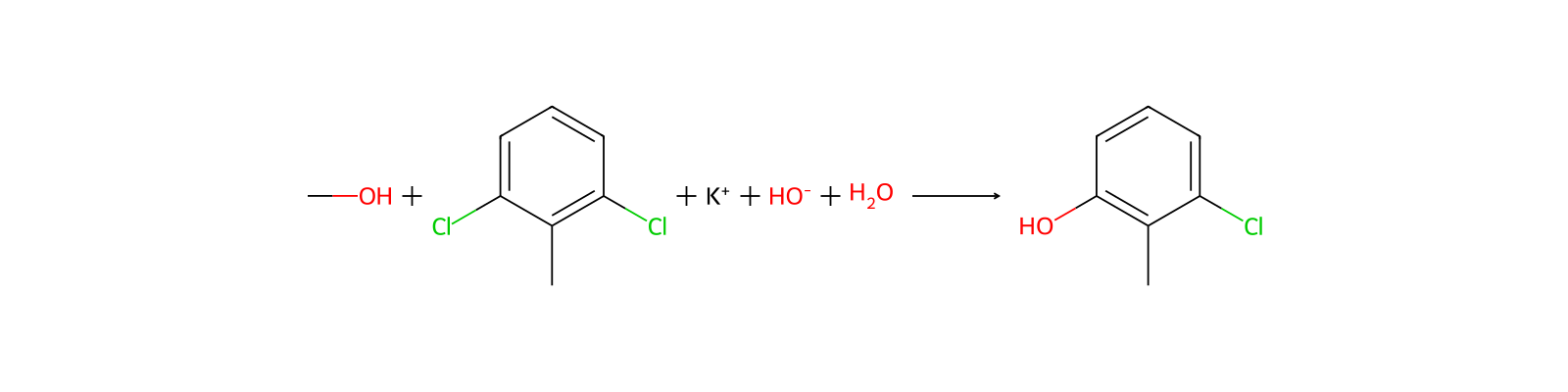
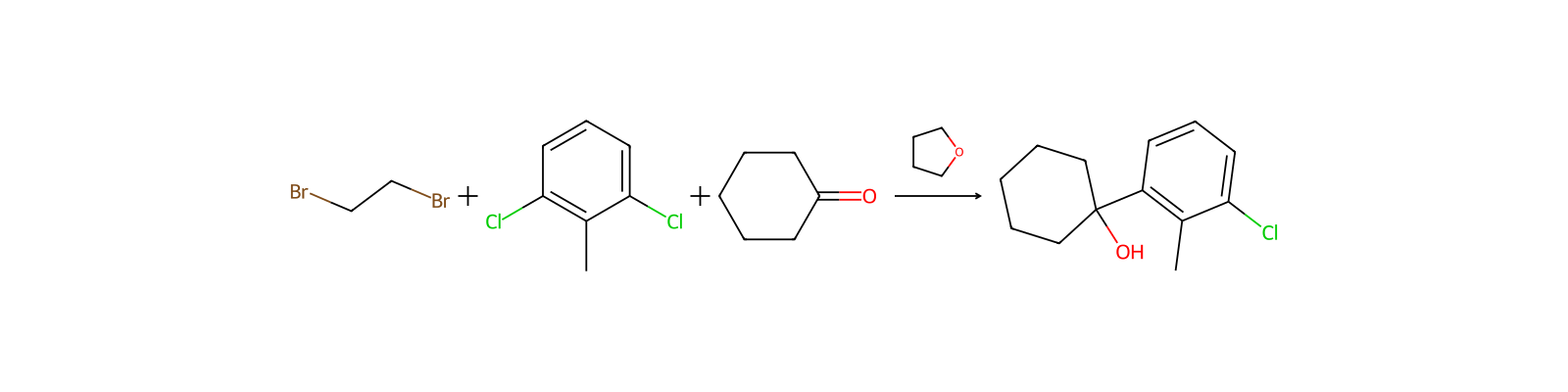
Related reactions
28 records



Linked notes
Loading…