Aminopropyltrimethoxysilane

Basic information
- CAS
13822-56-5- Standard SMILES
CO[Si](CCCN)(OC)OC- InChIKey
SJECZPVISLOESU-UHFFFAOYSA-N- Molecular formula
- C6H17NO3Si
- Average molar mass
- 179.29 g/mol
- Monoisotopic mass
- 179.09776993
Overview
reagent for making polymers; structure in first source
Names & identifiers
- Preferred name
- Aminopropyltrimethoxysilane
- IUPAC
- 3-trimethoxysilylpropan-1-amine
- English name
- 3-Aminopropyltrimethoxysilane
- Molecular formula
- C6H17NO3Si
- Molecular weight
- 179.29
Names & synonyms
13822-56-53-Aminopropyltrimethoxysilane(3-Aminopropyl)trimethoxysilane3-(Trimethoxysilyl)propylamine3-(Trimethoxysilyl)-1-propanamine1-Propanamine, 3-(trimethoxysilyl)-AminopropyltrimethoxysilaneSilane SC 3900Propylamine, 3-(trimethoxysilyl)-KBE 903SC 39007MRY0C9SB6
Show more names
APTMS3-(trimethoxysilyl)-1-propanaminγ-AminopropyltrimethoxysilaneA-1110CA0880KH0540
TMSPA cpdGENIOSIL GF 96NSC-838453-(aminopropyl)trimethoxysilaneRefChem:915703APS-3237-511-53-(Trimethoxysilyl)propan-1-amine
Database identifiers
- CAS
13822-56-5- PubChem CID
- 83756
- DTXSID
DTXSID0038833- UNII
- 7MRY0C9SB6
- EC Number
- 237-511-5
- Nikkaji
- J209.066J
Properties
Computed structural properties
- Topological polar surface area
- 53.7 Ų
- Hydrogen bond donors
- 1
- Hydrogen bond acceptors
- 4
- Rotatable bonds
- 6
- Heavy atoms
- 11
- Formal charge
- 0
- Complexity
- 89.6
Experimental & physicochemical properties
Chemical ClassesMetals -> Metalloid Compounds (Silicon)
Food Contact SubstancesFCS -> FDA Inventory of Food Contact Substances Listed in 21 CFR
Physical Description
Liquid
Clear to straw-colored liquid with an ammoniacal odor; [Gelest MSDS]
Physicochemical properties
- Melting point
- -60 °C · <-60°C
- Boiling point
- 91 · 91-92 °C15 mm Hg(lit.)
- Density
- 1.027 g/mL · 1.027 g/mL at 25 °C(lit.)
- vapor pressure
- 0 · 0-12790Pa at 20-25℃
- refractive index
- 20 · n20/D 1.424(lit.)
- Flash point
- 182 °F · 182 °F
- storage temp.
- 30 °C · Store below +30°C.
- solubility
- Chloroform (Slightly), Methanol (Slightly)
- form
- Liquid
Safety & regulation
Safety information is for reference only and does not replace the supplier’s Safety Data Sheet (SDS), applicable regulations, or professional assessment.
GHS classification
GHS Classification
This chemical does not meet GHS hazard criteria for 2.1% (22 of 1053) of reports.
Danger
H314 (48.7%): Causes severe skin burns and eye damage [Danger Skin corrosion/irritation]
P260, P264, P264+P265, P280, P301+P330+P331, P302+P352, P302+P361+P354, P304+P340, P305+P351+P338, P305+P354+P338, P316, P317, P321, P332+P317, P337+P317, P362+P364, P363, P405, and P501 (click each P-code to see the statement)
Aggregated GHS information provided per 1053 reports by companies from 19 notifications to the ECHA C&L Inventory. Each notification may be associated with multiple companies.
Hazard information
Regulatory Information
Chemical: 1-Propanamine, 3-(trimethoxysilyl)-
1-Propanamine, 3-(trimethoxysilyl)- is listed on the EPA's Chemical Data Reporting (CDR) system. Manufacturers and importers of 1-Propanamine, 3-(trimethoxysilyl)- are required to report information about their production and use of this chemical to the EPA under the Toxic Substances Control Act (TSCA). (40 eCFR Part 711)
Status: Active Update: 05-01-2023 https://echa.europa.eu/registration-dossier/-/registered-dossier/14372
3-(Trimethoxysilyl)-propylamine: Does not have an individual approval but may be used under an appropriate group standard
Other Safety InformationEvaluation - Chemicals that are unlikely to require further regulation to manage risks to environment
Hazards Summary
Reacts with water and moisture producing methanol; Vapor causes severe eye irritation; Liquid causes severe conjunctivitis and corneal damage; May cause skin irritation and contact dermatitis; A respiratory tract irritant; Oral toxicity associated with the hydrolysis product methanol; [Gelest MSDS] See Methyl alcohol. See 3-Chloropropyltrimethoxysilane.
Chemistry & industry
Uses & manufacturing
UsesPermitted for use as an inert ingredient in non-food pesticide products; [EPA]
U.S. Production2023: 1,000,000 - <5,000,000 lb
Consumer UsesBinder
Industry UsesAdhesion/cohesion promoter
Household ProductsInformation on 6 consumer products that contain 3-Aminopropyltrimethoxysilane in the following categories is provided:
General Manufacturing Information
Rubber Product Manufacturing
1-Propanamine, 3-(trimethoxysilyl)-: ACTIVE
Applications
Uses3-(Trimethoxysilyl)-1-propanamine is an amino-functional silane that may be used over a broad range of applications to give an improvement in the bond between a substrate, filler or reinforcement and resins that react with the amino group. 3-(Trimethoxysilyl)-1-propanamine is especially recommended to thermoplastic resins and thermosetting resins such as epoxy, PBT, polyurethane etc. It can improve reinforced plastic's physical properties and electric properties as flexural strength, compression strength and shear strength. It also can improve the dispersion and wet ability of filler in the high molecular materials. 3-(TRIMETHOXYSILYL)-1-PROPANAMINE is an excellent promoter of adhesion and sealant (such as polyurethane, epoxy, and phenol). In the glass wool and FRP products, it can be added into phenol resins to improve the wet resistance and mechanical performance. Applications: Superior adhesion promoter in RTV silicones and other hybrid sealants. Excellent adhesion promoter for difficult substrates such as ABC, PVC ad Poly Shyrene. Useful component in primer systems for hybrid and polyurethane sealants.
Uses(3-Aminopropyl)trimethoxysilane is used as a silane coupling agent on silver nanoparticles. It is also used in silanization processes. It is also used to prepare surface modified titanate nanotubes (TiNT).
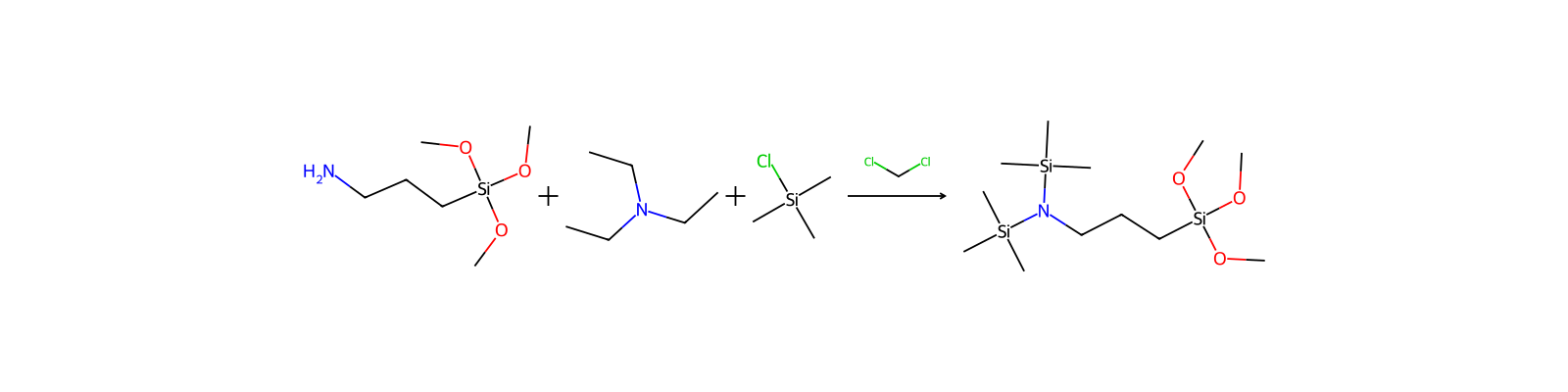
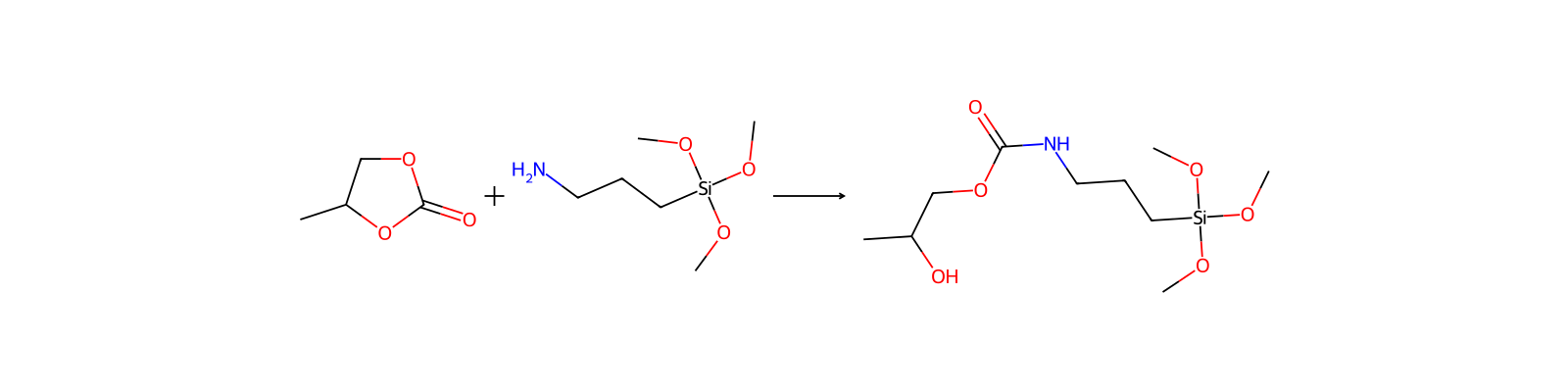
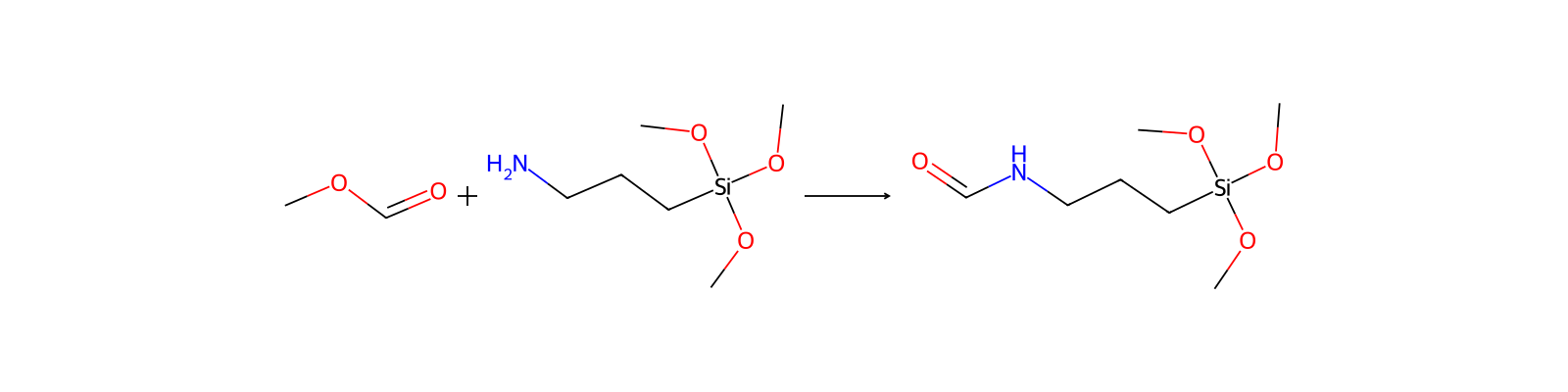
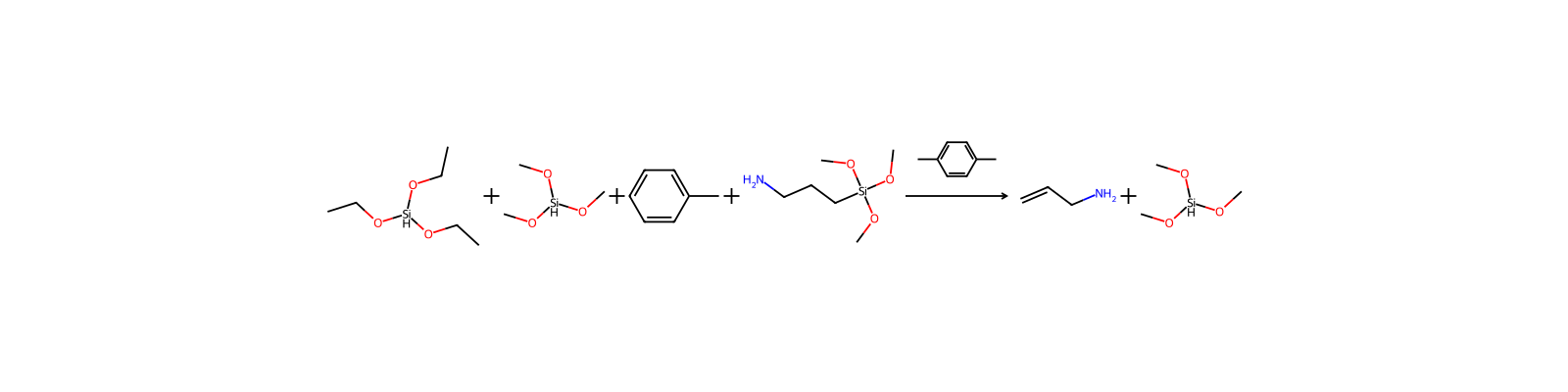
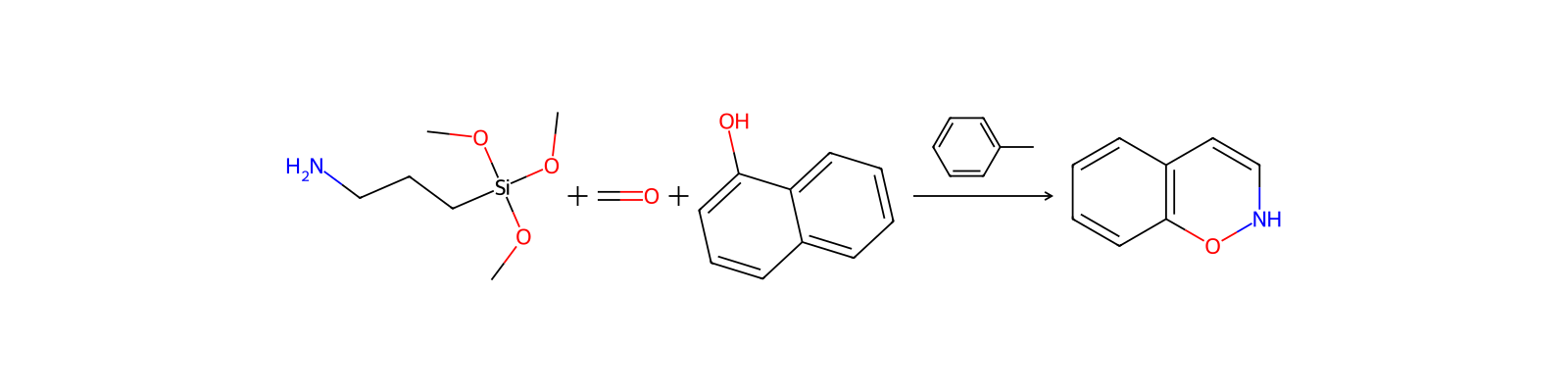
Related reactions
61 records



Compound notes
Loading…