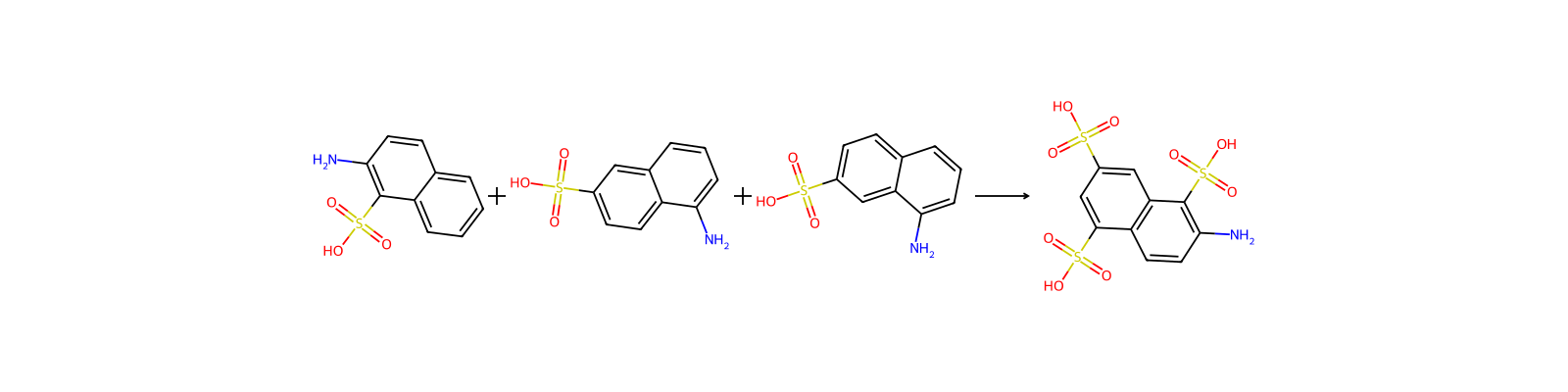
HRID 255629As reactant

119-28-8Nc1cccc2ccc(S(=O)(=O)O)cc12QEZZCWMQXHXAFG-UHFFFAOYSA-Ndetermination of nitrite formation from nitrate by bacteria
119-28-8DTXSID7059486CHEMBL4165941Safety information is for reference only and does not replace the supplier’s Safety Data Sheet (SDS), applicable regulations, or professional assessment.
This chemical does not meet GHS hazard criteria for 3.9% (2 of 51) of reports.
Danger
H314 (86.3%): Causes severe skin burns and eye damage [Danger Skin corrosion/irritation]
P260, P264, P280, P301+P330+P331, P302+P361+P354, P304+P340, P305+P354+P338, P316, P321, P363, P405, and P501 (click each P-code to see the statement)
Aggregated GHS information provided per 51 reports by companies from 6 notifications to the ECHA C&L Inventory.
Chemical: 2-Naphthalenesulfonic acid, 8-amino-
REACH registered substance: 8-aminonaphthalene-2-sulphonic acid (EC: 204-311-4)
2-Naphthalenesulfonic acid, 8-amino-: Does not have an individual approval but may be used under an appropriate group standard
UsesIntermediate of dyestuff
Uses8-Amino-2-naphthalenesulfonic acid can be used as a reactant to synthesize: Fe3O4/sulfonated polyaniline composite material via chemical oxidative polymerization with aniline in the presence of magnetite (Fe3O4) nanoparticles. Prismatic crystals of strychnine-8-ammonio-2-naphthalenesulfonate-water by heating with strychnine in water/ethanol solvent mixture.5-amino-9-dialkylamino benzo[a]phenoxazine dyes (Nile blue analogs) by condensation with N-alkyl or N-sulfo-propyl 4-arylazo-substituted 3-hydroxyaniline.


