

Basic information
- CAS
14447-15-5- Standard SMILES
CCCOC(=O)CC#N- InChIKey
NLFIMXLLXGTDME-UHFFFAOYSA-N- Molecular formula
- C6H9NO2
- Average molar mass
- 127.14 g/mol
- Monoisotopic mass
- 127.06332853
Names & identifiers
- Preferred name
- Propyl cyanoacetate
- IUPAC
- propyl 2-cyanoacetate
- English name
- Propyl cyanoacetate
- Molecular formula
- C6H9NO2
- Molecular weight
- 127.14
Names & synonyms
Propyl cyanoacetate14447-15-5EINECS 238-424-5AI3-32563RefChem:869732238-424-5propyl 2-cyanoacetaten-Propyl cyanoacetateAcetic acid, cyano-, propyl esterCyanoacetic Acid Propyl EsterAcetic acid, 2-cyano-, propyl esterMFCD00015784
Show more names
PCYAn-PropylcyanatePropylCyanoacetate>cyanoaceticacidpropylester4''-BRORNO-2-CHLOROCHALCONE
cyanoacetic acid n-propyl esterCyanessigsaurepropylesterSCHEMBL926842SCHEMBL1417199SCHEMBL1417200DTXSID5073400NLFIMXLLXGTDME-UHFFFAOYSA-AKOS015915500
Database identifiers
- CAS
14447-15-5- PubChem CID
- 84444
- DTXSID
DTXSID5073400- EC Number
- 238-424-5
- Nikkaji
- J134.025E
Properties
Computed structural properties
- XLogP
- 0.9
- Topological polar surface area
- 50.1 Ų
- Hydrogen bond donors
- 0
- Hydrogen bond acceptors
- 3
- Rotatable bonds
- 4
- Heavy atoms
- 9
- Formal charge
- 0
- Complexity
- 133
Physicochemical properties
- Boiling point
- 216 °C · 216 °C
- Density
- 1 · 1,03 g/cm3
- refractive index
- 1.42 · 1.4200-1.4230
- Flash point
- 108 °C · 108°C
- storage temp.
- Store at room temperature
- Water Solubility
- Insoluble in water
- form
- clear liquid
- pka
- 3.1 · 3.10±0.10(Predicted)
- color
- Colorless to Light yellow
- CAS DataBase Reference
- 14447 · 14447-15-5(CAS DataBase Reference)
- NIST Chemistry Reference
- N-Propyl cyanoacetate(14447-15-5)
- EPA Substance Registry System
- Acetic acid, cyano-, propyl ester (14447-15-5)
- Symbol(GHS)
- 7 · GHS07
- Signal word
- Warning
- Hazard statements
- 302 · H302+H312+H332-H315-H319
- Precautionary statements
- 261 · P261-P264-P270-P271-P280-P301+P312+P330-P302+P352+P312+P362+P364-P304+P340+P312-P305+P351+P338+P337+P313-P501
- Risk Statements
- 36 · 36/37/38-20/21/22
- Safety Statements
- 26 · 26-36/37/39
- HS Code
- 29269090 · 29269090
Safety & regulation
GHS classification
GHS Classification
Warning
H302 (100%): Harmful if swallowed [Warning Acute toxicity, oral];H312 (100%): Harmful in contact with skin [Warning Acute toxicity, dermal];H315 (100%): Causes skin irritation [Warning Skin corrosion/irritation];H319 (100%): Causes serious eye irritation [Warning Serious eye damage/eye irritation];H332 (100%): Harmful if inhaled [Warning Acute toxicity, inhalation];H335 (50%): May cause respiratory irritation [Warning Specific target organ toxicity, single exposure; Respiratory tract irritation]
P261, P264, P264+P265, P270, P271, P280, P301+P317, P302+P352, P304+P340, P305+P351+P338, P317, P319, P321, P330, P332+P317, P337+P317, P362+P364, P403+P233, P405, and P501 (click each P-code to see the statement)
Aggregated GHS information provided per 2 reports by companies from 2 notifications to the ECHA C&L Inventory. Each notification may be associated with multiple companies.;Information may vary between notifications depending on impurities, additives, and other factors. The percentage value in parenthesis indicates the notified classification ratio from companies that provide hazard codes. Only hazard codes with percentage values above 10% are shown. For more detailed information, please visit ECHA C&L website.
Hazard information
Hazard Classes and CategoriesAcute Tox. 4 (100%);Acute Tox. 4 (100%);Skin Irrit. 2 (100%);Eye Irrit. 2A (100%);Acute Tox. 4 (100%);STOT SE 3 (50%)
Safety data
- hs_code
- 29269090
- risk_code
- 36/37/38-20/21/22
- Signal word
- Warning
- Symbol(GHS)
- GHS07
- safety_code
- 26-36/37/39
- Hazard statements
- H302+H312+H332-H315-H319
- Precautionary statements
- P261-P264-P270-P271-P280-P301+P312+P330-P302+P352+P312+P362+P364-P304+P340+P312-P305+P351+P338+P337+P313-P501
Chemistry & industry
Suppliers100 total
梯希爱(上海)化成工业发展有限公司021-67121386 · [email protected]
Hebei Chuanghai Biotechnology Co., Ltd+86-17732866630 · [email protected]
武汉英诺医药科技有限公司+86-027-59232304 15387063101 · [email protected]
毕佳索(上海毕得医药科技股份有限公司)400-6005915 · [email protected]
上海麦克林生化科技股份有限公司021-50706066 15221275939 · [email protected]
山东海舟生物工程有限公司130-0567-0367 13006570367 · [email protected]
武汉欣扬瑞和化学科技有限公司153-07155313 15307155313 · [email protected]
杭州品高化工有限公司0571-87658025 · [email protected]
上海毕得医药科技股份有限公司400-1647117 13681763483 · [email protected]
苏州市森菲达化工有限公司18796480002 18796480002 · [email protected]
陕西缔都化学有限公司029-029-81123119 17391733320 · [email protected]
爱斯特(成都)生物制药股份有限公司+86-28-85122536 85324413 · [email protected]
湖北科乐精细化工有限公司027-59101668 19945030958 · [email protected]
Dayang Chem (Hangzhou) Co.,Ltd.+86-0571-88938639 17705817739 · [email protected]
Hebei Yanxi Chemical Co., Ltd.+86-17531190177 · [email protected]
武汉绿景丰华生物科技有限公司19972070065 · [email protected]
上海迈瑞尔生化科技有限公司4006356688 18621169109 · [email protected]
北京索莱宝科技有限公司010-50973130 17801761073 · [email protected]
安耐吉化学&3A(安徽泽升科技股份有限公司)400-0056266 · [email protected]
石家庄斯迪亚诺精细化工有限公司0311-89250318 13582355795 · [email protected]
武汉市恒久化工有限公司17317534732 17671758929 · [email protected]
欧利希(湖北)医药科技有限公司17316404525 17316404525 · [email protected]
上海泰坦科技股份有限公司400-6009262 15618770481 · [email protected]
常州市华阳科技有限公司+8615250961469 · [email protected]
湖北成海化工有限公司027-59220433 18327245847 · [email protected]
湖北微斯汀科技有限公司027-61182895 13367240285 · [email protected]
玛雅试剂+86 (573) 82222445 (0)18006601000 452520369 · [email protected]
ZHEJIANG JIUZHOU CHEM CO., LTD+86-0576225566889 +86-13454675544 · [email protected];[email protected];[email protected]
广东元丰化学试剂有限公司0751-2829979 13376591640 · [email protected]
艾科试剂4008-755-333 18080918076 · [email protected]
TCI AMERICA800-4238616 · [email protected]
TOKYO CHEMICAL INDUSTRY CO., LTD.03-36680489 · [email protected]
TCI Europe320-37350700 · [email protected]
深圳振强药物研发有限公司0755-66853366 13670046396 · [email protected]
PT CHEM GROUP LIMITED+86-85511178; +86-85511178 · [email protected]
HBCChem, Inc.+1-510-219-6317 · [email protected]
上海毕得医药科技股份有限公司400-164-7117 18317119277 · [email protected]
上海爱蝶实业有限公司021-58957966 18930537195 · [email protected]
成都零六生物科技有限公司400-1166-196 13458535857 · [email protected]
常州翔龙医药科技有限公司18915873328 18915873328 · [email protected]
南京恰风和医药科技有限公司025-57018978 18251899859 · [email protected]
上海孚一生物科技有限公司+86 (21) 61124340
青岛海智微元生物科技有限公司18317699790 18317699790 · [email protected]
九鼎化学(上海)科技有限公司4009209199 · [email protected]
厦门志信化学有限公司+86-5922680277 +86-13806087780 · [email protected]
泰安市江舟生物科技有限公司1385-13854830759 13854830759 · [email protected]
安阳鸿蒙新材料有限公司19588588067 · [email protected]
上海阿拉丁生化科技股份有限公司6206333 13167063860 · [email protected]
武汉多普乐生物医药有限公司+86-02787215551 19945035818 · [email protected]
山东崇成能源科技有限公司18253333366 · [email protected]
Related reactions
4 records
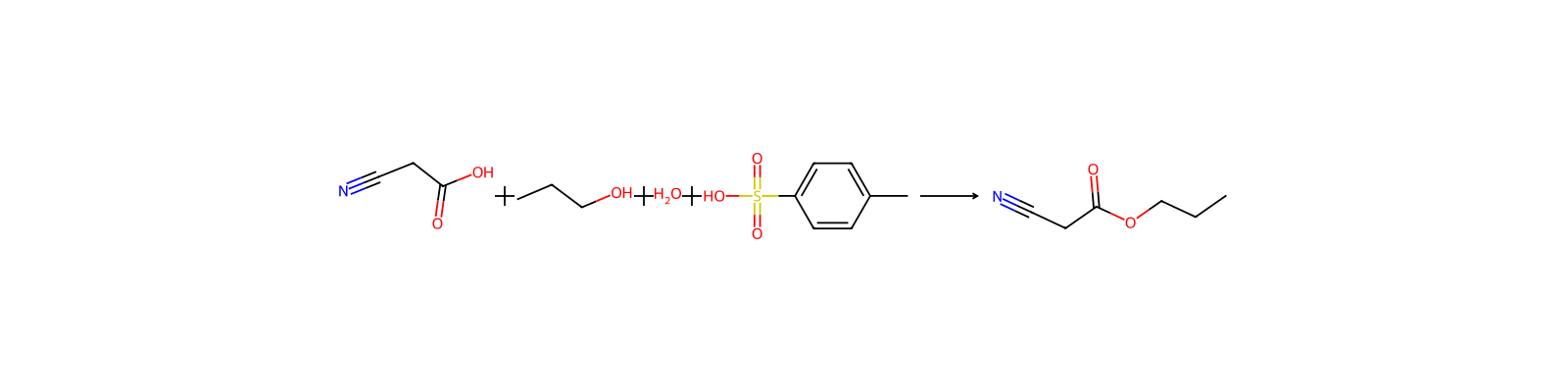


Compound notes
Loading…