
Basic information
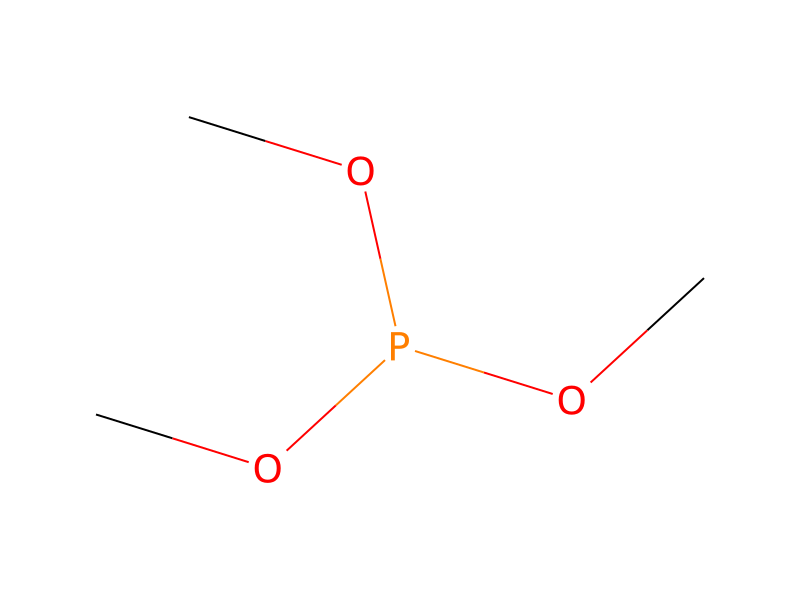
- Standard SMILES
COP(OC)OC- InChIKey
CYTQBVOFDCPGCX-UHFFFAOYSA-N- Molecular formula
- C3H9O3P
- Average molar mass
- 124.08 g/mol
- Monoisotopic mass
- 124.02893078
Overview
Trimethyl phosphite appears as a clear colorless liquid with a strong foul odor. Flash point 99 °F. Denser than water and insoluble in water. Vapors heavier than air. Used to make other chemicals.
Names & identifiers
- Preferred name
- Trimethyl phosphite
- IUPAC
- trimethyl phosphite
- English name
- Trimethyl phosphite
- Molecular formula
- C3H9O3P
- Molecular weight
- 124.08
Names & synonyms
TRIMETHYL PHOSPHITE121-45-9TrimethylphosphiteTrimethoxyphosphineMethyl phosphitePhosphorous acid, trimethyl esterTrimethylfosfitTrimethoxyfosfinFosforyn trojmetylowyDTXSID4026979Trimethyl ester of phosphorous acid26Q0321ZDG
Show more names
P(OCH3)3TrimethyPhosphiteAURORA KA-1230Trimethylphosphit
NSC-6513DTXCID106979CHEBI:183313RefChem:191757204-471-5PHOSPHOROUS ACID TRIMETHYL ESTERP(OMe)3NSC 6513
Database identifiers
- CAS
121-45-9- PubChem CID
- 8472
- DTXSID
DTXSID4026979- ChEMBL
CHEMBL3186364- ChEBI
CHEBI:183313- UNII
- 26Q0321ZDG
- EC Number
- 204-471-5
- Nikkaji
- J2.486D
Properties
Computed structural properties
- XLogP
- 0.1
- Topological polar surface area
- 27.7 Ų
- Hydrogen bond donors
- 0
- Hydrogen bond acceptors
- 3
- Rotatable bonds
- 3
- Heavy atoms
- 7
- Formal charge
- 0
- Complexity
- 31.7
Experimental & physicochemical properties
Chemical Classes
Other Classes -> Phosphite Compounds
Flammable agents - 3rd degree
SpringerMaterials PropertiesSchoenflies notation
Odor
Irritating, pungent, oily, pyridine-like odor
Distinctive, pungent odor.
Powerful, sickly odor
Density
1.046 at 68 °F (USCG, 1999) - Denser than water; will sink
1.0518 g/cu cm at 20 °C
Relative density (water = 1): 1.1
1.046
1.046 @25 °C
1.05
Color/FormColorless liquid
Solubility
Reacts with water (NIOSH, 2024)
Reacts (hydrolyzes) with water
Very soluble in ethanol, ether
Soluble in hexane, benzene, acetone, carbon tetrachloride, and kerosene
Solubility in water: reaction
Reacts
Flash Point
82 °F (USCG, 1999)
28 °C (82 °F) - closed cup
130 °F (54 °C) (open cup)
23 °C c.c.
82 °F
82 °F
Boiling Point
232 °F at 760 mmHg (USCG, 1999)
110 °C
111.5 °C
232 °F
232 °F
Decomposition
Hazardous decomposition products formed under fire conditions - Carbon oxides, oxides of phosphorus.
... When heated to decomposition can emit highly toxic fumes of /phosphorus oxides/.
Melting Point
-108 °F (USCG, 1999)
-78 °C
-78 °C
-108 °F
-78 °C
-108 °F
Vapor Density
4.3 (Air = 1)
Relative vapor density (air = 1): 4.3
Odor Threshold
Odor Threshold Low: 0.001 [ppm]
Odor threshold (tested by means of a laboratory test panel) are on the order of 0.1 ppb.
Physicochemical properties
- Melting point
- 78 °C · −78 °C(lit.)
- Boiling point
- 111 · 111-112 °C(lit.)
- Density
- 1.052 g/mL · 1.052 g/mL at 25 °C(lit.)
- vapor density
- 4.3 · 4.3 (vs air)
- vapor pressure
- 17 mm · 17 mm Hg ( 20 °C)
- refractive index
- 20 · n20/D 1.408(lit.)
- Flash point
- 82 °F · 82 °F
- storage temp.
- 2 · 2-8°C
- solubility
- Chloroform, DMSO (Sparingly)
- form
- Liquid
- color
- Colorless
- Specific Gravity
- 1.052 · 1.052
- explosive limit
- 5.2 · 5.2-61.2%(V)
- Water Solubility
- Hydrolyzes with water.
- Sensitive
- Air & Moisture Sensitive
- Hydrolytic Sensitivity
- 4 · 4: no reaction with water under neutral conditions
- BRN
- 956570 · 956570
- Henry's Law Constant
- 9 · 9.0×10-1 mol/(m3Pa) at 25℃, HSDB (2015)
- Exposure limits
- 10 mg/m3 · TLV-TWA 10 mg/m3 (2 ppm) (ACGIH).
- Stability
- Moisture Sensitive
- InChI
- 1S/C3H9O3P/c1-4-7(5-2)6-3/h1-3H3
- InChIKey
- CYTQBVOFDCPGCX-UHFFFAOYSA-N
- SMILES
- P(OC)(OC)OC
- CAS DataBase Reference
- 121 · 121-45-9(CAS DataBase Reference)
- FDA UNII
- 26 Q0321ZDG · 26Q0321ZDG
- NIST Chemistry Reference
- Phosphorous acid, trimethyl ester(121-45-9)
- EPA Substance Registry System
- Trimethyl phosphite (121-45-9)
- UNSPSC Code
- 12352108 · 12352108
- NACRES
- 22 · NA.22
- Symbol(GHS)
- 2 · GHS02
- Signal word
- Warning
- Hazard statements
- 226 · H226
- Precautionary statements
- 210 · P210-P233-P240-P241-P242-P243-P280-P303+P361+P353-P370+P378-P403+P235-P501
- target organs
- Respiratory system
- Hazard Codes
- Xn,T,F,Xi
- Risk Statements
- 10 · 10-22-36/37/38-41-37/38-65-48/23/24/25-11-46-45-67-66-36
- Safety Statements
- 26 · 26-39-62-45-16-53
- OEB
- B
- OEL
- 2 ppm · TWA: 2 ppm (10 mg/m3)
- RIDADR
- 2329 · UN 2329
- WGK Germany
- 1 · 1
- RTECS
- 1400000 · TH1400000
- F
- 10 · 10-13-21
- Autoignition Temperature
- 250 °C · 250 °C
- TSCA
- TSCA listed
- HS Code
- 2920 · 2920 23 00
- HazardClass
- 3 · 3
- PackingGroup
- III
- Storage Class
- 3 · 3 - Flammable liquids
- Hazard Classifications
- 4 OralEye · Acute Tox. 4 OralEye Irrit. 2Flam. Liq. 3Skin Irrit. 2STOT SE 3
- Hazardous Substances Data
- 121 · 121-45-9(Hazardous Substances Data)
- Toxicity
- 50 orally · LD50 orally in Rabbit: 1600 mg/kg LD50 dermal Rabbit 2600 mg/kg
- REACH Registrations
- Active
- Limited Quantities
- 5 L · 5.0 L (1.3 gallons) (liquid)
- Excepted Quantities
- Max Inner Pack (30g or 30ml) and Max Outer Pack (1Kg or 1L)
Safety & regulation
GHS classification
GHS Classification
Danger
H226 (99.6%): Flammable liquid and vapor [Warning Flammable liquids]
P203, P210, P233, P240, P241, P242, P243, P261, P264, P264+P265, P270, P271, P280, P301+P317, P302+P352, P303+P361+P353, P304+P340, P305+P351+P338, P305+P354+P338, P317, P318, P319, P321, P330, P332+P317, P337+P317, P362+P364, P370+P378, P403+P233, P403+P235, P405, and P501 (click each P-code to see the statement)
Aggregated GHS information provided per 236 reports by companies from 15 notifications to the ECHA C&L Inventory. Each notification may be associated with multiple companies.
Danger
H226: Flammable liquid and vapor [Warning Flammable liquids]
Hazard information
Regulatory Information
Chemical: Phosphorous acid, trimethyl ester
Phosphorous acid, trimethyl ester is listed on the EPA's Chemical Data Reporting (CDR) system. Manufacturers and importers of Phosphorous acid, trimethyl ester are required to report information about their production and use of this chemical to the EPA under the Toxic Substances Control Act (TSCA). (40 eCFR Part 711)
Status: Active Update: 22-03-2018 https://echa.europa.eu/registration-dossier/-/registered-dossier/13214
Phosphorous acid, trimethyl ester: HSNO Approval: HSR001231 Approved with controls
The New Jersey Worker and Community Right to Know Act requires public and private employers to provide information about hazardous substances at their workplaces. (N.J.S.A. 34:5A-1 et. seq.)
Other Safety InformationIMAP assessments - Phosphorous acid, trimethyl ester: Human health tier II assessment
DOT LabelFlammable Liquid
Fire Hazards
Special Hazards of Combustion Products: Toxic fumes of POx. (USCG, 1999)
· HIGHLY FLAMMABLE: Will be easily ignited by heat, sparks or flames.
Flammable. Gives off irritating or toxic fumes (or gases) in a fire. Above 23 °C explosive vapour/air mixtures may be formed.
Fire PotentialFlammable liquid when exposed to heat, flame, or oxidizers.
Health Hazards
Symptoms of exposure may include burning sensation, coughing, wheezing, laryngitis, shortness of breath, headache, nausea, and vomiting. (USCG, 1999)
· May cause toxic effects if inhaled or absorbed through skin.
Hazards Summary
Corrosive to skin; [Quick CPC] Liquid causes second or third degree burns after short contact. [CHRIS] Dose dependent cataract formation occurs in rats exposed to concentrations above 100 ppm. Lung inflammation occurs in animals exposed at 600 ppm. Human subjects complain of objectionable odor above 20 ppm. No adverse health effects were found in 179 employees exposed regularly to 0.3 to 8 ppm. [ACGIH] A severe skin, eye, and respiratory tract irritant; [ICSC]
DOT ID and Guide
2329 130
2329 130
Reactive GroupSulfonates, Phosphonates, and Thiophosphonates, Organic
UN ClassificationUN Hazard Class: 3; UN Pack Group: III
Special Reports
Organization for the Prohibition of Chemical Weapons; Convention on the Prohibition of the Development, Production, Stockpiling and Use of Chemical Weapons and Their Destruction. The Chemical Weapons Convention (CWC) is an international treaty which bans the development, production, stockpiling, and transfer or use of chemical weapons. The Convention mandates the destruction and prohibition of chemical weapons and related facilities and provides for restrictions on international trade in toxic chemicals and precursors.[Available from, as of November 12, 2008: http://www.opcw.org]
Reactivity AlertsHighly Flammable
Safety & protection
Fire Fighting
Excerpt from ERG Guide 130 [Flammable Liquids (Water-Immiscible / Noxious)]:
Use foam, carbon dioxide, powder. In case of fire: keep drums, etc., cool by spraying with water. NO direct contact with water.
First Aid Measures
Fresh air, rest.
Rinse and then wash skin with water and soap.
First rinse with plenty of water for several minutes (remove contact lenses if easily possible), then refer for medical attention.
Rinse mouth.
Accidental Release Measures
· CALL 911. Then call emergency response telephone number on shipping paper. If shipping paper not available or no answer, refer to appropriate telephone number listed on the inside back cover.
· ELIMINATE all ignition sources (no smoking, flares, sparks or flames) from immediate area.
First Aid
Excerpt from NIOSH Pocket Guide for Trimethyl phosphite:
General First Aid:
(General first aid procedures)
Safe StorageFireproof. Separated from oxidants and strong bases.
Exposure Control and Personal Protection· Wear positive pressure self-contained breathing apparatus (SCBA).
Fire Fighting Procedures
Suitable extinguishing media: Dry powder.
Advice for firefighters: Wear self-contained breathing apparatus for firefighting if necessary.
To fight fire, use water, foam, fog, /carbon dioxide/.
Storage Conditions
Keep container tightly closed in a dry and well-ventilated place. Containers which are opened must be carefully resealed and kept upright to prevent leakage. Never allow product to get in contact with water during storage. Storage class (TRGS 510): Flammable liquids.
Cleanup Methods
ACCIDENTAL RELEASE MEASURES: Personal precautions, protective equipment and emergency procedures: Use personal protective equipment. Avoid breathing vapors, mist or gas. Ensure adequate ventilation. Remove all sources of ignition. Evacuate personnel to safe areas. Beware of vapors accumulating to form explosive concentrations. Vapors can accumulate in low areas. Environmental precautions: Prevent further leakage or spillage if safe to do so. Do not let product enter drains. Methods and materials for containment and cleaning up: Contain spillage, and then collect with an electrically protected vacuum cleaner or by wet-brushing and place in container for disposal according to local regulations. Do not flush with water.
Nonfire Spill ResponseExcerpt from ERG Guide 130 [Flammable Liquids (Water-Immiscible / Noxious)]:
Disposal Methods
SRP: Recycle any unused portion of the material for its approved use or return it to the manufacturer or supplier. Ultimate disposal of the chemical must consider: the material's impact on air quality; potential migration in air, soil or water; effects on animal, aquatic and plant life; and conformance with environmental and public health regulations. If it is possible or reasonable use an alternative chemical product with less inherent propensity for occupational harm/injury/toxicity or environmental contamination.
SRP: Wastewater from contaminant suppression, cleaning of protective clothing/equipment, or contaminated sites should be contained and evaluated for subject chemical or decomposition product concentrations. Concentrations shall be lower than applicable environmental discharge or disposal criteria. Alternatively, pretreatment and/or discharge to a permitted wastewater treatment facility is acceptable only after review by the governing authority and assurance that "pass through" violations will not occur. Due consideration shall be given to remediation worker exposure (inhalation, dermal and ingestion) as well as fate during treatment, transfer and disposal. If it is not practicable to manage the chemical in this fashion, it must be evaluated in accordance with EPA 40 CFR Part 261, specifically Subpart B, in order to determine the appropriate local, state and federal requirements for disposal.
Product: Burn in a chemical incinerator equipped with an afterburner and scrubber but exert extra care in igniting as this material is highly flammable. Offer surplus and non-recyclable solutions to a licensed disposal company. Contact a licensed professional waste disposal service to dispose of this material; Contaminated packaging: Dispose of as unused product.
Principles and methods for destruction of chemical weapons: ... "Destruction of chemical weapons" means a process by which chemicals are converted in an essentially irreversible way to a form unsuitable for production of chemical weapons, and which in an irreversible manner renders munitions and other devices unusable as such. ... Each ... /nation/ shall determine how it shall destroy chemical weapons, except that the following processes may not be used: dumping in any body of water, land burial or open-pit burning. It shall destroy chemical weapons only at specifically designated and appropriately designed and equipped facilities. ... Each ... /nation/ shall ensure that its chemical weapons destruction facilities are constructed and operated in a manner to ensure the destruction of the chemical weapons; and that the destruction process can be verified under the provisions of this Convention.
Spillage DisposalPersonal protection: self-contained breathing apparatus. Collect leaking and spilled liquid in sealable containers as far as possible.
Toxicology
Target OrgansEyes, skin, respiratory system, reproductive system
Environmental Fate
TERRESTRIAL FATE: Trimethyl phosphite hydrolyzes rapidly in the presence of water(1,2) and therefore, adsorption to soil, volatilization from moist soil surfaces, and biodegradation are not expected to be important fate processes(SRC). The hydrolysis rate of trimethyl phosphite is expected to be similar to the hydrolysis rate of triethyl phosphite(SRC). In acid solution (pH=4) triethyl phosphite hydrolyzes immediately forming diethyl phosphite and ethanol(3). At pH 7, triethyl phosphite hydrolyzes completely within 20 minutes; after 3 hours 89.3% diethyl phosphite and 10.7% monoethyl phosphite are formed(3). At pH 9, the half-life of triethyl phosphite in water is approximately 5.1 hours; 70% of the substance remains unhydrolyzed after 3 hours(3). Trimethyl phosphite is expected to volatilize from dry soil surfaces(SRC) based upon a vapor pressure of 24 mm Hg at 25 °C(4). Dimethyl phosphite, an hydrolysis product of trimethyl phosphite, reached 48% of its theoretical BOD in 4 weeks in the Japanese MITI test indicating it is inherently biodegradable, but not readily biodegradable(1).
AQUATIC FATE: Trimethyl phosphite hydrolyzes rapidly in the presence of water(1,2) and therefore, adsorption to sediment, volatilization from water surfaces, bioconcentration and biodegradation are not expected to be important fate processes(SRC). Trimethyl phosphite hydrolyzes in water to form dimethyl phosphite and methanol(1,2). The hydrolysis rate of trimethyl phosphite is expected to be similar to the hydrolysis rate of triethyl phosphite(SRC). In acid solution (pH=4) triethyl phosphite hydrolyzes immediately forming diethyl phosphite and ethanol(3). At pH 7, triethyl phosphite hydrolyzes completely within 20 minutes; after 3 hours 89.3% diethyl phosphite and 10.7% monoethyl phosphite are formed(3). At pH 9, the half-life of triethyl phosphite in water is approximately 5.1 hours; 70% of the substance remains unhydrolyzed after 3 hours(3). Dimethyl phosphite, an hydrolysis product of trimethyl phosphite, reached 48% of its theoretical BOD in 4 weeks in the Japanese MITI test indicating it is inherently biodegradable, but not readily biodegradable(1).
ATMOSPHERIC FATE: According to a model of gas/particle partitioning of semivolatile organic compounds in the atmosphere(1), trimethyl phosphite, which has a vapor pressure of 24 mm Hg at 25 °C(2), is expected to exist solely as a vapor in the ambient atmosphere. Vapor-phase trimethyl phosphite is degraded in the atmosphere by reaction with photochemically-produced hydroxyl radicals(SRC); the half-life for this reaction in air is estimated to be 33 minutes(SRC), calculated from its rate constant of 7.1X10⁻¹⁰ cu cm/molecule-sec at 25 °C(3). Trimethyl phosphite does not absorb at wavelengths >290 nm(4) and therefore is not expected to be susceptible to direct photolysis by sunlight(SRC).
Adverse EffectsDermatotoxin - Skin burns.
Exposure Routes
The substance can be absorbed into the body through the skin and by ingestion.
inhalation, ingestion, skin and/or eye contact
Toxicity Summary
IDENTIFICATION AND USE: Trimethyl phosphite (TMP) is a colorless liquid. It is used primarily as an intermediate in the manufacture of pesticides. It is also used as a fireproofing agent in the production of textiles, as an intermediate in the production of flame-retardant polymers for polyurethane foams, and as a catalyst. HUMAN EXPOSURE AND TOXICITY: Examination of 179 employees involved in manufacturing of TMP failed to reveal any indications of ocular changes or other adverse effects on worker health associated with occupational exposure to trimethyl phosphite. It is only moderately toxic by oral ingestion and an irritant to eyes, skin and upper respiratory system. ANIMAL STUDIES: Topical application of trimethyl phosphite produced moderately severe but persistent irritation on rabbit skin. Instillation of undiluted trimethyl phosphite into the rabbit eye caused severe ocular irritation and swelling, which lasted for several days. No permanent damage to the eye could be detected. Marked mortality (> 70%) /was demonstrated/ among rats exposed at 600 ppm, 6 hours/day, 5 days/week for 4 weeks. Ten percent of the rats exposed at 300 ppm also died. Gross histological evidence of lung inflammation was observed in the animals exposed at 600 ppm, but no such changes occurred in those subjected to 300 or 100 ppm. Clinical signs of ocular irritation occurred in the animals exposed at 100 ppm or higher concentrations. Severe cataract developed in the 600 ppm exposure group, and mild cataracts from 300 ppm; 100 ppm exposures caused mild, reversible "striate opacities" of the lenses of a few animals. TMP was administered by gavage to pregnant rats at rates of 16, 49, or 164 mg/kg/day, on gestation Days 6 through 15. Acetyl salicylic acid (250 mg/kg/day) was also administered to a group of rats as a positive control. Teratologic evaluation revealed gross fetal abnormalities, skeletal defects, and soft tissue defects at a dose rate of 164 mg/kg/day of trimethyl phosphite, but not at the two lesser rates. An increased frequency of fetal resorption was also observed at 164 mg/kg/day. Trimethyl phosphite was genotoxic in three separate mouse lymphoma assays, either with or without microsomal activation. Trimethyl phosphite was also positive in a battery of Drosophila melanogaster mutagenicity assays and in a bacterial DNA damage/repair suspension assay using various strains of Escherichia coli and Salmonella typhimurium. Trimethyl phosphite failed to show evidence for genetic toxicity in Salmonella and Saccharomyces strains, in a cell transformation assay, in a bacterial DNA repair assay (Escherichia coli, Salmonella typhimurium) or in two Salmonella/mammalian-microsome preincubation assays.
Signs and Symptoms
Cough. Sore throat.
Redness. Pain.
Redness. Pain.
irritation eyes, skin, upper respiratory system; dermatitis; In Animals: teratogenic effects
Ongoing Test Status
EPA has released the Interactive Chemical Safety for Sustainability (iCSS) Dashboard. The iCSS Dashboard provides an interactive tool to explore rapid, automated (or in vitro high-throughput) chemical screening data generated by the Toxicity Forecaster (ToxCast) project and the federal Toxicity Testing in the 21st century (Tox21) collaboration. /The title compound was tested by ToxCast and/or Tox21 assays/[USEPA; ICSS Dashboard Application; Available from, as of July 7, 2016: http://actor.epa.gov/dashboard/]
ICSC Environmental DataEnvironmental effects from the substance have not been investigated adequately.
Soil Adsorption/MobilityAdsorption to soils or suspended solids and sediment in water is not expected to be an important fate process(SRC) because trimethyl phosphite reacts (hydrolyzes) in water(1).
TSCA Test Submissions
The ability of 1,3-dioxolane to induce morphological transformation in the C3H/10T 1/2 mouse cell line (Cell Transformation Assay) without metabolic activation was evaluated. Based on preliminary toxicity tests (exposure time=24 hrs), 1,3-dioxolane was tested at 10 concentrations between 1.0-20,000 ul/ml, with cell survival ranging from 100% to 66%. 1,3-Dioxolane exhibited a weak transformation potential using this test system.
Teratogenicity was evaluated in pregnant female BLU:(SD)BR albino rats (25/group) orally exposed by gavage to trimethyl phosphite at dose levels of 0, 16, 49 or 164 mg/kg/day on gestation days (GD) 6-15. Surviving animals were sacrificed on GD 20. Significant differences were observed between treated and control animals in the following (high-dose group unless otherwise noted): decreased body weight minus gravid uterine weight, increased incidence of morphological abnormalities in soft tissues and skeletal system and gross abnormalities (including widening of cal sutures, increased incidence of abnormalities, primarily partial ossification of the long bones, along with anomalies of several sternebrae and vertebrae, and all treated groups exhibited increased incidence of dams with fetuses afflicted with teratologic effects of any kind. No significant differences were observed between treated and control animals in the following: maternal mortality, pharmacological examination, food consumption or body weight, live fetuses/dam, average fetal weight, numbers of live litters, implantation sites, resorptions, and dead fetuses.
The mutagenicity of trimethyl phosphite was evaluated in Salmonella tester strains TA98, TA100, TA1535, TA1537 and TA1538 (Ames Test) and in Saccharomyces cerevisiae strain D4, both in the presence and absence of added metabolic activation by Aroclor-induced rat liver S9 fraction. Based on preliminary toxicity determinations, trimethyl phosphite, diluted with DMSO, was tested at concentrations up to 5.0ul/plate using the plate incorporation technique. Trimethyl phosphite did not cause a positive response in any of the tester strains with or without metabolic activation.
The mutagenicity of trimethyl phosphite was evaluated in the germ cells of Drosophila melanogaster by inhalation exposure employing the Y chromosome loss test, dominant lethal test, bithorax test of levels and sex-linked recessive lethal test. Based on preliminary toxicity determinations, trimethyl phosphite, was administered at 10mM to male flies and then mated. Trimethyl phosphite cause a significant increase in genetic damage in the treated Drosophila under the experimental conditions used. Also employed was the white-ivory mosaic test, which did not produce a positive response.
For more TSCA Test Submissions (Complete) data for TRIMETHYL PHOSPHITE (10 total), please visit the HSDB record page.
Human Toxicity Excerpts
/EPIDEMIOLOGY STUDIES/ Analyses of workplace air /from a plant engaged in the manufacture of trimethyl phosphite revealed concentrations averaging up to 8 ppm in 1969 and 1971. More thorough studies in this and another facility in 1979 indicated average exposures generally between 0.3 and 4 ppm, with occasional values as high as 15 ppm. Examination of 179 employees in these plants failed to reveal any indications of ocular changes or other adverse effects on worker health associated with occupational exposure to trimethyl phosphite.
/OTHER TOXICITY INFORMATION/ It is only moderately toxic by oral ingestion and an irritant to eyes, skin and upper respiratory system. No information of chronic toxicity of vapors. Exposure of workers during its manufacture and handling may involve low-level inhalation of vapors.
Artificial Pollution Sources
Trimethyl phosphite's production and use as an intermediate, especially for production of pesticides(1), as a fireproofing agent in the production of textiles, as an intermediate in production of flame-retardant polymers for polyurethane foams, and as a catalyst(2) may result in its release to the environment through various waste streams(SRC).
Regulatory information
DHS Chemicals of Interest (COI)
Trimethyl phosphite
80
220
Chemical Weapons/Chemical Weapons Precursors chemical material that, if stolen or diverted, can be converted into weapons using simple chemistry, equipment, or techniques.
Safety data
- F
- 10-13-21
- OEB
- B
- OEL
- TWA: 2 ppm (10 mg/m3)
- wgk
- 1
- tsca
- TSCA listed
- rtecs
- TH1400000
- ridadr
- UN 2329
- hs_code
- 2920 23 00
- Toxicity
- LD50 orally in Rabbit: 1600 mg/kg LD50 dermal Rabbit 2600 mg/kg
- risk_code
- 10-22-36/37/38-41-37/38-65-48/23/24/25-11-46-45-67-66-36
- Signal word
- Warning
- Symbol(GHS)
- GHS02
- hazard_code
- Xn,T,F,Xi
- safety_code
- 26-39-62-45-16-53
- hazard_class
- 3
- Storage Class
- 3 - Flammable liquids
- packing_group
- III
- target organs
- Respiratory system
- Hazard statements
- H226
- Limited Quantities
- 5.0 L (1.3 gallons) (liquid)
- Excepted Quantities
- Max Inner Pack (30g or 30ml) and Max Outer Pack (1Kg or 1L)
- REACH Registrations
- Active
- Hazard Classifications
- Acute Tox. 4 OralEye Irrit. 2Flam. Liq. 3Skin Irrit. 2STOT SE 3
- Autoignition Temperature
- 250 °C
- Precautionary statements
- P210-P233-P240-P241-P242-P243-P280-P303+P361+P353-P370+P378-P403+P235-P501
- Hazardous Substances Data
- 121-45-9(Hazardous Substances Data)
Chemistry & industry
Uses & manufacturing
Uses
Used in the manufacture of pesticides, flame-retardant textiles, and polyurethane foams; also used as a catalyst; [ACGIH]
Plastic Composites Manufacturing [Category: Industry]
Precursor to DMMP /Dimethylmethyl phosphonate/
Trimethyl phosphite has been used primarily as an intermediate in the manufacture of pesticides. It is also used as a fireproofing agent in the production of textiles, as an intermediate in the production of flame-retardant polymers for polyurethane foams, and as a catalyst.
Liquid phosphorus source used in the deposition of phosphosilicate glass (PSG)
Chemical intermediate, especially for insecticides.
U.S. Production
2023: 1,000,000 - <5,000,000 lb
(1975) PROBABLY GREATER THAN 1.36X10+6 GRAMS
Phosphorous acid, trimethyl ester is listed as a High Production Volume (HPV) chemical (65FR81686). Chemicals listed as HPV were produced in or imported into the U.S. in >1 million pounds in 1990 and/or 1994. The HPV list is based on the 1990 Inventory Update Rule. (IUR) (40 CFR part 710 subpart B; 51FR21438).
Production volumes for non-confidential chemicals reported under the Inventory Update Rule. [Table#2672]
Non-confidential 2012 Chemical Data Reporting (CDR) information on the production and use of chemicals manufactured or imported into the United States. Chemical: Phosphorous acid, trimethyl ester. National Production Volume: Withheld.
Consumer UsesLubricating agent
Industry UsesLubricating agent
Methods of Manufacturing
REACTION OF PHOSPHORUS TRICHLORIDE AND METHYL ALCOHOL IN PRESENCE OF A TERTIARY AMINE
Methanol + phosphorus trichloride (dehydrochlorination)
Synthesis: Phosphorus trichloride and methanol. Catalyst: Diethylaniline, petroleum ether.
Formulations/PreparationsJC Schumacher Co, EXTREMA, 99% grade
General Manufacturing Information
All Other Basic Organic Chemical Manufacturing
Phosphorous acid, trimethyl ester: ACTIVE
/The Chemical Weapons Convention (CWC) is an international treaty which bans the development, production, stockpiling, and transfer or use of chemical weapons. The Convention mandates the destruction and prohibition of chemical weapons and related facilities and provides for restrictions on international trade in toxic chemicals and precursors./ The Convention's monitoring and verification measures involve submission of declarations regarding ... /Schedule 1, 2, and 3 chemicals/ and inspections by the Organization for the Prohibition of Chemical Weapons of the facilities where these chemicals are produced. ... Schedule 3 chemicals ... /may/ have been stockpiled or used as weapons, but ... are produced /and used/ in large quantities for purposes not prohibited by the Convention (2). Trimethyl phosphite is listed in the CWC Annex on Chemicals under Schedule 3 (1).
Applications
UsesTrimethyl phosphite has been used primarily as an intermediate in the manufacture of pesticides and the synthesis of organophosphate insecticides. It is also used as a fire retardants in the production of textiles, as an intermediate in the production of flame-retardant polymers for polyurethane foams, and as a catalyst.
General DescriptionTrimethyl phosphite appears as a clear colorless liquid with a strong foul odor. Flash point 99°F. Denser than water and insoluble in water. Vapors heavier than air. It is used in making pesticides, flame retardants and organophosphorous additives.
Upstream & downstream products
Upstream raw materials
Downstream products
Suppliers50 total
国药集团化学试剂有限公司86-21-63210123 · [email protected]
山东旭晨化工科技有限公司0533-15715337262 15715337262 · [email protected]
上海阿拉丁生化科技股份有限公司400-6206333 13167063860 · [email protected]
南通润丰石油化工有限公司66017690 19952660367 · [email protected]
Career Henan Chemica Co+86-0371-86658258 +86-13203830695 · [email protected]
湖北成丰化工有限公司13125175253 · [email protected]
武汉欣扬瑞和化学科技有限公司13720274133 · [email protected]
武汉欣扬瑞和化学科技有限公司153-07155313 15307155313 · [email protected]
武汉问津化学科技有限公司13517196568 · [email protected]
江苏星科元信息科技有限公司400-605-7200 15335295587
河北展药生物科技有限公司15369953316 +8615369953316 · [email protected]
山东前元高分子材料有限公司18678041314 18765609661 · [email protected]
广州隽唐科技有限公司020-36607679 13502246435 · [email protected]
武汉捷又顺化工科技有限公司18062118104; 18062118104
Syntechem Co.,Ltd[email protected]
上海迈瑞尔生化科技有限公司4006356688 18621169109 · [email protected]
江苏普乐司生物科技有限公司0513-66017706 18551496367 · [email protected]
阿法埃莎(中国)化学有限公司400-6106006 · [email protected]
上海德默医药科技有限公司400-021-7337 2355568890 · [email protected]
安耐吉化学&3A(安徽泽升科技股份有限公司)400-0056266 · [email protected]
武汉卡诺斯科技有限公司027-83238443 15327105076 · [email protected]
上海瀚鸿科技股份有限公司021-54306202 13764082696 · [email protected]
山东洛克化工有限公司17653113209 13065062079 · [email protected]
上海竺钥化工有限公司021-33559231 18964673308 · [email protected]
Beckmann-Kenko GmbH+49 4241 9308 88 · [email protected]
山东西亚化学有限公司13355009207 13355009207 · [email protected]
玛雅试剂+86 (573) 82222445 (0)18006601000 452520369 · [email protected]
四川库利南科技有限公司400-1166-196 18981987031 · [email protected]
上海德铼钶医药科技有限公司17351445187
南京维奥化工有限公司Please Send Email 18652950785 · [email protected]
斯百全化学(上海)有限公司021-021-021-67601398-809-809-809 15221380277 · [email protected]
艾科试剂4008-755-333 18080918076 · [email protected]
TOKYO CHEMICAL INDUSTRY CO., LTD.03-36680489 · [email protected]
武汉卡诺斯科技有限公司153-37111468 15337111468 · [email protected]
山东艾特化工有限公司18615658326 18615658326 · [email protected]
北京环宇世纪化学科技有限公司hysj_bj.com
日照力德士化工有限公司010-51268198 · [email protected]
美岚实业(上海)有限公司021-58958189 · [email protected]
上海爱蝶实业有限公司021-58957966 18930537195 · [email protected]
成都零六生物科技有限公司400-1166-196 13458535857 · [email protected]
广拓化学(上海)有限公司021-60899189-8001 18918189673 · [email protected]
雷丁试剂0510-85629785 18013409632 · [email protected]
上海御略医药科技有限公司021-60345187 13671753212 · [email protected]
上海麦克林生化科技股份有限公司15221275939 15221275939 · [email protected]
上海兴鲁化工科技有限公司02120970332 · [email protected]
池州凯隆进出口贸易有限公司[email protected]
Sigma-Aldrich西格玛奥德里奇(上海)贸易有限公司021-61415566 800-8193336 · [email protected]
潍坊市前进精细化工有限公司18753684562 · [email protected]
康迪斯化工(湖北)有限公司13343438265 · [email protected]
九鼎化学(上海)科技有限公司4009209199 · [email protected]
Additional notes
DefinitionChEBI: Trimethyl phosphite is an organophosphorus compound that is phosphane in which the three hydrogens are replaced by methoxy groups. It is an alkylating agent used primarily in the synthesis of organophosphate compounds. It has a role as an alkylating agent.
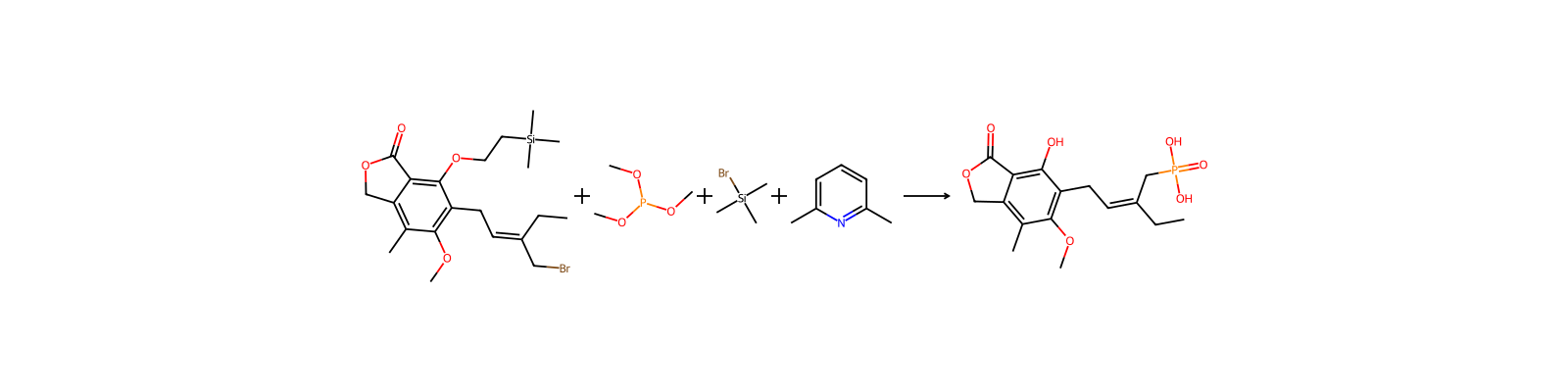
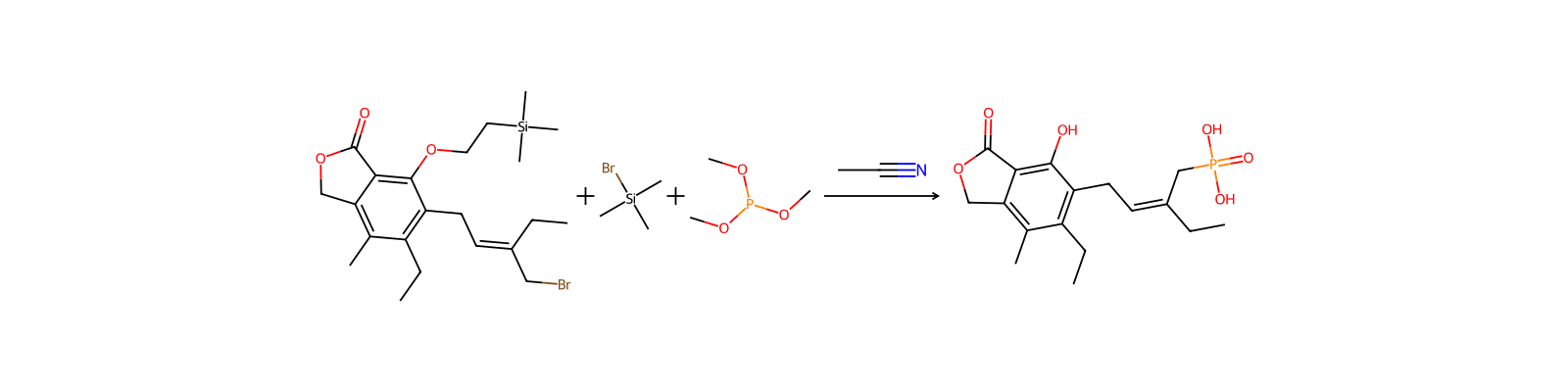
Related reactions
448 records


Linked notes
Loading…