HomeMCPWorkbenchSkills
HomeWorkbenchNotificationsMe
llms.txt · MCP GuidePrivacy Policy · Terms of Service · Supportv1.8.3
  1. Home
  2. /Compound

Norbornadiene

HCID 8473
New reaction
Print
Basic informationOverviewNames & identifiersPropertiesSafety & regulationChemistry & industryRelated reactionsCompound notes
Substructure searchFind similar structures

Basic information

CAS
121-46-0
Standard SMILES
C1=CC2C=CC1C2
InChIKey
SJYNFBVQFBRSIB-UHFFFAOYSA-N
Molecular formula
C7H8
Average molar mass
92.14 g/mol
Monoisotopic mass
92.06260026

Overview

2,5-norbornadiene, stabilized appears as a colorless liquid. Insoluble in water and less dense than water. Contact may irritate skin, eyes and mucous membranes. May be toxic by ingestion, inhalation and skin absorption. When heated will polymerize and at decomposition emits acrid smoke and irritating fumes.

Names & identifiers

Preferred name
Norbornadiene
IUPAC
bicyclo[2.2.1]hepta-2,5-diene
English name
2,5-Norbornadiene
Molecular formula
C7H8
Molecular weight
92.14

Names & synonyms

2,5-NorbornadieneBicyclo[2.2.1]hepta-2,5-diene121-46-0NorbornadieneDicycloheptadieneBICYCLO(2.2.1)HEPTA-2,5-DIENEBicyclo(2.2.1)heptadieneUN2251W9ZTQ75ZUS3,6-Methano-1,4-cyclohexadieneNSC-13672DTXSID1059523
Show more names
BICYCLO[2.2.1]-2,5-HEPTADIENENorborna-2,5-dieneBicyclo[2.2.1]hepta-2,5-diene, 97%, stabilized with 0.05 - 0.25% BHT, 97%Norbornadine2,5-NORBORNADINE
UN-2251Bicyclo[2.2.1]heptadieneRefChem:83016DTXCID6033669204-472-0BicycloheptadieneMFCD00082301NSC 13672

Database identifiers

CAS
121-46-0、16422-76-7
PubChem CID
8473
DTXSID
DTXSID1059523
UNII
W9ZTQ75ZUS
EC Number
204-472-0
Nikkaji
J36.833D、J398.207F

Properties

Computed structural properties

XLogP
2.1
Topological polar surface area
0 Ų
Hydrogen bond donors
0
Hydrogen bond acceptors
0
Rotatable bonds
0
Heavy atoms
7
Formal charge
0
Complexity
103

Experimental & physicochemical properties

Chemical Classes · 2 items

Other Classes -> Aliphatics, Unsaturated

Flammable agents - 3rd degree

SpringerMaterials PropertiesCoriolis coupling
LogP2.67
Flash Point-6 °F (NFPA, 2010)
Vapor Pressure25.5 [mmHg]
Physical Description · 3 items

2,5-norbornadiene, stabilized appears as a colorless liquid. Insoluble in water and less dense than water. Contact may irritate skin, eyes and mucous membranes. May be toxic by ingestion, inhalation and skin absorption. When heated will polymerize and at decomposition emits acrid smoke and irritating fumes.

Liquid

Liquid with a foul odor; [Merck Index] Colorless liquid; [CAMEO]

Physicochemical properties

Melting point
19 °C · −19 °C (−2 °F; 254 K)
Boiling point
89 °C · 89 °C (192 °F; 362 K)
Density
0.906 g/cm3 · 0.906 g/cm3
vapor pressure
69 hPa · 69 hPa (20 °C)
refractive index
1.47 · 1.47
Flash point
-21 °C · -21 °C
storage temp.
30 °C · Store below +30°C.
solubility
Chloroform (Sparingly)
form
clear liquid
color
Colorless to Almost colorless
Odor
Very diffusive, gassy-piney, camphoraceous-woody odor
explosive limit
1.6 · 1.6-6.3%(V)
Water Solubility
Immiscible with water.
λmax
195 nm · 195nm(EtOH)(lit.)
BRN
506224 · 506224
Stability
Volatile
InChI
1S/C7H8/c1-2-7-4-3-6(1)5-7/h1-4,6-7H,5H2/t6-,7+
InChIKey
SJYNFBVQFBRSIB-UHFFFAOYSA-N
SMILES
C1[C@H]2C=C[C@@H]1C=C2
LogP
2.67 at · 2.67 at 25℃ and pH7
Surface tension
64.3 · 64.3-64.4mN/m at 900μg/L and 20.3℃
CAS DataBase Reference
121 · 121-46-0(CAS DataBase Reference)
EWG's Food Scores
1 · 1
FDA UNII
9 ZTQ75ZUS · W9ZTQ75ZUS
NIST Chemistry Reference
2 · 2,5-Norbornadiene(121-46-0)
EPA Substance Registry System
2 · 2,5-Norbornadiene (121-46-0)
UNSPSC Code
12352300 · 12352300
NACRES
23 · NA.23
Symbol(GHS)
2 · GHS02,GHS07
Signal word
Danger
Hazard statements
303 · H303-H315-H319-H317-H412-H225
Precautionary statements
501 · P501-P273-P272-P240-P261-P210-P233-P243-P241-P242-P264-P280-P370+P378-P312-P337+P313-P305+P351+P338-P362+P364-P303+P361+P353-P333+P313-P403+P235
PPE
Eyeshields, Faceshields, Gloves, type ABEK (EN14387) respirator filter
Hazard Codes
F
Risk Statements
11 · 11
Safety Statements
16 · 16-23
RIDADR
2251 · UN 2251 (BICYCLO[2.2.1]- HEPTA-2,5-DIENE, STABILIZED (2,5-NORBORNADIENE, STABILIZED))
WGK Germany
2 · 2
RTECS
6535000 · RB6535000
F
13 · 13
Autoignition Temperature
350 °C · 350 °C
TSCA
TSCA listed
HazardClass
3 · 3
PackingGroup
II
HS Code
2902199090 · 2902199090
Storage Class
3 · 3 - Flammable liquids
Hazard Classifications
3 Flam · Aquatic Chronic 3Flam. Liq. 2
Toxicity
50 orl-rat: · LD50 orl-rat: 890 mg/kg SHELL*
REACH Registrations
Active

Safety & regulation

Safety information is for reference only and does not replace the supplier’s Safety Data Sheet (SDS), applicable regulations, or professional assessment.

GHS classification

GHS Classification · 4 items

Danger

H225 (100%): Highly Flammable liquid and vapor [Danger Flammable liquids]

P210, P233, P240, P241, P242, P243, P260, P264, P264+P265, P280, P301+P330+P331, P302+P361+P354, P303+P361+P353, P304+P340, P305+P354+P338, P316, P317, P321, P363, P370+P378, P403+P235, P405, and P501 (click each P-code to see the statement)

Aggregated GHS information provided per 84 reports by companies from 7 notifications to the ECHA C&L Inventory. Each notification may be associated with multiple companies.

Hazard information

Regulatory Information · 5 items

Chemical: Bicyclo[2.2.1]hepta-2,5-diene

Bicyclo[2.2.1]hepta-2,5-diene is listed on the EPA's Chemical Data Reporting (CDR) system. Manufacturers and importers of Bicyclo[2.2.1]hepta-2,5-diene are required to report information about their production and use of this chemical to the EPA under the Toxic Substances Control Act (TSCA). (40 eCFR Part 711)

Status: Active Update: 22-11-2022 https://echa.europa.eu/registration-dossier/-/registered-dossier/26780

2,5-Norbornadiene: Does not have an individual approval but may be used under an appropriate group standard

The New Jersey Worker and Community Right to Know Act requires public and private employers to provide information about hazardous substances at their workplaces. (N.J.S.A. 34:5A-1 et. seq.)

DOT LabelFlammable Liquid
Fire Hazards · 3 items

Excerpt from ERG Guide 128 [Flammable Liquids (Water-Immiscible); polymerization hazard]:

· HIGHLY FLAMMABLE: Will be easily ignited by heat, sparks or flames.

· HIGHLY FLAMMABLE: Will be easily ignited by heat, sparks or flames.

Health Hazards · 3 items

Excerpt from ERG Guide 128 [Flammable Liquids (Water-Immiscible); polymerization hazard]:

CAUTION: Petroleum crude oil (UN1267) may contain TOXIC hydrogen sulphide gas.

CAUTION: Petroleum crude oil (UN1267) may contain TOXIC hydrogen sulphide gas.

Hazards Summary · 1 item

May polymerize; May cause skin, eye, and mucous membrane irritation; [CAMEO] Stabilized with BHT (butylated hydroxytoluene, CAS# 128-37-0); An irritant; [Alfa Aesar MSDS] 2,5-Norbornadiene, stabilized (UN2251) has warning of explosive polymerization. [ERG 2016] See 2-Norbornene.

DOT ID and Guide · 2 items

2251 128P

2251 128P

Reactive GroupHydrocarbons, Aliphatic Unsaturated
Reactivity AlertsHighly Flammable
Reactivity Profile · 1 item

2,5-NORBORNADIENE may react vigorously with strong oxidizing agents. May react exothermically with reducing agents to release hydrogen gas. In the presence of various catalysts (such as acids) or initiators, may undergo exothermic addition polymerization reactions. Violent explosions at low temperatures in ammonia synthesis gas units have been traced to the addition products of dienes and nitrogen dioxide [Bretherick, 5th Ed., 1995].

Air and Water ReactionsHighly flammable. Insoluble in water.
Hazard Classes and Categories · 2 items

Flam. Liq. 2 (100%)

Flammable agents - 3rd degree, Reactive agents - 1st degree

Safety & protection

Fire FightingExcerpt from ERG Guide 128 [Flammable Liquids (Water-Immiscible); polymerization hazard]:
Accidental Release Measures · 4 items

· CALL 911. Then call emergency response telephone number on shipping paper. If shipping paper not available or no answer, refer to appropriate telephone number listed on the inside back cover.

· ELIMINATE all ignition sources (no smoking, flares, sparks or flames) from immediate area.

· CALL 911. Then call emergency response telephone number on shipping paper. If shipping paper not available or no answer, refer to appropriate telephone number listed on the inside back cover.

· ELIMINATE all ignition sources (no smoking, flares, sparks or flames) from immediate area.

First Aid · 3 items

Excerpt from ERG Guide 128 [Flammable Liquids (Water-Immiscible); polymerization hazard]:

General First Aid:

General First Aid:

Exposure Control and Personal Protection · 2 items

· Wear positive pressure self-contained breathing apparatus (SCBA).

· Wear positive pressure self-contained breathing apparatus (SCBA).

Nonfire Spill ResponseExcerpt from ERG Guide 128 [Flammable Liquids (Water-Immiscible); polymerization hazard]:
Isolation and Evacuation · 3 items

Excerpt from ERG Guide 128 [Flammable Liquids (Water-Immiscible); polymerization hazard]:

Immediate precautionary measure

Immediate precautionary measure

Personal Protective Equipment (PPE)Excerpt from ERG Guide 128 [Flammable Liquids (Water-Immiscible); polymerization hazard]:
Emergency Response Planning Guidelines · 2 items

CAUTION: The majority of these products have a very low flash point. Use of water spray when fighting fire may be inefficient.

CAUTION: The majority of these products have a very low flash point. Use of water spray when fighting fire may be inefficient.

Toxicology

Toxicity DataLC50 (rat) = 14,100 ppm/8hr

Safety data

F
13
PPE
Eyeshields, Faceshields, Gloves, type ABEK (EN14387) respirator filter
wgk
2
tsca
TSCA listed
rtecs
RB6535000
ridadr
UN 2251 (BICYCLO[2.2.1]- HEPTA-2,5-DIENE, STABILIZED (2,5-NORBORNADIENE, STABILIZED))
hs_code
2902199090
Toxicity
LD50 orl-rat: 890 mg/kg SHELL*
risk_code
11
Signal word
Danger
Symbol(GHS)
GHS02,GHS07
hazard_code
F
safety_code
16-23
hazard_class
3
Storage Class
3 - Flammable liquids
packing_group
II
Hazard statements
H303-H315-H319-H317-H412-H225
REACH Registrations
Active
Hazard Classifications
Aquatic Chronic 3Flam. Liq. 2
Autoignition Temperature
350 °C
Precautionary statements
P501-P273-P272-P240-P261-P210-P233-P243-P241-P242-P264-P280-P370+P378-P312-P337+P313-P305+P351+P338-P362+P364-P303+P361+P353-P333+P313-P403+P235

Chemistry & industry

Uses & manufacturing

UsesUsed to make synthetic rubber; [ChemIDplus] Used in organic, organometallic, and petrochemical synthesis; Used as an intermediate for aldrin; [Merck Index]
U.S. Production2023: 50,000 - <250,000 lb
Industry UsesIntermediate
General Manufacturing Information · 2 items

Pharmaceutical and Medicine Manufacturing

Bicyclo[2.2.1]hepta-2,5-diene: ACTIVE

Applications · 3 items

Uses2,5-Norbornadiene is used as an intermediate in prostaglandin synthesis and shows anti-ethylene effect on plants. It acts as a starting material for the synthesis of diamantane and as an acetylene transfer agent for instance, in reaction with 3,6-di-2-pyridyl-1,2,4,5-tetrazine. It is also a useful dienophile in Diels-Alder reactions.

Uses2,5-Norbornadiene is industrially available as a chemical intermediate. It was not intended for use in perfumes, and it is only occasionally used as such. It serves mainly as a starting material for the manufacture of industrial chemicals, etc.2,5-Norbornadiene has occasionally been used in Pine needle fragrances to improve the diffusiveness of the fragrance, and to lend initial power and short life to the fragrances which are intended for "short-effect" purposes, e.g. dishwashing detergent fragrances, etc. It is also used as a masking agent when a volatile and powerful material is needed at low cost.

General Description2,5-norbornadiene, stabilized appears as a colorless liquid. Insoluble in water and less dense than water. Contact may irritate skin, eyes and mucous membranes. May be toxic by ingestion, inhalation and skin absorption. When heated will polymerize and at decomposition emits acrid smoke and irritating fumes.

Preparation methods

Preparation2,5-Norbornadiene is of interest as a metal-binding ligand, whose complexes are useful for homogeneous catalysis. Norbornadiene can be formed by a Diels-Alder reaction between cyclopentadiene and acetylene.

Upstream & downstream products

Upstream raw materials

3,4-Diazatricyclo[4.2.1.02,5]nona-3,7-diene, (1R,2R,5S,6S)-rel- (9CI)Bicyclo[2.2.1]hept-2-ene, 5,6-bis(phenylsulfonyl)-, (endo,endo)- (9CI)

Downstream products

Bicyclo[2.2.1]heptane-2,5-dioneDihydromyrceneanti-5-Carboxytricyclo[2.2.1.0](2,6)-heptan-3-one.Naphtho[2,1-f]quinoline3-exo-Aminobicyclo[2.2.1]hept-5-ene-2-exo-carboxylic acid

Related reactions

44 records
New reaction record
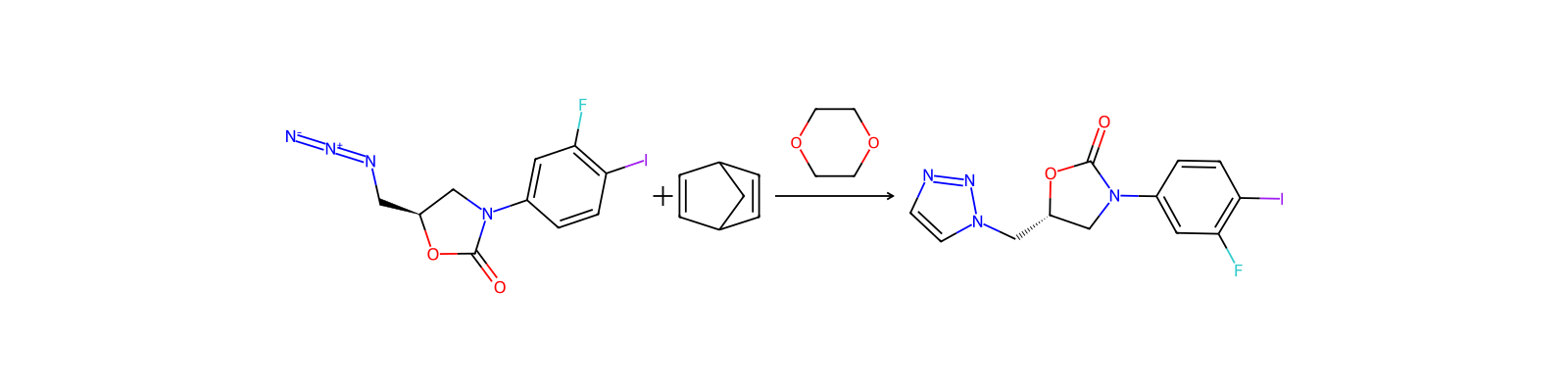
HRID 394822 reaction equation
HRID 394822As reactant
HRID 456785 reaction equation
HRID 456785As reactant
HRID 456789 reaction equation
HRID 456789As reactant
HRID 456795 reaction equation
HRID 456795As reactant
HRID 459010 reaction equation
HRID 459010As reactant
HRID 568298 reaction equation
HRID 568298As reactant
HRID 603219 reaction equation
HRID 603219As reactant
HRID 723806 reaction equation
HRID 723806As reactant
PreviousPage 1 of 6

Compound notes

On this pageBasic informationOverviewNames & identifiersPropertiesSafety & regulationChemistry & industryRelated reactionsCompound notes