HomeMCPWorkbenchSkills
HomeWorkbenchNotificationsMe
llms.txt · MCP GuidePrivacy Policy · Terms of Service · Supportv1.8.0
  1. Home
  2. /Compound

Sulfanilic acid

HCID 8479
New noteNew reactionRequest quotes
Print preview

Completing data — refresh the page later to see the latest
Basic informationOverviewNames & identifiersPropertiesSafety & regulationChemistry & industryRelated reactionsCompound notes
Substructure searchFind similar structures

Basic information

CAS
121-57-3
Standard SMILES
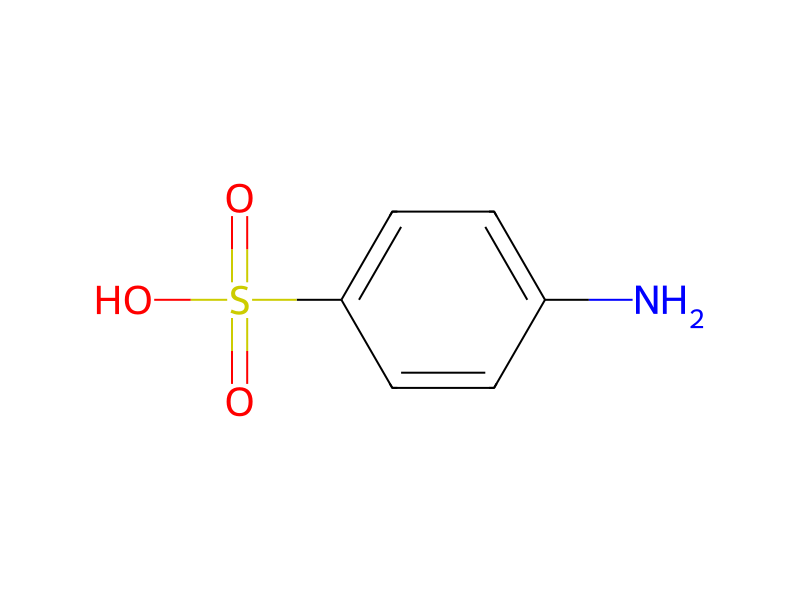
Nc1ccc(S(=O)(=O)O)cc1
InChIKey
HVBSAKJJOYLTQU-UHFFFAOYSA-N
Molecular formula
C6H7NO3S
Average molar mass
173.19 g/mol
Monoisotopic mass
173.01466408

Overview

4-aminobenzene sulfonic acid appears as white powder with faint purple tinge. Grayish-white flat crystals. Becomes anhydrous at around 212 °F. Low toxicity (used medicinally).

Names & identifiers

Preferred name
Sulfanilic acid
IUPAC
4-aminobenzenesulfonic acid
English name
Sulfanilic acid
Molecular formula
C6H7NO3S
Molecular weight
173.19

Names & synonyms

SULFANILIC ACID4-Aminobenzenesulfonic acid121-57-3Sulphanilic acidp-Aminobenzenesulfonic acidAniline-4-sulfonic acidAniline-p-sulfonic acidSulfanilsaeureAniline-p-sulphonic acidp-Aminophenylsulfonic acidp-Anilinesulfonic acidKyselina sulfanilova
Show more names
sulfanilic4-aminobenzenesulfonateSULFANILLIC ACIDP-SULFANILIC ACIDSUFANILIC ACID
p-sulfoaniline4-Sulfoaniline4-Sulfanilic acidNSC 7170CCRIS 4576CHEBI:27500HSDB 5590EINECS 204-482-5

Database identifiers

CAS
121-57-3、97675-28-0
PubChem CID
8479
DTXSID
DTXSID6024464
ChEMBL
CHEMBL1566888
ChEBI
CHEBI:27500
UNII
434Z8C2635
EC Number
204-482-5、307-598-5
Nikkaji
J2.924F

Properties

Computed structural propertiesFilling in

XLogP
-0.6
Topological polar surface area
88.8 Ų
Hydrogen bond donors
2
Hydrogen bond acceptors
4
Rotatable bonds
1
Heavy atoms
11
Formal charge
0
Complexity
210

Experimental & physicochemical properties

Chemical ClassesNitrogen Compounds -> Aminobenzenesulfonic Acids
PesticidesEnvironmental transformation -> Pesticide transformation products (metabolite, successor)
LogP · 3 items

log Kow = -2.16

-0.9

-2.16

Density · 4 items

1.485 at 77 °F (NTP, 1992) - Denser than water; will sink

1.485 at 25 °C/4 °C

1.49 g/cm³

1.485 @25 °C

Color/FormOrthorhombic plates or monoclinic from water
Solubility · 6 items

less than 1 mg/mL at 68 °F (NTP, 1992)

Insoluble in ethanol and ether

Soluble in fuming hydrochloric acid

Slowly sol in water: about 1% at 20 °C, about 1.45% at 30 °C, about 1.94% at 40 °C

In water, 10.68 g/L at 20 °C; 14.68 g/L at 30 °C

Solubility in water: poor

Decomposition · 2 items

When heated to decomposition it emits toxic vapors of /nitrogen oxides and sulfur oxides/.

Safety & regulation

Safety information is for reference only and does not replace the supplier’s Safety Data Sheet (SDS), applicable regulations, or professional assessment.

GHS classification

GHS Classification · 6 items

Warning

H315: Causes skin irritation [Warning Skin corrosion/irritation]

P261, P264, P264+P265, P272, P280, P302+P352, P305+P351+P338, P321, P332+P317, P333+P317, P337+P317, P362+P364, and P501 (click each P-code to see the statement)

Warning

H315 (98.6%): Causes skin irritation [Warning Skin corrosion/irritation]

P261, P264, P264+P265, P272, P280, P302+P352, P305+P351+P338, P321, P332+P317, P333+P317, P337+P317, P362+P364, and P501 (click each P-code to see the statement)

Hazard information

Regulatory Information · 5 items

Chemical: Benzenesulfonic acid, 4-amino-

Regulation (EC) No 1107/2009 (amended)

Benzenesulfonic acid, 4-amino- is listed on the EPA's Chemical Data Reporting (CDR) system. Manufacturers and importers of Benzenesulfonic acid, 4-amino- are required to report information about their production and use of this chemical to the EPA under the Toxic Substances Control Act (TSCA). (40 eCFR Part 711)

Status: Active Update: 11-12-2015 https://echa.europa.eu/registration-dossier/-/registered-dossier/14240

Benzenesulphonic acid, 4-amino-: Does not have an individual approval but may be used under an appropriate group standard

Other Safety InformationIMAP assessments - Sulfanilic acid and its sodium salt: Human health tier II assessment
DOT LabelCorrosive
Fire Hazards · 2 items

Flash point data for this chemical are not available, however it is probably combustible. (NTP, 1992)

Combustible. Gives off irritating or toxic fumes (or gases) in a fire.

Health HazardsSYMPTOMS: Symptoms of exposure to this compound may include irritation of the skin, eyes and mucous membranes.

Chemistry & industry

Pharmacology

Mechanism of Action · 1 item

Many idiosyncratic non-steroidal anti-inflammatory drugs (NSAIDs) cause GI, liver and bone marrow toxicity in some patients which results in GI bleeding/ulceration/fulminant hepatic failure/hepatitis or agranulocytosis/aplastic anemia. The toxic mechanisms proposed have been reviewed. Evidence is presented showing that idiosyncratic NSAID drugs form prooxidant radicals when metabolized by peroxidases known to be present in these tissues. Thus GSH, NADH and/or ascorbate were cooxidised by catalytic amounts of NSAIDs and hydrogen peroxide in the presence of peroxidase. During GSH and NADH cooxidation, oxygen uptake and activation occurred. Furthermore the formation of NSAID oxidation products was prevented during the cooxidation indicating that the cooxidation involved redox cycling of the first formed NSAID radical product. The order of prooxidant catalytic effectiveness of fenamate and arylacetic acid NSAIDs was mefenamic acid>tolfenamic acid>flufenamic acid, meclofenamic acid or diclofenac. Diphenylamine, a common moiety to all of these NSAIDs was a more active prooxidant for NADH and ascorbate cooxidation than these NSAIDs which suggests that oxidation of the NSAID diphenylamine moiety to a cation and/or nitroxide radical was responsible for the NSAID prooxidant activity. The order of catalytic effectiveness found for sulfonamide derivatives was sulfaphenazole>sulfisoxazole>dapsone>sulfanilic acid>procainamide>sulfamethoxazole>sulfadiazine>sulfadimethoxine whereas sulfanilamide, sulfapyridine or nimesulide had no prooxidant activity. Although indomethacin had little prooxidant activity, its major in vivo metabolite, N-deschlorobenzoyl indomethacin had significant prooxidant activity. Aminoantipyrine the major in vivo metabolite of aminopyrine or dipyrone was also more prooxidant than the parent drugs. It is hypothesized that the NSAID radicals and/or the resulting oxidative stress initiates the cytotoxic processes leading to idiosyncratic toxicity.

Metabolism/MetabolitesYIELDS P-ACETAMIDOBENZENESULFONIC ACID IN RABBIT: DANIEL, JW, TOXICOL APPL PHARMAC, 4, 572 (1962). /FROM TABLE/
Absorption, Distribution and Excretion · 2 items

4-Aminobenzene sulfonic acid can be absorbed from the gastrointestinal tract. Absorption through the lungs appears to be possible; absorption of an intratracheally-instilled solution of 4- aminobenzene sulfonic acid has been detected in the rat. Accumulation does not take place in mammals; excretion after oral administration mainly occurs within 24 hr. 4-Aminobenzene sulfonic acid is excreted either unchanged or as the N-acetyl metabolite, in the urine in rabbits, and in the urine and the feces in rats.

Related reactions

116 records

New reaction record
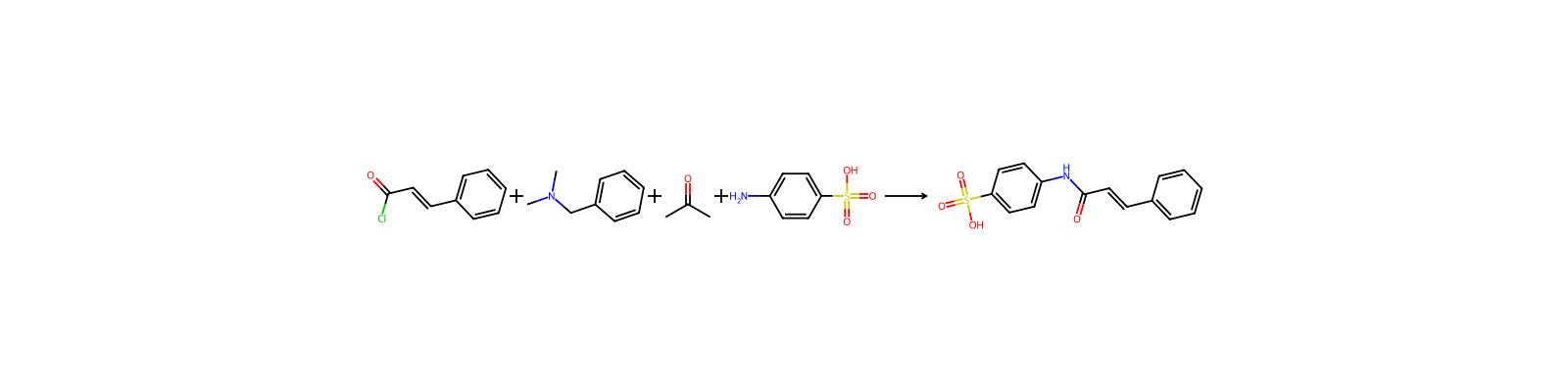
HRID 21678 reaction equation
HRID 21678As reactantuspto-grants-1995_06
HRID 95939 reaction equation
HRID 95939As reactantTraining data from https://doi.org/10.1039/C8SC04228D (2/10)
HRID 126233 reaction equation
HRID 126233As reactantTraining data from https://doi.org/10.1039/C8SC04228D (2/10)
HRID 135939 reaction equation
HRID 135939As reactantTraining data from https://doi.org/10.1039/C8SC04228D (9/10)
HRID 151652 reaction equation
HRID 151652As reactantTraining data from https://doi.org/10.1039/C8SC04228D (9/10)
HRID 180566 reaction equation
HRID 180566As reactantTraining data from https://doi.org/10.1039/C8SC04228D (6/10)
HRID 194329 reaction equation
HRID 194329As reactantTraining data from https://doi.org/10.1039/C8SC04228D (6/10)
HRID 198318 reaction equation
HRID 198318As reactantTraining data from https://doi.org/10.1039/C8SC04228D (6/10)
Page 1 of 15

Compound notes

Loading…

On this pageBasic informationOverviewNames & identifiersPropertiesSafety & regulationChemistry & industryRelated reactionsCompound notes
More actions
New noteNew reactionRequest quotes

288 °C

Melting Point · 2 items

Decomposes without melting at 550 °F (NTP, 1992)

288 °C decomposes without melting

Vapor Pressure0.0000002 [mmHg]
Food Contact SubstancesFCS -> FDA Inventory of Food Contact Substances Listed in 21 CFR
Physical Description · 4 items

4-aminobenzene sulfonic acid appears as white powder with faint purple tinge. Grayish-white flat crystals. Becomes anhydrous at around 212 °F. Low toxicity (used medicinally).

Dry Powder

Greyish-white solid; [Hawley] White to grey solid; [ICSC] Light grey fine crystals and fragments; [MSDSonline]

WHITE POWDER OR WHITE-TO-GREY CRYSTALS.

Dissociation ConstantspKa = 3.25 at 25 °C; pKa = 3.34 at 15 °C

Physicochemical properties

Melting point
300 °C · >300 °C(lit.)
Boiling point
288 ℃ · 288 ℃
bulk density
620 kg/m3 · 620kg/m3
Density
1.485 · 1.485
vapor pressure
0 Pa · 0Pa at 25℃
refractive index
1.55 · 1.5500 (estimate)
storage temp.
30 °C · Store below +30°C.
solubility
10 g/l · 10g/l
pka
3.24 · 3.24(at 25℃)
form
solid
color
White to Off-White
PH
2.5 · 2.5 (10g/l, H2O, 20℃)
Water Solubility
0.1 g/100 · 0.1 g/100 mL (20 ºC)
Merck
14 · 14,8926
BRN
908765 · 908765
Henry's Law Constant
1.1 · 1.1×107 mol/(m3Pa) at 25℃, HSDB (2015)
Stability
Stable. Incompatible with strong oxidizing agents.
InChI
1S/C6H7NO3S/c7-5-1-3-6(4-2-5)11(8,9)10/h1-4H,7H2,(H,8,9,10)
InChIKey
HVBSAKJJOYLTQU-UHFFFAOYSA-N
SMILES
Nc1ccc(cc1)S(O)(=O)=O
LogP
-2.3 at · -2.3 at 25℃
Indirect Additives used in Food Contact Substances
SULFANILIC ACID
FDA 21 CFR
176.18 · 176.180; 177.1200
CAS DataBase Reference
121 · 121-57-3(CAS DataBase Reference)
FDA UNII
434 Z8C2635 · 434Z8C2635
NIST Chemistry Reference
4 · Benzenesulfonic acid, 4-amino-(121-57-3)
EPA Substance Registry System
Sulfanilic acid (121-57-3)
UNSPSC Code
41171621 · 41171621
NACRES
21 · NB.21
Symbol(GHS)
7 · GHS07
Signal word
Warning
Hazard statements
315 · H315-H319-H317-H412
Precautionary statements
501 · P501-P261-P273-P272-P264-P280-P302+P352-P337+P313-P305+P351+P338-P362+P364-P333+P313
PPE
95 · dust mask type N95 (US), Eyeshields, Faceshields, Gloves
Hazard Codes
C,Xi
Risk Statements
36 · 36/38-43-34
Safety Statements
26 · 26-36/37/39-45-37-24-36/37
RIDADR
2790 · UN 2790 8/PG 3
WGK Germany
1 · 1
RTECS
3895500 · WP3895500
Autoignition Temperature
400 °C · >400 °C
TSCA
TSCA listed
HS Code
2921420090 · 2921420090
Storage Class
11 · 11 - Combustible Solids
Hazard Classifications
2 Skin · Eye Irrit. 2Skin Irrit. 2Skin Sens. 1
Hazardous Substances Data
121 · 121-57-3(Hazardous Substances Data)
Toxicity
50 orally · LD50 orally in Rabbit: 12300 mg/kg
REACH Registrations
Active
Hazards Summary · 1 item

An eye and mild skin irritant; May cause skin sensitization; In monohydrate form at room temperature; Becomes anhydrous near 100 deg C; [ICSC] Sensitizing in 5 of 6 guinea pig and 1 of 2 mouse skin tests; [IUCLID] Emergency medical treatment: irritants; [HSDB] May cause skin, eye, and mucous membrane irritation; [CAMEO] An irritant; [MSDSonline]

Reactive GroupAmines, Phosphines, and Pyridines
EC ClassificationSymbol: Xi; R: 36/38-43; S: (2)-24-37
Reactivity Profile4-AMINOBENZENE SULFONIC ACID is an amino acid. Reacts weakly with both acids and bases.
Atmospheric Standards · 1 item

This action promulgates standards of performance for equipment leaks of Volatile Organic Compounds (VOC) in the Synthetic Organic Chemical Manufacturing Industry (SOCMI). The intended effect of these standards is to require all newly constructed, modified, and reconstructed SOCMI process units to use the best demonstrated system of continuous emission reduction for equipment leaks of VOC, considering costs, non air quality health and environmental impact and energy requirements. Sulfanilic acid is produced, as an intermediate or a final product, by process units covered under this subpart.

Chemical DangersDecomposes on heating at 288 °C, on burning and on contact with strong acids. This produces toxic fumes including nitrogen oxides and sulfur oxides. Reacts violently with strong bases.
Air and Water ReactionsInsoluble in water.

Safety & protection

Fire Fighting · 2 items

Fires involving this compound can be extinguished using a dry chemical, carbon dioxide or Halon extinguisher. (NTP, 1992)

Use water spray, powder, foam, carbon dioxide.

First Aid Measures · 4 items

Fresh air, rest.

Remove contaminated clothes. Rinse skin with plenty of water or shower.

First rinse with plenty of water for several minutes (remove contact lenses if easily possible), then refer for medical attention.

Rinse mouth.

First Aid · 1 item

EYES: First check the victim for contact lenses and remove if present. Flush victim's eyes with water or normal saline solution for 20 to 30 minutes while simultaneously calling a hospital or poison control center. Do not put any ointments, oils, or medication in the victim's eyes without specific instructions from a physician. IMMEDIATELY transport the victim after flushing eyes to a hospital even if no symptoms (such as redness or irritation) develop.

Safe StorageSeparated from strong acids and strong bases.
Cleanup Methods · 1 item

SLUDGE FROM A MUNICIPAL SEWAGE TREATMENT PLANT WAS ACCLIMATED AS SEED IN A CONTINUOUS FLOW, COMPLETELY MIXED LABORATORY REACTOR. A SUBSTRATE CONTAINING A MIXTURE OF GLUCOSE, PHENOL & SULFANILIC ACID WAS FED AT DIFFERENT FOOD-TO-MICROORGANISM RATIOS. REMOVAL RATE WAS DETERMINED AS TOTAL ORGANIC C (TOC) MEASUREMENTS. ANALYSES FOR EACH SUBSTRATE IN THE INFFLUENT & EFFLUENT SAMPLES WERE MADE.

Nonfire Spill Response · 1 item

SMALL SPILLS AND LEAKAGE: If you spill this chemical, you should dampen the solid spill material with water, then transfer the dampened material to a suitable container. Use absorbent paper dampened with water to pick up any remaining material. Seal your contaminated clothing and the absorbent paper in a vapor-tight plastic bag for eventual disposal. Wash all contaminated surfaces with a soap and water solution. Do not reenter the contaminated area until the Safety Officer (or other responsible person) has verified that the area has been properly cleaned.

Disposal Methods · 1 item

SRP: The most favorable course of action is to use an alternative chemical product with less inherent propensity for occupational harm/injury/toxicity or environmental contamination. Recycle any unused portion of the material for its approved use or return it to the manufacturer or supplier. Ultimate disposal of the chemical must consider: the material's impact on air quality; potential migration in soil or water; effects on animal and plant life; and conformance with environmental and public health regulations.

Spillage Disposal · 1 item

Personal protection: particulate filter respirator adapted to the airborne concentration of the substance. Do NOT let this chemical enter the environment. Sweep spilled substance into covered sealable containers. If appropriate, moisten first to prevent dusting. Wash away remainder with plenty of water.

Isolation and EvacuationExcerpt from ERG Guide 153 [Substances - Toxic and/or Corrosive (Combustible)]:
Eye PreventionWear safety goggles or eye protection in combination with breathing protection if powder.
Fire PreventionNO open flames.
Inhalation RiskA harmful concentration of airborne particles can be reached quickly when dispersed, especially if powdered.

Toxicology

Interactions · 3 items

WHEN GIVEN ORALLY IN SUFFICIENT AMT (100-500 MG/KG IN RATS), THE CHELATOR /ETHYLENE DIAMINETETRAACETATE/ INCREASES THE RATES OF ABSORPTION OF HEPARIN.../&/ SULFANILIC ACID...ALL LIPID-INSOL SUBSTANCES WHICH ORDINARILY ARE POORLY ABSORBED FROM GI TRACT.

BILE SALTS, DISODIUM EDTA, TETRACYCLINE, OR SODIUM LAURYL SULFATE PRESENT IN THE GUT LUMEN OF THE RAT INCREASED THE TRANSFER OF SULFANILIC ACID FROM THE SMALL INTESTINE TO THE THORACIC DUCT LYMPH.

The effect of mitomycin C (MMC) pre-administration intravenously on the absorption of drugs from rat stomach has been examined by means of the in-situ loop technique. 48 hr after the MMC-treatment, the absorption of salicylic acid, aspirin and sulphanilic acid was not influenced but that of sulphanilamide was significantly increased compared with the control. At 96 hr, a differential effect of MMC on the absorption of each drug was seen: the absorption of weakly acidic drugs was significantly decreased while that of bases and strong sulphonic acid increased. The decreased absorption of salicylic acid and aspirin correlated with the reduced gastric mucosal blood flow. At 96 hr there were severe hemorrhagic lesions in the gastric mucosa. The increase in absorption of poorly absorbed drugs could be ascribed to the increased permeability of the blood-gastric epithelium barrier as was evidenced by leakage of Evans Blue.

Ecotoxicity ValuesLC50; Species: Pimephales promelas (Fathead Minnow) weight 0.3-1 g; Conditions: freshwater, static, 22 °C, pH 7.2-7.9, hardness 40-48 mg/L CaCO3, alkalinity 30-35 mg/L CaCO3, dissolved oxygen >40%; Concentration: 100400 ug/L for 96 hr
Environmental Fate · 3 items

TERRESTRIAL FATE: Based on a classification scheme(1), an estimated Koc value of 10(SRC), determined from a structure estimation method(2), indicates that sulfanilic acid is expected to have very high mobility in soil(SRC). The pKa of sulfanilic acid is 3.25 at 25 °C(3), indicating that this compound will partially exist in anion form in the environment and anions generally do not adsorb more strongly to soils containing organic carbon and clay than their neutral counterparts(4). Volatilization of sulfanilic acid from moist soil surfaces is not expected to be an important fate process(SRC) given an estimated Henry's Law constant of 8.9X10⁻¹³ atm-cu m/mole(SRC), using a fragment constant estimation method(2). Sulfanilic acid is not expected to volatilize from dry soil surfaces(SRC) based upon an estimated vapor pressure of 1X10⁻⁹ mm Hg at 25 °C(SRC), determined from a fragment constant method(2). Based on results of the majority of eight separate laboratory determinations, it can be concluded that sulfanilic acid is not readily biodegradable(5). Sulfanilic acid, present at 100 mg/L, reached 8% of its theoretical BOD in 2 weeks using an activated sludge inoculum at 30 mg/L in the Japanese MITI test(5) which also indicates the compound is not readily biodegradable(SRC).

AQUATIC FATE: Based on a classification scheme(1), an estimated Koc value of 10(SRC), determined from a structure estimation method(2), indicates that sulfanilic acid is not expected to adsorb to suspended solids and sediment(SRC). Volatilization from water surfaces is not expected(3) based upon an estimated Henry's Law constant of 8.9X10⁻¹³ atm-cu m/mole(SRC), developed using a fragment constant estimation method(2). According to a classification scheme(4), an estimated BCF of 3(SRC), from a log Kow of -2.16(5) and a regression-derived equation(2), suggests the potential for bioconcentration in aquatic organisms is low(SRC). Sulfanilic acid absorbs UV light at wavelengths >290 nm(6) and may be susceptible to direct photolysis in sunlit water(SRC). Based on results of the majority of eight separate laboratory determinations, it can be concluded that sulfanilic acid is not readily biodegradable(7). Sulfanilic acid, present at 100 mg/L, reached 8% of its theoretical BOD in 2 weeks using an activated sludge inoculum at 30 mg/L in the Japanese MITI test(8) which also indicates the compound is not readily biodegradable(SRC).

ATMOSPHERIC FATE: According to a model of gas/particle partitioning of semivolatile organic compounds in the atmosphere(1), sulfanilic acid, which has an estimated vapor pressure of 1X10⁻⁹ mm Hg at 25 °C(SRC), determined from a fragment constant method(2), is expected to exist solely in the particulate phase in the ambient atmosphere. Particulate-phase sulfanilic acid may be removed from the air by wet or dry deposition(SRC). Sulfanilic acid absorbs UV light at wavelengths >290 nm(3), and therefore may be susceptible to direct photolysis by sunlight(SRC).

Adverse EffectsSkin Sensitizer - An agent that can induce an allergic reaction in the skin.
Signs and Symptoms · 2 items

Redness.

Redness. Pain.

ICSC Environmental DataThe substance is harmful to aquatic organisms.
Soil Adsorption/Mobility · 1 item

Using a structure estimation method based on molecular connectivity indices(1), the Koc of sulfanilic acid can be estimated to be 10(SRC). According to a classification scheme(2), this estimated Koc value suggests that sulfanilic acid is expected to have very high mobility in soil. The pKa of sulfanilic acid is 3.25(3), indicating that this compound will partially exist in anion form in the environment and anions generally do not adsorb more strongly to soils containing organic carbon and clay than their neutral counterparts(4).

Human Toxicity Excerpts · 2 items

/HUMAN EXPOSURE STUDIES/ ... Specific and non-specific binding of 4-aminobenzene sulfonic acid to immunoglobulins (lgD) has been detected in patients sensitized to tartrazine from which 4-aminobenzene sulfonic acid can be metabolically liberated. Patients with symptoms of recurrent urticaria have not shown hypersensitivity reactions to 4-aminobenzene sulfonic acid.

/HUMAN EXPOSURE STUDIES/ PATIENTS WITH RECURRENT URTICARIA OR ANGIOEDEMA WERE PROVOKED WITH SULFANILIC ACID. NO URTICARIAL REACTION FROM SULFANILIC ACID WAS NOTED.

Artificial Pollution SourcesSulfanilic acid's production and use as an intermediate in the production of dyes, pesticides, pharmaceuticals(1) may result in its release to the environment through various waste streams(SRC).
Environmental Biodegradation · 1 item

AEROBIC: In a study assessing biodegradability by manometric respirometry conducted by the Commission of European Communities, five of the eight laboratories employed in the study determined sulfanilic acid was <20% biodegradable(1). A sixth laboratory where the inoculum was adapted to sulphonic acids found sulfanilic acid to be 70% biodegradable at 10 days and 90% biodegradable at 28 days(1). A seventh laboratory found duplicates on one occasion to give no removal while a single determination yielded 12% degradation(1). The eighth laboratory reported 6, 14 and 62% biodegradation after 28 days in three(1). Based on results of the majority of eight separate laboratory determinations, it can be concluded that sulfanilic acid is not readily biodegradable(1). Sulfanilic acid, present at 100 mg/L, reached 8% of its theoretical BOD in 2 weeks using an activated sludge inoculum at 30 mg/L in the Japanese MITI test(2) which also indicates the compound is not readily biodegradable(SRC).

Environmental Bioconcentration · 1 item

An estimated BCF of 3 was calculated in fish for sulfanilic acid(SRC), using a log Kow of -2.16(1) and a regression-derived equation(2). According to a classification scheme(3), this BCF suggests the potential for bioconcentration in aquatic organisms is low(SRC).

Volatilization from Water/Soil · 1 item

The Henry's Law constant for sulfanilic acid is estimated as 8.9X10⁻¹³ atm-cu m/mole(SRC) using a fragment constant estimation method(1). This Henry's Law constant indicates that sulfanilic acid is expected to be essentially nonvolatile from water surfaces(2). Sulfanilic acid's Henry's Law constant indicates that volatilization from moist soil surfaces is not expected to occur(SRC). Sulfanilic acid is not expected to volatilize from dry soil surfaces(SRC) based upon an estimated vapor pressure of 1X10⁻⁹ mm Hg at 25 °C(SRC), determined from a fragment constant method(1).

Regulatory information

Atmospheric Standards · 1 item

This action promulgates standards of performance for equipment leaks of Volatile Organic Compounds (VOC) in the Synthetic Organic Chemical Manufacturing Industry (SOCMI). The intended effect of these standards is to require all newly constructed, modified, and reconstructed SOCMI process units to use the best demonstrated system of continuous emission reduction for equipment leaks of VOC, considering costs, non air quality health and environmental impact and energy requirements. Sulfanilic acid is produced, as an intermediate or a final product, by process units covered under this subpart.

Safety data

PPE
dust mask type N95 (US), Eyeshields, Faceshields, Gloves
wgk
1
tsca
TSCA listed
rtecs
WP3895500
ridadr
UN 2790 8/PG 3
hs_code
2921420090
Toxicity
LD50 orally in Rabbit: 12300 mg/kg
risk_code
36/38-43-34
Signal word
Warning
Symbol(GHS)
GHS07
hazard_code
C,Xi
safety_code
26-36/37/39-45-37-24-36/37
Storage Class
11 - Combustible Solids
Hazard statements
H315-H319-H317-H412
REACH Registrations
Active
Hazard Classifications
Eye Irrit. 2Skin Irrit. 2Skin Sens. 1
Autoignition Temperature
>400 °C
Precautionary statements
P501-P261-P273-P272-P264-P280-P302+P352-P337+P313-P305+P351+P338-P362+P364-P333+P313
Hazardous Substances Data
121-57-3(Hazardous Substances Data)

WHEN SULFANILIC ACID WAS ADMINISTERED ORALLY TO RATS, 53% OF THE ADMINISTERED DOSE WAS FOUND IN THE URINE.

Uses & manufacturing

Uses · 6 items

Used to make dyes and other organic chemicals; Also used as an analytical reagent (Ehrlich's reagent and determination of nitrites) and antibacterial; [Merck Index] Used in the paper, pulp, board, and polymer industries; Used as an additive to construction materials and foodstuffs; [IUCLID]

Pulp and Paper Processing [Category: Industry]

Manufacture of various dyes and organic chemicals; as reagent in analytical chemistry (Ehrlich's reagent, determination of nitrites)

Intermediate in the production of dyes, pesticides, pharmaceuticals.

CHEM INT FOR DYES (ESP AZO DYES), EG, C.I. ACID ORANGE 24

CHEM INT FOR ANALGESICS AND OTHER ORG CHEMS

ImpuritiesImpurities: aniline, 2,4-disulfanilic acid, 2- and 3-aminobenzenesulfonic acid.
U.S. Exports · 2 items

(1979) No Data

(1981) No Data

U.S. Imports · 2 items

(1979) 1.11X10+8 GRAMS (INCLUDES SALT)

(1981) 2.55X10+8 GRAMS (INCLUDES SALT)

U.S. Production · 6 items

2023: 7,300,000 lb

(1979) MORE THAN 4.54X10+6 GRAMS (INCL SALT)

(1981) MORE THAN 4.54X10+6 GRAMS (INCL SALT)

Benzenesulfonic acid, 4-amino- is listed as a High Production Volume (HPV) chemical (65FR81686). Chemicals listed as HPV were produced in or imported into the U.S. in >1 million pounds in 1990 and/or 1994. The HPV list is based on the 1990 Inventory Update Rule. (IUR) (40 CFR part 710 subpart B; 51FR21438).

Production volumes for non-confidential chemicals reported under the Inventory Update Rule. [Table#5446]

Production volume for non-confidential chemicals reported under the 2006 Inventory Update Rule. Chemical: Benzenesulfonic acid, 4-amino-. Aggregated National Production Volume: 10 to < 50 million pounds.

Industry UsesIntermediate
Methods of Manufacturing · 4 items

By heating aniline with weak fuming sulfuric acid and pouring the reaction product into water. /Monohydrate/

Readily prepared from aniline and sulfuric acid.

REACTION OF ANILINE WITH SULFURIC ACID OR SULFUR TRIOXIDE; BAKING OF ANILINE SULFATE TO EFFECT INTRAMOLECULAR REARRANGEMENT

Equimolar amounts of aniline and sulfuric acid are reacted in a lead-lined reactor. The reaction mass is spread on trays and baked in an oven at 190 - 220 °C, the water of the reaction being removed continuously. The process is complete if a sample dissolves clearly in a dilute alkaline solution and has practically no smell of aniline. The crude product is dissolved as a sodium salt in water that has been rendered alkaline with sodium carbonate solution; traces of aniline are removed by blowing with steam. The solution is clarified by filtration and can then be processed further immediately. The baking operation can be carried out in vacuo, which facilitates the removal of the water of the reaction.

Formulations/PreparationsGrade: Technical, pure, reagent.
Use ClassificationEnvironmental transformation -> Pesticide transformation products (metabolite, successor)
General Manufacturing Information · 3 items

Pharmaceutical and Medicine Manufacturing

Benzenesulfonic acid, 4-amino-: ACTIVE

APPLICATION OF 2000 PPM OF A FRUIT THINNING PREPARATION CONTAINING SULFANILIC ACID TO FULLY BLOOMED ORANGE TREES RESULTED IN AN INCREASE IN THINNING RATE FROM 37.6% OF THE CONTROL TO 60.8%.

Applications · 5 items

DescriptionSulfanilic acid (4-amino benzene sulfonic acid ) is an off-white crystalline solid which finds application in quantitative analysis of nitrate and nitrite ions. The solid acid exists as a zwitterion, and has an unusually high melting point.

UsesSulfanilic Acid (Sulfadimethoxine EP Impurity D) is a toxic metabolite of Tartrazine (T007700). Used as Ehrlich’s reagent, for detecting of nitrites. Antibacterial.

UsesSulfanilic acid may be used for the functionalization of single-walled carbon nanotubes (SWNTs) with aryl sulfonate groups.

UsesA toxic metabolite of Tartrazine (T007700). Used as Ehrlich’s reagent, for detecting of nitrites. Antibacterial.

General DescriptionWhite powder with faint purple tinge. Grayish-white flat crystals. Becomes anhydrous at around 212°F. Low toxicity (used medicinally).

Upstream & downstream products

Upstream raw materials

AnilineSulfuric acid

Downstream products

Acid Orange 7Acid yellow 17Acid Orange 156Direct Red Brown RNAuramine ODirect Blending Brilliant Red D-10BLREACTIVE GREEN 194-amino-1-naphtholReactive Dark Blue M-2geSumilight Supra Orangl 2GLTartrazineMethyl OrangeCIBACRON BRILLIANT YELLOW 3G-P4-Chlorobenzenesulfonic acidFluorescent Brightener VBUDIRECT RED 808,8-Dimethoxy-2,6-dimethyloctan-2-olDirect Blending Brilliant Red D-5BLPiperonyl aldehydeReactive Red 154-Amino-benzenesulfonic acid monosodium saltN-Phenyl-1-naphthylamine4-Amino-1,3-benzenedisulfonic acidsodium N-benzylsulphanilateC. I. Pigment Red 56Sunset Yellow FCFAcid Yellow 199Direct Blend Rubine D-BLLnew redREACTIVE RED 4p-AnisaldehydeDirect Blending Yellow D-3RNL4-Chlorobenzenesulfonyl chlorideDirect Violet 9Reactive Violet 2Direct Blending Scarlet D-GLN

Additional notes

DefinitionChEBI: An aminobenzenesulfonic acid that is aniline sulfonated at the para-position.