
2,6-Dichloro-3-nitropyridine
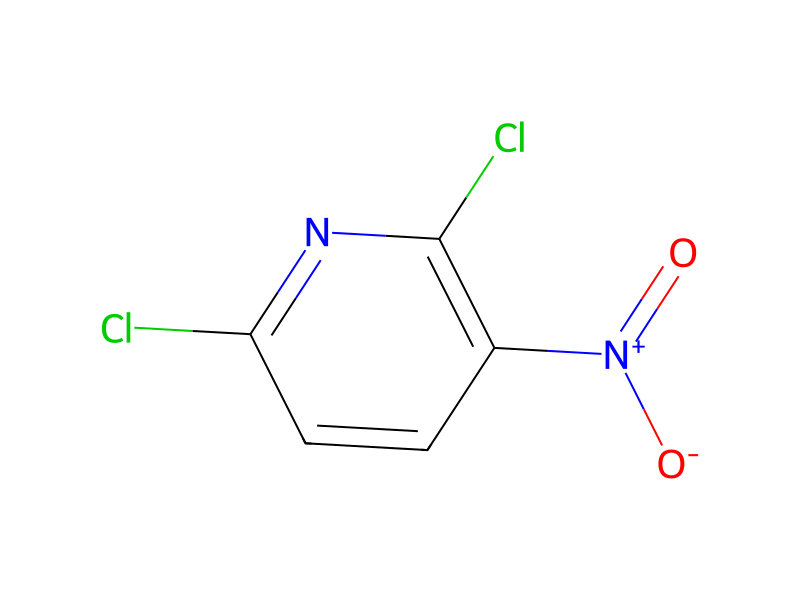
Basic information
- CAS
16013-85-7- Standard SMILES
O=[N+]([O-])c1ccc(Cl)nc1Cl- InChIKey
SHCWQWRTKPNTEM-UHFFFAOYSA-N- Molecular formula
- C5H2Cl2N2O2
- Average molar mass
- 192.98 g/mol
- Monoisotopic mass
- 191.94933266
Names & identifiers
- Preferred name
- 2,6-Dichloro-3-nitropyridine
- IUPAC
- 2,6-dichloro-3-nitropyridine
- English name
- 2,6-Dichloro-3-nitropyridine
- Molecular formula
- C5H2Cl2N2O2
- Molecular weight
- 192.99
Names & synonyms
2,6-Dichloro-3-nitropyridine16013-85-7DTXSID10166803EINECS 240-151-1RefChem:445384DTXCID8089294240-151-1Pyridine, 2,6-dichloro-3-nitro-2,6-dichloro-3-nitro-pyridineMFCD000062343-Nitro-2,6-dichloropyridineKH7F529L8W
Show more names
6-Dichloro-3-nitropyridine26DC3NPTIMTEC-BB SBB0036142,6-Dichloro-3-nitroDichloro-3-nitropyrid2,6-Dichloro-3-nitropyrid...
DICHLORONITROPYRIDINE2,6-Dichloro-3-nitropyridine tech.AC-27682,6-Dichloro-3-nitropyridine, technical grade, 92%Flupirtine Impurity HCholest-4-ene, 3-chloro-, (3|A)-2,6-dichloronitropyridineFT-0651285
Database identifiers
- CAS
16013-85-7- PubChem CID
- 85239
- DTXSID
DTXSID10166803- UNII
- KH7F529L8W
- EC Number
- 240-151-1
- Nikkaji
- J219.937H
Properties
Computed structural properties
- XLogP
- 2.6
- Topological polar surface area
- 58.7 Ų
- Hydrogen bond donors
- 0
- Hydrogen bond acceptors
- 3
- Rotatable bonds
- 0
- Heavy atoms
- 11
- Formal charge
- 0
- Complexity
- 161
Experimental & physicochemical properties
LogP1.96
Physicochemical properties
- Melting point
- 55 · 55-60 °C(lit.)
- Boiling point
- 295.5 · 295.5±35.0 °C(Predicted)
- Density
- 1.6791 · 1.6791 (rough estimate)
- refractive index
- 1.61 · 1.6100 (estimate)
- Flash point
- 230 °F · >230 °F
- storage temp.
- Keep in dark place,Sealed in dry,Room Temperature
- solubility
- soluble in Methanol
- form
- Liquid
- pka
- -5.76 · -5.76±0.10(Predicted)
- color
- Clear colorless to light yellow
- BRN
- 1619741 · 1619741
- InChI
- InChI=1S/C5H2Cl2N2O2/c6-4-2-1-3(9(10)11)5(7)8-4/h1-2H
- InChIKey
- SHCWQWRTKPNTEM-UHFFFAOYSA-N
Safety & regulation
Safety information is for reference only and does not replace the supplier’s Safety Data Sheet (SDS), applicable regulations, or professional assessment.
GHS classification
GHS Classification
Warning
H315 (95.8%): Causes skin irritation [Warning Skin corrosion/irritation]
P261, P264, P264+P265, P271, P272, P280, P302+P352, P304+P340, P305+P351+P338, P319, P321, P332+P317, P333+P317, P337+P317, P362+P364, P403+P233, P405, and P501 (click each P-code to see the statement)
Aggregated GHS information provided per 48 reports by companies from 8 notifications to the ECHA C&L Inventory. Each notification may be associated with multiple companies.
Hazard information
Hazard Classes and CategoriesSkin Irrit. 2 (95.8%)
Safety data
- PPE
- dust mask type N95 (US), Eyeshields, Faceshields, Gloves
- wgk
- 3
- hs_code
- 29333990
- risk_code
- 36/37/38-42/43-43
- Signal word
- Warning
- Symbol(GHS)
- GHS07
- hazard_code
- Xn,Xi
- safety_code
- 22-26-36/37-37/39-24-36/37/39
- hazard_class
- IRRITANT
- Storage Class
- 11 - Combustible Solids
- target organs
- Respiratory system
- Hazard statements
- H315-H317-H319-H335
- Hazard Classifications
- Eye Irrit. 2Skin Irrit. 2Skin Sens. 1STOT SE 3
- Precautionary statements
Chemistry & industry
Applications
Uses2,6-Dichloro-3-nitropyridine was used:in the synthesis of pyridyldifluoroacetatesas starting reagent in the preparation of bicyclooxacalixhetarene
Uses2,6-Dichloro-3-nitropyridine is a starting compound for the synthesis of a sulfide analog of Flupirtine with KV7.2/3 channel opening activity. 2,6-Dichloro-3-nitropyridine can be used in pain research.
General Description2,6-Dichloro-3-nitropyridine undergoes macrocyclic condensation reaction with resorcinol derivatives to yield chiral tetraoxacalix[2]arene[2]pyridines.
Upstream & downstream products
Upstream raw materials
Downstream products
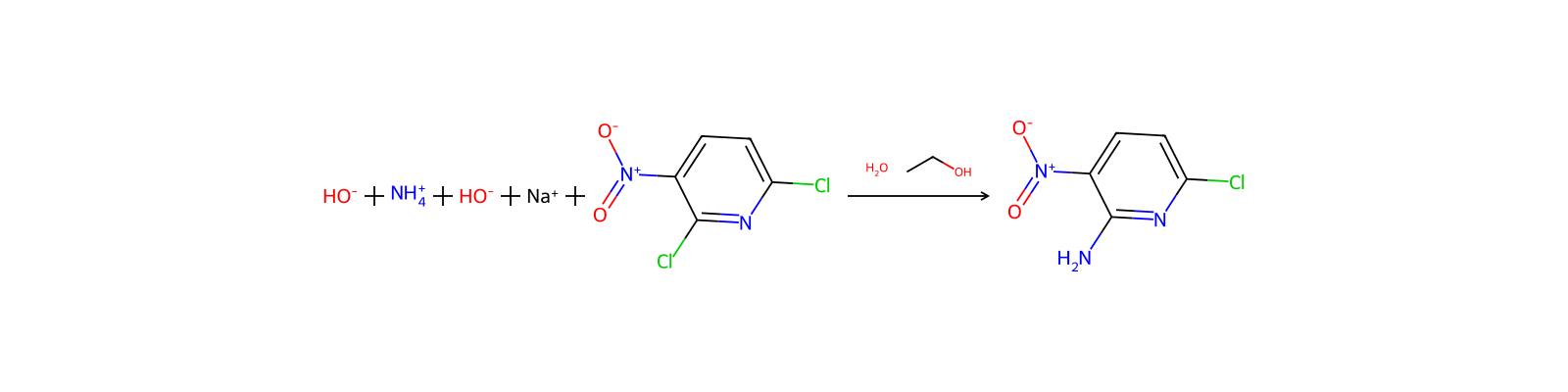
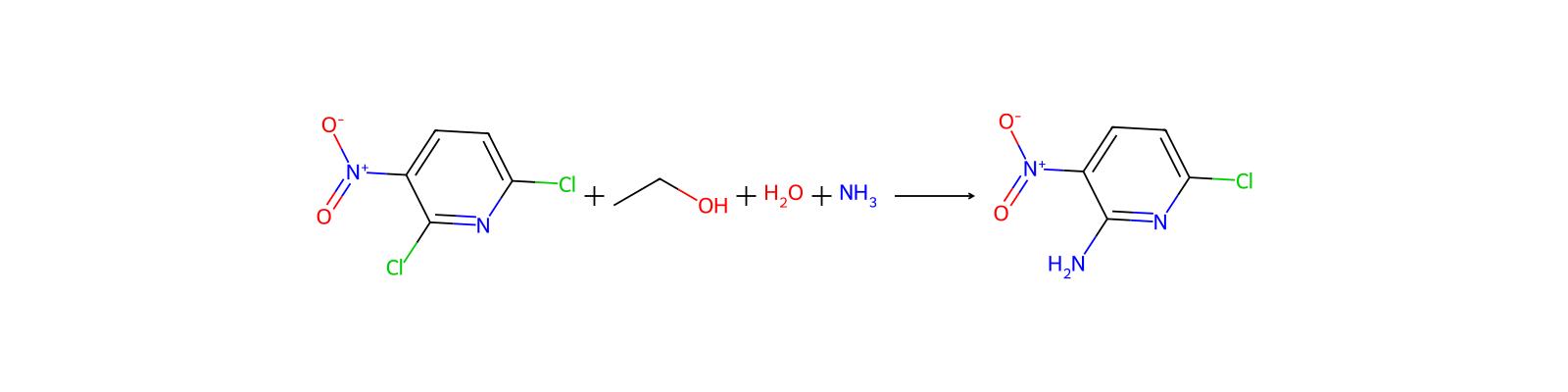
Related reactions
254 records



Compound notes
Loading…