
Basic information
- Standard SMILES
CCO[Si](CC[Si](OCC)(OCC)OCC)(OCC)OCC- InChIKey
IZRJPHXTEXTLHY-UHFFFAOYSA-N- Molecular formula
- C14H34O6Si2
- Average molar mass
- 354.59 g/mol
- Monoisotopic mass
- 354.18939187
Overview
structure in first source
Names & identifiers
- Preferred name
- Bis(triethoxysilyl)ethane
- IUPAC
- triethoxy(2-triethoxysilylethyl)silane
- English name
- 1,2-Bis(triethoxysilyl)ethane
- Molecular formula
- C14H34O6Si2
- Molecular weight
- 354.59
Names & synonyms
1,2-Bis(triethoxysilyl)ethane16068-37-43,8-Dioxa-4,7-disiladecane, 4,4,7,7-tetraethoxy-F57B935G98DTXSID7051763RefChem:71744DTXCID6030318240-212-2Bis(triethoxysilyl)ethane4,4,7,7-Tetraethoxy-3,8-dioxa-4,7-disiladecanetriethoxy(2-triethoxysilylethyl)silaneC14H34O6Si2
Show more names
KH-526CFS-374Silquest Y 9805Co-Formula CFS-3741,2-Bis(triethoxysiLHEXAETHOXYDISILETHYLENE2-Bis(triethoxysilyl)ethane
MFCD00239362S02108Ethylenebis(triethoxysilane)EINECS 240-212-21,2-Bis(triethoxysilyl)ethane,UNII-F57B935G98Ethylenebis(triethoxysilane);triethoxy(2-triethoxysilylethyl)silane;4,4,7,7-Tetraethoxy-3,8-dioxa-4,7-disiladecane;SCHEMBL35088
Database identifiers
- CAS
16068-37-4- PubChem CID
- 85266
- DTXSID
DTXSID7051763- UNII
- F57B935G98
- EC Number
- 240-212-2
- Nikkaji
- J286.803B
Properties
Computed structural properties
- Topological polar surface area
- 55.4 Ų
- Hydrogen bond donors
- 0
- Hydrogen bond acceptors
- 6
- Rotatable bonds
- 15
- Heavy atoms
- 22
- Formal charge
- 0
- Complexity
- 208
Experimental & physicochemical properties
Food Contact SubstancesFCS -> FDA Cumulative Estimated Daily Intake (CEDI)
Physical DescriptionLiquid
Physicochemical properties
- Melting point
- -20 · -20-10°C
- Boiling point
- 119 °C · 119 °C(lit.)
- Density
- 0.958 g/mL · 0.958 g/mL at 25 °C(lit.)
- vapor pressure
- 0 · 0-7910Pa at 20-25℃
- refractive index
- 20 · n20/D 1.411(lit.)
- Flash point
- 230 °F · >230 °F
- storage temp.
- Keep in dark place,Sealed in dry,Room Temperature
- form
- clear liquid
- color
- Colorless to Almost colorless
- Specific Gravity
- 0.957 · 0.957
- Viscosity
- 2.58 mm2/s · 2.58mm2/s
- Water Solubility
- Soluble in alcohol, aromatic and aliphatic hydrocarbons. Hydrolyzes with water.
- Hydrolytic Sensitivity
- 7 · 7: reacts slowly with moisture/water
- InChI
- 1S/C14H34O6Si2/c1-7-15-21(16-8-2,17-9-3)13-14-22(18-10-4,19-11-5)20-12-6/h7-14H2,1-6H3
- InChIKey
- IZRJPHXTEXTLHY-UHFFFAOYSA-N
- SMILES
- CCO[Si](CC[Si](OCC)(OCC)OCC)(OCC)OCC
- LogP
- -4 · -4-2.7 at 20-25℃
- CAS DataBase Reference
- 16068 · 16068-37-4
- EWG's Food Scores
- 1 · 1
- FDA UNII
- 57 B935G98 · F57B935G98
- EPA Substance Registry System
- 3 · 3,8-Dioxa-4,7-disiladecane, 4,4,7,7-tetraethoxy- (16068-37-4)
- UNSPSC Code
- 12352103 · 12352103
- NACRES
- 23 · NA.23
- Symbol(GHS)
- 5 · GHS05,GHS07
- Signal word
- Danger
- Hazard statements
- 315 · H315-H318-H335
- Precautionary statements
- 280 · P280-P302+P352-P305+P351+P338+P310
- target organs
- nasopharynx,larynx
- PPE
- Eyeshields, Gloves, type ABEK (EN14387) respirator filter
- Hazard Codes
- Xi
- Risk Statements
- 36 · 36/37/38-41-38-37-36
- Safety Statements
- 26 · 26-36
- RIDADR
- 2810 · 2810
- WGK Germany
- 3 · 3
- RTECS
- 7755000 · JG7755000
- TSCA
- TSCA listed
- HS Code
- 29319090 · 29319090
- Storage Class
- 6.1 C · 6.1C - Combustible acute toxic Cat.3toxic compounds or compounds which causing chronic effects
- Hazard Classifications
- 3 OralAcute · Acute Tox. 3 OralAcute Tox. 4 DermalAquatic Chronic 3STOT RE 1 Inhalation
- REACH Registrations
- Active
Safety & regulation
GHS classification
GHS Classification
Danger
H301 (65.7%): Toxic if swallowed [Danger Acute toxicity, oral]
P260, P261, P264, P264+P265, P270, P271, P273, P280, P301+P316, P302+P352, P304+P340, P305+P354+P338, P317, P319, P321, P330, P332+P317, P362+P364, P403+P233, P405, and P501 (click each P-code to see the statement)
Aggregated GHS information provided per 230 reports by companies from 11 notifications to the ECHA C&L Inventory. Each notification may be associated with multiple companies.
Hazard information
Regulatory Information
Chemical: 3,8-Dioxa-4,7-disiladecane, 4,4,7,7-tetraethoxy-
Regulation (EC) No 1935/2004 (amended)
3,8-Dioxa-4,7-disiladecane, 4,4,7,7-tetraethoxy- is listed on the EPA's Chemical Data Reporting (CDR) system. Manufacturers and importers of 3,8-Dioxa-4,7-disiladecane, 4,4,7,7-tetraethoxy- are required to report information about their production and use of this chemical to the EPA under the Toxic Substances Control Act (TSCA). (40 eCFR Part 711)
PMN - indicates a commenced PMN (Pre-Manufacture Notices) substance.
Status: Active Update: 01-07-2022 https://echa.europa.eu/registration-dossier/-/registered-dossier/23679
3,8-Dioxa-4,7-disiladecane, 4,4,7,7-tetraethoxy-: Does not have an individual approval but may be used as a component in a product covered by a group standard. It is not approved for use as a chemical in its own right.
Hazard Classes and CategoriesAcute Tox. 3 (65.7%)
Safety data
- PPE
- Eyeshields, Gloves, type ABEK (EN14387) respirator filter
- wgk
- 3
- tsca
- TSCA listed
- rtecs
- JG7755000
- ridadr
- 2810
- hs_code
- 29319090
- risk_code
- 36/37/38-41-38-37-36
- Signal word
- Danger
- Symbol(GHS)
- GHS05,GHS07
- hazard_code
- Xi
- safety_code
- 26-36
- Storage Class
- 6.1C - Combustible acute toxic Cat.3toxic compounds or compounds which causing chronic effects
- target organs
- nasopharynx,larynx
- Hazard statements
- H315-H318-H335
- REACH Registrations
- Active
- Hazard Classifications
- Acute Tox. 3 OralAcute Tox. 4 DermalAquatic Chronic 3STOT RE 1 Inhalation
- Precautionary statements
- P280-P302+P352-P305+P351+P338+P310
Chemistry & industry
Uses & manufacturing
U.S. Production2023: 25,000 - <50,000 lb
Consumer UsesMonomers
Industry UsesMonomers
General Manufacturing Information
Paint and Coating Manufacturing
3,8-Dioxa-4,7-disiladecane, 4,4,7,7-tetraethoxy-: ACTIVE
Applications
Uses1,2-Bis(triethoxysilyl)ethane is used as coating auxiliary agents, leather auxiliary agents, plastic auxiliary agents, surfactants and textile auxiliary agents. It is used to prepare mesoporous organosilica materials.
Uses1,2-bis(triethoxysilyl)ethane may be used to prepare mesoporous organosilica materials. Amine functionalization of mesoporous silica can be undertaken by this silane. It may form inorganic hybrid membranes with poly(vinyl alcohol). Effect of this crosslinking silane on the bonding of bis-GMA (bis-phenol-A-diglycidyldimethacrylate) resin to silicatized titanium was investigated.
General Description1,2-bis(triethoxysilyl)ethane is a non-functional silane and a double trialkoxysilyl precursor.
Suppliers50 total
梯希爱(上海)化成工业发展有限公司021-67121386 · [email protected]
上海阿拉丁生化科技股份有限公司400-6206333 13167063860 · [email protected]
湖北科孚乐材料科技有限公司027-84459282 13720265353 · [email protected]
上海比阳实业有限公司+86-21-52699951; +8613917686115 · [email protected]
武汉欣扬瑞和化学科技有限公司153-07155313 15307155313 · [email protected]
温州共赢化学有限公司+86-0086-577-64498589 +86-15355981851 · [email protected]
河北创海生物科技有限公司+86-86-13131129325 · [email protected]
Dayang Chem (Hangzhou) Co.,Ltd.+86-0571-88938639 17705817739 · [email protected]
韶远科技(上海)有限公司021-50795510 4000665055 · [email protected]
Syntechem Co.,Ltd[email protected]
上海迈瑞尔生化科技有限公司4006356688 18621169109 · [email protected]
阿法埃莎(中国)化学有限公司400-6106006 · [email protected]
安耐吉化学&3A(安徽泽升科技股份有限公司)400-0056266 · [email protected]
石家庄斯迪亚诺精细化工有限公司0311-89250318 13582355795 · [email protected]
上海瀚鸿科技股份有限公司021-54306202 13764082696 · [email protected]
上海钰康生物科技有限公司+86-18930848214 +86-021-56762820 · [email protected]
山东万达有机硅新材料有限公司021-54177116
郑州研德生物科技有限公司0371-63682289 15538176268 · [email protected]
上海比阳实业有限公司+86-15021878111 · [email protected]
孝感深远化工有限公司15527621225; 15527621225 · [email protected]
山东西亚化学有限公司13355009207 13355009207 · [email protected]
四川库利南科技有限公司400-1166-196 18981987031 · [email protected]
天津希恩思生化科技有限公司400 638 7771 · [email protected]
Novel Chemical+86-21-64855560, 4008207808 · [email protected]
艾科试剂4008-755-333 18080918076 · [email protected]
QINGDAO KAIENSI INTERNATIONAL TRADE CO.,LTD.+86-0532-8699-9256 +86-18518128472 · [email protected]
上海遐瑞医药科技有限公司+86 21 61551611
TCI AMERICA800-4238616 · [email protected]
TOKYO CHEMICAL INDUSTRY CO., LTD.03-36680489 · [email protected]
TCI Europe320-37350700 · [email protected]
上海楚青新材料科技有限公司021-61530618; 18721685818
上海将来实业股份有限公司021-61552785 · [email protected]
HBCChem, Inc.+1-510-219-6317 · [email protected]
上海探圭新材料科技有限公司18516111942 · [email protected]
北京奥秘佳得医药科技有限公司+86-13522808617 · [email protected]
上海石洋化工有限公司021-56795766 · [email protected]
成都零六生物科技有限公司400-1166-196 13458535857 · [email protected]
上海麦克林生化科技股份有限公司15221275939 15221275939 · [email protected]
深圳利斯康医药科技有限公司0755-89396905 · [email protected]
艾孚特(天津)新材料有限公司18756952323 18756942323 · [email protected]
成都润泽本土化工有限公司13096311329 028-88469284 616445927 · [email protected]
湖北巨胜科技有限公司027-59599241 18871490274 · [email protected]
池州凯隆进出口贸易有限公司[email protected]
Sigma-Aldrich西格玛奥德里奇(上海)贸易有限公司021-61415566 800-8193336 · [email protected]
Shanghai Enchem Industry Co., Ltd.15021317485
壮铭新材料科技江苏有限公司17312398916 051386936896 15216715905 · [email protected]
Alfa Chemistry1-516-6625404 · [email protected]
Alfa Chemistry+1-5166625404 · [email protected]
湖北圣达利化学有限公司027-83629626 18995558541 · [email protected]
成都润泽本土化工有限公司028-88469284 18000562381 · [email protected]
Related reactions
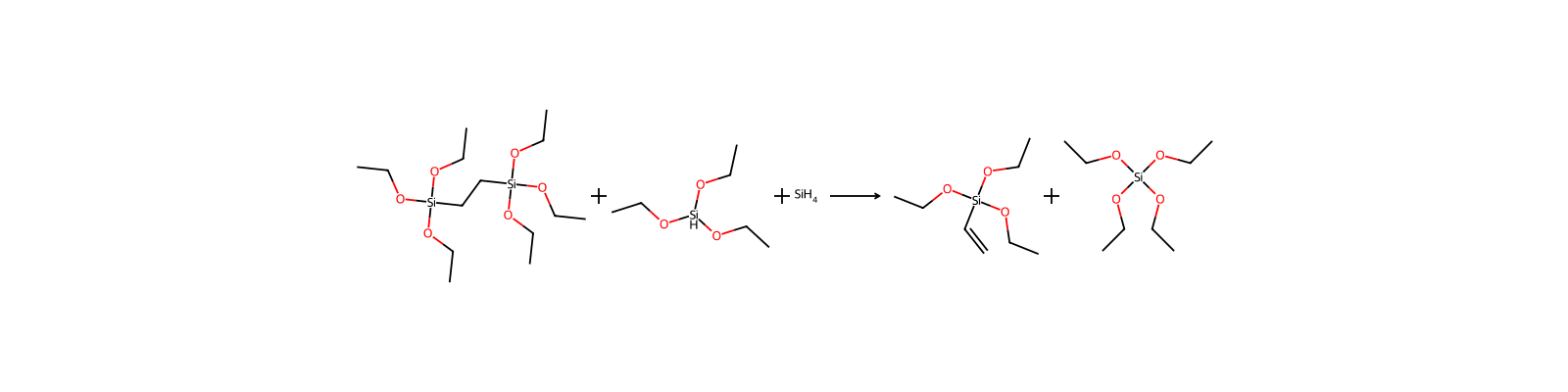
3 records


Linked notes
Loading…