HomeMCPWorkbenchSkills
HomeWorkbenchNotificationsMe
llms.txt · MCP GuidePrivacy Policy · Terms of Service · Supportv1.8.0
  1. Home
  2. /Compound

Chloramben

HCID 8630
New noteNew reactionRequest quotes
Print preview
Basic informationOverviewNames & identifiersPropertiesSafety & regulationChemistry & industryRelated reactionsCompound notes
Substructure searchFind similar structures

Basic information

CAS
133-90-4
Standard SMILES
Nc1cc(Cl)cc(C(=O)O)c1Cl
InChIKey
HSSBORCLYSCBJR-UHFFFAOYSA-N
Molecular formula
C7H5Cl2NO2
Average molar mass
206.02 g/mol
Monoisotopic mass
204.96973376

Overview

Purplish white powder or light purple solid. (NTP, 1992)

Names & identifiers

Preferred name
Chloramben
IUPAC
3-amino-2,5-dichlorobenzoic acid
English name
Chloramben
Molecular formula
C7H5Cl2NO2
Molecular weight
206.03

Names & synonyms

Chloramben3-Amino-2,5-dichlorobenzoic acid133-90-4AmbibenAmiben DSAmibinAmobenVegibenAMIBENBenzoic acid, 3-amino-2,5-dichloro-Ornamental weederChlorambed
Show more names
NaptolAMBENVegabenAcpm-629amibends
2,5-Dichloro-3-aminobenzoic acidOrnamental weeder 4GChlorambeneACP-M-728NCI-C00055DTXSID2020262EWG424FFB5DTXCID00262

Database identifiers

CAS
133-90-4
PubChem CID
8630
DTXSID
DTXSID2020262
ChEMBL
CHEMBL446021
ChEBI
CHEBI:82183
UNII
EWG424FFB5
EC Number
205-123-5
Nikkaji
J5.590E

Properties

Computed structural properties

XLogP
2
Topological polar surface area
63.3 Ų
Hydrogen bond donors
2
Hydrogen bond acceptors
3
Rotatable bonds
1
Heavy atoms
12
Formal charge
0
Complexity
188

Experimental & physicochemical properties

Chemical ClassesHazardous Air Pollutants (HAPs)
SpringerMaterials PropertiesFusion temperature
Pesticides · 5 items

Pesticide -> EPA IRIS

Herbicides

Active substance -> EU Pesticides database: Not approved

Pesticides -> Herbicides, Other

Pesticide

LogP · 2 items

log Kow = 1.11

1.46

OdorODORLESS
Color/FormCOLORLESS CRYSTALLINE SOLID
Solubility · 6 items

less than 0.1 mg/mL at 72 °F (NTP, 1992)

water solubility = 700 mg/l @ 25 °C

SOLUBILITY IN ETHANOL: 172 G/L @ 25 °C

SOL IN ALKALI

SOLUBILITY IN ACETONE: 23.27 G/100 G @ 29 °C

For more Solubility (Complete) data for AMIBEN (9 total), please visit the HSDB record page.

Decomposition · 2 items

DISASTER HAZARD: WHEN HEATED TO DECOMP, IT EMITS HIGHLY TOXIC FUMES SUCH AS /HYDROGEN/ CHLORIDE AND NITROUS OXIDES.

Safety & regulation

Safety information is for reference only and does not replace the supplier’s Safety Data Sheet (SDS), applicable regulations, or professional assessment.

GHS classification

GHS Classification · 5 items

This chemical does not meet GHS hazard criteria for 7.1% (3 of 42) of reports.

Danger

H315 (92.9%): Causes skin irritation [Warning Skin corrosion/irritation]

P203, P261, P264, P264+P265, P271, P280, P302+P352, P304+P340, P305+P351+P338, P318, P319, P321, P332+P317, P337+P317, P362+P364, P403+P233, P405, and P501 (click each P-code to see the statement)

Aggregated GHS information provided per 42 reports by companies from 3 notifications to the ECHA C&L Inventory. Each notification may be associated with multiple companies.

Hazard information

Regulatory Information · 3 items

Hazard Traits - Dermatotoxicity

2002/2076

The New Jersey Worker and Community Right to Know Act requires public and private employers to provide information about hazardous substances at their workplaces. (N.J.S.A. 34:5A-1 et. seq.)

DOT LabelClass 9
Fire HazardsFlash point data for this compound is not available, but it is probably combustible. (NTP, 1992)
Fire PotentialNonflammable
Health HazardsACUTE/CHRONIC HAZARDS: This compound emits toxic fumes when heated to decomposition. (NTP, 1992)
Hazards Summary · 2 items

Chloramben is used as a herbicide on a number of crops. Limited information is available on the health effects of chloramben. Acute (short-term) exposure to high levels of chloramben in humans results in mild to moderate dermal irritation. No information is available on the chronic (long-term) effects of chloramben in humans. Animal studies have reported effects on the liver from chronic oral exposure to chloramben. A National Toxicology Program Study reported that oral exposure to chloramben caused liver tumors in mice, but not in rats. EPA has not classified chloramben for potential carcinogenicity.

Chemistry & industry

Pharmacology

Metabolism/Metabolites · 5 items

THE MAJOR PATHWAY OF CHLORAMBEN METABOLISM IN BOTH TOLERANT & SUSCEPTIBLE PLANT SPECIES APPEARS TO BE A RAPID FORMATION OF METHANOL-SOLUBLE CONJUGATES & "BOUND" INSOLUBLE RESIDUES.

IN PLANTS, AMIBEN IS CONVERTED TO N-GLUCOSYLAMINE. THE ENZYME, ISOLATED FROM SOYBEANS ... FOUND TO BE SPECIFIC FOR URIDINE DIPHOSPHATE-5'-GLUCOSE & CORRESPONDING THYMIDINE ANALOG.

... THE PROLONGED IN VIVO STABILITY, IMMOBILITY, & ACCUM OF ... /THE N-GLUCOSIDE CONJUGATE/ IN BOTH SUSCEPTIBLE & TOLERANT PLANTS STRONGLY ... /SUGGESTS/ THAT N-GLUCOSIDE BIOSYNTHESIS IS A MAJOR DETOXICATION MECHANISM.

YIELDS 3-AMINO-2,5-DICHLOROBENZOIC ACID-N-GLUCOSIDE IN SOYBEAN, BARLEY, BEET, TOMATO, CUCUMBER. /FROM TABLE/

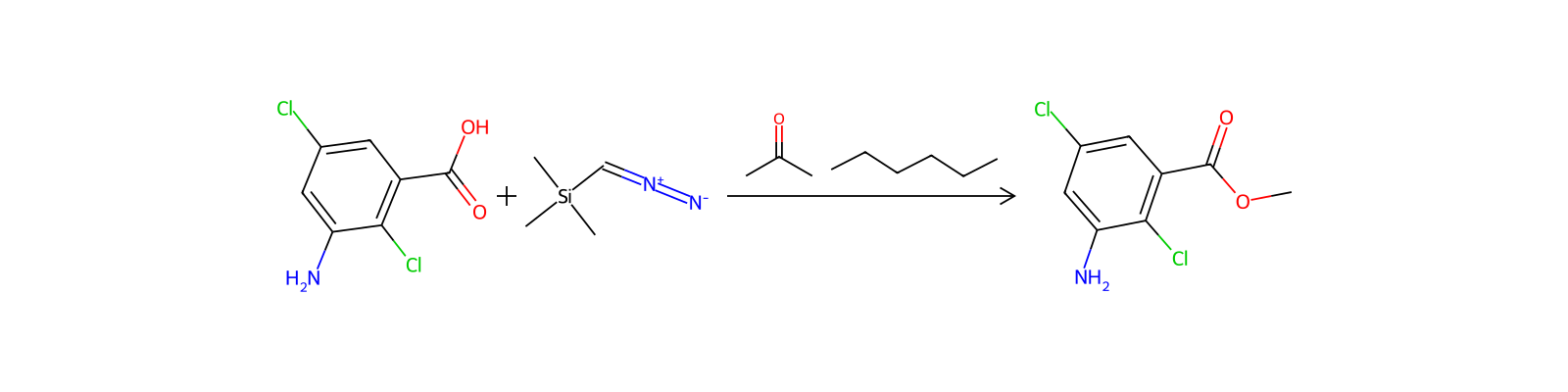
CHLORAMBEN METAB IN PLANTS. A REPORTED CHLORAMBEN-X CONJUGATE IDENTIFIED AS METHYL 3-AMINO-2,5-DICHLOROBENZOATE (CHLORAMBEN METHYL ESTER) WAS AN ARTIFACT FORMED BY TRANSESTERIFICATION OF AN UNKNOWN ESTER METABOLITE DURING CLEAN UP OF METHANOL EXTRACTS OF FLORISIL COLUMNS.

Absorption, Distribution and Excretion · 3 items

... /STUDIES IN A LACTATING COW SHOWED THAT OVER/ A PERIOD OF 4 DAYS, DIETARY CHLORAMBEN (5 PPM IN DAILY RATION) WAS RAPIDLY EXCRETED IN URINE (88%) & FECES (5%). NO RESIDUES WERE DETECTED IN THE MILK. APPROX 18% OF CHLORAMBEN IN URINE WAS PRESENT AS UNKNOWN CONJUGATED MATERIAL.

... UNPUBLISHED FEEDING STUDIES WITH DOGS ... SHOWED ... THAT DIETARY CHLORAMBEN (5 PPM) WAS RAPIDLY EXCRETED IN URINE & FECES, & NO ... RESIDUES WERE DETECTED IN TISSUE SAMPLES TAKEN ... .

ACIDIC COMPOUNDS SUCH AS 3-AMINO-2,5-DICHLOROBENZOIC ACID ARE BOUND TO BOVINE SERUM ALBUMIN. BLOOD/TISSUE RATIOS OF (14)C FROM RATS DOSED WITH LABELED ACID WERE HIGHLY CORRELATED WITH THE LOGARITHM OF BINDING AFFINITY CONSTANTS.

Uses & manufacturing

Uses · 5 items

Chloramben is used as a herbicide to control grasses and broadleaf weeds on soybeans, dry beans, lima beans, asparagus, pumpkins, squash, corn, tomatoes, peppers, and sweet potatoes.

Used as a selective pre-emergence herbicide to control annual grasses and broad-leaf weeds in various food crops (mainly soybeans), trees, and shrubs; [EXTOXNET PIP - Chloramben]

Related reactions

21 records
New reaction record
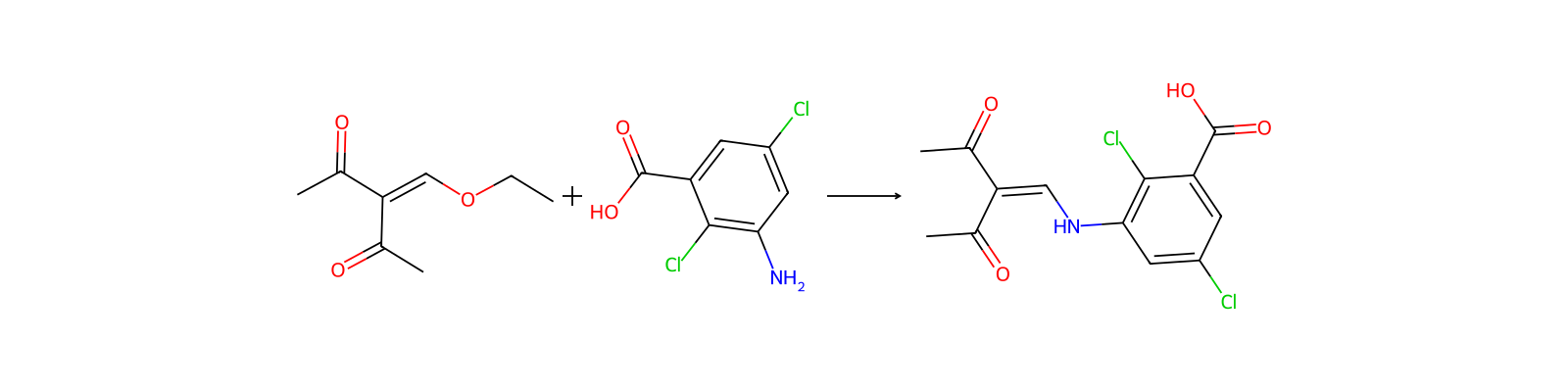
HRID 65379 reaction equation
HRID 65379As reactantuspto-grants-1986_09
HRID 87974 reaction equation
HRID 87974As reactantTraining data from https://doi.org/10.1039/C8SC04228D (2/10)
HRID 134259 reaction equation
HRID 134259As reactantTraining data from https://doi.org/10.1039/C8SC04228D (9/10)
HRID 255484 reaction equation
HRID 255484As reactantuspto-grants-1987_10
HRID 274836 reaction equation
HRID 274836As productuspto-grants-1995_02
HRID 274837 reaction equation
HRID 274837As reactantuspto-grants-1995_02
HRID 299070 reaction equation
HRID 299070As reactantTraining data from https://doi.org/10.1039/C8SC04228D (8/10)
HRID 330863 reaction equation
HRID 330863As reactantuspto-grants-2014_11
Page 1 of 3

Compound notes

Loading…

On this pageBasic informationOverviewNames & identifiersPropertiesSafety & regulationChemistry & industryRelated reactionsCompound notes
More actions
New noteNew reactionRequest quotes

... DANGEROUS; WHEN ... /IN/ CONTACT WITH ACIDS OR ACID FUMES THEY EVOLVE HIGHLY TOXIC /HYDROGEN/ CHLORIDE FUMES. SOME ORG CHLORIDES DECOMP TO YIELD PHOSGENE. /CHLORIDES/

Melting Point · 4 items

381 to 387 °F (NTP, 1992)

200-201 °C

MP: ABOVE 195 °C /TECHNICAL PRODUCT/

200 °C

Vapor Pressure · 4 items

0.007 mmHg at 212 °F (NTP, 1992)

0.0000001 [mmHg]

930 mPa @ 100 °C

0.007 [mm Hg] @100 °C

Physical Description · 2 items

Purplish white powder or light purple solid. (NTP, 1992)

Colorless odorless solid; Technical product is purplish white solid; [HSDB]

Stability/Shelf LifeRAPIDLY DECOMPOSED BY LIGHT

Physicochemical properties

Melting point
200 °C · 200 °C
Boiling point
312 °C · 312 °C
Density
1.4062 · 1.4062 (rough estimate)
refractive index
1.61 · 1.6100 (estimate)
storage temp.
0 · 0-6°C
solubility
Acetonitrile (Slightly), DMSO (Sparingly), Metahnol (Slightly)
pka
2.75 · 2.75±0.25(Predicted)
form
Powder
color
Pale Beige
Water Solubility
700 mg/L · 700 mg/L (25 ºC)
Merck
13 · 13,2082
BRN
2365906 · 2365906
Henry's Law Constant
2.6 · 2.6×105 mol/(m3Pa) at 25℃, Duchowicz et al. (2020)
Exposure limits
An experimental carcinogen.
Major Application
peptide synthesis
InChI
1S/C7H5Cl2NO2/c8-3-1-4(7(11)12)6(9)5(10)2-3/h1-2H,10H2,(H,11,12)
InChIKey
HSSBORCLYSCBJR-UHFFFAOYSA-N
SMILES
Nc1cc(Cl)cc(C(O)=O)c1Cl
Toxicology and Carcinogenesis
Bioassay of Chloramben for Possible Carcinogenicity (CASRN 133-90-4)
CAS DataBase Reference
133 · 133-90-4(CAS DataBase Reference)
EWG's Food Scores
1 · 1
FDA UNII
424 FFB5 · EWG424FFB5
NIST Chemistry Reference
3 · 3-Amino-2,5-dichlorobenzoic acid(133-90-4)
EPA Substance Registry System
Chloramben (133-90-4)
Pesticides Freedom of Information Act (FOIA)
Chloramben
UNSPSC Code
12352106 · 12352106
NACRES
22 · NA.22
Symbol(GHS)
7 · GHS07,GHS08
Signal word
Danger
Hazard statements
315 · H315-H319-H335-H350
Precautionary statements
201 · P201-P302+P352-P305+P351+P338-P308+P313
target organs
Respiratory system
PPE
3 · Eyeshields, Gloves, type P3 (EN 143) respirator cartridges
Hazard Codes
T,Xn
Risk Statements
45 · 45-36/37/38-40
Safety Statements
53 · 53-22-26-36/37/39-45-36
RIDADR
3077 · UN 3077 9/PG 3
WGK Germany
3 · 3
RTECS
1925000 · DG1925000
TSCA
TSCA listed
HazardClass
9 · 9
HS Code
29224999 · 29224999
Storage Class
6.1 C · 6.1C - Combustible acute toxic Cat.3toxic compounds or compounds which causing chronic effects
Hazard Classifications
1 BEye · Carc. 1BEye Irrit. 2Skin Irrit. 2STOT SE 3
Hazardous Substances Data
133 · 133-90-4(Hazardous Substances Data)
Toxicity
Nontoxic to fish (Hartley and Kidd, 1987); acute oral LD50 for rats 5,620 mg/kg (Hartley and Kidd, 1987), 3,500 mg/kg (RTECS, 1985).
Limited Quantities
5 kg · 5.0 kg (11 lbs) (solid)
Excepted Quantities
Max Inner Pack (30g or 30ml) and Max Outer Pack (1Kg or 1L)

Rapidly excreted after ingestion; [EXTOXNET PIP - Chloramben] Little or no sensitization reactions observed in male guinea pigs; Histopathological liver changes observed in 18-month dietary study of mice (LOAEL of 15 mg/kg/day for hepatic effects); [ToxPlanet: EPA - Health Effects Assessments] A mild to moderate skin irritant; [HSDB] A skin and strong eye irritant; Targets the liver; [Sigma-Aldrich MSDS]

Reactive GroupAcids, Carboxylic
Special Reports · 2 items

USEPA/ODW; Health Advisories for 50 Pesticides (8/88) NTIS No. PB88-245931

DHEW/NCI; Bioassay of Chloramben for Possible Carcinogenicity (1977) Technical Rpt Series No. 25 DHEW Pub No. (NIH) 77-825

FIFRA Requirements · 1 item

Tolerances are established for residues of the herbicide chloramben in or on the following raw agricultural commodities: beans dried; beans, lima; beans, snap; beans, vines; cantaloupes; corn, field, fodder; corn, field, forage; corn, field, grain; cucumbers; peanuts; peanuts, forage; peas, pigeon; peas, pigeon, forage; peppers; pumpkins; soybeans; soybeans, forage; squash, summer; squash, winter; sunflower seed; sweet potatoes; and tomatoes.

Reactivity ProfileCHLORAMBEN reacts with sodium hypochlorite solutions (NTP, 1992).
Atmospheric Standards · 1 item

Listed as a hazardous air pollutant (HAP) generally known or suspected to cause serious health problems. The Clean Air Act, as amended in 1990, directs EPA to set standards requiring major sources to sharply reduce routine emissions of toxic pollutants. EPA is required to establish and phase in specific performance based standards for all air emission sources that emit one or more of the listed pollutants. Amiben is included on this list.

Air and Water ReactionsInsoluble in water.

Safety & protection

Fire FightingFires involving this material can be controlled using a dry chemical, carbon dioxide or Halon extinguisher. (NTP, 1992)
First Aid · 1 item

EYES: First check the victim for contact lenses and remove if present. Flush victim's eyes with water or normal saline solution for 20 to 30 minutes while simultaneously calling a hospital or poison control center. Do not put any ointments, oils, or medication in the victim's eyes without specific instructions from a physician. IMMEDIATELY transport the victim after flushing eyes to a hospital even if no symptoms (such as redness or irritation) develop.

Nonfire Spill Response · 1 item

SMALL SPILLS AND LEAKAGE: Should a spill occur while you are handling this chemical, FIRST REMOVE ALL SOURCES OF IGNITION, then you should dampen the solid spill material with ethanol and transfer the dampened material to a suitable container. Use absorbent paper dampened with ethanol to pick up any remaining material. Seal the absorbent paper, and any of your clothes, which may be contaminated, in a vapor-tight plastic bag for eventual disposal. Solvent wash all contaminated surfaces with ethanol followed by washing with a soap and water solution. Do not reenter the contaminated area until the Safety Officer (or other responsible person) has verified that the area has been properly cleaned.

Disposal Methods · 3 items

Reuse: The use of chemical reagents as a means of disposal is not recommended at the present time. Amiben's shelf life is of sufficient duration to allow for total use of the product in accordance with label directions. On this basis, there should be few instances of small quantities of excess amiben requiring disposal. For the decontamination of amiben containers, the National Agricultural Chemical Association (USA) recommends triple rinse. "Triple rinse" means the flushing of containers three times, each time using a volume of the normal diluent equal to approx ten percent of the container's capacity and adding the rinse liquid to the spray mixture or disposing it by the method prescribed for disposing of the pesticide.

Incinerate in a unit equipped with an effluent gas scrubber at a temperature above 1000 C about 1-2 seconds. Recommendable method: Incineration.

Wet Oxidation: Studies of wet oxidation process applied to amiben herbicide process wastes indicate 88 to 99.5% destruction of the active ingredient.

Preventive MeasuresAvoid skin and eye contact, inhalation of spray mists and drifting.
Isolation and EvacuationExcerpt from ERG Guide 171 [Substances (Low to Moderate Hazard)]:
Allowable Tolerances · 1 item

Tolerances are established for residues of the herbicide chloramben in or on the following raw agricultural commodities: beans dried: 0.1 ppm; beans, lima: 0.1 ppm; beans, snap: 0.1 ppm; beans, vines: 0.1 ppm; cantaloupes: 0.1 ppm; corn, field, fodder: 0.1 ppm; corn, field, forage: 0.1 ppm; corn, field, grain: 0.1 ppm; cucumbers: 0.1 ppm; peanuts: 0.1 ppm; peanuts, forage: 0.1 ppm; peas, pigeon: 0.1 ppm; peas, pigeon, forage: 0.1 ppm; peppers: 0.1 ppm; pumpkins: 0.1 ppm; soybeans: 0.1 ppm; soybeans, forage: 0.1 ppm; squash, summer: 0.1 ppm; squash, winter: 0.1 ppm; sunflower seed: 0.1 ppm; Sweet potatoes: 0.1 ppm; and tomatoes: 0.1 ppm.

Protective Action Criteria (PAC) · 3 items

11 [mg/m3]

120 [mg/m3]

690 [mg/m3]

Personal Protective Equipment (PPE) · 1 item

RECOMMENDED RESPIRATOR: Where the neat test chemical is weighed and diluted, wear a NIOSH-approved half face respirator equipped with a combination filter cartridge, i.e. organic vapor/acid gas/HEPA (specific for organic vapors, HCl, acid gas, SO2 and a high efficiency particulate filter). (NTP, 1992)

Toxicology

Interactions... CAFFEINE & CHLORAMBEN REACTED TO FORM AN INSOL COMPLEX IN STOMACH OF RATS. DECREASED GI ABSORPTION OF (14)C CAFFEINE WAS ASSOCIATED WITH AN INCOMPLETE DISSOCIATION OF THE CHLORAMBEN-CAFFEINE COMPLEX IN THE INTESTINAL TRACT.
Target OrgansHepatic
Environmental Fate · 5 items

LOSS /OF CHLORAMBEN/ BY LEACHING WAS MOST PRONOUNCED FROM A SANDY SOIL & WAS PROGRESSIVELY LESS AS CLAY & ORGANIC COMPONENTS INCREASED.

VOLATILITY & SOIL MOVEMENT ARE MORE DEPENDENT ON FORM OF CHLORAMBEN APPLIED THAN ON SOIL TYPE. ...ALUMINUM & AMMONIUM SALTS... WERE EASILY LEACHED FROM SEVERAL ARKANSAS SOILS. METHYL & BUTOXYETHYL ESTERS RESISTED LEACHING, WHILE AMIDE WAS INTERMEDIATE WITH RESPECT TO LEACHING.

/FROM INVESTIGATIVE STUDIES/ ... ONE MIGHT EXPECT THAT CHLORAMBEN PERSISTENCE ... /MAY/ BE GREATEST AS THE BUTOXYETHYL ESTER IN DRY SOIL OF HIGH ORG CONTENT & LEAST FOR ... SALT IN A MOIST SANDY SOIL WHERE HIGH RAINFALL WOULD ACCELERATE LEACHING.

ABSORPTION OF CHLORAMBEN TO SOIL PARTICLES SIGNIFICANTLY REDUCED HERBICIDAL ACTIVITY. ... IN ONE INSTANCE, UNDER CONTROLLED LAB CONDITIONS, A MUCK SOIL ABSORBED 29% OF APPLIED CHLORAMBEN, WHEREAS A SILTY CLAY LOAM ABSORBED ONLY 9%. ... DESORPTION OF CHLORAMBEN FROM MUCK SOILS IS SLOW.

For more Environmental Fate (Complete) data for AMIBEN (9 total), please visit the HSDB record page.

Adverse EffectsOccupational hepatotoxin - Secondary hepatotoxins: the potential for toxic effect in the occupational setting is based on cases of poisoning by human ingestion or animal experimentation.
Acute Toxicity LinkChemical: CHLORAMBEN
Ongoing Test Status · 1 item

The following link will take the user to the National Toxicology Program (NTP) Test Agent Search Results page, which tabulates all of the "Standard Toxicology & Carcinogenesis Studies", "Developmental Studies", and "Genetic Toxicity Studies" performed with this chemical. Clicking on the "Testing Status" link will take the user to the status (i.e., in review, in progress, in preparation, on test, completed, etc.) and results of all the studies that the NTP has done on this chemical. [http://ntp-apps.niehs.nih.gov/ntp_tox/index.cfm?fuseaction=ntpsearch.searchresults&searchterm=133-90-4]

EPA IRIS Information · 3 items

Chloramben

Hepatic

1.5 x 10 ^-2 mg/kg-day

Soil Adsorption/Mobility · 2 items

Amiben is expected to have anionic properties in most soil systems under environmental conditions (pH 5-9). When a column of Ella island soil type (pH 3.8, 1.6% organic matter, 82.7% sand, 12.2% silt, and 5.2% clay) was perfused for 160 days with a microbial medium containing 5.7 and 26.9 ppm (14)-COOH-labelled Amiben, 1.4 ppm (24.6%) and 5.0 ppm (18.5%) Amiben adsorbed to the soil, respectively. When a column of Kewaunee clay soil type (pH 6.4, 3.8% organic matter, 14% sand, 35.1% silt, and 48.7% clay) was perfused for 160 days with a microbial medium containing 5.7 and 26.9 ppm 14COOH-labelled Amiben, 0.6 ppm (11.1%) and 2.6 ppm (9.8%) Amiben adsorbed to the soil, respectively. When a column of Poygan silty clay soil type (pH 7.2, 10% organic matter, 6% sand, 58.9% silt, and 33.6% clay) was perfused for 160 days with a microbial medium containing 5.7 and 26.9 ppm 14COOH-labelled Amiben, 1.4 ppm (24.6%) and 5.4 ppm (20.1%) Amiben adsorbed to the soil, respectively. Therefore, soil pH and organic matter content are the primary factors controlling Amiben adsorption with higher adsorption to soil occurring either at a low pH with a low organic matter content or at a neutral pH with a high organic matter content(1).

In a study of the adsorption of organic herbicides by montmorillonite, Amiben at an initial concentration of 500 umol/L exhibited no adsorption or negative adsorption to Na-montmorillonite soil (pH 6.8 and 87.0 cation exchange capacity) and H-montmorillonite soil (pH 3.35 and 73.5 cation exchange capacity)(3). Amiben was more strongly adsorbed to soil with high organic matter content; furthermore, adsorption of Amiben to soil particles significantly reduced herbicidal activity(5). Based on adsorption studies of 12 soils, a mean Koc value of 190 was determined for amiben(1). In another adsorption study, an experimental Koc value of 21 was determined for Amiben(2). These Koc values indicate that Amiben will have high to very high mobility in soil and will leach(4). However, protonated Amiben may exhibit higher adsorption at lower pHs than its Koc values indicate(SRC).

Atmospheric ConcentrationsAmiben was reported in ambient air between 1970 and 1971(1).
Human Toxicity ExcerptsMILD TO MODERATE DERMAL IRRITATION, NO EVIDENCE OF SYSTEMIC TOXICITY.
Artificial Pollution SourcesAmiben is used as an herbicide and it is released to the environment by ground spray or granular application(1).
Environmental Biodegradation · 4 items

STUDIES WITH SOIL MICROFLORA INDICATED THAT BREAKDOWN OF AMIBEN OCCURRED...& THAT THE CARBOXYL WAS CLEAVED SLOWLY BUT STEADILY.

MOVES READILY IN SANDY SOILS OR FOLLOWING HEAVY RAINS. ... BROKEN DOWN BY MICROORGANISMS. ... SOME PHOTOCHEMICAL LOSS IN AQUEOUS SOLN. ON MOIST SOIL LOSS REPORTED BUT SOIL MUST REMAIN MOIST FOR LOSS TO OCCUR ... AVG PERSISTENCE @ RECOMMENDED RATES: APPROXIMATELY 6 TO 8 WEEKS.

When a column of Ella island soil type (pH 3.8, 1.6% organic matter, 82.7% sand, 12.2% silt, and 5.2% clay) was perfused for 160 days with a microbial medium containing 5.7 and 26.9 ppm (14)-COOH-labelled Amiben, 56.2 and 39.1% biodegradation was observed for Amiben, respectively. When a column of Kewaunee clay soil type (pH 6.4, 3.8% organic matter, 14% sand, 35.1% silt, and 48.7% clay) was perfused for 160 days with a microbial medium containing 5.7 and 26.9 ppm (14)-COOH-labelled Amiben, 42.7 and 27.7% biodegradation was observed for Amiben, respectively. When a column of Poygan silty clay soil type (pH 7.2, 10% organic matter, 6% sand, 58.9% silt, and 33.6% clay) was perfused for 160 days with a microbial medium containing 5.7 and 26.9 ppm (14)-COOH-labelled Amiben, 40.3 and 22.6 % biodegradation was observed for Amiben, respectively(1).

In an aerobic biodegradation study in a Honeoye silt loam at 25 °C and pH 6.5, amiben biodegraded slowly at rate of 4,500, 6,500, 11,500, and 74,000 cpm (cumulative (14)-CO2 evolution) after 7, 14, 28, and 112 days, respectively(1). According to a bioassay using the soybean plant and 50 ppm Amiben in soil, there was no breakdown of Amiben over an 11-month incubation period in moist soil at 15 °C; at incubation temperatures of 25 and 35 °C, Amiben breakdown over an 11-month period was 42 and 46 percent, respectively(2). Amiben showed the greatest loss of activity in Staten Island peaty muck (42% dissolved organic carbon and pH 5.8) which suggests that the rate of degradation depends on the organic content(3).

Regulatory information

FIFRA Requirements · 1 item

Tolerances are established for residues of the herbicide chloramben in or on the following raw agricultural commodities: beans dried; beans, lima; beans, snap; beans, vines; cantaloupes; corn, field, fodder; corn, field, forage; corn, field, grain; cucumbers; peanuts; peanuts, forage; peas, pigeon; peas, pigeon, forage; peppers; pumpkins; soybeans; soybeans, forage; squash, summer; squash, winter; sunflower seed; sweet potatoes; and tomatoes.

Atmospheric Standards · 1 item

Listed as a hazardous air pollutant (HAP) generally known or suspected to cause serious health problems. The Clean Air Act, as amended in 1990, directs EPA to set standards requiring major sources to sharply reduce routine emissions of toxic pollutants. EPA is required to establish and phase in specific performance based standards for all air emission sources that emit one or more of the listed pollutants. Amiben is included on this list.

State Drinking Water Guidelines · 3 items

(FL) FLORIDA 110 ug/L

(MN) MINNESOTA 100 ug/l

(WI) WISCONSIN 150 ug/l

Federal Drinking Water GuidelinesEPA 100 ug/l

Safety data

PPE
Eyeshields, Gloves, type P3 (EN 143) respirator cartridges
wgk
3
tsca
TSCA listed
rtecs
DG1925000
ridadr
UN 3077 9/PG 3
hs_code
29224999
Toxicity
Nontoxic to fish (Hartley and Kidd, 1987); acute oral LD50 for rats 5,620 mg/kg (Hartley and Kidd, 1987), 3,500 mg/kg (RTECS, 1985).
risk_code
45-36/37/38-40
Signal word
Danger
Symbol(GHS)
GHS07,GHS08
hazard_code
T,Xn
safety_code
53-22-26-36/37/39-45-36
hazard_class
9
Storage Class
6.1C - Combustible acute toxic Cat.3toxic compounds or compounds which causing chronic effects
target organs
Respiratory system
Hazard statements
H315-H319-H335-H350
Limited Quantities
5.0 kg (11 lbs) (solid)
Excepted Quantities
Max Inner Pack (30g or 30ml) and Max Outer Pack (1Kg or 1L)
Hazard Classifications
Carc. 1BEye Irrit. 2Skin Irrit. 2STOT SE 3
Precautionary statements
P201-P302+P352-P305+P351+P338-P308+P313
Hazardous Substances Data
133-90-4(Hazardous Substances Data)

Farming (Pesticides) [Category: Industry]

HERBICIDE FOR GRASSES & BROADLEAF WEEDS ON SOYBEANS, DRY BEANS, LIMA BEANS, ASPARAGUS, PUMPKINS, SQUASH, CORN, TOMATOES, PEPPERS, SWEET POTATOES

PREPLANT INCORPORATED OR PRE-EMERGENCE WEED CONTROL. APPLIED AT PLANTING OF CORN, DRY BEANS, LIMA BEANS, PEANUTS, PUMPKINS, SEEDLING ASPARAGUS, SOYBEANS, SQUASH, SUNFLOWERS, ESTABLISHED TOMATOES AND PEPPERS, CUCUMBERS, CANTALOUPES, SNAPBEANS, AND SWEET POTATOES. POST EMERGENCE IN SOYBEANS.

U.S. Exports(1972) NEGLIGIBLE
U.S. Imports(1972) NEGLIGIBLE
U.S. Production(1975) 4.6X10+9 GRAMS (CONSUMPTION)
Consumption Patterns98% AS A HERBICIDE FOR GRASSES & BROADLEAF WEEDS ON SOYBEANS; 2% AS A HERBICIDE FOR GRASS & BROADLEAF WEEDS ON OTHER CROPS (DRY BEANS, LIMA BEANS, SEEDLING ASPARAGUS, PUMPKINS, SQUASH, CORN, TOMATOES, PEPPERS, & SWEET POTATOES) (1971)
Methods of Manufacturing · 2 items

/IT IS MADE BY/ CHLORINATION OF BENZOIC ACID, FOLLOWED BY NITRATION & REDUCTION.

CHLORAMBEN IS SYNTHESIZED FROM PURIFIED DINOBEN BY REDUCTION OF NITRO GROUP.

Formulations/Preparations · 2 items

THESE INCLUDE; 'AMIBEN', AQUEOUS SOLN (240 G AE/L) & 'AMIBEN GRANULAR 10%', GRANULES (100 G AE/KG).

THE TECHNICAL PRODUCT IS ... ABOUT 90% PURE ...

Use ClassificationHERBICIDES
General Manufacturing Information · 4 items

Benzoic acid, 3-amino-2,5-dichloro-: ACTIVE

INHIBITS ROOT DEVELOPMENT OF SEEDLING WEEDS.

/AMIBEN IS SUGGESTED FOR USE/ ... AT 2-4 KG AE/HA.

Used at 2 ug ai/kg

Applications · 5 items

DescriptionChloramben is a colorless, odorless, crystallinesolid. Molecular weight=206.03; Freezing/Meltingpoint=200-201℃; Vapor pressure=6.8 3 1023 mmHg at100℃. Hazard Identification (based on NFPA 704 MRating System): Health 3, Flammability 0, Reactivity 0.Soluble in water; solubility=690 ppm at 25℃.

UsesChloramben may be used as an analytical reference standard for the determination of the analyte in water samples using liquid chromatography with electrochemical detection (LC-EC).

UsesPreemergence or preplant herbicide used in many vegetable and field crops to control annual broad-leaved weeds and grasses. Also for postemergent control of common ragweed, redroot pigweed, smartweed and velvet-leaf.

UsesHerbicide or plant growth regulator.

General DescriptionPurplish white powder or light purple solid.

Upstream & downstream products

Upstream raw materials

ParaformaldehydeTin granularp-Dichlorobenzene

Downstream products

Ethyl-3-amino-2.5-dichlorobenzoate

Additional notes

DefinitionChEBI: Chloramben is a chlorobenzoic acid.