Basic information
- Standard SMILES
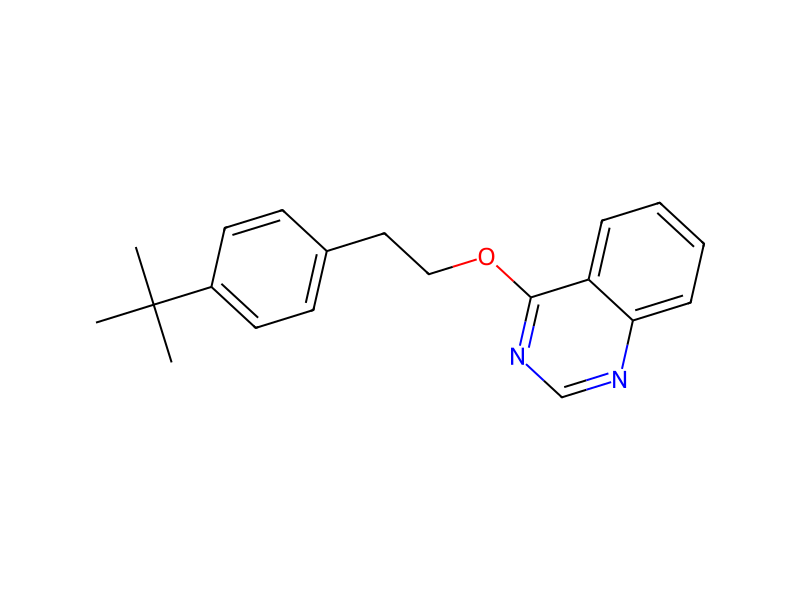
CC(C)(C)c1ccc(CCOc2ncnc3ccccc23)cc1- InChIKey
DMYHGDXADUDKCQ-UHFFFAOYSA-N- Molecular formula
- C20H22N2O
- Average molar mass
- 306.4 g/mol
- Monoisotopic mass
- 306.17321332
Overview
Fenazaquin is a member of quinazolines. It has a role as an acaricide and a mitochondrial NADH:ubiquinone reductase inhibitor.
Names & identifiers
- Preferred name
- Fenazaquin
- IUPAC
- 4-[2-(4-tert-butylphenyl)ethoxy]quinazoline
- English name
- Fenazaquin
- Molecular formula
- C20H22N2O
- Molecular weight
- 306.4
Names & synonyms
Fenazaquin120928-09-8Magister4-[2-(4-tert-butylphenyl)ethoxy]quinazoline4-tert-Butylphenethylquinazolin-4-yl etherDTXSID4040476DK5Q534WEE4-((4-(1,1-Dimethylethyl)phenyl)ethoxy)quinazoline4-tert-butylphenethyl quinazolin-4-yl etherQuinazoline, 4-(2-(4-(1,1-dimethylethyl)phenyl)ethoxy)-DTXCID2020476CHEBI:38593
Show more names
el436XDE 436)phenethoxy)AFenazaquinFenazaquin 0.14-(4-(tert-Butyl)Fenazaquin (EL436C13441000 Fenazaquin
DE-436EL-4364-(2-(4-(1,1-Dimethylethyl)phenyl)ethoxy)quinazoline4-(2-(4-tert-butylphenyl)ethoxy)quinazolineRefChem:140105410-580-04-(4-(tert-Butyl)phenethoxy)quinazolineFenazaquin [ISO]
Database identifiers
- CAS
120928-09-8- PubChem CID
- 86356
- DTXSID
DTXSID4040476- ChEMBL
CHEMBL243282- ChEBI
CHEBI:38593- UNII
- DK5Q534WEE
- EC Number
- 410-580-0、601-746-5
- Nikkaji
- J739.230C
Properties
Computed structural properties
- XLogP
- 5.7
- Topological polar surface area
- 35 Ų
- Hydrogen bond donors
- 0
- Hydrogen bond acceptors
- 3
- Rotatable bonds
- 5
- Heavy atoms
- 23
- Formal charge
- 0
- Complexity
- 357
Experimental & physicochemical properties
Pesticides
Acaricides
Active substance -> EU Pesticides database: Approved
Environmental transformation -> Pesticides (parent, predecessor)
Acaricides, Insecticides
Pesticide (Fenazaquin) -> USDA PDB
LogP
log Kow = 5.51 at 20 °C
4.91
Density1.16
Color/FormColorless crystals
Solubility
In acetone, hexane 33-50, acetone, ethyl acetate 400-500, n-chlorobutane, chloroform, toluene, N-methyl-2-pyrrolidone >500, dichloromethane >600, dimethylformamide 300-400, ethylene glycol <5, isopropanol, methanol 50-100 (all in g/L at 23 °C)
In water, 0.102 mg/L (pH 5, 7) , 0.135 mg/L (pH 9); both at 20 °C
Endocrine DisruptorsPotential endocrine disrupting compound
DecompositionWhen heated to decomposition it emits toxic fumes of /nitrogen oxides/.
Melting Point77.5-80 °C
Vapor Pressure3.4X10-3 mPa /2.55X10-8 mm Hg/ at 25 °C
Stability/Shelf LifeDT50 of aqueous solution exposed to sunlight is 15 days (pH7, 25 °C)
Dissociation ConstantspKa = 2.44
Physicochemical properties
- Melting point
- 70 · 70-71° (Dreikorn); mp 77.5-80.0° (Gambie)
- Boiling point
- 447.01 °C · 447.01°C (rough estimate)
- Density
- 1.097 · 1.0970 (rough estimate)
- vapor pressure
- 3.4 x · 3.4 x l0-6 Pa (25 °C)
- refractive index
- 1.57 · 1.5700 (estimate)
- storage temp.
- Sealed in dry,Room Temperature
- solubility
- Chloroform (Slightly), Ethyl Acetate (Slightly)
- Water Solubility
- 0.102 mg · 0.102 mg l-1 (20 °C, pH 7)
- pka
- 2.88 · 2.88±0.30(Predicted)
- form
- solid
- color
- White to off-white
- BRN
- 8331263 · 8331263
- Henry's Law Constant
- 2.1 · 2.1×102 mol/(m3Pa) at 25℃, Duchowicz et al. (2020)
- Major Application
- agricultureenvironmental
- InChI
- 1S/C20H22N2O/c1-20(2,3)16-10-8-15(9-11-16)12-13-23-19-17-6-4-5-7-18(17)21-14-22-19/h4-11,14H,12-13H2,1-3H3
- InChIKey
- DMYHGDXADUDKCQ-UHFFFAOYSA-N
- SMILES
- CC(C)(C)c1ccc(CCOc2ncnc3ccccc23)cc1
- LogP
- 5.51 · 5.510
- CAS DataBase Reference
- 120928 · 120928-09-8(CAS DataBase Reference)
- FDA UNII
- 5 Q534WEE · DK5Q534WEE
- EPA Substance Registry System
- Fenazaquin (120928-09-8)
- UNSPSC Code
- 41116107 · 41116107
- NACRES
- 24 · NA.24
- Symbol(GHS)
- 6 · GHS06,GHS09
- Signal word
- Danger
- Hazard statements
- 301 · H301-H332-H410
- Precautionary statements
- 261 · P261-P264-P270-P273-P301+P310-P304+P340+P312
- PPE
- 95 · dust mask type N95 (US), Eyeshields, Faceshields, Gloves, type P2 (EN 143) respirator cartridges
- Hazard Codes
- T,N
- Risk Statements
- 20 · 20-25-50/53
- Safety Statements
- 37 · 37-45-60-61
- RIDADR
- 2811 · UN 2811 6.1/PG 3
- WGK Germany
- 3 · 3
- RTECS
- 1382000 · VA1382000
- Storage Class
- 6.1 C · 6.1C - Combustible acute toxic Cat.3toxic compounds or compounds which causing chronic effects
- Hazard Classifications
- 3 OralAcute · Acute Tox. 3 OralAcute Tox. 4 InhalationAquatic Acute 1Aquatic Chronic 1
- Hazardous Substances Data
- 120928 · 120928-09-8(Hazardous Substances Data)
- Toxicity
- 50 orally · LD50 orally in rats, mice (mg/kg): 134, 1480; dermally in rabbits (mg/kg): >5000; LC50 (96 hr) in bluegill, trout (mg/l): 34.1, 3.8 (Longhurst)
- REACH Registrations
- Inactive
Safety & regulation
GHS classification
GHS Classification
Danger
H301: Toxic if swallowed [Danger Acute toxicity, oral]
P261, P264, P270, P271, P273, P301+P316, P304+P340, P317, P321, P330, P391, P405, and P501 (click each P-code to see the statement)
Danger
H301 (100%): Toxic if swallowed [Danger Acute toxicity, oral]
P261, P264, P270, P271, P273, P301+P316, P304+P340, P317, P321, P330, P391, P405, and P501 (click each P-code to see the statement)
Hazard information
Regulatory Information
Regulation (EC) No 1107/2009 (amended)
Fenazaquin is listed in the dataset of EPA Human Health Benchmarks for Pesticides under the Safe Drinking Water Act (40 eCFR 141)
2011/39/EU, Reg. (EU) 2023/918, Reg. (EU) No 2018/1266, Reg. (EU) No 2018/690, Reg. (EU) No 540/2011
Status: Active Update: 15-12-2008 https://echa.europa.eu/registration-dossier/-/registered-dossier/3270
Quinazoline, 4-2-4-(1,1-dimethylethyl)phenylethoxy-: Does not have an individual approval but may be used as a component in a product covered by a group standard. It is not approved for use as a chemical in its own right.
Special ReportsUSEPA Office of Prevention, Pesticides and Toxic Substances, Pesticide Fact Sheet for Fenazaquin (August 2007).[Available from, as of June 1, 2011: http://www.epa.gov/opprd001/factsheets/]
FIFRA RequirementsImport tolerances are established for residues of the insecticide and miticide, fenazaquin, 4-tert-butylphenethyl quinazolin-4-yl ether, in or on raw agricultural commodities as follows: [Table#7848]
Hazard Classes and Categories
Acute Tox. 3 (100%)
Acute Tox. 3 (100%)
Hazardous to the aquatic environment (acute) - category 1
Acute Tox. 3 *
Safety & protection
Disposal Methods
SRP: The most favorable course of action is to use an alternative chemical product with less inherent propensity for occupational harm/injury/toxicity or environmental contamination. Recycle any unused portion of the material for its approved use or return it to the manufacturer or supplier. Ultimate disposal of the chemical must consider: the material's impact on air quality; potential migration in soil or water; effects on animal and plant life; and conformance with environmental and public health regulations.
Allowable TolerancesImport tolerances are established for residues of the insecticide and miticide, fenazaquin, 4-tert-butylphenethyl quinazolin-4-yl ether, in or on raw agricultural commodities as follows: [Table#7847]
Toxicology
Ecotoxicity Values
LD50; Species: Colinus virginianus (Northern Bobwhite Quail, age approximately 18 weeks, 208 g initial bw range 201-208 g) gavage, 1747 mg/kg bw for 19 days (95% confidence interval: 1508-2176 mg/kg)
LC50; Species: Colinus virginianus (Bobwhite quail) diet >5204 ppm for 5 days /98.4% a.i./
LD50; Species: Anas platyrhynchos (Mallard duck) oral >2000 mg a.i./kg bw /98.4% a.i./
LC50; Species: Anas platyrhynchos (Mallard duck) diet >5030 ppm for 5 days /98.4% a.i./
For more Ecotoxicity Values (Complete) data for Fenazaquin (13 total), please visit the HSDB record page.
Environmental Fate
TERRESTRIAL FATE: Based on a classification scheme(1), Koc values of 18700 to 42100(2) indicate that fenazaquin is expected to be immobile in soil(SRC). Volatilization of fenazaquin from moist soil surfaces is not expected to be an important fate process(SRC) given an estimated Henry's Law constant of 1.0X10⁻⁷ atm-cu m/mole(SRC), based upon its vapor pressure, 2.55X10⁻⁸ mm Hg(3), and water solubility, 0.102 mg/L(3). Fenazaquin is not expected to volatilize from dry soil surfaces(SRC) based upon its vapor pressure(3). The half-life in soil is approximately 45 days(3).
AQUATIC FATE: Based on a classification scheme(1), a Koc range of 18700 to 42100(2) indicates that fenazaquin is expected to adsorb to suspended solids and sediment(SRC). Volatilization from water surfaces is not expected(3) based upon an estimated Henry's Law constant of 1.0X10⁻⁷ atm-cu m/mole(SRC), derived from its vapor pressure, 2.55X10⁻⁸ mm Hg(4), and water solubility, 0.102 mg/L(4). According to a classification scheme(5), a BCF of 500(2) suggests that bioconcentration in aquatic organisms is high, provided the compound is not metabolized by the organism(SRC). The half-life of an aqueous solution exposed to sunlight is 15 days at pH 7, 25 °C(4). Biodegradation data in water were not available(SRC, 2011).
AQUATIC FATE: Using an aquatic microcosm study simulation of 5% drift and 1% runoff from agricultural fields, fenezaquin was applied at rates of 225, 440, and 1125 g active ingredient/ha. After 2 hours, fenazaquin concentrations in a model pond were 0.58, 1.07, and 2.68 ug/L, respectively. Over 22 hours, concentrations dropped by 60-70%. No fenazaquin was detected in the water after 21 days(1).
ATMOSPHERIC FATE: According to a model of gas/particle partitioning of semivolatile organic compounds in the atmosphere(1), fenazaquin, which has a vapor pressure of 2.55X10⁻⁸ mm Hg at 25 °C(SRC), determined from a fragment constant method(2), is expected to exist solely in the particulate phase in the ambient atmosphere. Particulate-phase fenazaquin may be removed from the air by wet or dry deposition(SRC). Fenazaquin contains chromophores that absorb at wavelengths >290 nm(4), and therefore may be susceptible to direct photolysis by sunlight(SRC).
Ecotoxicity Excerpts
/BIRDS and MAMMALS/ Reproduction studies conducted with bobwhite quail and rats indicate no frank reproductive effects in either birds or mammals. In the avian reproduction study, the only observed effect was on growth in males at the highest concentration tested /(953 ppm for 22 weeks)/ /98.0% AI/
/AQUATIC SPECIES/ Rainbow trout (Oncorhynchuys mykiss) /were studied in a/ 63-day early life stage /experiment under/ unaerated continuous flow /conditions/. 80 embryos/concentration level. 0, 0 (solvent), 0.20, 0.51, 0.96, 1.98 and 3.92 mg/L. NOAEC: 0.96 ug/L LOAEC 1.98 ug/L. At test termination, survival, body weight and body length were significantly reduced at 1.98 ug/L. No fish survived at 3.92 ug/L. Excessive analytical variation (> or =20% of the mean measured value) at the three lowest levels, which included the NOAEC level; solvent level not constant; test initiation was with eyed-embryos (e.g., the exposure period was too short) and no time to swim-up assessment. /98% a.i. technical fenazaquin/ /from table/
/AQUATIC SPECIES/ In a 96 hr acute toxicity study, rainbow trout (/Oncorhynchus mykiss/) were exposed to EL-436 (fenazaquin) at nominal concentrations of 0 (negative and solvent controls), 2.5, 5.0, 7.0, 8.5 and 10.0 ug/L under flow-through conditions. TWA concentrations (reviewer-calculated) were <1 (<LOQ, controls), 1.6, 3.0, 4.4, 5.4, and 8.8 ug a.i./L, respectively. the 96-hr LC50 (with 95% CI) was 3.9 (3.0-5.4) ug a.i./L. The NOAEC, based on treatment-related mortality and signs of toxicity, was 3.0 ug ai/L. Sublethal effects (sluggishness, hypoactivity, or prostration) were observed in surviving fish from the 4.4 ug ai/L level from 24 to 48 hours. Based on the results of this study, EL-436 (fenazaquin) would be classified as very highly toxic to juvenile rainbow trout in accordance with the classification system of the USEPA.
/AQUATIC SPECIES/ The 48 hr acute toxicity of EL-436 (fenazaquin) to Daphnia magna was studied under static conditions. Daphnids (30 organisms/level) were exposed to EL-436 at nominal concentrations of 0 (control and solvent control), 0.3, 1.0, 3.0, 4.5, 7.0, and 10.0 ug/L. Mean measured concentrations of fenazaquin were <0.2 (<LOD, controls), 0.3, 0.8, 3.0, 4.4, 6.8, and 9.8 ug ai/L, respectively. Following 48 hr of exposure, cumulative immobility was 4% in the negative control group, 13% in the solvent control group, and 0, 7, 20, 23, 83, and 100% in the mean-measured 0.3, 0.8, 3.0, 4.4, 6.8, and 9.8 ug ai/L treatment groups, respectively. The 48-hr EC50 (with 95% CI) for immobility was 5.6 (5.0-6.3) ug ai/L. Hypoactivity or prostration was also observed at the > or =3.0 ug ai/L exposure levels. The NOAEC for immobility and the other sublethal observations was 0.8 ug ai/L. Based on the results of this study, EL-436 (fenazaquin) would be classified as very highly toxic to Daphnia magna in accordance with the classification system of the USEPA.
Soil Adsorption/Mobility
The Koc of fenazaquin has been reported to range from 18700 to 42100(1). The compound is rapidly adsorbed onto soil particles with 88% and 96% of the adsorption from a sandy loam soil and a clay loam soil, respectively, occurring within 2 hours. Adsorption increases with the organic content and clay content(1). According to a classification scheme(2), this Koc range suggests that fenazaquin is expected to be immobile in soil.
Artificial Pollution SourcesFenazaquin's production may result in its release to the environment through various waste streams; its use as an acaricide(1) will result in its direct release to the environment(SRC).
Environmental Bioconcentration
A BCF range of 500 was measured in fish for radio-labeled fenazaquin, at a concentration of 0.02 and 0.01 ug/L, using rainbow trout (Oncorhynchus mykiss) exposed for 21 to 28 days. BCF values were 400-500 for days 1-2 and 400-600 on days 21-28, irrespective of initial test compound concentration. At the end of the depuration period (days 1 and 14) no radioactivity was detected in the water above the detection limit of 0.05 ug/L. Residues in fish fell rapidly with 80% of radioactivity eliminated within the first 24 hours, <7% remaining on day 7. The depuration half-life was 1.4 days over days 1-7(1). According to a classification scheme(2), this BCF suggests the potential for bioconcentration in aquatic organisms is high(SRC), provided the compound is not metabolized by the organism(SRC).
Volatilization from Water/Soil
The Henry's Law constant for fenazaquin is estimated as 1.0X10⁻⁷ atm-cu m/mole(SRC) derived from its vapor pressure, 2.55X10⁻⁸ mm Hg(1), and water solubility, 0.102 mg/L(1). This Henry's Law constant indicates that fenazaquin is expected to be essentially nonvolatile from water and moist soil surfaces(2). Fenazaquin is not expected to volatilize from dry soil surfaces(SRC) based upon its vapor pressure(1).
Non-Human Toxicity Excerpts
/LABORATORY ANIMALS: Subchronic or Prechronic Exposure/ In a 90-day oral toxicity study, XDE-436 (/fenazaquin/ 98.1% ai) was administered to 4 Beagle dogs/sex/dose in diet at dose levels of 0, 1, 5, or 15 mg/kg bw/day at constant dosing. All percentages presented are changes from controls. No toxicological effects on organ weight, clinical chemistry, clinical signs, hematology, gross and histopathology were related to the dietary exposure of fenazaquin to beagle dogs. At 15 mg/kg/day dose, significant reductions in body weight of males (6 to 12%) and females (4 to 11%) were reported. At the high dose, overall body weight gain decreased in males (76%) and females (73%); mean food consumption was reduced in males (6 to 24%) and females (10 to 27%). Food efficiency values were also significantly decreased in high dose groups, males (72%) and females (67%). ... The toxicologically significant body weight changes correspond to the decrease in food consumption reported for the high dose group, which appears to be due only in part to a reduction in palatability of the diet. Based on the toxicological findings associated with fenazaquin 90-day dietary exposure to beagle dogs, the NOAEL is established at 5 mg/kg/day and the LOAEL is established at 15 mg/kg/day based on reductions of body weight, body weight gain, food consumption and food efficiency.
/LABORATORY ANIMALS: Subchronic or Prechronic Exposure/ In a 90-day oral toxicity study EL-436 (/fenazaquin/ purity 98%) was administered to 15 Syrian golden hamster [Lak:LVG(SYR)]/sex/dose by gavage at doses of 0, 5, 25, 75, or 150 mg/kg/day for males and 0, 5, 25, 50, or 100 mg/kg/day for females. Control animals received 5 mL/kg of the vehicle (10% aqueous acacia solution). There were no treatment related mortalities or clinical signs and no difference between the controls and the fenazaquin treated groups in urinalysis. Food consumption data from the first 10- weeks of the study were considered unreliable due to excessive spillage. There were slight dose-related increases (22-69%) in liver microsomal p-nitroanisole-o-demethylase enzyme activity in all animals that received fenazaquin at > or = 25 mg/kg/day but no changes were seen in hepatic peroxisomal beta-oxidation activity (fatty acyl CoA oxidase). Small changes occurred in some hematology parameters (< or = 6% decrease) among treated hamsters but, the changes were within the normal ranges of biological variation and were not considered toxicologically meaningful. The greatest effect of treatment was on body weight. At termination, the body weight in males decreased (p<0.01) 16 and 23% relative to the controls in the 75 and 150 mg/kg/day groups. Similarly, body weight in females decreased (p<0.01) 19 and 28% relative to the controls in the 50 and 100 mg/kg/day groups, respectively. The body weight gains from the same treated groups were also substantially reduced 54 and 74% less than the controls in males and 39 and 61% less than the controls in females, respectively. Because of growth retardation, the absolute organ weights of kidney, heart, and spleen were decreased in animals at dose levels > or = 50 mg/kg/day. The large decrease in absolute (42-49%) and relative weights (27-36%) of testes and prostate are considered treatment-related in males administered 75 and 150 mg/kg/day fenazaquin. These findings are corroborated by histopathology findings of increased testicular hypospermatogenesis (0/15, 1/15, 2/15/, 5/15/ and 8/15 in control through the high dose groups, respectively, moderate to severe at the top two doses). Under the conditions of the study, the LOAEL for fenazaquin in male hamsters is 75 mg/kg/day based on decreased body weight, reduced testes and prostate weights, and testicular hypospermatogenesis. The LOAEL is 50 mg/kg/day in females based on decreased body weight. The NOAEL for EL-436 is 25 mg/kg/day for both males and females.
/LABORATORY ANIMALS: Subchronic or Prechronic Exposure/ In a 90-day oral toxicity study EL-436 (fenazaquin; 98.4% ai) was administered to 10 Fischer 344 rats/sex/dose in the diet at dose levels of 0.0%, 0.0015%, 0.0045%, 0.015%, or 0.045% (equivalent to 0.0, 1.0, 3.0, 9.6, and 28.7 mg/kg bw/day for males and 0.0, 1.2, 3.5, 11.5, and 33.0 mg/kg bw/day for females, respectively). All rats survived to scheduled termination, and no treatment-related clinical signs were noted. In the high dose group, body weight of males was significantly reduced by 10-14% throughout the study, and overall body weight gain was reduced by 21%. Body weight of high dose females was significantly reduced by 5-7% during most of the study, and overall body weight gain was reduced by 14%. Food consumption by the high dose males and females was significantly reduced by 10 to 21% throughout the study, and overall food consumption was reduced by 14% and 11%, respectively, compared to that of the controls. Food efficiency in the high dose males was significantly reduced by 16% at week one and by 8% at study end; food efficiency for all other treated groups was comparable to that of controls. Hematology results for all groups were unremarkable. Changes in clinical chemistry included increased serum enzyme activities (61-75% over controls) in the high dose males and increased hepatic microsomal enzyme activities (21-80%) in mid- and high-dose males and females. Due to a lack of histological correlates and minimal increases in liver weight, these changes in isolation are considered an adaptive response rather than a toxic effect. Urinalysis was unremarkable. Changes in absolute organ weight in the mid- and high-dose groups were generally less than 10%, and not considered biologically significant. Increased relative organ weights (7-17% over controls) for those groups reflected the decreased body weights. No histological correlates were seen for the organ weight changes. Gross pathology was unremarkable, and no treatment-related histopathologic changes were seen. The LOAEL for fenazaquin in rats is 0.045% in the diet (28.7 mg/kg bw/day for males and 33.0 mg/kg bw/day for females) based on decreases in body weight, body weight gain, and food consumption. The NOAEL is 0.015% in the diet (9.6 mg/kg bw/day for males, 11.5 mg/kg bw/day for females).
/LABORATORY ANIMALS: Subchronic or Prechronic Exposure/ In a 90-day oral toxicity study, EL-436 (/Fenazaquin/ > or = 99% ai) was administered to 15 F344 rats/sex/dose group daily by gavage at dose levels of 0, 1, 3, 10, or 30 mg/kg/day for 90 days. In addition, 10 rats/sex in the control and high-dose groups were maintained 1-month post treatment to evaluate the reversibility of observed effects. There were no compound related effects on survival, clinical signs, ophthalmic, hematologic, or urinary parameters. Statistically significant decreases in body weight (8%-12% in males) and body weight gain (18% and 13% in males and females, respectively) were noted only among high-dose rats. The high dose also resulted in a statistically significant decrease in food consumption (4%-8%) and food efficiency (10% and 12%) in both sexes. Following a recovery period these parameters returned to normal. Slight changes in clinical chemistry parameters observed in high dose male and female rats were reversible 1-month post treatment. Statistically significant increases in absolute and relative liver and adrenal weight in mid- or high-dose male and female rats (6%-20% for liver and 10%-42% for adrenal, respectively) observed during the treatment period were reversible during the post treatment period. However, these findings were not supported by histopathological changes. Changes in serum enzyme activity levels and liver weight were considered adaptive changes in response to the treatment. The LOAEL for EL-436 in male and female rats is 30 mg/kg/day based on decreases in body weight gain, food consumption and food efficiency in both sexes. The NOAEL is 10 mg/kg/day.
For more Non-Human Toxicity Excerpts (Complete) data for Fenazaquin (16 total), please visit the HSDB record page.
Environmental Abiotic Degradation
Fenazaquin is not expected to undergo hydrolysis in the environment due to the lack of functional groups that hydrolyze under environmental conditions(1). Fenazaquin contains chromophores that absorb at wavelengths >290 nm(1), and therefore may be susceptible to direct photolysis by sunlight(SRC). The photolysis half-life in water is about 15 days(2).
Probable Routes of Human ExposureOccupational exposure to fenazaquin may occur through inhalation and dermal contact with this compound at workplaces where fenazaquin is produced or used. (SRC)
Environmental Fate/Exposure Summary
Fenazaquin's production may result in its release to the environment through various waste streams; its use as an acaricide will result in its direct release to the environment. If released to air, a vapor pressure of 2.55X10⁻⁸ mm Hg at 25 °C indicates fenazaquin will exist solely in the particulate phase in the atmosphere. Particulate-phase fenazaquin will be removed from the atmosphere by wet or dry deposition. Fenazaquin contains chromophores that absorb at wavelengths >290 nm, and therefore may be susceptible to direct photolysis by sunlight. If released to soil, fenazaquin is expected to have no mobility based upon a Koc range of 18700 to 42100. Volatilization from moist soil surfaces is not expected to be an important fate process based upon an estimated Henry's Law constant of 1.0X10⁻⁷ atm-cu m/mole. Fenazaquin may not volatilize from dry soil surfaces based upon its vapor pressure. The half-life in soil is approximately 45 days. If released into water, fenazaquin is expected to adsorb to suspended solids and sediment based upon the Koc. Volatilization from water surfaces is not expected to be an important fate process based upon this compound's estimated Henry's Law constant. A BCF of 500 suggests that bioconcentration in aquatic organisms is high, provided the compound is not metabolized by the organism. Hydrolysis is not expected to be an important environmental fate process since this compound lacks functional groups that hydrolyze under environmental conditions. The photolysis half-life in water is about 15 days. Occupational exposure to fenazaquin may occur through inhalation and dermal contact with this compound at workplaces where fenazaquin is produced or used. (SRC)
Antidote and Emergency Treatment
/SRP:/ Immediate first aid: Ensure that adequate decontamination has been carried out. If patient is not breathing, start artificial respiration, preferably with a demand valve resuscitator, bag-valve-mask device, or pocket mask, as trained. Perform CPR if necessary. Immediately flush contaminated eyes with gently flowing water. Do not induce vomiting. If vomiting occurs, lean patient forward or place on the left side (head-down position, if possible) to maintain an open airway and prevent aspiration. Keep patient quiet and maintain normal body temperature. Obtain medical attention. /Poisons A and B/
/SRP:/ Basic treatment: Establish a patent airway (oropharyngeal or nasopharyngeal airway, if needed). Suction if necessary. Watch for signs of respiratory insufficiency and assist ventilations if needed. Administer oxygen by nonrebreather mask at 10 to 15 L/min. Monitor for pulmonary edema and treat if necessary ... . Monitor for shock and treat if necessary ... . Anticipate seizures and treat if necessary ... . For eye contamination, flush eyes immediately with water. Irrigate each eye continuously with 0.9% saline (NS) during transport ... . Do not use emetics. For ingestion, rinse mouth and administer 5 mL/kg up to 200 mL of water for dilution if the patient can swallow, has a strong gag reflex, and does not drool ... . Cover skin burns with dry sterile dressings after decontamination ... . /Poisons A and B/
/SRP:/ Advanced treatment: Consider orotracheal or nasotracheal intubation for airway control in the patient who is unconscious, has severe pulmonary edema, or is in severe respiratory distress. Positive-pressure ventilation techniques with a bag valve mask device may be beneficial. Consider drug therapy for pulmonary edema ... . Consider administering a beta agonist such as albuterol for severe bronchospasm ... . Monitor cardiac rhythm and treat arrhythmias as necessary ... . Start IV administration of D5W /SRP: "To keep open", minimal flow rate/. Use 0.9% saline (NS) or lactated Ringer's if signs of hypovolemia are present. For hypotension with signs of hypovolemia, administer fluid cautiously. Watch for signs of fluid overload ... . Treat seizures with diazepam or lorazepam ... . Use proparacaine hydrochloride to assist eye irrigation ... . /Poisons A and B/
Regulatory information
FIFRA RequirementsImport tolerances are established for residues of the insecticide and miticide, fenazaquin, 4-tert-butylphenethyl quinazolin-4-yl ether, in or on raw agricultural commodities as follows: [Table#7848]
Safety data
- PPE
- dust mask type N95 (US), Eyeshields, Faceshields, Gloves, type P2 (EN 143) respirator cartridges
- wgk
- 3
- rtecs
- VA1382000
- ridadr
- UN 2811 6.1/PG 3
- Toxicity
- LD50 orally in rats, mice (mg/kg): 134, 1480; dermally in rabbits (mg/kg): >5000; LC50 (96 hr) in bluegill, trout (mg/l): 34.1, 3.8 (Longhurst)
- risk_code
- 20-25-50/53
- Signal word
- Danger
- Symbol(GHS)
- GHS06,GHS09
- hazard_code
- T,N
- safety_code
- 37-45-60-61
- Storage Class
- 6.1C - Combustible acute toxic Cat.3toxic compounds or compounds which causing chronic effects
- Hazard statements
- H301-H332-H410
- REACH Registrations
- Inactive
- Hazard Classifications
- Acute Tox. 3 OralAcute Tox. 4 InhalationAquatic Acute 1Aquatic Chronic 1
- Precautionary statements
- P261-P264-P270-P273-P301+P310-P304+P340+P312
- Hazardous Substances Data
- 120928-09-8(Hazardous Substances Data)
Chemistry & industry
Pharmacology
Mechanism of Action
Fenazaquin is a miticide that exhibits both contact and ovicidal activity against a broad spectrum of mite and certain insects by inhibiting mitochondrial electron transport at the Complex I site (NADH-ubiquinone reductase).
... In this study, ...the in vitro toxicity and mechanism of action of several putative complex I inhibitors that are commonly used as pesticides. The rank order of toxicity of pesticides to neuroblastoma cells was pyridaben > rotenone > fenpyroximate > fenazaquin > tebunfenpyrad. A similar order of potency was observed for reduction of ATP levels and competition for (3)H-dihydrorotenone (DHR) binding to complex I, with the exception of pyridaben (PYR). Neuroblastoma cells stably expressing the /rotenone/ (ROT)-insensitive NADH dehydrogenase of Saccharomyces cerevisiae (NDI1) were resistant to these pesticides, demonstrating the requirement of complex I inhibition for toxicity. ... PYR was a more potent inhibitor of mitochondrial respiration and caused more oxidative damage than ROT. The oxidative damage could be attenuated by NDI1 or by the antioxidants alpha-tocopherol and coenzyme Q(10). PYR was also highly toxic to midbrain organotypic slices. These data demonstrate that, in addition to ROT, several commercially used pesticides directly inhibit complex I, cause oxidative damage, and suggest that further study is warranted into environmental agents that inhibit complex I for their potential role in Parkinson's Disease.
Parkinson's disease (PD) brains show evidence of mitochondrial respiratory Complex I deficiency, oxidative stress, and neuronal death. Complex I-inhibiting neurotoxins, such as the pesticide rotenone, cause neuronal death and parkinsonism in animal models. We have previously shown that DJ-1 over-expression in astrocytes augments their capacity to protect neurons against rotenone, that DJ-1 knock-down impairs astrocyte-mediated neuroprotection against rotenone, and that each process involves astrocyte-released factors. To further investigate the mechanism behind these findings, we developed a high-throughput, plate-based bioassay that can be used to assess how genetic manipulations in astrocytes affect their ability to protect co-cultured neurons. We used this bioassay to show that DJ-1 deficiency-induced impairments in astrocyte-mediated neuroprotection occur solely in the presence of pesticides that inhibit Complex I (rotenone, pyridaben, fenazaquin, and fenpyroximate); not with agents that inhibit Complexes II-V, that primarily induce oxidative stress, or that inhibit the proteasome. This is a potentially PD-relevant finding because pesticide exposure is epidemiologically-linked with an increased risk for PD. Further investigations into our model suggested that astrocytic GSH and heme oxygenase-1 antioxidant systems are not central to the neuroprotective mechanism.
Metabolism/Metabolites
Metabolism involved cleavage of the ether bond, with formation of the 4-hydroxyquinazoline and carboxylic acid derivatives. Other biotransformations included oxidation of one of the methyl groups on the alkyl side chain to produce either an alcohol, which was further metabolised by hydroxylation of the O-ether alkyl moiety, or a carboxylic acid, which was further metabolised by hydroxylation of the 2-position of the quinazoline ring.
EL-436 (Fenazaquin, 97.36-98.80% ai; EL-436 uniformly labeled on either the t-butyl-phenyl ring (phenyl; 97.33->99.9%, 4.23 and 5.44 uCi/mg) or the quinazoline-phenyl ring (quinazoline; 98.8-99.2%, 19.8 uCi/mg) was administered to groups of five male and five female Fischer 344 (F344/Crl) rats as a single 1 mg/kg or 30 mg/kg radiolabeled dose. A group of eight male and eight female rats received 14-daily doses of 1 mg/kg unlabeled test material followed by a single radiolabeled gavage dose. An additional group of three male and three female rats received a single 1 mg/kg radiolabel dose to determine elimination of the compound in expired air. ... In the urine, the primary metabolite was AN-1 (4-(2-hydroxy-1,1-dimethylethyl) phenylacetic acid) (24-29% of total urinary radioactivity) plus numerous minor metabolites. This metabolite was characterized by the absence of protons associated with the quinazoline portion of the molecule, indicating cleavage of the ether bridge. No significant differences between the sexes or dose groups were observed. Four primary metabolites and numerous minor metabolites were found in the feces. The parent compound, fenazaquin, represented 1.2-4.2% of the recovered radioactivity in the single or multiple low-dose groups and 11.5-20.6% of the recovered activity in single high-dose rats. Metabolite F1 (4.6-9.4% of the administered dose) had the phenyl and quinazoline rings and both sets of methylene protons intact, as well as the addition of a single oxygen atom to the phenyl-t-butyl portion of the parent molecule. Metabolite F-1A, a minor metabolite contributing 0.6-2.6% of the radioactivity, was characterized by intact phenyl and quinazoline rings and hydroxylation of the ethoxy bridge. Metabolite F-2 was the primary fecal metabolite identified (16.3-22.8% of the recovered radioactivity) and was similar to metabolite F1, but with the addition of two oxygen atoms and the loss of two hydrogen atoms to form a carboxylic acid on one of the methyl alky groups attached to the phenyl ring. Metabolite F3 contributed 6.5-12.6% of the recovered radioactivity and contained both the phenyl and quinazoline ring systems; however, the quinazoline ring had been hydroxylated and one of the methyl alkyl groups of the phenyl ring had been carboxylated. While the fecal metabolites were likely produced by the liver, it is not possible to exclude metabolism by intestinal microflora. These studies show that radiolabeled fenazaquin is rapidly metabolized and eliminated from male and female rats following treatment with either single or multiple low doses or following a single high dose of the compound. However, there is no information on biliary excretion or fecal/urinary elimination following iv administration.
Absorption, Distribution and Excretion
EL-436 (Fenazaquin, 97.36-98.80% ai; EL-436 uniformly labeled on either the t-butyl-phenyl ring (phenyl; 97.33->99.9%, 4.23 and 5.44 uCi/mg) or the quinazoline-phenyl ring (quinazoline; 98.8-99.2%, 19.8 uCi/mg) was administered to groups of five male and five female Fischer 344 (F344/Crl) rats as a single 1 mg/kg or 30 mg/kg radiolabeled dose. A group of eight male and eight female rats received 14-daily doses of 1 mg/kg unlabeled test material followed by a single radiolabeled gavage dose. An additional group of three male and three female rats received a single 1 mg/kg radiolabel dose to determine elimination of the compound in expired air. Overall recovery of the radiolabel was excellent (89.5-107.7% of the administered dose). Within 48 hours of treatment, approximately 75% of the radiolabel was recovered in the excreta, and by 72 hours after treatment, >84% was recovered. No sex-related differences in elimination were noted. Approximately 20% of the radiolabel was recovered in the urine with the remainder in the feces. Less than 1.6% of the radiolabel was recovered in the residual carcass or tissues and essentially no significant amount of radiolabel was recovered in the expired air. There are no available excretion studies following bile cannulation or intravenous (i.v.) administration to determine test material bioavailability (gastrointestinal absorption). Therefore, while the nearly 20% of the administered dose was absorbed before it was excreted in urine, it is not clear if any or all of the remaining dose (nearly 80%) that was found in feces was actually absorbed prior to its fecal elimination.
Uses & manufacturing
Uses
For fenazaquin (USEPA/OPP Pesticide Code: 044501) ACTIVE products with label matches. /SRP: Registered for use in the U.S. but approved pesticide uses may change periodically and so federal, state and local authorities must be consulted for currently approved uses./
Miticide and insecticide
Acaracide
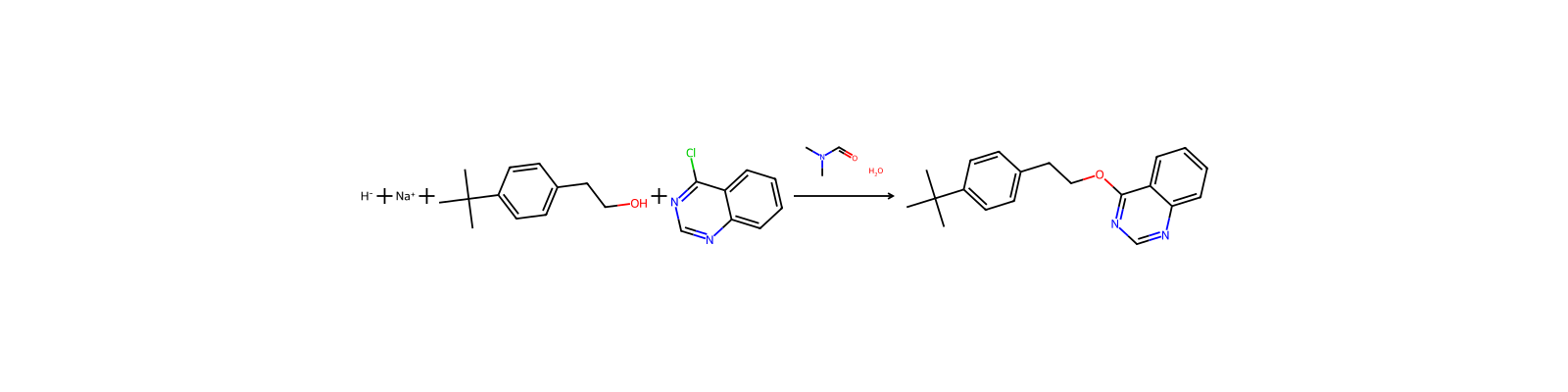
Methods of ManufacturingFenazaquin is produced by reaction of 4-hydroxyquinazoline with phosphite and chlorine, and treating the resulting haloquinazoline with 4-tert-butylphenylethanol.
Formulations/Preparations
Emulsifiable concentrate; suspension concentrate.
Fenazaquin Technical (Gowan Company, LLC) Fenazaquin 99.4%
GWN-1708 Miticide/Insecticide (Gowan Company, LLC) Fenazaquin 18.79%
Use Classification
Environmental transformation -> Pesticides (parent, predecessor)
Acaricides, Insecticides
General Manufacturing Information
The majority of usage is in Europe (>80%)
The WHO Recommended Classification of Pesticides by Hazard identifies fenazaquin (technical grade) as Class II: moderately hazardous; Main Use: acaracide.
Applications
DescriptionFenazaquin is a quinazoline acaricide. It has a low aqueous solubility but is highly soluble in many organic solvents. It is not volatile and is not expected to leach to groundwater. It may be persistent in soil and water systems depending on local conditions. Its toxicity to terrestrial and aquatic organisms tends to high to moderate. Fenazaquin is moderately toxic to humans via the oral route and, whilst it may be a respiratory tract irritant no chronic effects have been identified.
UsesAcaricide and insecticide.
UsesFenazaquin is a non-systemic acaricide/insecticide used widely in controlling mites and other related pests in fruits, vegetables and tea.
UsesFenazaquin is an acaricide mainly used for control of mites (Eutetranychus, Panonychus and Tetranychus spp.) on pome and citrus fruits and glasshouse-grown ornamental plants.
Suppliers50 total
上海阿拉丁生化科技股份有限公司400-6206333 13167063860 · [email protected]
Hebei Chuanghai Biotechnology Co., Ltd+86-17732866630 · [email protected]
湖北威德利化学试剂有限公司181-6332-1995 18062128043 · [email protected]
山东泰诚生物科技有限公司18769832557 18769832557 · [email protected]
毕佳索(上海毕得医药科技股份有限公司)400-6005915 · [email protected]
合肥翰刚医药科技有限公司+8618062405514 · [email protected]
广州佳途科技股份有限公司81960175 18933936954 · [email protected]
武汉欣扬瑞和化学科技有限公司153-07155313 15307155313 · [email protected]
杭州品高化工有限公司0571-87658025 · [email protected]
Qingdao Trust Agri Chemical Co.,Ltd+86-008615963231493 +86-008613573296305 · [email protected]
北京索莱宝科技有限公司010-50973130 17801761073 · [email protected]
湖北威德利化学试剂有限公司17771473825 13385289472 · [email protected]
梯希爱(上海)化工贸易有限公司021-61109150 · [email protected]
湖北魏氏化学试剂股份有限公司027-59102966 18717199209 · [email protected]
InvivoChem中国13549236410 · [email protected]
上海相辉医药科技有限公司13761987713; 13761987713 · [email protected]
上海艾梯西生物科技有限公司18721763493
Pure Chemistry Scientific Inc.001-857-928-2050 or 1-888-588-9418 · [email protected]
上海尺水药物研究有限公司[email protected] 13564957716 · [email protected]
泰安鑫润生物科技有限公司15318133072 15318133072 · [email protected]
韶关市启程生物科技有限公司18122215013 · [email protected]
上海毕楷科技有限公司18516304666
四川库利南科技有限公司400-1166-196 18981987031 · [email protected]
金克隆(北京)生物技术有限公司400-910-1997 15330005590 · [email protected]
成都思天德生物科技有限公司028-83243028 19136088901 · [email protected]
深圳振强药物研发有限公司0755-66853366 13670046396 · [email protected]
南京生利德生物科技有限公司025-57798810 18652991625 · [email protected]
苏州亚科科技股份有限公司0512-87182055 13451648594 · [email protected]
上海将来实业股份有限公司400-0066400 13621662912 · [email protected]
上海将来实业股份有限公司021-61552785 · [email protected]
天津普西唐生物医药科技有限公司010-60605840 · [email protected]
凯试(上海)科技有限公司021-50135380 · [email protected]
天津阿尔塔科技有限公司022-6537-8550 15522853686 · [email protected]
Hangzhou HeRui Chemical Co., Ltd0086-571-87396576 · [email protected]
南兴化工(江苏)有限公司0512-66387035 18662433356 · [email protected]
上海陶术生物科技股份有限公司+1-781-999-5354; +1-00000000000 · [email protected]
上海博熠生物医药科技有限公司021-021-54331997 18321536537 · [email protected]
湖北世腾化工科技有限公司18971850150 19086915685 · [email protected]
安耐吉化学&3A(安徽泽升科技股份有限公司)400-0056266 · [email protected]
武汉匠信生物科技有限公司19272768272 18007157445 · [email protected]
艾吉析科技(上海)有限公司17721401538;17717235263 17721401538 · [email protected]
北京伊万景瑞生物科技有限公司15866847540 · [email protected]
湖北万业众诚化学试剂有限责任公司18671296875 · [email protected]
湖北美钡新材料有限公司18271819653 · [email protected]
南通市苏北化工原料有限公司0513-85290972 18762756250 · [email protected]
南京择优新材料科技有限公司173-40521416 17340521416 · [email protected]
上海西陇生化科技有限公司021-52907766-8042
上海源叶生物科技有限公司13636370518 · [email protected]
山东西亚化学有限公司4009903999 13395398332 · [email protected]
南京罗迈美生物科技有限公司[email protected]
Additional notes
DefinitionChEBI: Fenazaquin is a member of quinazolines. It has a role as an acaricide and a mitochondrial NADH:ubiquinone reductase inhibitor.
Related reactions
5 records




Linked notes
Loading…